
Hi Ayushi,
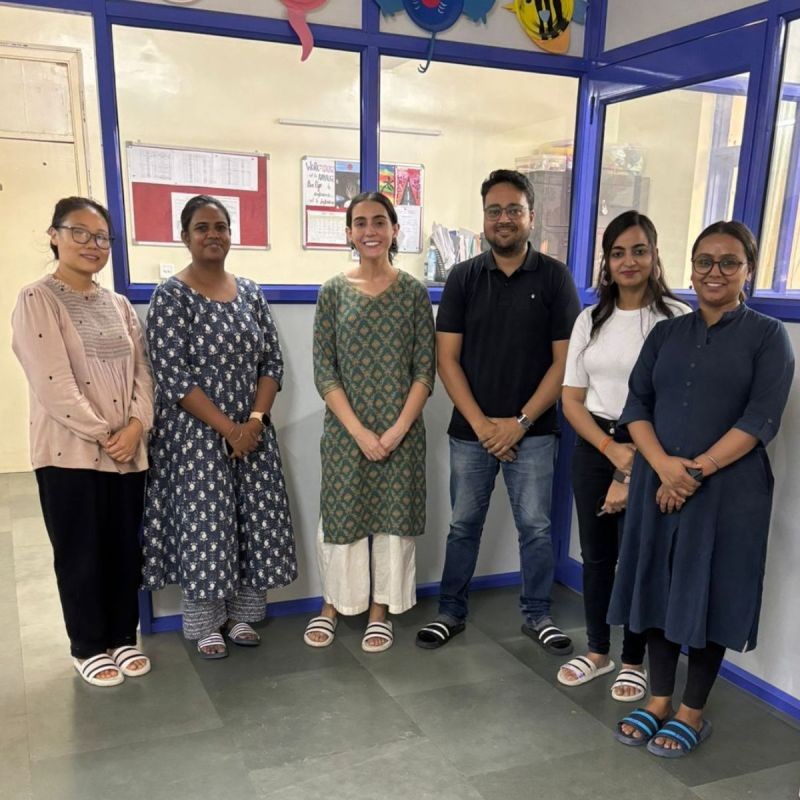
Last week, I visited a learning center in Delhi run by a France based NGO. The reason I wanted to share my experience with you was because the visit reinforced my belief on how personalized digital education can address the learning gap challenge in our last mile learners.
As for the work the NGO is doing, it was truly inspiring to see how they are providing education support to underprivileged children in the community and enabling them to excel in their studies at school.
Let’s talk about the challenges they are facing
The one classroom we visited had about 20 – 25 students. The teacher Javed (an alumni of this center and spoke such fluent English, I am totally impressed) had divided the students into 4 or 5 groups depending on the grade in which they study in school. Each group had 1 or 2 books from which they were reading and Javed was hopping between groups ensuring every child gets due attention.
However, a significant challenge that Javed faces is that these children have different learning levels, making it difficult to assess their individual needs in a mixed classroom setting. Additionally, the problem is compounded by the fact that children are in different grades. So, the first challenge is within each grade, children exhibit varying learning levels. Second, in the very same classroom, there are children from multiple grades studying together.
In these situations, it is very challenging for an NGO with limited resources, to effectively guide every child.
So, how can technology help?
Student devices such as Tablets or Chromebooks and if budgets allow even laptops can be made available which are pre-loaded with a personalized adaptive learning and curriculum aligned digital content. And one does not require a large number of devices. These devices can be used in rotation and even if a child gets to spend 30-40 mins on them for 3 days in a week, it is sufficient to get them started on this personalized learning journey.
With the help of technology, we can quickly identify the learning gaps of each child and assess what a child needs to do to address these gaps.
How will this benefit the center?
The limited teaching staff will gain insights into each child’s learning level. They will fast-track their plans to bring children up to grade-level proficiency and produce better, quicker results than ever before. Plus one can engage students better. So while Javed is sitting with one set of students, the other set of students can be given devices to do assessments or watch remedial videos to build up their conceptual understanding.
We hope to work with this NGO soon and will keep sharing regular updates with you.
Before I log off, would you mind taking a quick pulse survey? This will help me understand if we should talk more about such experiences or not.
Are you working or supporting a learning center which works towards remedial learning of last mile learners?
- Yes
- No
If so, I’d love to hear from you! Please reply to this email with your thoughts. I’m eager to explore how remedial learning is solving last mile challenge of historical learning gap.