

Hi,
Summer vacation is here, and like many parents, I’m seeing my kids at home, full of curiosity—exploring, asking questions, and spending more time on their devices. What’s striking these days is how naturally they turn to AI, especially tools like ChatGPT, to get answers for everything. It’s fascinating, but seeing this behavior at home has made me reflect more deeply—not just about my own kids, but about millions of students across India.
If AI is becoming such an integral part of how children seek knowledge today, are AI-integrated learning apps truly ready to meet the real needs of Indian learners?
AI in education is the buzzword of 2025. From practice questions to doubt-solving to lesson planning, AI is everywhere in learning apps. But the real question is—are these apps genuinely effective for Indian classrooms and homes?
Before deciding on an AI powered education app, you must see whether it is designed to fulfill the competencies requirements as per Indian curriculum system. Many learning apps claim to be powered by AI, but it’s essential to pause and ask: What kind of AI is really being offered? Is it genuinely helpful? And most importantly, is it safe for students?
In one of our recent interactions with a social sector partner, we were asked about the AI integration in our own app—similar to what many others promote. What I shared with them is something I believe every education leader should consider:
- First, while AI tools can generate content aligned with Indian textbooks, that alone does not ensure effective learning. Most AI solutions are still not fully trained as per state or national competency frameworks, which are crucial for meaningful learning outcomes. Students need more than just AI-generated questions—they need context, explanation, and guided support.
- Second, although internet access is growing in rural India, connectivity challenges such as bandwidth, speed, and reliability still exist. Hence, if you’re considering adopting AI in such locations, it would currently be more of a nice-to-have feature rather than something that delivers real impact. Investments in AI at this stage should be thoughtfully done keeping a view on the existence of supporting conditions. An important factor also to be considered is that as AI is becoming popular, there are no guidelines available on how to use AI. Exposing students to AI without proper guardrails and guidelines can pose risks which we cannot imagine.
So, the next time you hear about an “AI-powered education app,” make sure to look beyond the label. Check whether the content is curriculum-aligned, and accessible—especially offline.
The good news? The future of AI for Indian learners is promising. I’m hopeful that in the coming years, we’ll see AI learning apps that are deeply curriculum-aligned and fully offline-capable, bringing powerful learning experiences to every corner of the country.
Until then, I believe we should not rush to integrate AI-powered learning, especially in government schools and it will be wise to focus on adopting learning apps that already meet these two essential needs: curriculum relevance and offline readiness for the meaningful digital engagement.
I am happy to share that we’re also actively working on AI integration in our learning app, with a deep focus on training it to both national and state curriculum, as well as supporting diverse Indian language needs. If you’d like to connect and discuss further, I’d be happy to share our approach and learn from your perspective too.
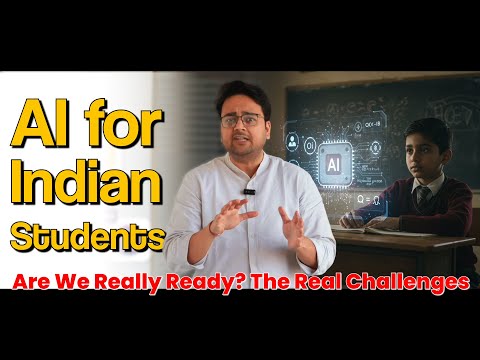
Watch the video to see why AI in education must go beyond quick answers—and why AI integrated learning apps are still not ready for Indian learners
PS: You can check all the previous newsletters on this link.