

Hi,
As we bid farewell to the financial year 2024-25 and step into 2025-26, I want to take a moment to thank everyone who has been a part of our journey. Whether you have worked with us, shown interest in our solution, or stayed connected through this newsletter, your support has been invaluable.
With the new financial year setting the stage for growth and the academic year around the corner, it’s a time of fresh beginnings—not just for businesses and institutions but for the entire education ecosystem. This transition presents an opportunity to reflect on how we can enable deeper understanding and meaningful learning outcomes. This brings me to the importance of Personalized Adaptive Learning (PAL) in transforming education in India’s government schools. PAL is expected to play an important role in transforming India’s education system, it is therefore important to discuss PAL in detail and not do superficial work which the ecosystem has earlier done with the Smart Classrooms.
What is Personalized and Adaptive Learning (PAL)?
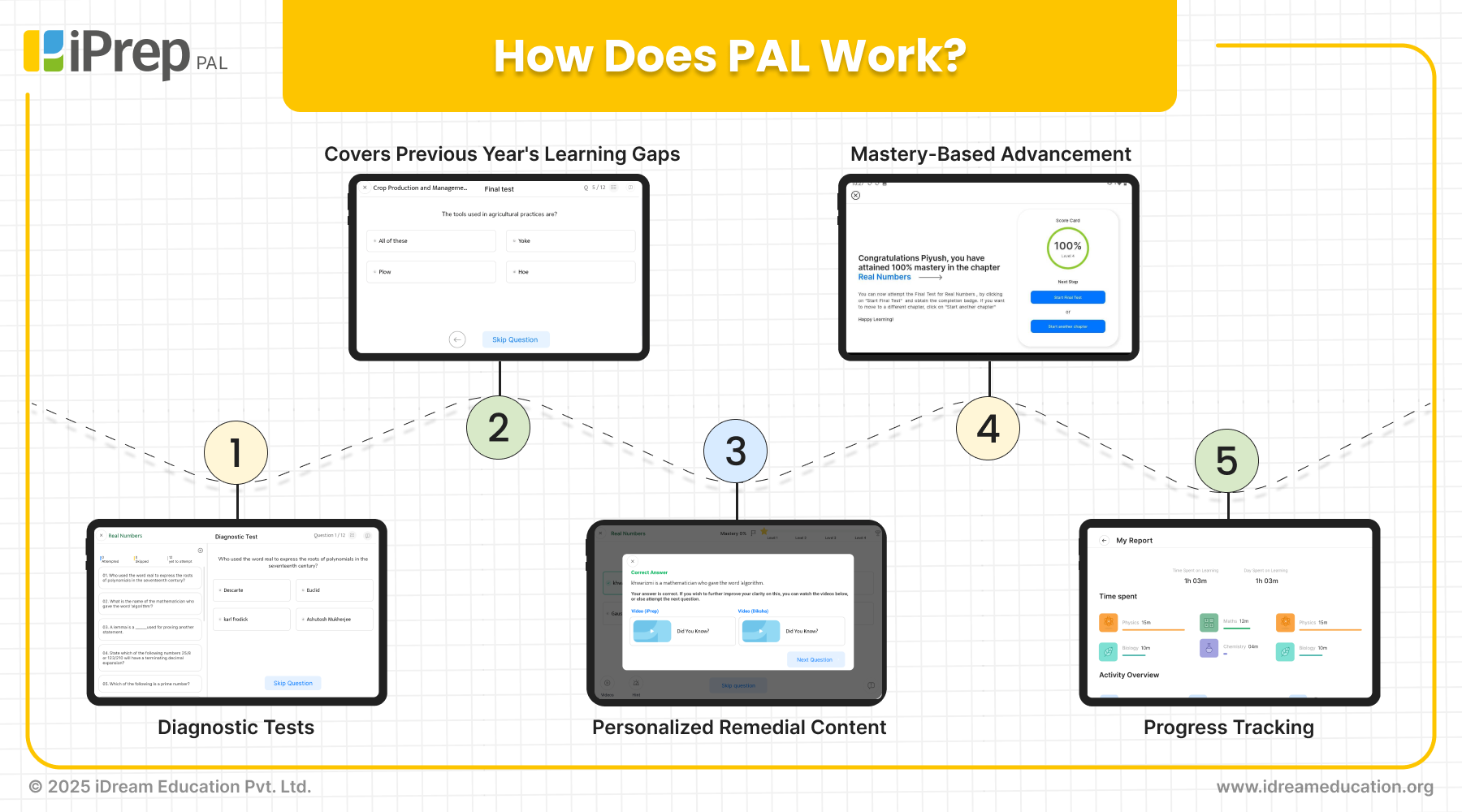
PAL is a learning approach that adapts to students’ learning needs in real time. Unlike traditional methods where all students learn at the same pace, PAL continuously analyzes a student’s performance and adjusts the content to match their learning level, strengths, and weaknesses.
Key Features of PAL designed to improve student’s learning outcomes
- Remedial Learning Content: Students receive lessons tailored to their understanding level.
- Adaptive Assessments: Learning gaps are identified, and questions are adjusted accordingly.
- Data-Driven Insights: Teachers get real-time reports on student progress, helping them provide targeted support.
Why is PAL important for Government Schools?
Having worked with government schools, I’ve seen how PAL can bridge the gaps that exist in our education system. Let me share some key reasons why I believe PAL is a must-have for government schools:
- Government schools in India often struggle with large class sizes, teacher shortages, and students with varying learning levels. Personalized and Adaptive Learning (PAL) bridges these gaps by ensuring that every student receives a customized learning experience, regardless of their background or learning speed.
- In large and multi-grade classrooms, tracking individual progress can be a challenge for teachers. PAL provides detailed analytics, enabling teachers to identify students who need extra support and focus their attention accordingly.
- Additionally, since students learn at different speeds—some grasping concepts quickly while others require repeated explanations—PAL allows each child to learn at their own pace, boosting both confidence and motivation.
- Beyond personalized learning, PAL makes education more engaging by incorporating videos, interactive quizzes, and gamified elements. This interactive approach significantly enhances student engagement and improves retention rates, making learning both effective and enjoyable.
Challenges in Implementing PAL
While PAL offers immense benefits, there are hurdles to overcome:
- Digital Infrastructure Limitations
- Teacher Resistance to Technology
- Language Barriers
- Hesitation to Adopt PAL-Based Learning
But here’s what I truly believe—every challenge has a solution, and change begins when we take that first step. If we start implementing PAL in the academic year 2025-26, students will have an entire year to adapt, overcome learning challenges, and show remarkable progress.
I’d love to hear your thoughts on PAL? Do you see its potential in your school or community? Let’s start a conversation and work towards an education system that nurtures every child’s potential.
Top Post on LinkedIn: I’ve explained what is Personalized Adaptive Learning and why it matters. Take a look here.
Blog of the Week: If you’re interested in a detailed read on Personalized and Adaptive Learning and how it’s transforming education in India’s government schools, check it out here!
PS: You can check all the previous newsletters on this link.