

Hi,
On 10th October I hosted my younger son’s birthday at a play area in Gurgaon. He turned 7. While I was speaking with one of the parents, he said, “I wish, even we had such things while growing up”. Not only how our kids play these days has changed, what is also changing fast is how they are learning in the classroom and at home.
What about the last mile learners in our government schools? Are things changing for them too?
Learning gap in these students continues to be a big challenge even today. I’ve seen how students fall behind when they miss something important in class due to irregularity, lack of interest or engagement and then they do not get any support outside the school.
Personalized learning has the potential to solve this. But it requires a device in the hands of the students, which unfortunately at least today is an expensive proposition and hence difficult to do at scale.
But there is an interesting piece of news I would like to share with you. In a district in Meghalaya, without giving personalized devices to all the students in the district and with very finer innovation, in a time frame of 1 year, we were able to improve the number of students who clear Class X exam from 25-29% to 60%. I am certainly proud of this achievement and is a testimony to the remarkable work done by our team in Gurgaon. And the district administration deserves a lot of credit for the success because it was them initially who believed and aspired to do something like this.
Here’s what we did. I am sharing a very crisp account below:
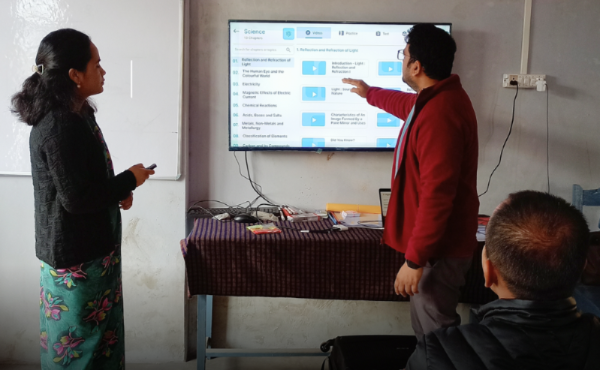
Because budgets were low, we used an affordable Smart TV and set up a Smart Classroom in all schools using a Pen Drive preloaded with Meghalaya State Board aligned content for grades 6th to 10th. Next, with just 150 tablets distributed amongst 5 of our team members, we started conducting personalized assessments of every student every month on the concept they had learned in the previous month.
After the first such assessment, our data showed that over 90% of students were performing 3-4 grades below their current grade. This highlighted a significant learning gap that needed to be addressed.
We then built a bridge course with the teachers and our subject matter experts and made this course a part of the learning application itself which was running on the Smart TV. To run the bridge course, all that the teachers had to do was press a button on their Smart TV.
Gradually, things began to improve. Kudos to the efforts of the teachers and a constant motivational push from the district administration, the smart classes began to be regularly conducted in the school and the monthly tests started to show improvement.
And then when the day arrived, the results were heartwarming and brought a smile to the faces of the teachers, the district administration and of course all of us at iDream. 60% students cleared the class X exam, the first time in the history of this district.
You can learn more about this amazing project by checking out the full story of Project Ka Lawei in this video:
The story above is a reminder that with finer innovation and a strong commitment, the difference can be made even with lower costs.
This week we are celebrating World Students’ Day and I believe on this occasion, we should step back and rethink how student’s learn. We need to be able to break all barriers of learning such as class, language, content, hardware, OS, location, cost and make a commitment to our next generation that we will strive to give them an opportunity to learn, to grow and to excel.
Let’s continue to support students and find new ways to help them thrive in this ever-changing world!
Happy World Students’ Day!