
Hi Reader,
Growing up we have been made to believe that it is very difficult to get changes done where the government is involved. There is bribery, vote bank politics, etc. but never reasoning and logic. For me, all of this changed in 2017. And since then I have become an even more hopeful person from the one that I always was.
If you are reading this newsletter for the first time, you may want to read the last two I have sent. You will find them here. But it is okay, even if you don’t. I will try to build the right context for you.
Let’s go back to 2016.
In Gujarat, specifically in Jamnagar and Kutch, we had set up one of India’s first tablet-based Smart ICT labs. As the name suggests, it had tablets, an SD Card for the content, an earphone for the students to listen to the videos, and a charging rack. I was personally there and did the training with the teachers and students.
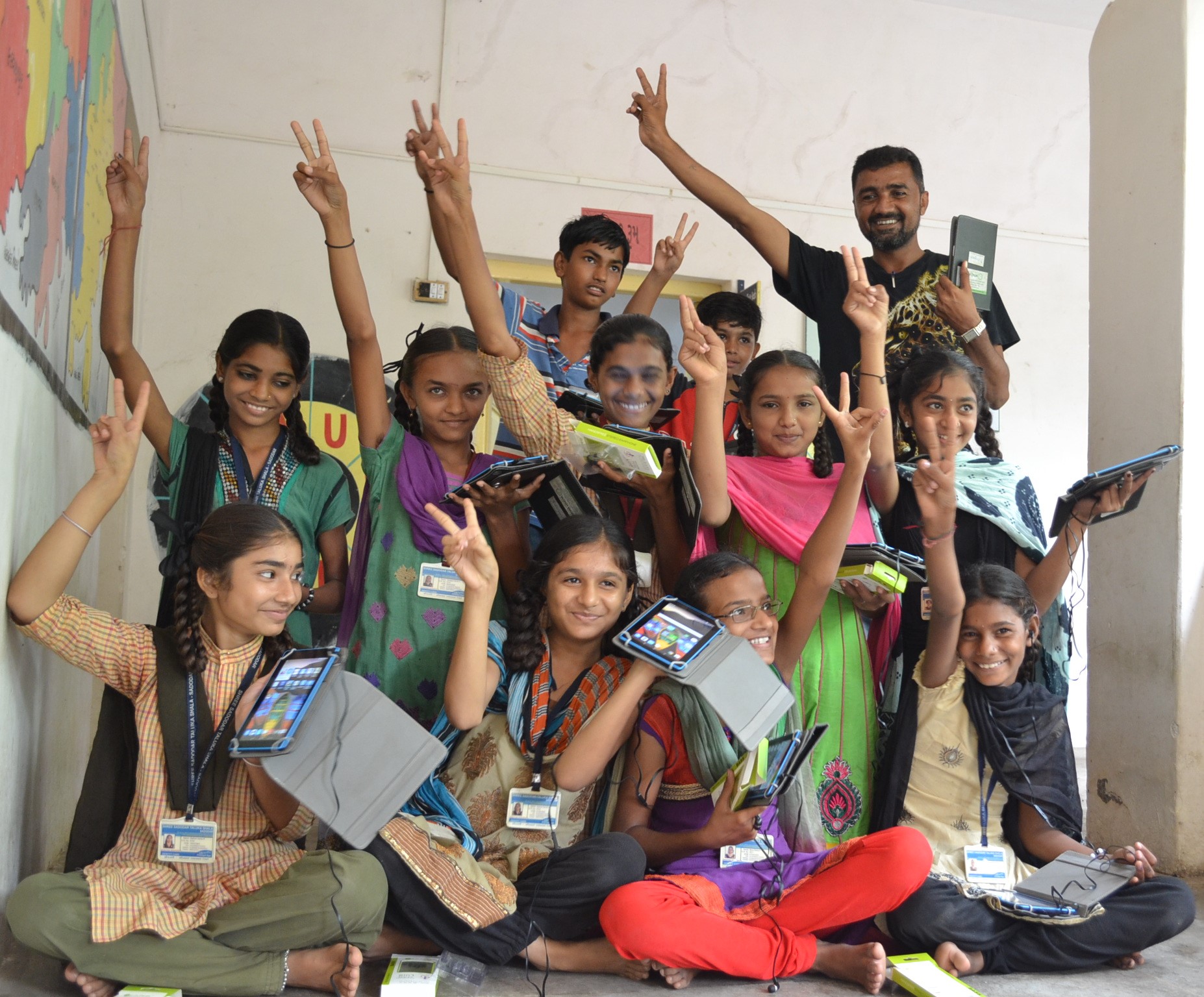
The image captures the scene after the training session was concluded
While we were traveling from one school to another, one interesting thing happened.
During a visit to one of the schools, I was surprised to find students already using tablets. At first, I was shocked and petrified. I feared the worst for the tablets. But 10 minutes into the classroom, I was relieved. But had an “Aha” moment as well. When I asked the teacher, why did you not wait for us to come, open the devices, and for the training to happen? The teacher very casually said, “Isme kya hai, ye to bahut easy hai“, which in English translates to “There is nothing complicated here, it is easy to operate the tablets“.
He further added,
I use an Android smartphone, most of these kids use one at home, so we are quite familiar with it. The charging rack was so easy to set up that we had to just open the carton and place the tablets inside. Once the devices were charged, we started using them. Yes, for the first 5-10 minutes, we had to navigate around and see what was there, but once we got the hang of it, I started conducting my classes.
Now, this was an AHA! moment.
What we were able to achieve was natural adoption. And that’s the best case.
You see, natural adoption happens when something is very easy to use. And when there is a natural adoption, there is regularity in usage without too much follow-up. Which is one problem we wanted to solve. Non-usage of digital infrastructure in government schools.
You must be wondering. How did my opinion about government work change?
In November of 2017, the then Ministry of Human Resources and Development set up a Think Tank for deliberations on the ICT Policy. We applied and were asked to be a part of it. 2 days of deliberations happened and on the last day we presented our findings to the Honourable Education Minister, Shri Prakash Javadekar ji. Listen to this very brief video where my co-founder Puneet is giving the presentation on the stage.
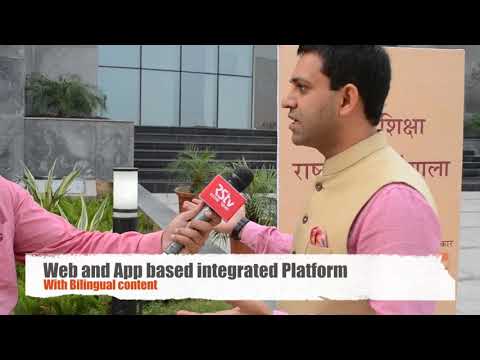
Puneet presents a compelling and well-reasoned argument for three things: incorporating student-centric devices like tablets and Chromebooks with charging racks, ensuring the availability of local language content, and implementing personalized adaptive learning for students.
In March 2018, the new ICT policy was released and I am happy to share that it makes a provision for government schools to consider buying tablets, notebooks, and laptops along with the purpose of setting up ICT Labs rather than just the desktops.
We tried, we persevered and a change happened. Here’s a snapshot from the ICT policy which mentions the changes I have mentioned.
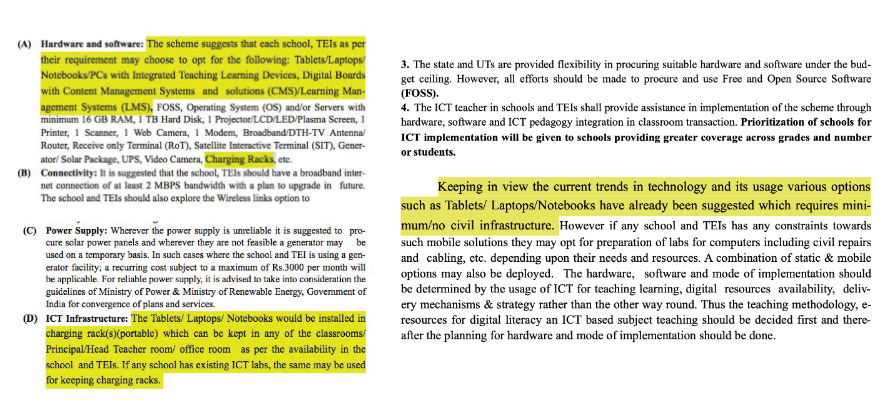
It hasn’t been easy, but since then we have set up tablet-based ICT labs in various states like Karnataka, J&K, UP, and Maharashtra to name a few. Not only this, but we had recently installed our digital library at an experience center located within the National Council of Educational Research and Training (NCERT) headquarters in Delhi.
But do these tablets really improve engagement and learning outcomes? Will share in the next one.
Bye and enjoy the rain!