

Hi,
Over the last few years, many of us in the education ecosystem have celebrated large-scale ICT and Smart Classroom deployments across government schools. Hardware has reached classrooms at an unprecedented pace. Many congratulations to you for being a part of this amazing movement.
And yet, a hard question continues to stare us in the face:
Is this hardware actually being used consistently, meaningfully, and at scale?
Because if it isn’t, then no matter how impressive the procurement looks on paper, we are not creating long-term value for students, teachers, governments, or for yourself as a solution provider.
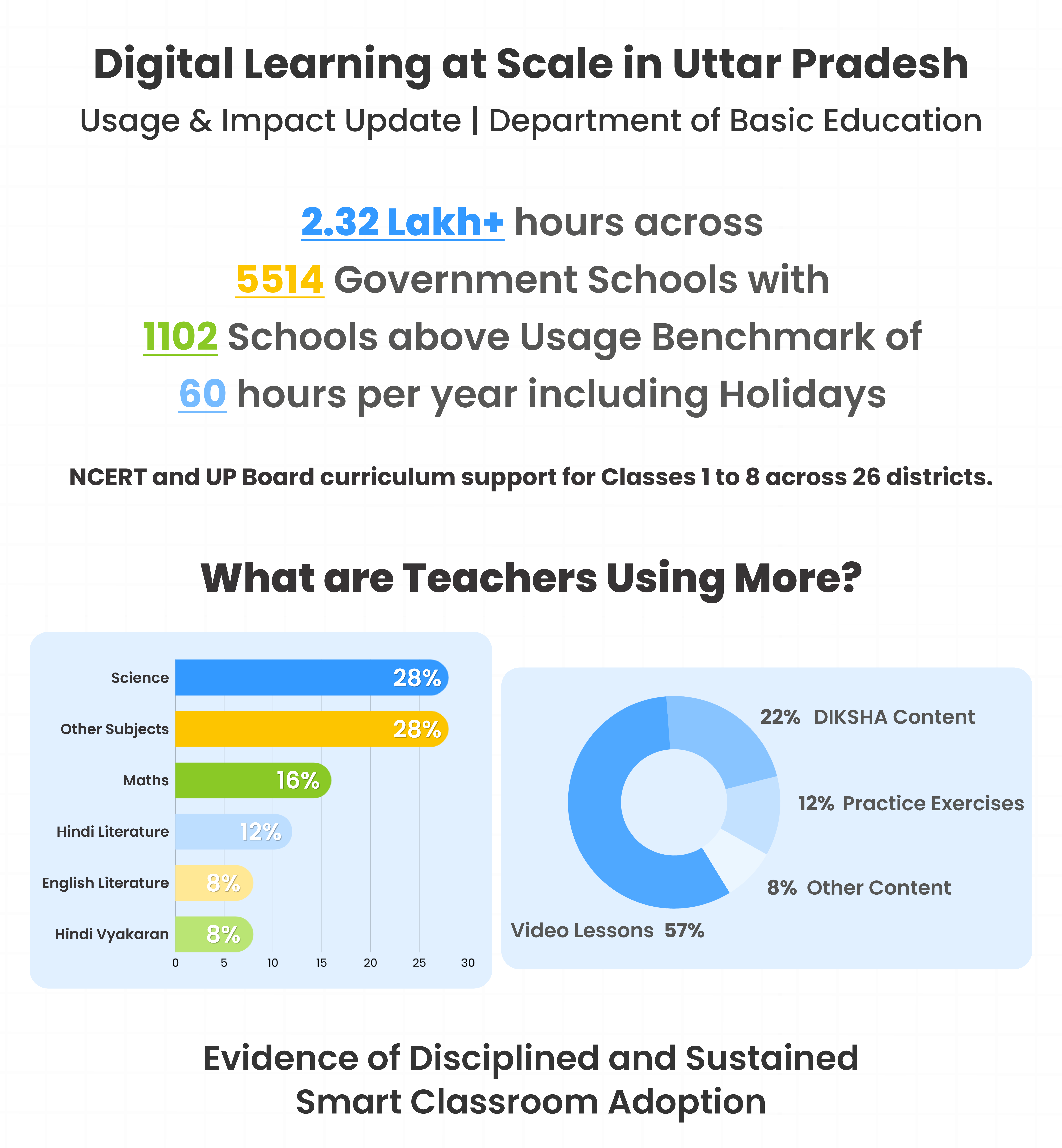
Recently, while reviewing usage data from our implementation with the Basic Education Department, Government of Uttar Pradesh, we were reminded of an important truth.
Over a 1.5-year period, teachers across government schools used Smart Classrooms powered by iPrep for 2.32+ lakh hours. In practical terms, this translated to:
- 35%+ schools crossed benchmark “ideal usage” levels
- 57% of classroom time was spent on animated, curriculum-aligned video lessons
- 22% of the time was spent watching DIKSHA videos
Why does this matter?
Because this might be one of the few large-scale examples where DIKSHA content is actually being used inside classrooms not because DIKSHA changed, but because it was made fully offline and seamlessly usable for teachers.
This is the difference between installing hardware and enabling learning.
When classrooms are equipped only with screens and devices, usage often drops after the initial excitement. Teachers struggle with connectivity, content discovery, and classroom relevance. Over time, devices gather dust and so does the perceived value of the hardware itself.
But when hardware is bundled with:
- Curriculum-aligned content
- Offline-first access
- Teacher-friendly workflows
- Clear usage benchmarks and analytics
something powerful happens.
- Teachers use it
- Students engage with it
- Governments see outcomes through it
And hardware starts generating repeat value, leading to more business.
This is a moment to pause and reflect for you.
Yes, selling hardware today may be easier.
But unused hardware does not lead to renewals, expansions, or long-term partnerships.
- Usage does.
- Impact does.
- Data-backed outcomes do.
|
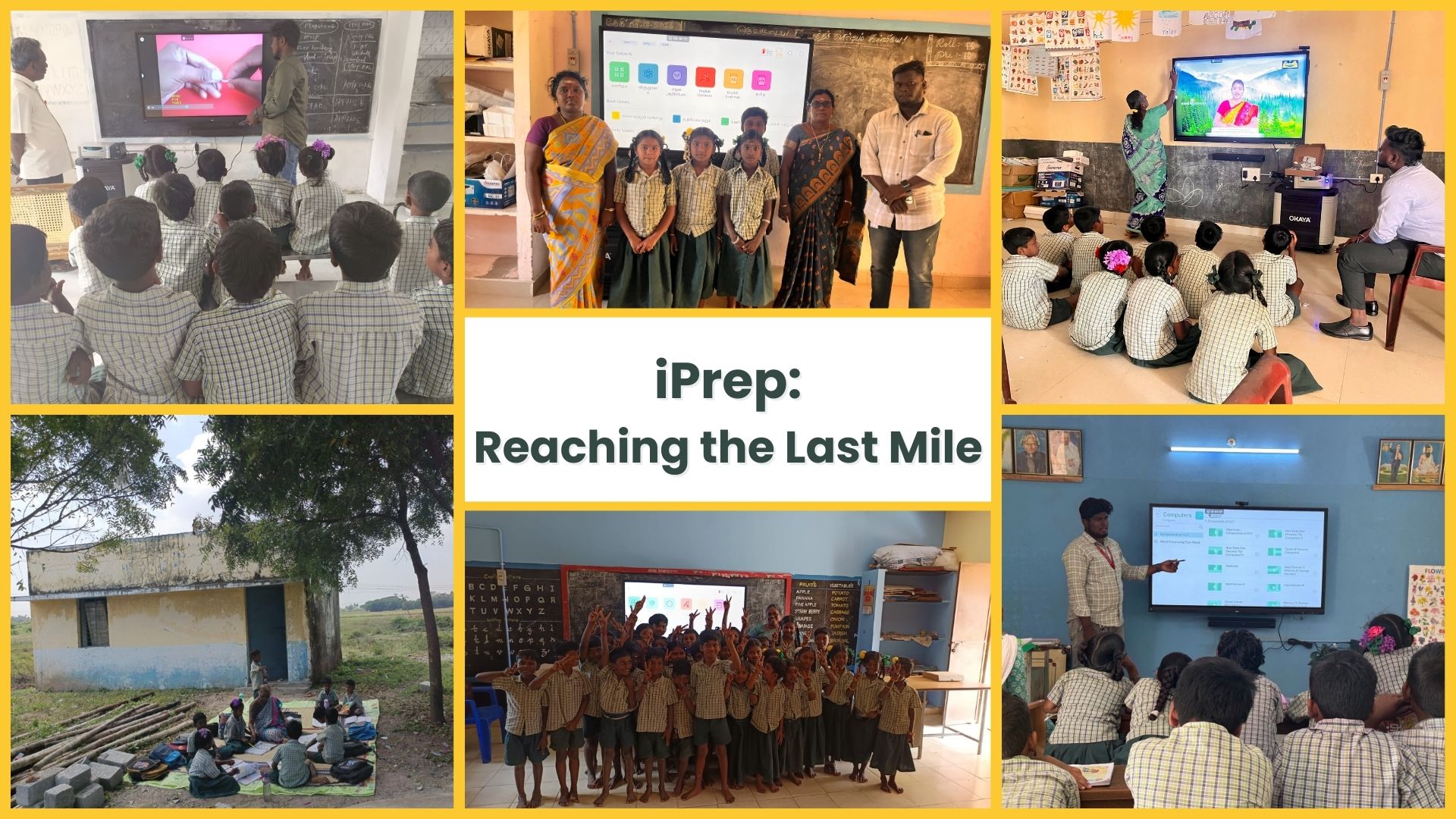
At iDream Education, our belief is simple: What gets procured is important but what gets used is everything. |
If we, as an ecosystem, want to build sustainable businesses and meaningful impact in education, the future lies in integrated learning solutions – not hardware in isolation.
Let’s build classrooms that don’t just switch on but move learning forward.