

Hi,
Let me begin by asking you a question:
Have you ever tried looking up something online in your local language: Tamil, Kannada, Marathi?
You type it in, hoping for quick help… only to be flooded with results in English or Hindi.
You tweak your words, add language filters, open five tabs, and still maybe find one thing that helps.
Now, imagine being a teacher or student in a government school facing this struggle every single day juggling limited time, patchy internet, and the constant pressure to complete the syllabus.
It’s not just challenging—it’s unrealistic.
Over time, it leads to a cycle where things are left unfinished, students fall behind, and learning gaps widen. Many simply lose interest, disengage, and in some cases, drop out altogether. This is not just a digital access problem—it’s a ground level language access problem.
Watch to hear a story from my recent visit to Bangalore, where I met a project partner who shared how bilingual feature and digital content on LMS helped the school break through this exact barrier
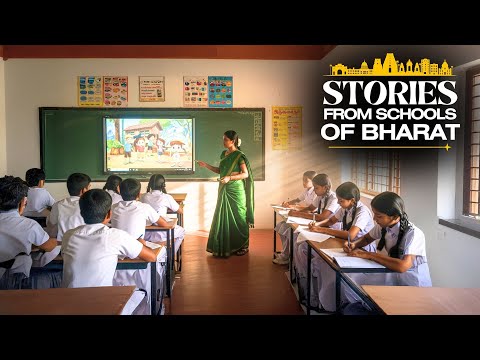
And that’s the whole point. When content is contextual, bilingual, and syllabus-aligned like in schools of Tamil Nadu—it doesn’t just deliver information. It enables inclusion. It supports the teachers to switch languages seamlessly when teaching instead of adding to their load. Further, it also empowers students to learn comfortably in the language they are familiar with.
Do check out more stories from #schoolsofbharat here.
I’d love to hear your thoughts! How else can we make digital learning more inclusive and seamless for every classroom across India? Also, what’s your take on our bilingual or even multilingual feature on LMS platforms?
PS: You can check all the previous newsletters on this link.