

Hi,
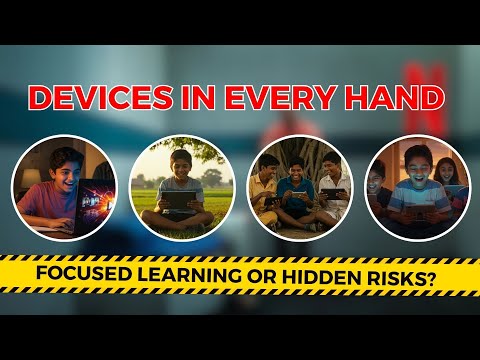
With summer vacation approaching, students will be spending more time on their devices than usual. While you may hope to reduce the screen time, it would be impossible to completely eliminate it. As parents and educators, we need to therefore be mindful of what kind of access we are giving to our kids on the hardware devices at home or in the school. You must have seen or heard about the latest Netflix show called Adolescence.
There is a scene in this series Adolescence that hits hard.
The father of a convicted child says, “Our son was in the house, in his room. How much safer could he be?” And yet, he wasn’t safe. The parents had no idea what their child was being exposed to while browsing random websites or scrolling through Instagram. This scene really highlights the importance of awareness in the digital age.
When my kids ask for screen time and I let them watch content on YouTube, I’m always mindful of two things.
- What are they watching?
- What’s going to be recommended next?
Even one careless click can take them to content that’s misleading or completely inappropriate. And we can’t always predict how they’ll interpret even the things that seem safe.
The truth is, the internet is everywhere now – even in remote villages. While many of us in cities have become more careful about our kids’ screen use, that’s not the case in Tier 3 towns and villages. Unrestricted and unmonitored access to the internet in such areas can have a significant impact on the emotional and mental well-being of children.
There’s an extreme perspective emerging these days that suggests we should simply avoid giving devices to our children. But I don’t think that’s the answer. Devices aren’t the problem—it’s how we use them that matters.
Let’s be honest – screens are now part of learning. Kids in Grade 3 or 4 are learning to code and submitting homework digitally. Governments are investing in providing smart class hardware, tablets, and desktops in government schools and for at-home learning as part of ICT Labs.
But here’s the problem:
- These devices are often distributed without a clear plan
- Teachers and students are left to figure things out on their own
- And the internet? It’s full of distractions—YouTube rabbit holes, social media, random apps
Instead of being learning tools, devices often turn into digital distractions.
So here’s what I believe we need: a mindset shift. We need to make devices safe and purpose-built for learning.
Everyone including state governments, private schools, NGOs are doing great work giving devices to students. But often, that support ends once the hardware is delivered. Teachers don’t always have the time (or the tools) to find the right content. And students? They’re just a tap away from a spiral of distraction. Here’s what I suggest to turn this around:
- Enable devices that come preloaded with high-quality educational content. No internet needed.
- Install Device Management Apps to restrict what can be downloaded or viewed. You can block browsers or only allow safe, educational websites.
- Choose offline apps that work completely without the internet and have zero ads.
If you’re with me on this and want to see a learning platform that works completely offline, I’d love to show you what we’re building. Our platform, iPrep, works completely offline and runs on all kinds of hardware. It’s built for schools and safe for students to use at home. If you would like to talk about this more, just reply to this mail, and we can set up a time to speak.
Read More: Discover why delivering offline content is crucial in our detailed blog inspired by a trending Netflix show – Adolescence. Read the full story here.
Top LinkedIn Post of the Week: We assume kids are safe at home with devices in hand—but digital exposure is a double-edged sword. Know why mindful digital access matters more than ever. Click Here
Watch how Netflix’s Adolescence highlights the urgent need for offline learning—see the full video
PS: You can check all the previous newsletters on this link.