

Hi Ayushi,
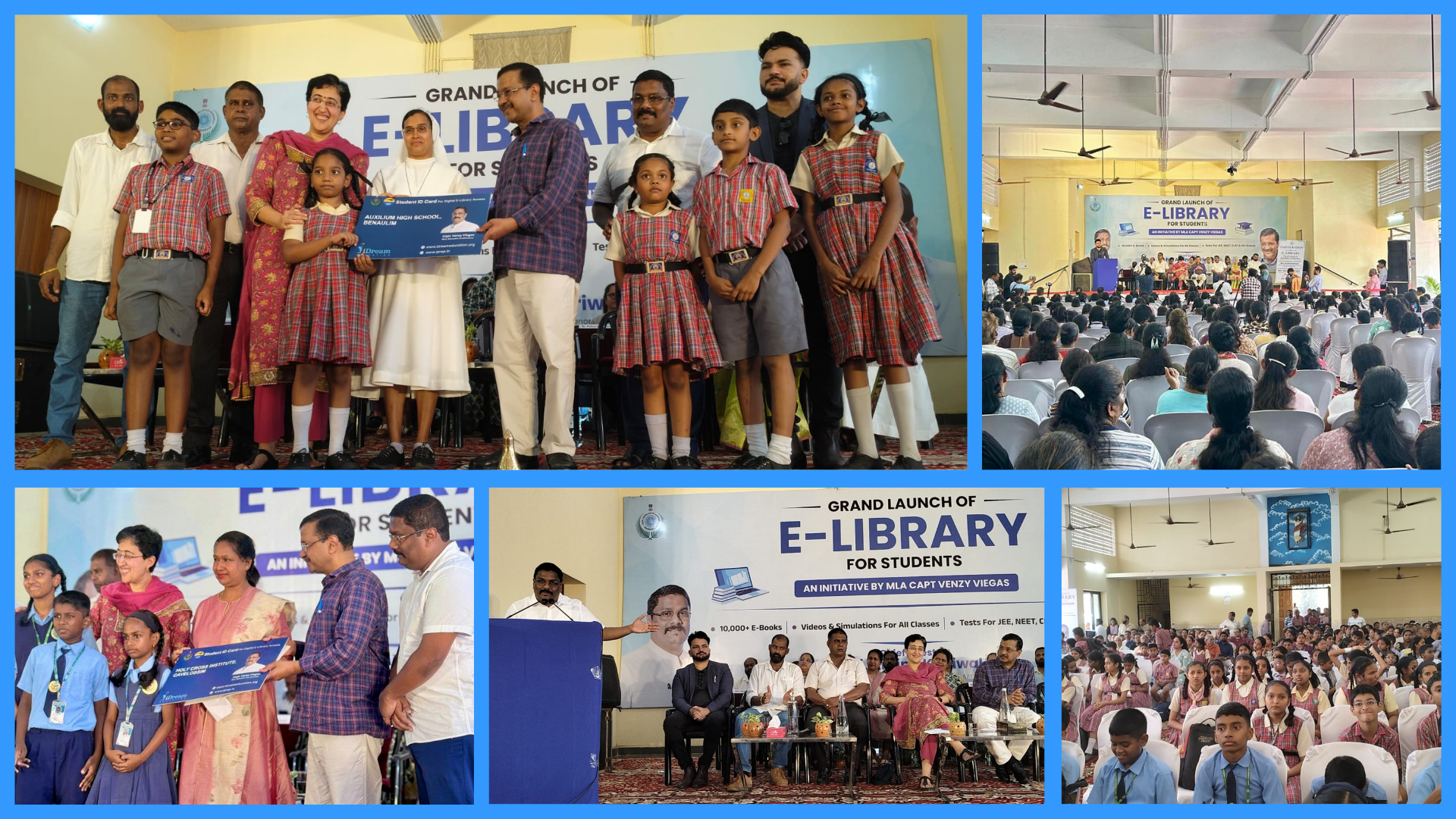
Over the past few weeks, something beautiful unfolded in Goa – a place known for its beaches, mountains, most importantly clean air and now, for a growing culture of digital learning.
Under the MP/MLA Local Area Development Fund, Captain Venzy Viegas launched a state-of-the-art e-Library to strengthen digital learning access for school students in collaboration with iDream Education.
I am very happy to share that our iPrep Digital Library Platform has been enabled in this e-Library initiative across five schools for 1904 students in the Benaulim constituency, providing structured access to a rich repository of 10,000+ books across 25+ genres of all age groups. But this is not just a reading app. Students will also gain access to curriculum-aligned animated videos, practice questions, activities, and simulations, transforming a simple digital library into a joyful academic learning ecosystem.
What stood out to me was the simplicity of this intervention.
No heavy infrastructure.
No operational complexity.
Just a thoughtful design and focused execution leading to real and direct access for children.
In a recent article written by Gouri Gupta ji from CSF and Shri Amitabh Kant, they highlighted an interesting statistic from the Bharat Survey for EdTech (BaSE). It said that 90% of households now own one Smartphone and about 57% of those have two. And 72% of these children have access to this smartphone on which they are spending 1.3 hours per day. This presents an amazing opportunity for EdTech to create meaningful impact.
Our initiative in Goa aligns well with this trend. However, while the initiative has enabled reach, just like the article by Gouri ji and Shri Amitabh says that EdTech needs to move beyond access and focus on outcomes, we need to understand what will drive meaningful outcomes. What kind of programmatic intervention should be designed around this which is low cost and yet effective.
Do I have all the answers today? No. But we are committed to researching, experimenting on the ground and building a model which is scalable, low cost and builds a responsible habit of digital content usage at home. With the advent of AI, it is our responsibility to also ensure the safety of our children.
An Invitation
If your organisation works with children who:
- Have access to a mobile device at home for some time during the day
- Have intermittent or regular internet connectivity
… a similar intervention can be designed at very low cost, giving students access to:
- Thousands of books in local languages
- Curriculum-aligned academic content
- Structured learning pathways
- Data-backed reporting on engagement and progres
But most importantly, I would like to collaborate with like minded partners with whom we can also take such an implementation to the next stage and build a layer of a structured programmatic intervention around this.