How Smart Classes in Arani, Tiruvannamalai District Changed the Way Teachers Teach?
Arani, a major commercial town in the Tiruvannamalai district of Tamil Nadu, didn’t follow that pattern.
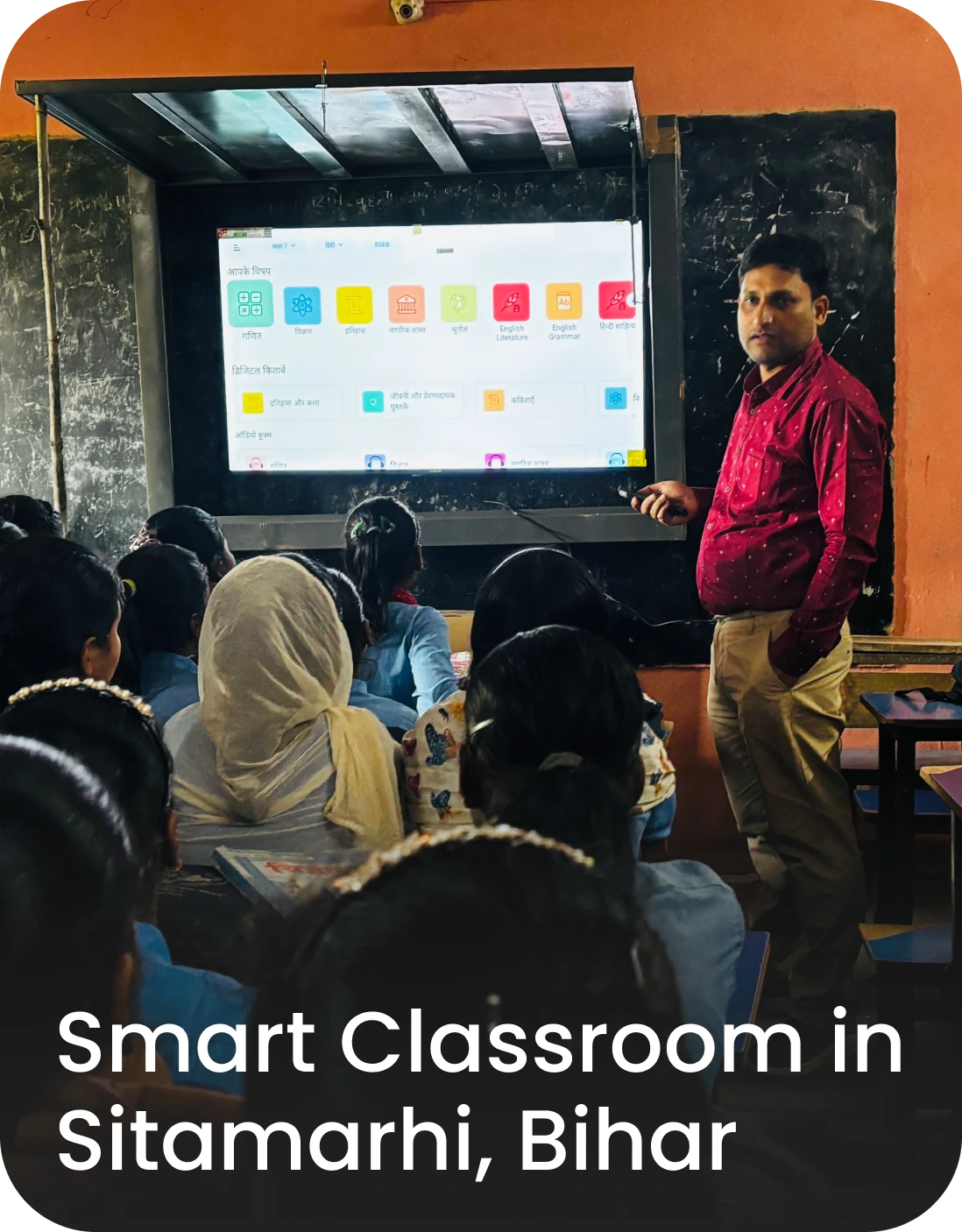
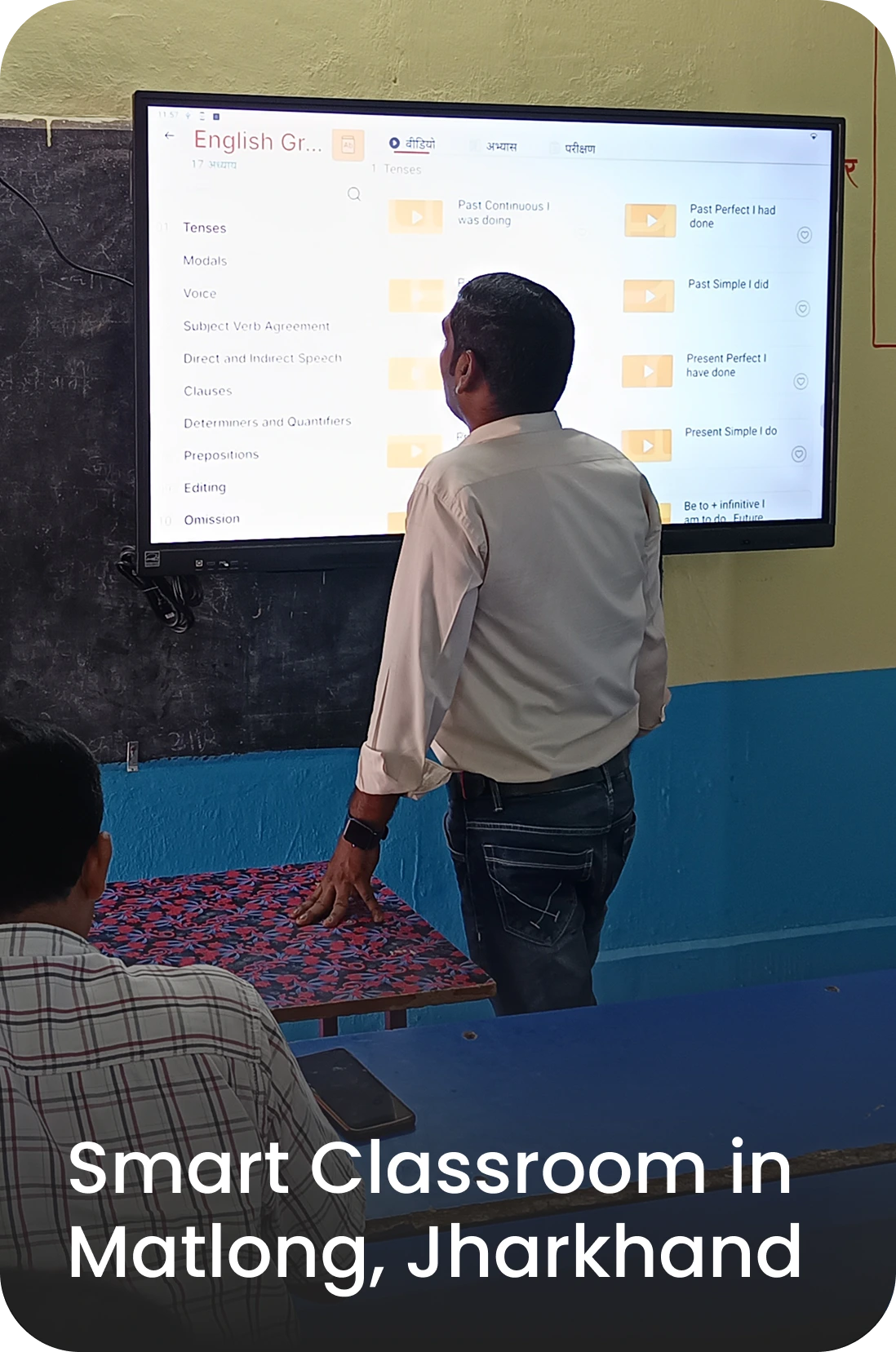
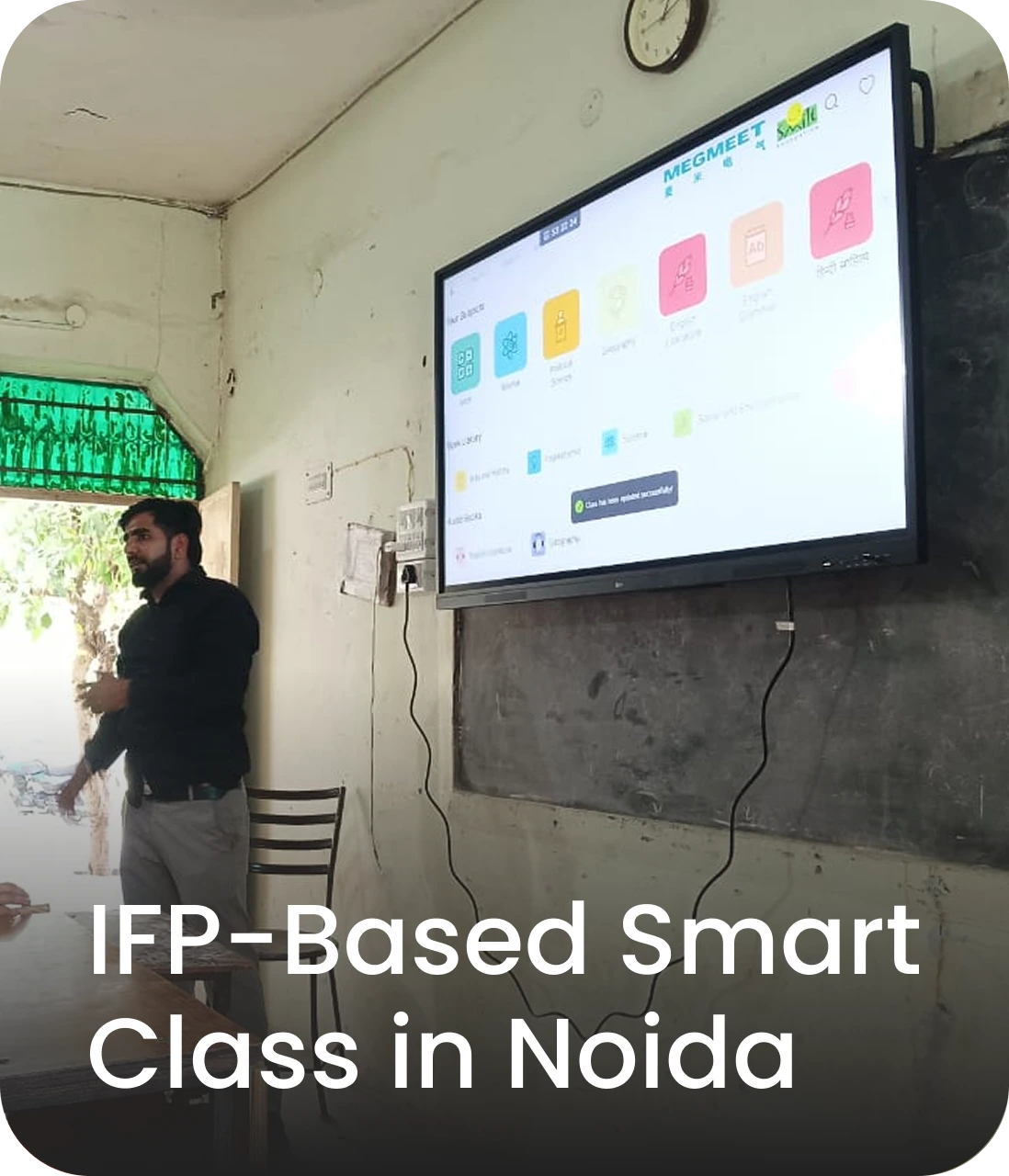
When smart classes were introduced and implemented in the school, teachers didn’t wait for confidence to arrive on its own. Within weeks of installation, setup, and just one training session, the smart class LMS and digital content had already found their way into daily teaching. Lessons were being planned around it. Students were engaging with it. What typically takes months has compressed into a matter of weeks – not because the challenge of adoption had disappeared. But because something about how this implementation was approached made the transition feel less like a leap and more like a natural next step.
That speed from installation to real, everyday classroom use is what made this implementation stand apart. And understanding what drove it is what this piece is about.
Let’s Begin With the School
Before looking at what the smart classroom brought in, it helps to understand where it was introduced and who it was introduced for.
In Arani, there is a government boys’ school that serves approximately 717 students – most of them coming from nearby villages where families depend on agriculture as their primary livelihood.
For these students, school means something beyond routine. It is where ideas that don’t exist in their immediate surroundings become accessible. Where a student from a farming family begins to see what else might be within reach. The school, in that sense, carries a weight that goes beyond academics and the teachers here understand that. They work consistently to keep lessons engaging and meaningful across grades. Bringing both commitment and care to classrooms that serve students with real aspirations and limited access to learning resources outside of school.
What was needed was a way to support that effort more structurally. Teachers needed reliable digital tools that could strengthen how they teach, without asking them to reinvent their existing approach.
That’s what led them to connect with an education-focused NGO, which then partnered with iDream Education to implement smart classes in this Arani school.
The Smart Class Setup: Three Classrooms, One Clear Purpose
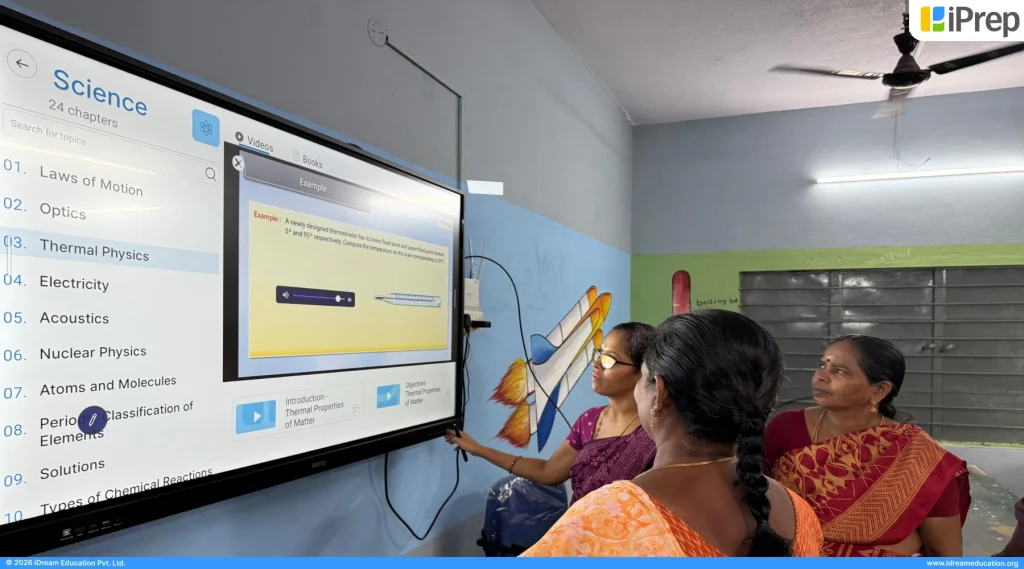
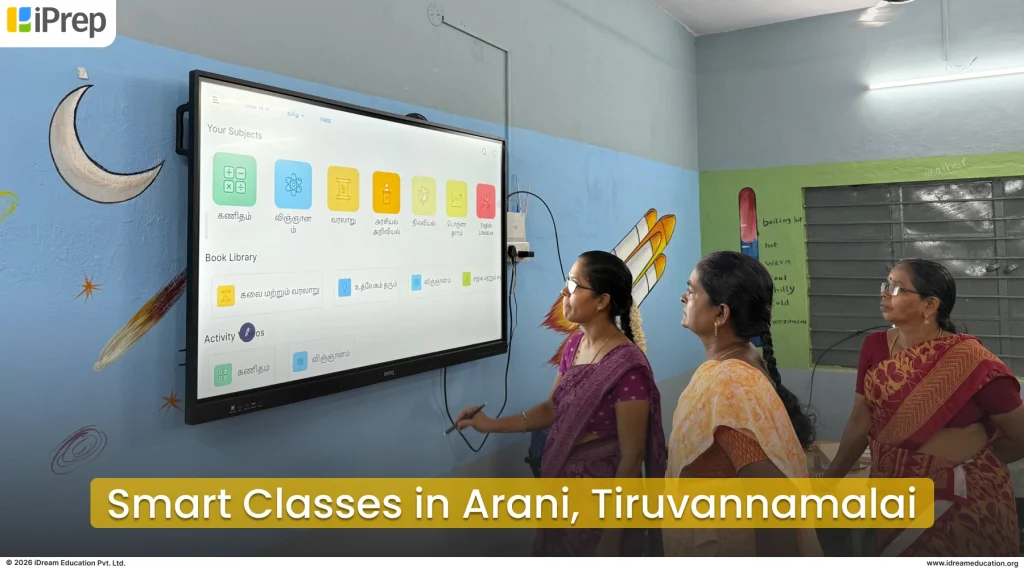
Three smart classrooms were installed in the school, each equipped with a BenQ Interactive Flat Panel and access to the iPrep smart class LMS. The platform provides smart class content aligned with Tamil Nadu Board, covering Classes 1 to 12 in both Tamil and English medium. Teachers received access to multi-media content, including video lessons, syllabus books, practice questions, notes, simulations, digital book library and much more. All the digital content is structured to complement textbook teaching rather than replace it.
What made the setup particularly usable was how directly the digital content connected to what teachers were already teaching. A chapter in the textbook had a corresponding resource on the platform. A concept that needed visual explanation had a video or simulation ready to use. Smart classes in schools narrowed the gap between what teachers taught and what was available digitally.
This is what made all the difference in how quickly teachers began using it.
With such acceptance, our hands-on training session became a teaching conversation
Of the 28 teachers in the school, 15 attended the training session – a perfectly normal turnout given the demands of an active academic schedule. What was not normal was what happened during the training.
Teachers didn’t simply watch the demonstration unfold. They leaned in. They opened subject chapters on the iPrep. The first thing they explored was video lessons across topics of their individual subjects, and they began discussing. In the mid-session, the discussion goes to how video explanations would help them make comprehension better of complex concepts. The conversation in the room shifted almost without anyone noticing. What had begun as an orientation to a new platform became, quite naturally, a planning conversation about delivering tomorrow’s lessons using iPrep.
By the end of the session, the question was no longer “how does this work?” It had become “this lesson might actually help me explain this topic tomorrow.”
That shift from curiosity about the tool to ownership of it happened within a single training session. And it carried straight into the classroom.
Within the first month, teachers had already begun using the smart class content during their regular teaching schedule. Where most implementations work toward over several months had already started taking shape in this Arani school.
As this began to reflect in classroom practice, teachers did not limit it to demonstration or occasional use. Students were spending meaningful time engaging with concepts through exploration during regular lessons. This early classroom integration is what made smart class adoption in Arani faster, as teachers were able to see its use clearly from the very first interaction.