

What if a teacher in a remote government school could instantly access personalized teaching support, adaptive learning tools, and insights about every student’s progress? And what if millions of last-mile learners could experience the same quality of learning support as students in the most advanced classrooms?
That is exactly the vision behind AI-powered learning for every learner in India, now taking shape through Bharat Bodhan AI.
To accelerate this vision, the Ministry of Education today convened the Bharat Bodhan AI Conclave 2026 at Bharat Mandapam, New Delhi, bringing together stakeholders from across the education and technology ecosystem including government officials, state education departments, NCERT, research institutions, startups, solution providers, NGOs, and implementation partners. The conclave marked a historic milestone as the first national convening of India’s AI-in-Education ecosystem and formally announced the Centre of Excellence for Artificial Intelligence in Education, to be led by IIT Madras through the Bodhan AI Foundation.
As India’s education system expands across classrooms, universities, and digital learning environments, the need for intelligent systems that can connect learning platforms, empower educators, and expand access to quality education has become increasingly critical. Bodhan AI represents this vision. It is an education-focused intelligence framework designed to support teachers, empower students, and strengthen the human relationships at the heart of learning. Built as an open and interoperable ecosystem, Bodhan AI aims to integrate with existing education systems while promoting inclusion through language and accessibility, allowing AI-powered learning solutions to scale across India’s diverse education landscape.
Key Focus Areas Shaping the Future of AI in India’s Education
The Bharat Bodhan AI Conclave 2026 moved beyond conversations around the potential of AI and focused on four priority areas that will shape how Artificial Intelligence supports learning across India’s education ecosystem. These areas reflect the need to build AI capabilities not only within classrooms, but across the entire learning-to-work continuum.
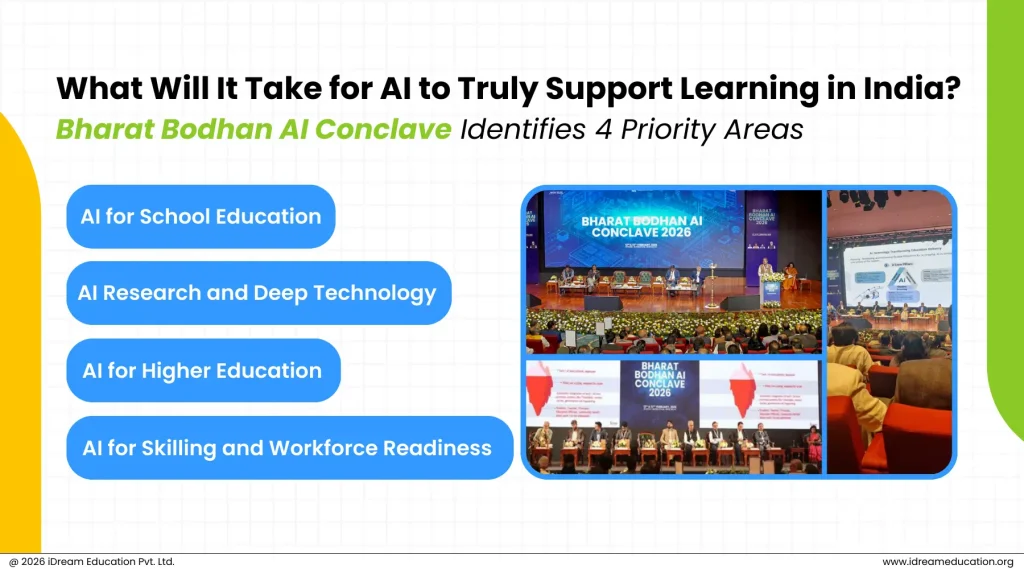
AI for School Education
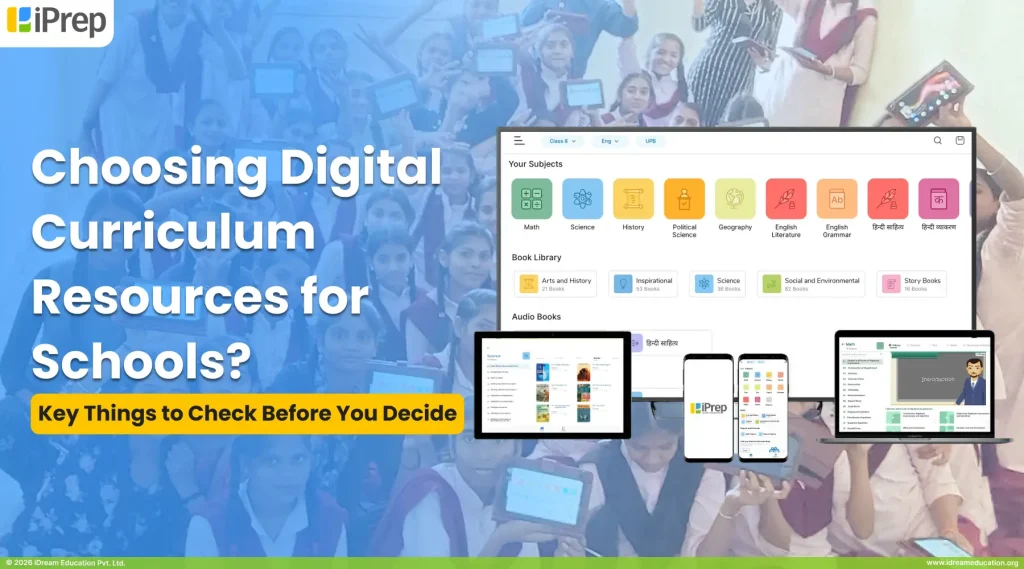
At the school level, discussions centered on how AI can support teachers, enable personalized learning pathways, and help students strengthen foundational and conceptual understanding. From intelligent content recommendations to adaptive assessments and multilingual learning support, AI has the potential to assist teachers in addressing diverse classroom needs..
AI for Higher Education
In universities and colleges, AI can help transform learning through intelligent tutoring systems, research assistance tools, and advanced data-driven insights that support both educators and learners. The focus was on enabling institutions to adopt AI responsibly while enhancing academic research, curriculum design, and student engagement.
AI for Skilling and Workforce Readiness
As India’s workforce evolves, AI can play a key role in connecting education with industry needs. Discussions explored how AI-powered platforms can help learners build relevant skills, receive personalized learning pathways, and access career-aligned training opportunities that prepare them for the future of work.
AI Research and Deep Technology
A strong research ecosystem is essential to drive innovation in AI for education. The conclave emphasized strengthening collaboration between research institutions, universities, and technology innovators to build India-led AI models, datasets, and deep technology capabilities that can power the next generation of learning solutions.
Alongside these priority areas, the conclave also advanced discussions around the Bharat EduAI Stack
An open digital architecture envisioned to build, integrate, and scale AI-powered learning solutions across India’s education ecosystem. Designed as an interoperable infrastructure, the EduAI Stack aims to enable developers, education providers, and institutions to create AI-driven applications that can seamlessly integrate with existing learning platforms and digital education initiatives across the country.
Bharat Bodhan AI Conclave 2026 Highlights a Strong Focus on School Education and Last-Mile Learning
While the Bharat Bodhan AI Conclave 2026 discussed AI across multiple education sectors, one of the most important conversations focused on how these innovations can translate into real impact in school classrooms especially in government schools serving last-mile learners. Edtech organizations and implementation partners presented their work and insights on how artificial intelligence can help strengthen teaching practices, expand access to digital content, and enable data-driven learning support for students.
We are happy to share that iDream Education was among the participants at the Bharat Bodhan AI Conclave 2026
We presented our work in enabling digital learning ecosystems in government schools. Speaking at the conclave, Puneet Goyal, Managing Director of iDream Education, highlighted how Artificial Intelligence can significantly accelerate progress in social edtech. He outlined key opportunities where AI can strengthen education systems including accelerating the creation of high-quality digital learning content in vernacular languages, enabling teachers to generate quizzes, assessments, examples, and simulations on demand, leveraging usage data and analytics to track learning progress, and strengthening personalized adaptive learning systems for students.
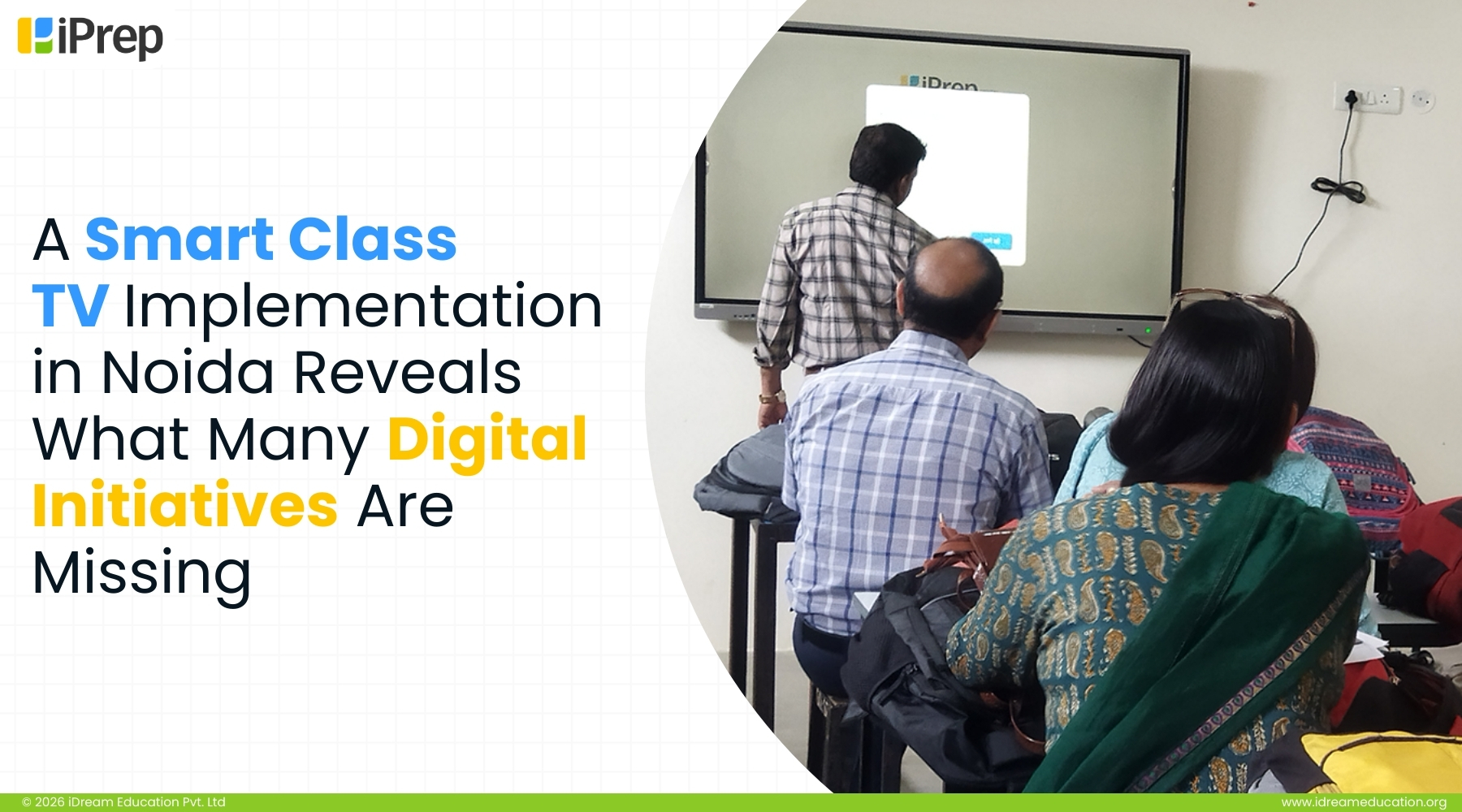
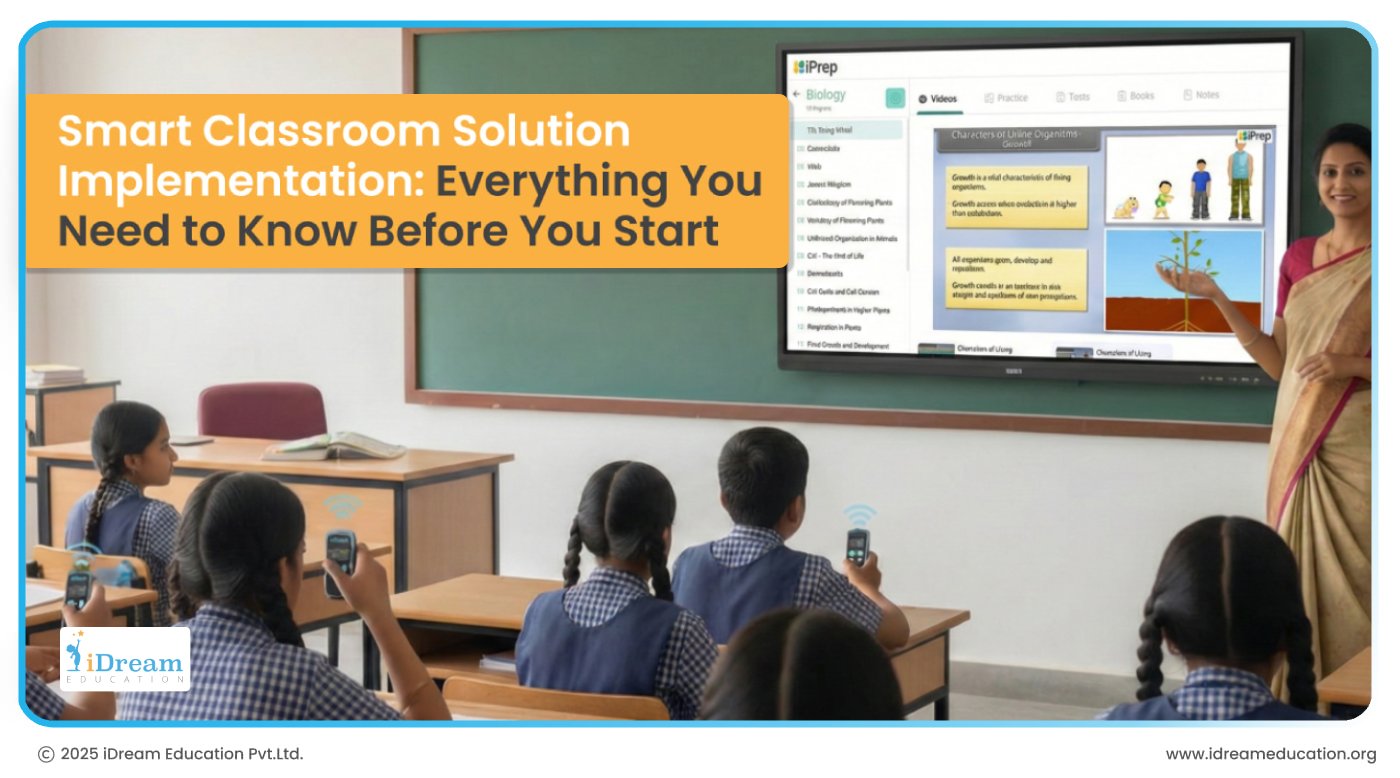
At the conclave, we also shared insights from its smart classroom implementations with digital content, LMS, and analytics in government schools in Uttar Pradesh, implemented in partnership with the Department of Basic Education. We share how the smart classroom usage data reflected a strong shift toward content-driven engagement and measurable classroom usage, with 2.32 lakh+ smart teaching hours recorded across 5,514 government schools, and 1,102 schools crossing the benchmark of 60+ usage hours annually. These insights highlight that when digital infrastructure is supported with relevant content, teacher enablement, and usage analytics, it can lead to meaningful classroom engagement and stronger learning outcomes.
Conclave Witnessed A Clear Message from National Leadership: AI Must Drive Meaningful Usage, Personalization and Learning Outcomes
Speaking at the conclave, Hon’ble Union Minister for Education, Dharmendra Pradhan Ji, emphasized that the expansion of digital infrastructure in schools must translate into meaningful learning outcomes. While smart classrooms, ICT labs, and digital libraries are being established across the country, he highlighted the need to ensure their regular usage, localized content in vernacular languages, and personalized learning experiences for government school students. Sharing classroom realities, he spoke about students who often hesitate to participate due to the fear of judgment and how thoughtfully designed technology and AI-powered systems can help create more inclusive, supportive, and confidence-building learning environments.
Sanjay Kumar, Secretary, Department of School Education and Literacy, also highlighted the Ministry’s ongoing collaboration with Indian Institute of Technology Madras and the broader ecosystem to explore how AI can expand Personalized Adaptive Learning (PAL) across government schools. A key theme emerging from the conclave was the growing recognition of PAL as a powerful approach to help students bridge learning gaps and progress at their own pace.
Across discussions, stakeholders emphasized a broader shift in the digital education narrative – from hardware installation to quality content and learning platforms, from infrastructure deployment to regular usage tracking, from access to technology to personalized learning journeys, and from delivery of tools to measurable learning outcomes.
For us the conversations at the Bharat Bodhan AI Conclave 2026 were both encouraging and inspiring.
A clear shift in the narrative is now visible, one that moves beyond the early stages of digital infrastructure toward meaningful usage and real learning impact. The focus of India’s digital education journey is evolving:
- From hardware → to quality digital content, LMS, and learning analytics
- From installation → to regular usage with continuous tracking
- From access → to personalized learning and student progress
- From delivery of tools → to data-driven learning outcomes
We congratulate the Ministry of Education and IIT Madras for creating a platform that brings together policymakers, educators, researchers, and solution providers with such clarity of purpose. Initiatives such as Bharat Bodhan AI signal an important step toward building an education ecosystem where Artificial Intelligence can help accelerate access to digital learning, increase meaningful usage, enable the creation of high-quality content in vernacular languages, strengthen analytics and personalization, and ultimately drive measurable learning outcomes.
As organizations working closely with government schools, we are encouraged to see this direction gaining national momentum. At iDream Education, we are happy to be contributing to this journey and working toward a future where every last-mile student, teacher, and government school in Bharat can experience meaningful and personalized learning through technology.
Watch Puneet Goyal present iDream Education’s work, current progress, and vision for AI in social edtech at the Bharat Bodhan AI Conclave 2026
The presentation highlights how digital learning ecosystems, local language, adaptive learning, and AI-powered tools can help accelerate meaningful learning outcomes for students in government schools and last-mile communities.
If you are working toward strengthening digital learning in schools, we would be happy to connect and explore how we can collaborate to enable impactful and scalable learning solutions. You may contact us at +91 7678265039 or write to us share@idreameducation.org
Categories You may Explore
Related Articles