

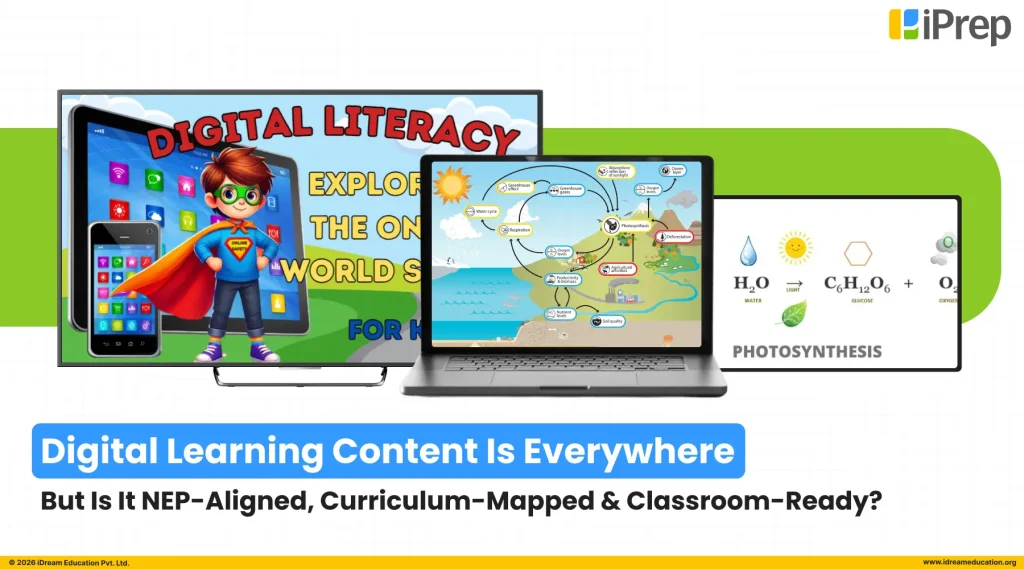
Today, digital learning content for school education is everywhere. Thousands of videos, animated lessons, practice questions, simulations, PDFs, and learning apps are available at the click of a button. Schools subscribe to platforms. Teachers receive digital resources. Students can access learning material anytime.
On the surface, it seems like one of education’s biggest challenges has already been solved.
But has it?
- If digital content is so widely available today, why do many classrooms still rely almost entirely on traditional teaching methods?
- Why do teachers often struggle to find the right digital resource at the right moment during a lesson?
- And why do many digital initiatives show limited classroom usage despite having vast content libraries?
Perhaps the real issue is not the availability of digital learning content.
Perhaps the real issue is how that content fits into the actual learning journey of students.
- Is it clearly aligned with the curriculum teachers are required to complete?
- Is it structured in a way that supports chapter-wise teaching?
- Can it be easily used during classroom instruction without disrupting the teaching flow?
- And most importantly, does it truly help students understand concepts better?
Because in education, digital learning content alone does not transform learning.
But, the content that is structured, curriculum aligned, and used inside classrooms is what truly makes the difference. Interestingly, this is exactly the direction envisioned in NEP 2020, which emphasizes the development and use of high-quality digital learning resources to improve access, equity, and learning outcomes across India’s education system.
Let us look at how NEP 2020 Clearly Recognizes the Power of Digital Learning Content
The importance of digital learning content is not just being discussed by schools, and edtech platforms. It is strongly emphasized in India’s National Education Policy (NEP) 2020, which envisions technology playing a major role in improving the quality, equity, and accessibility of education across the country.
- The policy highlights the need for high-quality, multilingual digital learning content that can support both teachers and students. It encourages the creation of interactive, learner-centric, and competency-based content that goes beyond rote learning and helps students build deeper understanding and skills.
- To support this vision, several national initiatives have already been launched. Platforms such as DIKSHA and SWAYAM serve as large repositories of digital educational resources, providing teachers and students access to e-books, videos, practice material, and courses in multiple Indian languages.
- NEP 2020 also encourages the use of emerging technologies such as Artificial Intelligence (AI), Augmented Reality (AR), Virtual Reality (VR), and virtual labs to make learning more immersive and experiential, especially in subjects that require visualization and practical understanding.
- At the same time, the policy emphasizes that digital learning content should support competency-based education, blended learning, and flipped classroom approaches. It also stresses the importance of inclusive access to ensure that students from diverse backgrounds, including those in remote or socio-economically disadvantaged communities can benefit from digital learning through multilingual content and even offline access where internet connectivity is limited.
- NEP 2020 highlights the need for digital resources and platforms that empower teachers with better tools, training, and insights into student learning progress.
In essence, the NEP 2020 envisions a robust, open, and interoperable digital ecosystem where high-quality digital learning content becomes an integral part of everyday teaching and learning.
But this brings us back to an important question. If such a strong vision for digital learning content exists at the policy level, why do many classrooms still struggle to effectively use digital content?
The Real Challenge: From Digital Learning Content Availability to Classroom Usability
The Teacher’s Reality: Finding the Right Content at the Right Moment
- Many digital repositories are built as large content libraries rather than structured classroom resources. Teachers may find hundreds of videos or activities on a subject, but finding the exact content aligned with the chapter they are teaching at that moment can be difficult. Searching through large repositories during a class period is rarely practical.
- In many cases, the content may be engaging but not fully aligned with the textbook sequence or curriculum structure that teachers are required to follow. As a result, digital resources sometimes remain supplementary rather than becoming an integrated part of classroom instruction.
For teachers, classroom time is structured and limited. Lessons must follow a defined syllabus, chapters need to be completed within academic timelines, and teaching must align closely with prescribed textbooks and assessments. In such an environment, digital content becomes valuable only when it can be quickly accessed, easily navigated, and directly mapped to the topic being taught.
Limited Visibility into Content usage
- Another challenge is the limited ability to track how digital learning content is actually being used within classrooms. While many platforms provide access to extensive libraries of resources, schools and administrators often lack clear visibility into which content is being accessed, how frequently it is used, and how it supports classroom teaching.
- Without meaningful usage insights, it becomes difficult to understand whether digital resources are truly becoming part of everyday learning or simply remaining available on the platform. Teachers and school leaders also miss the opportunity to identify which types of content are most effective, which subjects see higher engagement, and where additional support may be required.
For digital learning initiatives to create measurable impact with digital learning content, they also need content on a platform that provides clear reporting and analytics on content usage, enabling schools to monitor adoption, support teachers more effectively, and continuously improve the use of digital resources in classrooms.
Connecting Digital Content with Learning Outcomes
- Beyond access and usage, another important challenge is ensuring that digital learning content meaningfully supports student learning outcomes. While engaging videos, simulations, and activities can enhance classroom experiences, their impact is limited if they are not connected to practice opportunities, assessments, and concept reinforcement.
For digital learning content to truly drive meaningful learning outcomes, it must go beyond isolated videos or single-format resources. Effective digital learning ecosystems need to offer multiple categories of content such as animated video lessons, practice exercises, assessments, revision materials that work together to support the full learning journey of a student. Equally important is strict alignment with the curriculum. Teachers follow structured syllabi defined by NCERT or respective state boards, and digital content must map clearly to chapters, topics, and learning objectives within these frameworks. Without this alignment, even high-quality content can become difficult for teachers to integrate into classroom teaching. Plus, digital learning content should be available in the preferred language of learners, enabling students to engage with concepts more comfortably and confidently.
These challenges highlight an important reality in the evolution of digital learning. Expanding access to digital learning content is only the first step. The real impact emerges when digital resources are structured for classroom use, aligned with the curriculum teachers follow, visible in terms of how they are used, and designed to support measurable learning outcomes for students.
As schools increasingly adopt digital learning tools, the focus must therefore shift from simply providing content libraries to building thoughtfully designed digital learning ecosystems that support teachers, engage students, and align with the academic goals of the education system. This shift is essential if digital learning initiatives are to truly deliver the promise envisioned in NEP 2020 – enhancing quality, equity, and learning outcomes across classrooms.
What Effective Digital Learning Content Ecosystems Should Look Like
For digital learning initiatives to truly support classroom teaching and learning outcomes, the focus must move beyond simply providing large libraries of content. What schools and education systems increasingly need are well-designed digital learning content ecosystems where content, accessibility, curriculum alignment, and monitoring work together. Here’s what it should look like:
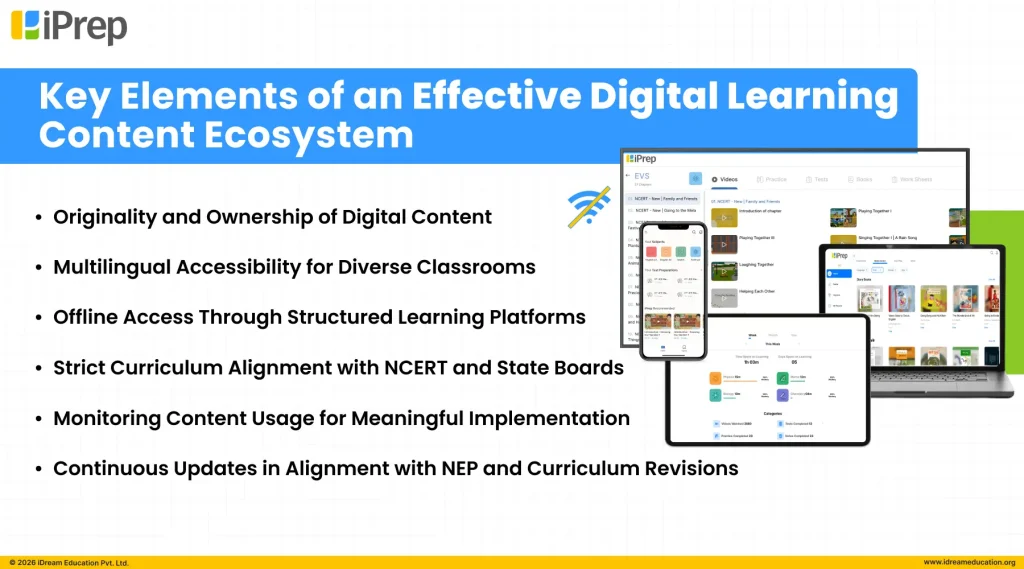
Originality and Ownership of Digital Content
One of the most important aspects of a strong digital learning content ecosystem is the originality of the content itself. Platforms that actively develop, create, and curate their own educational content are better positioned to ensure quality, consistency, and curriculum alignment. Original content creation also allows for continuous improvements based on classroom feedback, evolving curriculum requirements, and advances in digital pedagogy.
When digital content is primarily sourced through white-labelled resources or aggregated libraries, maintaining consistent pedagogy, curriculum mapping, and regular updates can become difficult. In contrast, platforms that build their own digital content ecosystems, design learning resources that are structured, interconnected, and tailored to the needs of teachers and students.
Continuous Updates in Alignment with NEP and Curriculum Revisions
India’s education ecosystem is evolving rapidly, particularly after the introduction of NEP 2020. The policy emphasizes competency-based learning and improved curriculum frameworks. Over the past two years, there have been significant revisions in NCERT and state textbooks from Classes 3 to 10. Further updates are continuing as the education system transitions toward NEP-aligned learning structures. In such a dynamic environment, digital learning content cannot remain static.
Effective digital learning ecosystems must therefore ensure regular updates to content, keeping it aligned with revised textbooks, curriculum changes, and evolving pedagogical approaches. This ensures that teachers can rely on digital resources that remain relevant and consistent with the materials students are studying.
Strict Curriculum Alignment with NCERT and State Boards
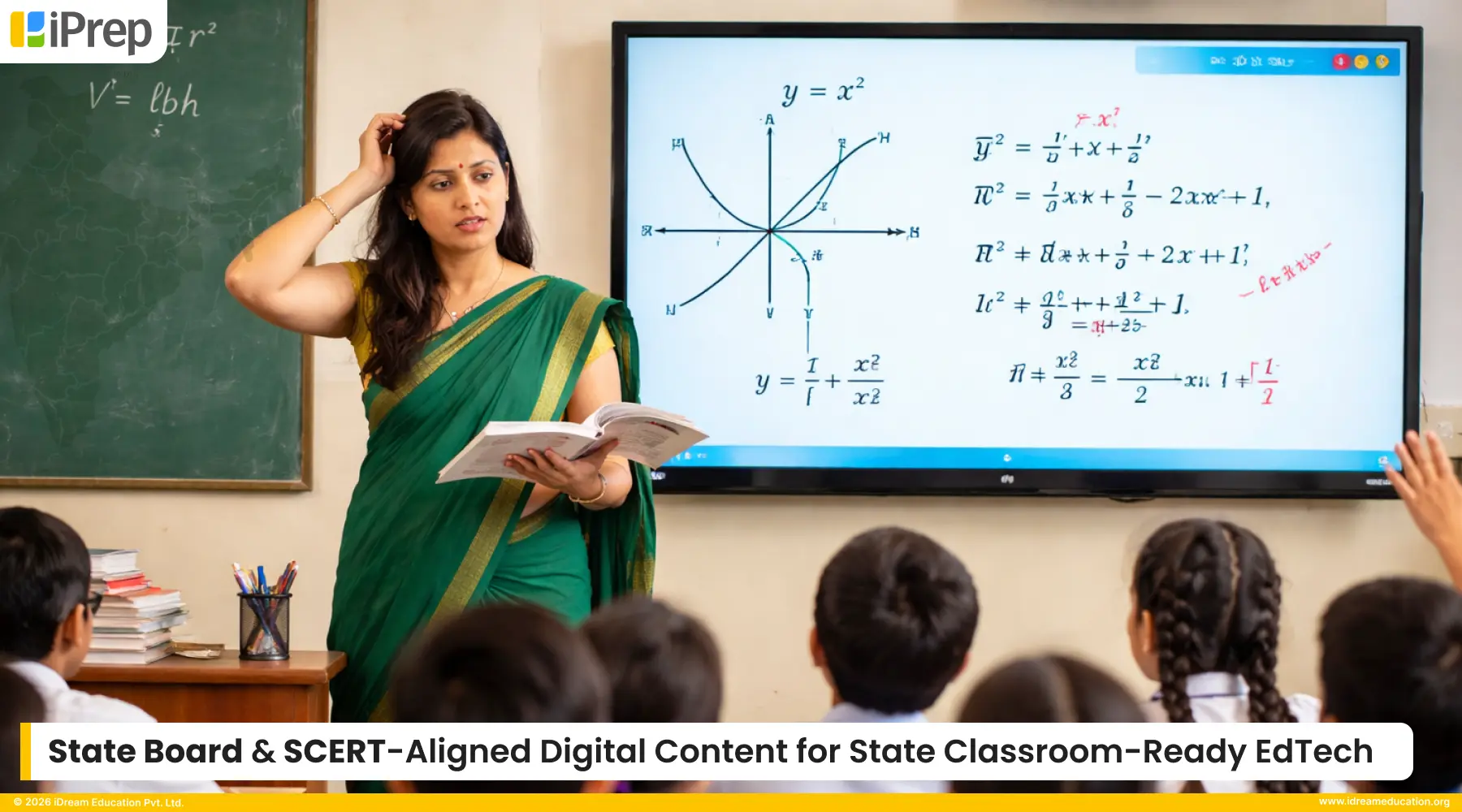
For digital learning content to be truly useful in classrooms, it must be strictly aligned with the curriculum frameworks followed by schools, whether NCERT or respective state boards. Content that is mapped chapter-wise and topic-wise allows teachers to quickly locate relevant resources during lessons. This alignment ensures that digital tools support the natural flow of classroom teaching rather than becoming separate supplementary materials.
When curriculum alignment is carefully structured, digital learning content can seamlessly support lesson explanations, practice exercises, and revision, strengthening the overall learning process.
Multilingual Accessibility for Diverse Classrooms
Language plays a crucial role in how students engage with learning materials. Digital learning content ecosystems must therefore support multiple Indian languages including Hindi and English. This enables students to learn concepts in the language most familiar to them.
Equally important is the ability to easily switch between languages, especially in classrooms where teachers may explain concepts in one language while students refer to textbooks in another. Therefore, providing multilingual content on LMS on which teachers/students can easily switch between languages, helps make digital learning more inclusive. This also ensures that technology supports students across diverse educational contexts.
Offline Access Through Structured Learning Platforms
While internet connectivity has improved across many regions, reliable access is still not guaranteed in all schools. For digital learning initiatives to reach every classroom, platforms must support offline access to digital learning content.
Through structured Learning Management Systems (LMS) that allow content to be preloaded on devices or local servers, teachers and students can access digital resources without depending on continuous internet connectivity. Offline accessibility to digital learning content ensures that digital learning remains consistent and usable even in low-connectivity or remote environments.
Monitoring Content Usage for Meaningful Implementation
Another critical element of effective digital learning content ecosystems is the ability to track how content is actually being used. This means usage data such as which content is accessed, how frequently it is used, and which subjects have higher engagement. The data provides valuable insights for schools and education programs. Even in offline environments, LMS should be able to record usage data and later sync when the device connects to the internet. This way digital learning content partner allows project administrators to monitor implementation at the school, district, or project level. Such usage insights help ensure that digital learning initiatives move beyond deployment and toward measurable classroom adoption and impact.
We at iDream Education are Building Digital Learning Content that is NEP-Aligned, Curriculum-Mapped, and Classroom-Usable
We have signed a Memorandum of Understanding (MoU) with the National Council of Educational Research and Training (NCERT) to collaboratively develop curriculum-aligned digital learning content and a Learning Management System (LMS) aligned with the vision of the National Education Policy (NEP) 2020. This collaboration reflects the growing recognition that digital learning solutions must go beyond content libraries and focus on structured, curriculum-aligned, and accessible learning ecosystems that can support both teachers and students across diverse educational contexts.
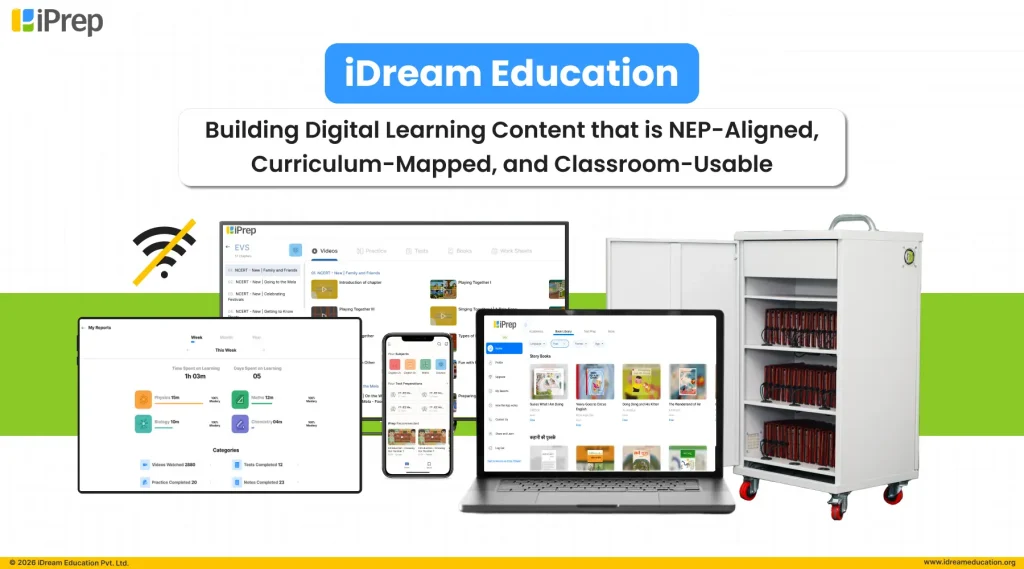
From our early days, we have chosen not to compromise on learning quality. Rather than competing only on price, we focus on building a strong digital learning content ecosystem. This ecosystem is NEP-aligned, curriculum-mapped, and designed to meet diverse classroom teaching and learning needs. A key part of our approach has been designing offline-first solutions. These solutions work effectively in low-connectivity and last-mile contexts where reliable internet access may not always be available. To support effective implementation, iPrep, our LMS, also enables usage reporting and monitoring. This helps education programs understand how digital content is being used across schools.
At the same time, we ensure that our solutions remain affordable and scalable. This enables wider access to high-quality digital learning content across schools and education programs.
If you would like to explore a demo of our digital learning content and the Learning Management System (LMS) through which we enable our digital learning resources, you may get in touch with us at +91 7678265039. We would be happy to walk you through the digital learning content aligned with your preferred state board and language, so you can clearly understand how the content is built, structured, and delivered for classroom use. You can also write to us share@idreameducation.org or share your details here
Categories You may Explore
Related Articles