

For years now, the whole conversation about our children and technology has been stuck on one simple, fear-driven question: How much screen time is too much?
Most parents today hold a simple, often fearful perception: screens are the enemy. The go-to solution is usually a rigid timer, 30 minutes, an hour, a strict tally of weekly hours. This is almost always dedicated solely to entertainment such as YouTube, cartoons, or gaming.
But the hard truth is that this strict approach often backfires, creating a cycle of tension. The device becomes “forbidden fruit,” and within the limited time allowed, children rush to consume content as quickly as possible. Meanwhile, our homes turn into spaces marked by scarcity and, unfortunately, mistrust.
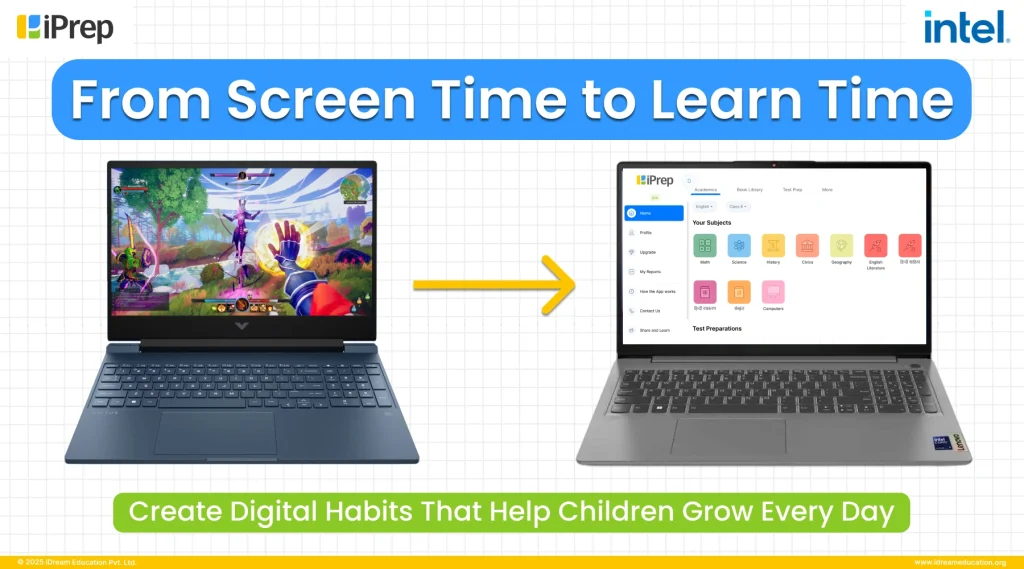
It’s time to ask a different question. Rather than obsessing over limiting screen time, we should focus on building Digital Learning Habits – practices grounded in responsibility, open dialogue, and, above all, trust. This shift is the key to turning the anxiety-filled notion of “Screen Time” into truly enriching “Learn Time.”
From Restriction to Autonomy: How Children Thrive When Trusted
As we move from worrying about limiting screen time to creating truly enriching Learn Time, modern child psychology gives us a clear insight: children, like all humans, need autonomy to thrive. According to the foundational Self-Determination Theory (SDT), which is one of the leading theories of human motivation, posits that for optimal well-being and growth in both children and adults, we need three psychological ‘nutrients’: autonomy, competence, and relatedness.
When we, as parents, try to enforce strict, arbitrary rules, our children often perceive it as controlling. Cyberpsychology study on Autonomy vs. Control suggests that when parental mediation relies purely on restriction, it is negatively linked to a child’s perception of autonomy-supportive parenting. This, understandably, leads to a host of problems:
- Lower Intrinsic Motivation: External control (like that insistent timer) quietly sabotages a child’s natural, internal desire to engage and learn.
- Concealment and Conflict: Especially with older children, restrictive rules don’t actually cut down on screen time. Instead, children develop a concealing nature and start hiding their activities from parents.
- A Vicious Circle: American Psychological Association (APA) studies indicate the relationship between screen time and emotional issues is often two-sided: spending too much time on screens can lead to emotional problems, but children who already have those problems frequently turn to screens as a coping mechanism.
The takeaway is simple: our role is not to be the Guard of the device, but the Guide of their digital journey. By fostering digital learning habits, we help children develop internal boundaries, responsibility, and a positive relationship with screens – turning “Screen Time” into meaningful Learn Time.
Building Digital Learning Habits at Home Through Dialogue
Open dialogue is the bridge that connects children to healthy digital habits. Digital Learning Habits do not emerge from restrictions – they grow through conversations that encourage reflection, responsibility, and ownership. When children feel heard, they become far more receptive to guidance and far more capable of regulating themselves.
Here’s how families can begin building these habits at home:
Start with Shared Understanding, Not Rules
Instead of announcing limits, sit with your child and ask:
- “What do you enjoy most on your device?”
- “What do you want to learn this week?”
This invites them into the process and signals that their voice matters.
Co-Create a Balanced Digital Plan
Together, design a simple routine that includes both enjoyment and learning:
- A window for curiosity-driven learning
- A time for entertainment
- A break for offline play
Because the child helped create it, they feel committed to following it.
Make Learning Visible and Celebrated
Ask open-ended questions such as:
- “What new thing did you discover today?”
- “Show me something interesting you learned.”
This subtle shift – celebrating what they learn rather than policing how long they watch slowly builds intrinsic motivation.
What Digital Learning Habits Looks Like in Practice
If time-based restriction encourages passive viewing, then Digital Learning Habits (DLH) encourage purposeful, meaningful engagement. The goal is not merely to reduce screen time but to reshape what happens during that time. Here’s how DLH come alive in everyday routines:
From Passive Consumption to Active Creation
When your child picks up a device, gently reframe the starting point. Instead of asking, “What cartoon will you watch?” try: “What will you create or learn today?” This single shift activates the child’s sense of competence and turns screen use into an intentional activity rather than a default pastime.
Safety as a Transparent Guardrail
Parental controls and safety tools should not feel like hidden surveillance. Present them openly as protective guardrails that help children explore confidently and safely. When children understand the “why,” transparency builds trust and trust strengthens autonomy.
Incentivizing Responsibility, Not Compliance
Once a foundation of dialogue and trust is in place, recreational screen time, whether 30 minutes of OTT, cartoons, or gaming, can become a reward for demonstrating digital responsibility, not just rule-following. The true incentive isn’t the entertainment itself; it’s the validation that they are managing their learning and digital choices with maturity.
The School’s Essential Role: Embedding Digital Learning Habits
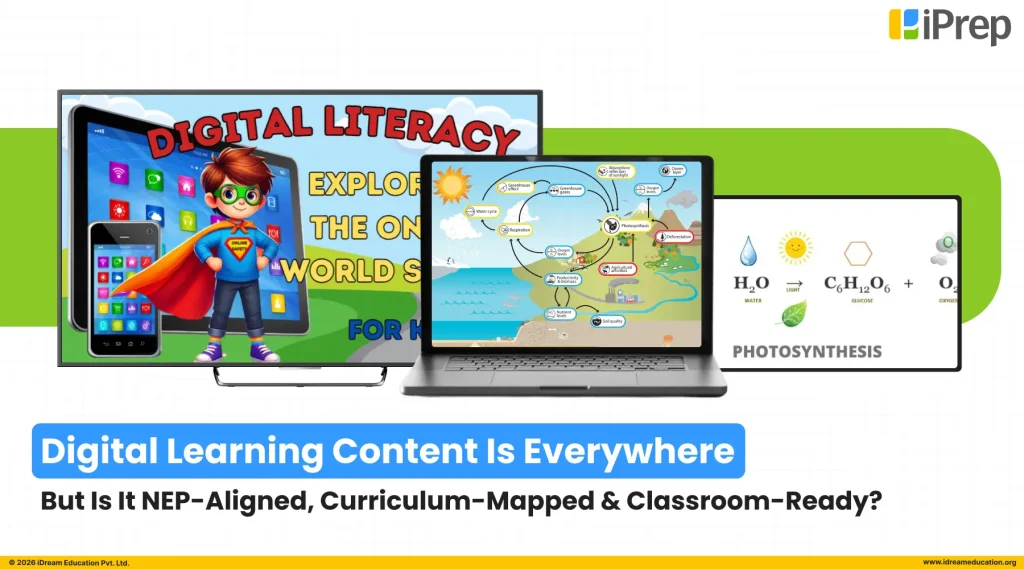
The development of healthy Digital Learning Habits cannot stop at our front door. Schools have a moral and educational imperative to embed a robust Digital Literacy Program into the curriculum, starting from the earliest grades. A well-designed school-led digital literacy framework should focus on three pillars:
- Understanding Technology, Not Just Using It: Children should learn how digital platforms work, how information flows, and how algorithms influence what they see. This foundational understanding empowers them to become thoughtful, discerning users rather than passive consumers.
- Safe, Responsible, and Ethical Digital Conduct: Schools must teach students the principles of digital citizenship such as privacy, online respect, cyber safety, and responsible communication. These lessons help students build internal boundaries that travel with them, regardless of the device in their hand.
- Purposeful Learning With Digital Tools: Digital literacy should move beyond typing classes or sporadic computer periods. It should integrate into everyday learning using digital tools to explore concepts, collaborate, problem-solve, and express creativity. When students see technology as a tool for thinking, not just entertainment, Digital Learning Habits naturally take root.
Let us Shape a Healthy Digital Future
The conversation around screens has been stuck in fear for far too long. But fear neither prepares our children for the world they are growing into, nor does it help us guide them with clarity. By shifting our focus from restricting screen time to cultivating Digital Learning Habits, we equip our children with something far more powerful than compliance. We give them the skills to navigate technology with purpose, confidence, and responsibility.
And this is exactly where meaningful associations can accelerate change
Intel comes together with iDream Education to power the “Padhai Ka Future” initiative. We take a significant step toward making digital learning not just accessible, but safe, structured, and learning-ready for every student. By enabling laptops to be equipped with the iPrep Learning App, this collaboration ensures that students are welcomed into a digital space designed for exploration, creativity, responsibility, and growth. It brings everything we’ve discussed to life:
- Technology that supports autonomy, not addiction
- Tools that guide learning, not just entertainment
- Safe digital environments that empower students to build strong Digital Learning Habits
In other words, this association reflects the very shift we’ve been advocating transforming devices from sources of worry into trusted companions for learning.
If you believe in safe, confident, and future-ready students, we invite you to take the pledge to ensure responsible and secure digital learning for every child here: https://bit.ly/49hA8cJ
Explore and buy an Intel-powered laptop for students today and get 50% off a 1-year iPrep subscription for a complete digital learning experience: https://shorturl.at/Rhn27
Categories You may Explore
Related Articles