

In many schools across India, students are eager to learn — but the language of available digital resources often doesn’t match the language in which they think, question, and understand. While digital libraries are rapidly becoming a part of school education, most collections are still heavily English-centric. This creates a silent learning gap for Hindi medium students, where access exists, but true comprehension does not.
A digital library for Hindi medium schools cannot be built by simply translating a few books or uploading Hindi PDFs. It must be thoughtfully designed around Hindi-first digital library content — including curriculum-aligned resources, concept-explainer videos, interactive modules, reference materials, sample papers, inspirational biographies, practice content, stories, poems, and lot more in clear, student-friendly Hindi. When library content is available in Hindi for Hindi medium learners, their engagement deepens, confidence grows, and self-learning becomes possible.
The real question, then, is not whether to create a digital library — but how to build one that genuinely serves Hindi medium learners. What should it include?
A Hindi medium digital library can serve as a core and central knowledge resource for schools across India, because Hindi is the mother tongue or comfort language for a large number of learners across India. Students across geographies often prefer Hindi books and other Hindi medium library content for concept clarity, exam preparation, revision, foundational learning, and independent exploring. When learners can read, watch, and explore ideas in Hindi, they process information faster, ask better questions, and retain learning longer.
To make such a library meaningful, the focus should not just be on volume of content, but on relevance, curriculum alignment, format diversity, and ease of access. A strong Hindi medium digital library should bring together structured academic resources, reading material, & interactive learning assets, all organized in a way that teachers and students can easily discover and use.
Let’s look at what a well-designed Hindi medium digital library should include.
A well-designed Hindi medium digital library is not just a translated version of an English platform — it is a thoughtfully structured learning ecosystem built for Hindi-speaking learners, & Hindi medium schools. Research on digital learning adoption in India consistently shows that students engage more deeply and retain concepts better when content is available in their home or instructional language. That makes language-first design, curriculum alignment, and multi-format resources essential.
Here’s what an effective Hindi medium digital library should include:
Hindi Medium Digital Library LMS
At the foundation, the digital library for Hindi Medium schools should operate through a proper LMS (Learning Management System) designed for Hindi-medium usage. This means:
- Hindi-first interface and navigation
- Class-wise and subject-wise structured access
- User logins for students and teachers
- Progress tracking and usage insights
- Easy content organization by chapter and topic
A Hindi medium digital library with LMS ensures the platform is not just for browsing but ensures structured reading/learning experience.
Multi-category Curriculum-Aligned Hindi Content in Digital Library
All core resources should be mapped to Hindi medium curriculum frameworks such as NCERT and state board syllabi. This includes chapter-wise:
- Structured animated video content
- Practice Questions
- Syllabus books
- Chapter notes and quick revision material & Assessment
- Interactive Simulation
- Worksheets and activity sheets
- Practical Lab Videos
e-Library content in Hindi medium enables teachers and students to directly connect digital resources in the digital library to their day to day learning/teaching experiences.
Hindi Reading Resources & Digital Books
Digital Library for Hindi Medium Schools should also include beyond academic, multiple genres, age appropriate reading resources. This includes:
- Storybooks in Hindi
- General reading material
- Subject enrichment reading
- Age-appropriate literature
- Inspirational Biographies
- Stories & Poems
- Sample Papers & Journals
- Reference books and supplementary readers
A rich collection of Hindi medium library content helps build reading fluency, comprehension, vocabulary, and subject confidence. Over time, this not only strengthens language skills but also improves overall learning outcome, boosts interests, helps students develop reading habits.
Low-Bandwidth and Offline Access
Many government schools in India operate in rural and semi-urban regions where internet connectivity is unreliable or extremely limited. Therefore, a Hindi medium digital library should be designed to work smoothly in low-bandwidth conditions and offer offline access options. This ensures that learning does not stop due to network issues and that students can continue using digital library resources anytime. Offline and low-data functionality is essential to make digital libraries truly inclusive and practical for real school environments.
Continuous Content Updates
Curriculum changes, updated textbooks, & new reading resources should be reflected quickly in the library so that learners and teachers always access current, relevant Hindi e-library content.
Usage reporting & Monitoring
A well-designed digital library for Hindi medium schools should also include built-in usage reporting and monitoring features to help schools and program administrators understand how effectively the implemented library is being used. Dashboards and reports should be able to show time spent, content accessed. For school leaders, NGOs, CSR, social sector and implementation partners, usage reports provide visibility into adoption and impact, enabling better decision-making and continuous improvement of digital learning initiatives.
How to Start looking for a Digital Library for Hindi Medium Schools
Getting started with a Hindi medium digital library does not have to be complex if approached step by step. The goal should be to ensure smooth adoption by students.
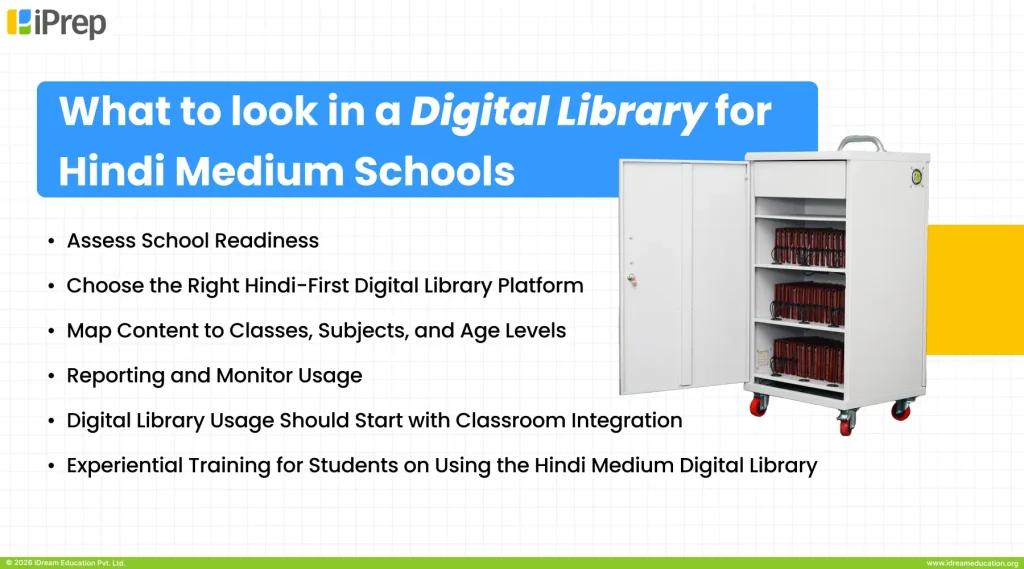
Assess School Readiness
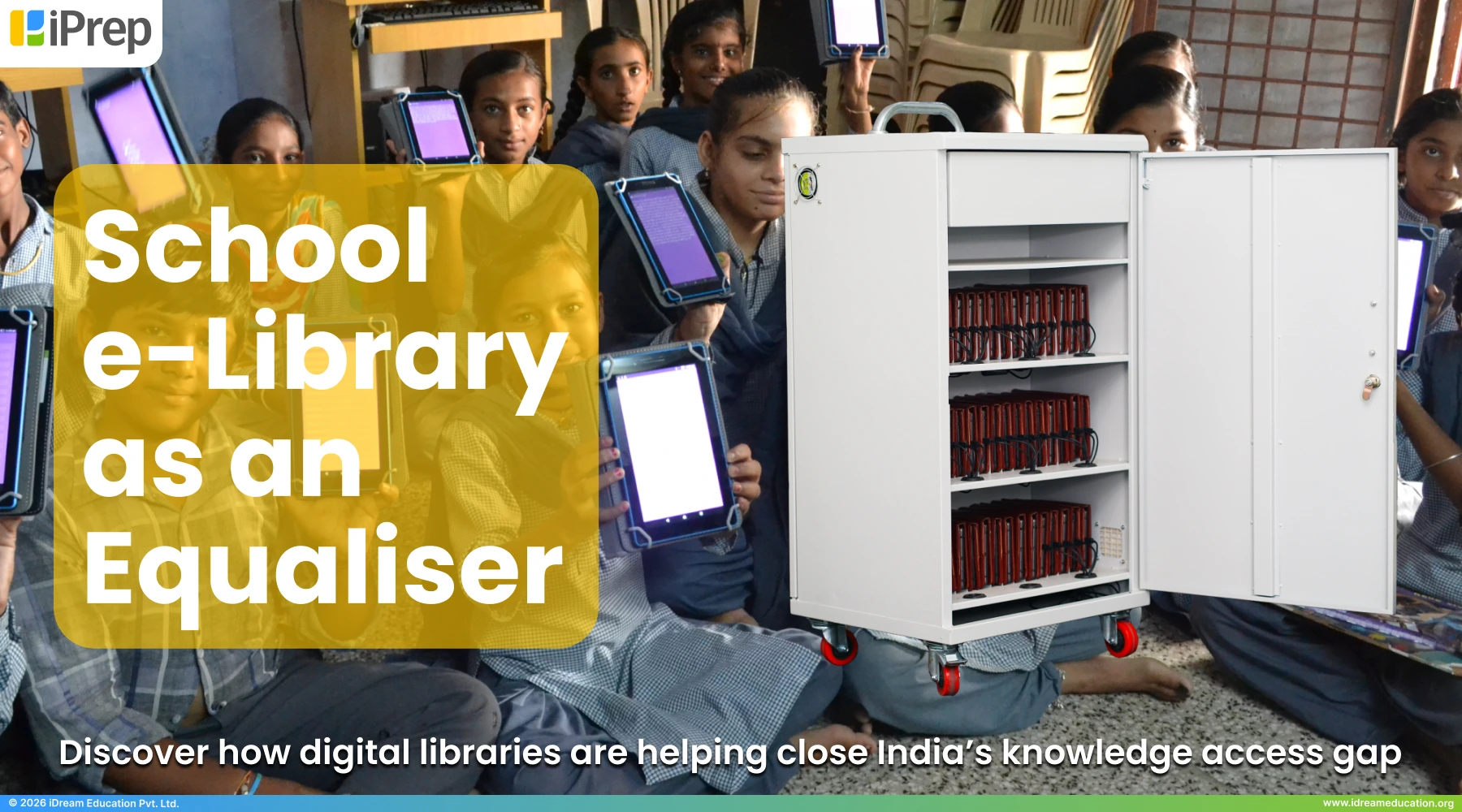
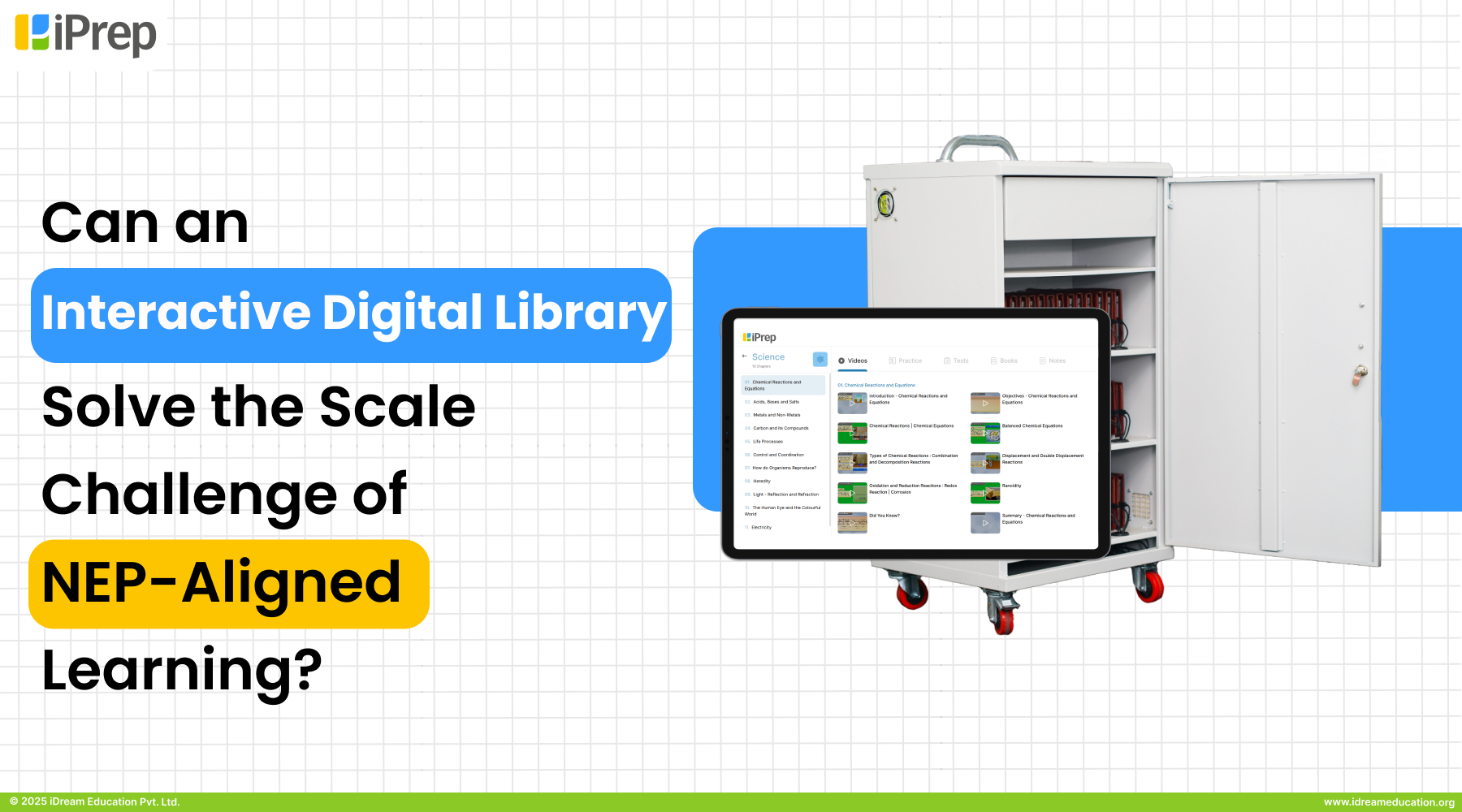
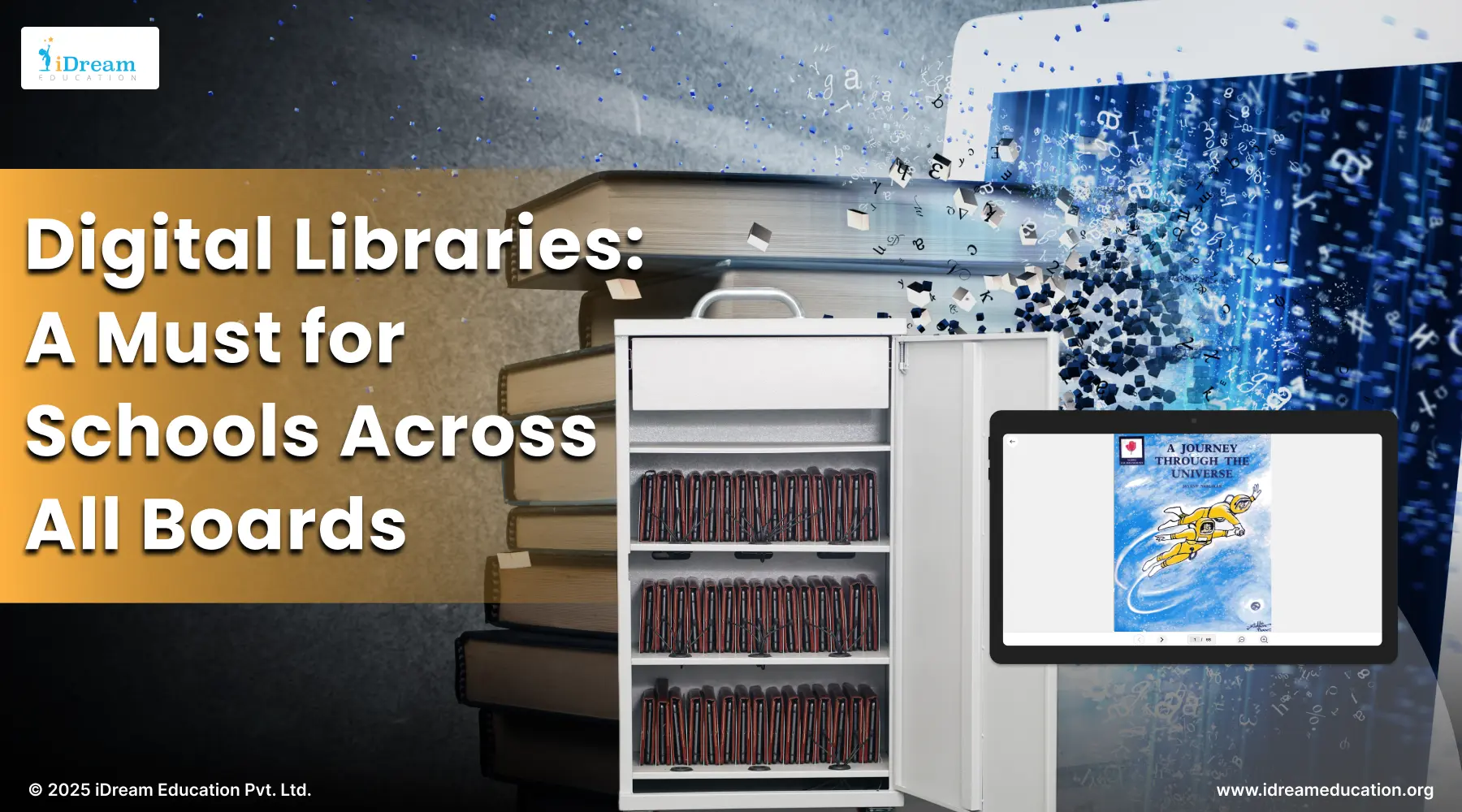
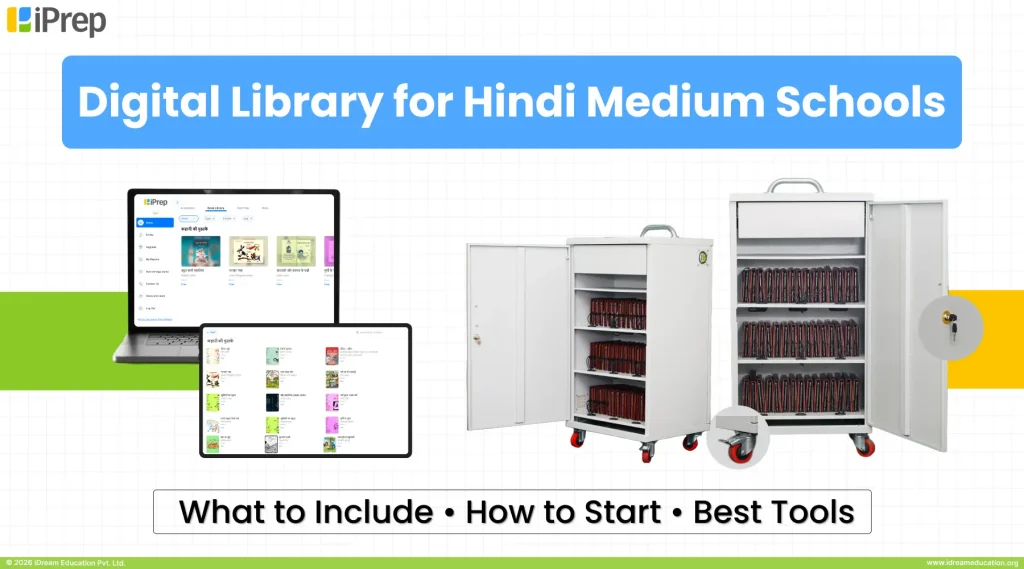
Start by evaluating the school’s existing infrastructure — available devices, smart classrooms, tablets, computer labs, local storage systems, internet connectivity, and power backup. A Hindi medium digital library can be implemented using current devices or through new devices based on your project plan. It can be deployed via a shared ICT lab setup, device storage and charging racks, or a local server–based digital library model. The overall setup can be fully customized according to project requirements and the school’s infrastructure conditions, ensuring practical and scalable implementation.
Choose the Right Hindi-First Digital Library Platform
Select a Hindi medium digital library LMS that goes beyond being just a content repository and functions as a structured library platform. It should provide curriculum-aligned Hindi content, multi-format learning resources, and a wide range of non-academic and reading materials. Look for offline access in a well-organized, class- and subject-wise format. The Hindi medium digital library platform should be easy to navigate and designed with Hindi-first approach. The interface, features, content, and navigation elements all should be available in Hindi — so that students can use it comfortably and independently.
Map Content to Classes, Subjects, and Age Levels
Choose a Hindi medium digital library that organizes academic books and reading resources by class, subject, and age group. Academic and beyond academic books should be clearly structured so students can easily find relevant materials that match their grade level and age. Class-wise, subject-wise, and age-appropriate categorization ensures better discovery, more meaningful usage, and a smoother connection between digital resources and classroom learning. Plus, the implementing partner should be able to customize the digital library content based on the specific needs of the school and the goals of your project. This ensures the resources, categories, and structure remain relevant and context-aligned.
Reporting and Monitor Usage
Look for a Hindi medium digital library solution that includes detailed usage reporting and category-wise content engagement insights. The implementing partner should be able to share regular – preferably monthly usage reports, case studies, and impact summaries so you can clearly understand how the platform is being used. This visibility helps schools and project stakeholders identify gaps, provide timely support where adoption is low, and take corrective measures when needed. Continuous monitoring ensures better learning outcomes and keeps the digital library actively and meaningfully used.
Experiential Training for Students on Using the Hindi Medium Digital Library
Your chosen implementing partner for the Hindi medium digital library should provide hands-on, experiential training for students at the time of project rollout. This initial orientation should help learners understand how to navigate the platform and effectively use the variety of e-library resources. Beyond the one-time onboarding, the partner should also offer ongoing support and refresher training sessions whenever adoption is low or when teachers and students need additional guidance. Continuous training and support ensure better usage, higher confidence, and more meaningful learning outcomes from the digital library.
Digital Library Usage Should Start with Classroom Integration
The digital library implementation partner should ensure that usage begins through structured classroom integration rather than optional or irregular access. This can be done by introducing a dedicated digital library period in the school timetable, where students regularly use the platform for reading, concept learning, and practice. Timetable-based integration builds consistent habits, improves adoption, and helps teachers actively connect digital library resources with classroom learning. Regular, scheduled usage ensures the digital library becomes a meaningful part of the learning process instead of a one-time or occasional tool.
One of the best comprehensive solutions is the iPrep Digital Library designed specifically for Hindi Medium Schools
With us, you get end-to-end support. It starts from planning and setup to teacher onboarding, student orientation, usage monitoring, and continuous improvement support. We ensure that the hindi medium digital library is not only installed but actively and meaningfully used.
Our Key strengths include:
- Hindi Digital library Software: Hindi-first digital library software with structured LMS features, category-wise organization, Hindi interface, and easy navigation.
- Complete Hindi Language Content Ecosystem: Age-appropriate, class-wise academic and non-academic resources available in Hindi
- Curriculum-Aligned Academic Resources: Content mapped to NCERT and state board structures
- Beyond Textbooks Reading Library: Storybooks, general reading, inspirational biographies, stories, journals, sample papers, enrichment resources, and reference materials in Hindi
- Multi-Format Learning Content: Videos, practice, interactive resources, and digital books in Hindi
- Customization Support: Library categories, age, class and content bundles tailored to project goals and school needs
- Implementation & Training Support: Structured onboarding and experiential training for students and teachers both
- Usage Monitoring & Reporting: Regular usage insights and impact reporting
- Flexible Deployment Models: We support device-based, lab-based, and offline/local server setups
Choosing a well-supported, Hindi-first digital library platform ensures that your initiative goes beyond simple installation and leads to real classroom adoption and measurable learning impact. If you are planning to set up a digital library for Hindi medium schools, you can reach out to us at +91 7678265039. We would be happy to demonstrate the platform, showcase the Hindi library content ecosystem, and discuss customization options based on your project goals, objectives, and school requirements. You can also write to us at share@idreameducation.org or share your details here.
Categories You may Explore
Related Articles