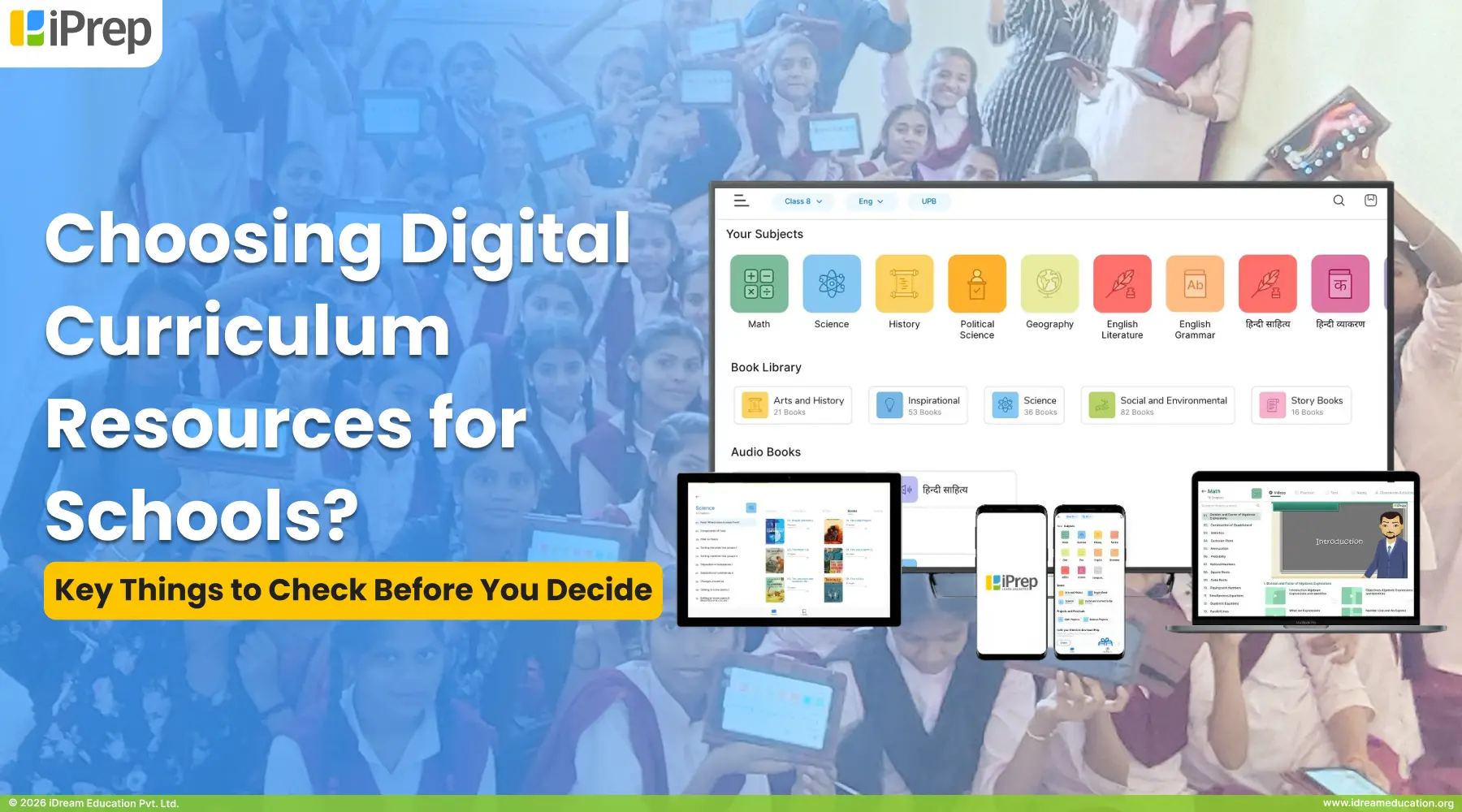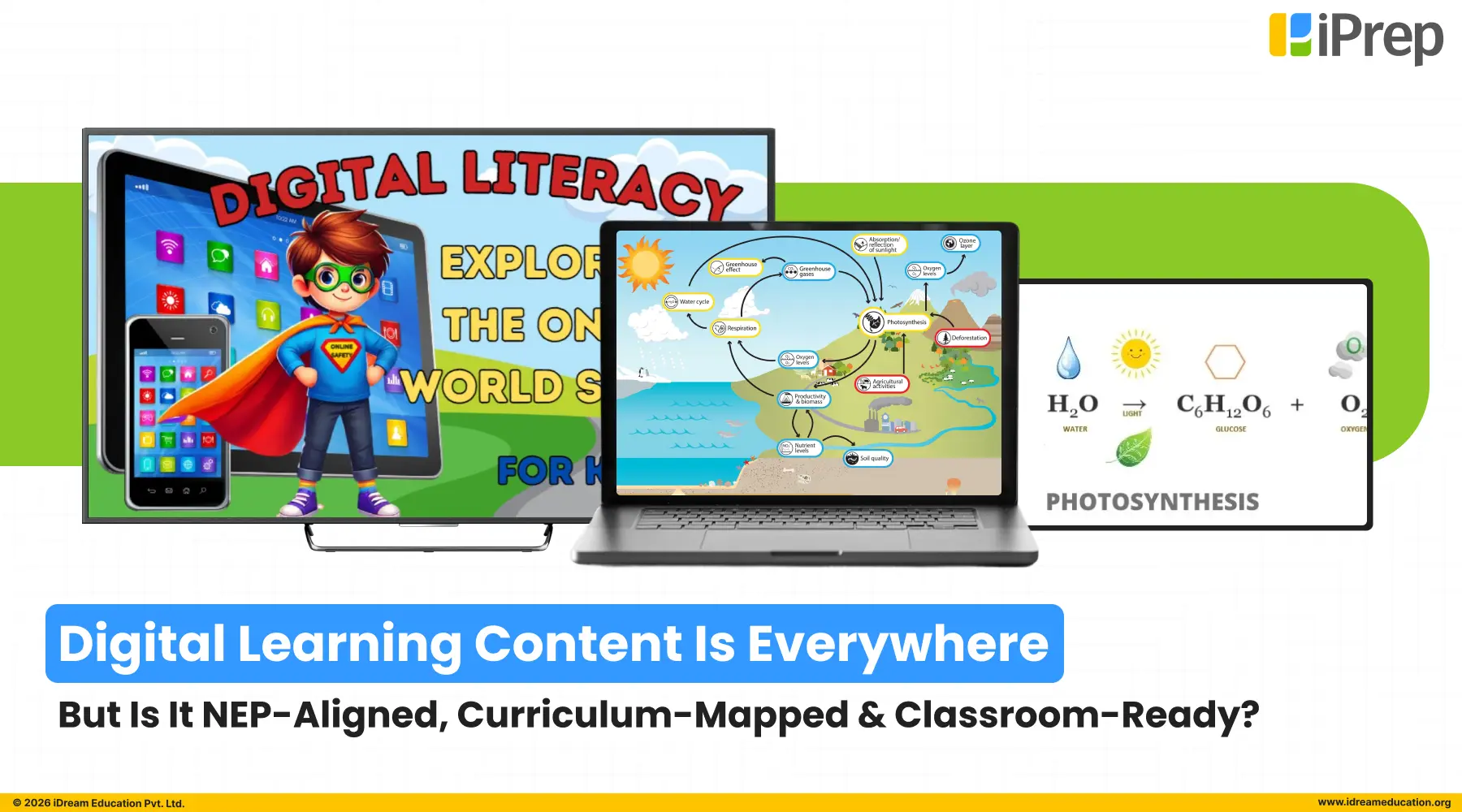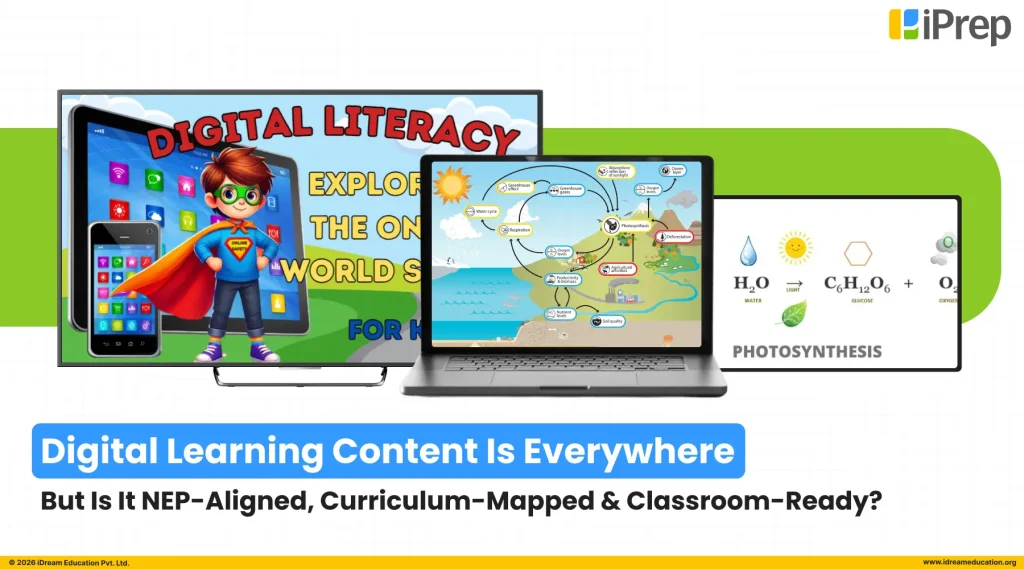


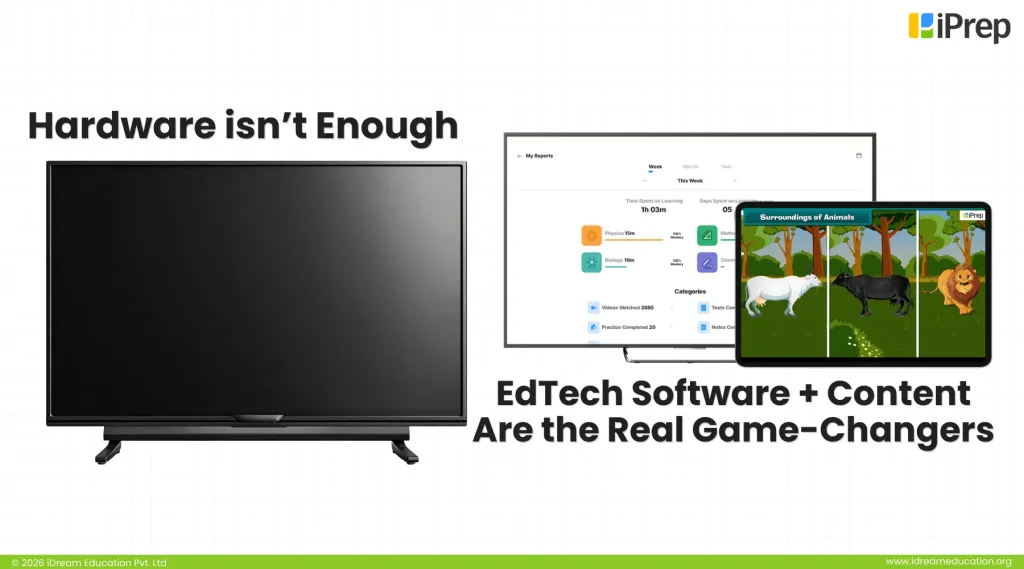
Across schools, government programs, and social sector initiatives, classroom digitisation is often equated with the procurement of hardware – smartboards, projectors, tablets, or panels. Yet, in practice, classroom technology remains incomplete without a deliberate, well-thought-out combination of EdTech software & content aligned with school curriculum. Procuring digital hardware without equally prioritising what runs on it is like building schools without teachers or textbooks.
Over the last decade, large investments have been made to “digitise” classrooms
Smart classes have been installed at scale, tenders have been floated, and infrastructure milestones have been achieved. However, actual digital learning outcomes remain inconsistent. While digital tools are present, evidence of sustained improvement in learning levels, conceptual clarity, or student engagement is still limited. The uncomfortable truth is that digital adoption is happening – but meaningful digital learning often is not.
One key reason for limited learning outcomes lies in a missing conversation
EdTech software and content are frequently treated as secondary components, added late in the process or bundled as a checkbox requirement, rather than being integrated intentionally for learning impact. The focus remains on deployment metrics such as the number of classrooms covered, devices installed, or hours of usage. Far less attention is paid to whether students are actually learning better, teachers are teaching more effectively, or classrooms are becoming more inclusive.
For governments, CSR teams, NGOs, bidders, and even hardware providers working in the education ecosystem, this gap matters deeply. Without integrating EdTech software capabilities, pedagogically sound content, teacher enablement, and curriculum relevance, digital classrooms risk becoming underutilised assets rather than engines of change.
Therefore, the real question is not whether classrooms are being digitised, but whether learning itself is being improved. As long as EdTech software and content remain afterthoughts in planning and procurement, digital classrooms will continue to struggle to justify their promise. For stakeholders working at scale – the shift must be from “deploying technology” to designing learning experiences.
EdTech Software & Content: Core to Learning Outcomes, Not Add-Ons to Hardware
Digital classrooms begin with hardware but learning does not. Screens, devices, and connectivity create access, yet access alone does not translate into understanding, engagement, or improved learning levels. What ultimately shapes learning outcomes is what students see on the screen, how teachers use it in the classroom, and whether the system enables continuous feedback and improvement.
EdTech software provides structured access to learning material that hardware cannot. It determines:
- How content is categorised and delivered
- How teachers navigate classroom instruction
- How students interact with digital learning material
Without purposeful e-learning software, digital classrooms often turn into a burden – forcing teachers to spend extra time connecting devices to the internet, searching for relevant content, and navigating cumbersome teaching workflows.
Similarly, content quality plays a decisive role.
Having curriculum-aligned, age-appropriate, multi-category, and pedagogically structured content available in one place significantly reduces teachers’ effort in searching for resources online. It transforms digital classroom hardware into a true plug-and-play solution which is very easy to use. It drives regular usage, conceptual clarity, enabling differentiated learning, and keeping classrooms meaningfully engaged. In contrast, when content is fragmented, outdated, or misaligned with learning objectives, even the most advanced hardware remains underutilised.
Equally critical and a part of Edtech software and content but frequently overlooked – is reporting
We believe, in large-scale education programs, what cannot be measured cannot be improved. Reporting mechanisms with Edtech software and content provide visibility into usage, learning progress, and gaps across schools, classrooms, and regions. They allow governments, CSR, NGOs, and implementation partners to move beyond assumptions and anecdotal success toward evidence-based decision-making.
When EdTech software, content, and reporting are treated as core components on par with hardware – digital initiatives gain the ability to adapt, improve, and scale responsibly. This integrated approach shifts digital education from a focus on deployment to a focus on learning impact, ensuring that investments lead not just to visible infrastructure, but to measurable, equitable, and lasting learning outcomes.
What the Right Combination of EdTech Software & Content Looks Like?
The right combination of EdTech software and content begins with learning objectives, not devices. Software is selected based on how it supports program needs, school curriculum, subjects, classroom needs, sequencing, pacing, and differentiated learning – rather than just on compatibility with hardware. Similarly, content in digital classroom programs should rely on curriculum-aligned, grade-appropriate, and concept-driven content that supports classroom instruction before, during, and after teaching.
Based on implementation experience, the right combination of EdTech software and content typically demonstrates the following characteristics:
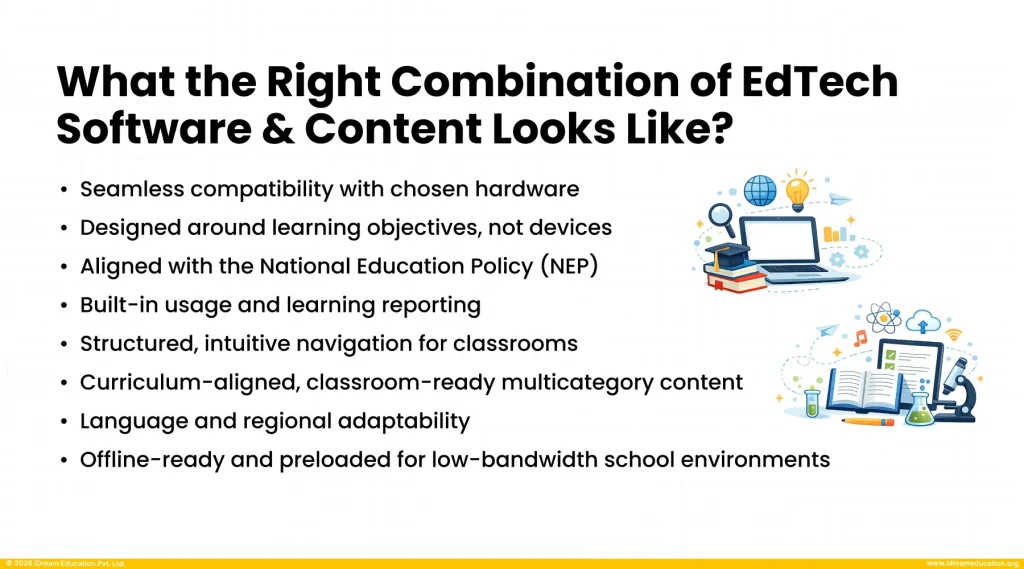
Seamless compatibility with chosen hardware
The EdTech software and content must function reliably across the selected devices and configurations, without performance issues or dependence on specific hardware models. This ensures uninterrupted classroom use and protects programs from becoming locked into inflexible or short-lived device choices.
Designed around learning objectives, not devices
Beyond compatibility, the focus shifts to learning. EdTech software and content are selected based on their ability to support program goals, school curricula, subjects, lesson sequencing, pacing, and differentiated learning needs rather than on technical fit alone.
Aligned with the National Education Policy (NEP):
The right combination of EdTech software and content reflects the intent of the National Education Policy. This means it should support competency-based learning, conceptual understanding, multilingual education, flexibility in learning pathways, and the use of technology to enhance equity and access. NEP-aligned design ensures that digital classroom programs are not just compliant, but pedagogically future-ready.
Offline-ready and preloaded for low-bandwidth school environments:
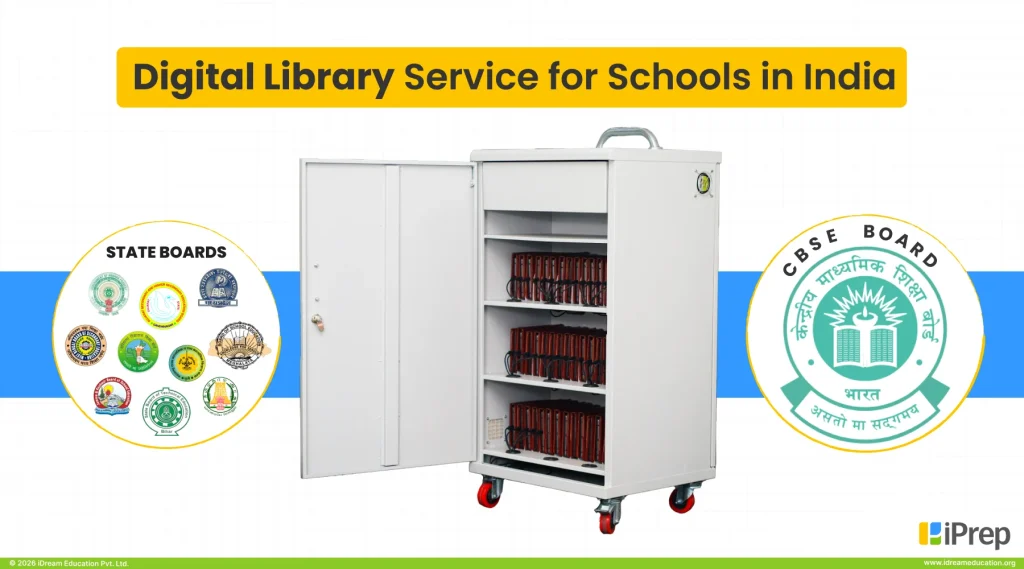
The right combination of EdTech software and content is designed with on-ground school realities in mind, including unreliable connectivity and limited bandwidth. Pre-installed software and preloaded content enable uninterrupted teaching and learning across any chosen hardware. This ensures classrooms in remote or low-connectivity areas are not excluded from your digital education programs.
Structured, intuitive navigation for classrooms
The right combination of EdTech software and content is the one that allows teachers to easily move across grades, subjects, chapters, and languages within the same system. Switching between classes does not require changing platforms or reconfiguring tools, enabling smoother classroom flow and higher adoption.
Curriculum-aligned, classroom-ready multicategory content
Plus, the EdTech software and content needs to be mapped to the prescribed curriculum and designed for multiple teaching and learning uses. It should support video playing, interaction with content, videos, PPT, PDF, and so much more. This improves learning experience and allows students and teachers to explore multiple types of content at one place.
Language and regional adaptability
Both the software interface and the content should be able to support multiple languages, allowing seamless switching to meet regional, teacher, and learner needs without disrupting classroom instruction.
Built-in usage and learning reporting
Integrated reporting provides visibility into how software and content are being used across subjects, grades, and schools. These insights enable monitoring, data driven decision-making, and continuous improvement of the program.
When EdTech software is designed specifically for school education, and digital content is closely aligned with classroom textbooks, digital hardware begins to serve a real purpose.
A combination that works seamlessly across devices, supports offline usage, enables bilingual learning, and allows subject-wise and category-wise navigation strengthens both teacher confidence and student engagement. It encourages regular classroom use. Through this combination, you can 100 % ensure that digital solutions become an active part of teaching and learning, rather than expensive hardware that remains underutilised or eventually set aside.
Think Beyond Screens: A Pause Worth Taking Before the Next Digital Classroom Rollout
Will learning improve simply because there is a screen in the classroom?
Experience tells us it will not.
Learning improves when teachers are supported with the right tools, when students engage with meaningful and curriculum-aligned content, and when systems are designed to adapt based on how learning is actually happening.
This is where EdTech software and content matter most.
They are not optional additions to digital classrooms – they are the mechanisms through which digital infrastructure turns into educational value.
For governments, social sector organisations, CSR leaders, bidders, and implementers, the next phase of digital education calls for harder, more honest questions.
- Are we measuring success by the number of classrooms digitised or by how learning changes within those classrooms?
- Are we focused on what can be installed or on what will be taught, how it will be taught, and how improvement will be measured?
Before the next program is designed or the next RFP is released, this is the moment to think deeply about the missing combination. Because digital education initiatives will ultimately be judged not by what is visible in classrooms, but by what students are able to understand, learn, and achieve.
Delivering NEP-Aligned EdTech Software and Content
We are happy to share that our work in this space is backed by a formal collaboration with NCERT, established through a signed MoU. This partnership reflects our long-standing commitment to strengthening digital learning in schools in alignment with national priorities.
Under this collaboration, we are developing NEP-aligned digital content and EdTech software (LMS solutions) rooted in national curriculum frameworks, competency-based learning, and inclusive pedagogical practices. Our years of experience in school education, combined with ongoing, hands-on collaboration with NCERT, ensure that this alignment is not theoretical but deeply operational, as envisioned under the National Education Policy. It informs how content is structured, how learning progresses across grades, and how technology supports real classroom instruction.
If you are exploring EdTech software and content to complement your chosen classroom hardware and are looking to build a truly complete digital classroom setup, we would be glad to engage & demonstrate our solutions through a virtual or in-person demo, on the hardware of your choice, and discuss how they can be aligned to your program objectives. To connect with us please reach out to us directly at +91 7678265039. We look forward to meaningful conversations focused on learning outcomes, not just technology deployment. You can also write to us at share@idreameducation.org or share your details here
Categories You may Explore
Related Articles