

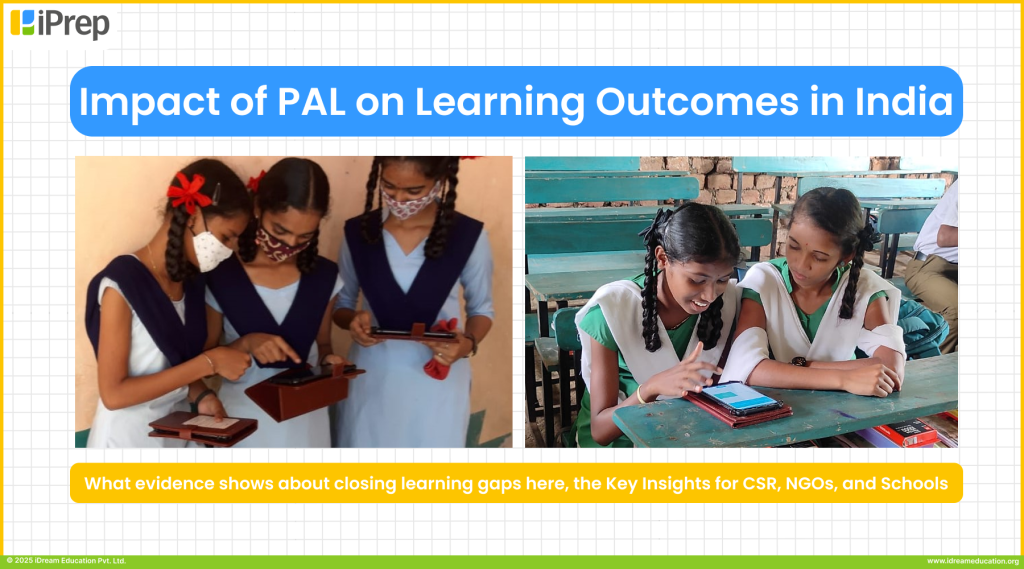
When schools shut down during COVID-19, India saw more than just classrooms closing. A less visible crisis began to unfold as learning gaps widened, particularly in government schools. For many students, the sudden shift to self-learning meant falling behind with no one to bridge the gap.
During that time, one field experience offered an important insight. Working with the CIPLA Foundation, we reached about 5,000 Class 10 students in Maharashtra, giving them offline access to high-quality Marathi content. These were students with limited digital access, yet through this support, they managed to stay on track and clear their board exams. It highlighted how timely and personalized learning support can meaningfully influence learning outcomes.
That moment marked a turning point. Everyone began asking the same question: How do we close learning gaps at scale? And it was in this question that Personalized Adaptive Learning (PAL) found its place. These experiences did not occur in isolation. Across states and school systems, similar learning gaps began to surface, raising a larger system-level concern.
Why the Impact of PAL Became Critical After COVID?
Over the past few years, PAL has emerged as one of the most talked-about education reforms since COVID. PAL platforms actively respond to variations in student pace and starting levels to support differentiated learning, something teachers struggle to achieve consistently in traditional classrooms. They adjust learning pathways to individual levels and pace, enabling more self-directed progress.
Many edtech organizations began experimenting with PAL. Some states even rolled it out in phases. As PAL gained visibility across states and programs, stakeholders shifted focus to proving its impact on learning outcomes with rigorous evidence.
Research Evidence Showing Measurable PAL Learning Gains

The first clear evidence came from Andhra Pradesh, where Nobel Laureate Prof. Michael Kremer and his team conducted a large-scale study on PAL. The results spoke volumes. Students using PAL showed learning progress equivalent to 1.9 years within just 17 months, and those who began with the lowest scores made the biggest gains.
This was not a small pilot program but an intervention carried out in rural government schools with limited resources, highlighting its relevance to real-world learning conditions. The study showed that PAL’s impact extends beyond technology. It creates a more inclusive learning environment.
Soon after, Prof. Karthik Muralidharan led another study in Rajasthan that found students’ learning with PAL improved by +0.22 standard deviations in Maths and +0.20 in Hindi. These gains translated into several additional months of progress compared to traditional classroom groups. For government schools, balancing large, varied classrooms, these numbers are significant. They suggest that Personalized Adaptive Learning outcomes in India extend beyond theoretical models and can be observed in practice.
These findings from large-scale studies created confidence in the potential impact of PAL, but their true significance lay in whether similar learning gains could be seen in everyday classroom settings.
The Same Impact of PAL Patterns Are Also Visible in Field Implementations
The impact of PAL is not limited to research labs, but classrooms across India are seeing it first-hand. One such implementation is through iPrep LMS, which enables tracking of how adaptive learning influences everyday teaching and learning.
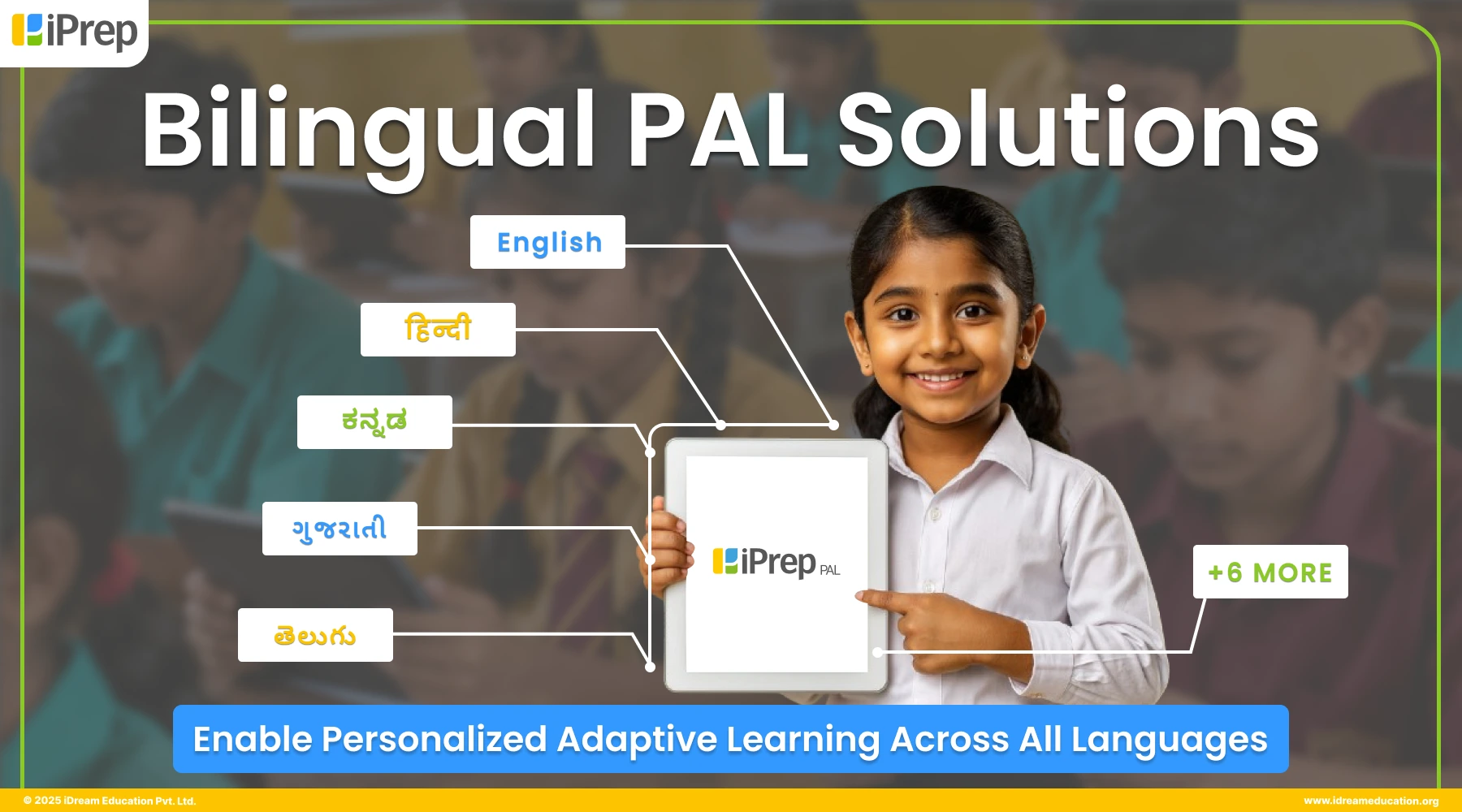
iPrep PAL is an offline-first, bilingual learning management system built especially for government school environments. It works smoothly across all types of hardware and operating systems. Even in areas with unstable connectivity, PAL platforms save all student learning and usage data offline and sync it later to an online dashboard.
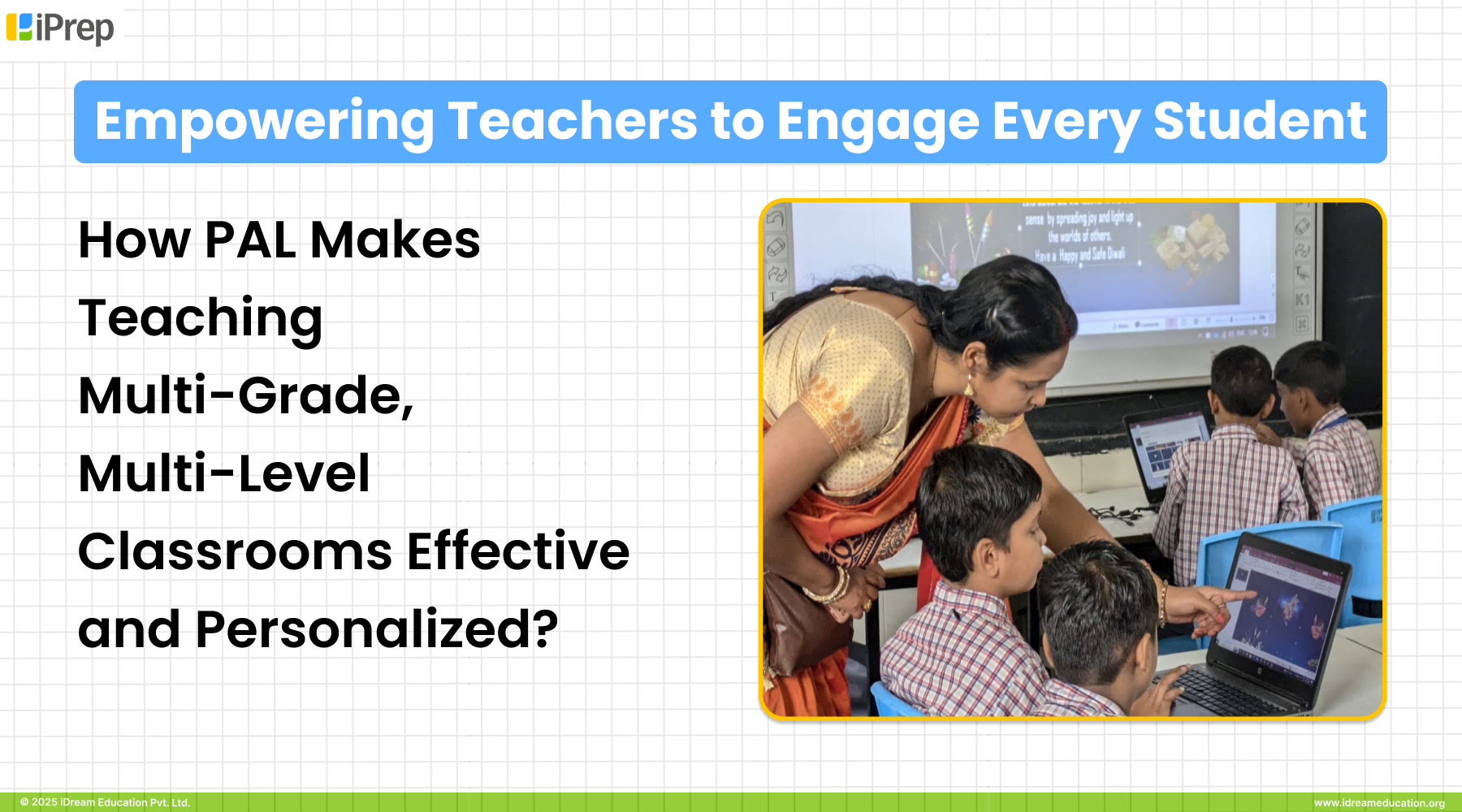
Field data indicate an average of 44% improvement in test scores after students began learning on PAL-enabled content. Teachers report that students are more engaged, participate more freely, and require less rote intervention because the PAL app automatically guides them where they need the most help.
From this data, a clear pattern emerges: PAL is not only closing learning gaps but also building confidence among learners. The feedback loop between students, teachers, and technology is making learning more human, not less. While these field-level results demonstrate the impact of PAL on learning outcomes, translating local success into system-wide improvement requires deliberate design, capacity building, and sustained governance support.
What Scaling the Impact of PAL Looks Like?
Both research and real-world data align: the impact of PAL in India is tangible. But scaling it effectively requires going beyond hardware distribution or isolated product interventions. If devices are being sent to schools for students, they must come pre-loaded with Personalized Adaptive Learning elements.
More importantly, PAL’s success depends on the people and processes surrounding it. To truly maximize effectiveness, India’s PAL programs typically require:
- Continuous teacher training focused on using PAL data for guided instruction
- Ongoing pedagogical and technical support so teachers are not left alone with the technology
- Regular data reviews at block and district levels to track learning gains and course-correct
- Robust project monitoring at the state level to support continuity and evidence-based scale-up
When implemented at scale with these supporting systems in place, PAL begins to influence not just classroom practices but broader education outcomes at a national level.
Where PAL Fits into India’s Education Goals by 2047
If India aims to become a developed nation by 2047, every child must have a fair chance to learn, grow, and compete. That future depends on bridging the learning gaps that still hold millions back.
And here’s what the growing evidence tells us: Personalized Adaptive Learning has emerged as a credible approach to addressing learning gaps at scale. It helps students catch up, learn faster, and stay engaged. It empowers teachers with insights and flexibility.
The impact of PAL is already visible, from academic studies to classroom data across India’s government schools. The next step is collective action to ensure that adaptive learning doesn’t remain an experiment but becomes the standard for equitable, effective education.
Because when learning adapts to every child, the results speak for themselves.
Reach out to us at +917678265039 or write to us at share@idreameducation.org.
Categories You may Explore
Related Articles