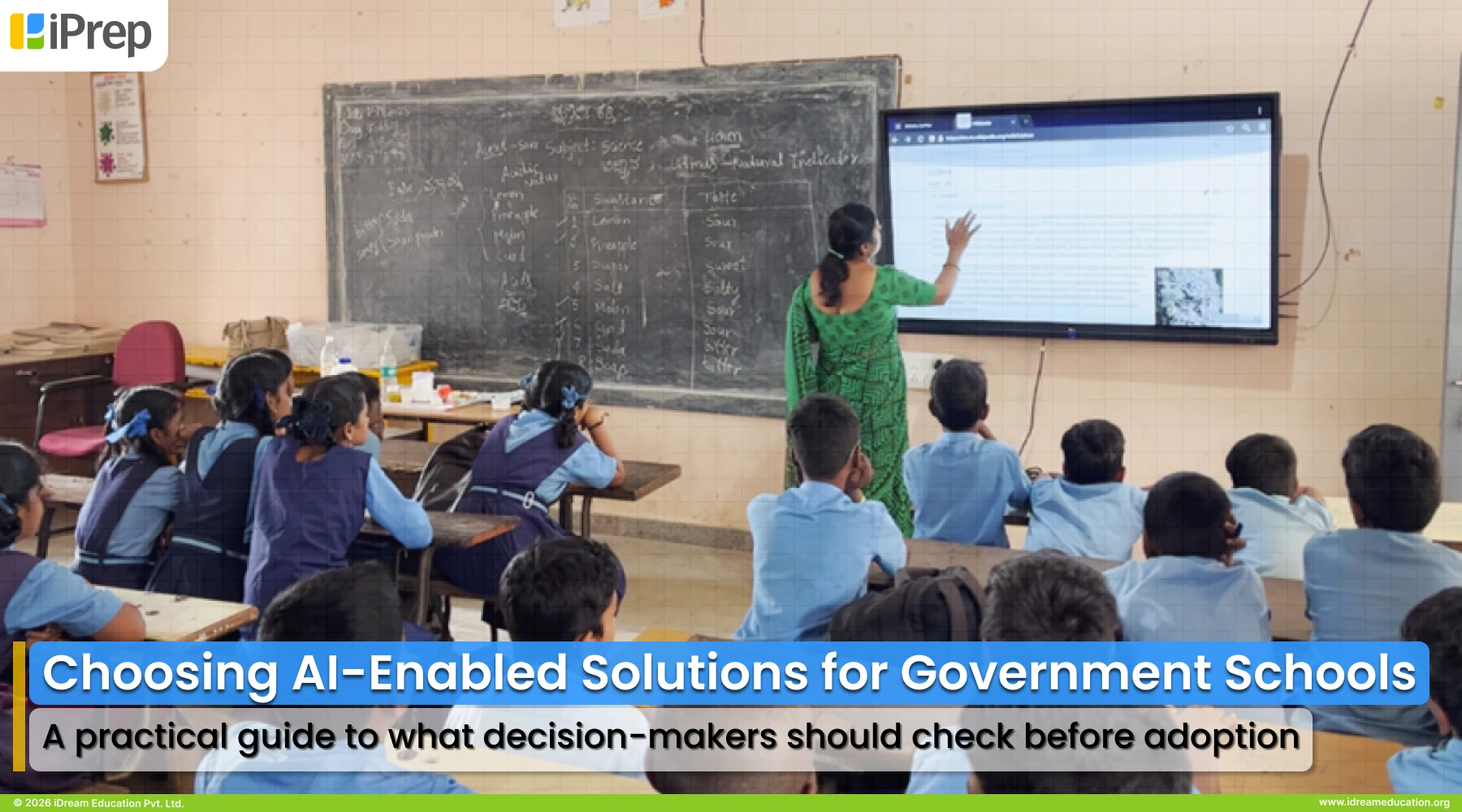
Walk into any government school today, and you will likely see signs of progress—smart classrooms, digital libraries, tablets, screens mounted proudly on walls. They tell a story of investment, ambition, and the hope that technology will change learning. On paper, the project looks successful.
But education does not change on paper.
A few months later, a different story quietly unfolds. A screen gathers dust. A tablet lies in a cupboard. A teacher hesitates before turning on a system she was never truly trained to use. Students sit in the same rows, learning in the same way, only now with a device nearby. Something was delivered – but something else was missing. “The missing piece is not money. It is not an effort. It is not even the intention.”
“The missing piece is understanding.”
We continue to judge education projects by scale – by the number of schools covered, devices distributed, and classrooms equipped. These figures are easy to report, but they are not easy to trust. They describe activity, not impact. What remains largely unmeasured is what truly defines success: whether teaching has become more effective, whether students are learning with greater depth, and whether classrooms are meaningfully changing.
Every classroom communicates its reality through teacher confidence, student engagement, hesitation, confusion, progress, and struggle. These signals are constant. But when they are not observed, documented, and analysed, they dissolve into routine. And routine, over time, disguises failure as stability.
Educational progress cannot be inferred from device availability alone. A resource that exists is not the same as a resource that works. Transformation begins only when learning is systematically observed, critically examined, and understood across time.
This is why Monitoring & Evaluation is not an administrative formality. It is the ethical responsibility of every education project. It determines whether intention becomes impact – or whether effort quietly fades inside classrooms that were meant to change.
What Monitoring & Evaluation Really Means in Education
Monitoring is not about counting what was delivered. It is about observing what is happening. It looks inside classrooms, not just into spreadsheets. And asks whether teachers are using the enabled devices confidently, whether lessons are flowing differently, whether students are more engaged, whether learning is becoming clearer, outcomes are improving.
Evaluation goes a step further. It not only asks what is happening, but what is changing. It looks for patterns over time: whether teaching practices are evolving, whether students are developing deeper understanding, and whether learning gaps are reducing—or simply shifting. Evaluation turns daily classroom realities into meaning.
Together, Monitoring & Evaluation become the learning system of an education project. Just as students need feedback to improve, projects need evidence to grow. Without it, decisions rely on assumptions rather than insight. Monitoring & Evaluation in education projects is not about control or compliance. It is about responsibility. It is how a project stays truthful to its purpose and accountable to the classrooms it exists to serve.
Why is Monitoring & Evaluation the key to real impact in education projects?
- Monitoring & Evaluation in education projects gives a clear and continuous picture of what is actually happening to learning. It does not look only at whether classes are running, but at whether students are understanding. It shows learning levels, learning gaps, learning progress, and where additional support is needed.
- Through regular assessments, classroom observations, teacher feedback, and student performance data, M&E reveals which concepts students have mastered and which ones remain unclear. It highlights patterns such as certain topics/grades being consistently weak, specific groups of students falling behind, or teaching methods that are not working as expected.
- M&E allows timely intervention. Instead of waiting for annual results to reveal failure, monitoring & evaluation in education projects identify struggles/gaps early. A student who is not keeping up in the first month can receive support in the second. A teacher who is facing difficulty with a new method can be guided before frustration turns into resistance.
- M&E also shows whether interventions themselves are working. When extra classes, digital tools, or teacher training should be introduced, Monitoring & Evaluation tracks whether they actually improve understanding. If they do not, the approach can be changed. This prevents projects from continuing with strategies simply because they were planned, rather than because they were effective.
In this way, Monitoring & Evaluation becomes the system that connects action to outcome. It ensures that every effort – whether in training, content, or technology – leads to real learning, not just well-documented activity.
How Can You Plan Monitoring & Evaluation Right in Education Projects?
Monitoring & Evaluation cannot be designed in one standard format for all education projects. If you are implementing a common solution across schools or grades, such as a digital library/ smart classroom or adaptive learning platform, your M&E approach must change based on what you are trying to achieve. Plus, M&E depends on your project goals, scale, timeline, and the type of solution being implemented. A small pilot needs different monitoring than a state-wide rollout.
Let’s Look at Some Use Cases You Should Consider for Monitoring & Evaluation in Education Projects
- If your project is focused on access, such as setting up smart classrooms or digital libraries, monitoring should first track usage: Are teachers using the system? How often? For what subjects? Are students engaging with it? Evaluation should then ask: Has teaching become easier? Have classroom interaction/outcomes improved?
- However, if your project is focused solely on student learning outcomes, monitoring must go beyond usage into understanding. It should track student performance, concept clarity, and progress over time. Evaluation should measure whether learning gaps have reduced and whether outcomes have improved compared to the baseline.
- If your project is focused on teacher capacity, monitoring should look at confidence, classroom practice, and adoption of new methods. Evaluation should ask whether training has changed how teachers teach – and whether students benefit from that change.
This is why there is no single M&E model. Each solution – digital library, smart classroom, assessment system with digital learning solution, or adaptive platform – needs its own monitoring logic.
Let Us Look at Some Ways of Doing Monitoring & Evaluation in Education Projects
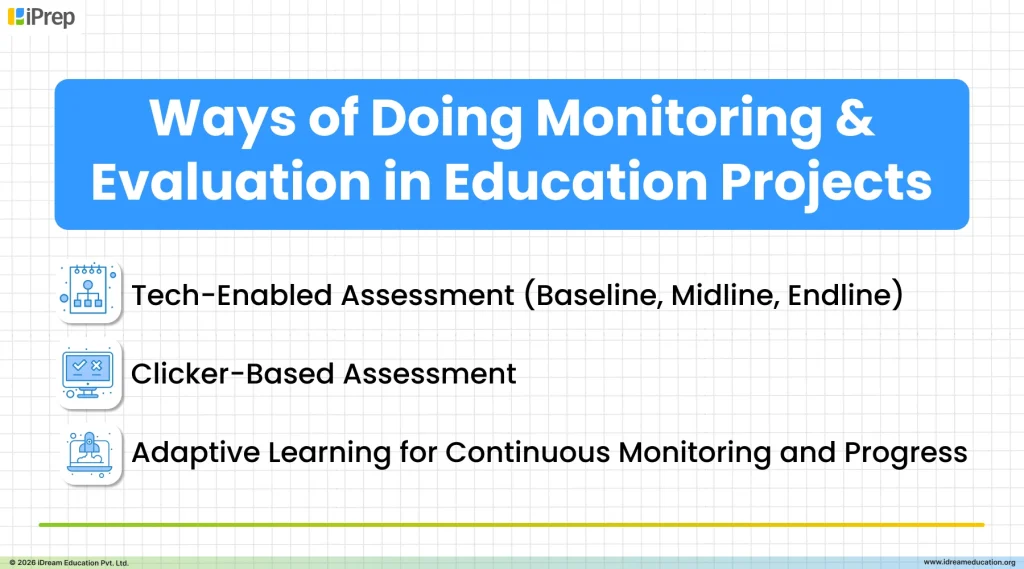
Tech-Enabled Assessment (Baseline, Midline, Endline)
- Tech-enabled assessments are most useful for complete projects where learning improvement is the core goal. The process begins with a baseline assessment to understand the current learning level of students before the initiative or digital solution is introduced. This shows where students are strong, where they are weak, and what kind of support they need.
- Based on baseline results, the team implements the solution with targeted support, including focused content, experiential learning methods, teacher training, and additional interventions for identified weak areas.
- A midline assessment is then conducted to check whether students are progressing well, whether learning has improved, and whether the interventions are working. If progress is slow or uneven, extra support is provided at this stage through re-teaching, mentoring, content changes, or teacher guidance, so that the project can still reach its planned outcomes.
- Finally, an endline assessment measures what has actually been achieved. It shows how much learning has improved, which gaps still remain, and what worked best. This data becomes the base for deciding next steps—whether to improve the model, continue support, or scale the project further.
Clicker-Based Assessment
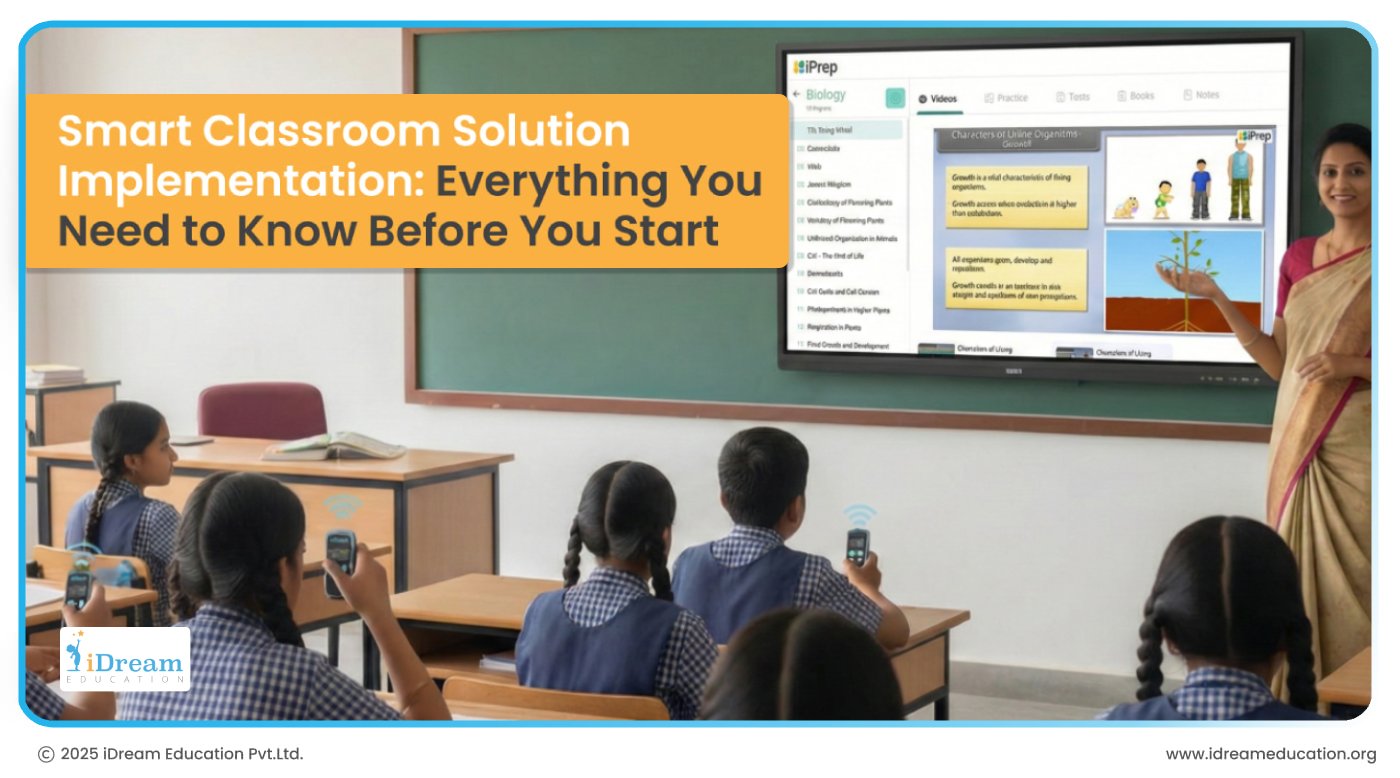
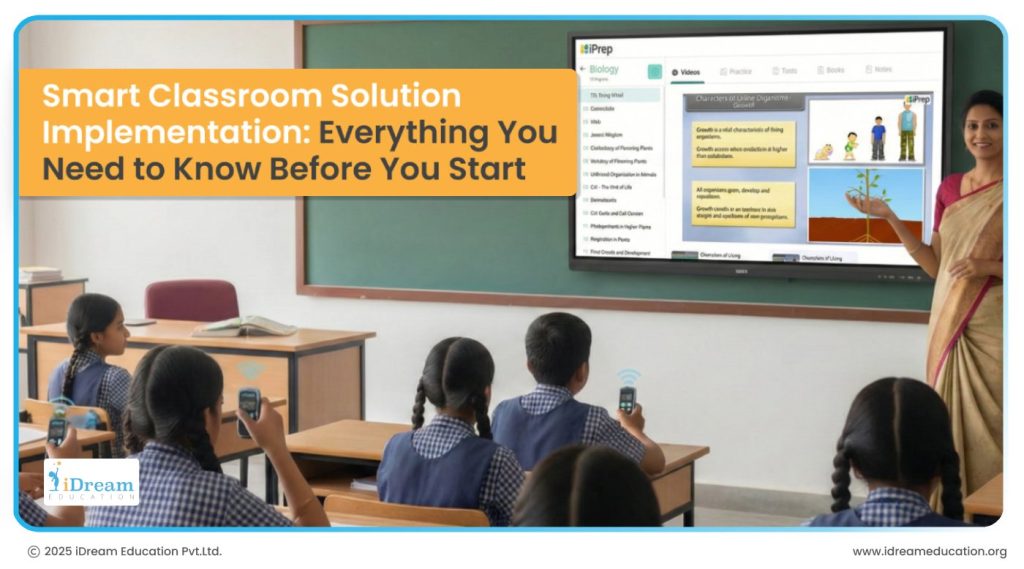
- Clicker-based assessment uses simple response devices that students can use to answer questions instantly in class. This method works very well with smart classroom–type solutions, where teachers can assess topic-level understanding every day or every 15 days.
- Teachers show assessment questions on a panel during or after a lesson, and students respond using clickers. Results appear instantly, showing who has understood and who has not. This keeps classrooms active and participative, while giving teachers clear evidence of learning.
- Clicker-based assessment helps in identifying learning gaps early, making live adjustments in teaching, providing targeted mentorship to struggling students, and allowing different learning paces for different students. Instead of waiting for exams, teachers get continuous feedback. Learning becomes visible every day, and teaching becomes responsive rather than assumed.
Adaptive Learning for Continuous Monitoring and Progress
- Adaptive learning enables monitoring & evaluation to happen as part of daily learning, not as a separate activity. Personalised adaptive solutions can be implemented through digital libraries or through individual devices given to students. Each student receives a unique login, their own learning path, and a system that responds to their performance.
- The journey begins with a diagnostic assessment that identifies each student’s learning gaps. Based on this, the platform automatically moves the student to remedial content, practice activities, and concept-building lessons. Once the student is ready, they attempt a final assessment to reach grade-level learning. This entire journey from diagnosis to mastery is continuously recorded on the reporting dashboard.
- Every action a student takes becomes data. This data can be tracked through reporting dashboards that show weekly project progress, class-wise trends, school-wise performance, and individual student journeys. Project teams can see who is progressing well, who is stuck, and where additional support is needed.
- PAL makes monitoring continuous and evaluation meaningful. You do not wait for the end of the year to know what happened. You know every week, sometimes every day, how learning is moving.
Monitoring & Evaluation in education projects is the key to real impact because it shows how well funds and solutions are being used. It reveals what is working, what is wasting effort, and what needs improvement. This clarity gives confidence to scale what works and fix what does not – so that every resource leads to real learning, not just recorded activity.
If you are looking to build strong Monitoring & Evaluation into your education project or need a digital solution that enables continuous assessment in a smart classroom or at the student level, you may connect with us to explore how this can be designed and implemented effectively. Contact us at +917678265039 or write to us at share@idreameducation.org. You can also share your details here.
Categories You may Explore
Related Articles