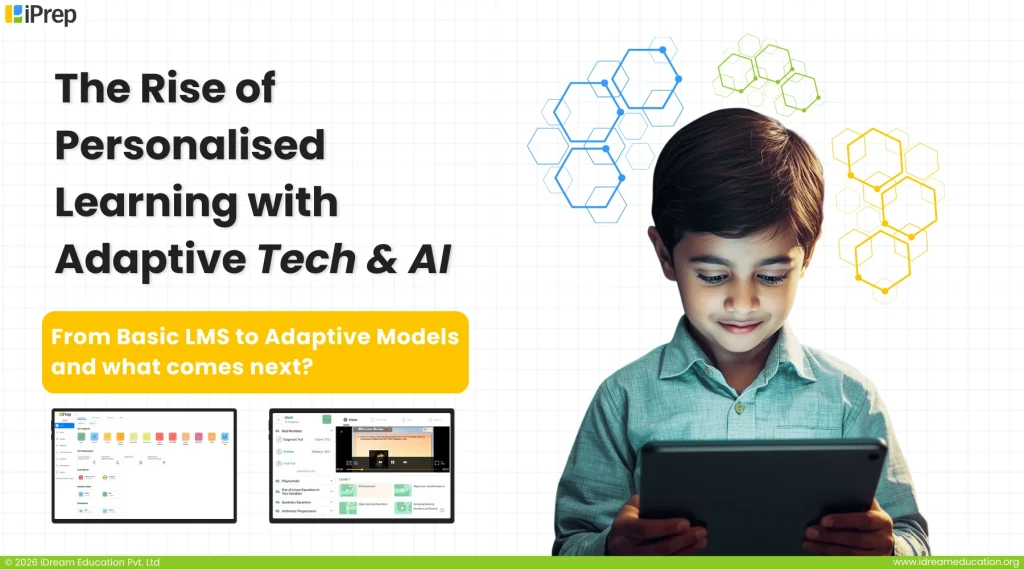
Educational technology has witnessed a profound transformation over the past decade, especially in how learning is delivered and personalized for students. For senior CSR leaders, NGO heads, and state government officials vested in advancing education equity, understanding this evolution is critical to shaping impactful interventions. In this blog, we lay out the evolution of LMS in India, from its beginnings as a simple classroom application to its gradual development into more intelligent, personalized learning platforms.
Understanding how and why these systems evolved matters, not because technology alone can solve learning gaps, but because each stage reflects how education systems have responded to real constraints over time.
The Era of “Library LMS”: When Personalized Learning Meant Organising Classroom Content
In its early days, the Learning Management System was designed primarily as a teaching aid for classrooms, not as a personalized tutor for every child. It brought together videos, PDFs, quizzes, and presentations in a single, well-structured sequence that teachers could follow as lesson plans. Instead of juggling multiple sources, a teacher could walk into the classroom, open the LMS, and get a clear, unit-wise, chapter-wise flow of content mapped to the syllabus.
Initially, many of these K12 learning resources were complex and built more for IT teams than for busy teachers. Over time, the user interface and experience evolved significantly. Menus became simpler, and navigation became more intuitive. Content is now easier to access with just a few clicks. What started as a dense dashboard transformed into a teacher-friendly tool. This visually guided interface makes it easier to run a digital class. Teachers can now project videos or pick activities on the spot. These improvements are designed to work even in government school settings.
Then came the COVID-19 pandemic, bringing a dramatic shift that tested every education system. This is where classroom-centric learning fell short when schools were closed due to COVID-induced lockdowns
The LMS was originally a structured classroom tool. It suddenly had to function independently when schools shut down overnight. Remote learning became the only available option. This pandemic period laid bare a longstanding challenge in education. It revealed unequal learning access and progress across different students. Many children were carrying hidden gaps from earlier grades.
Worldwide governments, NGOs, and CSR initiatives witnessed alarming reports of students potentially losing an entire academic year. In the Indian public school ecosystem, where offline-first learning methods dominate, the necessity for more responsive and personalized digital solutions became starkly evident.
The Rise of Personalised Adaptive Learning as a Critical Intermediate Step
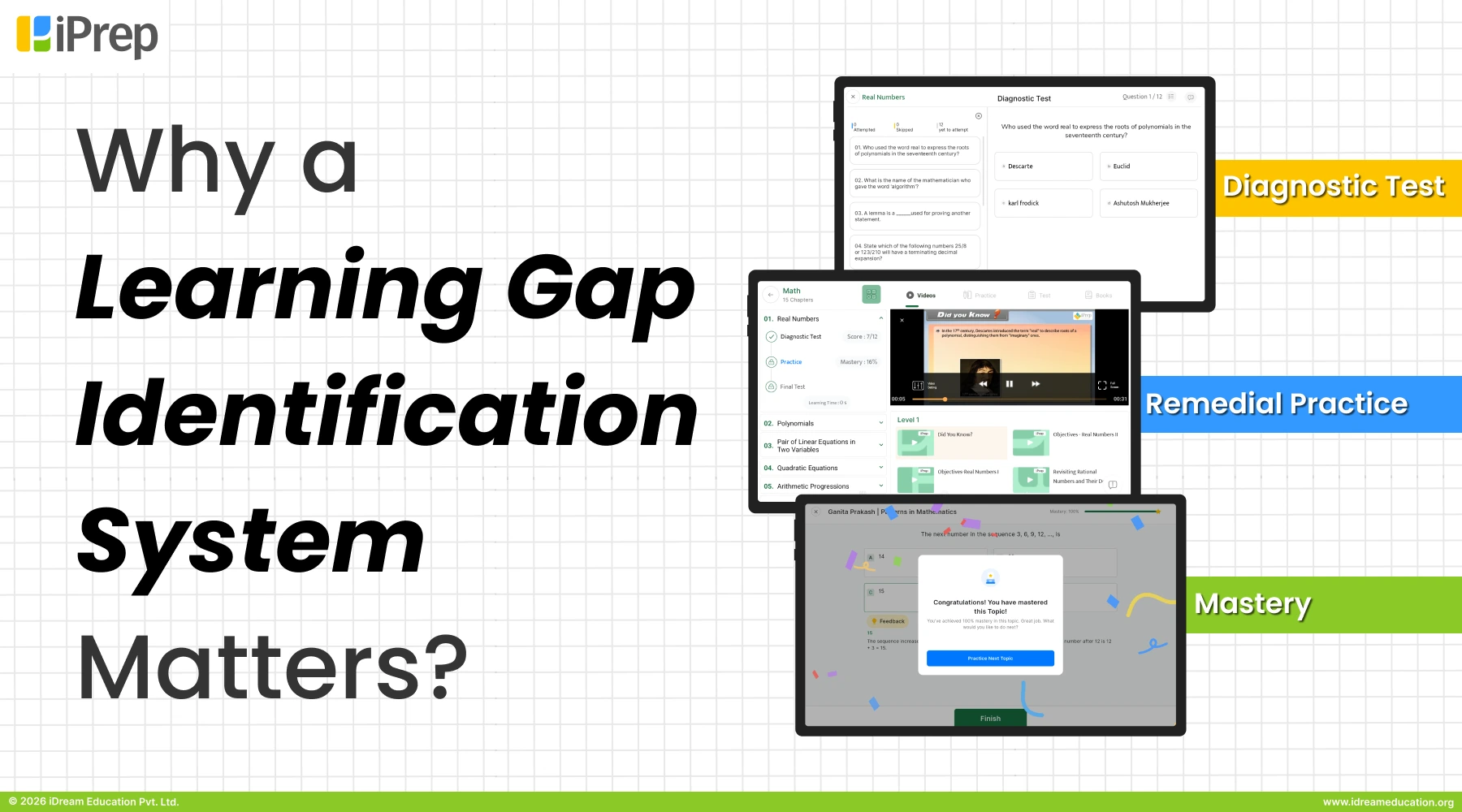
With classrooms reopening unevenly and teachers facing students at widely different learning levels, manual remediation alone proved difficult to scale. Recognizing the inability of “library LMS” formats to bridge growing learning gaps, educational technology evolved towards adaptive learning systems. These next-generation platforms assess student learning gaps through diagnostic tests and then direct learners to relevant remedial content based on preset rules.
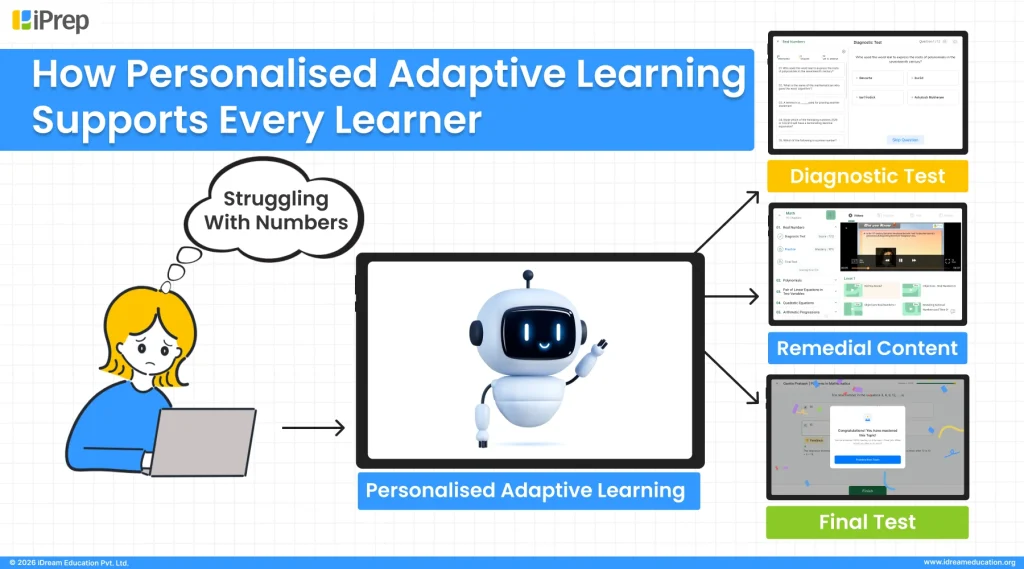
However, the form that adaptive learning could realistically take was shaped by ground realities. For many public education systems, especially in offline or low-connectivity contexts, rule-based adaptive learning remains a practical and scalable model rather than a transitional phase.
In India’s largely offline public school context, this adaptation was vital. Offline-capable, rule-based LMS allowed teachers and students to work within limited or no internet connectivity environments. The system would follow “if-this-then-that” logic. For example, if a learner scored below a threshold on a mathematics chapter, the platform would direct them to foundational lessons from earlier grades.
This approach is now bringing measurable improvements to several implementations. It is particularly effective where foundational gaps were clearly identified. These tools enable CSR and government programs to provide personalized instruction at scale. This impact is now possible even in the most remote areas. With the emergence of AI, it has become possible to identify learning gaps at a much finer, more granular level. This represents a natural next step in how learning management systems continue to evolve.
However, rule-based systems still rely on predefined pathways and approaches, limiting how precisely they can respond to individual learning patterns.
So, How Do AI-Enabled Personalized Learning Solutions Become the Next Step?
Artificial Intelligence introduces powerful new capabilities to personalized learning. These systems analyze learner behavior at a much finer level than rule-based approaches. AI-powered adaptive platforms go beyond fixed rules. They analyze real-time responses to pinpoint learning gaps at a micro level. AI does not assume that entire chapters are problematic. Instead, it drills down to the exact missing skill. It might identify a struggle with carry-forward addition or a specific grammatical structure. This precision ensures that support is provided exactly where it is needed.
This precise diagnosis allows the system to generate tailored content on demand. It can create custom visuals and interactive exercises. The AI also produces analogies or text explanations matched to a student’s learning style. This ensures the material moves at the correct individual pace. Students no longer face repetitive loops of the same video or quiz. Instead, AI introduces variety and nuance into the curriculum. This approach ensures that content resonates with the learner and clarifies difficult concepts.
Because AI can generate and recommend content dynamically, remediation can become more timely and targeted. Significantly, AI-enabled LMSs have the potential to reduce the time to mastery by targeting the smallest gaps immediately, rather than reverting them to earlier grades wholesale.
However, translating these AI-driven capabilities into large-scale school systems requires alignment with existing infrastructure realities.
Bringing AI-Enabled Learning to India’s Offline School Context
As AI-enabled adaptive learning emerges as the next stage in the evolution of personalised learning solutions, its adoption must be grounded in the operational realities of India’s public education system. India’s public education landscape, particularly in rural and underserved areas, remains predominantly offline, and AI’s data-intensive needs pose implementation challenges. However, hybrid models are likely to evolve gradually, combining offline-first LMS systems with selective AI modules that operate locally and sync when connectivity allows.
These innovations align well with CSR and government priorities by maximizing reach in low-infrastructure contexts while progressively introducing personalized, AI-enhanced learning.
What Does the Move Toward AI-Enabled Personalized Learning Enable?
As these PAL solutions mature and align more closely with system realities, they begin to open new possibilities for how personalization can function at scale. The use of AI-enabled personalized adaptive learning platforms presents an opportunity to support progress toward more equitable and effective learning outcomes. The trajectory, from static, one-size-fits-all LMS to intelligent, micro-level personalized remediation, is key to overcoming entrenched learning gaps, especially post-COVID.
AI-powered adaptive systems can enable several key outcomes:
- Direct targeting of specific skill gaps for faster mastery
- On-demand, diverse content to suit individual learner preferences
- Effective offline functioning with periodic syncing
- Actionable analytics to support evidence-based program decisions
- Scalable personalization that complements teacher efforts
The future LMS will no longer be just a digital content warehouse or simple rule-based tool. It will be a smart learning companion, detecting struggles as they emerge, adapting in real-time, and generating the right learning experiences to help every child succeed faster.
The Future Direction of Personalized Learning in India
As India charts its path toward digital inclusion and educational equity, understanding the progression from library LMS to rule-based adaptive platforms and emerging AI-enabled learning systems becomes increasingly important. For CSR and government leaders, these shifts raise important questions about how personalization, scale, and system constraints can be balanced over time while strengthening learning outcomes within real-world conditions.
If you are exploring personalised or adaptive learning solutions for a school or education project, you may reach us at +917678265039 or write to us at share@idreameducation.org.
Categories You may Explore
Related Articles