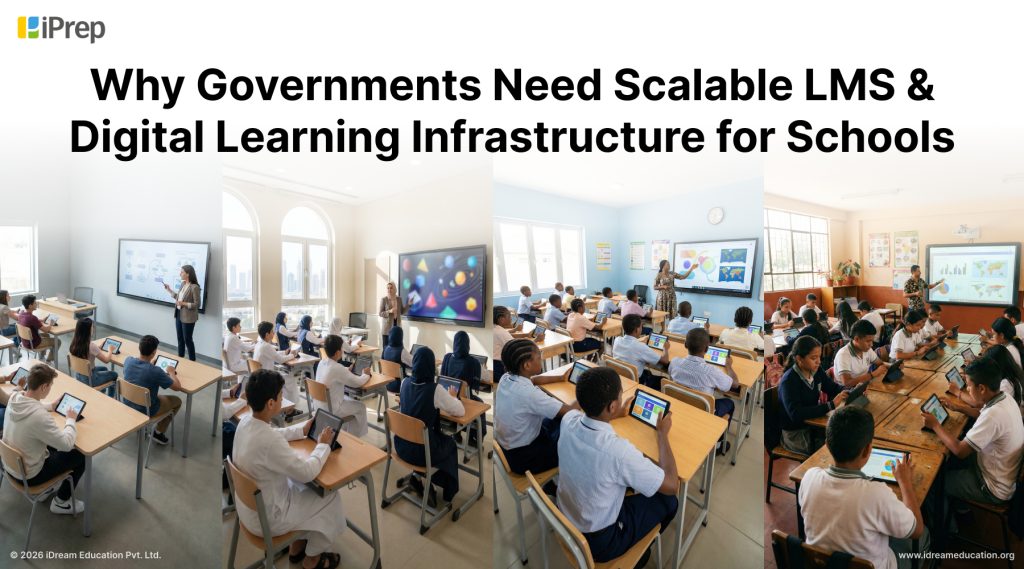


Across the world today, education systems are facing an urgent challenge: ensuring that learning continues safely, consistently, and at scale in an increasingly uncertain and digitally driven world. From emerging markets across Africa, the Middle East, Southeast Asia, and South America to developed nations, the need for secure, disruption-free digital learning infrastructure and high-quality learning resources has never been greater.
In this blog, we explore the evolving needs and challenges faced by education stakeholders across the ecosystem. These include Ministries of Education, global development organizations, NGOs, education implementers, system integrators, distributors, large school networks, as well as coaching academies and post-school learning centers working to deliver learning at scale.

The Status Quo of LMS & Digital Learning Infrastructure Across Emerging Education Systems
In our experience working closely with governments, schools, NGOs, and education partners at different levels in these said countries, we have observed a surprising shortage of platforms and learning management systems that truly address the full spectrum of their needs. One of the fundamental challenges lies in the high cost of quality human capital and the broader outcomes of our education systems.
Today’s students are growing up in a world that is more distracting and complex than ever before. They face rising exposure to cyberbullying, the risks of unrestricted internet access, and the growing influence of social media distractions. At the same time, the rapid advancement of AI has introduced new challenges—misinformation, deepfakes, and blurred lines between reality and propaganda.
Below is a structured view of the current landscape and the key challenges shaping it:
Limited Availability of Comprehensive LMS Platforms
Despite growing interest in digital education, many countries still lack robust, scalable LMS platforms that support curriculum-aligned learning, teacher enablement, and large-scale deployment. Most available systems tend to be:
- Fragmented – focusing only on content delivery or classroom management
- Pilot-driven – designed for small projects rather than nationwide scale
- Infrastructure-heavy – requiring high bandwidth or expensive hardware
As a result, education systems often struggle to implement sustainable digital learning ecosystems that can support millions of students and teachers simultaneously.
Learning Disruptions Continue to Impact Education Systems
Education systems across these regions continue to face frequent disruptions that interrupt schooling. These disruptions can arise from:
- Public health crises such as pandemics
- Regional conflicts or political instability
- Climate-related disasters and extreme weather events
- Infrastructure limitations in remote or underserved areas
When schools close unexpectedly, learning continuity becomes extremely difficult, especially in systems where structured digital platforms are not already in place. Without reliable and scalable LMS & digital learning infrastructure, millions of students find themselves without access to guided learning outside the classroom, resulting in significant learning gaps.
Limited Access to Consistent Learning Resources
In many education systems, students rely heavily on physical classrooms and teacher-led instruction as their primary learning environment :
- Students don’t have access to structured curriculum-based resources
- Learning becomes dependent on unregulated online content or informal sources
- Students are distracted by social media on the internet and are often victims of its direct and indirect perils
- Different students learn differently and at different paces and many students can be left behind
This creates inconsistency in learning quality and makes it difficult for governments and/or education systems to ensure equitable access to education across regions and socio-economic groups.
High Cost of Scaling Quality Human Capital
Another structural challenge is the high cost of expanding quality teaching capacity. Many countries face:
- Shortages of trained teachers
- Uneven distribution of experienced educators between urban and rural areas
- Limited capacity to deliver continuous teacher training
Building strong digital education infrastructure requires significant investment in both technology and human capital, making it difficult for governments to scale solutions quickly.
Rising Digital Risks for Today’s Students
Today’s students are growing up in a digital environment that is more complex and distracting than ever before. They face increasing exposure to:
- Social media distractions that reduce learning focus
- Cyberbullying and online safety risks
- Unrestricted internet access without academic guidance
The rapid rise of Artificial Intelligence has introduced additional challenges such as misinformation, deepfakes, and blurred boundaries between credible knowledge and propaganda. Without structured digital learning ecosystems, students often navigate this digital world without the academic scaffolding needed to develop critical thinking and responsible technology use.
Yet, within these challenges lies immense opportunity. If guided thoughtfully, AI and digital learning ecosystems can empower students, strengthen critical thinking, and help shape a generation capable of responsibly harnessing technology for the betterment of society and the future of humanity.
To summarize, despite these challenges…
The current moment presents a critical opportunity for education systems worldwide. When enabled thoughtfully, scalable LMS & digital learning infrastructure can ensure learning continuity during disruptions and quality learning in peace time. Instead of allowing digital risks to widen learning gaps, the education ecosystem now has the opportunity to build more resilient, offline and future-ready education systems that leverage technology to improve access, quality, and continuity of learning. This is precisely why scalable LMS & digital learning infrastructure are increasingly becoming essential pillars of modern school education systems.
The need for distraction free Learning and Quality Digital Learning Infrastructure is mutual
We are often reached out by various Ministries of Education, Education planners, specialists of EdTech and Education and all want the same things – an ecosystem that their students and teachers can use independently, safely and without the internet and its perils cited above. And they are right, how else can you ensure your students are not accessing apps and social media that not only distract them but can be damaging? How do you bring access to quality learning materials, accepted in their geographies, while safeguarding data, and make it available to millions of students seamlessly?
Over the last few years, we at iDream Education have endeavoured to provide solutions to all these problems. Whether it is an offline application that works on any device or operating system or online access with Mobile Device Management so that students still don’t access any other applications apart from the learning application, or an LMS that works in Smart Classroom devices, Labs or Digital Libraries with academic content and thousands of curated & age appropriate books for students to develop rich knowledge, confidence and through a habit of reading, the objective is to bring those elements in its platforms that benefit quality learning anywhere and anytime!
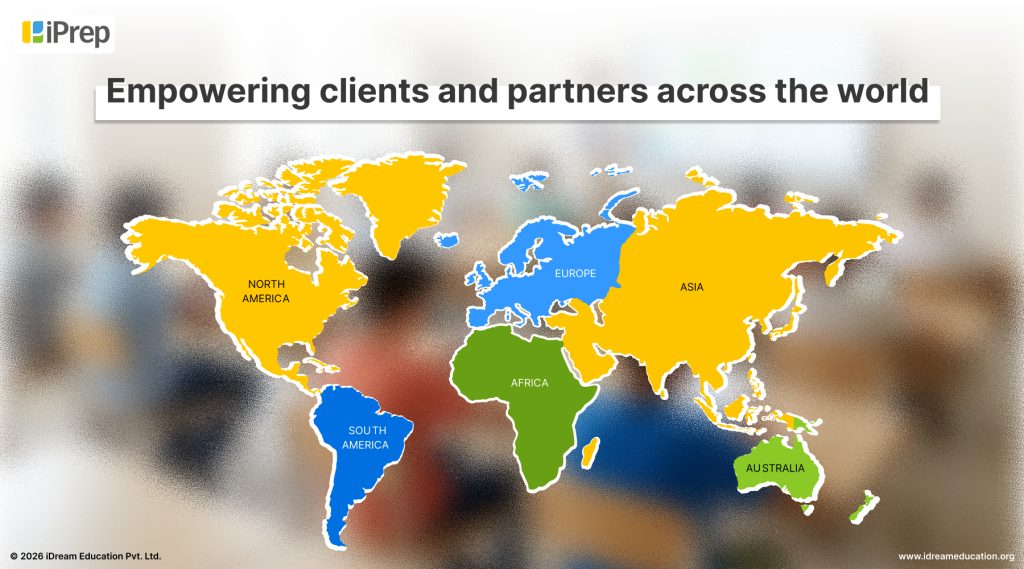
The World today is a Global Village
Education export is now a practical and scalable reality. For example, recently iDream developed a learning programme and ecosystem for a partner for students in Afghanistan by using its platform iPrep PAL. The program is meant to serve thousands of students with a special focus onFoundational Learning With strong similarities across curricula in India, many Middle Eastern countries such as Saudi Arabia, Qatar, Oman, Jordan, and Yemen, as well as African nations including Nigeria, Ghana, Rwanda, and Kenya—and even parts of South America are increasingly exploring and deploying learning management systems that serve multiple geographies with minimal adaptation. As a result, both digital learning platforms and high-quality educational content can now be shared, localized, and scaled across regions far more easily than ever before.
The role of Adaptive Learning Platforms
PAL (personalized adaptive learning) plays a critical role in large education programs focused on improving learning outcomes at scale. We implemented PAL for an entire state in India for half a million students. It did not take us more than a month to implement the programme, iPrep PAL, an adaptive learning platform for schools with gamification, remedial learning content and assessments, that charts individualized learning pathways, was given on Samsung Tablets to 0.5 million senior school students for 5 subjects. The results? Students after using the platform improved drastically, covering their historical learning gaps, most of whom scoring 80% in a topic for which they were scoring often less than 25%.
PAL is recognized among the most cost-effective education interventions and is listed in the World Bank Smart Buys for Education as one of the top recommended investments for improving learning outcomes in low- and middle-income countries.
How adaptive learning improves learning outcomes?
• Adaptive practice based on student learning levels
• Personalized learning pathways
• Helps improve academic performance and exam readiness
• Particularly effective after learning disruptions
• Supports foundational learning and concept clarity
But how do we take PAL to students of various emerging countries in the world for a highly skilled workforce?
The cue for Educational Planners
Education Planners and Multi laterals such as World Bank, UN, Global Partnership for Education, Asian development Bank are witnessing the fast growth of student bases in the countries being discussed above and there are not many platforms that meet the requirements and therefore there are RFPs and further processes before solutions are identified. The whole process could be simpler by deploying National level programmes in collaboration with Ministries of Education that would lead to large scale learning recovery, foster academic growth, life skills development, growth, lifelong learning and eventually a highly skilled workforce that enables developing countries to rise up in the Global ranks.
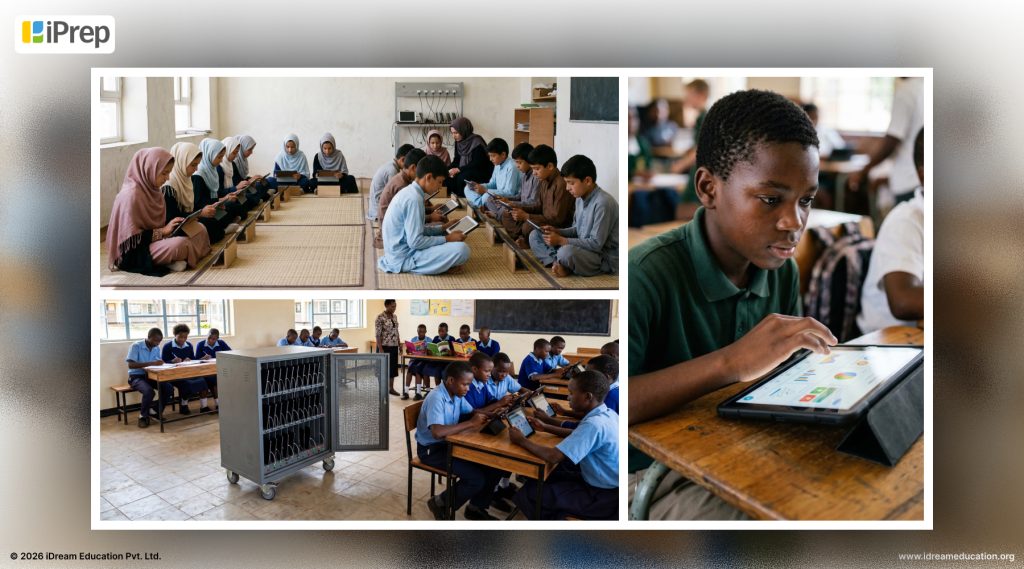
What Ministries of Education Should Look for in a National LMS & digital learning infrastructure
As countries explore large-scale digital learning programs, one question repeatedly arises among Ministries of Education, multilaterals, and program implementers: what defines a truly scalable national learning platform?
Many learning management systems are designed for individual schools or small institutions, but national education programs require platforms that are built differently—designed to serve millions of students across diverse geographies, infrastructure conditions, and learning needs.
Key features that Education planners should look for LMS & digital learning infrastructure:
Offline-first LMS that allows offline digital learning
Large parts of Africa, South Asia, and Latin America continue to face connectivity challenges. In many countries, connectivity is still unreliable. This is why offline access becomes non-negotiable for a national LMS.
LMS that works on any Device or Operating System
Schools operate across a mix of infrastructure—smart classrooms, tablets, computer labs, and digital libraries. A scalable LMS should work seamlessly across devices and operating systems.
Adaptive learning and personalized pathways
Adaptive learning systems allow students to practice at their own level, identify learning gaps, and receive targeted remediation. This is particularly effective in large public education systems where learning levels often vary widely within the same classroom.
Rich multimedia learning resources
Video lessons, simulations, interactive practice modules, and digital books help make learning more engaging and support concept clarity across subjects.
Teacher enablement tools
Teachers should be able to assign lessons, track student progress, conduct assessments, and integrate their own learning materials within the platform.
Curriculum-aligned learning resources
High-quality academic content aligned with national or regional curricula remains critical. Platforms that integrate structured animated video lessons, practice modules, assessments, and reading resources provide a complete learning ecosystem rather than just a content repository.
An LMS with strong Data security and safe digital environments for students
Ensuring that students remain within a secure learning environment,without exposure to distracting or harmful online content. This is increasingly becoming a priority for governments.
Reporting and program impact measurement
Large-scale education programs require transparent monitoring and evaluation. Robust reporting systems allow administrators and education planners to track engagement, learning progress, and program outcomes.
Scalability across institutions and geographies
A national platform must support implementation across thousands of schools while maintaining consistent performance, reporting, and content delivery.
Platforms that bring these capabilities together form the backbone of scalable digital learning infrastructure for national education systems
Learning at the time of conflict
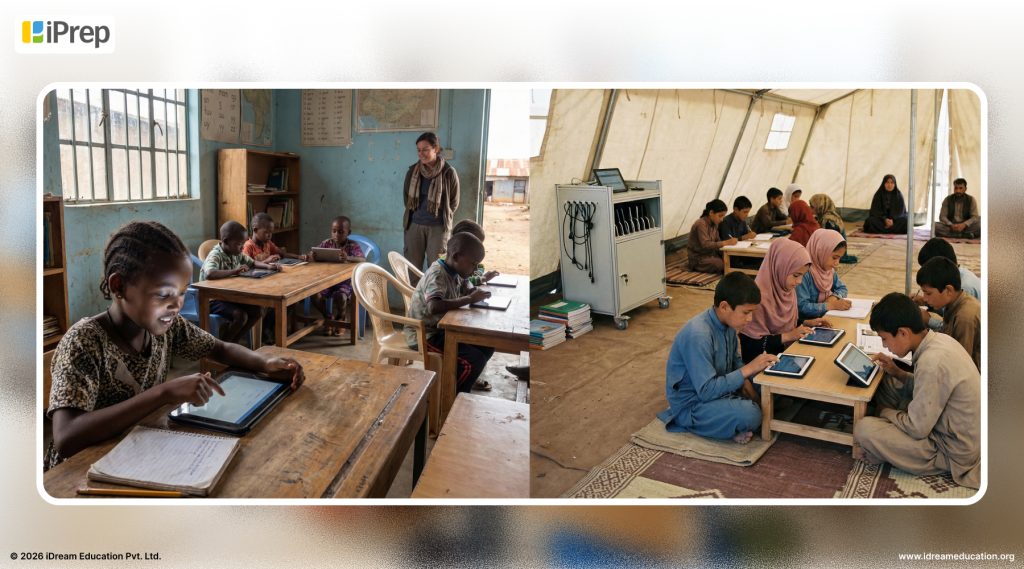
And this brings us to the now, a world marred with Warsl in fact, some say we’ve already entered a World War.. Even a few days of war displaces thousands, disrupts regular schooling and the result? A break in learning for students. The world has already seen a pandemic, lessons learnt, the silver lining however was that digital learning was adopted. The endeavor now is to ensure that not only earning does not stop at the times of conflict but it thrives and flourishes. Students should be able to access their curriculum fit material and material for their growth & iife-long learning right at home and without the internet, teachers should be able to teach remotely using a Learning Management System, completely removing the need of a physical classroom. Students should be able to practice and do assignments, joyfully read and engage in activities and gamified learning. They should be exposed more than ever to the positive aspects of AI.
How will all this be made possible?
This brings us to one of our last questions. ‘How will all this be made possible?’
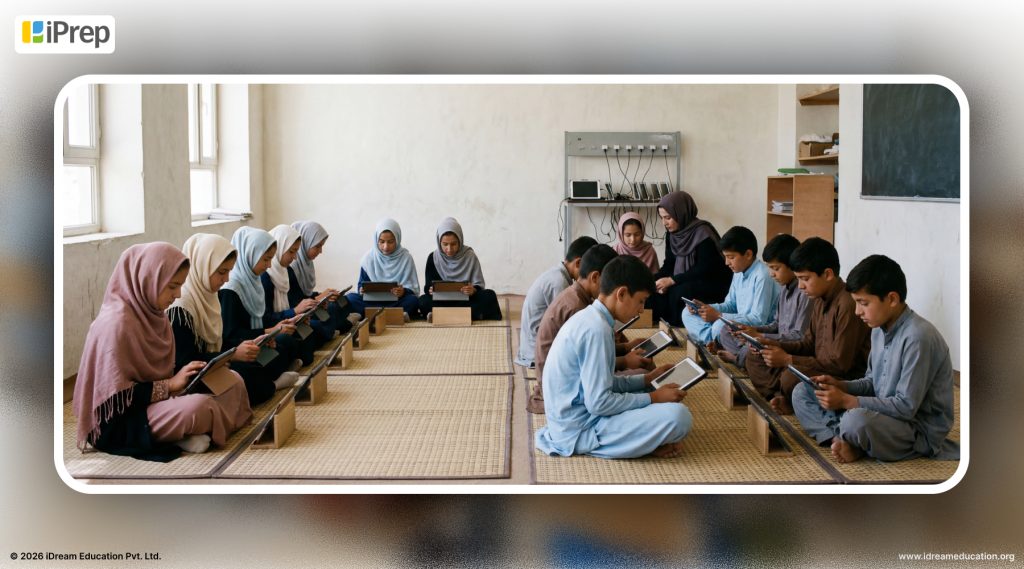
Thankfully, the answer is already there. All of the above is possible and national boundaries, challenges with infrastructure & connectivity and lack of structured learning management systems and Digital Learning Infrastructure are no longer a detriment. Let’s understand in more detail with an example of what we did in Afghanistan. We implemented adaptive learning, completely offline, meant for 40000 students across 15 schools, using a server-client model, and the results indicate that students when provided with appropriate content, and individualized learning opportunities, they improve. Students improved by 49% percentage points in Math and 46% percentage points in Science. They accessed remedial lessons, video lessons, simulations and access ensured academic success.
This is just one example, the possibilities of a scalable and flexible LMS, one in which customized content can be added, teachers/ administrators can add their own content, on top of an existing suite of rich digital learning content are immense. We are talking about a complete ecosystem that supports schools, districts, states, nations in alignment with non-negotiables of scalability, quality, safety, security, reporting and impact transparency.
Winding up:
Setting up a scalable and flexible LMS for all the countries listed below is not a pipe dream, it is a reality that is right in front of us. Seamless implementation at large scale at express speed, with quality and customized content, adaptive learning, reporting is the new export that will shape the future workforce in these countries:
Digital Learning Solutions for Middle East
Saudi Arabia
UAE
Qatar
Jordan
Oman
Digital Learning Solutions for Africa
Kenya
Nigeria
Ghana
Rwanda
Tanzania
South Africa
Digital Learning Solutions for Latin America
Brazil
Mexico
Colombia
Peru
Chile
If your organization is exploring a scalable LMS or digital learning ecosystem for national or regional education programs, connect with the iDream team to explore how the iPrep ecosystem can be deployed across schools, districts, and countries. For queries, reach out to +91 76782 65039 or email us at share@idreameducation.org
Frequently Asked Questions -
1. What are some of the digital solutions available for African countries, middle eastern countries, South East Asian countries, South American countries
There are many digital learning solutions for African, Middle Eastern, South American countries that can enable education programmes and ensure long term improvement in education outcomes. Digital learning solutions and curriculum aligned K12 content for Kenya, Nigeria, Ghana, Rwanda, Tanzania, South Africa, Saudi Arabia, UAE, Qatar, Jordan, Oman, Brazil, Mexico, Columbia, Peru, Chile are provided by organizations that provide end to end solution including curriculum aligned content, LMS, offline learning on any device or operating system at school and at home with adaptive learning, digital library, In depth reporting, remote learning, hybrid learning for low connectivity areas. K12 Digital learning content in Hausa, Yoruba, Igbo, Akan (Twi), Ewe, Ga, Kinyarwanda, French, Swahili, Zulu, Xhosa, Afrikaans, Sesotho, Arabic, Portuguese, Spanish, Nahuatl, Maya, Quechua, Aymara can be provided by credible digital learning providers.
2. Where can I get a Learning Management System for Schools for my country?
You can get a learning management system for your schools and education programmes be it a national programme by the Government or a programme by an NGO or a Global body by trusted Digital Learning providers. Such providers give Digital Content that aligns with different international curriculum and languages and offer secure, offline and scalable digital learning infrastructure with in depth and real time monitoring & reporting, as well as outcome measurement. Such organizations have experience of providing LMS and Digital content in various countries and states across the world and successfully implementing programmes for millions of students and thousands of schools.
Categories You may Explore
Related Articles