

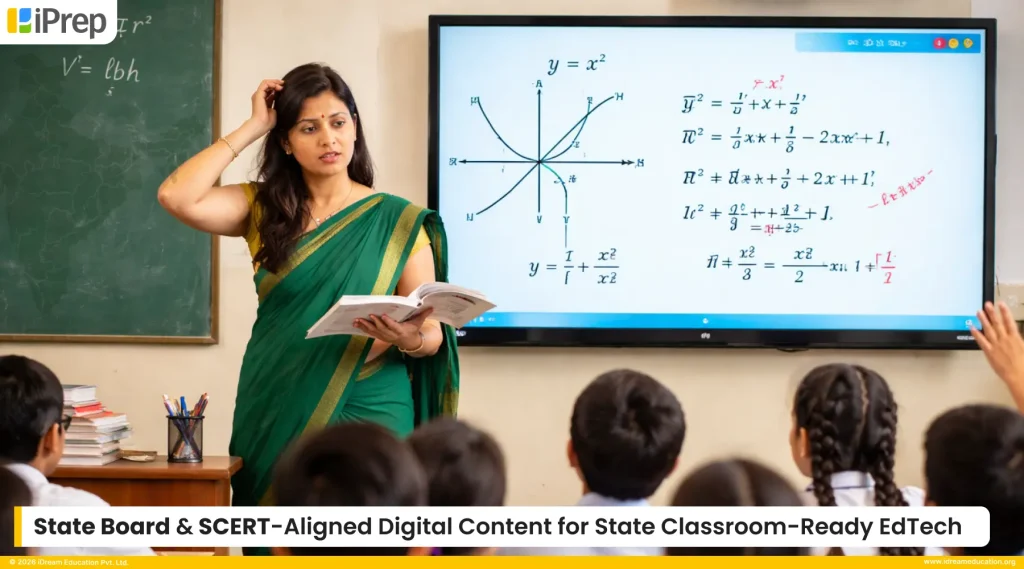
In most government and low-resource schools, classrooms don’t begin with dashboards, devices, or digital buzzwords. They begin with state-prescribed textbooks, regional languages, local histories, and teachers who are already stretched thin. Learning here follows the state curriculum for a reason. It reflects the social, cultural, and linguistic realities of the children sitting on those benches.
This is where a critical disconnect often appears between need and technology implementation
When a project is enabled with centrally, generic, or loosely mapped digital content, it may look impressive – but on the ground, it simply doesn’t fit. If a teacher opens a digital lesson and finds that the chapter order is different, examples are unfamiliar, historical references don’t match the state syllabus, or the language doesn’t align with the classroom medium, that content quickly becomes a burden, not a support. Instead of easing teaching, it adds one more layer of effort – something to explain, skip, or avoid altogether.
What happens when State Board Alignment of Content Is Missing?
In classrooms, teachers are not rejecting technology – they are protecting their time, energy, and responsibility towards students. A teacher managing 40–60 children, multiple grades, administrative work, and community expectations cannot afford tools that demand extra translation, extra explanation, or extra alignment work.
When digital content is not SCERT-aligned, teachers are forced to:
- Mentally map digital lessons to textbook chapters
- Translate concepts into the classroom language
- Skip content that doesn’t match the syllabus or exam pattern
- Justify to students why “this video says something else”
Over time, this effort outweighs the perceived benefit. What was introduced as “support” starts feeling like an additional burden. And in such environments, tools that increase workload—no matter how well-intentioned—are quietly sidelined.
For teachers, SCERT aligned digital content is not a “nice to have.” It is the difference between “use” and “non-use”
State classrooms demand SCERT digital learning material because students are assessed on it, teachers are trained on it, and communities trust it. Content that respects regional language, local context, and textbook flow naturally blends into the classroom. Content that doesn’t – no matter how advanced the technology is, often ends up unused, stored away, or eventually scrapped.
This is why the real conversation around digital learning in schools is not about technology adoption, but about relevance, respect, and reality. When digital content is deeply state board aligned, it stops being “extra work” and starts becoming a genuine classroom companion. Digital content that teachers willingly use and students truly connect with.
What Changes When Digital Content Is Truly SCERT-Aligned?
When digital content is designed with the state textbook at the centre, the classroom experience changes in small but powerful ways. Teachers no longer have to pause and reconcile differences between the screen and the book. Students no longer feel confused by unfamiliar terms or examples. Learning flows in the same direction from the textbook to understanding, not away from it.
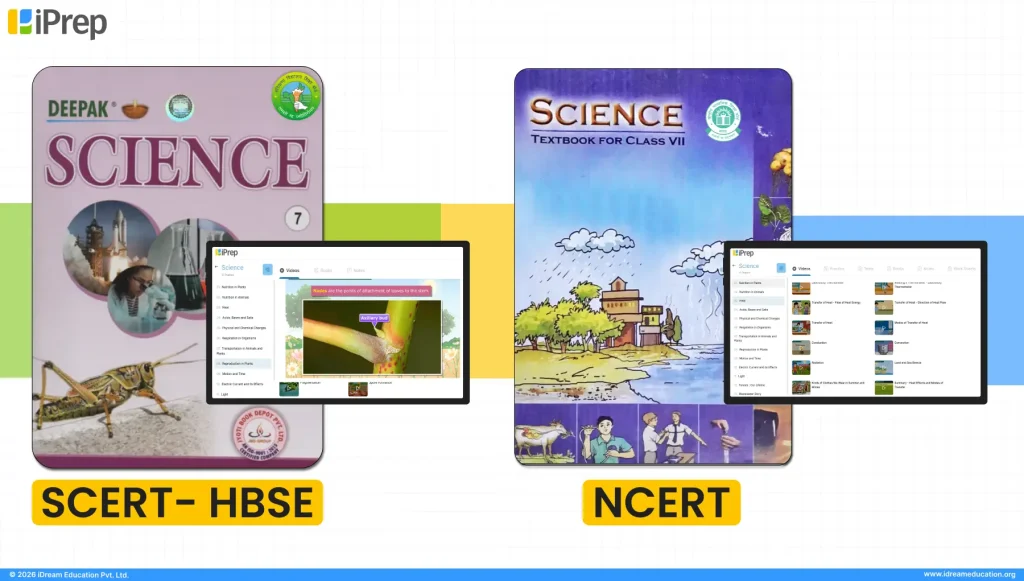
SCERT-aligned digital content mirrors the exact chapter structure, learning objectives, terminology, and pedagogy of the state syllabus. It speaks the classroom language – literally and culturally. As a result, digital content stops competing with the textbook and starts strengthening it.
At the ground level, state board alignment leads to three visible shifts:
- Teachers gain confidence, not cognitive load: Teachers can pick up digital content mid-lesson without preparation. The examples match what they already teach, the language feels natural, and the sequence supports their lesson plan. Technology becomes an extension of teaching – not a disruption.
- Students recognise what they are learning: When students see the same concepts, diagrams, and stories they encounter in their textbooks, explaining visually their interest in learning rises. The content feels familiar, not foreign. Understanding deepens because learning is reinforced, not reintroduced.
- Classrooms move from demonstration to interaction: SCERT aligned digital content enables teachers to pause, question, revise, and explain, without fear of going off-syllabus. Videos and visual content become tools for discussion, not one-way delivery. This is especially critical in first-generation learner contexts, where visual reinforcement can bridge learning gaps.
In such classrooms, digital content is no longer seen as an “extra period” or a special activity. This is the point where technology finally starts serving its purpose: supporting teachers, respecting context, and strengthening state-led learning systems.
Let us now look at: What Should SCERT-Aligned Digital Content Actually Include?
SCERT alignment is often misunderstood as a simple chapter tagging exercise. In reality, it is a content design discipline, one that begins with the textbook and ends in the classroom. For digital content to truly work in state schools, alignment must be deep, deliberate, and multidimensional.
What SCERT-Aligned Digital Content Should Comprise:
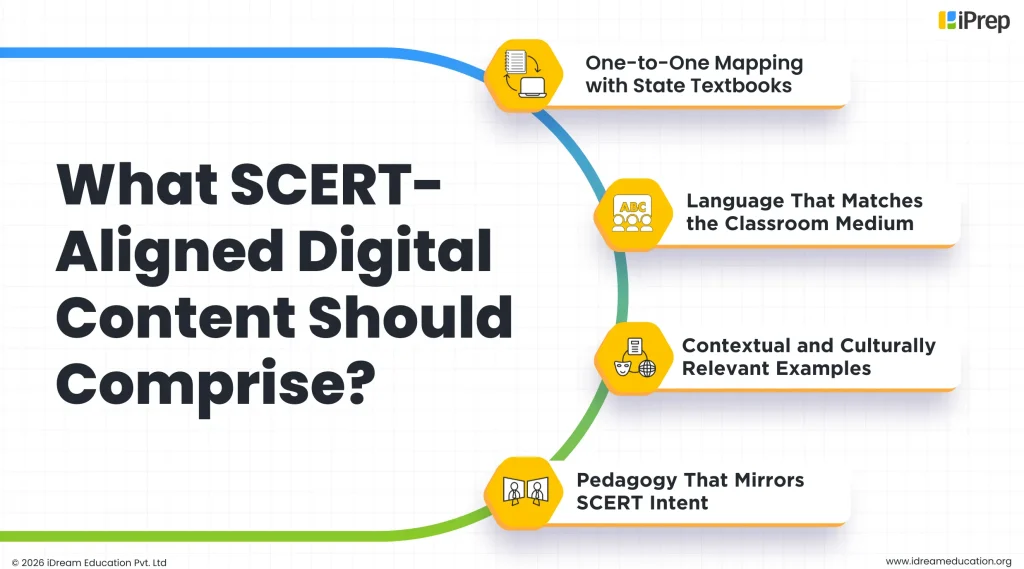
One-to-One Mapping with State Textbooks
Every digital asset – video, animation, practice, worksheet, or assessment must map clearly to:
- The exact textbook chapter
- The learning outcomes prescribed by the SCERT
- The sequence in which teachers teach
This ensures teachers can instantly relate what is on the screen to what is on the page, without mental translation.
Language That Matches the Classroom Medium
SCERT-aligned digital content must be available in the same medium of instruction as the classroom – Hindi, English, regional languages, or bilingual where required. Literal translations are not enough. Language must reflect:
- Local usage and terminology
- Age-appropriate explanations
- Familiar classroom phrasing used by teachers
When language aligns, comprehension improves and resistance disappears.
Contextual and Culturally Relevant Examples
State curricula deliberately include local references, regional history, geography, livelihoods, and social realities. SCERT Aligned Digital content must have:
- Locally recognisable examples
- State-specific historical and social context
- Avoid generic or metro-centric narratives
This relevance is what makes learning feel meaningful, not imposed.
Pedagogy That Mirrors SCERT Intent
SCERT textbooks are not just content, they reflect a pedagogical approach. SCERT aligned digital content must align with this intent by:
- Explaining concepts step-by-step
- Supporting activity-based and inquiry-driven learning
- Reinforcing textbook questions and exercises
When pedagogy aligns, teachers trust the content instinctively and use it for everyday teaching.
What State Govt, CSR, NGOs, and Ecosystem Implementers Should Consider in SCERT-Aligned Digital Content to Make Technology Classroom-Ready
Getting SCERT-aligned digital content is not about buying off-the-shelf solutions or deploying generic platforms at scale. It requires a collaborative, state-centric approach – one that starts with the state syllabus, respects classroom realities, and treats technology as an enabler, not the driver.
Below are the key considerations to consider when planning SCERT-aligned digital learning initiatives
Choose SCERT Content Providers Who Build for States, Not Just for Scale
Not all content providers are designed to serve state education systems. The right K12 content partners are those who:
- Offer syllabus–aligned SCERT digital learning material, not loosely mapped material
- Have deep regional language expertise, beyond basic translation
- Understand state-specific pedagogy, examples, and assessment norms
Partners who build for scale alone often prioritise uniformity. SCERT content partners who build for states prioritise relevance and usability, which is what drives real classroom adoption.
Ensure the Technology Comes with a Pre-Installed, State-Language Aligned LMS
Technology should simplify access, not add layers of complexity. The platform being deployed should ideally come with:
- An offline pre-installed learning management system (LMS) aligned to the state language
- Seamless access to SCERT-mapped content without additional configuration
- A teacher-friendly interface designed for low-resource environments
When content and LMS are already integrated and available in the classroom language, teachers can focus on teaching, not navigating systems.
Prioritise Update-Friendly, SCERT-Responsive Content
State syllabi evolve. Textbooks change. Learning outcomes get refined. SCERT-aligned digital content must be living content, not static assets. Look for SCERT content providers who can:
- Update content in line with SCERT revisions and textbook changes
- Reflect curriculum updates without long delays
- Maintain alignment year after year
- Reusable across academic years, reducing recurring costs
This ensures that digital content remains relevant for the long term and does not become obsolete within a short implementation cycle.
Watch bilingual teaching enabled by Telangana SCERT-aligned digital content on Smart Class
At the core of effective digital learning initiatives lies alignment with the classroom reality
When digital content speaks the same language as the textbook, follows the same curriculum, and respects the same cultural context, technology stops being an intervention and starts becoming an enabler.
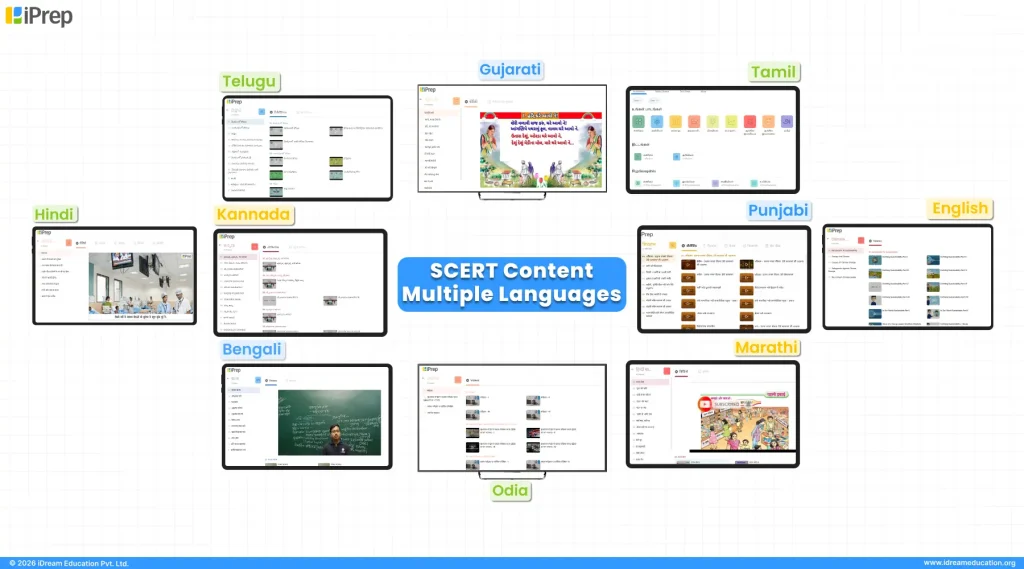
We work as SCERT-aligned digital content providers across India, offering curriculum-mapped learning resources in Hindi, English, and multiple regional languages, designed to integrate seamlessly into state classrooms and support teachers without adding to their workload. If you would like to experience how truly SCERT-aligned digital content works, we invite you to book a demo. You may contact us at +91 7678265039 or write to us at share@idreameducation.org. You can also share your details here
Looking for a State Board–Aligned Digital Content for Your State?
- State Board Aligned Digital Content for Karnataka
- State Board Aligned Digital Content for Bihar
- State Board Aligned Digital Content for Maharashtra
- State Board Aligned Digital Content for Uttar Pradesh
- State Board Aligned Digital Content for Madhya Pradesh
- State Board Aligned Digital Content for Meghalaya
- State Board Aligned Digital Content for Rajasthan
- State Board Aligned Digital Content for Gujarat
- State Board Aligned Digital Content for Andhra Pradesh
- State Board Aligned Digital Content for Arunachal Pradesh
- State Board Aligned Digital Content for Bengal
- State Board Aligned Digital Content for Assam
- State Board Aligned Digital Content for Chattisgarh
- State Board Aligned Digital Content for Himachal Pradesh
- State Board Aligned Digital Content for Tamil Nadu
- State Board Aligned Digital Content for Jammu & Kashmir
- State Board Aligned Digital Content for Telegana
- State Board Aligned Digital Content for Jharkhand
- State Board Aligned Digital Content for Punjab
- State Board Aligned Digital Content for Uttarakhand
- NCERT – CBSE Digital Content
Frequently Asked Questions -
1. What does State Board & SCERT-aligned digital content mean?
It means digital learning resources are mapped chapter-wise to the official State Board syllabus prescribed by the respective SCERT, ensuring complete syllabus coverage and relevance.
2. How is this different from generic or CBSE/NCERT content?
Generic content often follows a national framework, while State Board content is customized to local textbooks, learning objectives, and exam patterns, making it easier for teachers and students to use in daily classrooms.
3. Does the digital content available is mapped to official state textbooks?
Yes. SCERT aligned content providers offer page-by-page or chapter-by-chapter with state-prescribed textbooks, including examples, activities, and practice.
4. Does SCERT-aligned content support local language learning?
Absolutely. State Board digital content providers like iDream Education provides State board aligned content in regional languages used in classrooms, supporting better comprehension and classroom adoption.
5. Can SCERT digital content be used for smart classrooms and IFP panels?
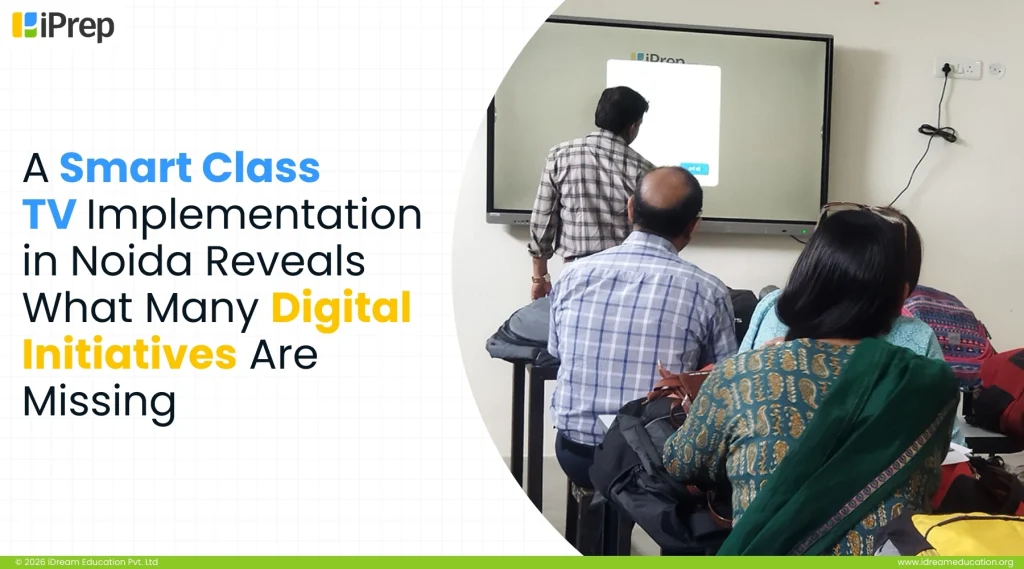
Yes. SCERT-aligned digital content is designed to be accessed in Interactive Flat Panels (IFPs) through LMS. This enables teachers to explain concepts visually using videos, animations, and interactive exercises.
6. Does SCERT digital content support exam preparation for State Board assessments?
Definitely. Since the content follows the official syllabus, it aligns closely with State Board exam formats.
7. Can schools integrate SCERT digital content with their existing LMS or ERP?
Most digital content providers in India offer API or LMS-ready formats, making it easy for schools, school groups, and EdTech platforms to integrate SCERT-aligned content into their existing systems.
8. Is SCERT-aligned digital content useful in low-connectivity areas?
Yes. Digital content providers in India like iDream Education have built LMS and integration systems that allows seamless access to digital content in offline mode specifically designed for low-bandwidth mode. This makes it practical for government schools with limited infrastructure.
Categories You may Explore
Related Articles