

Across India, schools are steadily adopting digital solutions. Devices have entered classrooms, and infrastructure has improved. On paper, access has increased.
But in real school environments, one question determines impact: Are students actually using these resources independently and consistently? From working closely with schools, we’ve observed that usage is not a by-product of installation. It is the result of structure, relevance, and ease of access. When digital resources are thoughtfully organized, enabled, aligned to classroom needs, and made available in a way that supports both academic practice and broader reading, student behaviour begins to shift.
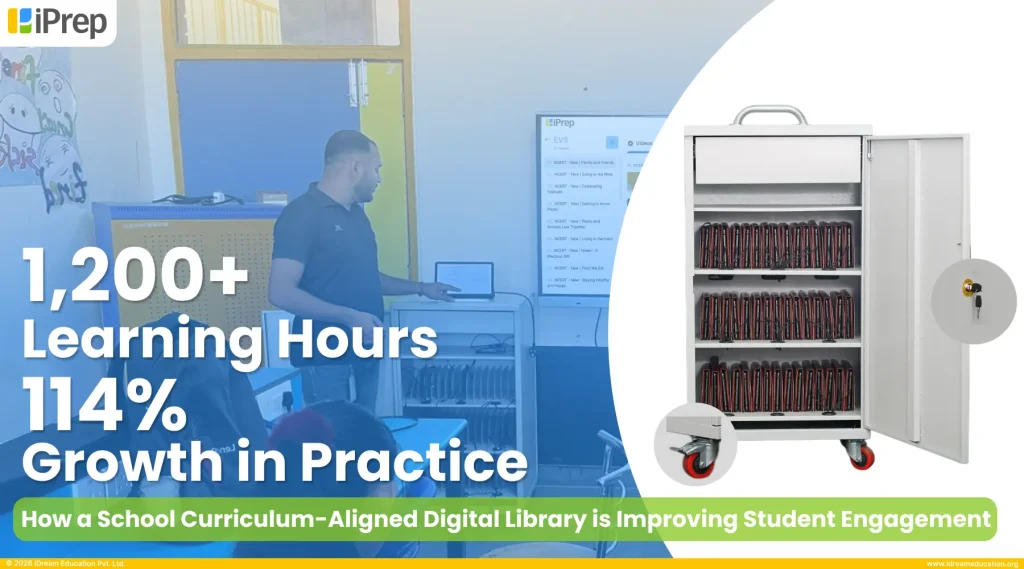
In a Rajasthan school where a structured Digital Library Project was introduced with clear academic alignment and organized multi-category access, the shift was visible within months Between November 2025 and January 2026 alone, students logged 1,200+ hours of usage. This case study examines why it worked, and what it signals for schools across India seeking to move from digital adoption to measurable learning outcomes.
Before we dive into the data, let us first understand what the Digital Library Project enabled within the school ecosystem
This School Curriculum Aligned Digital Library Project is implemented in Rajasthan & Punjab under a medium-scale CSR initiative aimed at strengthening digital learning in government schools.
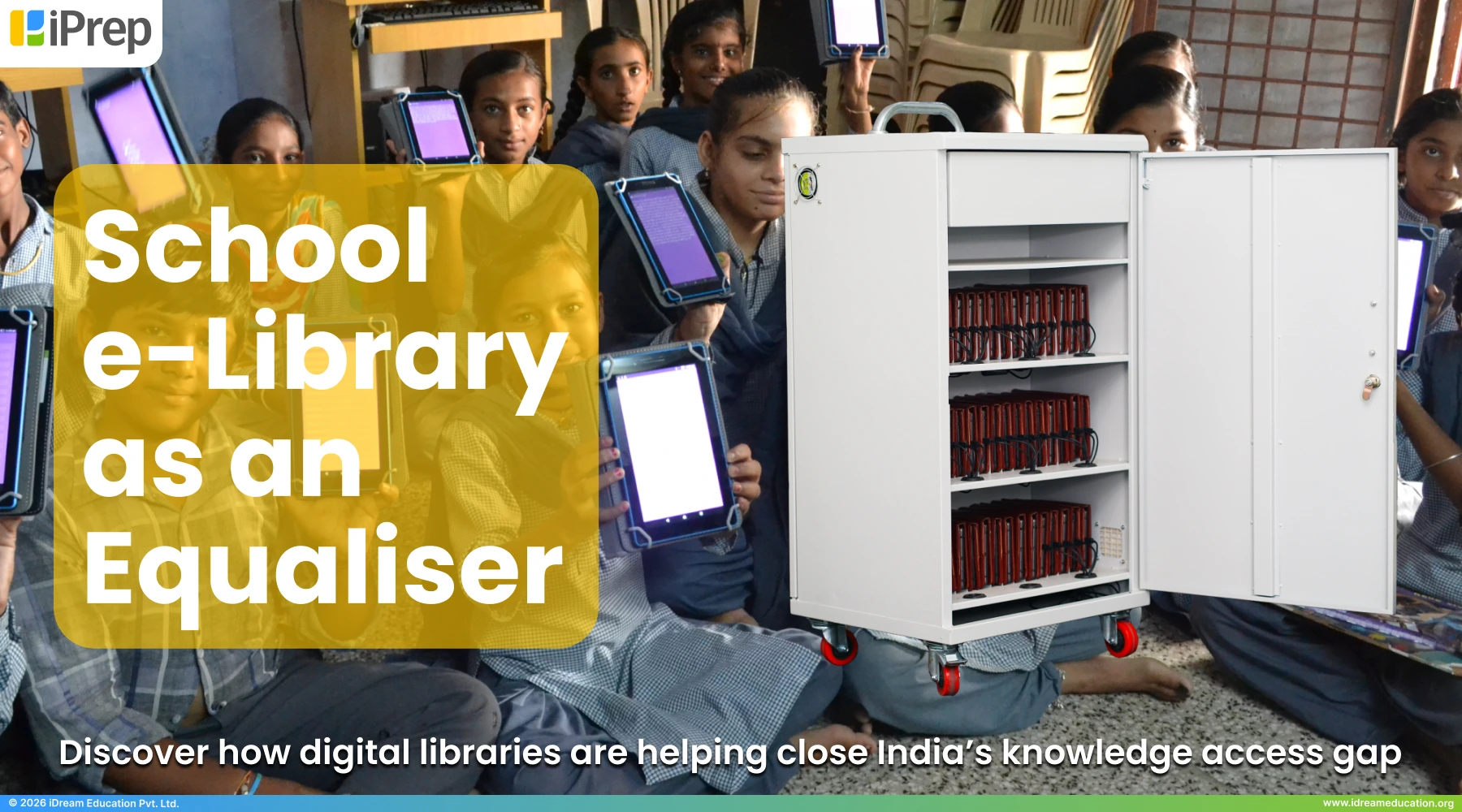
- The intervention focused on creating a tablet-based digital library ecosystem for students of Classes 6 to 8.
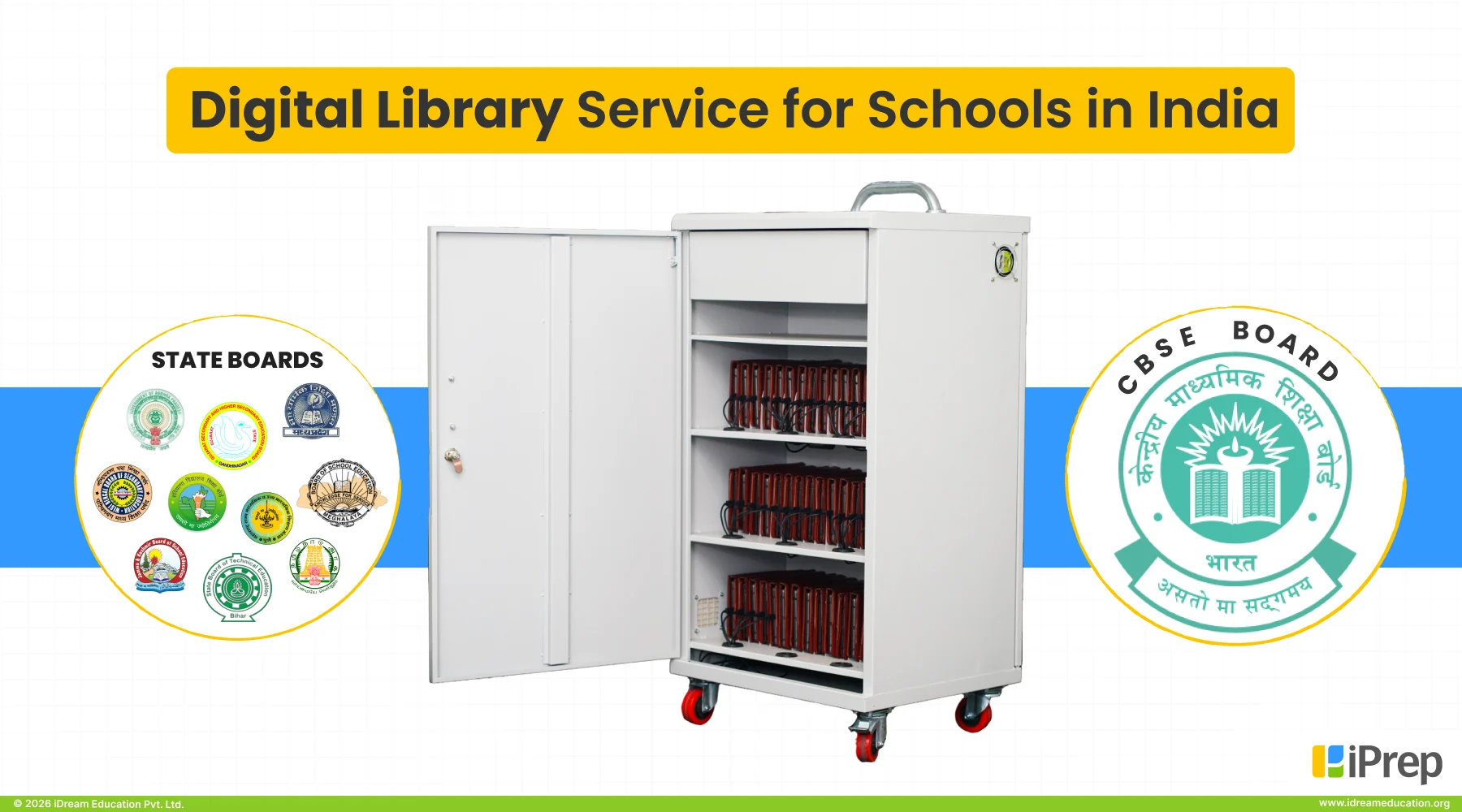
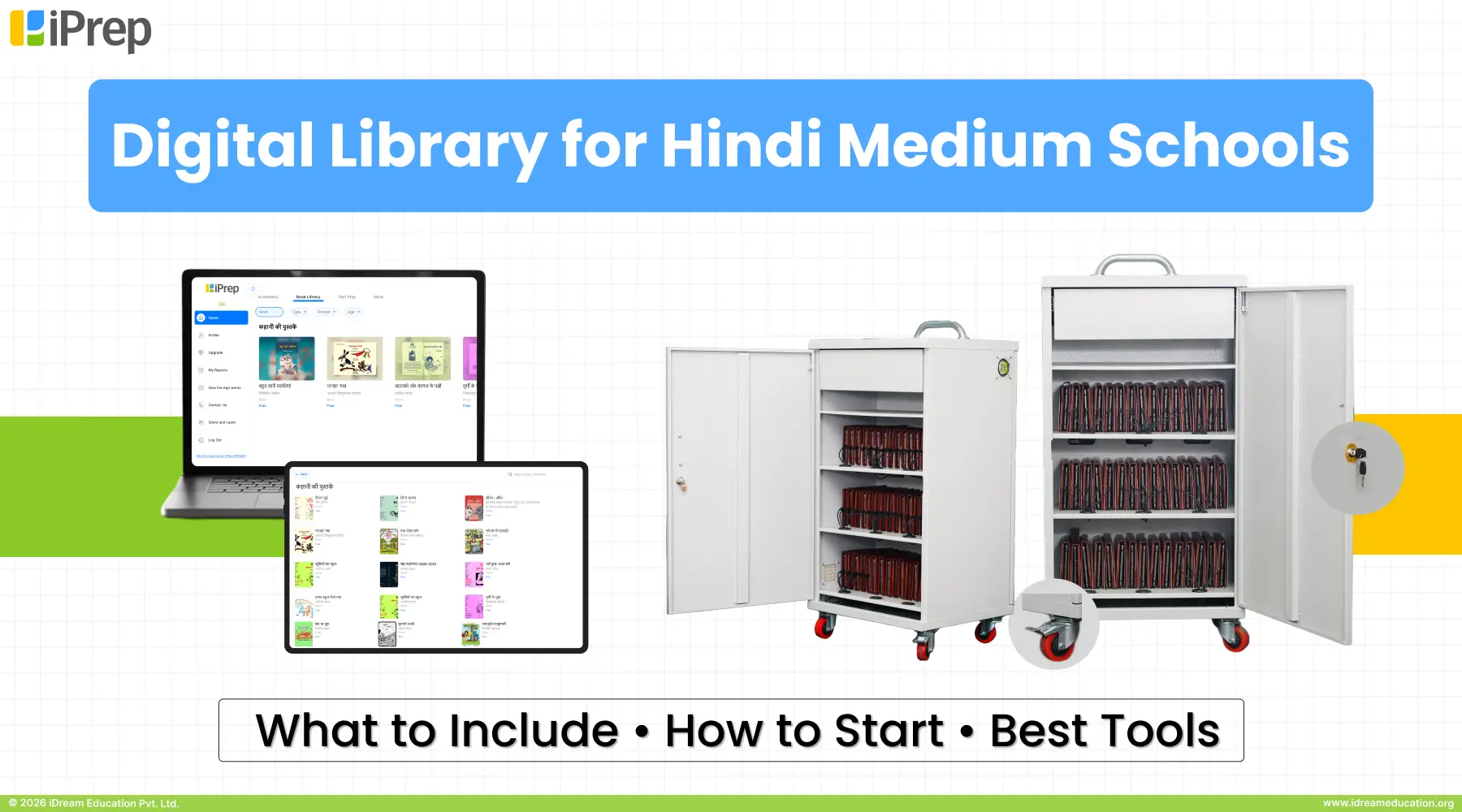
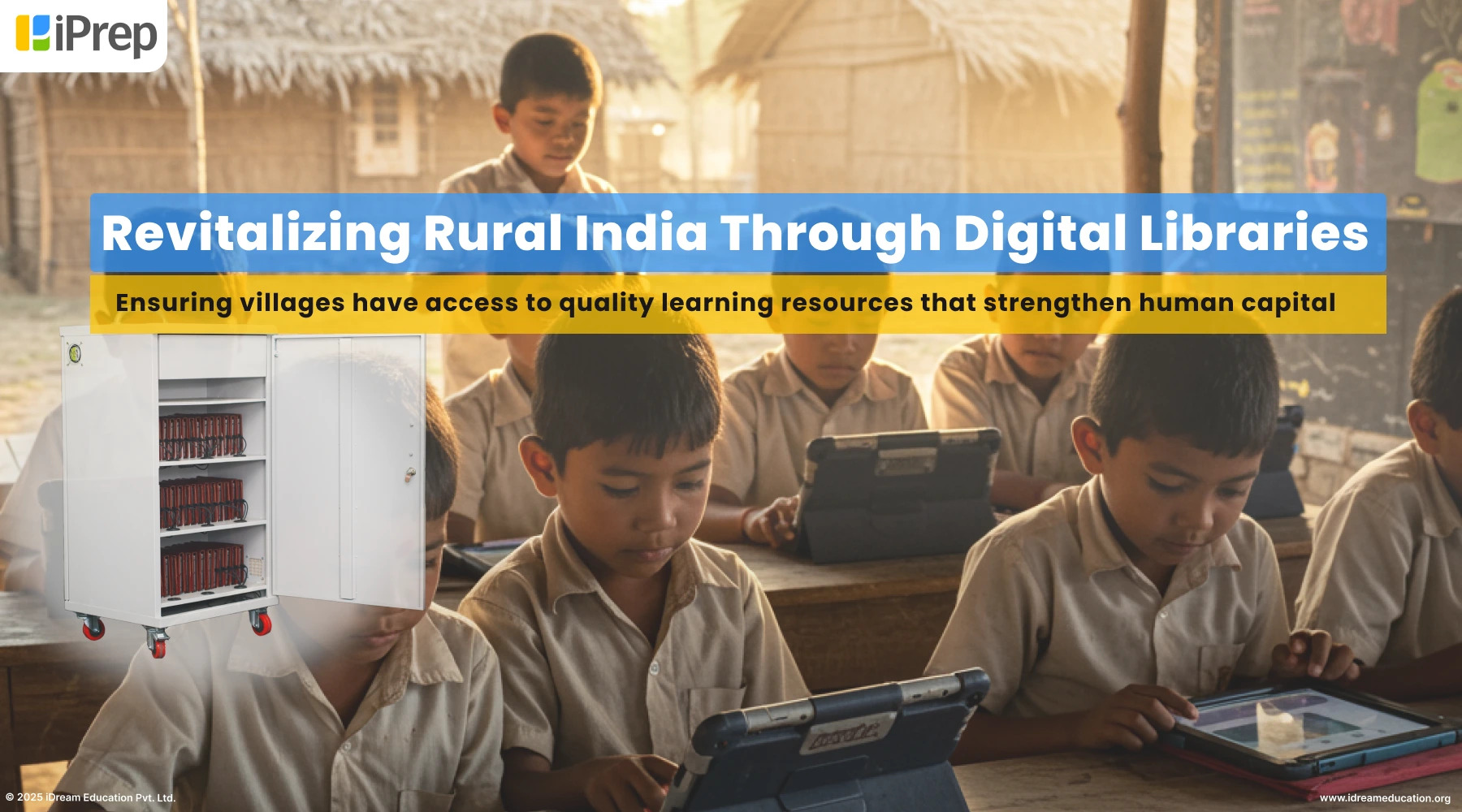
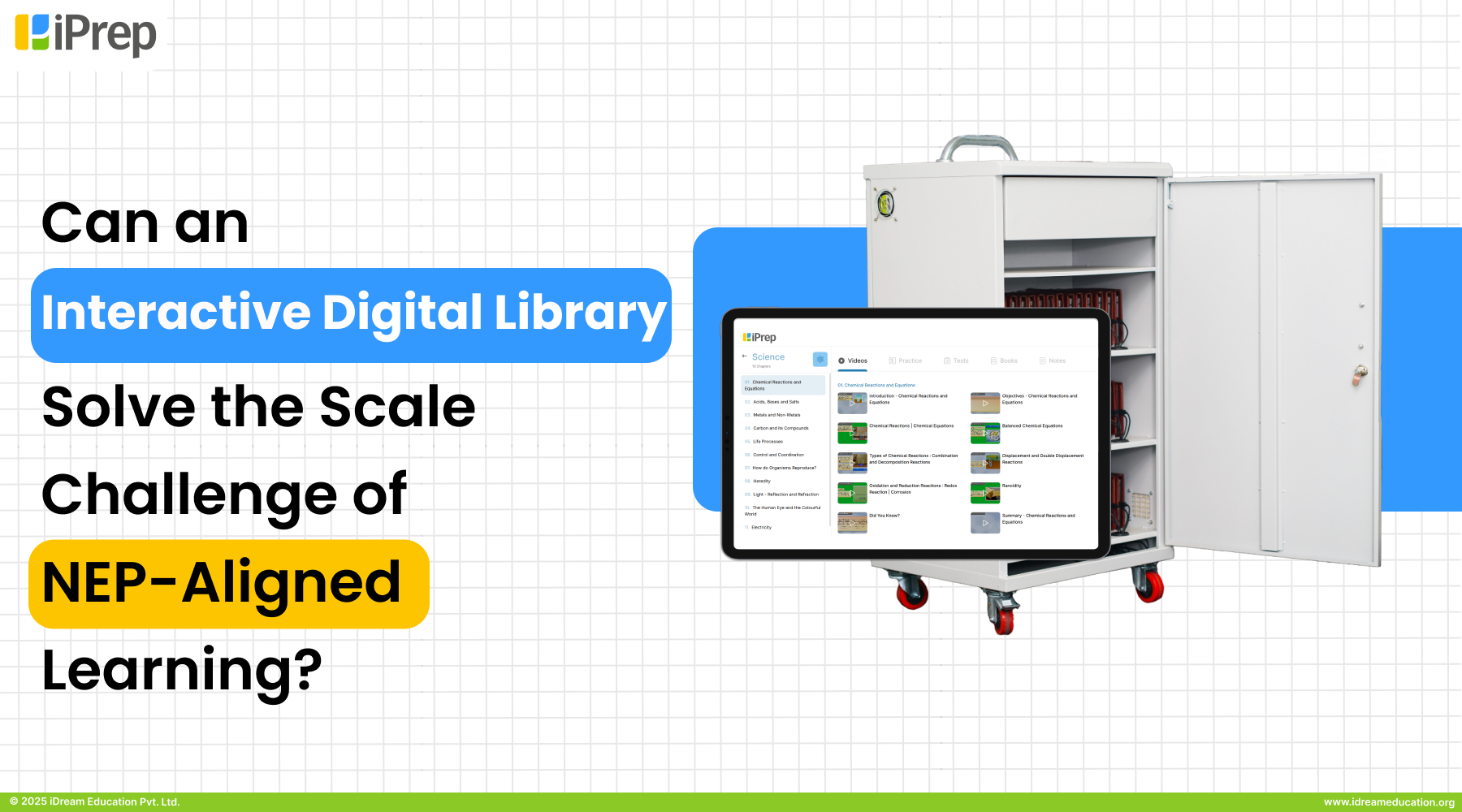
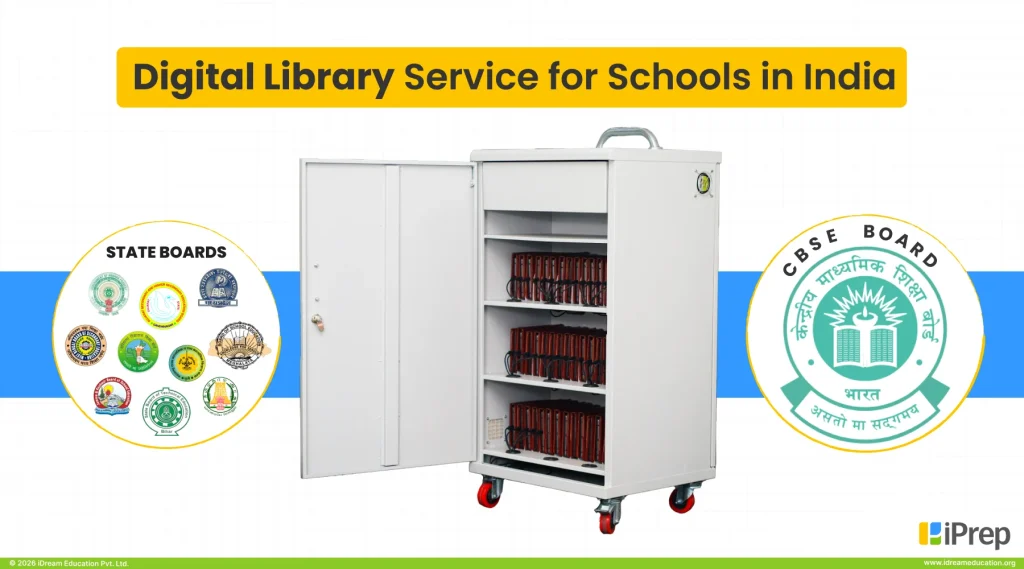
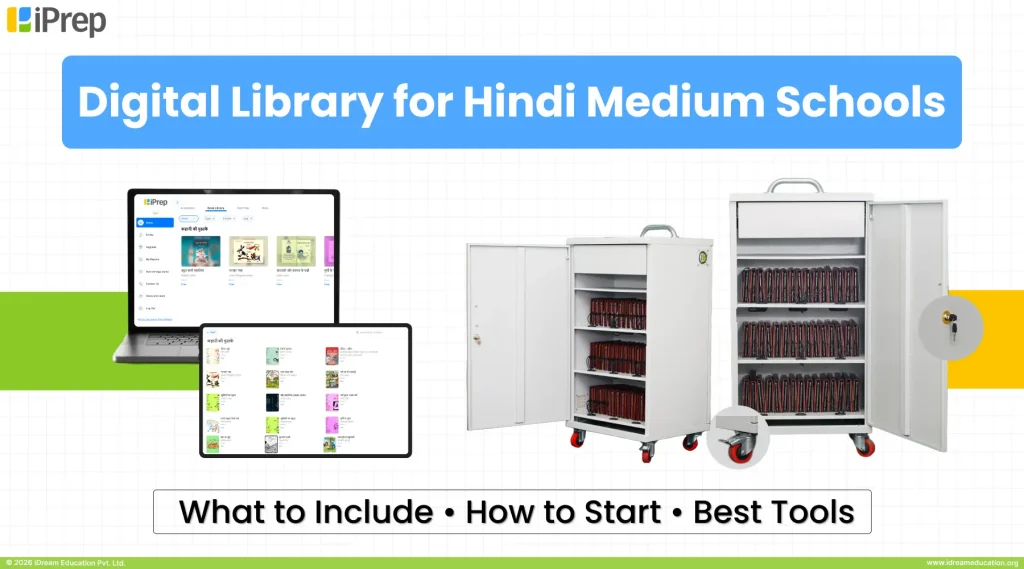
- The digital library setup is done through a storage and charging rack for tablets, ensuring structured access, device safety, and ease of integration for 3 classes.
- All multi-category digital library resources are aligned with the Rajasthan Board curriculum in Hindi and English Medium, ensuring direct relevance to classroom teaching and learning.
- This school curriculum aligned digital library is designed to function offline, enabling uninterrupted usage regardless of internet connectivity constraints.
- To ensure safe and focused usage, all tablets were pre-installed with a Mobile Device Management (MDM) system. Access was restricted exclusively to the iPrep LMS and preloaded digital library resources, preventing misuse and enabling a controlled academic environment.
However, this case study specifically focuses on one school located in Sudulnagar, Jodhpur, Rajasthan, where usage patterns and student engagement was unique and inspiring.
1,200+ Hours of Usage in Three Months – Tablets Alone Didn’t Drive It. The School Curriculum Relevance Did.
The 1,200+ hours of usage recorded within three months and the continued engagement beyond that period is not the result of simply placing tablets in students’ hands. If devices alone could drive engagement, every digital intervention would automatically succeed. But that is rarely the case.
So, what made the difference here?
It worked because the digital library was academically relevant, aligned with the school curriculum, hence immediately useful.
- Every piece of content was aligned with the Rajasthan Board curriculum. Students were not browsing aimlessly or consuming unrelated material. They were revisiting chapters taught in class, clarifying doubts, strengthening weak concepts, and preparing for upcoming assessments.
- As examinations approached, the platform became even more purposeful. Students turned to micro-sized revision modules for quick recall, short concept videos to deepen understanding, practice questions to check their preparation level, and structured notes for rapid recap — all available in one place.
- Equally important was the way the resources were organized. Instead of flipping through multiple guidebooks or searching across different sources, students could seamlessly switch between learning, practicing, revising, and exploring within a single, controlled LMS ecosystem. The experience was efficient. It respected their time.
In simple terms, the school curriculum aligned digital library worked by reducing friction in the learning process.
An Extraordinary Trend Observed in this Implementation: Practice Became the Most Used Category During Exam Months
While overall engagement remained strong, a deeper analysis of usage patterns during November, December, and January revealed a powerful trend. Practice emerged as the most used category.
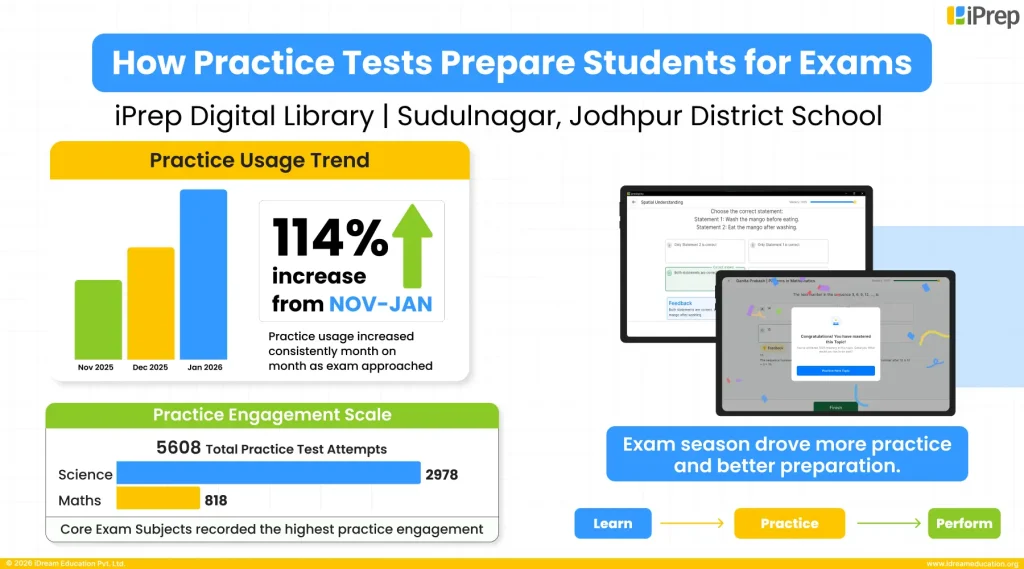
Over the three months, students collectively spent 164 hours attempting 5,608 practice tests. Among these, 2,978 attempts were in Science and 818 in Mathematics, with January 2026 reflecting the highest level of engagement. Month-wise growth tells an even more compelling story:
- November: 22% of total practice usage
- December: 31%
- January: 47%
From November to January, practice engagement grew by 114%. This progression clearly indicates that as examination timelines approached, students increasingly turned to structured practice within the digital library.
The usage data signifies something important about student behaviour
- When curriculum-aligned question banks are easily accessible, students naturally use them as self-assessment tools. They attempt tests to check their learning level, revisit weak areas, strengthen conceptual understanding, and prepare with greater confidence for exams.
- This was not passive content consumption. It was intentional academic preparation. The digital library, in this case, functioned as a structured testing environment, enabling revision, reinforcing concepts, and building exam readiness. The spike in practice usage during peak months demonstrates that when digital library resources are directly aligned with curriculum and assessment needs, students adopt them as a core preparation tool.
We are happy to see such meaningful usage patterns, especially the rise in independent practice and self-driven revision during crucial examination months. Observing students voluntarily test their learning levels, revisit concepts, and strengthen their preparation through the iPrep Digital Library reinforces the very purpose of this initiative. The platform did not merely provide access to content. It became a structured source for revision, practice, and conceptual reinforcement when students needed it the most.
The Larger Lesson
This school curriculum aligned digital library case study from Rajasthan reinforces a fundamental principle of digital learning implementation: technology alone does not drive usage – relevance does.
The sustained engagement, the 1,200+ overall hours, and the 114% growth in practice were not accidental outcomes. They were the result of enabling digital libraries with digital learning content specifically aligned with the school curriculum. When students see a direct connection between what is taught in class and what is available in the digital library, the platform naturally becomes useful, not optional.
Curriculum alignment in digital learning initiative has the potential to transform digital infrastructure from a supplementary resource into an academic companion. It ensures that students can use the platform in their own way – whether for quick revision, deeper conceptual understanding, repeated practice, or exam preparation, without feeling that they are stepping away from their core academic focus.
If you are exploring a school curriculum aligned digital library, we would be happy to demonstrate our school curriculum aligned content & how a structured digital library model can create measurable academic engagement. Let’s take this forward and design a solution that is relevant, purposeful, and impactful for your students. You may contact us at +91 7678265039 or write to us share@idreameducation.org or share your details here.
Categories You may Explore
Related Articles