

Across many schools in India today, digital infrastructure is steadily finding its way into classrooms. Smart TVs are being installed, screens are mounted, and classrooms are beginning to look digitally enabled. On paper, the transformation appears significant – technology has arrived, devices are operational, and the infrastructure investment is visible.
But an important question remains: Does the presence of technology automatically translate into better learning?
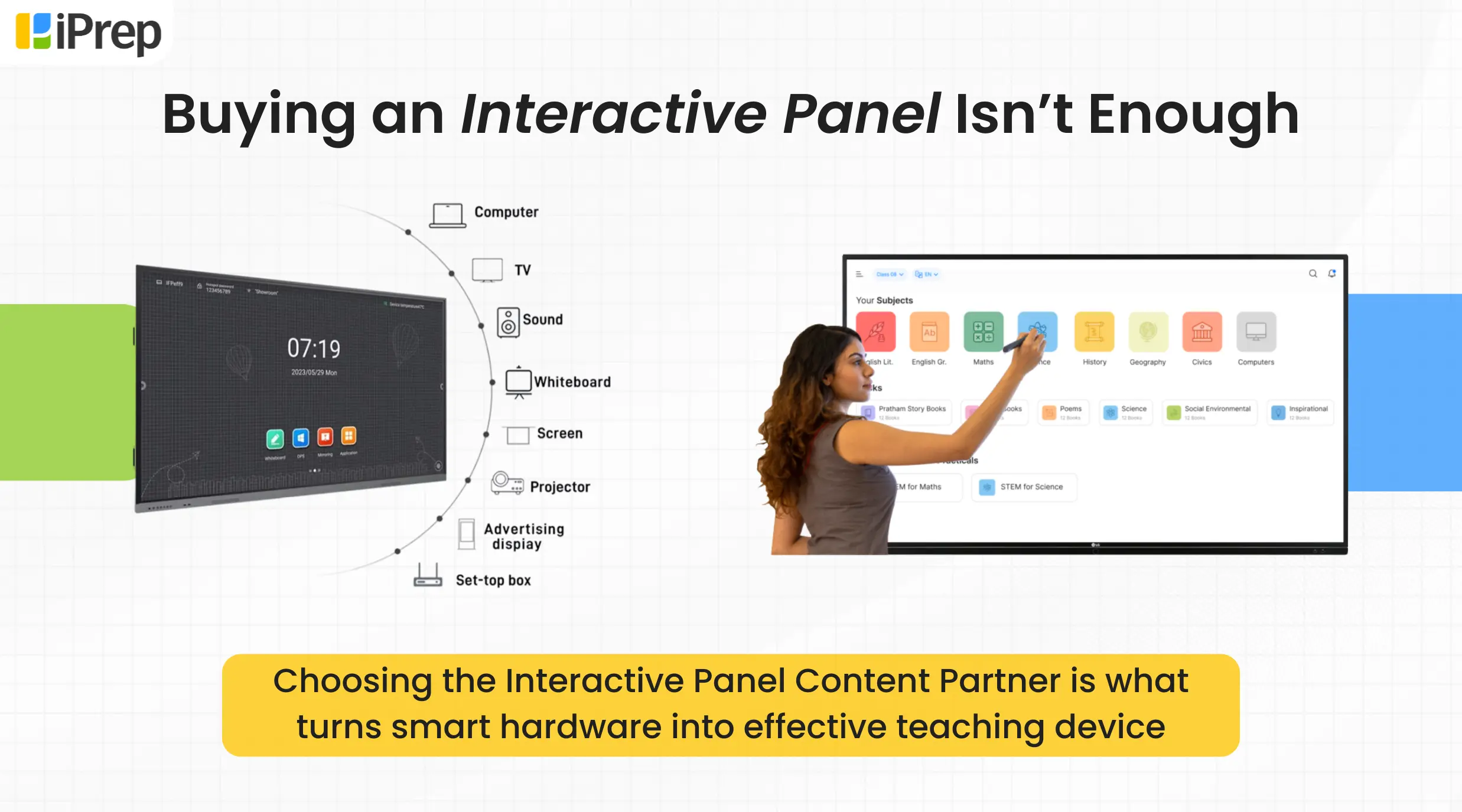
For CSR, NGOs, Govt. and education leaders working closely with schools, the answer is increasingly complex. A classroom may now have a large digital screen, but what truly determines its impact is how meaningfully that screen integrates with teaching and learning. Without curriculum-aligned digital learning resources, structured platforms, and teacher-ready content, even the most advanced devices risk becoming little more than display screens.
This raises a deeper reflection for everyone involved in digital education initiatives — Are we focusing enough on what happens after the device reaches the classroom?
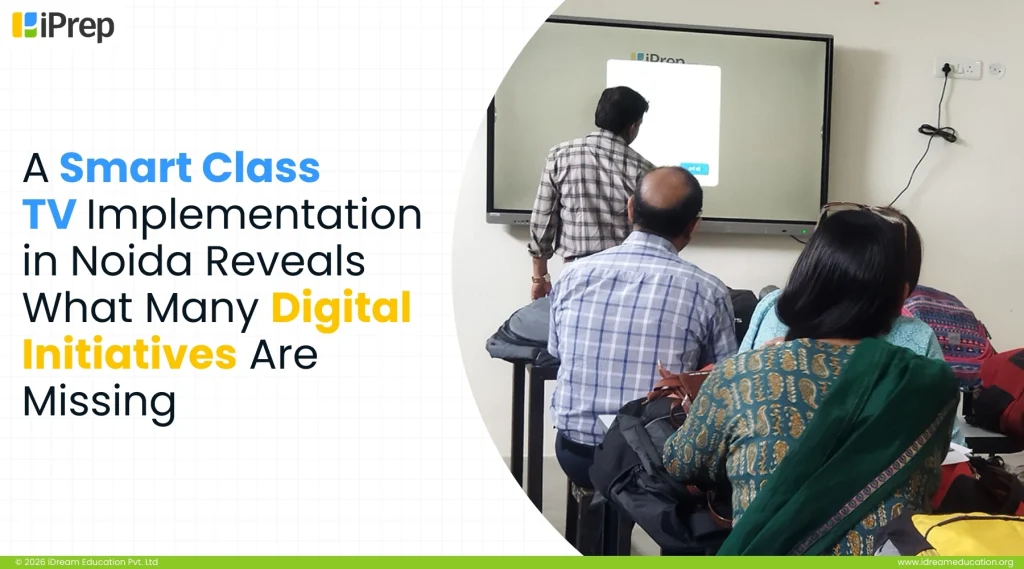
Our recent smart class implementation at a co-educational intermediate school in Noida, Uttar Pradesh, offers an important lens into this question. While the infrastructure was successfully deployed, the classroom experience revealed a gap that many digital learning initiatives across the country continue to face.
What Happens When Teachers Have the Technology – But Not the Teaching Resources?
In this case, an NGO had installed Smart TVs across 10 classrooms with the aim of strengthening digital teaching practices. Teachers welcomed the initiative and were eager to bring the new devices into their daily lessons. The expectation was simple: with digital screens now available in classrooms, teaching could become more engaging and visually supported.
But, once the devices began to be used during regular classes, the realities of classroom teaching started to emerge.
During a typical 40–45 minute period, teachers first had to connect the Smart TV to the internet. They then needed to search online for relevant videos or learning resources and finally check whether the content actually matched the topic they were teaching from the UP Board syllabus. What appeared to be a small step often consumed valuable classroom time. Instead of beginning the lesson immediately, teachers spent several minutes navigating search results, opening multiple videos, and filtering through content that was either not aligned with the syllabus, too lengthy for the class period, or not suited to the students’ level. As a result, the very time meant for explaining concepts, engaging students, and strengthening understanding was gradually slipping into content discovery rather than content delivery.
And this is where an important question emerges for many digital classroom initiatives:
If teachers have to spend the first part of every class searching for relevant material, is the technology truly supporting classroom teaching or unintentionally making it more difficult to manage? It was during this experience that teachers recognized & shared the real gap: the Smart TVs did not have structured, UP Board–aligned digital academic content readily available within the system.
How Did Teachers Recognize What Was Missing in this Smart Class Implementation? & How Did They Realize This so Clearly?
During the same time, in another classroom of the same school, smart classes were working very differently. Let us understand this story to see what is actually missing in many digital learning initiatives directly from the teacher experience itself.
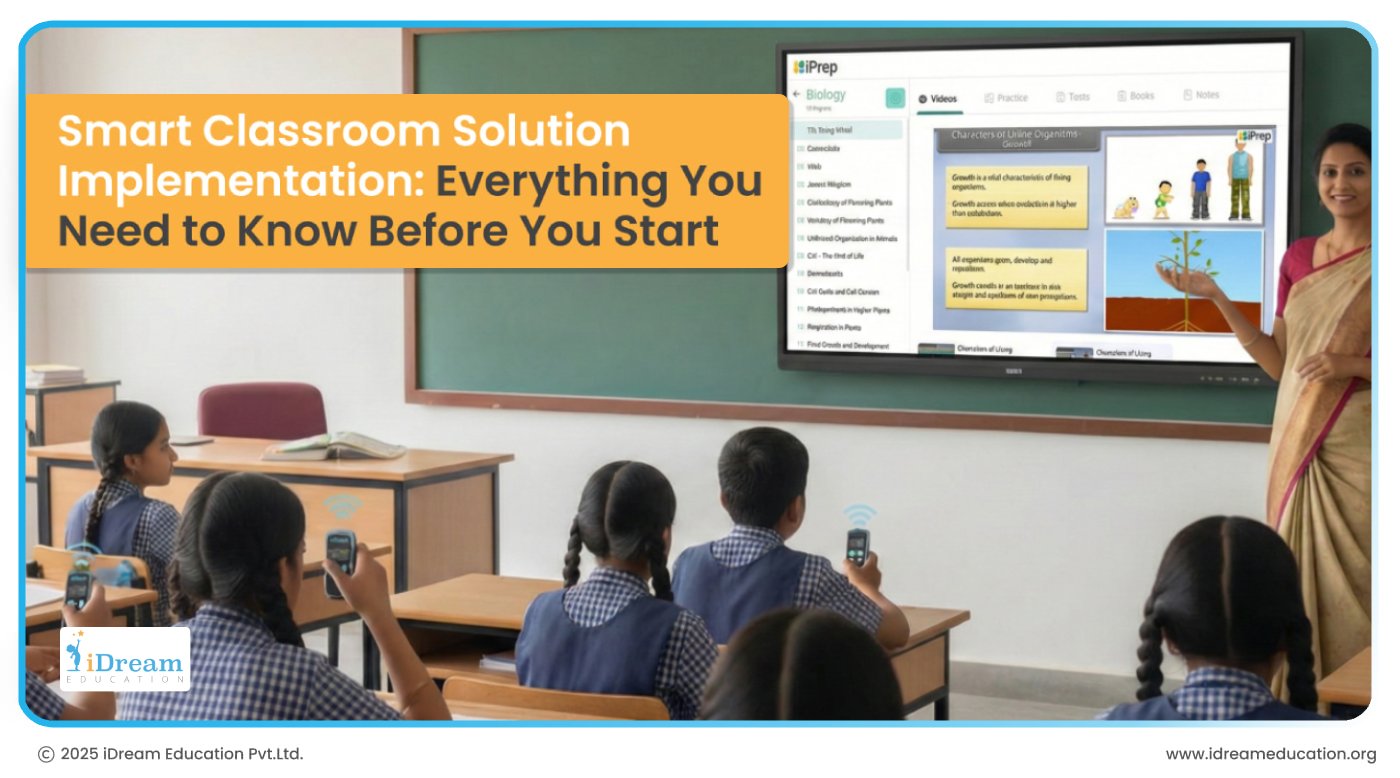
- The school already had one Smart Classroom from another NGO education initiative. In this, teachers had access to iPrep digital content. The LMS was preinstalled on their Smart TV, aligned with the UP Board curriculum for Classes 1 to 12 in both Hindi and English medium. In that classroom, teachers could easily access chapter-wise digital lessons mapped directly to the syllabus, along with practice questions, bilingual explanations, and assessments that supported classroom learning.
Because teachers had already experienced how smoothly lessons could run when structured digital content was readily available, the difference became very clear. While the newly installed Smart TVs required time and effort to search for relevant material online, the Smart Classroom with iPrep allowed teachers to quickly open the exact topic they were teaching and use it immediately during the lesson. This made classroom teaching more structured and ensured that the available class time was used effectively for explanation, discussion, and practice rather than searching for resources.
The Most Inspiring Moment: When Teachers Asked for the Missing Piece “iPrep LMS & Digital Content on already installed Smart TVs”
Having seen the difference between the two smart classroom setups, teachers suggested enabling LMS and digital content on the newly installed Smart TVs, so that every classroom could benefit from structured, curriculum-aligned resources during teaching. They said,
“We already have one Smart Classroom from a previous initiative where iPrep digital content is pre-installed. We are already using it and are familiar with the platform. It has offline UP Board–aligned content for Classes 1 to 12, available in both Hindi and English medium. The content in it also has chapter-wise mapped videos, practice questions, bilingual explanations, and assessments that support our classroom lessons.”
Taking this suggestion forward, the NGO collaborated with the iDream Education team.
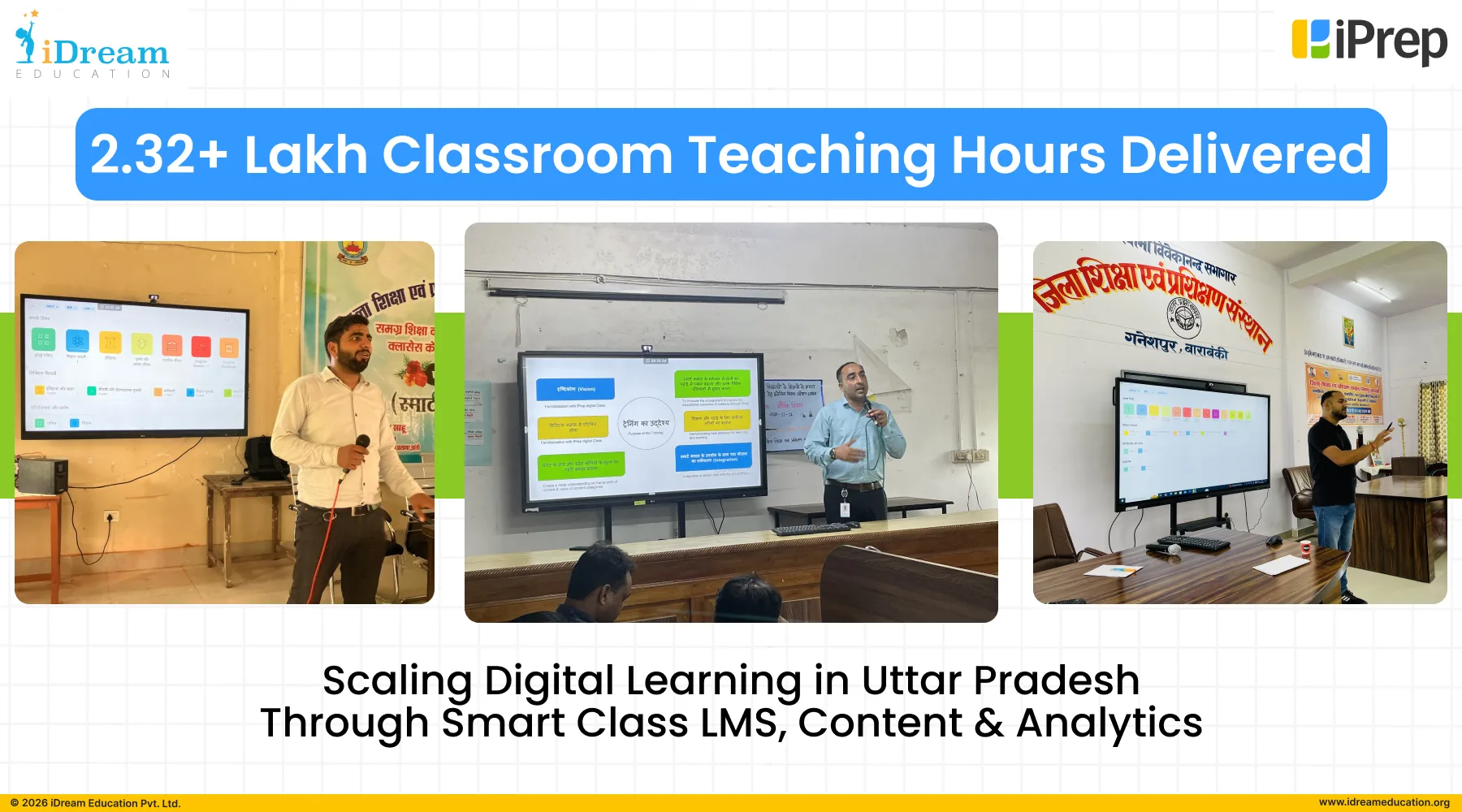
Soon after, access to the iPrep platform was enabled on the existing Smart TVs through app-based activation. This allowed teachers to access comprehensive UP Board–aligned digital content across classrooms, covering chapter-wise video lessons, syllabus books, practice questions, Notes and a lot more at one place.
Once this integration was completed, the difference in classroom usage became clearly visible. Since teachers were already familiar with the iPrep platform from the earlier Smart Classroom, only a one-time onsite orientation session was enough. This was conducted at the beginning of the program. Adoption was smooth, as the interface, lesson flow, and assessments were already known to them.
What Many Digital Learning Initiatives Can Learn From this Implementation?
This experience offers important learning for the social sector, NGOs, CSR programs, government initiatives, and others working to strengthen digital education in schools.
Installing hardware in classrooms is an important first step, but hardware alone does not automatically lead to meaningful classroom adoption. What truly enables regular usage is structured, curriculum-aligned digital learning content that teachers can easily access during their lessons. When teachers are able to quickly open the exact chapter they are teaching, supported with explanations, practice questions, and assessments, the technology naturally becomes part of everyday classroom teaching.
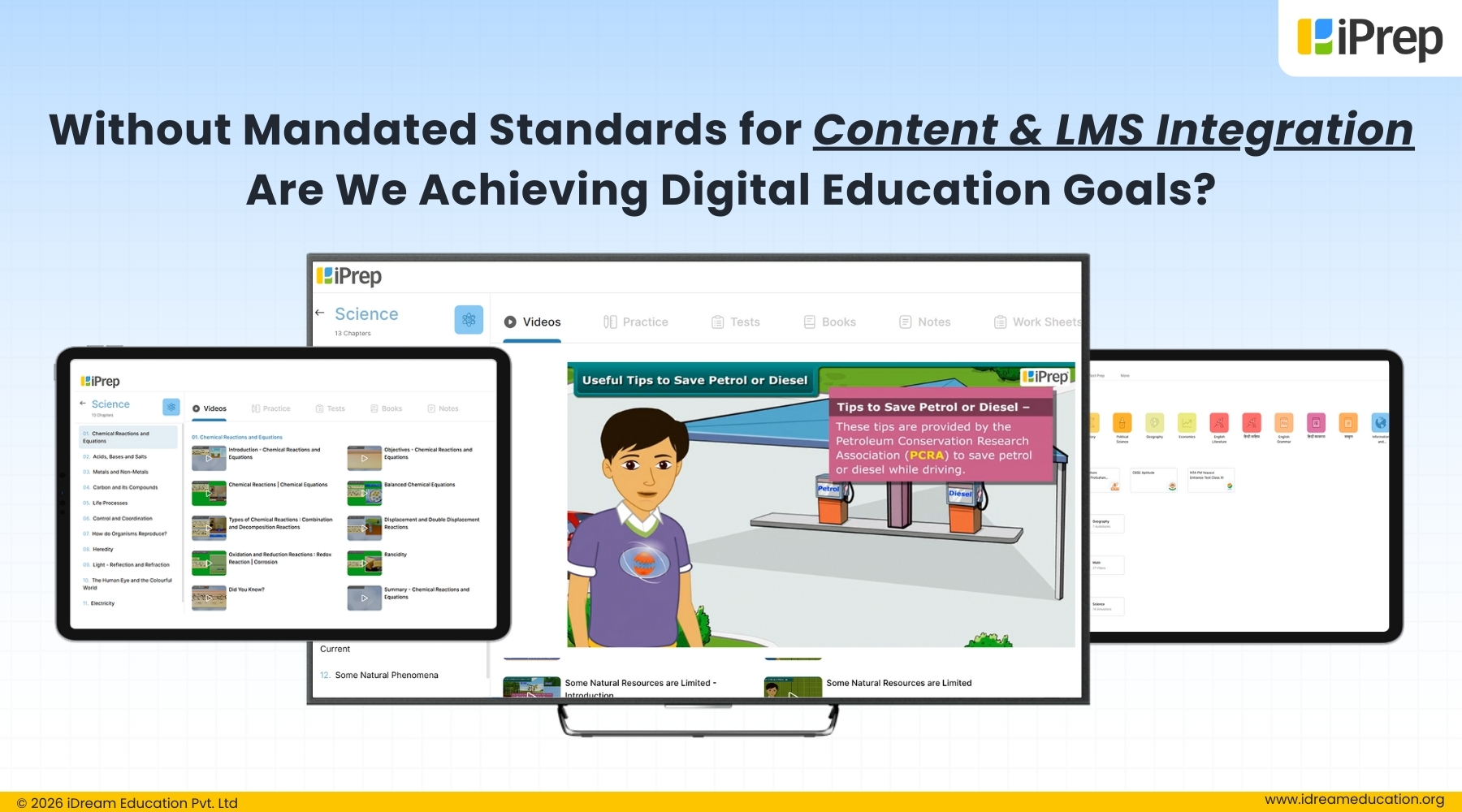
We are glad to share this experience because it clearly reflects something we have consistently emphasized in discussions around digital classroom initiatives. When planning digital learning programs, it is important that RFPs and tender specifications also include clear requirements for LMS platforms and curriculum-aligned digital content, not just hardware infrastructure. Only then can the technology being deployed truly serve the intended purpose of the project and support meaningful classroom teaching. If you would like to explore how structured, curriculum-aligned digital learning content can be enabled for your initiative aligned with NCERT/state boards, we would be happy to schedule a demo. You may reach out to us at +91 7678265039. You can also write to us share@idreameducation.org or share your details here
Categories You may Explore
Related Articles