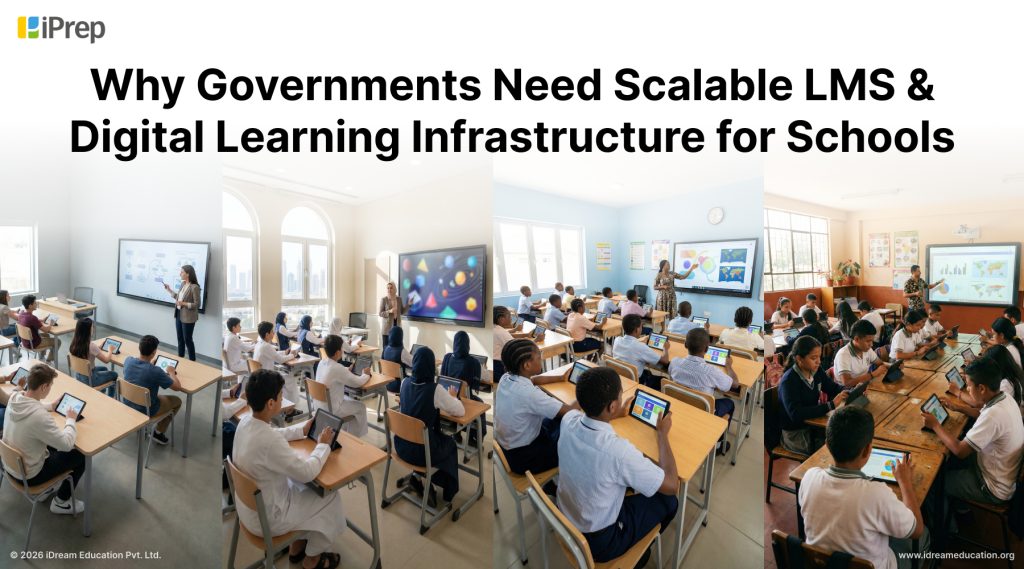


When smart classrooms enter government schools, the most important question is not, “Will the hardware work?” The real question is — “Will it actually be used for teaching and learning?”
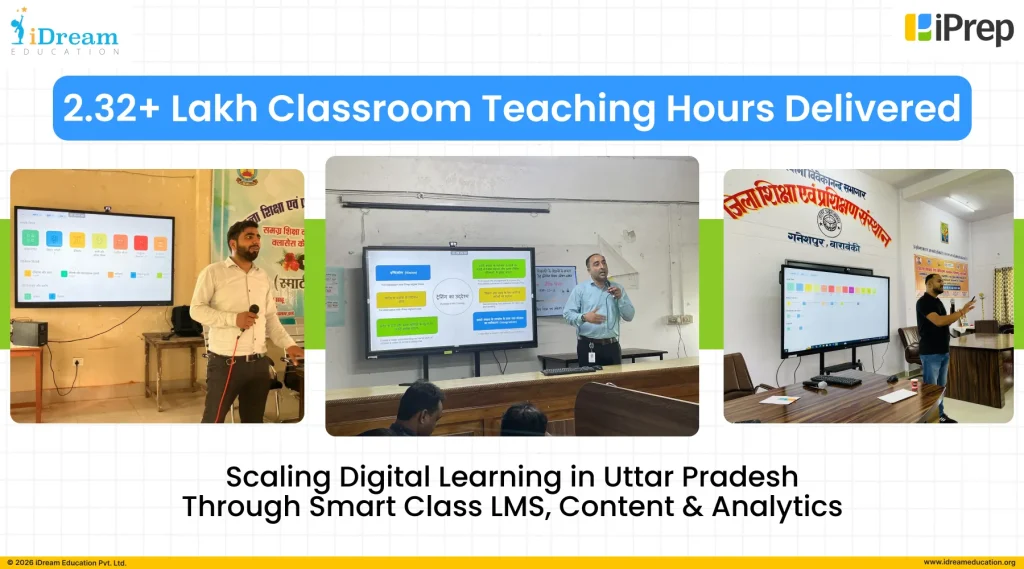
Across many states, smart classroom projects often stop at installing screens and devices. The hardware is delivered, photos are taken, and slowly, in many cases, the usage fades. There is no tracking, no visibility into classroom adoption, and no clear answer to whether students are truly learning better.
But the smart classroom initiative rolled out by the Basic Education Department, Government of Uttar Pradesh tells a different story.
While closely tracking teaching–learning usage analytics under this visionary UP Smart Classrooms Govt. Project, what clearly emerges is this: usage does not happen automatically. It happens when digital content, an LMS, and reporting systems are built into the very design of the project – not added as an afterthought.
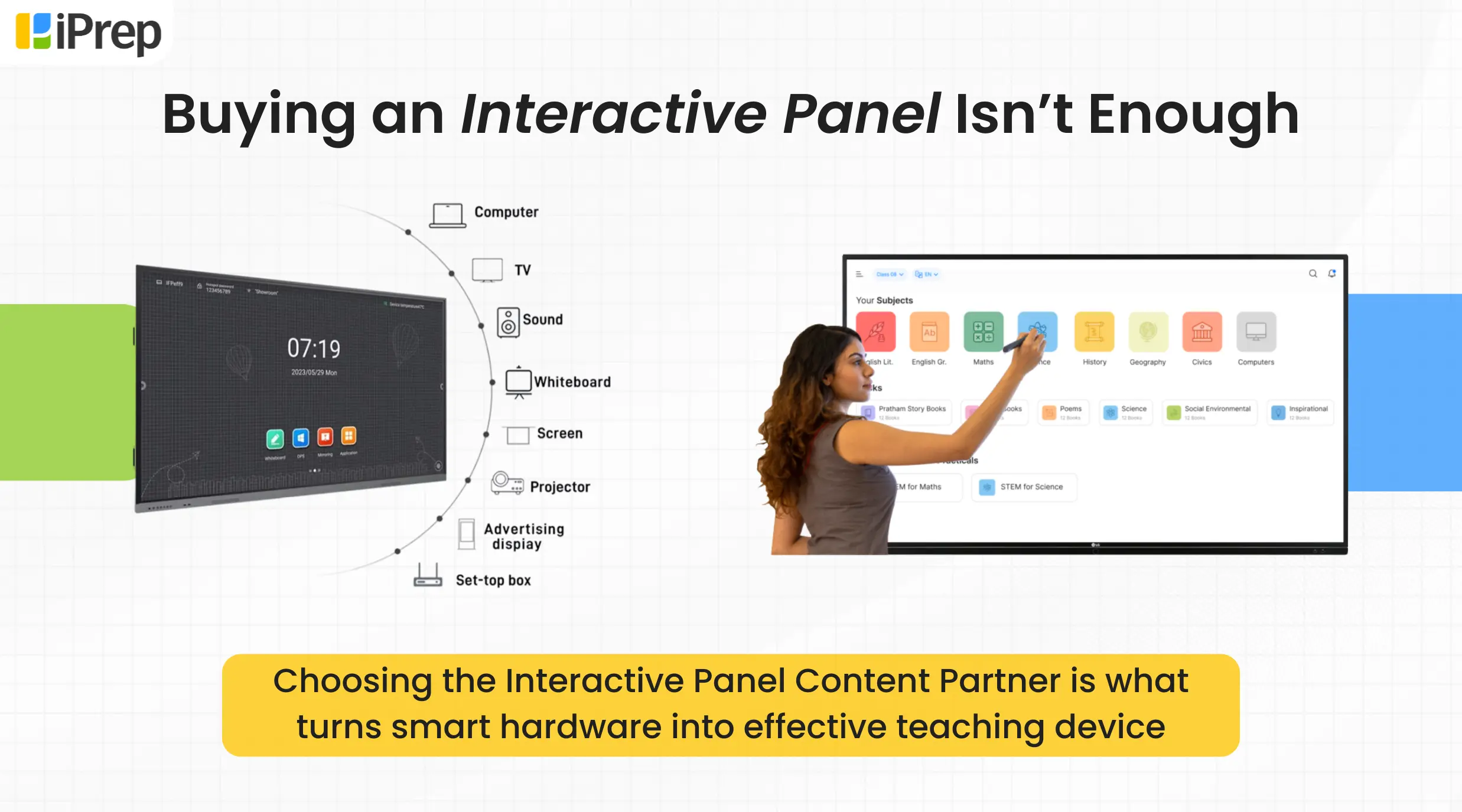
What makes the Uttar Pradesh model worth reflecting on is not just the scale of procurement, but the clarity of its specifications. The project mandated curriculum-aligned digital content, a structured Learning Management System (LMS), and a reporting dashboard that captures detailed subject-wise, grade-wise, and category-wise classroom usage. Multiple partners came together to deliver different components including us as the digital content partner. This way the department ensured that hardware was supported by meaningful academic engagement.
The early usage data of 2.32+ lakh classroom teaching hours from UP’s smart classrooms sends a strong and powerful message for future government tenders – when usage is designed into the system, classrooms respond.
We are inspired to acknowledge that this success did not happen by chance.
A major reason behind this thoughtful design was the visionary clarity of Vijay Kiran Anand Ji, who was serving as State Project Director at Uttar Pradesh Basic Education Department during 2022–2023, when the project was conceptualized and initiated.
He was very clear from the beginning:
If digital content is not comprehensive, if usage is not tracked properly, and if there is no LMS that works both offline and online – syncing classroom usage to a central monitoring dashboard, then the project would never move beyond hardware. It would simply become screens hanging on classroom walls. And that would mean wastage of public resources.
Therefore, instead of rushing into procurement, he pushed for deeper thinking.
The department and consultants were encouraged to study real implementations and understand what actually drives classroom usage. Inputs and suggested specifications were invited from major learning providers. These were carefully reviewed, discussed, and refined.
What finally emerged was not a generic smart classroom requirement, but a clearly defined and comprehensive solution framework.
The specifications explicitly covered curriculum-aligned digital content, a robust LMS with offline and online functionality, seamless syncing of usage data, and a central reporting dashboard for project monitoring. All of this was formally built into the RFP itself, making usage accountability a structural part of the project, not an optional add-on.
With careful consideration and structured planning, 5,514 smart classroom setups were implemented across 5,514 government schools
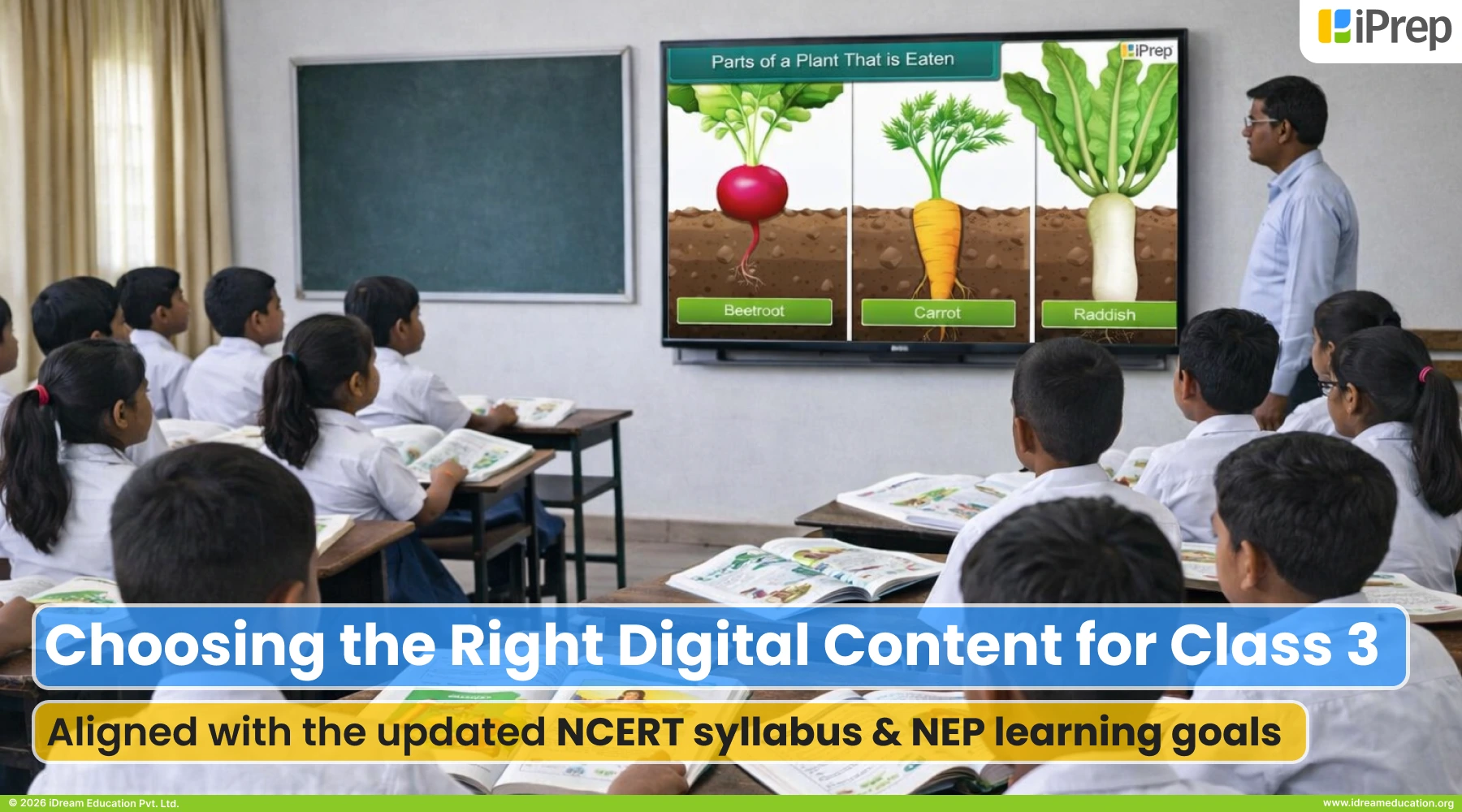
UP Smart Classroom Govt. project covers Classes 1 to 8. The smart class solution was aligned with UP Board and NCERT curriculum, and made available in both Hindi and English.
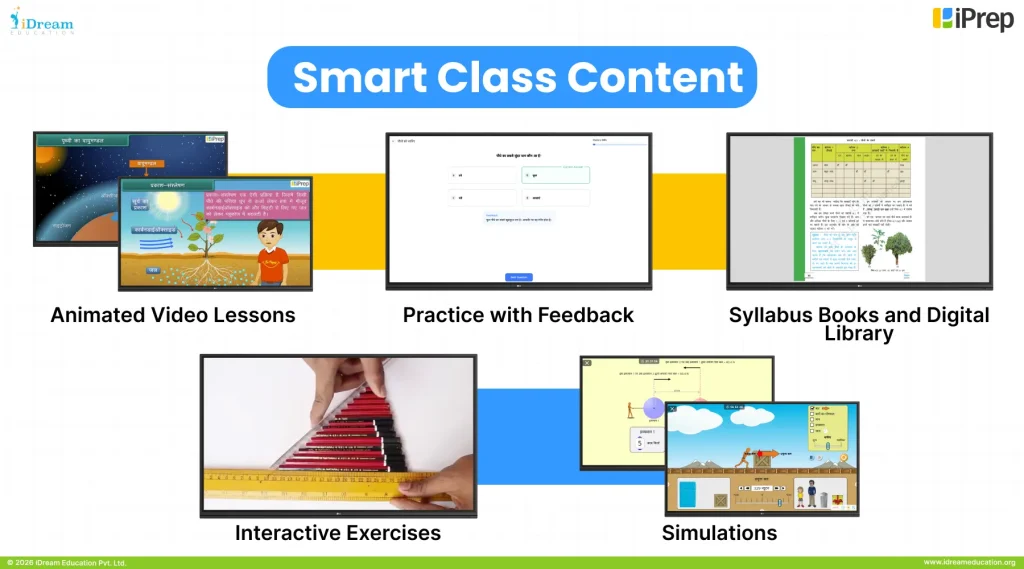
As the digital content partner, we provided:
- Comprehensive smart class content for Classes 1 to 8 across subjects including Mathematics, Science, EVS, History, Civics, Geography, Economics, English Grammar, and English Literature — all aligned with UP Board and NCERT learning outcomes.
- Beyond core academics, we also enabled additional subjects such as Computers and Life Skills, ensuring students receive exposure beyond textbooks.
- The Smart Class content was thoughtfully structured across multiple categories to address the diverse learning needs of students. It included animated video lessons to strengthen conceptual clarity, MCQ-based practice questions with instant feedback for reinforcement, and complete syllabus books for anytime reference. To encourage experiential learning, DIY project videos in Math and Science promoted hands-on, play-based understanding. A rich digital library featuring stories, poems, inspirational biographies, and more supported holistic development. Interactive simulations helped simplify complex topics, while curated DIKSHA videos were integrated to align with the curriculum. This was not merely content made available, it was a well-designed academic support system embedded directly into the classroom experience.
That clarity at the design & integration stage is what is now reflecting in actual usage in UP smart classrooms govt. project
Over a 1.5-year implementation period, smart classrooms recorded 2.32+ lakh teaching-learning hours, demonstrating that when content, LMS, and reporting are built into the foundation, usage naturally follows.
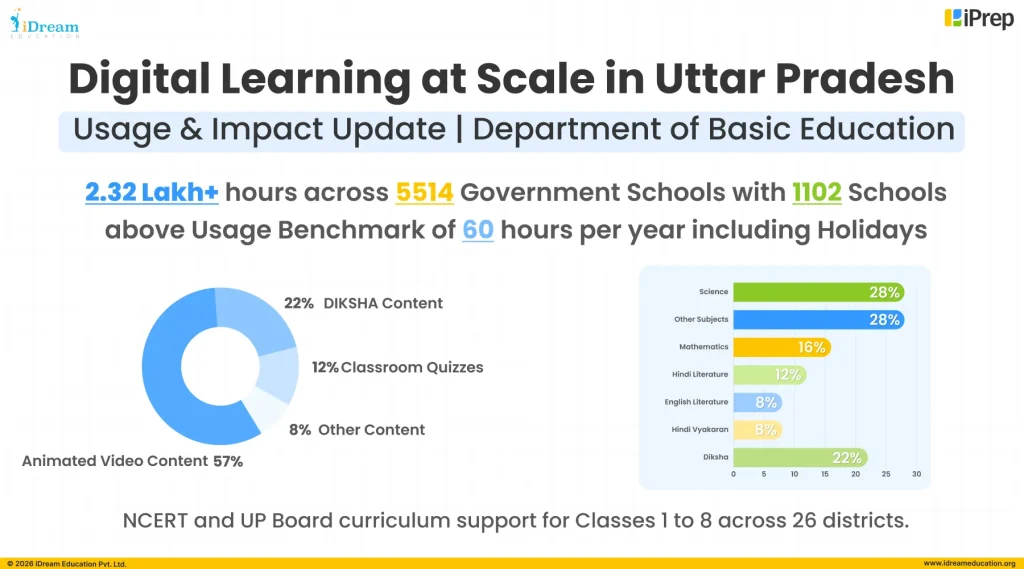
The numbers further strengthen this reality:
- 35%+ schools have crossed the defined “ideal usage” benchmark which was 60 hours per year including holidays
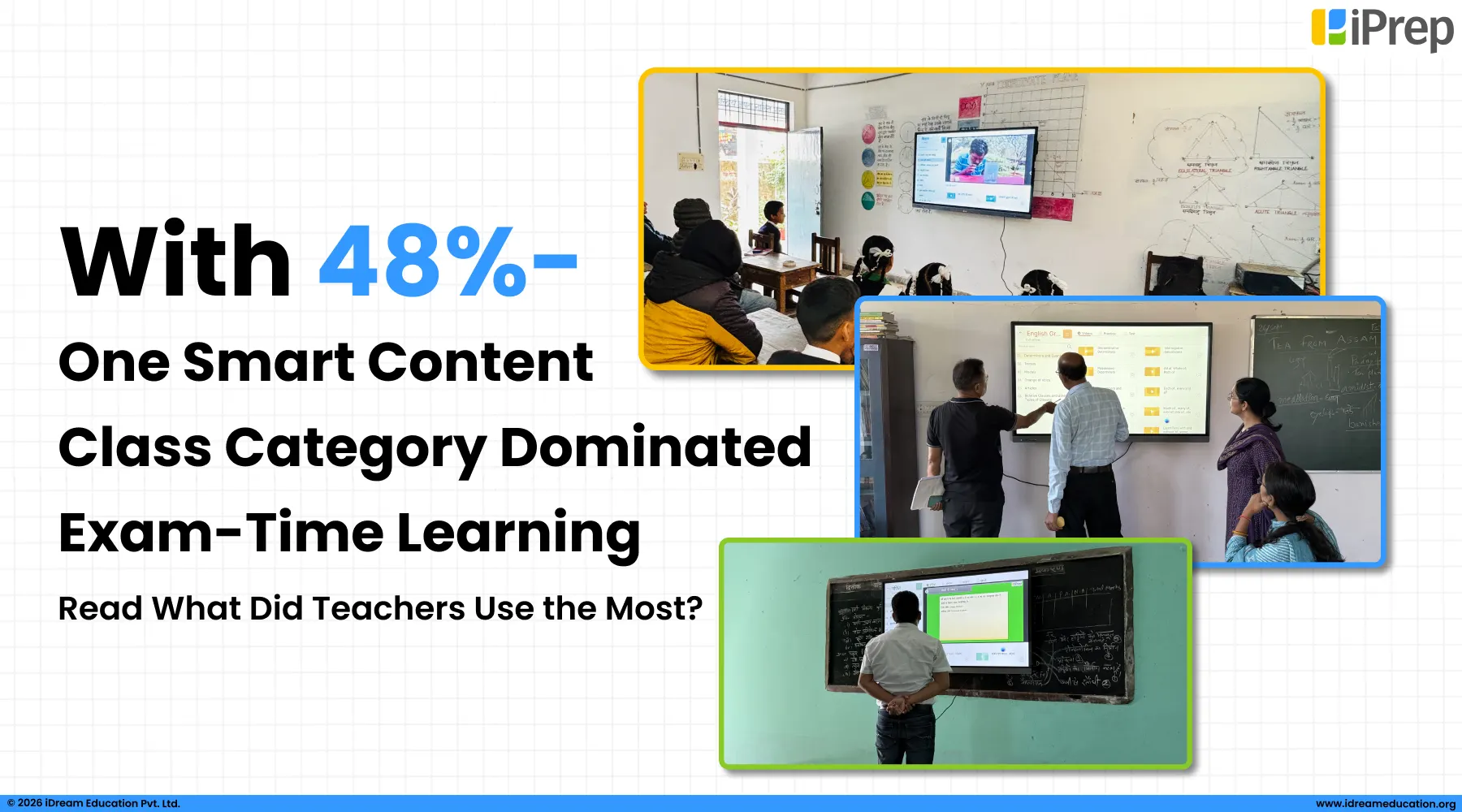
- 57% of the total usage time has been spent on curriculum-aligned animated lessons, showing strong classroom adoption of structured digital content.
- 22% of the total time has been spent on DIKSHA content, integrated offline into the LMS and tracked even without internet connectivity, later syncing to the central monitoring dashboard.
These are not just statistics. They represent teachers actively using smart class digital resources during class periods and students engaging with smart class content.
And this highlights a critical truth for future digital learning initiatives:
Classroom technology adoption does not happen automatically after hardware deployment. It must be intentionally designed as a complete digital learning solution with curriculum-mapped content, an LMS that works both offline and online, and clearly trackable data and analytics.
- When usage is measurable, it becomes manageable.
- And when it is manageable, it becomes impactful.
Media Coverage of Teacher Training & On-Ground Capacity Building
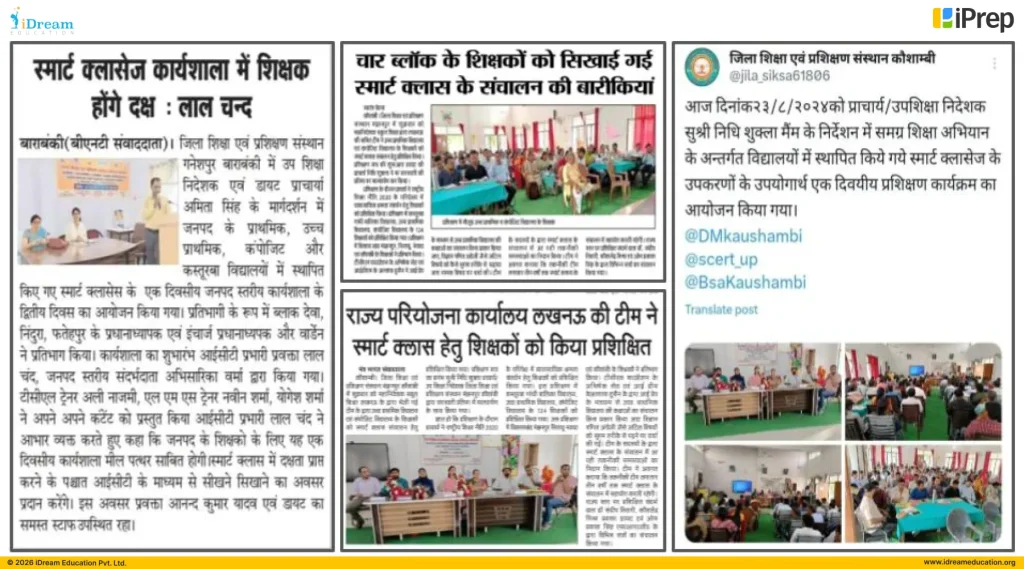
Under this project, structured teacher training and hands-on orientation sessions were conducted to ensure that teachers were comfortable using smart class content, navigating the LMS, and integrating digital resources into their daily lesson plans. Because when teachers are empowered, classrooms naturally become active learning spaces.
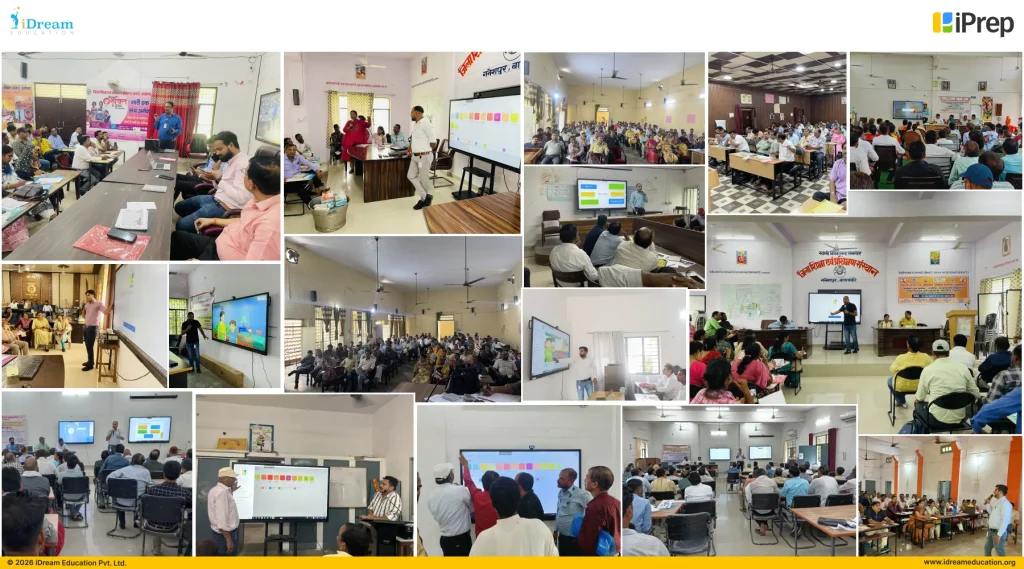
The experience of the UP Smart Classrooms govt.project shows that impact is not created at the time of installation, it is created at the time of design. What is written into the RFP, what is mandated in integration, and what is measured during implementation ultimately decide whether classrooms will use the system or ignore it.
Accordingly, digital infrastructure specifications in future government, CSR, and NGO RFPs and tenders must clearly mandate integration standards for:
- Curriculum-mapped digital content, especially animated multimedia that supports teachers in explaining concepts clearly and effectively
An LMS with strong offline functionality, ensuring that teaching-learning continues smoothly even without reliable internet connectivity - Structured, multi-category classroom content, including videos, practice questions, simulations, projects, and reading materials aligned with the vision of the National Education Policy
- Teacher-centric platforms that reduce teachers’ workload instead of adding complexity
- Built-in usage tracking and transparent reporting dashboards, capturing subject-wise, grade-wise, and school-wise data for real monitoring
- Continuous teacher training and ongoing academic support, not just one-time orientation, but throughout the project lifecycle
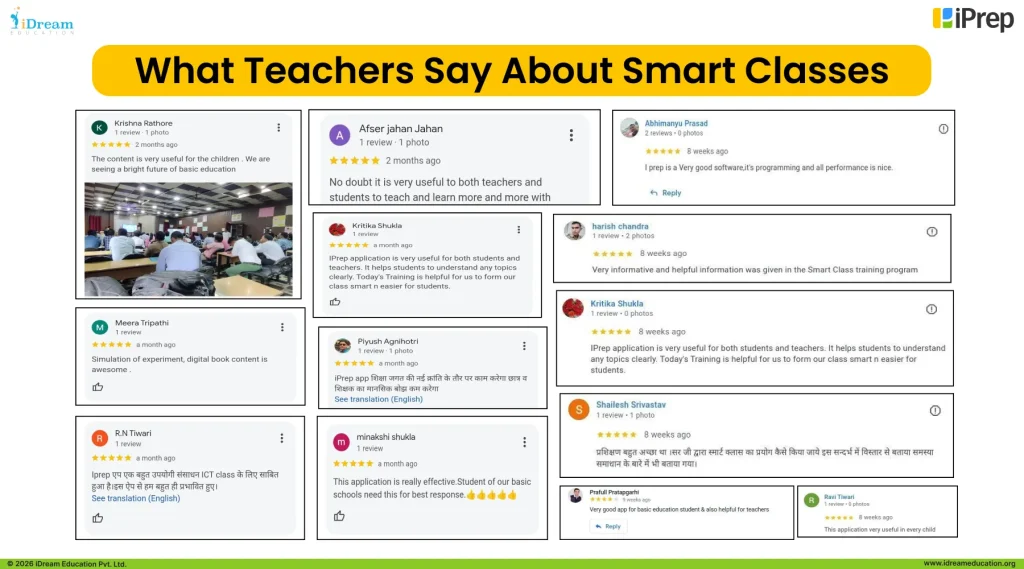
We remain committed to continuously researching, learning, and contributing to more outcome-oriented Smart Classroom implementations, aligned with the larger vision of ensuring last-mile access to meaningful learning and growth. If you are executing a Smart Classroom project or planning one, we would connect, understand and strengthen your initiative. You may contact us at +91 7678265039 or write to us share@idreameducation.org. Your can also share your details here
Categories You may Explore
Related Articles