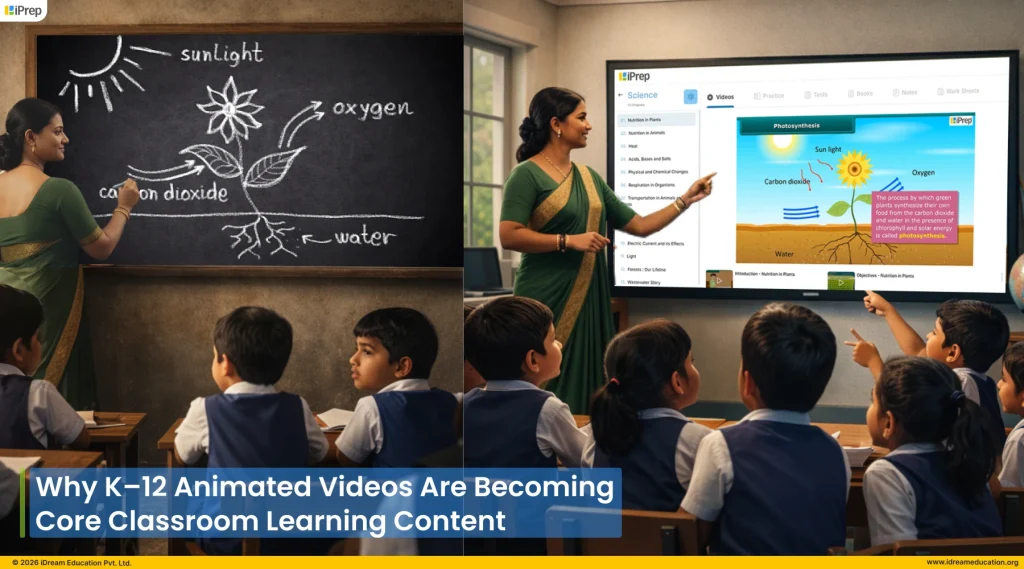


Digital learning in school education is no longer an experimental add-on, it’s become the infrastructure shaping how an entire generation learns. In India especially, the past decade has seen digital tools move from novelty to necessity. Classrooms now blend textbooks with smart classrooms, homework travels through apps, and teachers curate lesson plans through digital resources. What was once the privilege of a few urban schools is now within reach of a large portion of students and educators, and that shift changes the questions we must ask. We no longer only ask if technology should be used in schools; we ask which digital tools actually improve learning outcomes, build equity, and scale across contexts from municipal schools to well-funded private institutions.
Here, what is needed is to look beyond shiny features and marketing claims. The best digital learning tools should be able to answer three core needs simultaneously:
- They amplify pedagogy (not replace it),
- They respect local languages and contexts, and
- They make measurable learning visible to students, & teachers and school leaders
Good K12 digital tools tools reduce teacher workload while empowering instruction. They free up time for teachers to do what machines cannot: mentor, motivate and guide personally. For policymakers and school leaders, high-impact digital tools are those that integrate seamlessly with existing systems (curriculum frameworks, assessment cycles, teacher training), & support continuous professional development.
Let us unpack what “best” means in practice: the functional components (content, assessment, analytics, classroom alignment, and teacher enablement), the design principles that separate useful tools from distracting ones, and deployment models that work at scale in India’s diverse education ecosystem.
6 Core Pillars of Effective Digital Learning Tools
Curriculum-Aligned Digital Content
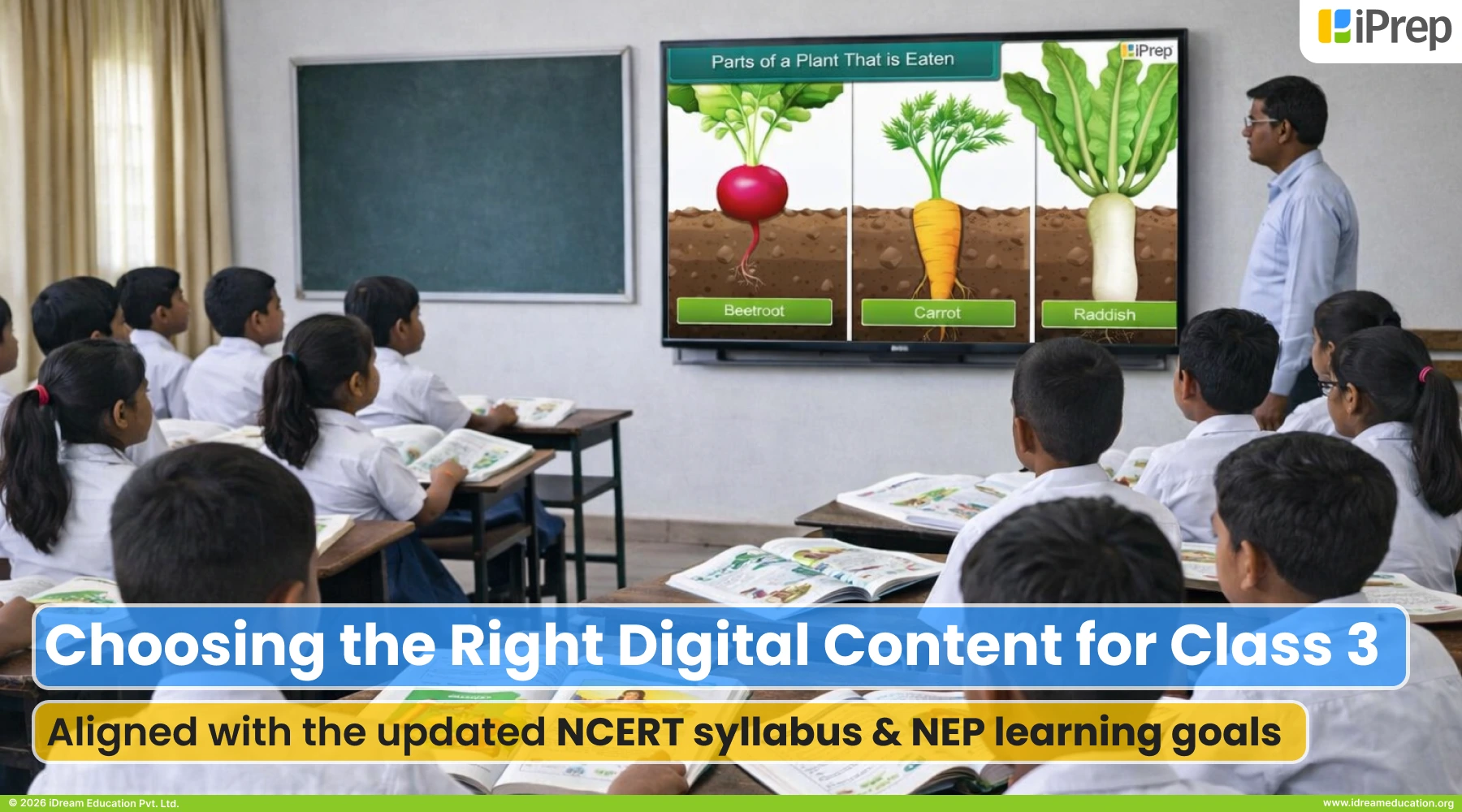
The strongest K–12 digital tools are deeply aligned with prescribed curricula such as the National Curriculum Framework, National Council of Educational Research and Training (NCERT), and state board syllabi. Content must map clearly to:
- Defined learning outcomes
- Chapter structures
- Competency levels
- Assessment standards
When digital content alignment is precise, teachers can integrate it seamlessly into daily lesson plans without disrupting academic flow. It becomes an instructional support not an additional burden.
Further, when the same aligned content is enabled on students’ devices, learning extends beyond the classroom. Students can revisit concepts at home, revise before exams, and practice independently. This ensures continuity between school learning and at-home reinforcement.
Multi-Category Learning Resources
High-quality K12 digital tools go beyond video lessons. They offer a rich ecosystem of learning formats that cater to diverse learning needs and classroom scenarios. This includes:
- Animated video lessons
- Interactive simulations
- Practice questions
- Chapter-wise PPT
- Notes
- Practical lab videos
- Worksheets and assignments
- Teacher lesson plans and guides
A multi-category digital content ensures that digital learning supports explanation, application, practice, revision, and evaluation. This covers the full learning cycle rather than a single touchpoint.
Bilingual/Multilingual Education Support
In a linguistically diverse country like India, bilingual capability in a digital learning tools is not a feature; it is foundational. Effective K12 digital tools should support:
- Hindi + English
- State languages + English
- State languages + English + Hindi
- State languages + Hindi
Bilingual content on a digital tools is necessity to strengthen conceptual understanding, particularly in government and regional-medium schools. It empowers students to grasp complex ideas in their familiar language while gradually building academic English proficiency.
Offline-First Digital Tools
Connectivity gaps remain a reality in many public schools. The best K12 digital learning tools are built with an offline-first architecture that allows:
- LMS & Content access without continuous internet access
- Functions smoothly on low bandwidth
- Automatic syncing when connectivity resumes
Offline capability ensures equitable access to digital learning and prevents learning disruption due to infrastructure limitations.
Universally Designed LMS
K12 digital tools are powerful when combined with Learning Management System (LMS) which is intuitive, inclusive, and scalable. A universally designed LMS should offer:
- Simple navigation to content and features
- Role-based dashboards (student, teacher, admin)
- Accessibility-friendly interfaces
- Seamless ERP or platform integration
This ease of use of LMS drives adoption of digital tools. When teachers and students can use the system confidently, digital learning becomes embedded in everyday practice.
Reporting and Monitoring
K12 Digital tools must move beyond content delivery to focus on measurable learning impact, usage monitoring and highlighting gaps. Effective digital tools come with built-in reporting systems that provide:
- Usage Tracking
- Actionable intervention insights
For teachers and project administrators, reporting & monitoring of digital tool transforms implementation into strategy. For teachers, it turns data into personalised guidance. And project administrators, it give direction to intervene, scale or ask for improvements.
Best K12 Digital Learning Tools for School Education
Across India’s diverse education ecosystem from government schools to private institutions, digital learning typically takes shape through five major implementation models. Each serves a different purpose, and when integrated thoughtfully, they create a comprehensive learning ecosystem rather than isolated digital interventions.
Smart Class solutions
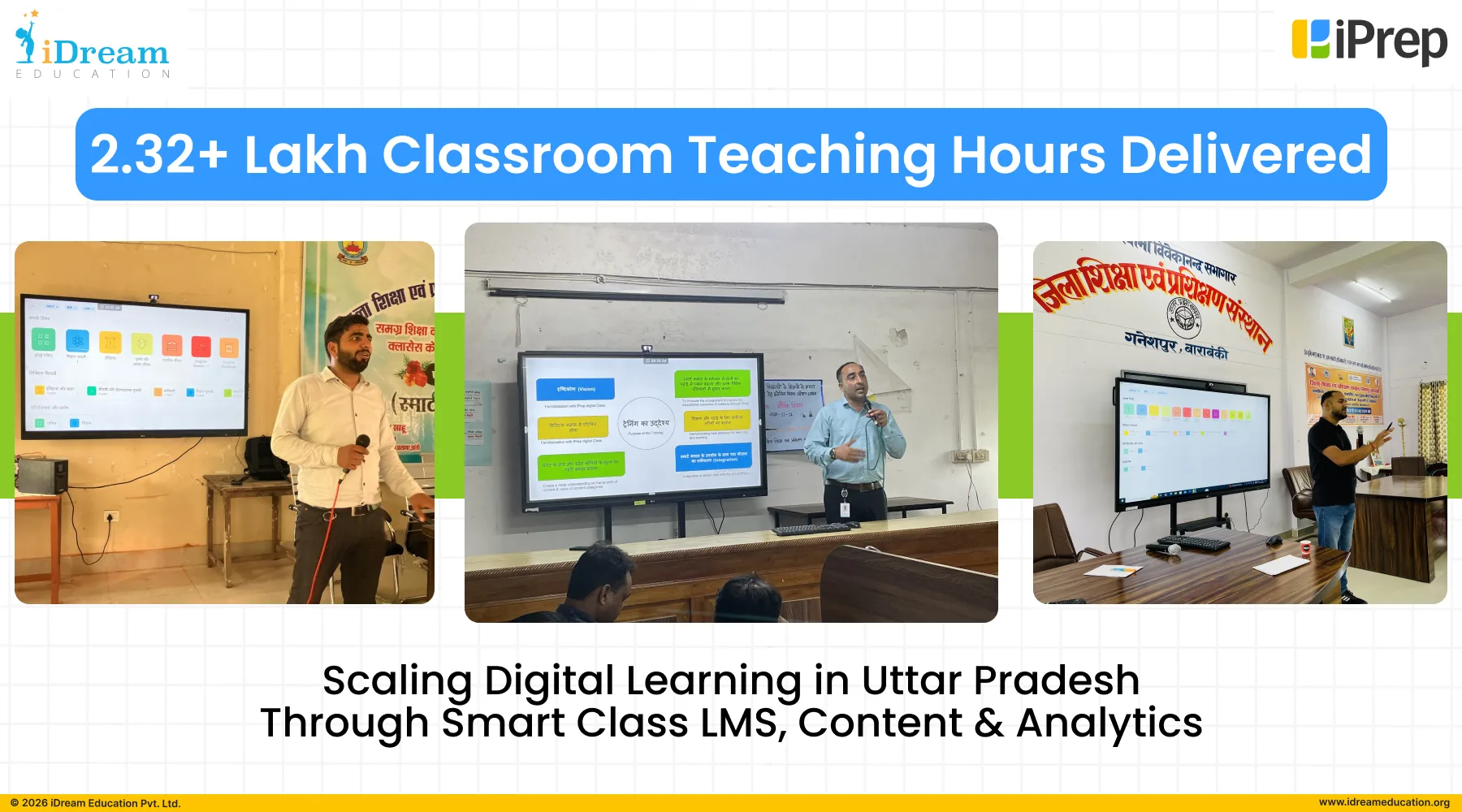
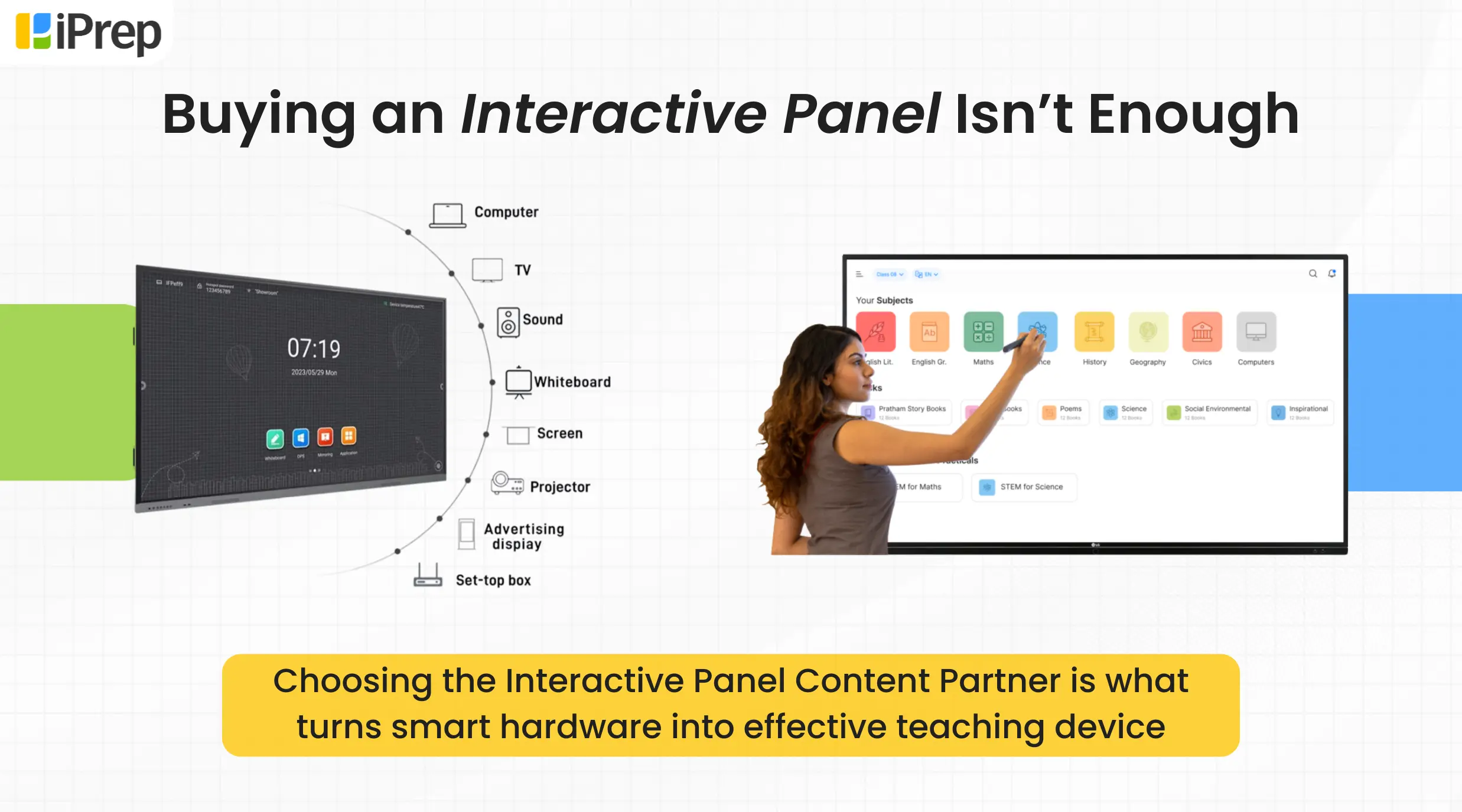
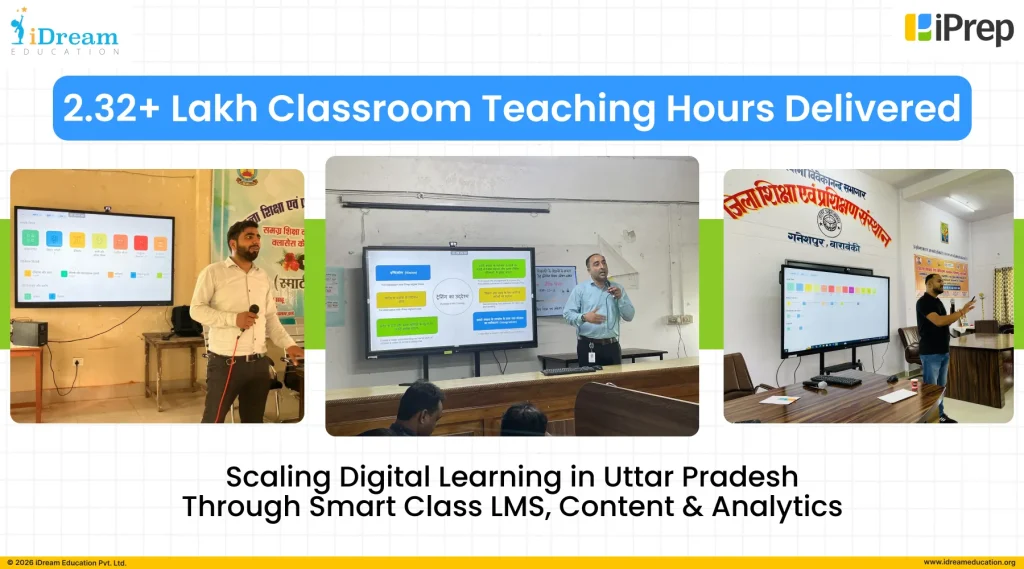
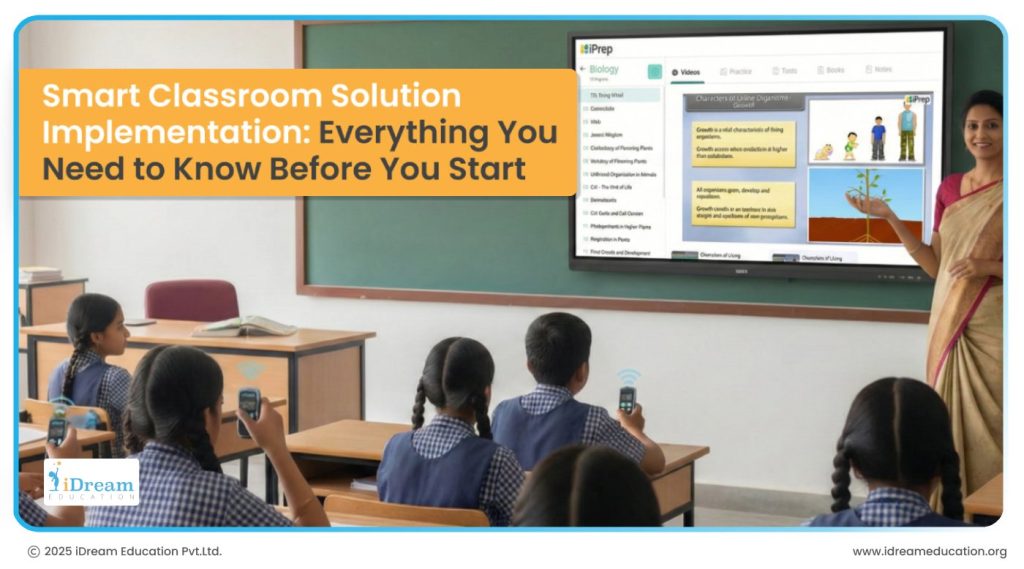
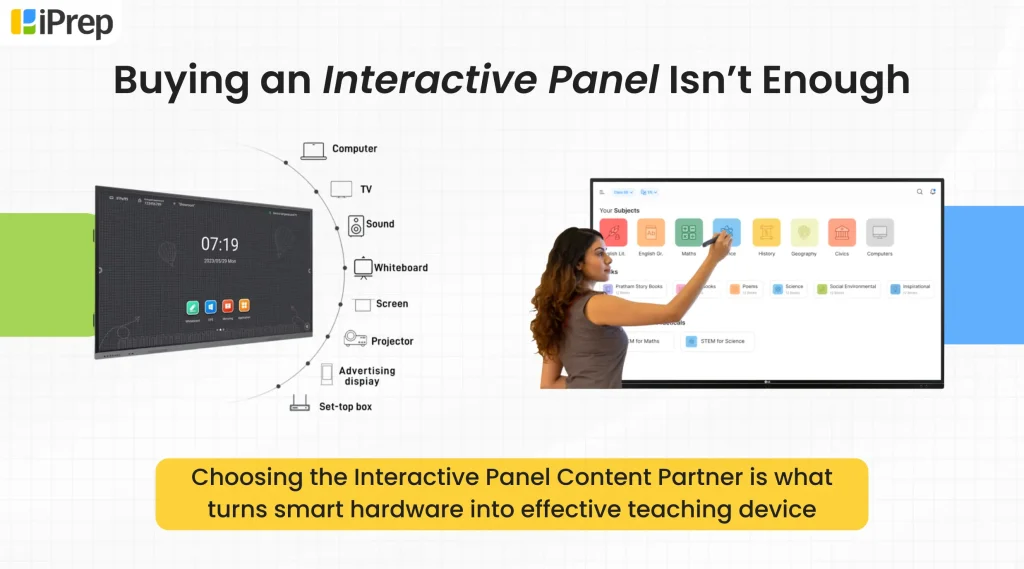
Smart Class solutions are typically implemented as a one-to-many instructional model, designed for use in classrooms, labs, or shared halls. You may choose to install smart setups in every classroom or in common class for rotational use basis timetable. The setup generally includes interactive panels, smart boards, projectors with a pre-installed LMS integrated with preloaded, curriculum-aligned digital content mapped to the board and language followed in the school. Because the content is already aligned to prescribed curricula such as NCERT and relevant state boards, teachers can incorporate it directly into their daily lesson flow without additional academic planning burdens.
A key strength of Smart Class solutions lies in teacher-controlled lesson navigation. Teachers can select modules, pause for explanation, revisit difficult concepts, initiate discussions, and conduct quick assessments within the same digital ecosystem. By bringing together best digital learning materials for students, smart classes make lesson plans richer and more interactive.
Learning Tablets
Learning tablets represent a one-to-one device model. This enables personalised access to digital content. Unlike smart classes that focus on collective instruction, learning tablets empower individual learning journeys. Preloaded with curriculum-aligned content and supported by an LMS/adaptive LMS, tablets allow students to learn at their own pace — revisiting lessons, attempting practice exercises, and strengthening weak areas independently. When integrated with adaptive learning systems, tablets can dynamically adjust difficulty levels based on student performance, supporting differentiated instruction within the same classroom. This is personalized K12 digital tools which can be enabled for in school and at home learning.
Digital libraries
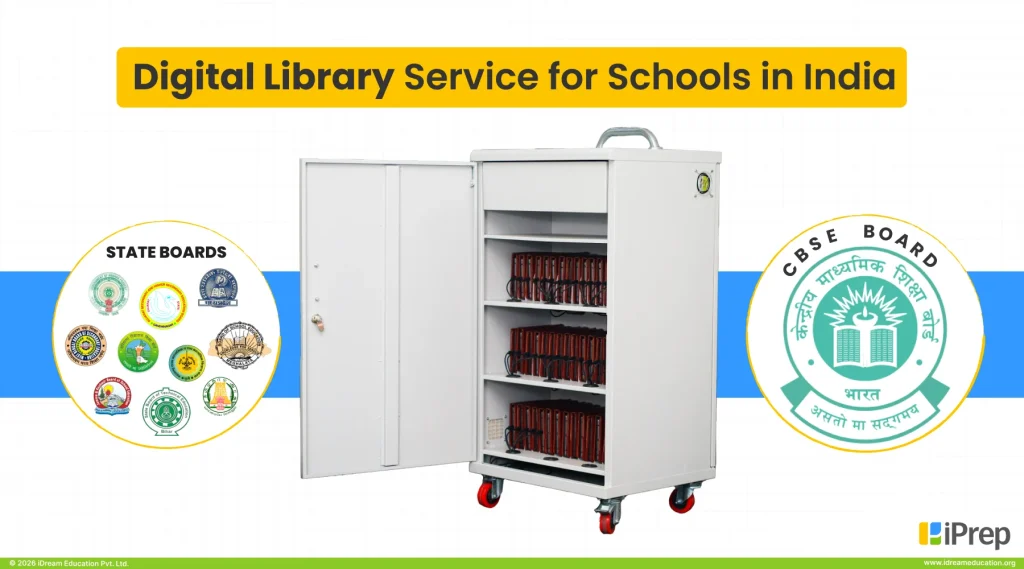
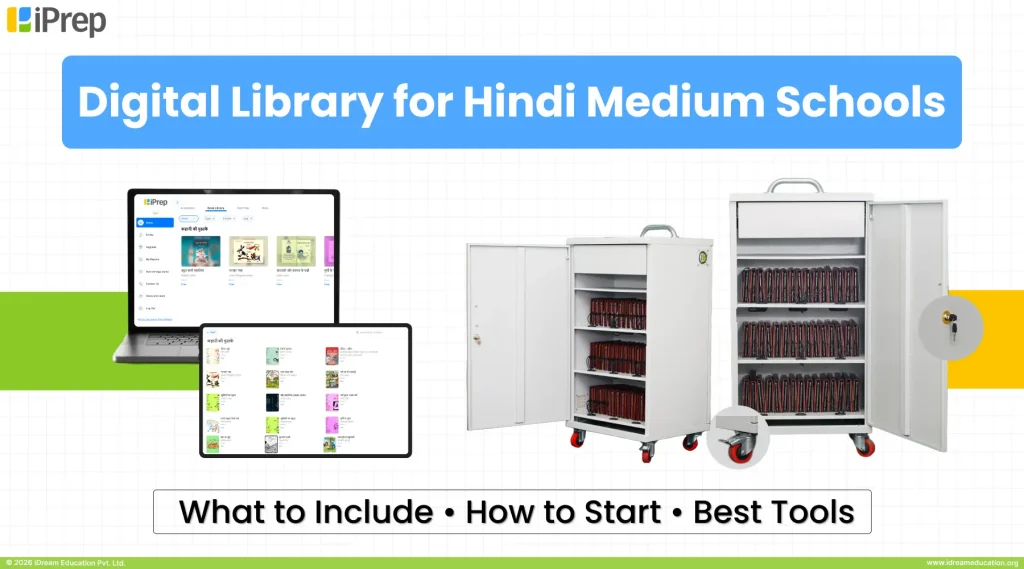
Digital libraries function as curated repositories of academic and beyond-academic resources, expanding learning beyond textbook-driven instruction. They typically best digital learning materials for students including e-books, reference materials, audiobooks, sample papers, inspirational biographies, educational videos, stories, poems, skill-development modules, and a lot more. Unlike structured curriculum platforms that follow a fixed progression, digital libraries promote exploratory learning and self-driven discovery. They play a crucial role in fostering reading habits, strengthening language proficiency, encouraging curiosity across grade levels.
From an implementation perspective, digital libraries are highly flexible and scalable. They can be deployed via tablets, laptops, or Chromebooks supported by storage and charging racks, or set up using local servers for offline environments. Importantly, digital libraries can be customised based on grade levels, age groups, subjects, and language preferences, making them adaptable to diverse school contexts. When thoughtfully enabled, they contribute meaningfully to holistic development by complementing classroom instruction with broader intellectual exposure and independent learning opportunities.
Learning apps
Learning apps are one of the digital tools that extend the classroom into students’ daily lives, creating continuity between school and home learning environments. Designed primarily for mobile access, these apps offer bilingual content, a structured curriculum, aligned digital content & usage monitoring. The most effective learning apps are not content-heavy dumps but structured practice ecosystems aligned with curriculum goals. By encouraging consistent daily engagement, they help build habits of revision, practice, and self-assessment, key drivers of long-term academic improvement.
Tech-enabled Assessment
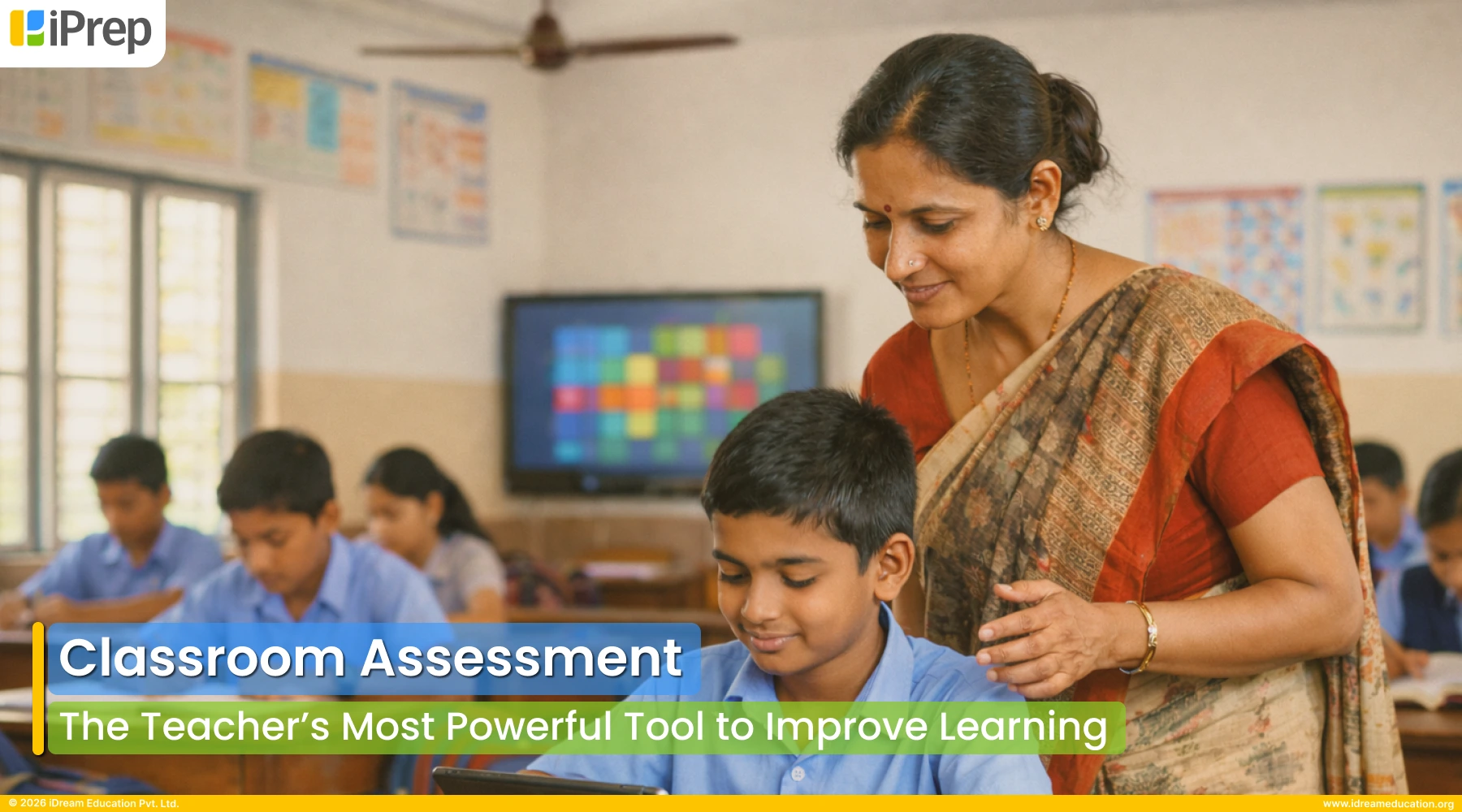
Digital assessment platforms shift schools from periodic evaluation to continuous performance monitoring. These systems enable baseline, monthly and endline assessment that highlights learning levels, progress and outcomes.
We are a 9+ year old social-sector EdTech organization with extensive experience working with thousands of schools across India, in partnership with CSR initiatives, NGOs, hardware providers, and government bodies. Over the years, we have implemented comprehensive K–12 digital tools across diverse geographies including rural, semi-urban, and urban regions and have also supported projects internationally.
We would be happy to walk you through our solutions, share relevant case studies, and offer a detailed demonstration tailored to your school or institutional needs. For more information or to schedule a discussion, you may contact us at +917678265039">+91 7678265039.
Categories You may Explore
Related Articles