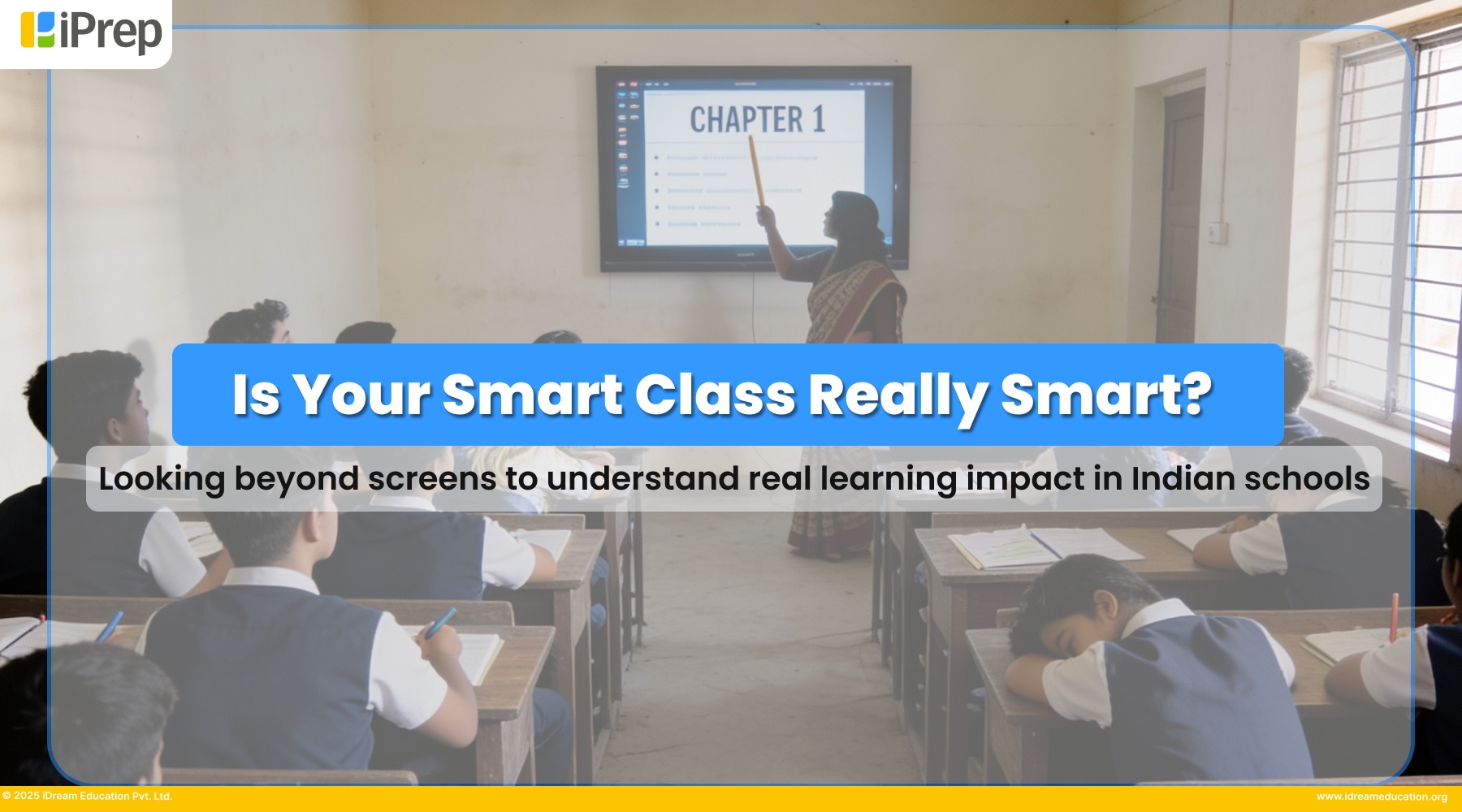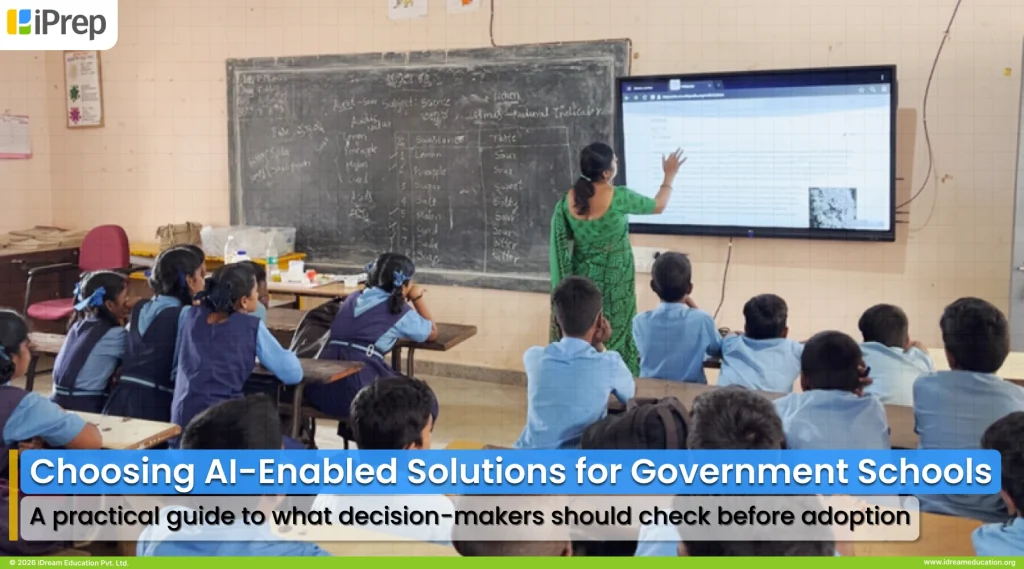
Imagine a typical afternoon in a government school. The “Smart Classroom” is in full swing. A high-definition screen at the front of the room is glowing, playing a vibrant animation of the water cycle. On the surface, it appears to be a triumph of modern education. But look at the teacher.
Despite the technology, the teacher is still doing what teachers have done for decades: looking at a sea of fifty faces and guessing. They ask, “Did everyone understand?” and a chorus of “Yes, Ma’am!” rings out. But is that true? Or are thirty students nodding simply because their neighbors are?
Smart classrooms are being set up with the best intentions to improve learning outcomes, not just to add hardware. But in reality, students mostly watch, they rarely interact. The teacher cannot see inside their minds to know who is following and who is lost in the back bench.
For program owners, CSR leaders, and government officials, this creates a “Black Box.” You see usage logs and attendance, but you only see actual learning results when the state exams come out at the end of the year. By then, it is too late to act.
If the ultimate goal is learning outcomes, how can we improve what we cannot see in real time? Smart Class assessment tools are perhaps the answer
The Hidden Flaw In Our Smart Class Investments
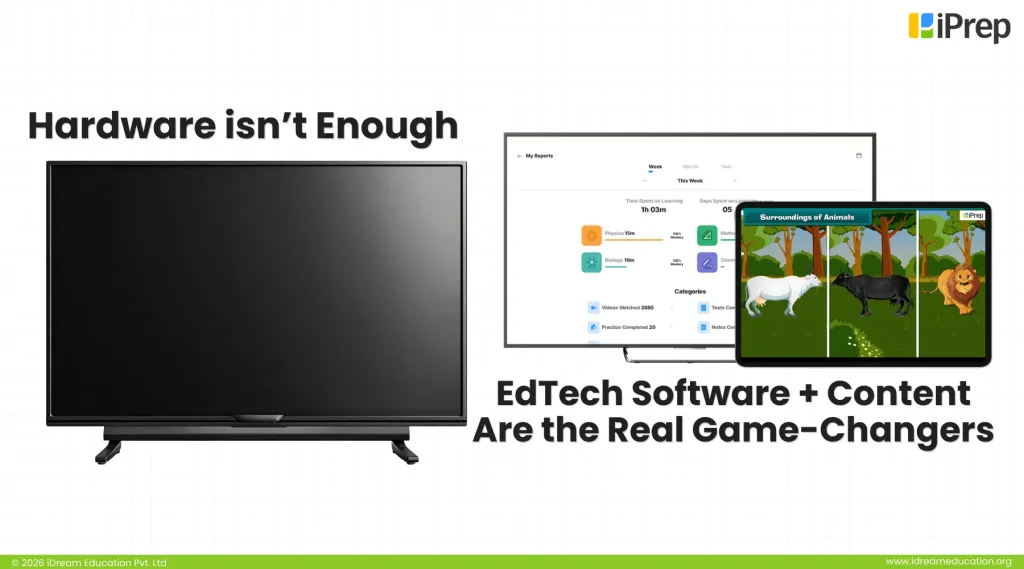
If we zoom out and analyze the billions invested in school technology, a hard truth emerges: Today’s smart classroom is an excellent tool for content delivery, but a weak tool for feedback.
Watching a video is not evidence of understanding. In this model, the student is a “viewing medium.” Because the content is engaging, it creates an “Illusion of Competence”—students feel they understand because the video was easy to follow, but they haven’t actually processed the concept.
When a teacher can’t easily act on what they don’t know, and stakeholders can’t act on what they can’t measure, the smart classroom becomes a passive entertainment center rather than an active learning hub. We end up trapped in a cycle of “hope-based” education, waiting for annual results to tell us if our multi-crore projects actually worked.
So, if screens alone can’t close learning gaps, what is the missing piece in this puzzle?
Formative Assessment Technology, therefore, becomes the need of the hour.
The Moment The Class Starts Talking Back
Imagine that same classroom, but with one critical change. The teacher plays a video on the smart screen, but every few minutes, they hit “Pause.”
Instead of asking a general question to the room, they trigger a “Check for Understanding.” Suddenly, every student, even the quietest child in the back, picks up a simple clicker interface.
The teacher asks, “Which process turns water vapor back into liquid?”
Each student clicks their choice. In three seconds, a bar chart appears on the smart screen. The teacher sees that 60% of the class chose “Evaporation” instead of “Condensation.”
For the first time, the teacher isn’t guessing. The class is “talking back” through data. The teacher doesn’t move to the next slide; they stop, re-teach the specific point of confusion, and verify again.
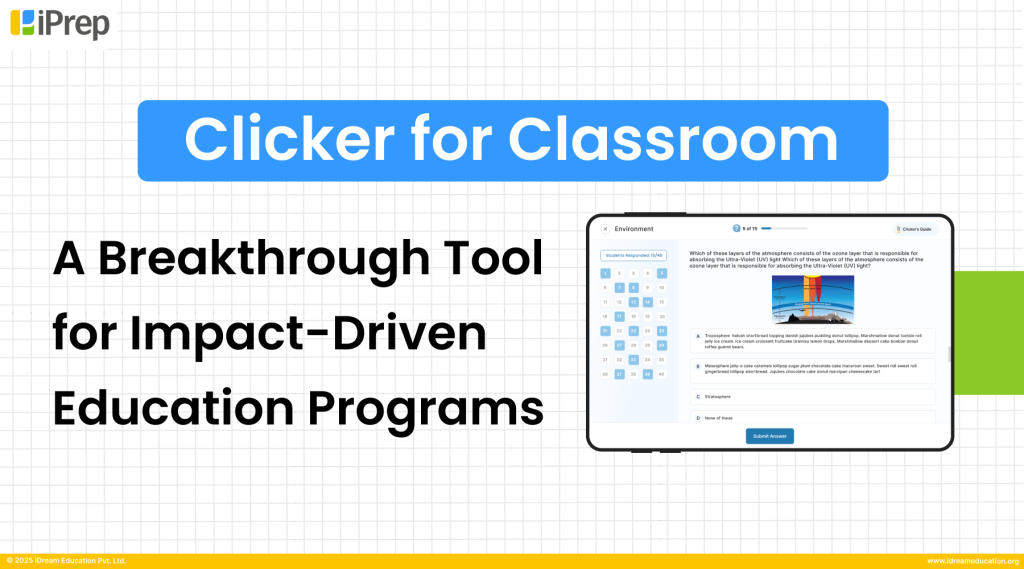
This is where the Clicker for Classroom quietly transforms a smart class into a learning lab.
Six Ways Clicker-Based Assessment Turns Data Into Teaching Power
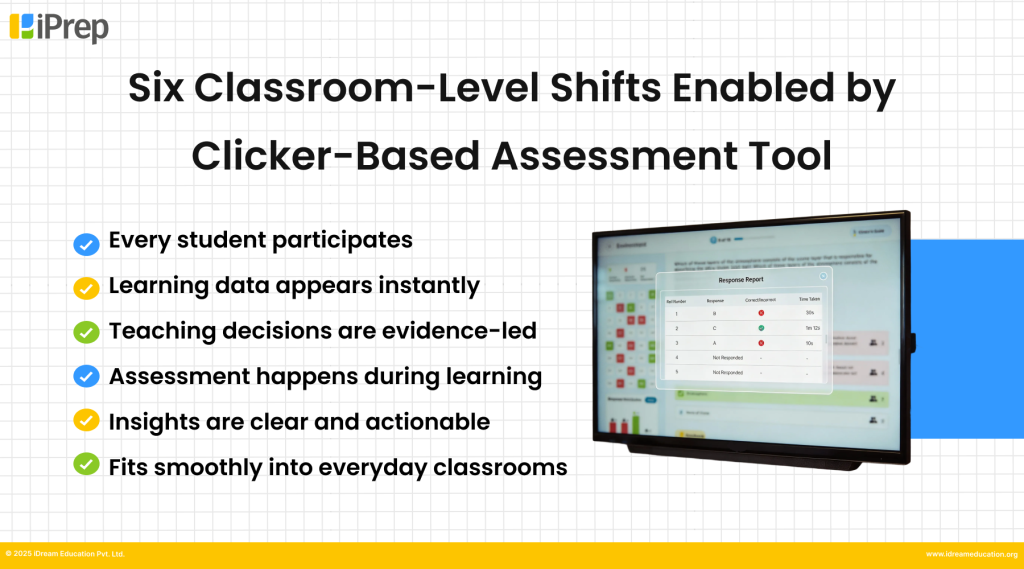
This isn’t just a gadget, it’s a “superpower” for educators. Here is how it changes the ground reality of teaching:
- Every Child Answers, Not Just The Loudest Few: We no longer rely on the 4–5 vocal students in the front row. Clicker-based assessment ensures 100% participation. Every child responds visibly.
- Real-Time Learning Data Inside Every Lesson: Teachers instantly identify confused students through real-time responses. There is no need to wait for weekly tests or monthly reviews to find a gap.
- Teacher Decisions Based On Evidence, Not Intuition: If the majority is stuck, the teacher reteaches differently on the spot. If only 5 students are stuck, the teacher can plan a small remedial group for them while others move ahead.
- A Continuous Formative Assessment Tool: Smart classroom assessment moves from “end-of-unit” stress to “every day” feedback. Every video or slide becomes a conversation.
- Actionable Analytics For Program Leaders: Over weeks, this data aggregates. CSR and NGO partners can see genuine learning trends across schools, not just “hours played,” but “concepts mastered.”
- Low-Friction Fit For Government Schools: These assessment tools align seamlessly with the Indian education context. They work with shared devices, require no 1:1 dependency, and can run entirely offline.
If this is what is possible inside one classroom, what happens when an entire program or state system starts to see this kind of data?
From Screens To Systems: Why Clickers Matter For Impact-Driven Programs
For State, CSR, and NGO leaders, clickers deliver systemic accountability through real-time data and measurable classroom impact.
Till now, most reports focused on “inputs”: How many screens were installed? How many hours of content were played? But Smart Classroom Assessment lets you report on outcomes.
You can finally see the percentage of students mastering specific competencies in real-time. You can identify which blocks or clusters are improving and which ones need urgent intervention. This shifts your narrative from “we hope this is working” to “we can see exactly what is working, where, and for whom.” It allows for mid-course corrections, tweaking content, or providing targeted teacher support before the academic year is lost.
The New Definition Of “Smart” In Smart Classrooms
In 2015, the breakthrough was simply putting screens into classrooms. By the coming year, that will no longer be enough.
The “Old Model” was: Smart Classroom = Screen + Content. The “New Model” is: Smart Classroom = Screen + Content + Continuous Insight.
We must move from the question “Did we install the technology?” to the question “Did students actually learn more because of smart classes, and how do we know?”
The clicker is not about more technology; it’s about finally seeing, in every class, whether our children are actually learning.
Don’t let your smart classroom implementation be a one-way street. Building a truly interactive environment means choosing tools that turn passive viewing into active participation. If you would like to see how a “Clicker for Classroom” can bridge the learning gap and help you design an education program that is practical, impactful, and built for the future, please reach out to us at +917678265039 or write to us at share@idreameducation.org.
Categories You may Explore
Related Articles