

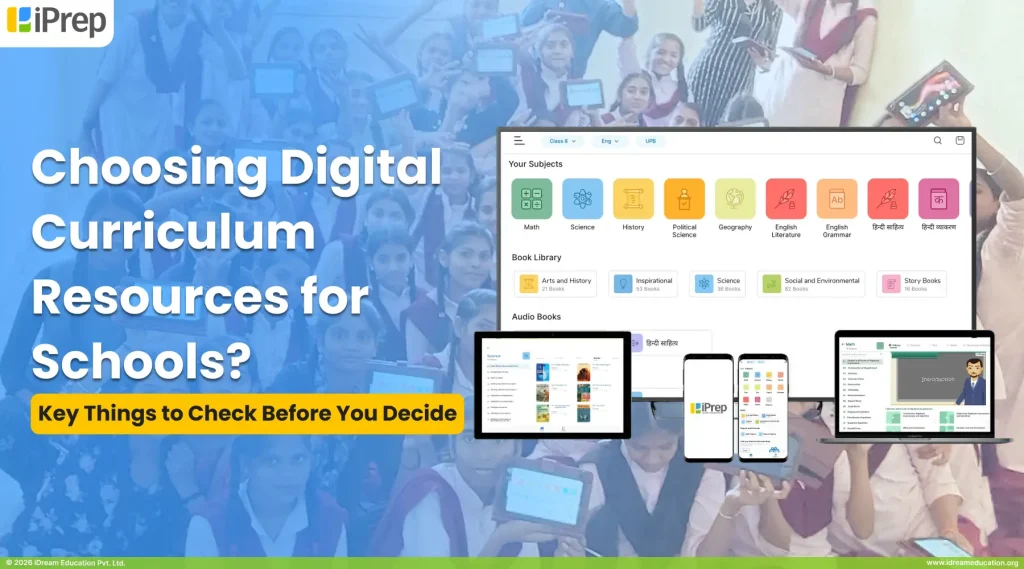
Schools today are not struggling to find digital content. They are struggling to find the right digital curriculum resources. Every platform promises animated lessons, thousands of videos, assessments, and AI-powered learning. Yet when schools actually start using these platforms, a familiar problem appears – teachers stop using them after the initial excitement fades.
For you, the objective behind introducing digital learning is clear. It is to support teachers, strengthen classroom instruction, and improve learning outcomes for students.
Yet, after deployment, a familiar pattern often appears. Platforms may offer extensive digital content libraries. Yet actual classroom usage remains limited, with teachers relying on only a small
portion of the available resources.
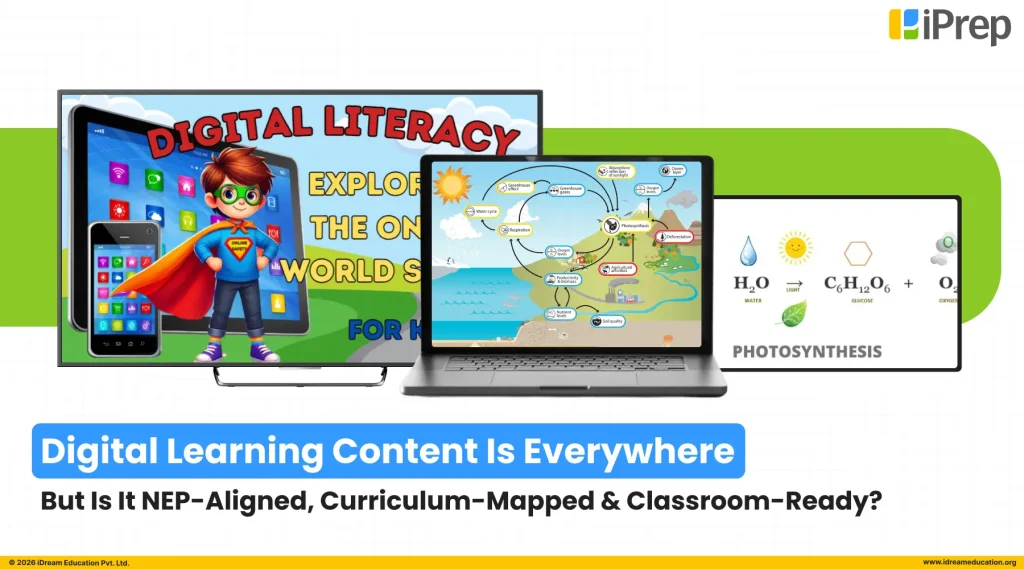
Why does this happen? Because many digital curriculum resources are designed to look impressive in demos. But they are not always aligned with the curriculum teachers actually follow in schools.
Before selecting digital curriculum resources for your school programs, it is important to look beyond content volume and flashy features. What truly matters is curriculum alignment, classroom usability, teacher adoption, and measurable learning impact.
Let us explore what education stakeholders should evaluate before choosing digital curriculum resources for schools
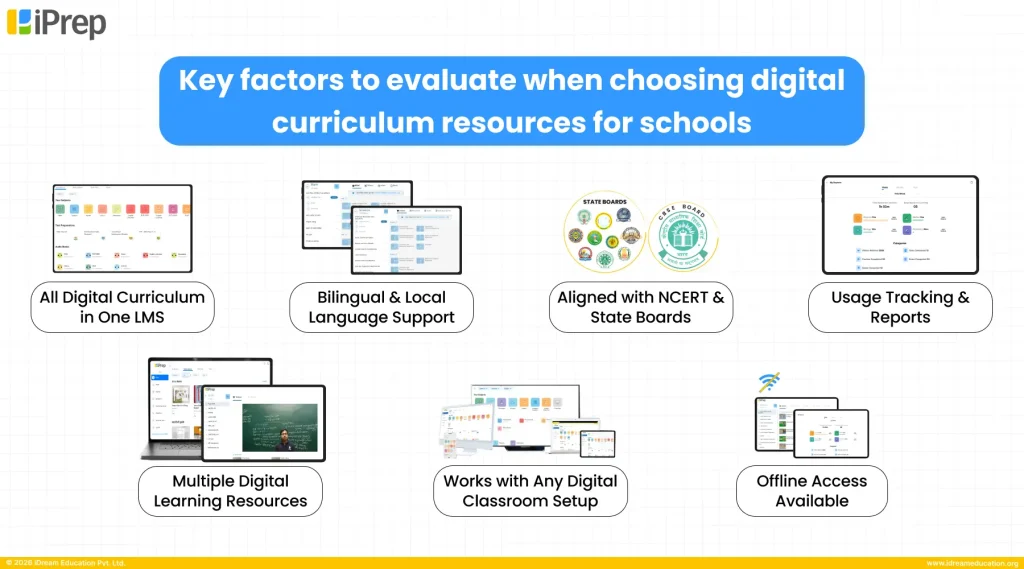
When governments, CSR programs, NGOs, and education implementers introduce digital learning in schools, the choice of digital curriculum resources becomes critical. The right resources can strengthen classroom teaching. They can also improve learning outcomes. The wrong choice, however, often leads to low teacher adoption and underutilized technology investments. To ensure meaningful impact, you should evaluate the following aspects before selecting digital curriculum resources for schools.
An LMS That Brings All Digital Curriculum Resources Together
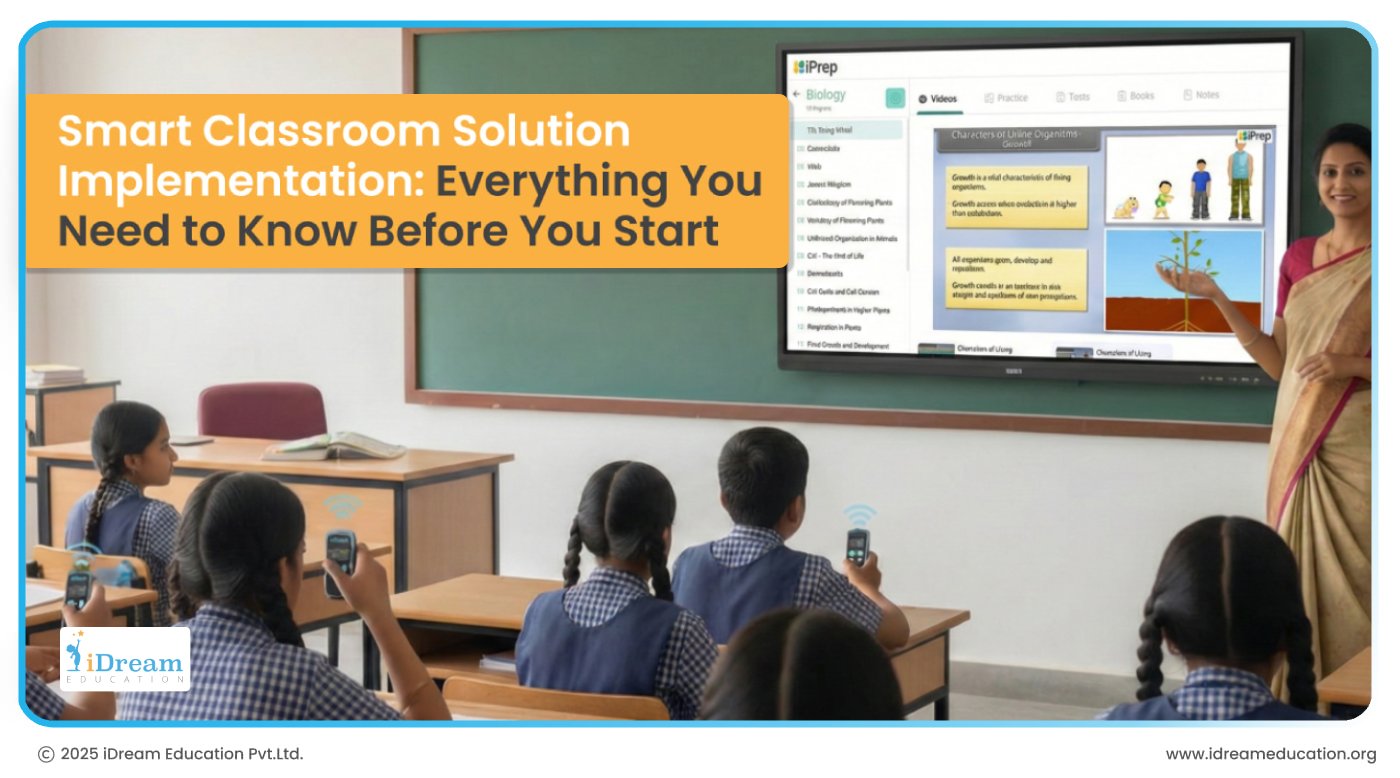
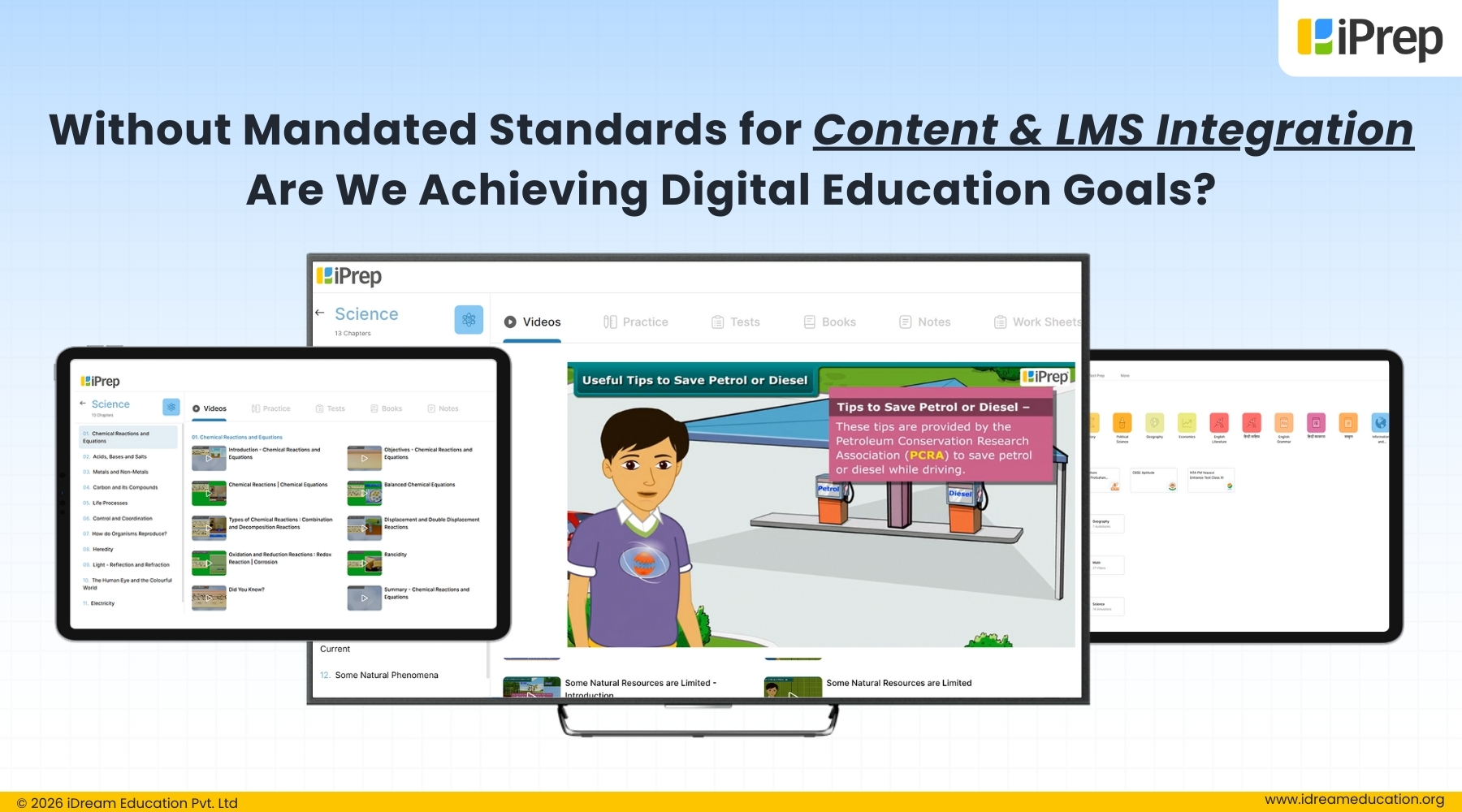
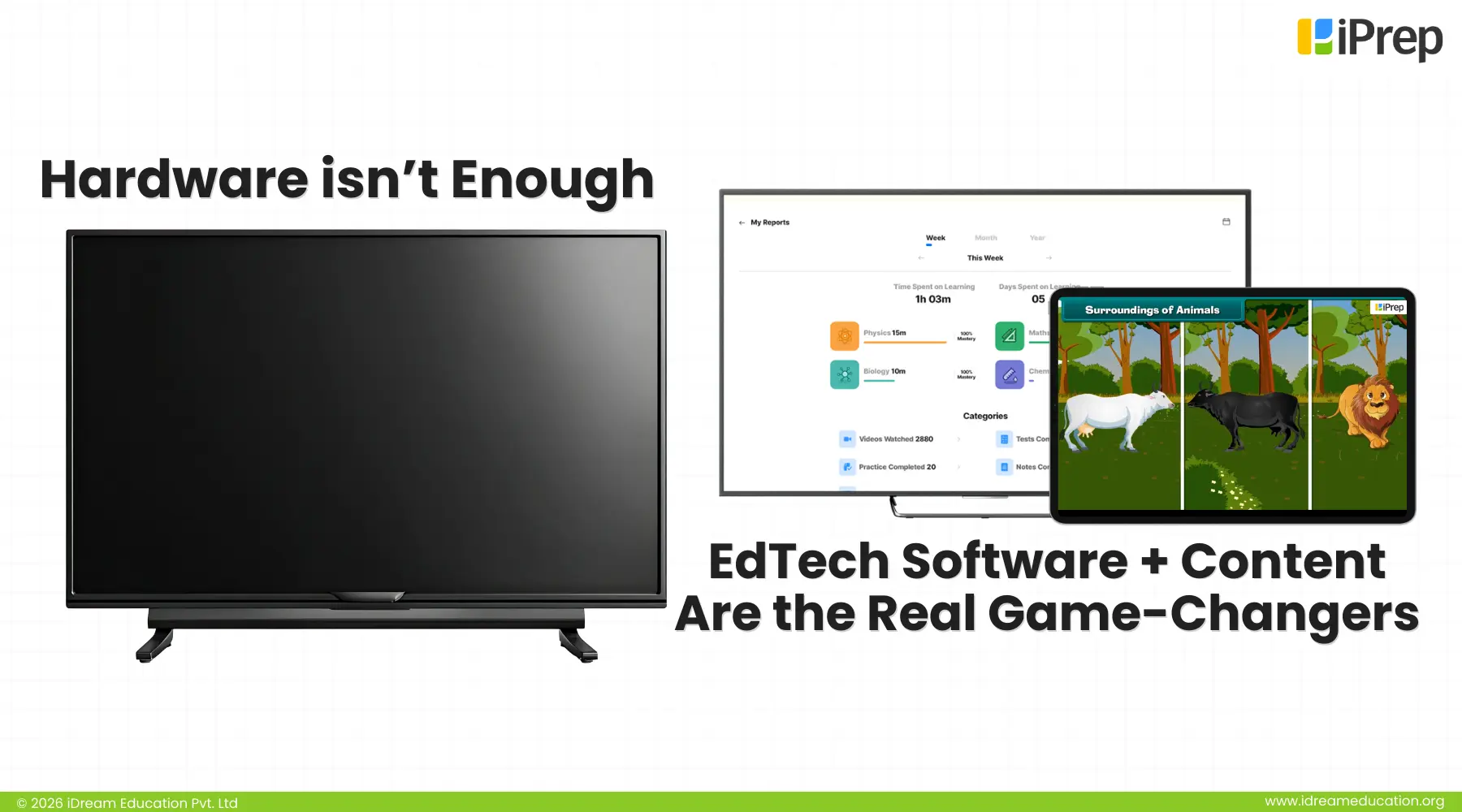
Digital curriculum resources should not be scattered across multiple platforms. A strong Learning Management System (LMS) should provide centralized access to all digital learning content in one place. Teachers/Students should be able to easily navigate between boards, subjects, grades, languages, and content categories without technical complexity. A universal and intuitive interface ensures that teachers and students can quickly find the right resources during classroom instruction. This allows them to use the content immediately instead of spending time searching for it.
Strict Curriculum Alignment with NCERT and State Boards
One of the most critical factors is curriculum alignment. Digital curriculum resources must be carefully mapped to NCERT and relevant state board curricula so that teachers/students can seamlessly integrate them into their daily lesson plans.
For programs that span multiple states, the LMS should support board-wise customization, ensuring that schools in each state get access to content aligned with their specific curriculum. Additionally, the digital curriculum should be regularly updated in line with NEP recommendations, state education board changes, and central guidelines, ensuring that teachers and students always have access to the most relevant and up-to-date learning resources.
Multiple Categories of Digital Curriculum Resources
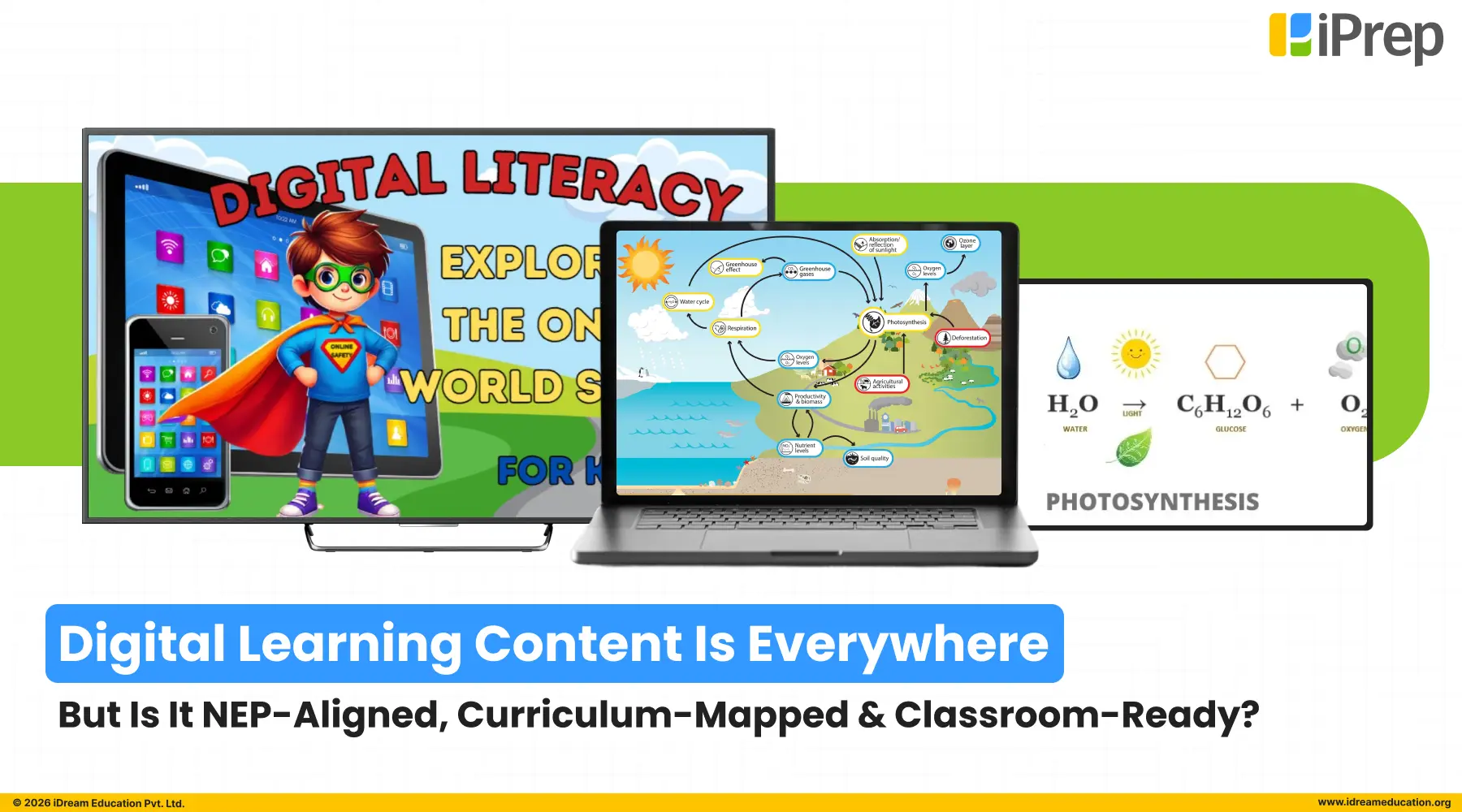
Effective digital learning cannot rely on video lessons alone. Students have different learning styles, and teachers need multiple resource formats to support classroom instruction. Digital curriculum resources should therefore include a diverse range of formats such as animated lessons, syllabus-aligned digital textbooks, chapter-wise notes, practice questions, assessments, simulations, concept visualizations and much more. Importantly, these resources should not merely be translated versions of the same material but should be thoughtfully designed or transliterated to maintain conceptual clarity across languages.
Bilingual and Local Language Availability
To truly support learning in classrooms, digital curriculum resources should be available in Hindi, English and regional languages, aligned with state and central board curricula. Bilingual access allows comprehending concepts more effectively and ensures that students can learn in the language they are most comfortable with. Providing curriculum-aligned digital resources in local languages significantly improves comprehension, engagement, and classroom adoption.
Usage Tracking and Reporting for Program Monitoring
For governments, NGOs, and CSR initiatives, understanding how digital curriculum resources are being used is essential for education program success. Therefore, the LMS you are choosing should provide robust reporting and analytics, where all content usage data is recorded and synced to a centralized dashboard. This enables education stakeholders to monitor teacher engagement, content usage patterns, subject-wise adoption, and overall program impact. Such data driven insights help identify where additional training, support, or improvements may be needed.
Offline Accessibility to Digital Curriculum Resources
In India, connectivity remains a challenge in many regions. Therefore, digital curriculum resources should be accessible offline through the LMS, ensuring that teachers and students can use them even in low or no internet environments. Offline capability ensures that geography or connectivity limitations do not restrict access to digital learning resources in your digital learning initiatives.
Compatibility with Existing or New Digital Classroom Infrastructure
Digital curriculum resources should be designed to integrate seamlessly with both new and existing digital classroom hardware whether smart TVs, projectors, tablets, chromebooks, Laptops, digital boards, or computer labs. Flexibility in integration ensures that education stakeholders can implement digital learning based on the infrastructure available in schools, without requiring expensive hardware upgrades.
iDream Education Enabling Digital Curriculum Resources That Work in Real Classrooms
- Our ecosystem combines curriculum-aligned digital content with a robust LMS that brings all learning resources together in one place. Teachers and students can easily navigate across boards, classes, subjects, languages, and multiple content categories, while the content itself is strictly mapped to NCERT and state board curricula and regularly updated in line with NEP and other central and state education guidelines.
- The platform also supports multi-state implementations, multilingual access, offline usage, and compatibility with existing or new digital classroom infrastructure, ensuring that digital curriculum resources can be effectively used across diverse school environments.
- Our digital curriculum resources are developed by a dedicated team of subject matter experts who closely work in alignment with NCERT and state board curricula. This ensures that the content is not only academically accurate but also designed in a way that teachers/students can easily integrate into everyday learning.
- Understanding the connectivity challenges faced by many schools, our digital curriculum resources are designed to work completely offline. Because of this capability, iPrep’s LMS and digital curriculum resources are implemented and used even in some of the most remote schools of India.
- Additionally, our LMS iPrep includes comprehensive reporting and analytics capabilities, where content usage across schools is captured and synced to centralized dashboards, enabling education stakeholders to monitor adoption, track engagement, and continuously improve program implementation.
Beyond content development & enabling digital curriculum resources,
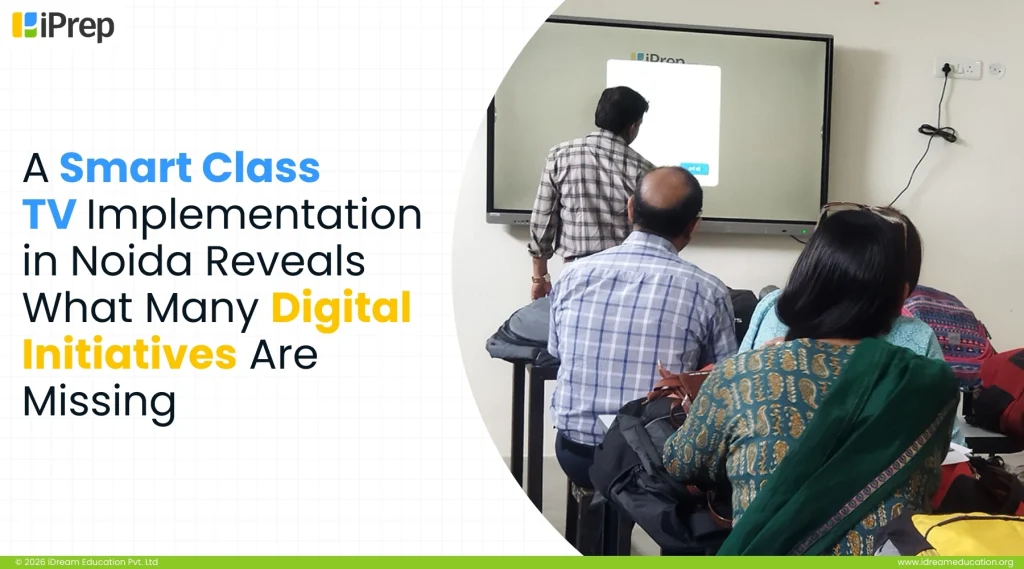
We believe that teacher onboarding and continuous support are essential for meaningful adoption. That is why our approach includes ground-level teacher training programs. In these programs, teachers & students are introduced to iPrep LMS & guided on how to use digital curriculum resources. We also provide support throughout the education program. Even after deployment, our teams remain engaged to provide ongoing guidance, usage monitoring, and support, helping education stakeholders ensure that digital learning initiatives translate into real classroom impact.
Over a decade now, we have extensive experience in implementing digital curriculum resources across diverse educational environments.
Our solutions have been deployed in 23 states across India, supporting learning in 11 languages. Today, over 1.5 million students and thousands of teachers actively use our digital curriculum resources as part of their everyday learning and teaching experience. This experience enables us to work closely with governments, CSR initiatives, NGOs, and education partners to design and implement digital learning programs that are practical, scalable, and aligned with the realities of classrooms across India.
If you are looking for digital curriculum resources for schools aligned with NCERT or any state board. We would be happy to connect with you. Our team can walk you through a demo of our state-specific digital learning content available through the bilingual iPrep LMS. It is designed to support teachers and students across different boards, languages, and classroom environments. Connect with us at +91 7678265039 to explore how our digital curriculum resources can support your digital learning initiatives. You can also write to us at share@idreameducation.org
Categories You may Explore
Related Articles