

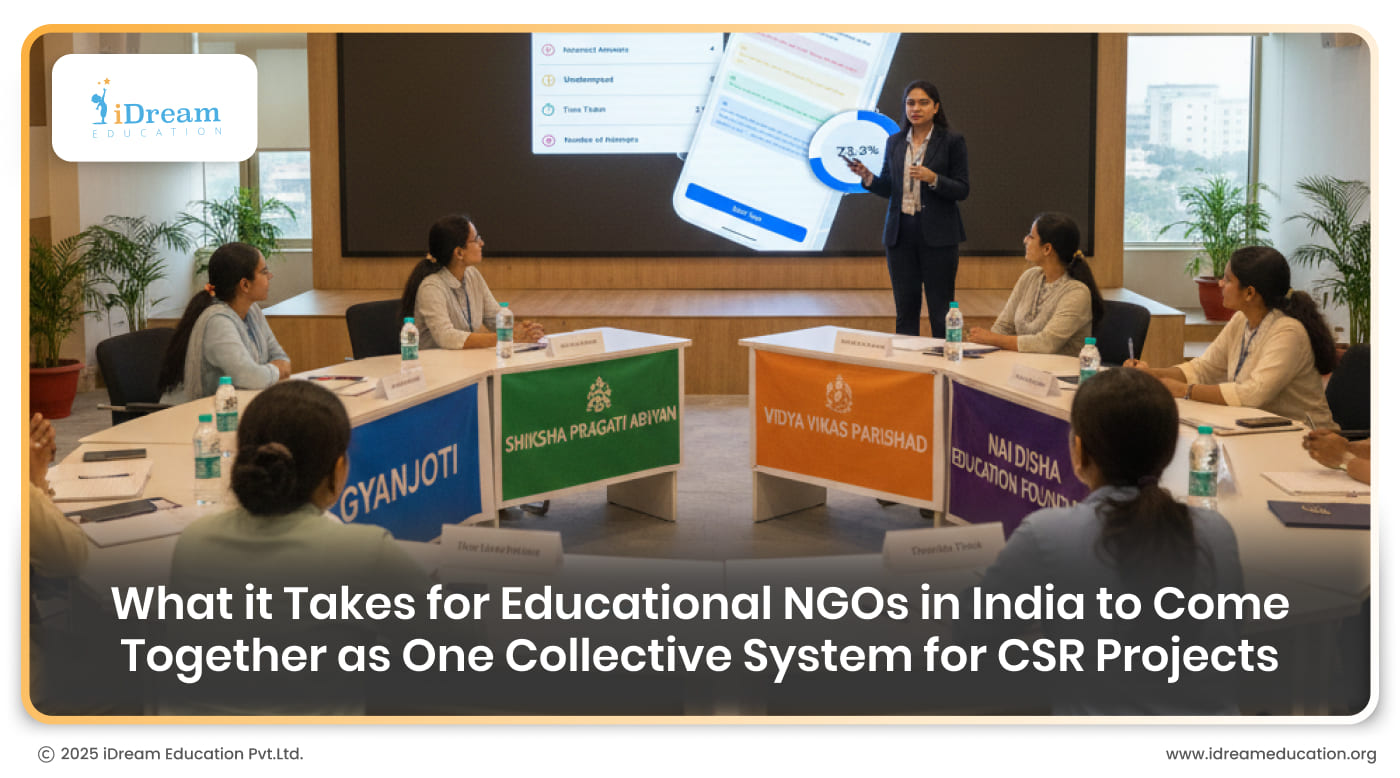
When you allocate CSR education funds across multiple NGOs, you expect measurable outcomes. You need consolidated reports for your board and want to see year-over-year impact progression.
But here’s what actually happens: each educational NGO in India operates independently. They use different metrics and follow separate implementation strategies. Your CSR investment gets scattered across fragmented efforts, making it nearly impossible to demonstrate consolidated ROI.
Imagine the potential if these NGOs could come together as a cohesive, unified system?
Interesting, right? Let’s understand the possibilities in detail.
What Educational NGOs in India are Doing Right Now?
As a CSR manager assessing potential implementation partnerships, you’d come across NGOs actively working on multiple fronts:
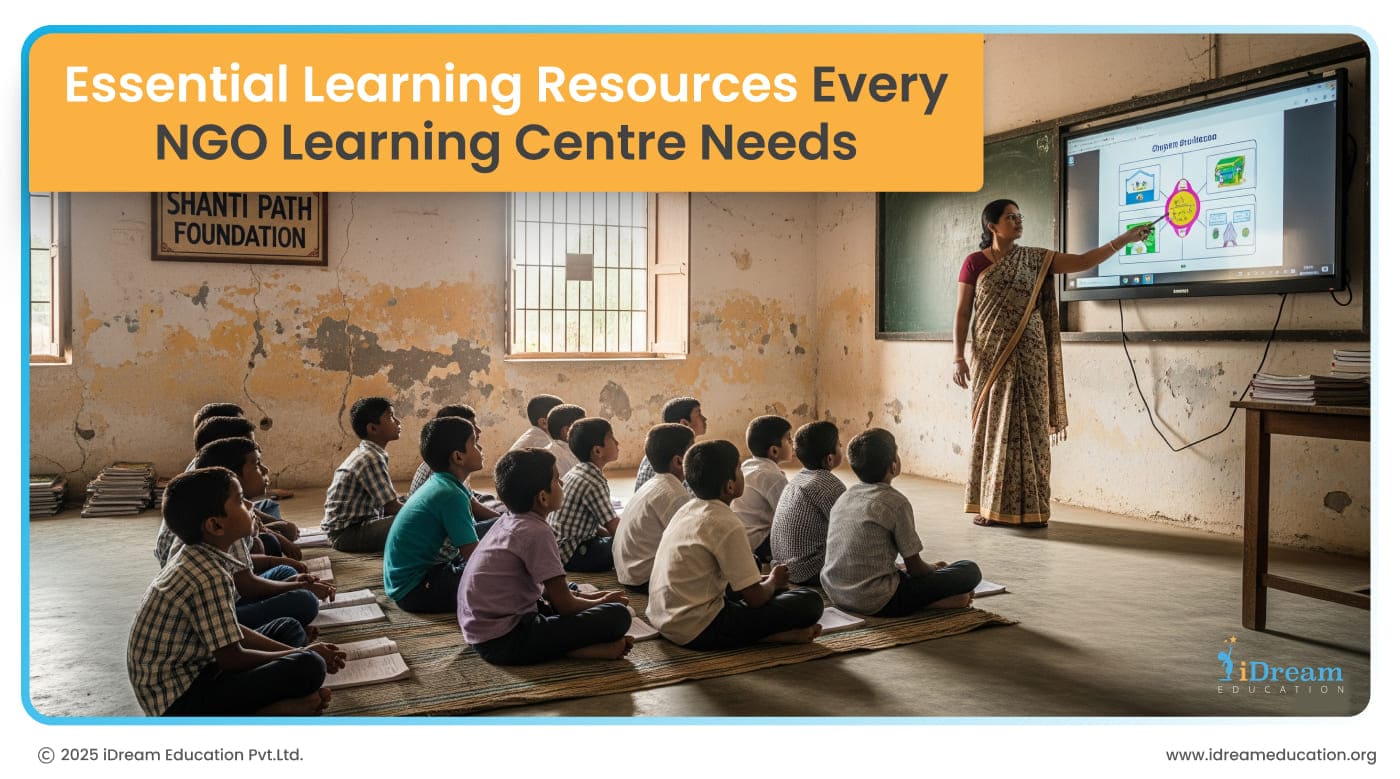
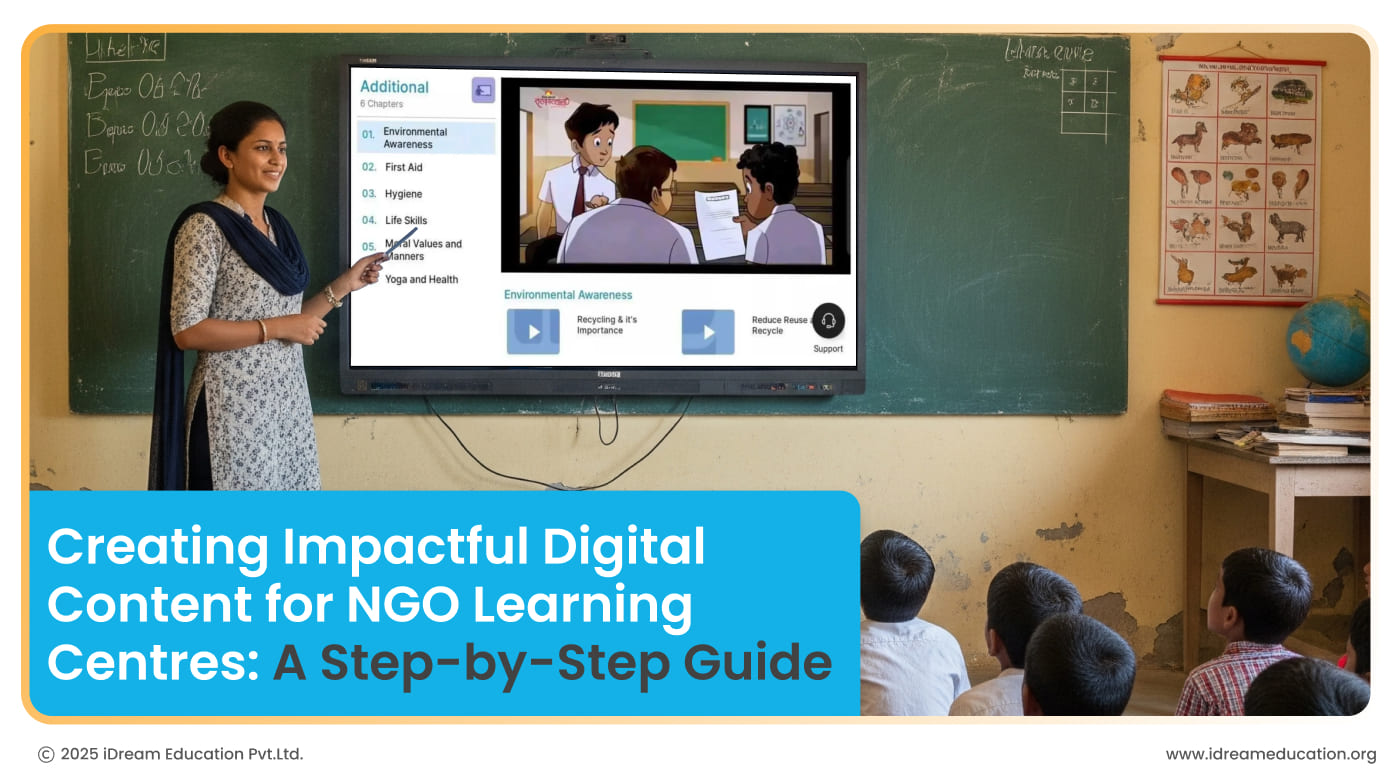
- Digital classroom providers are bringing tablets, smart classrooms, and interactive content to government schools.
- Teacher training specialists are focusing on modern pedagogy and classroom management in tier-2 and tier-3 cities.
- Infrastructure-focused NGOs are running campaigns for school buildings and learning materials.
- Programs that promote girls’ education are particularly focusing on increasing enrollment and retention rates in rural regions.
- Meanwhile, Foundational Literacy and Numeracy (FLN) programs are targeting early graders (KG – Class 3), where learning gaps often start to develop.
- Mobile learning units have reached tribal and remote areas, while grassroots organisations are tackling last-mile challenges like poor connectivity, infrastructure gaps, and teacher shortages.
Despite so many activities, your challenge lies in the fact that each NGO typically handles one or two areas, not all of them. You end up funding multiple partners to cover all bases, but coordination between them is virtually zero.
Current Gaps that Hold Back Real Change
In many districts, you might find multiple partners running similar digital learning programmes in the same set of schools. Another group may be conducting teacher training, while some other organisation introduces assessment tools that don’t connect with existing systems.
These parallel efforts, no matter how sincere, often create unintentional overlap in your CSR investments. Schools get confused about which program to prioritise, data collection happens in duplicate, and when one NGO’s funding cycle ends, the next partner starts from scratch, wasting your previous investment.
Without unified systems, your CSR investment struggles with three critical issues: you can’t show year-on-year impact to your board because baseline data rarely transfers between partners, financial efficiency suffers as each NGO develops separate monitoring systems, and you face duplicated efforts with incompatible data that make demonstrating sustained ROI nearly impossible.
A Collective System: What It Would Look Like?
A collective system would change your CSR project planning and reporting fundamentally. Here’s how:
Unified School Assessment
School profiling would happen once, where a unified assessment team would measure learning levels, infrastructure, teacher competency, and community engagement. This baseline data is then sent to a shared system accessible to all your partner NGOs.
Specialised Partner Roles
Based on this single assessment, different organisations step in with their strengths without overlap. For example, one focuses on digital content delivery, another specialises in teacher training, and a third concentrates on mobilising the community. A fourth could manage attendance and learning outcomes.
Coordinated Implementation
All partners work from the same playbook – use compatible digital learning solutions, report into one dashboard, and attend joint review meetings with school administrators and your CSR team.
Streamlined CSR Planning
You fund one coordinated program instead of juggling multiple fragmented partnerships. Your reporting becomes straightforward because all partners feed into one framework, and in the end, your board sees clear, consolidated impact metrics.
The year-over-year progression will be clearly visible. Baseline assessments from year one carry forward. And, when implementation partners change, they can simply plug into the existing system. This way, your sustained education initiative shows actual sustained results.
For CSR leaders seeking measurable outcomes, this model delivers what standalone NGO partnerships cannot: unified data, coordinated implementation, great use of technology, and demonstrable ROI.
Infrastructure That Can Make Your CSR Investment More Effective
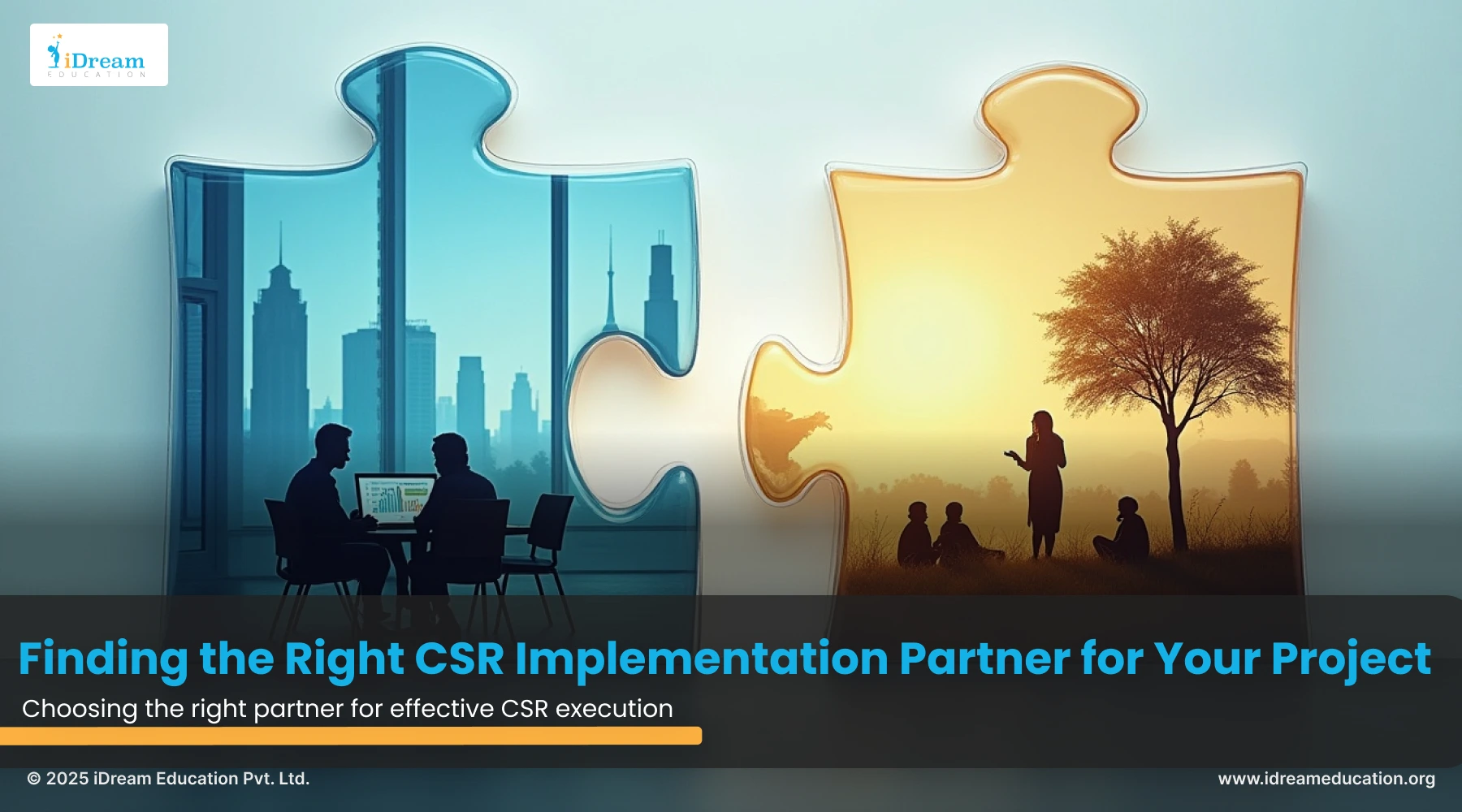
Your CSR education funds become more effective when directed toward coordinated programs rather than scattered initiatives. Joining hands with the right technology implementation partner is a critical CSR decision. Established EdTech CSR partners provide scalable digital learning management systems (LMS) that multiple NGOs can use without developing technology separately. This vendor selection determines whether your funded programs can actually coordinate or remain siloed.
A unified reporting framework is non-negotiable for your CSR team.
You need to see the same metrics across all partner NGOs: students reached, learning level improvements, teacher satisfaction scores, dropout rates, and cost per beneficiary. When every stakeholder views identical data, your impact reporting will become credible and board-ready.
Coordination mechanisms make your funded programs actually work together. Monthly inter-NGO meetings, shared project timelines, clear role definitions, and conflict resolution processes prevent the overlapping territories that waste your CSR budget. A governance body further makes sure no partner works at cross-purposes with your program goals.
Geographic division also reduces your coordination burden. Instead of managing five NGOs competing in one district, each takes responsibility for specific blocks or clusters. They still collaborate through the unified system, but duplication drops significantly.
Your CSR investment becomes more effective when the infrastructure supports coordination instead of competition.
Clear Measurable Outcomes: What Your CSR Board Actually Sees
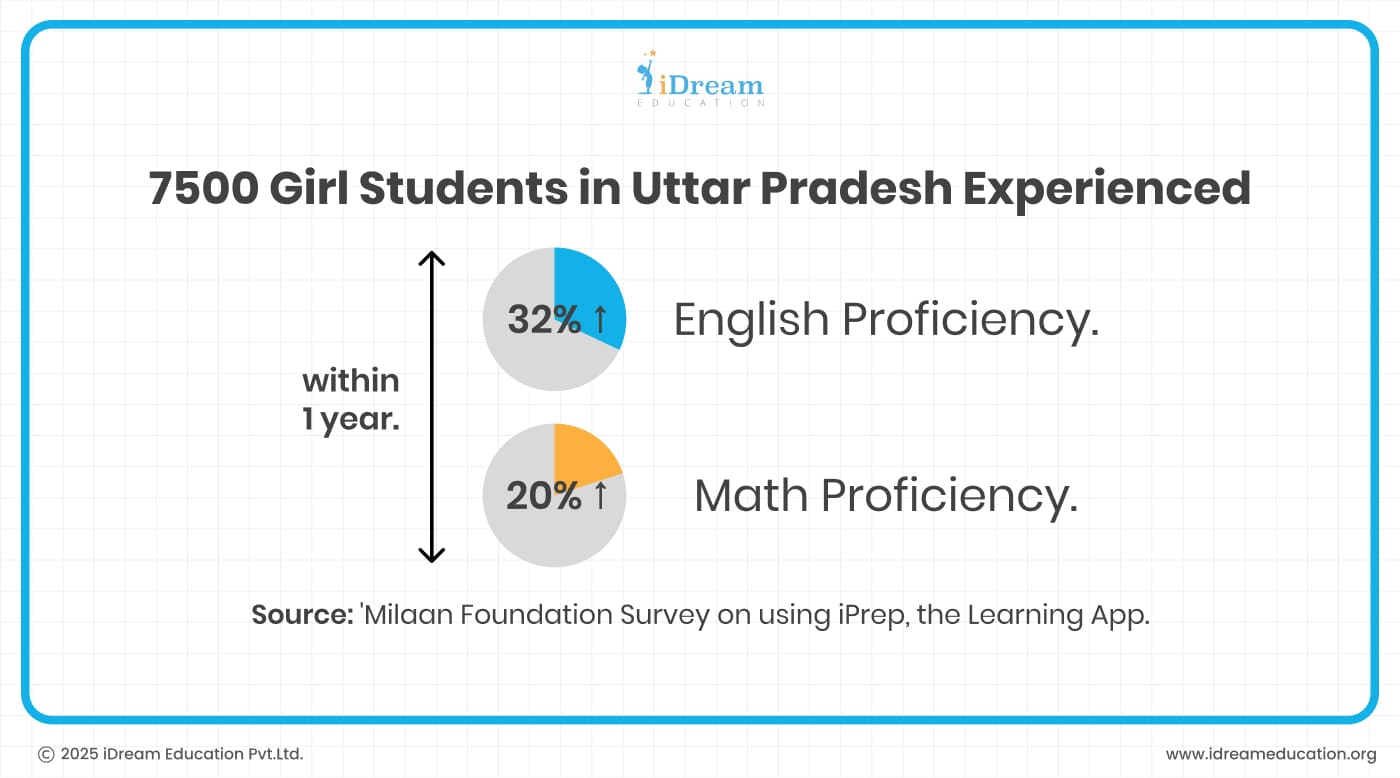
CSR leaders get what they need: clear, quantifiable results that stand up to board scrutiny. Let’s take the ‘Insights from Milaan Foundation’s Survey on the use of iPrep, the Learning App‘ as an example.
Within one year across 7,500 girl students in Uttar Pradesh, English reading levels reached 32% and math proficiency reached 52%. Teacher absenteeism reduced by 20%. These numbers came from coordinated implementation, not fragmented efforts.
Smarter Resource Allocation
Your resource allocation becomes smarter and more defensible. A training NGO doesn’t waste your funds creating content when a content NGO already has quality materials. A small local NGO doesn’t struggle with monitoring systems when a larger partner handles that centrally. Your CSR budget goes toward program delivery directly.
Reduced Duplication
Schools no longer deal with multiple agencies you’ve funded running similar programs. Teachers aren’t attending different training sessions teaching the same concepts. Students aren’t confused by conflicting approaches from your various partners.
Achievable Scale
Once a model works in one area, it replicates across others with little customisation. The collective has a combined reach that no single NGO you fund possesses. Government partnerships become easier when one unified group approaches education departments on behalf of your CSR initiative. For government education departments, coordinated NGO systems align with Samagra Shiksha and PM SHRI requirements for integrated interventions, making your CSR program a more valuable partner in achieving district-level learning goals.
Long-Term Sustainability
When one NGO’s funding dries up, others in the collective continue the work you’ve invested in. Knowledge transfer happens continuously, and lessons learned spread across the network. Your multi-year education commitment doesn’t reset with each partnership change.
For your CSR reporting, this means consistent, quality outcomes. Impact doesn’t depend on which NGO happens to work in an area. Your funded programs actually work together, delivering the integrated support that board members and stakeholders expect from CSR investments.
How Can CSR Leaders Drive NGO Collaboration in India
This vision requires honest conversations and strategic CSR decisions, not waiting for NGOs to organise themselves.
CSR partners drive change by funding consortiums rather than standalone projects. When you structure grants to incentivise collaboration and insist on shared reporting frameworks as funding conditions, NGOs will adopt them. Convening stakeholders is part of your CSR leadership: bring your partner NGOs together regularly, communicate about shared credit and resource pooling, and make it clear that your future funding prioritises coordinated efforts over individual recognition.
Your vendor selection for technology partners determines program success. At iDream Education, we’ve built the capability over the years to work with multiple NGO partners and bring them together on a unified platform—providing the infrastructure for coordination through smart classrooms, digital libraries, personalised LMS, and integrated reporting frameworks.
For instance, through the Bharat EdTech Initiative, we collaborated with a consulting company and an NGO that acted as the implementation agency. Together, we designed and implemented a unified program where we provided the technology platform while the NGO used it to drive their on-ground program. All the data from different implementation points seamlessly synced to a single dashboard, giving all stakeholders real-time visibility into program outcomes.
When you select the right technology implementation partner, data flow becomes seamless. Each NGO accesses what it needs while contributing to your larger ecosystem. Your consolidated reporting happens automatically, not through manual data collection from multiple sources.
Government bodies respond when CSR leaders push for systemic change. District education officers can designate cluster coordinators who work with your multiple NGO partners simultaneously. Your advocacy, backed by CSR investment, creates enabling conditions for coordination.
The sector for educational NGO in India has talent, commitment, and ground-level understanding. What it needs is a structure driven by strategic CSR funding decisions. Your investment can pool these strengths and deliver the integrated support that underprivileged schools need and that your board expects to see.
If you’re evaluating technology partners that enable coordinated NGO systems and deliver measurable CSR outcomes, reach out at +91 7678265039 or share@idreameducation.org to schedule a consultation.
Categories You may Explore
Related Articles