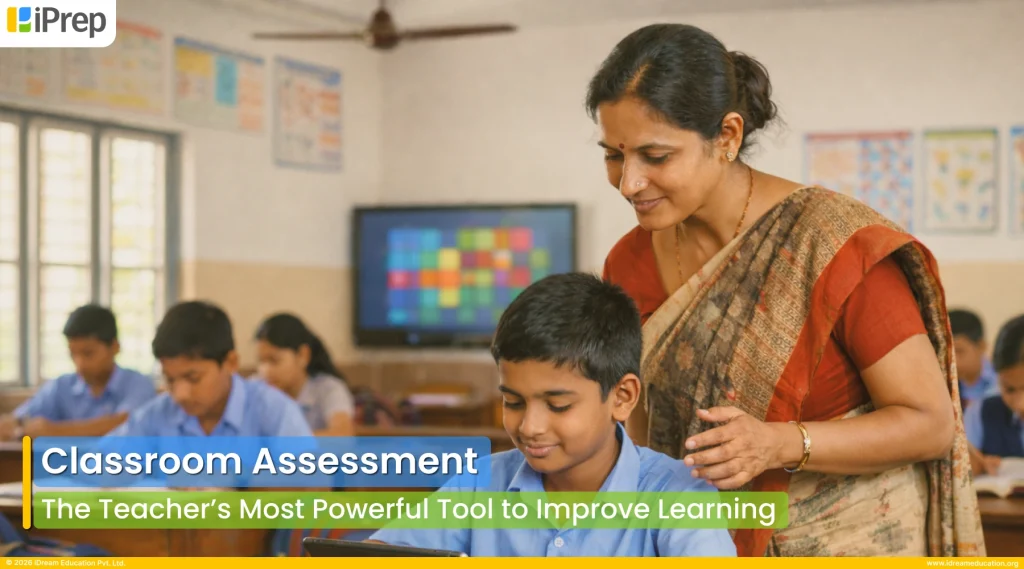
For a teacher standing at the front of a classroom in a rural government school, the view is often one of a sea of faces, some nodding, some staring at their desks, others diligently copying from the blackboard.
This teacher has a profound goal: they want every child in that room to master the lesson. They want to see the spark of understanding in the eyes of the boy in the third row and the quiet girl at the very back. But currently, that teacher is working within a set of rigid, invisible boundaries. They teach the curriculum, assign homework, and administer the occasional high-stakes test.
Then, the teacher waits and hopes. Hope that the majority of students understood the lecture. They hope the students who are confused will find the courage to raise their hands, though they rarely do. They hope that by the time the results of the unit test come back two weeks later, it won’t be too late to fix the gaps.
This is the reality of “teaching into the dark.” It is a systemic limitation where the classroom assessment is a “black box,” and the only way to see inside is through the rearview mirror of a failed exam. For CSR leaders, NGO heads, and State Government officials, this “hope-based” model creates the greatest barrier. It blocks foundational literacy and numeracy in early learners and grade-level literacy in older students.
How Can Teachers Use Clicker-Based Assessments to Gain Deeper Insights into Student Learning?
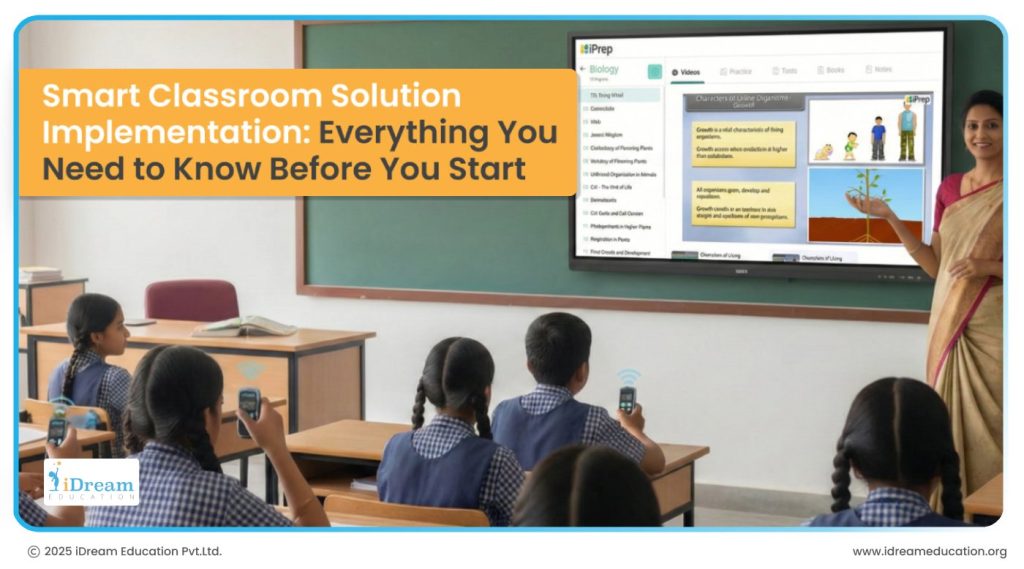
When we provide teachers with real-time tools such as Classroom Clickers or Digital CATs (Classroom Assessment Techniques) with smart classes, we aren’t just giving them gadgets, we are strengthening their teaching. These tools complement traditional methods, enabling teachers to run quick, playful quizzes alongside animated lessons to instantly understand students’ learning levels and then refine their teaching based on what the data reveals.
What Happens When Teachers Use Clicker-Based Assessment Systems in Smart Classrooms?
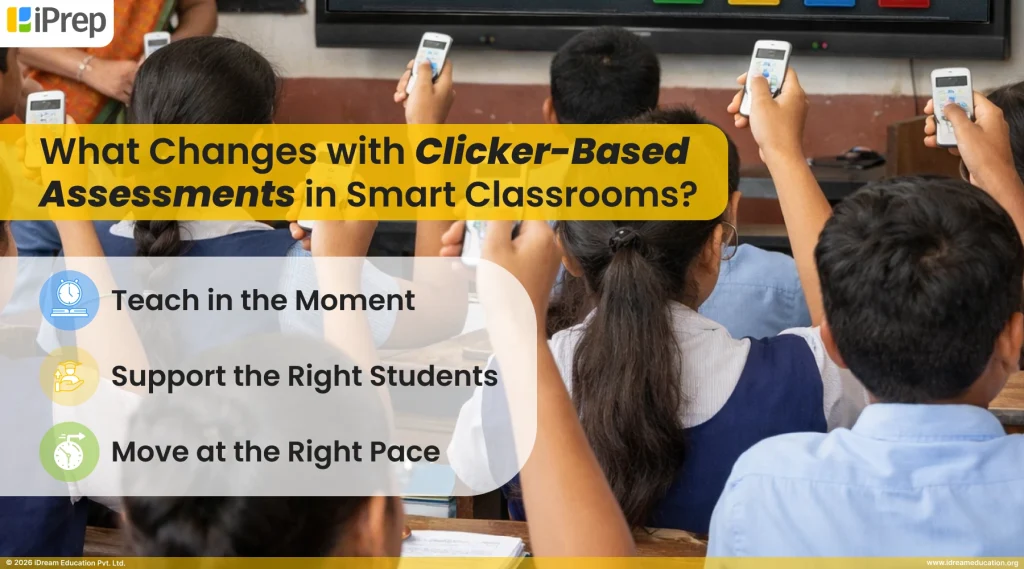
- The Live Adjustment: If the assessment chart shows that 40% of the class chose the wrong answer, the teacher doesn’t have to “hope” they can fix it later. They pivot now. They re-teach the concept using a different analogy while the iron is still hot.
- Targeted Mentorship: The “Classroom Map” on their screen identifies exactly which three or four students are struggling. Instead of a general lecture, the teacher can walk over for a 1-to-1 desk visit. This is precision education.
- Differentiated Pace: The teacher can now manage a diverse room. They can provide an extra challenge to the students who “clicked” correctly and offer immediate remediation to those who didn’t, ensuring that the fast-learners aren’t bored and the slow-learners aren’t abandoned.
Importance of Using Regular Classroom Assessment Insights
When assessment becomes a regular part of every lesson, it stops feeling like a test and starts working like a conversation. Short, frequent checks for understanding through questions, quizzes, discussions, or clicker-based responses give teachers a clear picture of how each student is engaging with the lesson. This simple shift has a powerful impact on relationships and classroom culture.
Seeing Every Student, Every Day
Regular assessment ensures that every learner is visible. When all students respond after each lesson – through questions, quizzes, or digital tools – no one is left unheard. Teachers move beyond relying on a few raised hands and begin to recognize the learning journey of every child, including the quiet and hesitant ones.
Building Trust Through Timely Support
Assessment insights allow teachers to step in at the right moment. When a teacher notices struggle early and offers quick, personal support, students feel cared for, not judged. These small interventions build trust and strengthen the teacher–student relationship.
Growing Confidence Through Continuous Feedback
Frequent, low-pressure assessments reduce fear and increase confidence. Students get regular chances to show what they know and to improve. Seeing their own progress motivates them to participate more actively and take ownership of their learning.
Creating a Classroom That Responds to Students
With real-time insights, teachers can adjust the pace and method of teaching. Lessons slow down when many are confused and move ahead when most are ready. Students feel the classroom is shaped around their needs, making them more engaged and present every day.
From Data to Trust: How Continuous Classroom Assessment Builds Confidence in Project Leadership
For CSR teams, NGOs, government officials, and everyone in the edtech ecosystem working to use digital tools to improve learning outcomes, this data matters far beyond a single class. It creates a strong evidence base – shifting us from assumptions (“We think students understood”) to proof (“We know 85% of the class has mastered this competency”).
This allows for a new kind of guidance. They can look at daily trends that work as a “Growth Map” of a child’s specific learning style. Is the student a visual learner? Do they struggle with procedural steps but excel at conceptual logic? This data protects the student’s journey across years, not just weeks. This gives project officials a clear edge in making timely interventions, planning additional support, scaling the program effectively, and strengthening guidance and training initiatives.
In a world where technology can now highlight learning gaps before they become failures, teachers no longer have to rely on guesswork. They can see clearly, act early, and support precisely. If you would like to explore how these classroom assessment interventions can be implemented, please feel free to contact us at 917678265039 or write to us at share@idreameducation.org.
Categories You may Explore
Related Articles