An Integrated Digital Learning Setup Designed for Remote Schools in Himachal Pradesh
In the hills and valleys of Himachal Pradesh, distance has long shaped what a classroom could offer. Government schools in remote and mountainous regions often had limited access to quality digital learning resources — not for lack of ambition, but because geography made scale difficult and connectivity unreliable. Teachers needed tools simple enough to fit naturally into their existing lessons, and students needed learning that didn’t stop the moment the internet did.
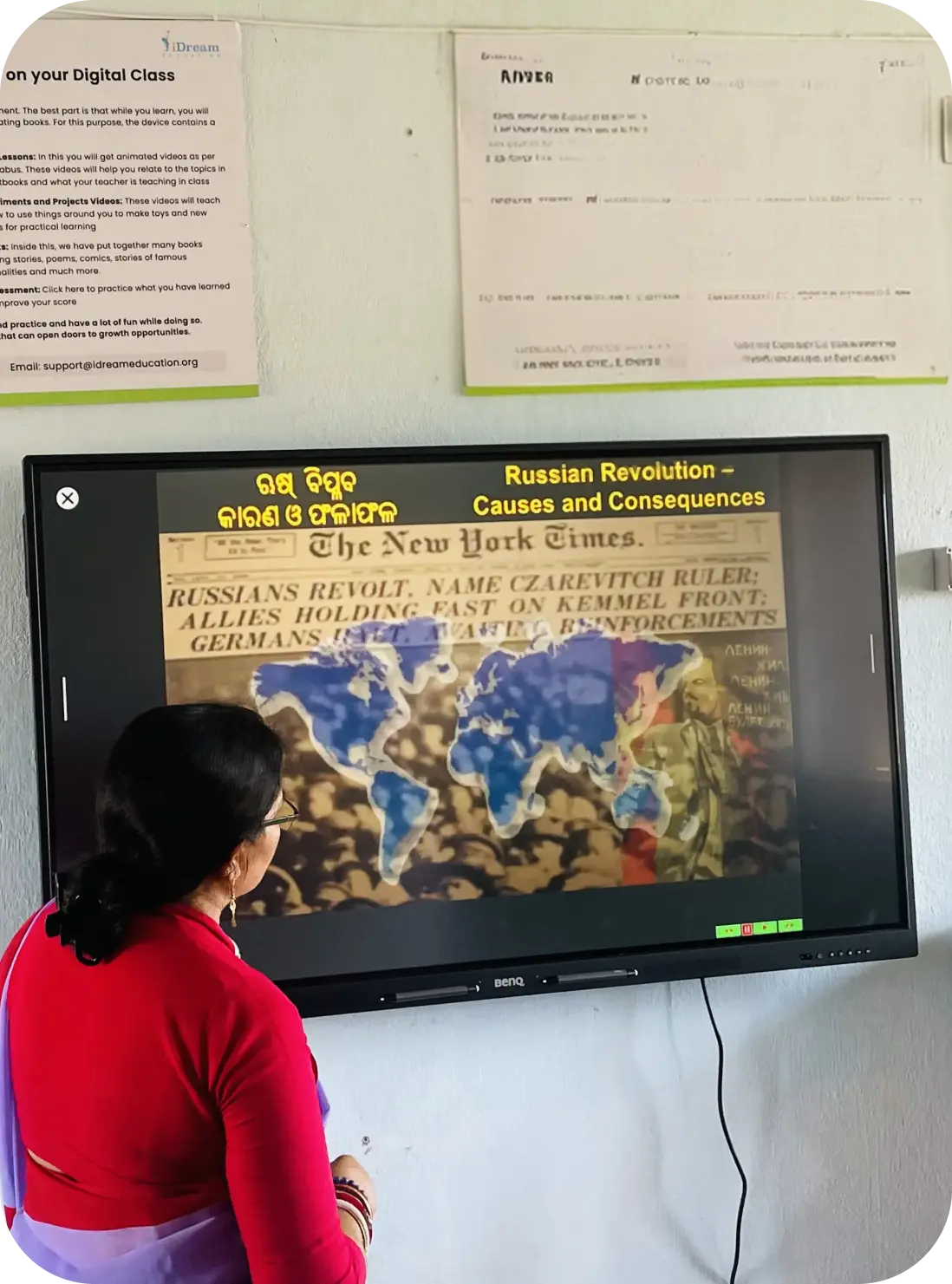
To meet this challenge, a leading supplier of educational kits, laboratory instruments, and teaching aids with technology partner collaborated with iDream Education to build a digital learning ecosystem designed for exactly these conditions. The deployment includes 199 ICT Labs equipped with 1,990 Windows-based devices, 124 Smart Classrooms, and Digital Library with PAL, each library stocked with 24 learning tablets. Every layer of this ecosystem runs on curriculum-aligned, multilingual content built to function fully offline.
The design is intentional in its balance. Smart Classrooms support teacher-led instruction, giving educators an engaging, technology-enabled way to bring lessons to life. ICT Labs and Digital Library with PAL, meanwhile, open the door to self-paced, personalized learning, letting students explore content at their own rhythm — a form of offline digital learning that doesn’t ask students to choose between guided and independent study.
Woven together, these interventions have created something larger than the sum of their parts: a unified digital learning platform reaching schools across geographically challenging terrain. Teachers now have consistent, easy-to-integrate tools for classroom delivery. Students, many of whom previously had limited exposure to digital resources, now move between collaborative and self-directed learning within the same school day.
With nearly 200 ICT Labs and over 120 Smart Classrooms across one state, this initiative shows what is possible when technology and teaching are planned together from the beginning. It proves that when solutions are designed for the realities of remote areas, quality education can reach every classroom—no matter the distance.