

If you search for “education platform,” you’ll find no shortage of options.
Each promises better engagement, improved learning outcomes, and seamless implementation.
But when these platforms are introduced in actual classrooms—whether in a private school in India, a public school in Kenya, or a government program in the Philippines—the experience is often very different.
The gap between what is promised and what actually works is where most decisions go wrong.
So instead of asking, “What is an education platform?”
It’s more useful to ask,
Which education platform will actually work in my environment?
What an Education Platform Really Is
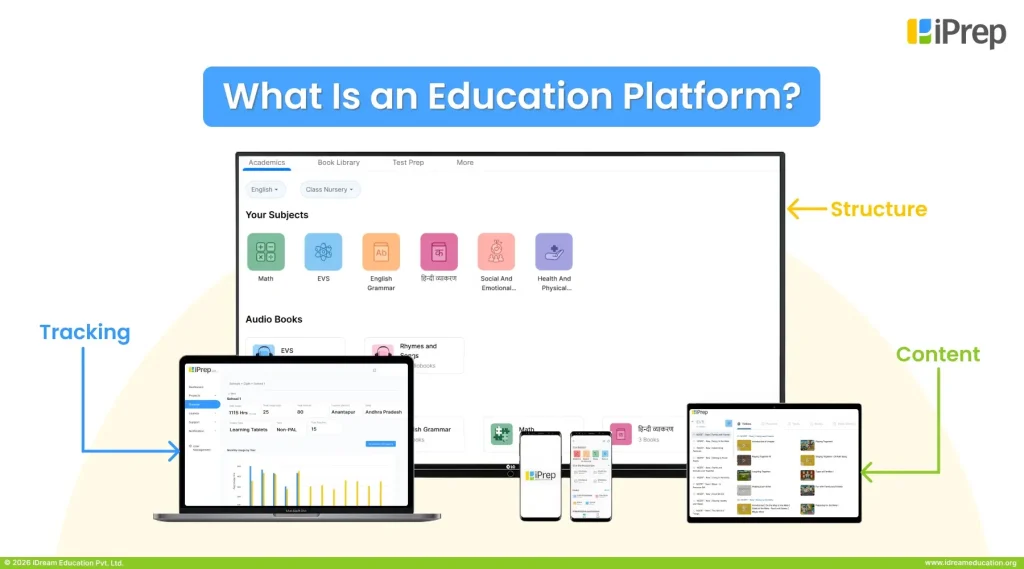
At its simplest, an education platform is a system that helps deliver learning.
That includes:
- Content (what students learn)
- Structure (how learning is organized)
- Tracking (how progress is measured)
Everything else – advanced analytics, AI features, dashboards, is secondary but almost as important.
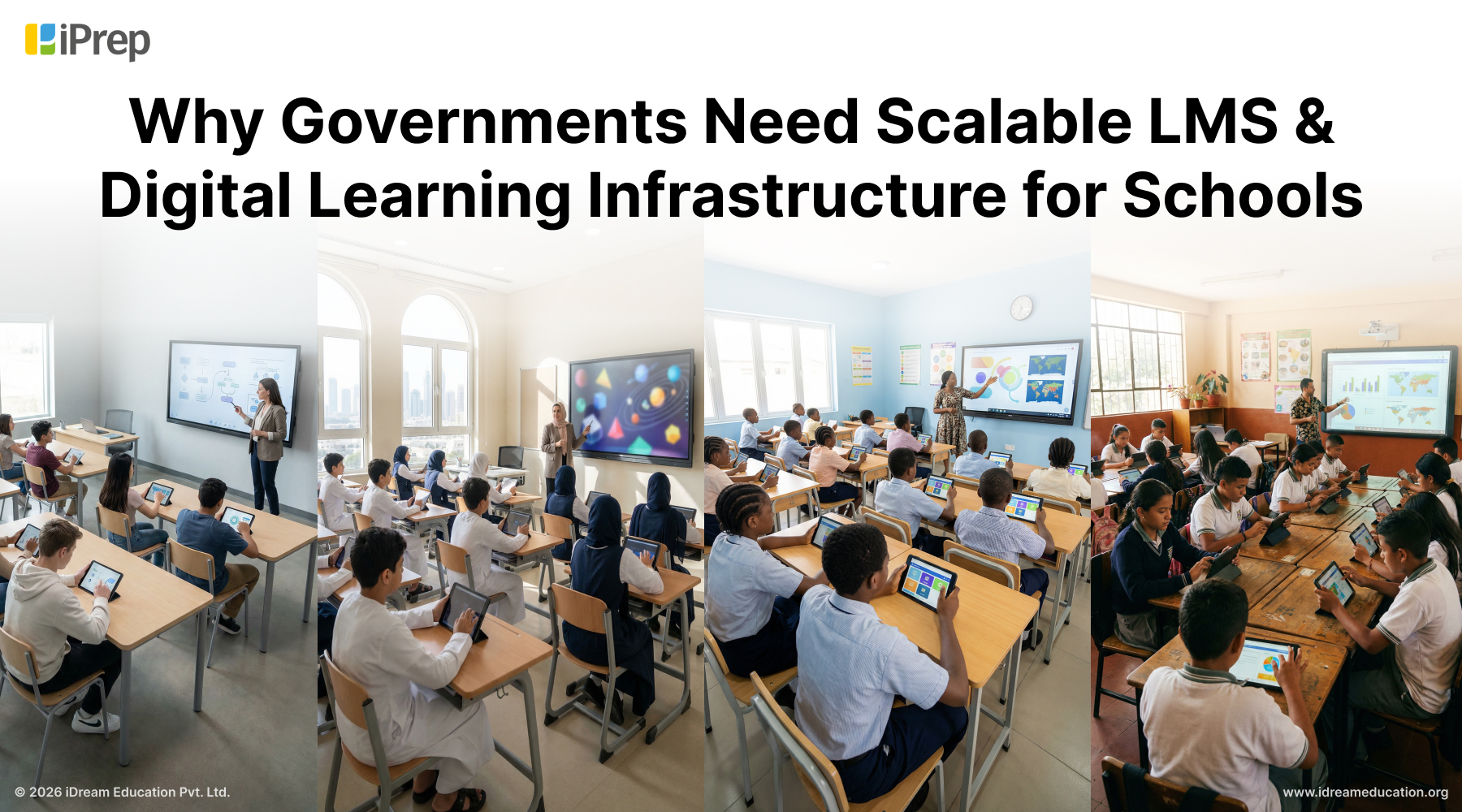
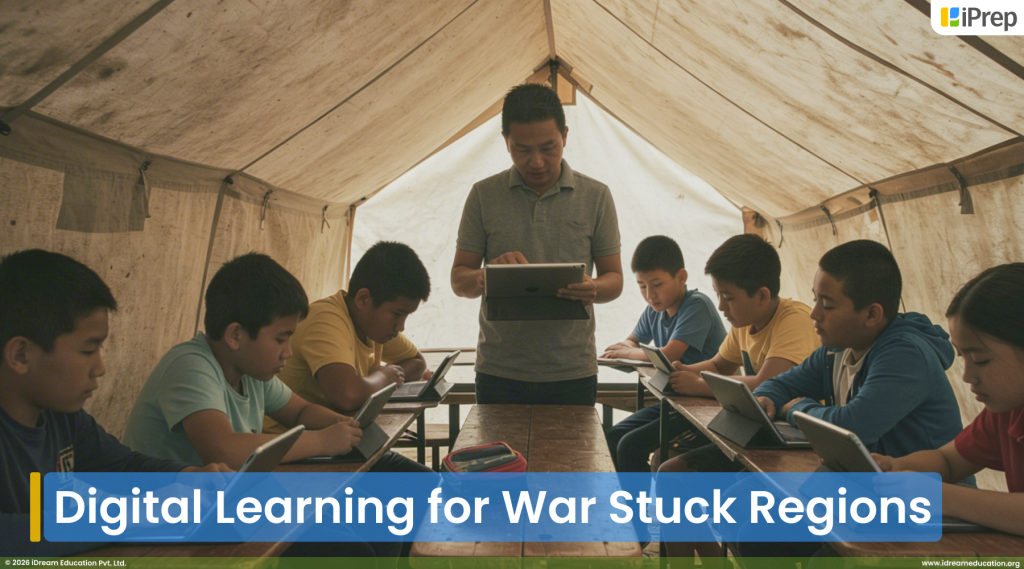
The best education platform is one that works in a multi-country, multi-state, multi-district, multi-school context as well as it works for a single school, student or an Academic Enrichment Center or a refugee camp. It is a digital learning platform for NGOs as much as it is a digital learning platform for a Government programme. The reason is that such a platform is secure, it is built for scale, it works while serving 5 students or 1 million, 5 schools or 25000 schools. Such an education platform hosts rich, curriculum aligned digital content, ebooks, modules for student growth. It works on any device or any operating system, offline or online, has layers of AI and personalization built in. Most importantly it tracks data, and ensures real-time monitoring & reporting and has built in impact assessment and student learning improvement. It is bilingual and hosts content in English and various other languages and vernaculars. The right education platform will work as well in Africa, Latin American, North America as it will work in the Middle East & North Africa and Asia. Because, it is flexible to meet the unique requirements of their governments, schools, NGOs and educational institutions, whether it is customized content or multi language content.
The core question is not how many features a platform has, but whether it supports learning in a way that is practical and usable. The checks mentioned above therefore are core to any reliable Education Platform
Why Many Education Platforms Don’t Work in Practice
Most platforms are designed for environments where:
- Every student has a personal device
- Internet connectivity is stable
- Learning is largely self-driven
But that’s where we miss paying attention to the ground realities.
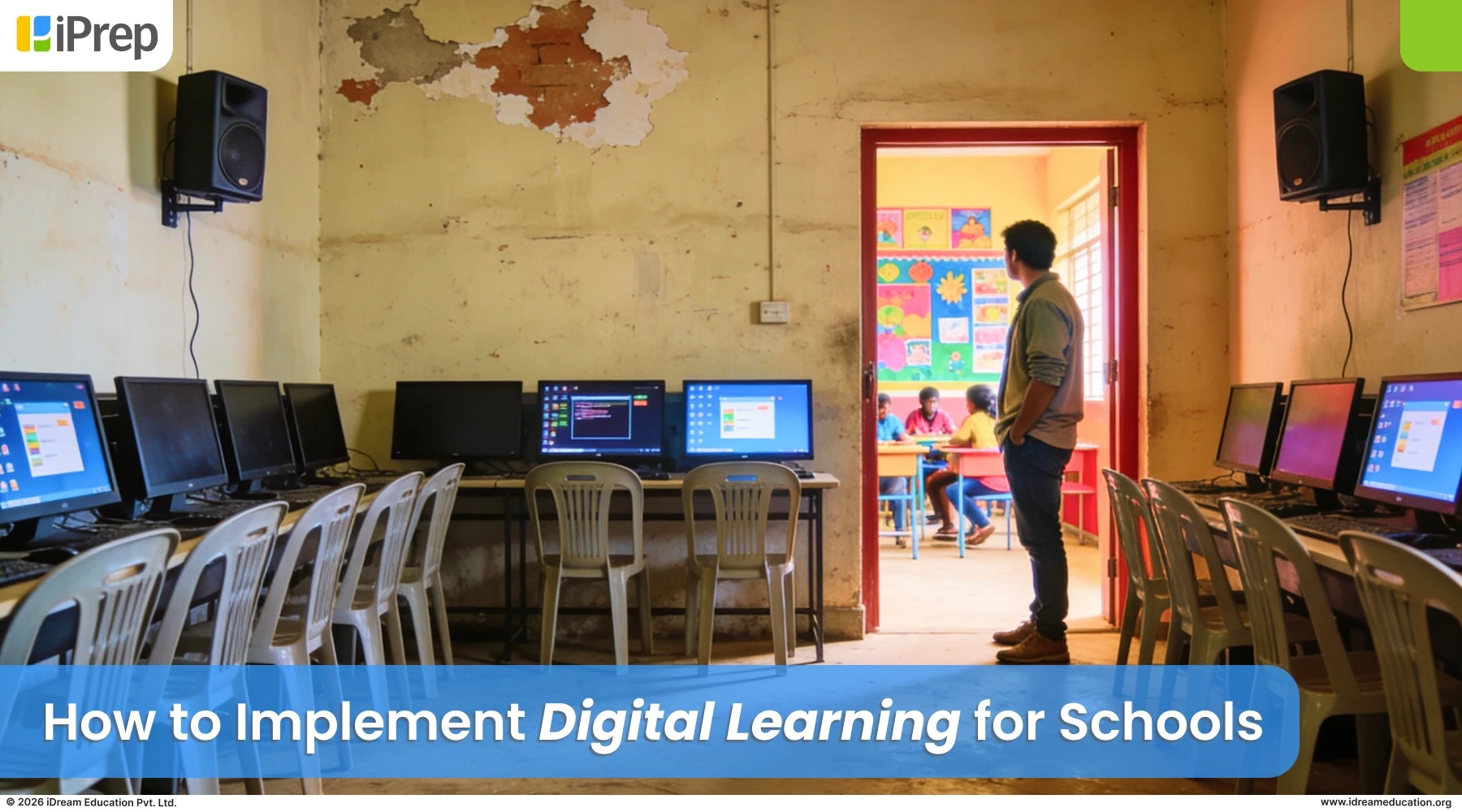
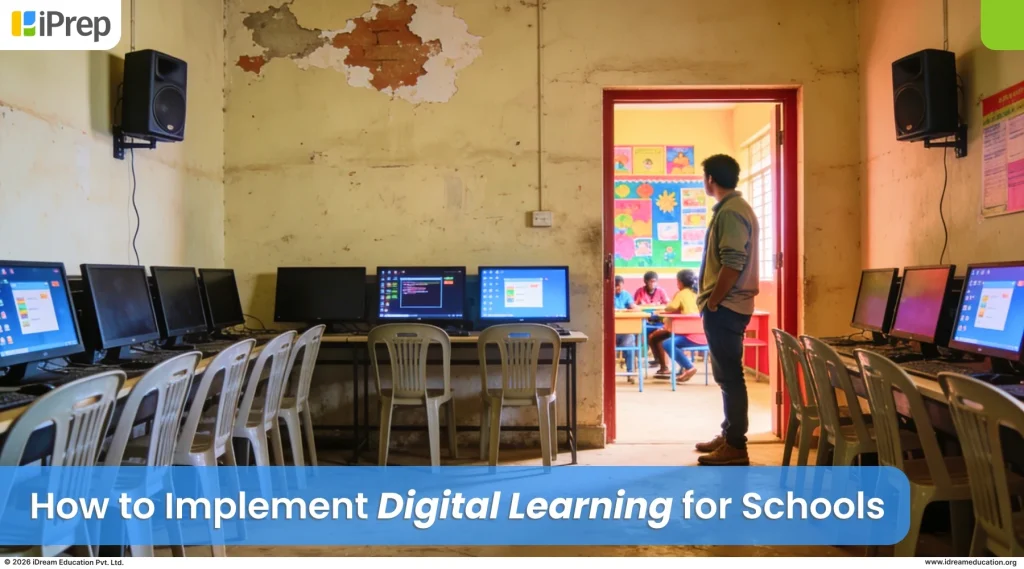
In many government schools in India, devices are shared. In parts of Africa and Southeast Asia, connectivity can be inconsistent. In many cases, the education platform works only on a windows or android device but the school, in its classroom and lab may not have devices that work on the same operating system.
When digital learning platforms don’t account for these realities, adoption suffers. In slightly evolved setups, schools or school groups or institutions feel that they need to develop their own platform, instead of focusing on student management, teacher training, they start developing their own platform or their own content, which is not their core expertise. The right approach is to follow a mid way and use existing and trusted infrastructure & content and outsource/ align content as per their requirements and let teachers create their own content to some extent.
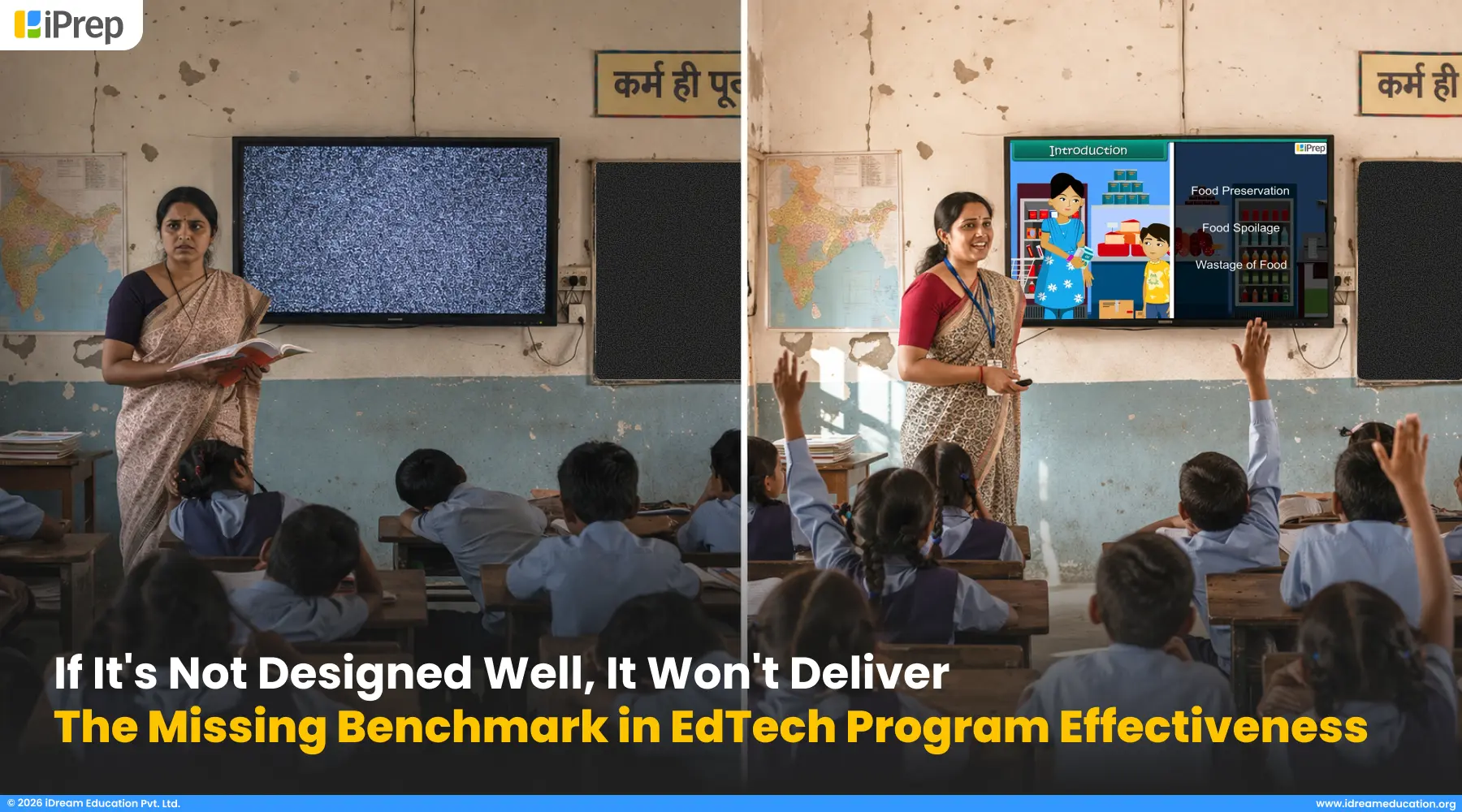
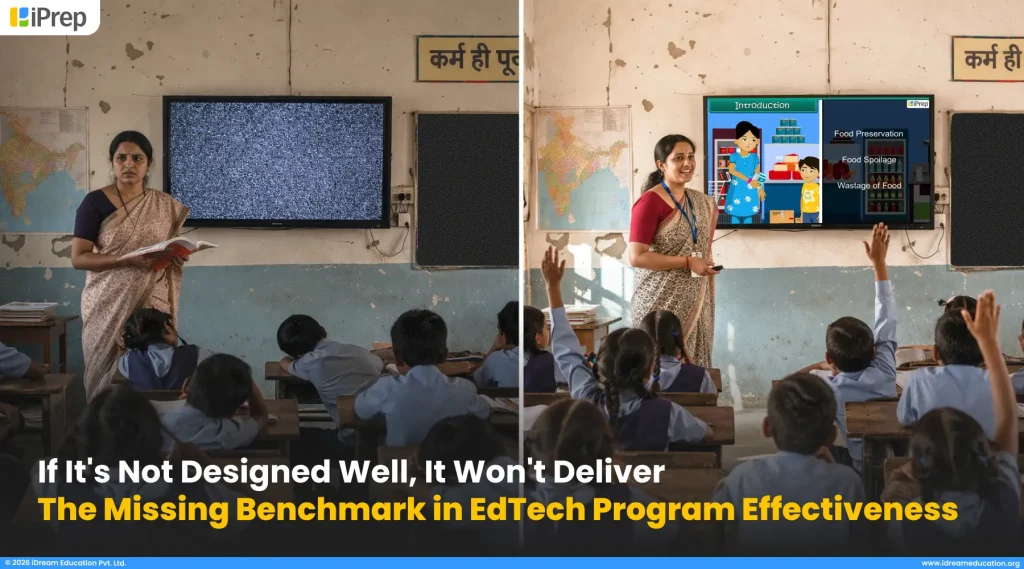
Due to not meeting the above approaches and standards. teachers find them difficult to use. Students engage inconsistently. Over time, the platform becomes just another tool that was introduced but not integrated.
Different Types of Education Platforms
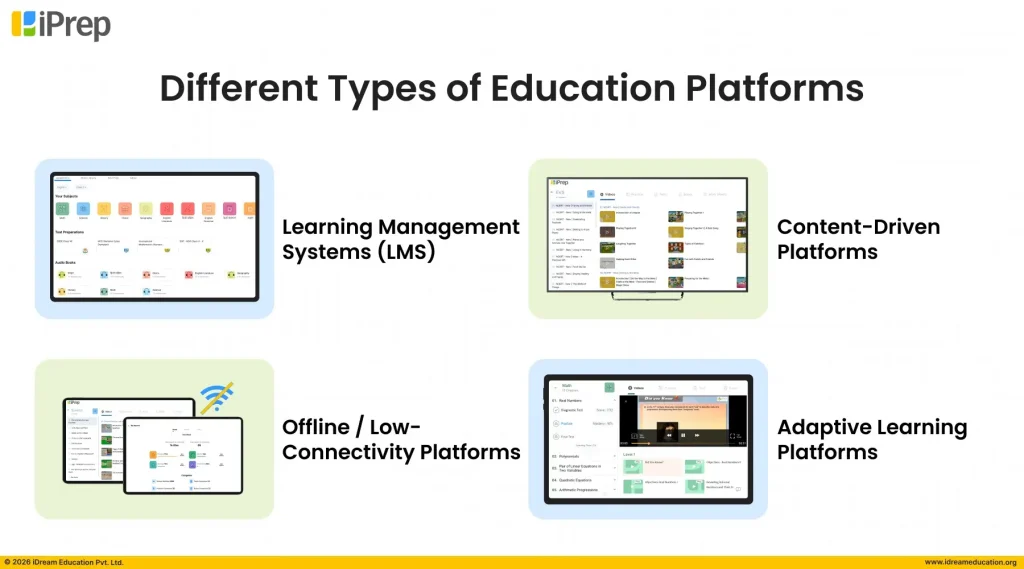
Not all platforms are built for the same purpose.
Some are structured as Learning Management Systems (LMS), focusing on organizing courses and tracking progress. These are often used in higher education or formal training environments.
Others are content-driven platforms, built around video lessons and practice modules. These are useful for supplementary learning but may lack depth in tracking or integration. Some have only a mobile app or an e learning app, while others don’t have a structured mobile app or an e learning app, and rely only on a basic interface and content.
Then there are platforms designed for offline or low-connectivity environments. These tend to be more relevant in public education systems across developing regions, where infrastructure cannot be taken for granted.
Finally, platforms that have a good digital infrastructure but lack content or content creation capabilities, adaptive platforms aim to personalize learning paths. While powerful in theory, they often require consistent usage and data inputs, which may not always be feasible in shared-device environments.
What Actually Matters When Choosing a Platform
The decision is rarely about features. It’s about fit.
A platform that works well in a well-resourced private school may not work at all in a government school with limited infrastructure.
So the evaluation needs to start with simple questions.
Will this platform work if the internet is unreliable?
Can multiple students use it easily?
Is it cost efficient for my programme?
Is it aligned with what students are expected to learn in their curriculum?
Can teachers use it without needing extensive technical support?
Another important factor is scalability. A platform might perform well in a pilot, but can it be deployed across 50 or 100 schools without becoming difficult to manage?
And finally, there is visibility. A good platform should not just deliver content—it should provide insights into how it is being used and whether learning is improving.
One Insight That Changes the Way You Choose a Digital Learning Platform
The best education platform is not the most advanced one.
It is the one that fits your environment.
In many parts of India, Africa, and Southeast Asia, that means:
- Working without continuous internet
- Supporting shared usage
- Being simple enough for teachers to adopt
In many countries including Latin America, Middle East and North Africa, that means:
- An evolved programme possibility as Internet availability is not a challenge
- A safe programme that ensures safety of the students on the Internet
- Providing a programme that is so good that students are not distracted using the Internet and thereby are safe from the perils of what the Internet and social media can bring in terms of harm to students
Platforms that ignore these realities often struggle, regardless of how advanced they appear.
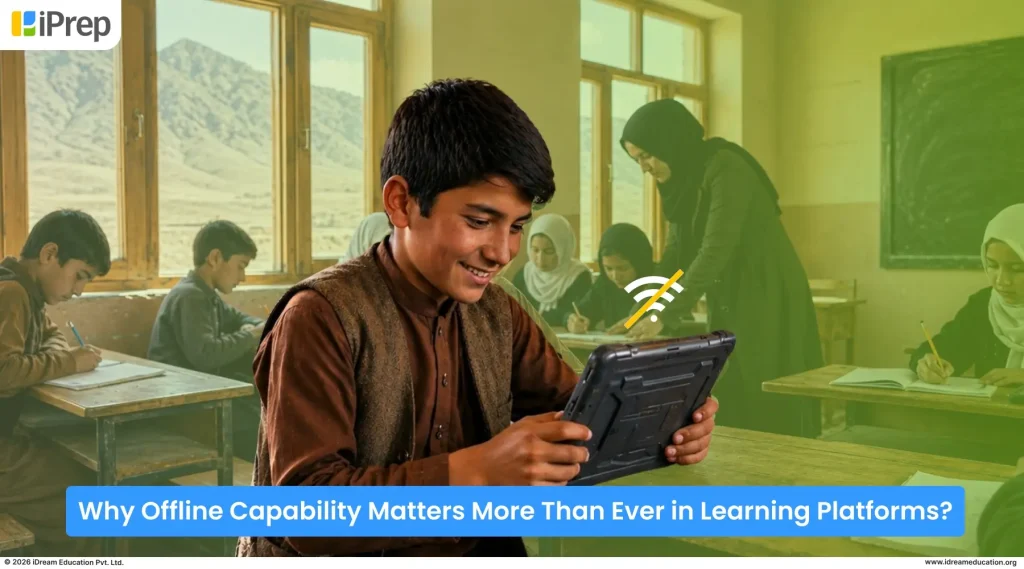
Why Offline Capability Matters More Than Ever in Learning Platforms
Offline Education Platforms are the future of learning
In conversations around digital learning, internet access is often taken for granted.
But in practice, even where connectivity exists, it is not always reliable or affordable at scale.
Offline capability ensures that learning does not stop when the internet does. It creates consistency, which is essential for both teachers and students.
This is one of the reasons why offline-first platforms are increasingly being considered in large-scale education programs across regions like Africa and Southeast Asia.
And if connectivity is not a problem at all, then student distraction due to the Internet due to abundance of it, which brings along with it the perils of social media distraction, Internet and AI is an even larger and growing concern in the developing and developed world. Offline access is again a plausible solution.
Even if we decide not to let students in such countries study offline and we decide that we cannot restrict their access to social media and the Internet; At least for learning, how do you make platforms so good, secure and exhaustive (and fit for purpose) therefore, to prevent students having to move to the Internet or Youtube/Instagram to learn and in the process get distracted and susceptible? At iDream we have tried to build our platform and content therefore in a way that students don’t have to go anywhere, nor do teachers, because even teachers can post whatever they need students to access within the platform. And to ensure safety from the Internet or specific apps, we install MDMs (Mobile Device Management) in devices so that from a single command centre, you may control which apps students can access and cannot access when they are online.
Common Mistakes to Avoid while choosing an Education Platform
A few patterns show up repeatedly when organizations choose an education platform.
Sometimes the decision is driven by features rather than usability. In other cases, platforms are selected without considering how teachers will actually use them in a classroom setting or in terms of assigning work to students and conducting assessments..And to add to it, lack of impetus on teacher training.
Another common mistake is assuming that a solution that works in one context will automatically work in another.
Lack of programme planning from the point of view of content, reporting and measurement of outcomes.
The result is often the same: low adoption and limited impact.
Features of an Education Platform:
From our experience we have gathered some features that an education platform must have:
- Universal Design: An Easy to Use Interface that is intuitive and can be navigated without having the requirement of training. This leads to easy adoption by students and by teachers
- Quality Content: It should host rich curriculum aligned content for all subjects and all grades with comprehensive coverage across various categories including Videos for Teaching & Learning for Concept clarity, practice modules for students, assessments, syllabus books, practicals & real life learning, learning by implementing using simulations
- Device Agnostic: It should work on any device be it a classroom learning device such as a Smart TV, Projector, Smart Board, Interactive Flat panel or an individual learning device such as a Tablet, Notebook, PC, Laptop, Mobile Phone
- Works on any Operating System: It should work on different operating systems such as Android, Windows. Linux. This ensures easy access to old and new systems and varied systems available with teachers and students.
- Offline first and moderated Internet usage: It should work both offline and online to ensure seamless usage especially in limited Internet connectivity environments
- Bilingual and Multi-language: It should allow students to easily change the language, and it should have content available in the desired languages for ease of diverse learners and teachers
- Scalability: A good digital learning platform should always support scale and not break when one scales it to a higher number of learners, classrooms, teachers or devices
- Security: Safe to use and properly certified by credible bodies that guarantee it is free from susceptibility to malware, attacks, hacking, and misuse of data
- Flexibility: One that supports easy content addition, adding AI layers, custom content addition by teachers and administrators
- Content Creation: An ability to have expert content experts and creators who ensure that the content being developed is best in class and adheres to the requirements of the curriculum and standards
- Certification: Certified by credible bodies that evaluate Edtech platforms and systems
- Seamless Reporting: Data Monitoring, Reporting should be real time with clear view to students, teachers, parents, administrators and key stakeholders the progress made in teaching and learning. This is also a crucial check and balance that must be maintained to ensure proper assignment of homework and assessments is happening and is getting documented, and students’s responses are being monitored
- Adaptive learning: A good education platform always ensures learning is customized to learning levels of different users, and offers remedial learning to cover previous year learning gaps and gaps in foundational knowledge.
- Score Improvement Monitoring: In-built impact assessment is an important feature of a robust education platform. This ensures less to no time wasted in collecting data and processing it.
Conclusion
Choosing an education platform is not a technology decision, it’s an implementation decision.
The right platform is the one that:
- Works within your constraints
- Is used consistently
- Supports actual learning
Everything else is secondary. But what is secondary is also important. We are not saying features are not important. What we are saying is that a platform should be complete and help in driving excellence; A mid way that ensures the primary and strives to ensure the secondary. Where the basics of on ground realities, quality and aligned content, ensuring safe, scalable & secure usage and measuring & bringing learning outcomes is ensured. And the best in the world features, benefits and innovation is achieved. For education planners and NGOs/ Governments exploring education platforms in Africa, Middle east & North Africa, Latin America, Asia and even North America, iDream can attempt to bring all these threads together and carve a scalable & impactful programme with iPrep. If you’re interested to discuss further on how, please connect with us at share@idreameducation.org
Frequently Asked Questions -
1. What is an education platform?
An education platform is a digital system that delivers learning content online or offline, enables teaching & learning, and tracks student progress. It typically includes videos, practice exercises, assessments, and reports, helping schools manage classroom, lab and student learning at home and improve outcomes through structured, curriculum-aligned resources and performance insights.
2. What is the difference between an LMS and an education platform?
An LMS (Learning Management System) focuses on managing courses, assignments, and tracking progress. An education platform goes further by offering learning content, practice modules, assessments, and analytics. In short, an LMS manages learning, while an education platform supports both learning delivery and outcomes.
3. Which platform is best for schools?
The best platform for schools is one that aligns with the curriculum, works with available infrastructure & ground realities, and is easy for teachers to use and students to learn from. It should include engaging content, innovative features, AI, assessments, and simple progress tracking to support effective teaching and improved student learning outcomes.
4. What is the best offline learning platform?
The best offline learning platform is one that works completely offline and can also function well when internet is available to prevent misuse of it. It works on all devices and operating systems without the internet and when Internet is available, it syncs usage data for reporting but also prevents un moderated use of the internet which could lead to distraction and students/teachers chasing different platforms and portals for getting content. The best offline learning platform offers pre-loaded content and application for students and teachers.
Categories You may Explore
Related Articles