

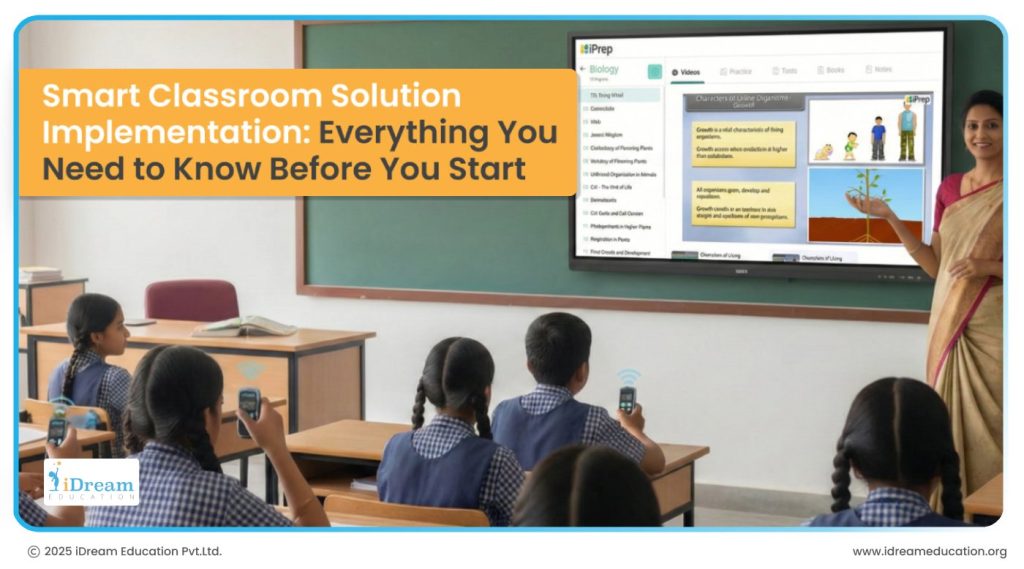
Smart Classroom Solutions are enhancing learning by making education more engaging and effective. They help students understand concepts better, improve reading and comprehension skills, and encourage active participation. A study by IIM Bangalore analysing data from 19 cities revealed a 22% increase in student enrolments between 2015 and 2024 following the strategic introduction of smart classroom technologies.
When thoughtfully implemented, smart classroom solutions are easy to set up, manage, and use. This is the reason why smart classrooms have become an integrated part of CSR programmes and state/central education initiatives such as the Smart City vision, Operation Digital Board, PM SHRI schools and more such initiatives.
In this blog, we’ll break down everything you need to know before you start: from the right infrastructure and content to teacher training, ongoing support, and how to measure real impact.
What You Need to Know Before Implementing a Smart Classroom Solution
Before implementing a smart classroom solution, it’s important to understand the exact needs of each school, especially in government setups.
Assessment of Existing Smart Class Setup in Schools
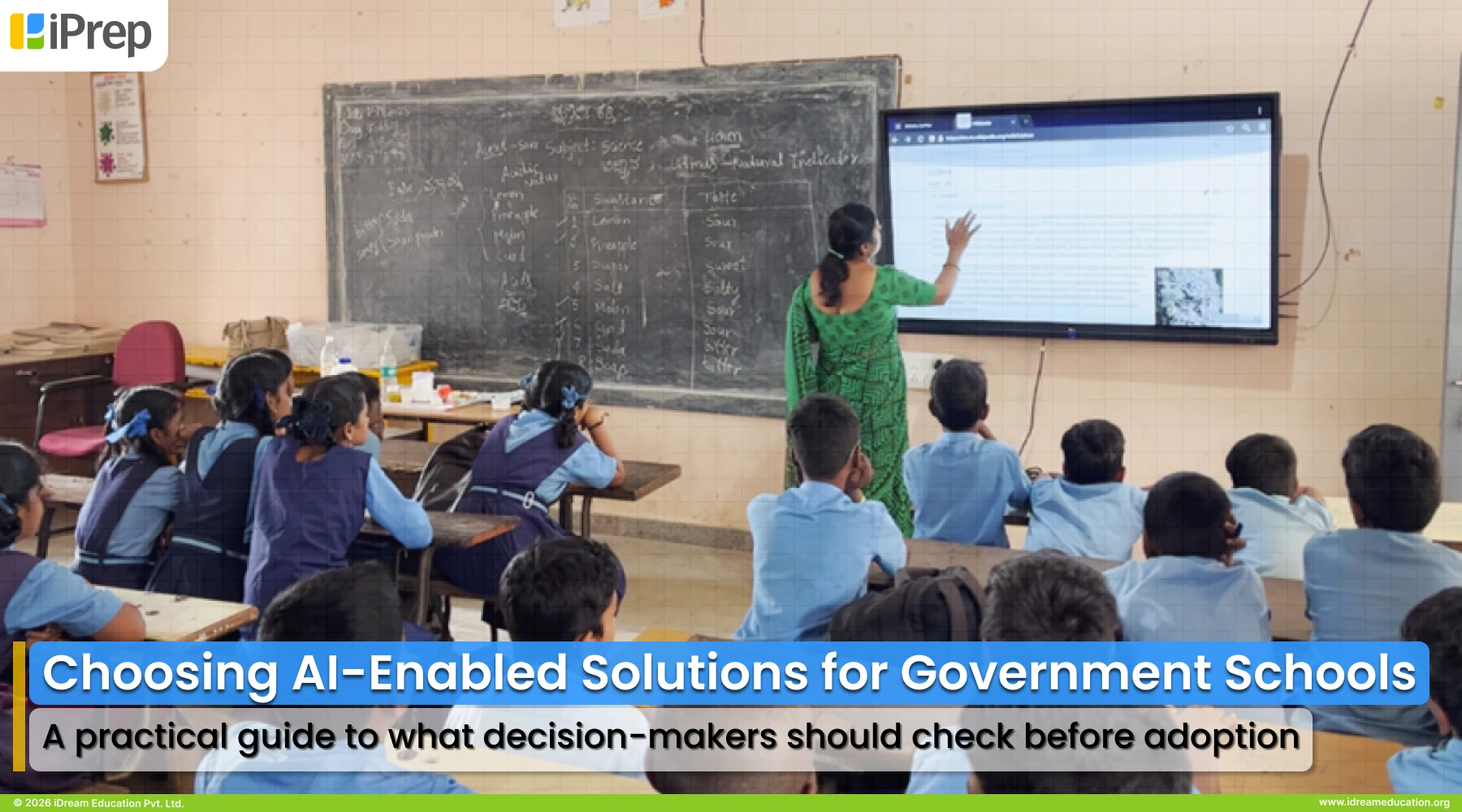
While many schools already have smart classroom hardware (projectors, smart boards, or interactive panels), teachers are often expected to connect devices to the internet, search for relevant content, and teach using it, all within a single class period. This is unrealistic given the limited time available during class periods.
In schools where smart classroom hardware is already in place, the real gap is not hardware – it is usable, ready-to-teach digital content. What is needed is:
- An LMS that is simple for teachers to use
- Digital content aligned with the school curriculum
When curriculum-aligned digital content is directly available on the smart classroom solution, teachers can focus on teaching—not on managing technology. This is what truly makes a smart classroom “smart.”
Assess Teachers’ Willingness to Use Digital Content Alongside Textbooks
Before implementation, it is critical to understand how open teachers are to integrating digital content with their existing textbook-based teaching. Teacher willingness directly impacts adoption, regular usage, and classroom effectiveness. If teachers see digital tools as supportive rather than disruptive, smart classrooms are more likely to become a natural part of daily teaching – rather than a forced measure driven by project officials or school management.
In such cases, the first focus should be on:
- Creating awareness about how digital content supports textbook teaching
- Conducting experiential, hands-on training during implementation
- Letting teachers “learn by doing” in real classroom-like scenarios
This ensures that smart classrooms are not just installed—but actually used meaningfully.
Assess School Infrastructure and Power Availability
While smart classroom solutions do not require heavy infrastructure, a reliable and continuous power supply during school hours is essential for consistent usage. Assess whether schools have uninterrupted electricity. If uninterrupted power is not available, the implementation partner should plan appropriate backup options such as inverters, batteries, or solar-based support, to ensure that digital learning is not disrupted.
Key Components of a Complete Smart Classroom Solution
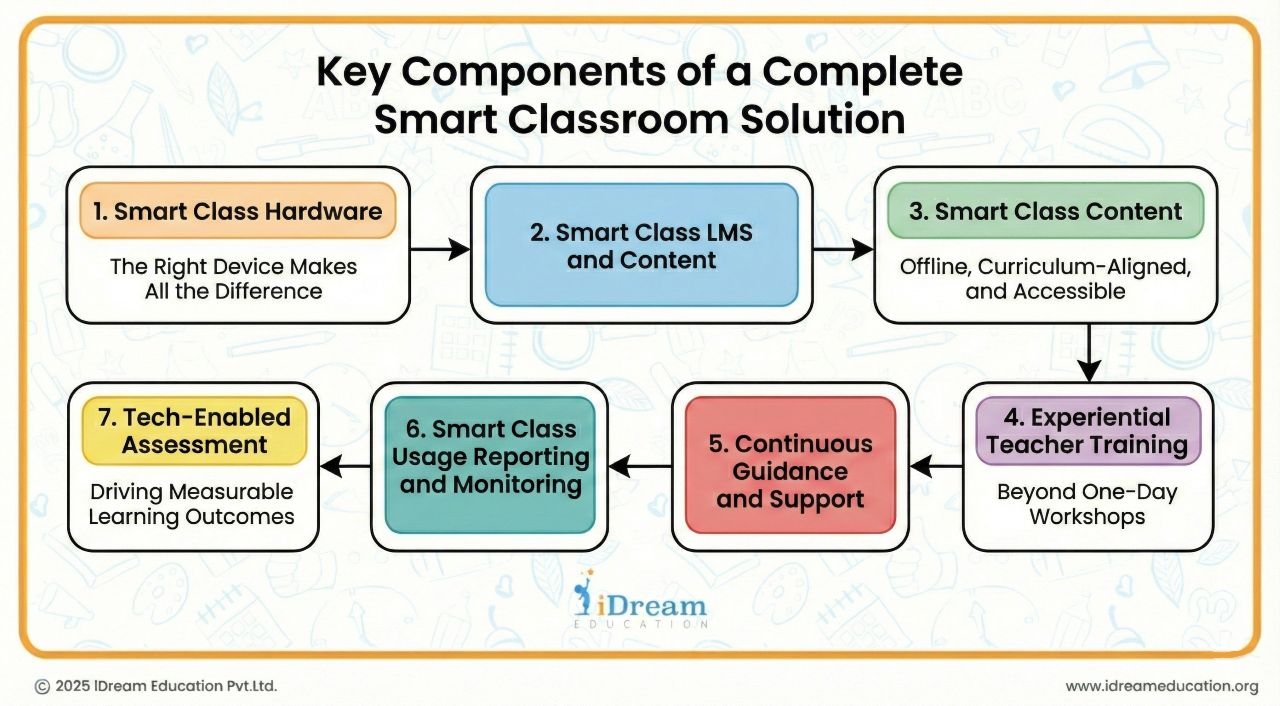
Scaling smart classroom solutions requires moving beyond hardware installation alone. A complete solution addresses seven critical components that determine whether your investment translates into sustained classroom impact:
1. Smart Class Hardware: The Right Device Makes All the Difference
The choice of hardware directly impacts adoption rates. Schools implementing complex multi-component setups (projector + laptop + speakers + cables) face constant technical issues that discourage regular use.
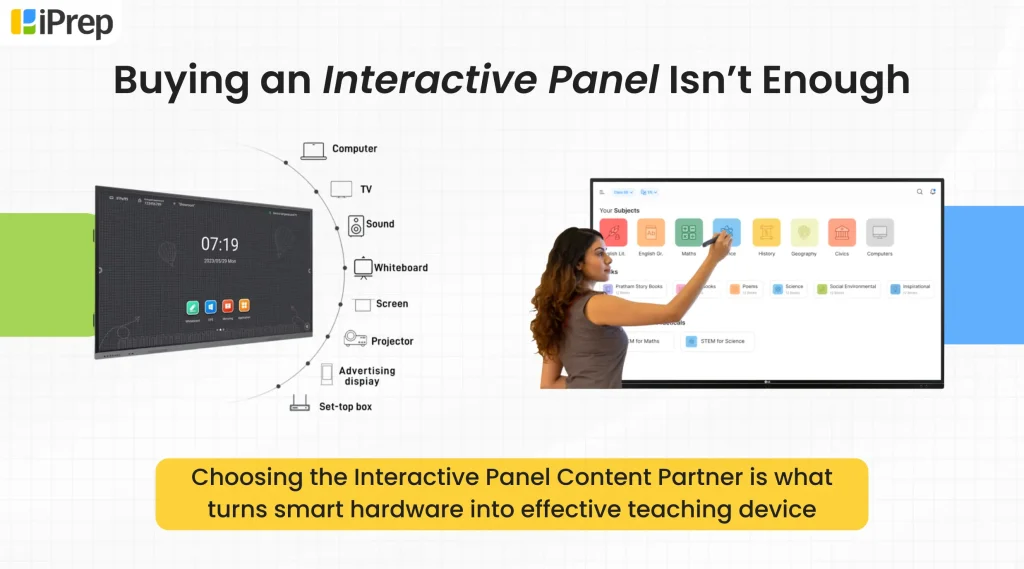
When selecting smart classroom hardware, prioritize simple, single-device solutions such as Interactive Flat Panels (IFPs) or Smart TVs. These devices work much like the TVs teachers already use at home and do not require technical expertise.
Teachers should be able to simply switch on the device and start teaching within seconds—without dealing with cables, connections, or multiple pieces of hardware. This simplicity is especially important in government schools, where technical support is often limited or unavailable, and many teachers may not be highly tech-savvy.
A smart classroom hardware you are choosing should reduce effort, not add to it.
2. Smart Class LMS and Content
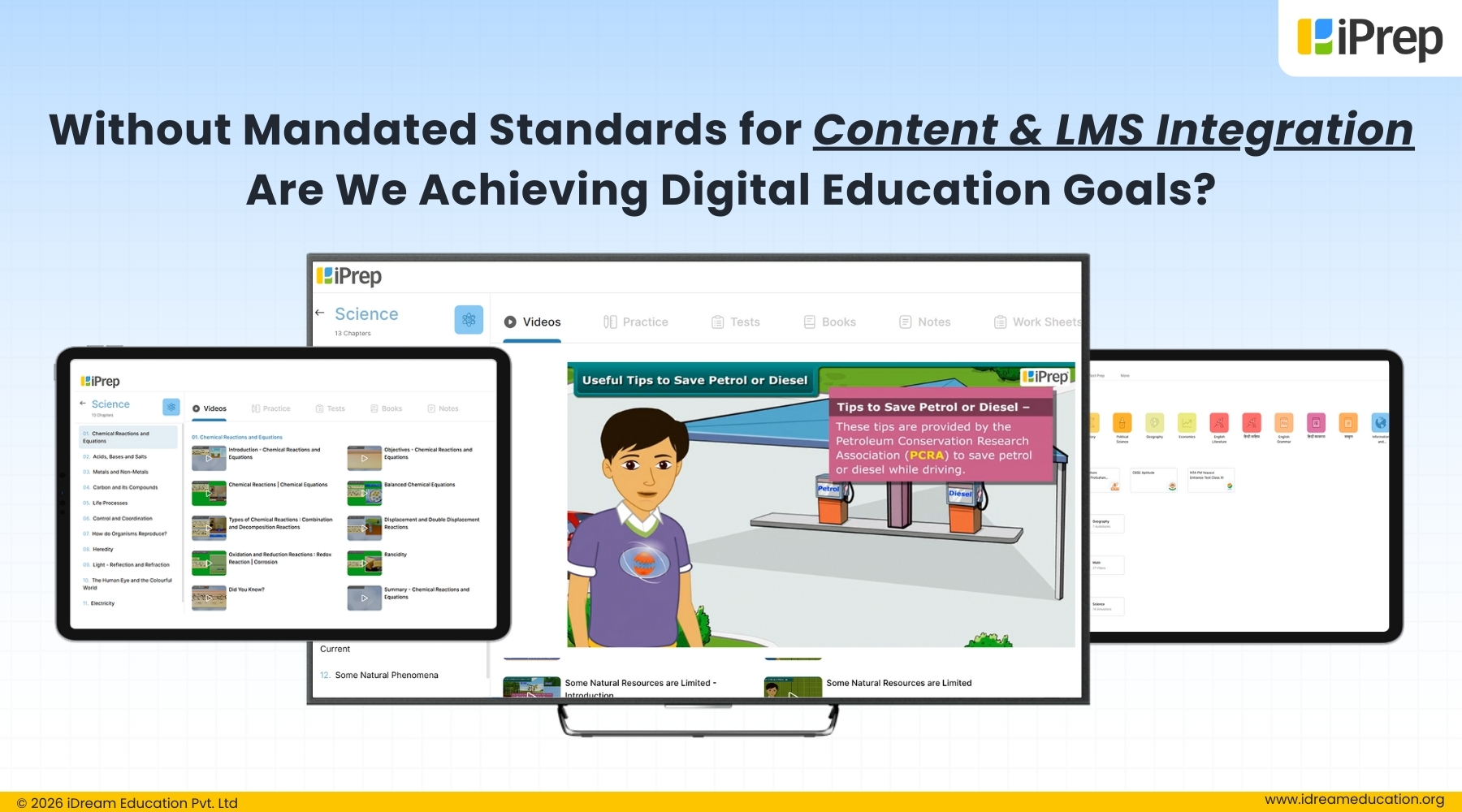
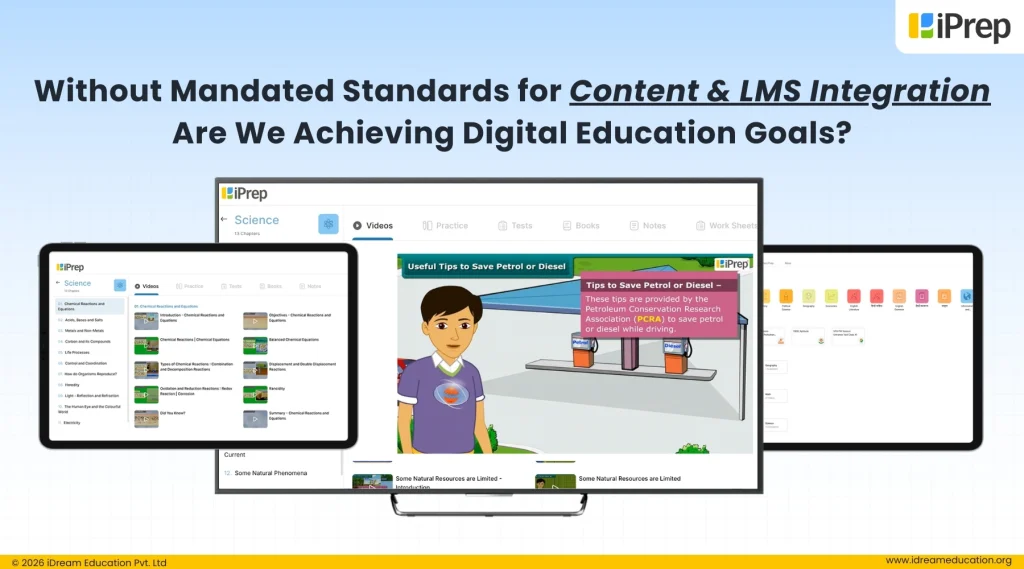
A Learning Management System (LMS) serves as the backbone for smart class setup. It transforms hardware into a complete school-ready solution by offering learning material in a structured and organised way.
The LMS chosen for smart classrooms should be intuitively designed, bilingual, and extremely easy to navigate, requiring minimal training. When teachers can find and use content without confusion, the smart classroom truly becomes a plug-and-play solution. It is ready to use instantly for daily classroom teaching.
3. Smart Class Content: Offline, Curriculum-Aligned, and Accessible
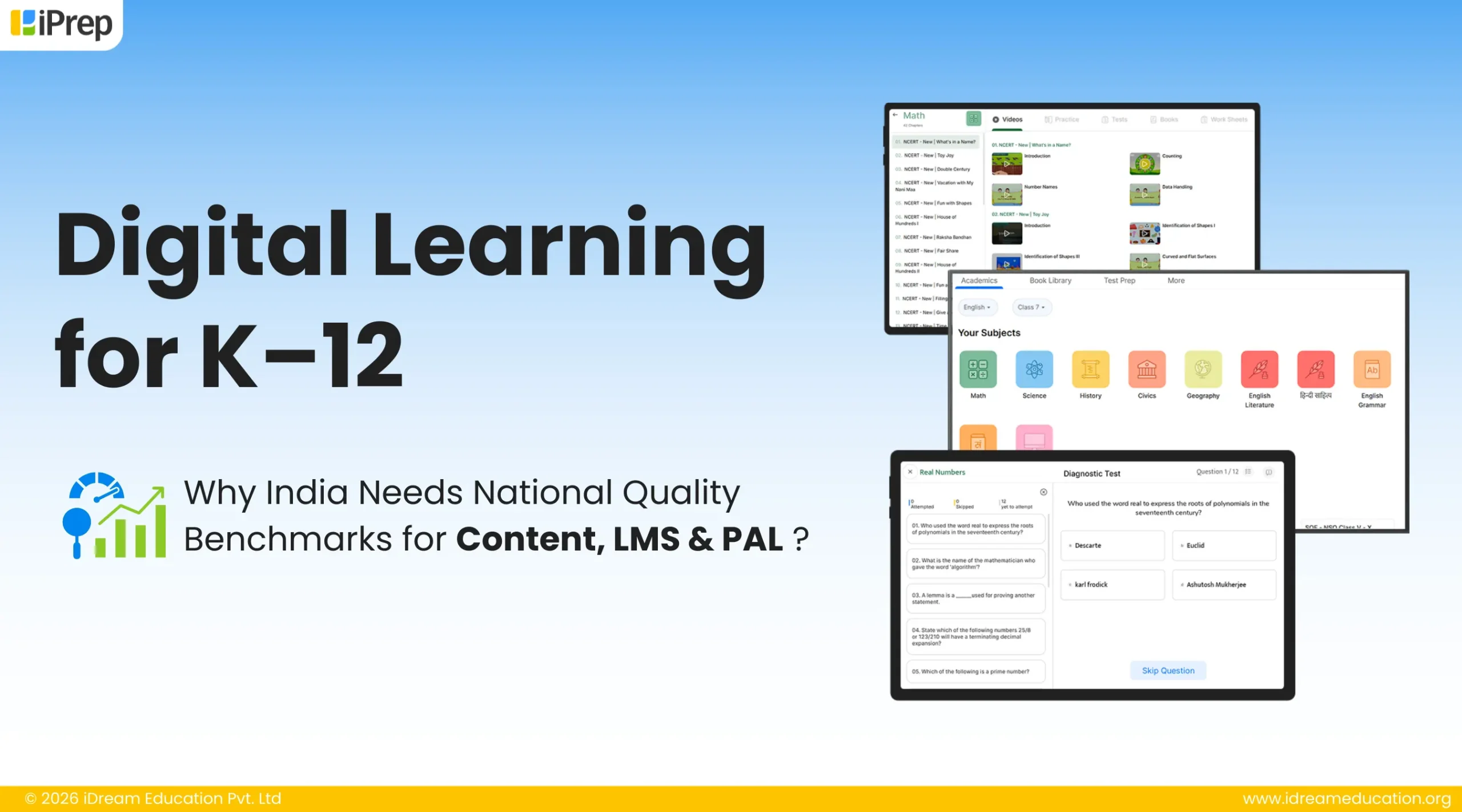
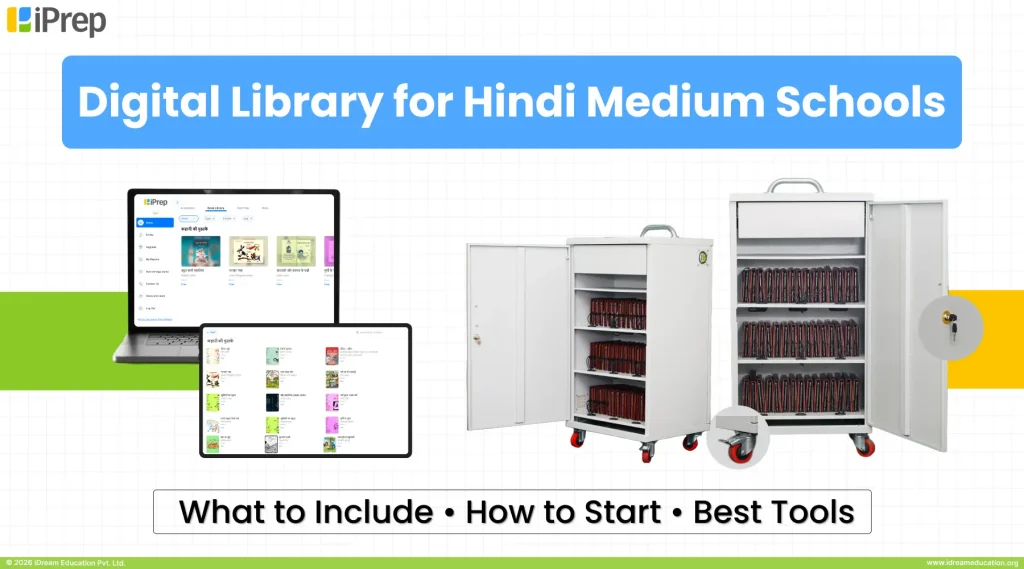
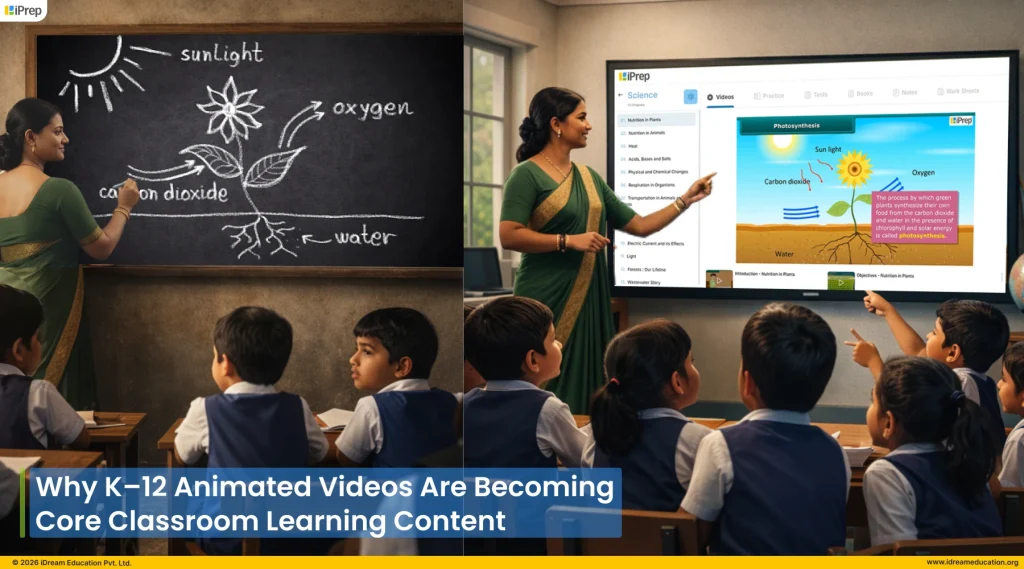
The availability of smart class content determines whether teachers will use smart classroom technology regularly. That’s why the smart classroom solution provider you choose must offer content aligned to NCERT or State Board curricula, in the preferred language, and organized clearly by classes, subjects, and chapters.
Smart class content should be usable offline and designed for multiple classroom needs – concept explanation, revision, practice, and student engagement. This content is the core engine that turns smart classrooms into a daily teaching tool, not an occasional add-on. When content is easy to access and directly linked to the syllabus, smart classrooms naturally become a meaningful part of everyday teaching.
4. Experiential Teacher Training: Beyond One-Day Workshops
Smart class utilisation remains suboptimal in many schools, primarily due to teachers lacking confidence in using digital technologies effectively.
Field observations across government schools in India show that without structured training and support, teachers often use smart classroom content for only a few minutes per class before returning to traditional methods. As a result, smart boards, projectors, and interactive panels in thousands of schools remain underutilised.
When implementing a smart classroom, choose a partner who provides experiential training. This means hands-on practice sessions where teachers actually use the smart classroom to teach sample lessons, receive feedback, and troubleshoot common issues in a supportive environment. Through experiential teacher training, teachers should be guided on how to use digital content in real classroom scenarios.
5. Continuous Guidance and Support
Training alone is insufficient. Teachers need ongoing support as they encounter real classroom challenges: a particular lesson not loading properly, uncertainty about how to integrate a smart class content into their teaching flow, or technical glitches they cannot resolve independently.
Effective implementation includes accessible help desk support (via phone or WhatsApp), regular follow-up visits from trainers, and a community of practice where teachers can share their concerns and get them resolved without delay. This continuous guidance helps in achieving regular usage of smart classes..
6. Smart Class Usage Reporting and Monitoring
Usage reporting and monitoring are critical to the success of any smart classroom implementation. They help schools understand how consistently and effectively the solution is being used in real classrooms. Choose a smart classroom solution partner that provides a reporting dashboard with clear usage insights and impact tracking.
The Smart Class LMS should capture detailed usage data showing how actively teachers engage with different types of digital content such as videos, practice modules, simulations, and exercises, so administrators get a true picture of on-ground adoption. Real-time or near real-time data sync is equally important, enabling instant visibility into engagement levels and highlighting underutilised resources.
Most importantly, insights should be actionable & not just descriptive. They should directly guide decisions on teacher training, targeted support, and content improvement, ensuring the smart classroom investment translates into measurable teaching and learning impact.
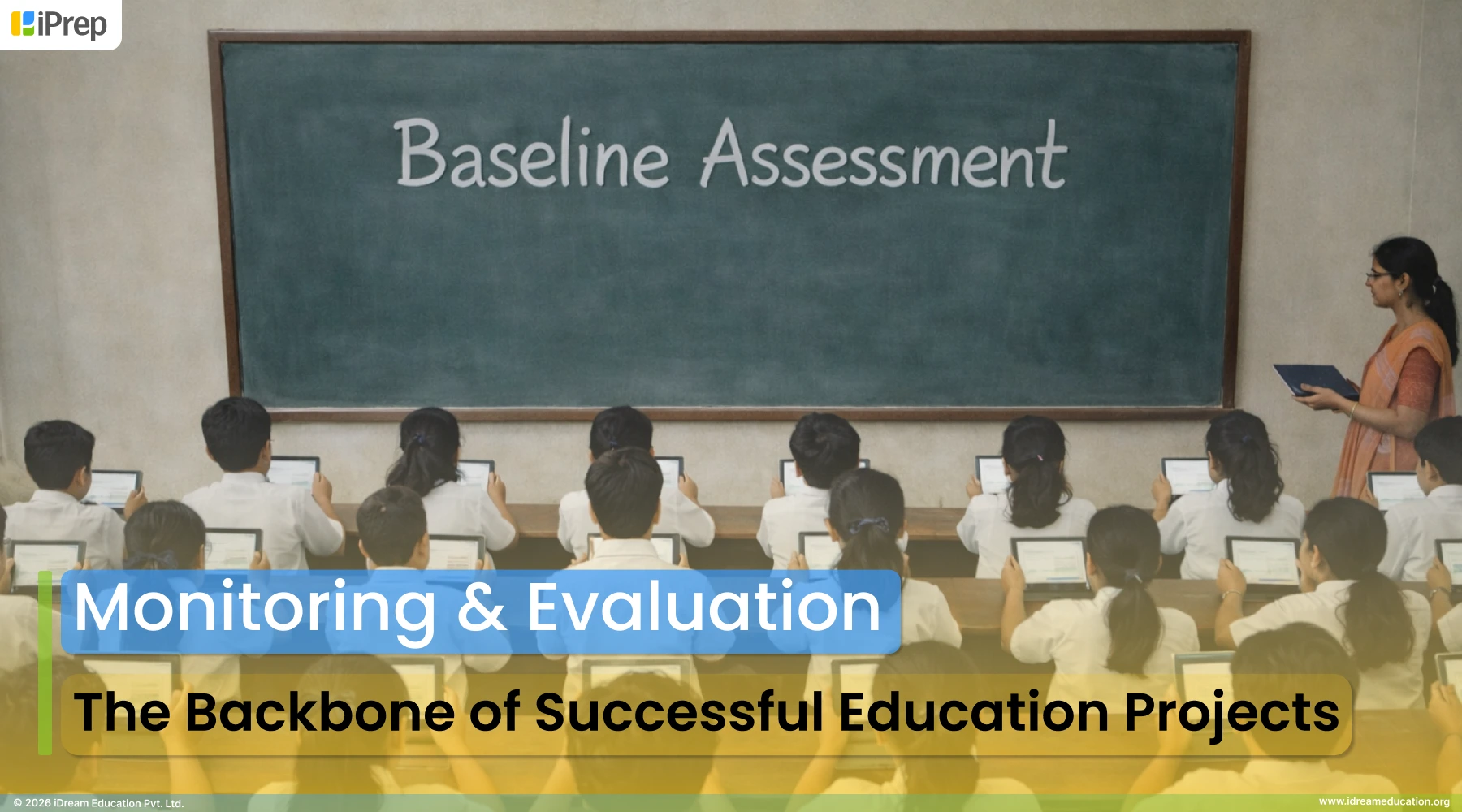
7. Tech-Enabled Assessment: Driving Measurable Learning Outcomes
While optional, tech-enabled assessment capabilities can dramatically improve learning outcomes by providing immediate feedback to students and actionable data to teachers about learning gaps in your smart classroom project. These can be conducted at the start, monthly and at the end of the academic year.
Projects incorporating assessment components demonstrate measurably stronger learning outcomes compared to implementations focused solely on content delivery. In our work with the Office of District Administration of East Jaintia Hills, Meghalaya (the Project Ka-Lawei), tech-enabled assessments such as baseline revealed significant learning gaps. To cover this, bridge courses were given to teachers to help them cover students’ learning gap in a smart class teaching approach. When the project progressed, Class X pass rates improved from 25% in Year 1 to 60% in Year 2, and further to 92% in Year 3.
If you are also looking to implement a complete smart classroom solution, you may contact us at, +91 7678265039 or email us at share@idreameducation.org.
You can also share your details here. We would be happy to schedule your virtual/in-person demo to walk you through components of the smart classroom.
Categories You may Explore
Related Articles