

Last updated: Feb’26
Over the past few years, India has made significant progress in getting children into schools. Enrollment levels are increasing, gender gaps have narrowed, and school infrastructure has expanded across rural and urban regions alike. On paper, the system looks larger and more inclusive than ever before.
Yet a harder question now stands at the center of the education debate:
Are children actually learning at the level they should be?
Multiple national and state assessments have consistently pointed to a learning reality that is uneven where many students advance grades without mastering foundational literacy, numeracy, and conceptual understanding. The challenge is no longer just about bringing children to school – it is about ensuring that time spent in school translates into real learning gains.
The concern becomes sharper when we look at large-scale national data.
The NAS 2021 survey shows a steady decline in the learning levels of students from Grades 3 to 10. According to the National Assessment Survey 2021, the average learning levels were measured at 59% in Grade 3, 49% in Grade 5, 42% in Grade 8, and just 36% in Grade 10. This downward trend clearly signals that as students move up the grades, learning gaps widen rather than close. This is indicating that the current educational infrastructure and support systems are not fully meeting what learners need to succeed in a rapidly changing world.
This shift: from schooling to learning requires more than incremental reform.
It demands an integrated approach that connects:
- Curriculum and classroom practice
- Teacher capability and ongoing support
- Infrastructure and usable learning tools
- Technology and pedagogy
- Funding and accountability
This is exactly the policy gap India attempted to address through a unified national framework Samagra Shiksha Abhiyan (SSA).
What is Samagra Shiksha Abhiyan (SSA)?
Samagra Shiksha Abhiyan is India’s flagship integrated school education program designed to improve access, equity, and quality across the entire K–12 spectrum from pre-primary to senior secondary. Unlike earlier fragmented schemes, Samagra Shiksha brings together elementary, secondary, and teacher education under one unified framework. Its core aim is not just enrollment but meaningful learning outcomes.
Why is Samagra Shiksha Structurally Different & More Powerful Than Earlier Schemes?
What makes Samagra Shiksha Abhiyan significant is not just its scale, but its structural design. Earlier national education programs often operated in silos — elementary education, secondary education, and teacher training were funded and managed through separate schemes. This created fragmentation in planning, budgeting, and execution.
Samagra Shiksha changed that architecture by integrating the entire school education lifecycle under one umbrella — from early grades to senior secondary, along with teacher education. This integration enables states and implementation partners to plan interventions more holistically rather than in isolated segments.
This matters because learning gaps are rarely isolated problems. They are systemic.
A Grade 8 learning deficit often begins with weak foundational skills in earlier grades. A teacher effectiveness issue often traces back to gaps in continuous professional development. Fragmented schemes could not fully address these cross-stage dependencies but an integrated framework can.
By design, Samagra Shiksha enables:
- Continuity from foundational to secondary learning
- Linked planning across grades and subjects
- Unified funding channels
- Stronger alignment between teacher training and classroom needs
- Better scope for technology-enabled interventions
- Outcome-linked monitoring frameworks
In other words, Samagra Shiksha is not just a scheme – it is a systems-level reform platform. Its success depends less on allocation and more on how intelligently it is activated on the ground.
Where Learning Outcomes Still Break Down Despite Strong Policy Design?
Even with an integrated framework like Samagra Shiksha in place, learning outcomes will not automatically improve. The gap between policy intent and classroom reality remains one of the biggest challenges in large-scale public education systems.
Most implementation challenges emerge at the last mile — inside classrooms — where diversity in student readiness levels, teacher workload, resource variability, and time constraints intersect. Common breakdown points include:
- Same lesson delivered to mixed-ability classrooms
- Limited time for individual student support
- One-time teacher training without ongoing reinforcement
- Content availability without usage guidance
- Technology installations without pedagogical integration
- Assessments that measure grades not learning gaps
- Monitoring focused on completion not comprehension
As a result, even when infrastructure, devices, and digital content are available, learning remains uneven because instruction is not personalized and feedback is not continuous.
This is where the conversation must shift: From what is deployed to how learning is delivered.
And that shift brings us to a critical enabler: Personalized Adaptive Learning (PAL) technology.
How PAL Technology Can Directly Drive Learning Outcomes Under Samagra Shiksha
If Samagra Shiksha provides the policy framework, then Personalized Adaptive Learning (PAL) provides the instructional engine that can translate that framework into measurable learning gains at the student level.
One of the core realities of Indian classrooms, especially in government and resource-constrained schools is learner diversity. In a single classroom, teachers often handle students with widely different readiness levels, learning speeds, language comfort, and conceptual clarity. Traditional one-pace teaching models struggle in such environments, no matter how strong the curriculum or how committed the teacher.
PAL solutions addresses this structural constraint by shifting the model from the same instruction for all to right instruction for each learner. Instead of assuming grade-level readiness, PAL systems continuously assess how each student is performing and dynamically adjust:
- Difficulty level of questions
- Concept sequencing
- Practice intensity
- Remedial learning pathways
- Mastery for each topic
This ensures that students are neither left behind nor held back – both of which are common causes of disengagement and learning loss.
What Makes PAL Especially Relevant for SSA Implementation
Samagra Shiksha emphasizes learning outcomes, foundational skills, teacher empowerment, and inclusive education. PAL technology directly strengthens each of these pillars:
- Outcome Measurement → Continuous Micro-Assessment: PAL platforms measure learning continuously through practice and test & not just through periodic exams. This enables early detection of gaps.
- Foundational Learning → Targeted Remediation: Students who lack prerequisite skills automatically receive structured remedial learning journeys instead of generic repetition. This involves making students learn through adaptive practice and remedial learning material aligned to the curriculum.
- Teacher Support → Actionable Insights: Teachers are empowered to track and monitor student-level diagnostic insights. This helps them plan focused interventions rather than guesswork teaching.
- Inclusion → Level-Based Learning Paths: Mixed-ability and multi-grade classrooms can function more effectively when students learn at their own level within the same environment.
- Technology Use → Pedagogy-Led: PAL shifts edtech usage from passive content consumption to active learning progression.
When integrated thoughtfully within Samagra Shiksha initiatives through digital libraries, or individual devices in remedial learning program — PAL has the potential to convert infrastructure investments into measurable outcome gains.
What a PAL-Enabled SSA Implementation Model Looks Like on the Ground?
For Samagra Shiksha initiatives to translate into measurable learning outcomes, implementation models must go beyond device distribution and curriculum aligned personalized learning. The most effective approach is where Personalized Adaptive Learning (PAL) is embedded into how students practice, teachers guide, and schools monitor progress.
On the ground, PAL can be set up through multiple infrastructure models supported under SSA — each serving a different operational context. Instead of treating them as separate investments, they should be seen as complementary delivery formats for adaptive learning. Below are three high-impact PAL deployment models you can structure this section around.
PAL Through Individual Learning Devices (PAL Tablets for Students)
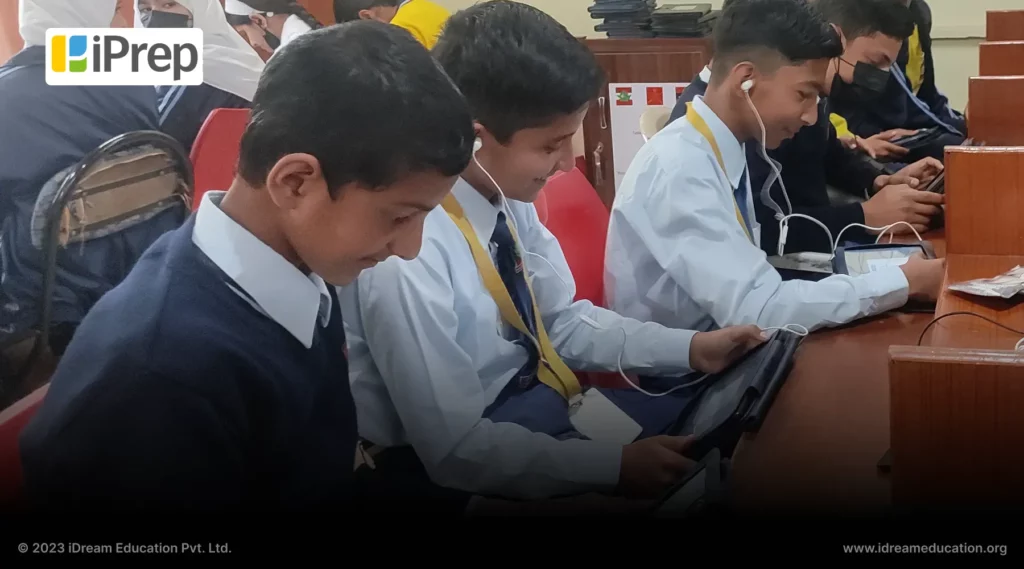
Best suited for: Remedial programs, foundational learning, after-school support, hostel schools, in school and at home learning in last-mile geographies.
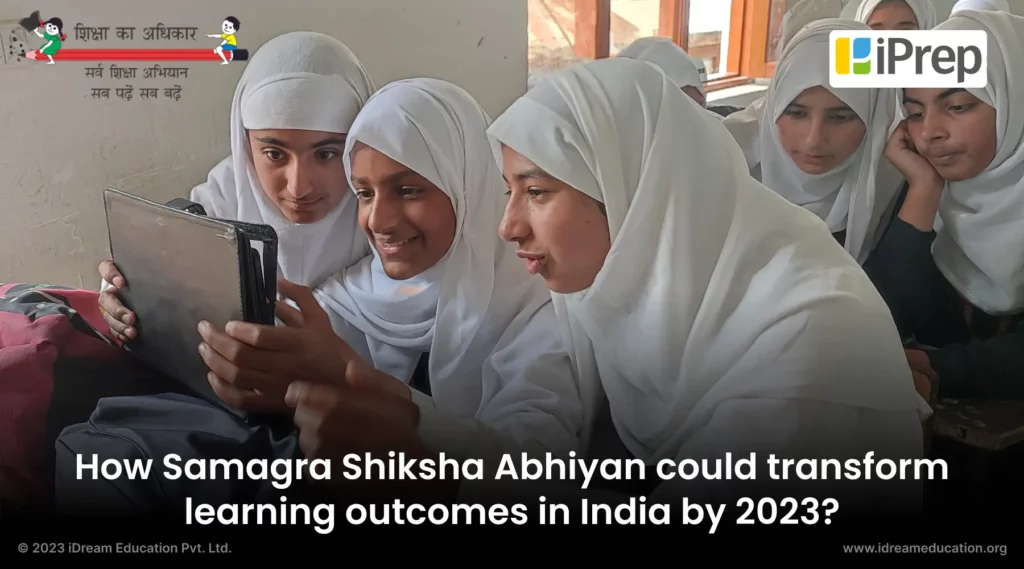
In this model, each learner gets access to a personalised tablet with PAL platform and curriculum aligned remedial learning content that continuously adjusts to their level. All accessible completely offline. This enables and strengthens one-to-one learning pathways, especially powerful where historical learning gaps are huge or classroom ratios are high and teacher time is limited.
What this PAL on Tablets model enables:
- Self-paced concept mastery
- Level-based progression instead of grade-only progression
- Strong remediation for foundational learning gaps
- Usage beyond school hours
- Offline-first adaptive learning in low-connectivity areas
- Individual learner data trails for monitoring progress
Impact advantage: Direct personalization at the student level enables continuous diagnosis, level-appropriate content delivery, and targeted remediation for each learner. Instead of assuming grade-level readiness, the adaptive system responds to actual performance patterns – adjusting concept difficulty, practice depth, and revision pathways in real time. This creates the highest depth of instructional adaptation, especially critical for closing foundational gaps, supporting first-generation learners, and enabling faster progression for advanced students within the same cohort.
A large-scale example demonstrating the effectiveness of this model is the Haryana government’s e-Adhigam initiative, where students from Classes 9 to 12 were provided tablets preloaded with Personalized Adaptive Learning software platforms such as iPrep PAL. Program outcome data from the July 2023 to June 2024 academic cycle showed substantial measurable gains: students using iPrep PAL recorded an average diagnostic score of 35.6%, which increased to 73.6% in the final assessment. This represents an improvement of 38 %. This indicates significant learning progression when adaptive technology is deployed through individual device models at scale.
PAL Inside Smart ICT Labs and Digital Learning Libraries
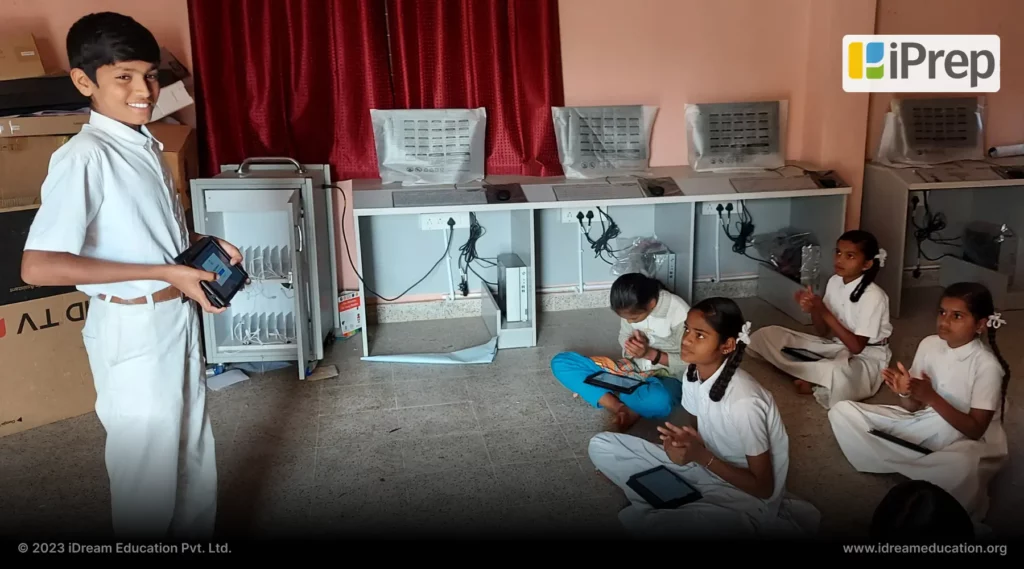
Best suited for: Shared-device environments, scheduled adaptive learning periods, cluster schools, and scalable in-school digital access models.
ICT Labs are among the three major digital education infrastructure components supported under the ICT Scheme of Samagra Shiksha. The scheme allows these labs to be set up in multiple formats using tablets, desktops, notebooks, or Chromebooks with storage and charging rack. This gives states and schools flexibility based on budget, space, and operational needs.
Modern ICT lab/ Digital library models are designed to be easy to deploy and manage. Many setups use integrated charging-and-storage racks that can accommodate anywhere from a small batch to 40+ devices, often without requiring additional wiring, specialized furniture, or dedicated lab construction. Multiple devices can charge simultaneously through a single power source, making the model practical even in schools with limited electrical infrastructure and intermittent connectivity.
When equipped with pre-installed Personalized Adaptive Learning (PAL) platforms, learning management systems, and curriculum-aligned digital content, ICT labs/Digital Libraries move beyond being computer access rooms — they become structured adaptive learning hubs inside the school.
What this model enables:
- Timetabled adaptive learning sessions within school hours
- Shared-device personalization through individual learner logins
- Preinstalled PAL software for offline usage
- Offline usage reporting with periodic sync to centralized dashboards
- Teacher-facilitated diagnostic and remediation sessions
- Efficient device usage across multiple classes and grades
- Lower operational complexity and management
Impact advantage: ICT labs enable scalable personalization within shared infrastructure by combining device pools with PAL platforms that individualize learning paths per student login. This allows schools to deliver adaptive, level-based learning even when one-to-one device access is not feasible. This makes it a cost-effective and SSA-aligned pathway to drive measurable learning improvement across larger student groups.
Evidence from a CSR-led remedial learning program where digital libraries integrated with PAL were implemented across 20 schools in two states covering more than 5,000 students shows strong outcome signals. During the 2024–25 academic year, total iPrep PAL usage recorded 7,740+ learning hours, spread across 183 active usage days, with an average usage of 6.85 minutes per learner per day. Learning assessments showed that average diagnostic scores of 32% improved to 60.5% in final test — reflecting an overall yearly gain of approximately 28.5 %. This indicates that even with shared infrastructure, PAL-enabled models can deliver measurable remediation and learning acceleration when usage is structured and monitored.
How does the Government Plan to Enhance Learning Outcomes with the Samagra Shiksha Abhiyan?
The Cabinet Committee on Economic Affairs (CCEA) expanded the canvas of the Samagra Shiksha Abhiyan to paint its vision across the landscape of education in Indian schools. The new tenure, ranging from April 1, 2021, to March 31, 2026, with an estimated outlay of ₹ 294283.04 crore, aims to touch the lives of over 15.6 crore students across 11.6 lakh schools and by examining the elaborated components of the state of Haryana (one of the states with an approved budget for the scheme), it becomes evident that the government is utilizing the Samagra Shiksha Abhiyan as a powerful catalyst to bolster the education sector of the country.
Multi-dimensional learning improvement levers of SSA are:
- Teacher Education Institutions (TEIs) strengthening
- Vocational education integration
- School infrastructure upgrades
- Foundational learning under the NIPUN Bharat Mission
- ICT and digital learning initiatives
- Early Childhood Care and Education (ECCE)
- Inclusive and equitable education provisions
Importantly, several of these components include recurring budgetary support, signaling a shift from one-time provisioning to sustained academic enablement.
Plus, it is important to note that the Samagra Shiksha Abhiyan operates under a commendable joint funding model where the union government and states cooperatively share the financial burden in a 60:40 ratio, and the ratio is even more favorable in hilly and northeastern states at 90:10. This shared structure enables scale & also mean that state-level planning quality and execution capacity play a critical role in determining real classroom impact.
While the government has been proactive in releasing funds for PAB-approved state plans, it is also widely acknowledged that gaps can emerge between approved outlays and on-ground expenditure across certain components and regions. These gaps are not merely financial – they are often operational and implementation-linked. This is precisely where implementation partners, CSR-led programs, and innovation-driven digital learning models become highly relevant.
If you are a state education department, CSR foundation, NGO, implementation partner, or school network looking to strengthen learning outcomes through structured digital and PAL-enabled models, you may connect us at +91 7678265039. We would be happy to discuss your program goals, share our learnings, and demonstrate outcome-driven solution approaches tailored to your context. You can also write to us at share@idreameducation.org or share your details here
Frequently Asked Questions -
1. What is Samagra Shiksha Abhiyan?
Samagra Shiksha Abhiyan is India’s integrated school education scheme covering pre-primary to senior secondary levels, focused on improving access, equity, and learning quality through funding for infrastructure, teacher development, digital initiatives, and outcome-driven programs.
2. When was Samagra Shiksha extended and for how long?
The scheme was extended for the period 2021–2026 with expanded scope and funding to strengthen learning outcomes, foundational literacy, and digital education across schools.
3. What are the major components supported under Samagra Shiksha?
Key components include teacher education, school infrastructure, ICT & digital initiatives, NIPUN Bharat foundational learning, vocational education, inclusive education, and early childhood care and education (ECCE).
4. What is the ICT scheme under Samagra Shiksha?
The ICT scheme supports digital education infrastructure such as smart classrooms, ICT labs, tablets, and digital libraries to enable technology-enabled teaching and learning in government schools.
5. How do ICT labs under Samagra Shiksha support personalized learning?
ICT labs can run adaptive learning platforms where each student logs in individually, receives level-based content, and progresses through personalized learning pathways even in shared-device environments.
6. Can CSR and implementation partners support Samagra Shiksha projects?
Yes. CSR organizations and implementation partners often support SSA initiatives through digital infrastructure, PAL setups, remedial programs, teacher training, and outcome monitoring — especially where operational gaps exist.
7. Which age range does Samagra Shiksha Abhiyan serve?
Samagra Shiksha Abhiyan offers a full range of educational services to pupils from 3 years old (preschool) to 18 years old (up to class 12).
8. What are Samagra Shiksha Abhiyan's main objectives?
The improvement of school infrastructure, academic support, teacher training, ICT-enabled learning, vocational education, and assistance for children with special needs are among the main tenets of Samagra Shiksha Abhiyan.
9. Can private schools participate in the Samagra Shiksha Abhiyan?
Yes, Samagra Shiksha Abhiyan is available to not only government schools but also schools receiving government funds and some types of private schools that meet certain requirements and take part in the program.
Categories You may Explore
Related Articles