We've received your request! Our team will be in touch within 24 hours to confirm your demo and discuss your
needs. We look forward to connecting with you!
Popular Searches
Smart class
NGO
Personalised Learning
CSR
Learning App
Government
State board content
Digital Library
Smart Board
Author: Rajeev Dudi
Rajeev is a dynamic Digital Marketing Associate at iDream Education. With a passion for content creation and SEO, Rajeev is a fresh talent in the industry, committed to delivering exceptional results.
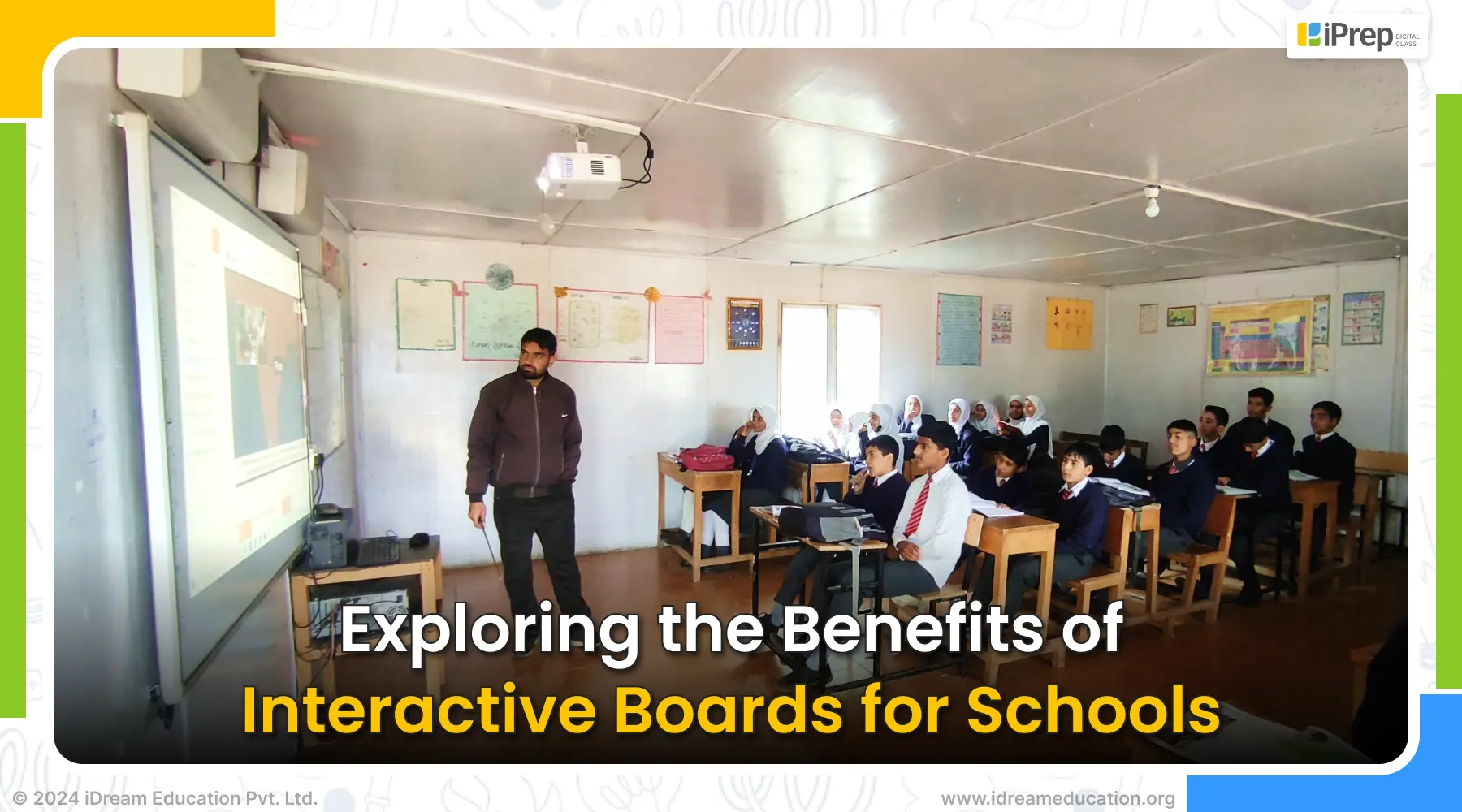
Students actively participating in interactive learning facilitated by interactive boards for schools
Technology is essential in refining traditional teaching methods in today’s constantly shifting educational environment. Among these innovations, interactive boards for schools stand out as dynamic tools reshaping classrooms for enhanced learning experiences. An Interactive Whiteboard, or IWB, seamlessly integrates digital technology with instructional practices, offering teachers a versatile platform to engage students and enhance learning outcomes. From its inception as basic touch-sensitive displays to contemporary high-definition interactive panels, the evolution of interactive whiteboards signifies a shift towards more immersive and interactive learning experiences. In this blog, we will explore what interactive boards for schools are and the benefits they offer.
What is an Interactive Whiteboard?
Interactive boards for schools are a technologically advanced display system that connects to a computer and projector. It allows teachers to present and interact with digital content in real time, enhancing classroom engagement and collaboration. Users can control the interactive board using touch, stylus, or other input devices, enabling dynamic multimedia presentations, interactive lessons, and collaborative activities. With features like annotation tools and multimedia integration, interactive boards facilitate personalized instruction and cater to diverse learning styles. Interactive whiteboards enable teachers to design immersive learning environments to encourage student engagement and comprehension by converting conventional teaching surfaces into interactive digital platforms.
The evolution of interactive whiteboards for schools has profoundly shaped educational practices. Initially conceived as basic touch-sensitive displays, these dynamic tools have undergone remarkable advancements, transitioning into sophisticated interactive panels that offer immersive learning experiences.
From their humble beginnings, interactive whiteboards have continuously evolved to meet the changing needs of teachers and learners. Early models featured simple touch-sensitive surfaces connected to computers and projectors. However, with technological progress, modern interactive whiteboards boast high-definition displays and seamless integration with instructional practices.
This evolution signifies a shift towards more dynamic and interactive learning environments. Today, as interactive whiteboards seamlessly integrate digital technology, teachers can deliver engaging multimedia presentations, conduct interactive lessons, and facilitate collaborative activities in real-time.
Equipped with features such as touch controls, stylus input, and multimedia integration, interactive whiteboards empower teachers to create personalized learning experiences that cater to diverse learning styles
Now let’s look at the benefits of interactive boards for schools in the next section
Benefits of Interactive whiteboards
Enhanced lessons:
Interactive boards for schools effectively bridge all types of learning styles. Students can learn through visuals, sounds and interactions to create the ultimate learning experience. Rather than using text-based lessons, students can understand and remember more effectively through these experiences, as well as movies, PowerPoint presentations and graphics that otherwise could not be used with a standard chalkboard.
Flexibility
Interactive boards for schools can host many different platforms. Teachers have a wide array to choose from, whether it be photos, graphs, illustrations or videos. The interactive display of the board offers plug-and-play compatibility for quick integration with various cloud-based platforms, including Google Classroom, allowing presentations on a large-format display inside the classroom. Additionally, in some boards 20-point multi-touch functionality allows multiple people to collaborate to facilitate effective learning.
Reduces Classroom Costs
Where traditional whiteboards and chalkboards rely on additional tools like dry markers, erasers, chalk and other whiteboard accessories, interactive boards for schools do not need any of these tools. This means that classroom costs are significantly reduced, as students also do not need to rely on materials to experience the lesson. The use of interactive whiteboards also means that there is less reliance on physical resources for teaching, as everything is online. Rather than having to waste money on printing paper, classrooms are moving to a digitised learning experience, which reduces classroom costs.
Ease-of-use
Ditching the chalk, markers and other classroom supplies makes interactive boards for schools even more appealing – the maintenance is next to nothing. Data is easily marked using a stylus or a finger for highlighting, drawing and writing. There is no need for extra tools, which means no mess or cleanup.
Interactive Learning:
Interactive boards for schools allow children to interact with the learning material. They become a part of the lesson. Their understanding of the subject is seen through touching, drawing, or writing on the board. The entire classroom can play educational games. They also provide immediate feedback, so students and teachers can easily assess student progress.
Access to the Internet:
Connection to the internet is one of the best benefits of interactive boards for schools it gives you a resource of online tools and information. Teachers have access to various sources to enhance and support their lessons with videos, articles, images, learning tools, and more. Students also have a rich resource for research and learning.
Multiple uses:
Interactive boards for schools have diverse applications, including displaying videos, writing, and accessing additional online resources. They serve as versatile tools for various educational activities and can adapt to different teaching and learning needs.
iPrep Digital Class with Interactive Whiteboards for Schools
iPrep Digital Class with Interactive Boards for Schools, offered by iDream Education, is a smart classroom solution designed to empower teachers and engage students in the 21st century. It combines interactive whiteboards (IWBs) with rich digital content and powerful tools to create a dynamic and engaging learning environment.
Here are some key features of iPrep Digital Class with Interactive Whiteboards:
Hardware Compatibility:
Works on various IWBs, including Android-based Smart TVs, Interactive Flat Panels (IFPs), Projectors, and traditional Interactive Whiteboards.
Can be installed on different operating systems like Open Source Android, Windows, Linux OS, OPS/Mini PC, or Desktop.
Comprehensive Curriculum-Aligned Content:
Covers all subjects and grades from 1st to 12th, aligned with NCERT and State Board curriculums.
Includes various content formats like:
Animated video lessons to grab student attention and explain complex concepts visually.
Interactive exercises and practice questions with instant feedback for self-assessment.
Practical lab videos to demonstrate experiments and procedures.
Digital syllabus books, notes, and assessments for easy access and revision.
Exam preparation materials to help students excel in their tests.
Bilingual Interface:
Available in English, Hindi, and other regional languages to cater to diverse student populations and promote linguistic inclusion.
Teacher-Friendly Tools:
Lesson planning tools to create interactive and engaging presentations.
Assessment tools to track student progress and identify areas for improvement.
Collaboration tools to encourage student participation and interaction.
Reporting and analytics to gain insights into student performance and make data-driven decisions.
Benefits for Schools:
Enhanced learning:
Interactive whiteboards and engaging content promote active learning and improve student understanding.
Increased engagement:
Students are more likely to be engaged in lessons when they can interact with the content directly.
Improved teacher effectiveness:
iPrep Digital Class provides teachers with tools and resources to make their lessons more effective.
Data-driven insights:
Schools can gain valuable data about student performance to improve instruction and support individual students.
Cost-effective:
iPrep Digital Class is a cost-effective solution compared to traditional textbooks and other learning materials.
Overall, iPrep Digital Class with Interactive boards for schools offers a comprehensive and flexible solution for schools looking to create a more engaging and effective learning environment for their students.
Conclusion
Interactive boards for schools are an amazing development in educational technology that will completely change conventional teaching approaches. These dynamic tools offer unparalleled benefits, fostering enhanced lessons through immersive multimedia experiences. With their flexibility, cost-effectiveness, and ease of use, interactive boards empower teachers to create engaging, interactive learning environments tailored to diverse student needs. By facilitating interactive learning, providing access to vast online resources, and offering comprehensive curriculum-aligned content, interactive boards elevate classroom engagement and promote academic excellence. iPrep Digital Class with Interactive Whiteboards emerges as a leading solution, epitomizing the synergy between interactive technology and educational advancement. Embracing interactive boards for schools heralds a future where learning transcends boundaries, ensuring schools equip students with the skills and knowledge to thrive in the dynamic digital age.
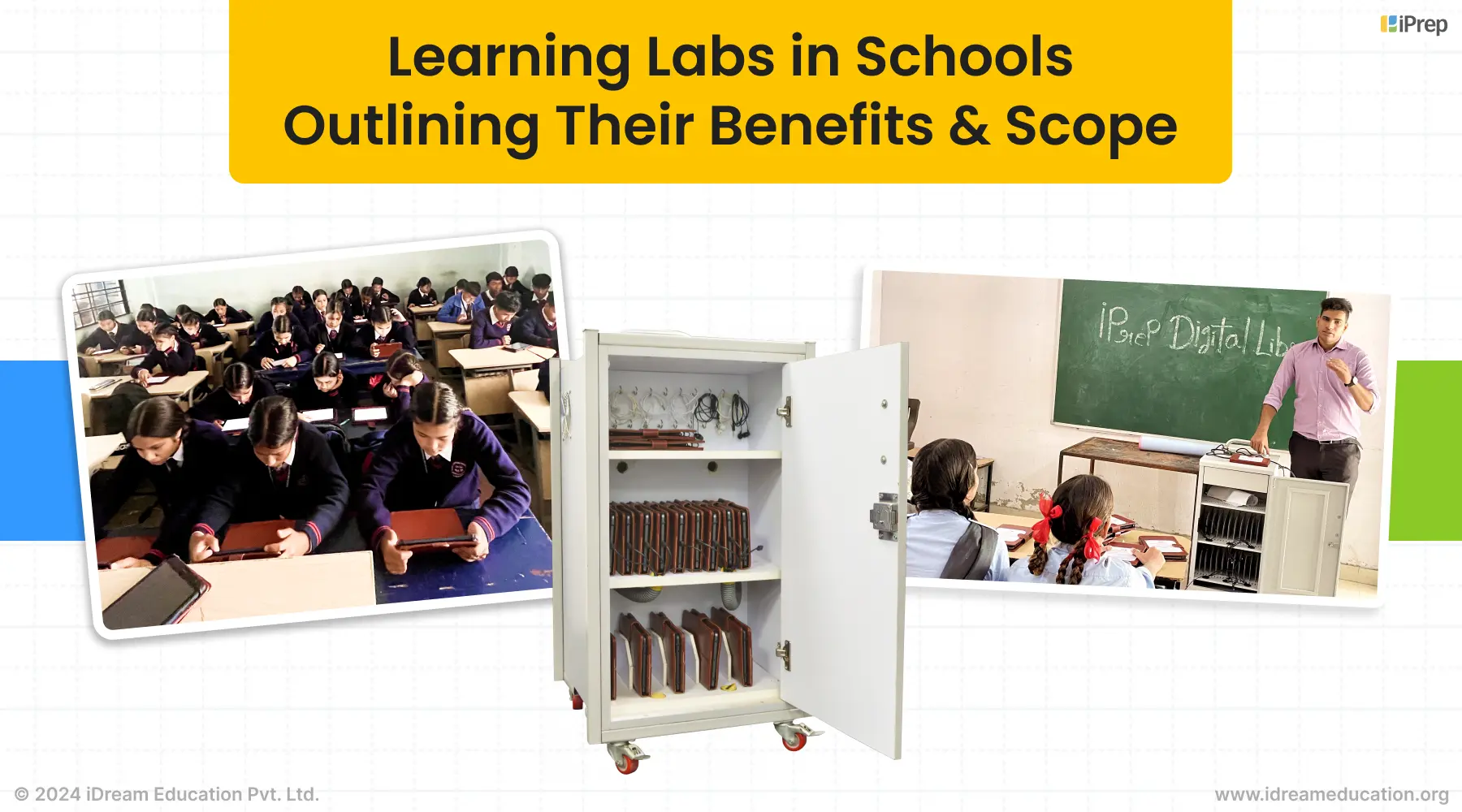
Learning labs in schools can bring immense benefits to elevate the teaching-learning experience
Learning Labs have emerged as dynamic spaces that serve as hubs for interactive, hands-on learning, fostering a more engaging educational environment. More than just a technological leap, learning labs in schools embody a response to the evolving needs of students as well as the demands of a rapidly changing world.
The benefits of implementing learning labs in school environments are many, as will be evident in the following sections. But first, let us have a better understanding of what a learning lab is and why it is significant.
What is a Learning Lab?
A learning lab, variously known as a digital library, study lab or educational lab, is a physical or virtual space designed to facilitate hands-on learning experiences and experimentation. It typically consists of various resources, tools, and equipment tailored to specific educational objectives and subject areas.
In a physical learning lab, you might find computers, tablets, interactive whiteboards, educational software, laboratory equipment, and manipulatives. In a virtual or online learning lab, the setup may include online platforms, simulations, virtual reality tools, digital libraries, and interactive multimedia content. Learners can access these resources remotely via computers, tablets, notebooks or other internet-enabled devices.
Why are Learning Labs in schools significant in India?
In March 2019, the Ministry of Education implemented a novel approach to ICT integration in schools in India by introducing a variety of technology tools for classrooms. This included tablets, laptops, notebooks, and a charging rack, all of which played a crucial role within the revamped ICT lab scheme.
What are the benefits of implementing Digital Learning Labs in Schools
Learning labs offer numerous advantages for schools, including:
Enhanced Learning Outcomes
Learning labs in schools provide students with access to interactive technologies and hands-on learning experiences that can enhance their understanding and retention of academic concepts. By engaging students in active learning, these ICT labs can improve overall learning outcomes and academic achievement.
Increased Engagement and Motivation
Learning labs offer a dynamic and interactive learning environment that can increase student engagement and motivation. By incorporating multimedia content, simulations, and interactive activities, these labs make learning more enjoyable and relevant for students.
Community Engagement and Collaboration
Learning labs in schools can serve as hubs for community engagement, providing opportunities for schools to partner with parents and community organizations.
Preparation for the Future
Learning labs help students develop essential digital literacy skills and familiarize them with emerging technologies. By providing hands-on experience with technology and digital tools, schools can prepare students for success in an increasingly technology-driven world.
Let’s delineate further how e learning labs can be useful for students and teachers.
Benefits of Learning Labs for Students
Hands-on learning experiences
Learning labs or study labs offer students opportunities to interact directly with educational materials through experiments, simulations, and manipulative activities. This hands-on approach allows them to explore concepts in depth and gain practical skills.
Collaboration and communication
Working in groups within the lab setting encourages students to communicate effectively, share ideas, and solve problems together. Collaborative projects foster teamwork skills and help students learn from their peers, preparing them for collaborative work environments in the future.
Personalized learning
ICT labs can accommodate diverse learning styles and preferences, allowing students to engage with content in ways that suit their individual needs. Whether through self-paced modules, interactive software, or differentiated activities, students can tailor their learning experience to maximize their understanding and success.
Dynamic learning environment
E learning labs in schools provide an engaging and interactive space where students can explore, experiment, and discover. With access to a variety of materials and resources, students are encouraged to ask questions, think critically, and explore their interests, fostering a love for learning that extends beyond the classroom.
Real-world application
Many activities within digital educational labs are designed to simulate real-world scenarios, allowing students to apply their knowledge and skills in practical contexts. Whether conducting science experiments, designing engineering projects, or analyzing data, students gain valuable experience that prepares them for future academic and professional pursuits.
What are the advantages of Digital Learning Labs for teachers?
Enhanced Teaching Methods
Learning labs provide teachers with innovative tools and resources to deliver dynamic and interactive lessons. They can incorporate multimedia content, simulations, and hands-on activities to engage students and facilitate deeper understanding of concepts.
Differentiated Instruction
With access to a variety of learning materials and technologies, teachers can tailor instruction to meet the diverse needs of their students. ICT labs allow for individualized learning paths, enabling teachers to provide personalized support and enrichment based on students’ abilities and interests.
Data-Driven Instruction
Online labs often include tools for assessing student progress and understanding. Teachers can use data gathered from lab activities, assessments, and student interactions to inform their instructional decisions, identify areas for intervention or enrichment, and track student growth over time.
Professional Development Opportunities
Working in a learning lab environment can provide teachers with opportunities for professional growth and collaboration. They can learn new instructional strategies, explore emerging technologies, and share best practices with colleagues, ultimately enhancing their teaching skills and effectiveness.
Increased Engagement and Motivation
By leveraging interactive technologies and hands-on experiences, learning labs can increase student engagement and motivation in the classroom. Teachers can capitalize on students’ natural curiosity and enthusiasm for learning, creating a positive and dynamic learning environment that fosters academic success. Now that we have made a compelling case for the incorporation of digital learning labs into school education let’s explore the physical requirements to set up one.
Hardware Components of Learning Labs
Essential learning lab equipment involves:
Tablets
Tablets are vital tools in digital Learning Labs, offering portability and interactivity. They grant access to various digital resources and educational apps.
Laptops/Notebooks
Laptops and notebooks complement the lab setup by offering students a more traditional yet versatile computing experience.
Desktop Computers/PCs
Desktop computers or personal computers (PCs) serve as essential hardware components, particularly in STEM-focused labs. These devices provide a more traditional computing setup with a separate monitor, keyboard, and CPU.
Charging Racks
Charging racks ensure devices are always powered and accessible, accommodating multiple tablets simultaneously.
Smart Boards
Smart Boards enhance the lab environment by transforming traditional whiteboards into interactive and dynamic learning tools.
Webcams/Microphones
Webcams and microphones enable virtual interactions and online collaboration, supporting blended learning approaches in modern labs.
iPrep Digital Library: A Smart ICT Learning Lab for Schools
The features of iPrep Digital Library make it a smart and effective solution for elevating the educational experience of schools
The iPrep Digital Library by iDream Education is an intuitive and easily maintainable Smart ICT Lab based on Tablets/Notebooks. Unlike traditional computer setups, the iPrep Digital Library only requires tablets with a charging rack, eliminating setup and maintenance hassles. Running on the Android OS, these tablets offer cost-effectiveness and user-friendliness akin to smartphones.
The iPrep digital library for schools offers tablets with preloaded digital learning content for students from classes 1st to 12th, including video lessons, practice with instant feedback, class notes in PDF format, practical videos, and holistic growth content. Additionally, interactive lessons feature DIY activity videos and life skills videos, enabling teachers to conduct engaging sessions. The tablets capture and record detailed usage data, which auto-syncs with the central project reporting dashboard. This data allows for monitoring tablet usage, student mastery levels, and personalized instruction planning by teachers.
Designed to supplement conventional classrooms and libraries, the iPrep Digital Library serves as an immersive learning environment, encompassing an English Lab, Language Lab, STEM Lab, Science Lab, Math Lab, and Smart ICT Lab all in one. This innovative approach elevates digital libraries to a more personalized, interactive, and data-driven teaching and learning experience.
Types of Digital Learning Labs
Various types of Learning Labs in Schools
The concept of digital Learning Labs in schools has evolved to encompass a multifaceted array of specialized learning environments, each meticulously designed to cater to specific educational requirements and learning objectives. Among these innovative learning environments, iDream Education’s offering- iPrep digital library, facilitates the incorporation of all the various types of labs into a single solution.
Language Labs
These Labs cater to the broader spectrum of linguistic skills. Interactive lessons, pronunciation exercises, and language immersion activities contribute to a comprehensive language-learning experience. iPrep offers interactive multimedia content, including audio recordings, videos, and interactive presentations, to facilitate language learning through a blended approach involving listening, speaking, and pronunciation practice.
STEM Labs
STEM Labs, a crucial component of Learning Labs, focuses on Science, Technology, Engineering, and Mathematics education. These labs provide hands-on experiences, experiments, and simulations, cultivating a deep understanding of STEM concepts. Digital Learning Labs designed for STEM education promotes critical thinking, problem-solving, and creativity, preparing students for the challenges of a technologically driven world.
Science Lab
The Science lab offers a dedicated space for conducting experiments and investigations, providing students with a hands-on approach to scientific concepts. iPrep’s simulations and virtual experiments allow students to conduct scientific experiments in a virtual environment, providing hands-on experience. Interactive lessons feature engaging multimedia elements such as videos, animations, and interactive diagrams to explain complex scientific concepts in an easy-to-understand manner.
Math Lab
Through the integration of digital resources, interactive modules, and real-world problem-solving activities, students develop a strong foundation in mathematical concepts. Math simulations on iPrep provide interactive environments where students can explore mathematical concepts through experimentation and observation. These simulations help students develop a deeper understanding of mathematical principles by seeing how variables interact and affect outcomes.
Smart ICT Lab
The Smart ICT Lab represents the pinnacle of technology within Digital Learning Labs. Equipped with state-of-the-art hardware such as tablets, laptops, smart boards, and charging racks, Smart ICT Labs fosters a technology-rich environment.
Tinkering Labs
A tinkering lab or innovation lab, is a dedicated space with tools and resources for experiential learning and creative exploration. These labs are designed to encourage experimentation, innovation, and problem-solving skills among young learners. These activities often involve STEM (Science, Technology, Engineering, and Mathematics) concepts but can also incorporate elements of art and design.
Let’s Conclude
In conclusion, learning labs have become vital spaces in schools, offering dynamic environments for addressing the evolving needs of students. The benefits of digital learning labs are numerous, including enhanced learning outcomes and increased engagement among students. The incorporation of digital learning labs into school education represents a significant shift towards personalized, interactive, and data-driven education.
Equipped with advanced hardware components Learning Labs provide a truly immersive learning environment. Additionally, the associated benefits, such as flexibility, engaging multimedia resources and immediate feedback contribute to a dynamic and effective education.
As schools increasingly adopt digital Learning Labs, students gain access to an engaging, collaborative, and technology-driven educational setting.
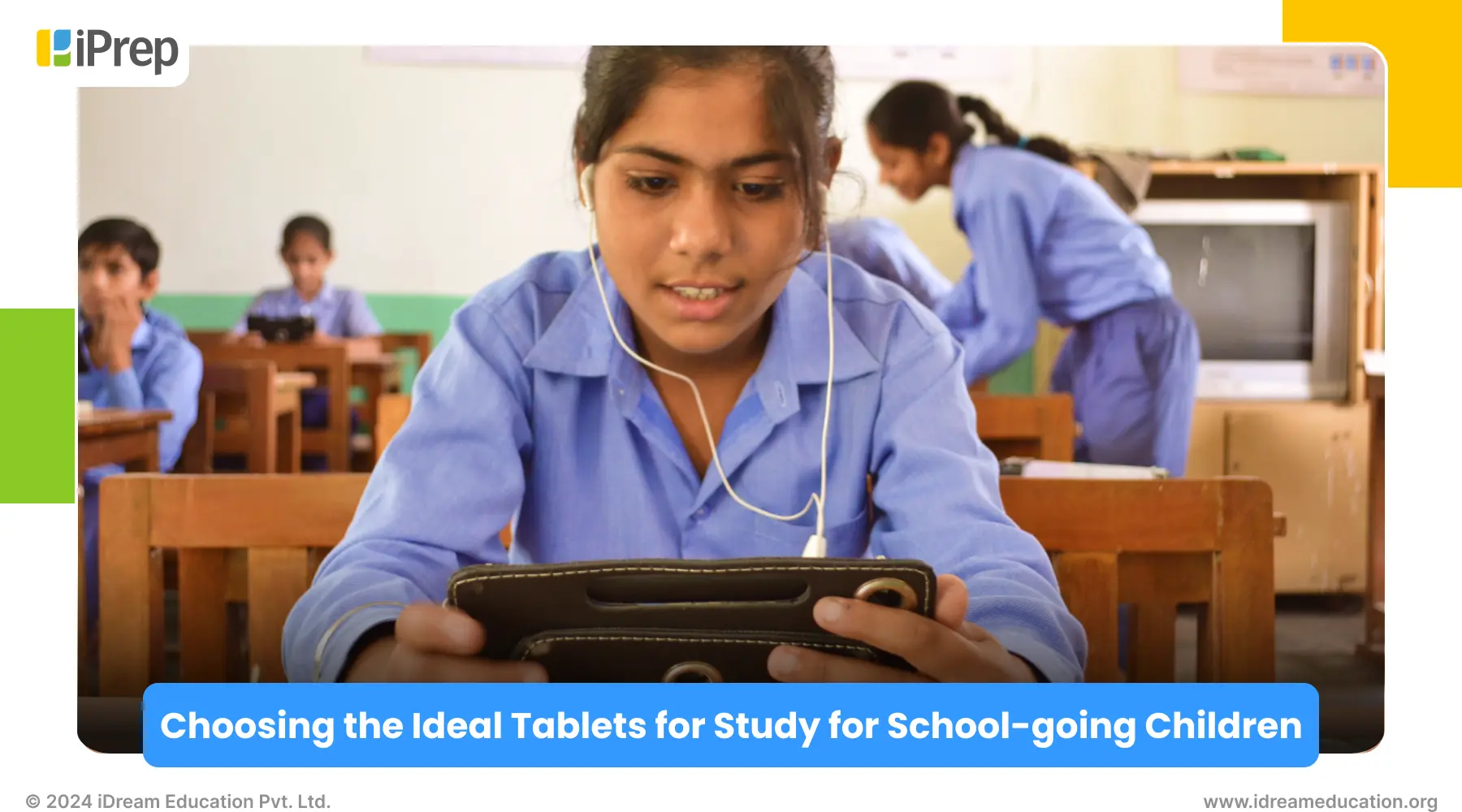
Students immersed in tablets for study within an interactive classroom learning environment
Tablets are becoming increasingly common in classrooms and other learning environments, which is evidence of their growing appeal for enhancing academic performance. As technology continues to reshape the way we approach education, learning tablets or tablets for study offer a dynamic solution for young minds.
Tablets for study encapsulate the essence of a contemporary and effective learning experience combined. Their user-friendly interface and portability make them an ideal companion for students, turning each study session into an interactive and engaging exploration. Tablets for study not only streamline the learning process but also provide an extensive repository of educational resources at students’ fingertips.
In this blog, we will explore the advantages that educational tablets bring to the table, elucidating their role as catalysts for a modern, tech-driven educational journey.
The Many Advantages of Using a tablet for study in the Classroom and Beyond
The advantages of using tablets for study in the classroom and beyond.
User-Friendly Design and Portability
One of the key benefits of utilizing tablets for study lies in their inherently user-friendly design. Children find tablets intuitive and easy to navigate, transforming the learning process into an enjoyable experience. The portability of these devices allows students to carry their entire library of educational materials in a single, convenient device, eliminating the need for heavy backpacks filled with textbooks.
Connectivity: Not Dependent on the Internet
In addition to their user-friendly design, tablets for study offer the added flexibility of offline access to educational content. Unlike some online platforms that demand a constant internet connection, tablets allow students to access pre-downloaded resources, ensuring uninterrupted learning. Moreover, even in areas with limited or no internet connectivity, students can rely on tablets to access their study materials.
Access to Multi-category Digital Resources
Another significant advantage of using Tablets for study is that it opens up a world of digital resources that go beyond traditional textbooks. Interactive e-books, educational apps, and multimedia content provide a dynamic learning experience catering to diverse learning styles. The vast repository of digital resources accessible through tablets ensures that students have access to up-to-date information on a wide range of subjects.
Personalized and Adaptive Learning
Tablets for study can also provide personalized learning experiences by adapting educational apps and platforms to individual learning styles, preferences, and strengths of students. This customization ensures that each student receives tailored support, enhancing the effectiveness of their learning journey. Additionally, tablets can enable students to progress at their own pace with individualized learning paths. Educational apps often employ adaptive algorithms to modify difficulty levels based on user performance. This helps in mastering topics and establishing a solid foundation & understanding across subjects.
Access to E-Books
Another Significant advantage of Tablets for study is that they serve as a versatile platform for e-books, making textbooks more interactive and engaging. The convenience of carrying an entire library in a compact device significantly reduces the physical burden on students. Additionally, features such as annotations, highlighting, and search functionalities enhance the overall reading and studying experience.
Reports and Analytics
Tablets for study facilitate the generation of detailed reports and analytics on students’ performance. Consequently, while teachers can track progress in school, when students go back home, parents can look at the reports to identify areas of improvement and tailor their support accordingly. This data-driven enhances collaboration between educators, students, and parents.
iPrep Tablets and Digital Library: A Finer Innovation in Tablets for Study
iPrep Tablets for study are designed with a focus on user-friendly interface and portability, enhancing the learning experience through an intuitive and engaging platform.
Equipped with adaptive learning features, iPrep Tablets can cater to the individualized pace at which students absorb information, ensuring a strong foundation across various subjects. The tablets’ scope extends beyond traditional classroom settings, offering offline access to educational content. This ensures uninterrupted learning, making iPrep Tablets suitable for diverse environments, including those with limited internet connectivity.
Moreover, iPrep Tablets can seamlessly become part of the iPrep digital library. These tablets integrate effortlessly with the digital library, which includes a charging rack capable of charging up to 60 tablets at once. This feature is particularly beneficial for areas with limited electricity, as the tablets, once fully charged, can be used for an entire day, reducing reliance on a constant power supply.
The iPrep digital library also addresses infrastructure constraints through its mobility. The library comes with a trolley equipped with tires, facilitating easy movement from one place to another.
Let’s now understand in more detail how iPrep tablets can be ideal tablets for study for school students.
Why are the features that make iPrep Tablets an ideal tablet for study for students?
The unique advantages of iPrep tablets for study
iPrep Tablets for study are designed to be suitable learning companions for school-going children. Features that make iPrep Tablets ideal for students are as follows:
1. User-Friendly Interface: Crafted on Universal Design Principles
At the core of iPrep Tablets lies a user-friendly interface that adheres to universal design principles. This design philosophy ensures that students find the tablets intuitive and easy to navigate, making the learning process not just efficient but also enjoyable.
2. Engaging Content
iPrep Tablets offers an extensive repository of engaging content, enhancing each study session into an interactive exploration. Through multimedia elements and interactive e-books, these tablets for study provide a dynamic learning experience that caters to diverse learning styles.
3. Bilingual Content
Recognizing the linguistic diversity of students, iPrep Tablets feature bilingual content, allowing students to engage with educational materials in their preferred language and breaking down language barriers for a more inclusive learning environment.
4. Multi-grade Access
Catering to students across various grades, iPrep Tablets ensures that the content is relevant and challenging, irrespective of the academic level. This multi-grade access facilitates seamless transitions between different levels, accommodating the diverse learning needs of students.
5. Holistic Content for Growth
Beyond traditional textbooks, iPrep Tablets provides a holistic learning experience by serving as a platform for curriculum books, notes, simulations, and other resources. This approach fosters comprehensive growth in students across academic and practical dimensions.
6. Reporting and Analytics for tracking the Educational Journey
One of the standout features of iPrep Tablets is the capability to generate detailed reports and analytics on students’ performance. This data-driven approach empowers teachers and parents to track progress, identify areas of improvement, and tailor support accordingly, fostering a collaborative educational ecosystem.
7. Personalized Adaptive Learning with iPrep PAL
A noteworthy aspect of iPrep Tablets is the integration of iPrep PAL (Personalized Adaptive Learning). This feature tailors content based on individual learning styles, preferences, and strengths, providing a customized learning experience that caters to the unique needs of each student.
Let’s conclude
iPrep Tablets can emerge as an innovative force in modern education, facilitating effective integration of technology and learning. With a user-friendly design, engaging content, and adaptive features, these tablets cater to the diverse needs of school-going children, making each study session interactive and enjoyable. The iPrep Tablets, coupled with the iPrep digital library, address connectivity and infrastructure challenges, ensuring uninterrupted learning in diverse settings. The tablets’ mobility and offline access make them particularly valuable in areas with limited resources. In all, iPrep Tablets can contribute significantly towards creating a holistic and data-driven educational ecosystem.
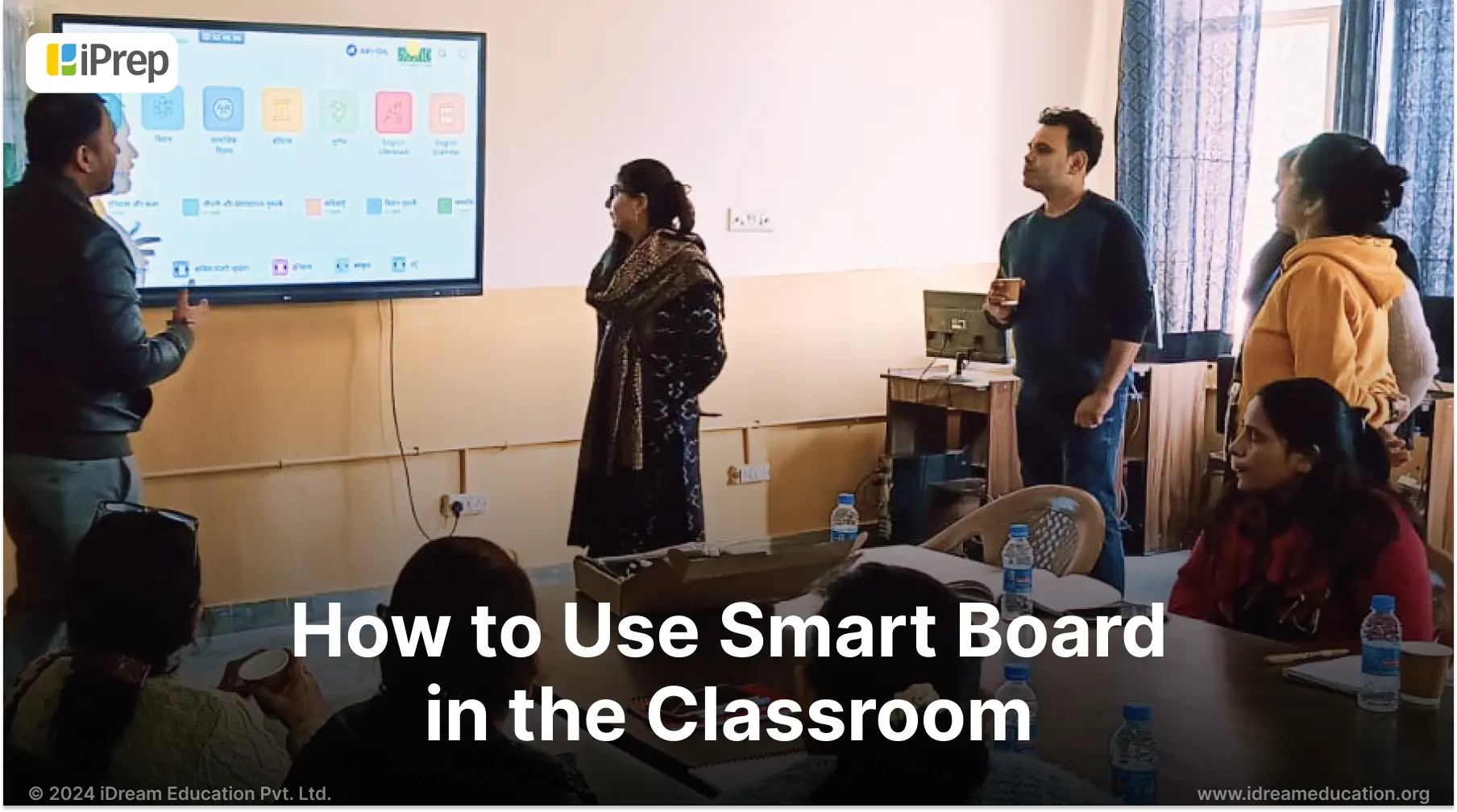
Teachers harnessing the power of a smart board in the classroom for an enhanced and interactive learning experience
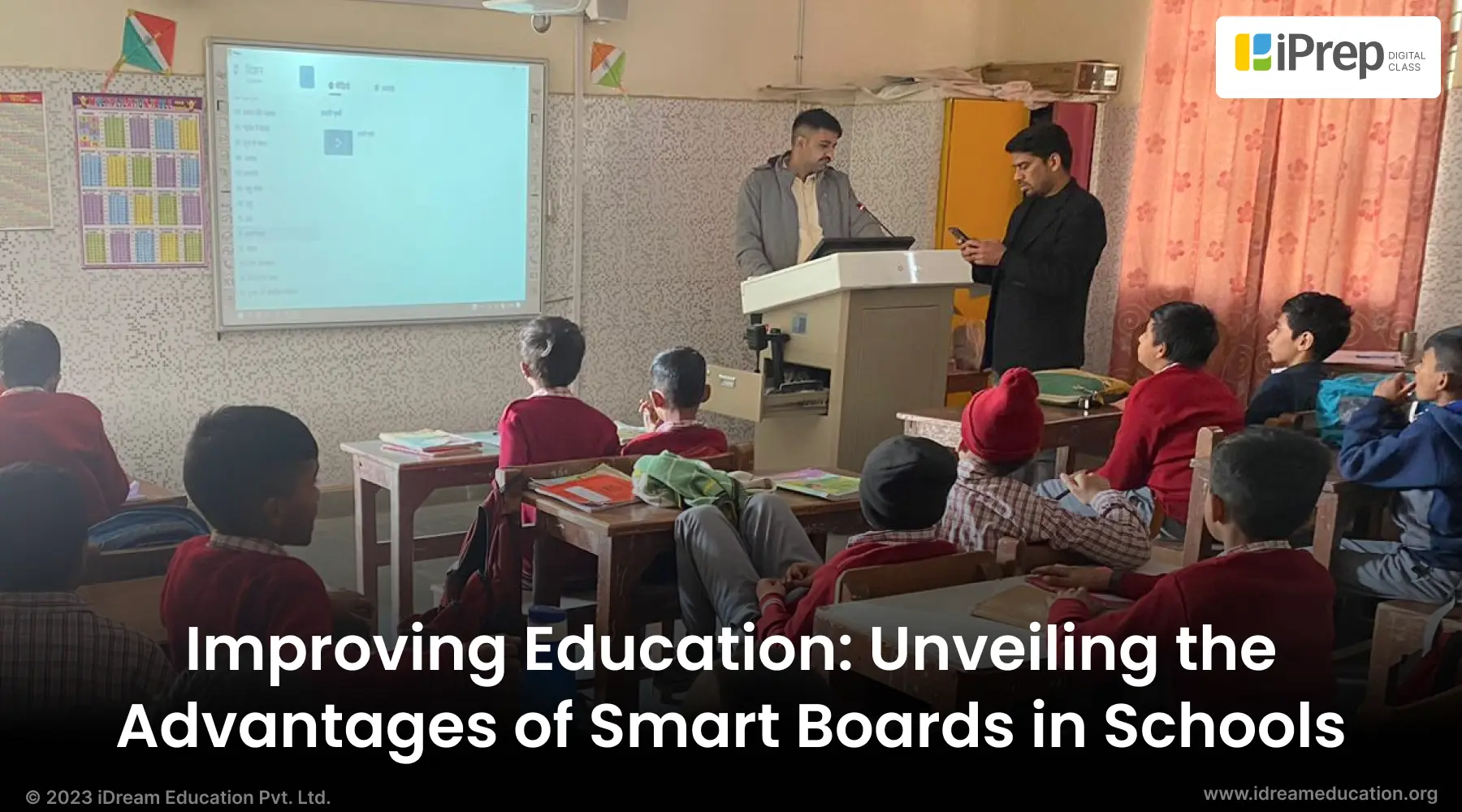
For years, a blackboard was the only prop available for teachers to teach in a classroom. Then came the whiteboard with colored pens. With time, and how it often happens technological advancements percolate and are reflected in education and learning (and rightfully so), a lot of improvements have been made in classroom teaching in schools and institutions. A Smart board for teaching in a classroom is one such technological improvement. While teachers matter as much as they did earlier, Smart boards in teaching aid teachers in explaining concepts visually while enabling interactive learning content, making the classroom experience relatively better, both for the teachers and students.
What is a Smart Board?
A Smart Board, also known as an interactive whiteboard, is a technology tool that combines a traditional whiteboard with modern interactive capabilities. It typically consists of a large touch-sensitive display surface, which can be used as a computer screen. Users can interact with the board using their fingers or a stylus, allowing them to control various applications, navigate the internet, and consume digital content in real time.
Watch the Video to Find Out Why Smart Boards Are One of the New Age Smart Class Solutions for Schools
Some Smart Board features include:
Recording a session
Creating and saving notes for later
Polls
Going live with the Class online to reach students at various locations remotely
Annotations, to explain various topics better
Collaboration by allowing multiple people to use the smart board at the same time
Zooming in (expanding) and Zooming out (reducing) content on screen
Smart Boards often come with specialized software that provides additional features, such as the ability to save and share content, create interactive lessons or presentations, and integrate with other digital tools. The goal is to enhance collaboration, engagement, and interactivity in various settings.
Smart boards with e-learning content or Smartboards with digital content such as Smartboard with iPrep digital content by iDream Education are excellent solutions that enable lesson planning, conducting classes, quizzes, revision and more.
Use of Smart Boards in teaching
Explore the key uses of a smart board in the classroom.
Given the differences between Smart Boards and Interactive Flat Panels (IFPs), here are some distinct use cases for each device in education and professional settings:
Uses of Smart Boards
1. Basic Interactive Teaching in Classrooms
Teachers use Smart Boards to write notes, solve problems, and highlight key points by interacting with the screen using pens or their fingers. Lessons can include interactive elements like dragging objects or annotating text. Do note the word ‘basic’ here. The reason is that, often misinterpreted as Interactive Flat panels, the level of interactivity offered by Smart Boards is less than that offered by Interactive Flat panels. You will be able to understand the difference better once you read through this section.
Benefit: this enhances student engagement through interactivity, making lessons more dynamic than using traditional whiteboards.
2. Digital Note-Taking and Saving Content
How it’s used: Teachers can write on the board during lessons and save the notes or content digitally. This can then be distributed to students via email or other digital platforms.
Benefit: this eliminates the need to manually copy down board notes, saving time and ensuring students have access to accurate material.
Benefit: this encourages student participation and allows for immediate feedback.
4. Integration with External Projectors
How it’s used: Smart Boards can work with projectors to display content from computers, making it useful for showing PowerPoint presentations, videos, or other learning materials.
Benefit: this makes them Cost-effective for schools that already have projector setups and want to introduce some interactivity without a major overhaul of their technology infrastructure.
5. Simple Gamified Learning Activities
How it’s used: Teachers can use interactive tools to turn lessons into games where students drag and drop items or select answers, helping with subjects like language learning or geography.
Benefit: this makes learning fun and engaging, particularly for younger students.
6. Teacher-Led Demonstrations
How it’s used: Smart Boards allow teachers to lead lessons while annotating or drawing diagrams, such as in science experiments or history timelines.
Benefit: this helps create a richer and more meaningful experience during the lecture format where teachers can visually break down complex topics in real time.
7. Interactive Storytelling
How it’s used: In elementary schools, Smart Boards can be used for interactive storytelling where students participate by dragging characters or elements into the narrative.
Benefit: Fosters creativity and involvement in the learning process, especially for younger students.
Vis a vis Smart boards, below are some of the uses of Interactive Flat panels. After going through this, you will be able to understand the advantages of Interactive Flat panels over smart boards.
1. High-Resolution Visual Learning
How it’s used: IFPs are used in classrooms to present multimedia-rich lessons, including videos, images, and presentations in high-definition or 4K quality. This is particularly beneficial for subjects like art, history, or biology, where detailed visuals are crucial.
Benefit: The experience is immersive with Crystal-clear visuals and vibrant colors enhance students’ understanding and engagement, particularly for complex visual subjects.
2. Collaborative Group Work
How it’s used: IFPs allow multiple users to interact simultaneously, supporting multi-touch gestures like pinch-to-zoom or rotating objects. Students can work in groups, brainstorming, or creating presentations together on the screen.
Benefit: This encourages collaboration and allows for group projects to be done directly on the panel, making teamwork more interactive.
3. Distance and Hybrid Learning
How it’s used: IFPs can connect to video conferencing tools like Zoom, Google Meet, or Microsoft Teams, making them ideal for classrooms or businesses where hybrid learning or meetings are common.
Benefit: this facilitates seamless remote learning or communication with external participants, making the device versatile for modern educational and professional needs.
4. Advanced Interactive Quizzes and Polling
How it’s used: Teachers create interactive quizzes, polls, or surveys directly on the IFP, with real-time student participation. Students can respond via touch or connected devices, and results are displayed instantly.
Benefit: Engages students more dynamically and provides immediate feedback, making it easier for teachers to assess student understanding.
5. STEM and STEAM Education
How it’s used: IFPs are used for interactive learning in STEM (Science, Technology, Engineering, Math) and STEAM (with Arts) subjects. The panels can run educational software, simulations, and tools that allow for hands-on learning, such as coding exercises or physics simulations.
Benefit: Enables immersive learning experiences in technical subjects, helping students grasp complex concepts through interactive exploration.
6. Corporate Presentations and Meetings
How it’s used: In corporate environments, IFPs are used in boardrooms for presentations, video conferencing, and collaborative work. Users can annotate directly on presentations, share screens, or edit documents in real time.
Benefit: Facilitates interactive and dynamic meetings, improving communication and decision-making during brainstorming sessions.
7. Touchscreen-enabled Lesson Delivery
How it’s used: Teachers or presenters use the touchscreen capabilities of IFPs to deliver lessons or presentations using digital tools, software, and apps. For instance, a science teacher might use a simulation app to demonstrate the solar system or chemical reactions.
Benefit: Integrates modern educational apps and software, giving educators a versatile tool for teaching different subjects through interactive and immersive means.
8. Interactive Workshops and Training Sessions
How it’s used: IFPs are used in both educational and corporate settings for interactive training sessions. Trainers can use the screen to explain processes, invite participants to collaborate, and share documents.
Benefit: Encourages participation, making training sessions more engaging and effective through hands-on learning.
9. Virtual Whiteboarding in Remote Collaboration
How it’s used: IFPs are ideal for virtual whiteboarding during remote meetings or online classes, where participants can draw, annotate, and brainstorm in real-time from different locations.
Benefit: Enhances remote collaboration and learning, giving remote participants the feeling of being physically present in the room.
10. Integrated Learning Management Systems (LMS)
How it’s used: IFPs can seamlessly integrate with Learning Management Systems (LMS) like Google Classroom, allowing teachers to pull assignments, lesson plans, and grades directly onto the screen.
Benefit: Streamlines class management, making it easier for educators to access and present course material, monitor student progress, and provide feedback.
Summary:
Smart Boards: Best suited for classrooms that need basic interactivity, note-taking, and cost-effective ways to engage students using projectors and external hardware. They’re a great fit for elementary to middle school settings where interactive activities and digital note-taking are essential.
Interactive Flat Panels (IFPs): Offer advanced interactivity, better display quality, and superior touch responsiveness, making them ideal for modern classrooms, STEM subjects, corporate environments, and hybrid learning scenarios. They cater to both education and business settings requiring high-resolution visuals, collaborative functionality, and integration with modern apps and software.
Each device has its place depending on the level of interactivity, image quality, and technology available in the environment, but IFPs are generally more versatile and suited for future-proofing classrooms and workplaces.
At iDream Education, we provide content for Smart Boards as well as Interactive Flat Panels. In fact many schools use Smart Boards across India, but it is important to note that Interactive Flat Panels are fast catching up to Smart Boards for teaching.
Amid dynamic shifts in the education system over the past 2-4 years, notably marked by the challenges posed by the COVID-19 pandemic, technological advancements, blended learning, and the need for local language content, the learning landscape has undergone a profound transformation. As we step into 2024, the educational narrative is woven with threads of resilience, innovation, and adaptability. This blog embarks on a journey through the trends shaping education, exploring the rise of online platforms, the surge in accessibility to education, and the impactful changes steering the course of learning and education in 2024.
In response to the global pandemic, the acceleration of online education in recent years has become not just a reaction but a change. Educational institutions worldwide have embraced technology, from digital classrooms to virtual exams. This period witnessed a boom in digital education, with advancements in video calling platforms, online exam tools, and collaborative file-sharing applications contributing to the transformative landscape of education in 2024.
However, the story goes beyond the online setting. Schools experienced a rise in distance learning, bringing education to students’ doorsteps, irrespective of geographical boundaries.
In this blog, we unravel the complexities of the past few years and delve into the multifaceted changes that will characterize education in 2024.
Trends of the Past 2-4 Years Amidst COVID-19 and the Rise of Online Education
Shifts in education during the COVID-19 era, witnessing the surge in online learning.
In response to the global pandemic, the education system witnessed an unprecedented acceleration towards online learning. What was initially a reactive measure to external challenges has evolved into a permanent fixture, fundamentally altering how we approach learning.
Acceleration of Online Education
The educational landscape has rapidly transformed due to the acceleration of online education, catalyzed by the global challenges posed by the COVID-19 pandemic. The onset of the pandemic required a swift pivot to online learning, compelling educational institutions worldwide to adopt virtual classrooms, video conferencing tools, and Learning Management Systems (LMS). This abrupt shift not only addressed immediate challenges but also underscored the long-term potential of online education, shaping the landscape of Education in 2024.
The transition from traditional classrooms to digital spaces, fueled by technological advancements, has been innovative, marking a fundamental shift in the essence of the learning experience. Institutions have not merely adapted but fully embraced the possibilities of online education, integrating innovative tools such as video calling platforms, online exams, and collaborative file-sharing applications. This transformative journey sustained education during challenging times and paved the way for a dynamic and engaging experience for education in 2024 and beyond.
Boom in Digital Education
An unprecedented surge in digital education for school students emerged in response to the global COVID-19 pandemic. As traditional classrooms shuttered due to lockdowns, educators swiftly embraced online platforms to ensure uninterrupted learning. This shift marked a seismic change, with technology becoming the cornerstone of education in 2024.
Several factors fueled this surge in digital education. Firstly, the necessity of remote learning accelerated the adoption of online tools, making them integral to the education landscape. Additionally, innovative ed-tech solutions also emerged, offering interactive and personalized learning experiences. Students now engage with immersive content, adaptive assessments, and collaborative platforms, transforming the educational paradigm.
The boom in digital education not only addressed immediate challenges but also uncovered its long-term potential. As we enter 2024, education has become deeply connected to technology, creating a dynamic and accessible learning environment for students worldwide. This transformation signifies a lasting shift towards a more connected, resilient, and tech-infused educational landscape.
New Updates and Technological Advancements
The school education landscape in the last 2-4 years has undergone remarkable advancements. One notable development is the proliferation of smart devices and the seamless integration of digital tools into learning. From interactive whiteboards to cloud-based collaboration platforms, students in 2024 now have access to diverse resources that enhance engagement and participation.
The COVID-19 pandemic acted as a catalyst for the widespread adoption of online education. Schools globally embraced learning management systems, video conferencing tools, and digital textbooks to facilitate remote learning during lockdowns. This shift ensured the continuity of education and laid the foundation for a more flexible and tech-integrated learning environment for education in 2024.
Furthermore, artificial intelligence (AI) has been pivotal in personalized learning experiences. Adaptive learning platforms analyze individual student progress, tailoring content to meet their specific needs. This customization fosters a more efficient and effective learning journey, reflecting the cutting-edge approaches to education in 2024.
In addition, cloud-based assessment tools have streamlined evaluation processes, providing instant feedback to students and educators. This real-time feedback loop enhances the learning experience and promotes a deeper understanding of the subject matter, aligning with the evolving standards of education in 2024.
Video Calling Platforms, Online Exam Platforms, and File Sharing Tools
The educational environment has seen a notable integration of video calling platforms, online test platforms, and file-sharing tools, which have had a substantial impact on how school students engage with learning. The emergence of these technologies, accelerated by the global COVID-19 pandemic, has played a pivotal role in overcoming challenges associated with remote education. Video calling platforms have become essential tools for virtual classrooms, enabling real-time interaction between students and teachers. This has provided a lifeline during school closures and social distancing measures, allowing for live lectures, Q&A sessions, and collaborative discussions, thus simulating the traditional classroom experience.
Simultaneously, adopting online exam platforms has streamlined the assessment process for students. These platforms offer secure and efficient ways to conduct exams remotely. The flexibility in scheduling exams has proven invaluable during disruptions to regular schooling, ensuring a seamless continuation of the learning process. Additionally, file-sharing tools have changed collaboration and resource access among students and teachers. These platforms facilitate the easy sharing of documents, presentations, and study materials, making the learning process more dynamic and adaptable to the evolving landscape of education in 2024.
Rise in Distance Learning at Schools
There has been a remarkable surge in the adoption of distance learning and open schooling for school students. Propelled by technological advancements, traditional educational paradigms have experienced a notable transformation. The decision to shift from physical classrooms to online and remote learning models by educational institutions worldwide reflects a dynamic change in the delivery of education. This transformation addresses not only immediate challenges but also prompts a broader reconsideration of how education in 2024 can be effectively facilitated.
Distance learning, facilitated by virtual classrooms, interactive online platforms, and digital resources, has allowed students to access educational content from the comfort of their homes. Open schooling, characterized by flexible schedules and personalized learning pathways, has gained traction as an alternative or complementary approach to conventional brick-and-mortar schooling. This trend has democratized education by reaching students in remote or underserved areas and empowered learners to tailor their educational experiences. The rise in distance learning and open schooling signifies a paradigm shift towards more inclusive, adaptable, and technology-driven landscapes of education in 2024.
Now, let’s examine the surge in education over the last 2-4 years that is expected to result in increased access to education in 2024 for everyone.
Surge in Educational Access Over the Last 2-4 Years
In the academic years spanning from 2019 to 2022, the gross enrollment ratios (GER) for primary, upper primary, and secondary education exhibited a consistent upward trend, indicative of a notable increase in access to education for people. Specifically, in the 2019-2020 academic year, the GER for primary education attained a value of 102.7%, while upper primary education recorded 89.7%, and secondary education stood at 77.9%. Subsequently, in the following academic year (2020-2021), the GER for primary education further increased to 103.3%, upper primary education rose to 92.2%, and secondary education reached 79.5%.
Continuing this positive trajectory, in the subsequent academic year (2021-2022), the GER for primary education reached 103.4%, upper primary education demonstrated a notable increase at 94.7%, and secondary education maintained an upward trend at 79.6%. These consecutive yearly increments in enrollment figures for students underscore a commendable surge in accessibility to education, reflecting the commitment towards inclusive and widespread educational opportunities.
This surge in educational access can be attributed to a multifaceted approach. Government initiatives focused on improving infrastructure, providing scholarships, and enhancing the overall quality of education have played a pivotal role. Increased awareness campaigns and community engagement programs have also contributed to breaking barriers to enrollment, especially in marginalized communities.
There’s more
Advancements in technology have facilitated distance education, leading to a notable 7% increase in enrollment in the academic year 2020-21 compared to 2019-20. The digital divide is gradually narrowing, allowing students from remote areas to participate in educational programs, further fostering inclusivity.
Moreover, targeted efforts to address the needs of children with functional needs (CWSN) resulted in a noteworthy 3.3% increase in their enrollment in the fiscal year 2022. This reflects a more inclusive educational system that accommodates diverse learning requirements.
The encouraging trend extends to declining school dropout rates for children at all levels in recent years, indicating sustained efforts to foster educational continuity and retention.
Overall, the surge in educational access is a testament to concerted efforts in policy-making. Additionally, community engagement and technological integration have played crucial roles, thus creating a more inclusive and accessible educational landscape. Furthermore, these combined efforts have not only expanded opportunities for learners but have also enhanced the overall quality of education.
Now that we have examined the data supporting the surge in educational access, it’s time to explore what education in 2024 will focus on in the next section.
Education in 2024
Education in 2024.
The year 2024 is full of possibilities, as traditional paradigms yield a more dynamic and personalized approach. In this transformative era, the emphasis is on tailoring educational experiences to individual needs, harnessing the power of technology, and fostering holistic growth. As we delve into the intricacies of contemporary education in 2024, we uncover an interconnected landscape of personalized learning, eradicating learning gaps, embracing microlearning, and seamlessly integrating technology into the very fabric of learning environments.
The days of a one-size-fits-all approach are long gone. As we enter 2024, the recognition that individuals learn in diverse ways has become more pronounced than ever. Personalized learning is the key to unlocking the unique potential within each student.
Acknowledging that one approach cannot cater to the varied learning styles, personalized learning has emerged as an educational paradigm tailored to the individual. This approach harnesses technology and innovative teaching methods to cater to diverse learning preferences, pacing, and strengths. By recognizing and adapting to the specific needs of each learner, personalized learning ensures that no one is left behind.
In 2024, the focus on personalized learning is not just a trend but a fundamental shift in education. It empowers students to take control of their learning journey, fostering a sense of ownership and engagement. Adaptive technologies, tailored content, and flexible pacing provide an environment where students thrive. Educators play a pivotal role as facilitators, guiding students through a personalized curriculum that aligns with their unique learning styles and contributing to shaping the landscape of education in 2024.
Emphasis on Holistic Growth: Beyond the Classroom
In 2024, the education landscape is witnessing a transformative shift towards recognizing the importance of holistic growth beyond the traditional confines of the classroom. Holistic development in school education transcends mere academic achievements, encompassing a child’s physical, intellectual, emotional, social, and moral facets. This approach emphasizes fostering a well-rounded individual and preparing students for the complexities of the real world.
Amid the rapidly evolving global landscape, a focus on holistic growth is necessary to equip students with the skills and resilience required for success in diverse environments. Beyond textbooks and exams, students need to develop emotional intelligence, social skills, and ethical values. By acknowledging the interconnectedness of various aspects of a child’s development, educators and parents can create an environment that nurtures academic prowess, emotional well-being, and social adaptability.
An emphasis on holistic growth in 2024 is imperative as society recognizes that academic achievements do not solely determine success. Employers and communities seek individuals with a well-rounded skill set, including adaptability, teamwork, and ethical decision-making. Schools that prioritize holistic development play a crucial role in shaping future leaders capable of navigating the complexities of an ever-changing world.
Eradicating Learning Gaps: A Non-Negotiable Mission
In 2024, education’s mission to eradicate learning gaps has become non-negotiable. Recognizing that every student deserves an equitable opportunity to thrive, there is an unequivocal commitment to closing learning gaps and ensuring no individual is left behind.
The emphasis on eradicating learning gaps in education in 2024 is crucial for several reasons. Firstly, a skilled and knowledgeable workforce is paramount in an interconnected and rapidly evolving global landscape. Addressing learning gaps is not just an ethical imperative but an economic necessity. The jobs of the future demand a well-educated and adaptable workforce, and closing learning gaps is central to achieving this goal.
Moreover, with the advancements in technology and communication, access to information has never been more democratized. Thus, there is a real possibility to eradicate learning gaps by leveraging technology. For education in 2024, adopting innovative teaching methods, personalized learning approaches, and inclusive policies is imperative to bridge these gaps. It’s a commitment to creating an educational ecosystem where students can access the tools and resources needed to reach their full potential regardless of background or circumstance. In this era, eradicating learning gaps is a goal and a mandate for a more equitable and prosperous future.
Microlearning: Bite-Sized Knowledge for Maximum Impact
There is a growing emphasis on microlearning as a powerful pedagogical tool in the educational landscape. Microlearning involves delivering educational content in small, easily digestible units, providing learners with bite-sized knowledge for maximum impact.
In today’s fast-paced world, where attention spans are shrinking and time is a precious commodity, microlearning meets the needs of learners seeking efficiency and effectiveness. The format allows for quick consumption and retention of information, making it an ideal solution for on-the-go professionals, students, and anyone with a busy schedule.
Moreover, the rise of mobile devices and digital platforms has made microlearning more accessible. Learners can engage with short, focused modules anytime, anywhere, fostering a culture of continuous learning. The approach caters to the modern learner’s preference for just-in-time information. It aligns with the principles of cognitive load theory, ensuring that learners can absorb and apply knowledge more effectively.
For education in 2024, the emphasis on microlearning is necessary to adapt to the evolving needs of learners and the changing nature of work. This approach accommodates the short attention spans prevalent in today’s society and aligns with the rapid pace of information dissemination. By providing bite-sized knowledge for maximum impact, microlearning transforms education into a flexible, adaptive, and highly efficient process, facilitating continuous learning in a rapidly changing world.
Hybrid Learning Models: Blurring Boundaries for Flexibility
As we venture into 2024, the education sector is witnessing a changing emphasis on Hybrid Learning Models, blurring the traditional boundaries between physical and virtual classrooms. However, the need for flexibility in education has become more crucial than ever, driven by many factors such as technological advancements, diverse learner preferences, and the ever-evolving global landscape.
Hybrid Learning Models seamlessly blend in-person and online components, allowing students to tailor their learning experience. This approach recognizes that individuals have different needs, and a one-size-fits-all model is no longer effective. Technology integration facilitates dynamic and interactive learning experiences, breaking away from the constraints of traditional brick-and-mortar settings.
For education in 2024, the emphasis on Hybrid Learning Models is necessary to cater to the demands of a rapidly changing world. Their flexibility accommodates various learning styles, allowing students to access resources, collaborate with peers, and engage in coursework at their own pace. Moreover, hybrid models prepare students for the digital skills required in the workforce, aligning education with the contemporary demands of a globally connected society. By blurring boundaries between physical and virtual learning environments, hybrid models create an adaptable educational framework that ensures accessibility and relevance in the years to come.
Let’s conclude
The last 2-4 years have witnessed a transformative shift in education, accelerated by the challenges of the COVID-19 pandemic. Online education has become a permanent fixture, with digital tools and advancements shaping a resilient and tech-infused learning environment for education in 2024.
The integration of video calling, online exams, and file-sharing tools has changed learning, while the rise in distance learning signals a shift towards inclusivity. The surge in educational access is evident, supported by government initiatives and technological advancements, leading to increased enrollment and reduced dropout rates.
Education in 2024 will focus on personalized learning, holistic growth, eradicating learning gaps, microlearning, and hybrid models. This transformative era underscores a commitment to creating an inclusive, adaptable, and tech-driven educational landscape, preparing students for success in a rapidly evolving global society. The threads of resilience, innovation, and adaptability continue to weave a dynamic educational narrative for the future.
Corporate Social Responsibility Initiatives that Shape the Future of India
In India, corporate entities meeting specific criteria, such as a net worth exceeding Rs. 500 crore, turnover surpassing Rs. 1000 crore, and net profit exceeding Rs. 5 crore, are mandated to allocate 2% of their average net profit from the previous three years or more to social responsibility initiatives. Notably, this regulatory framework underscores the evolving landscape of Corporate Social Responsibility initiatives, which have become integral to global corporate culture.
The increasing commitment of CSR initiatives of Indian companies reflects the heightened awareness of CSR’s pivotal role in contributing to societal well-being. This blog explores the profound significance of Corporate Social Responsibility Initiatives in the Indian corporate sector, highlighting their diverse focus areas and the potential impact they hold for the nation’s future.
Let’s first examine what Corporate Social Responsibility Initiatives are.
What are Corporate Social Responsibility Initiatives
Corporate Social Responsibility (CSR) refers to a business practice that involves companies taking responsibility for their impact on society beyond their primary goal of maximising profits. Corporate Social Responsibility Initiatives are specific actions and programs that companies undertake as part of their CSR strategy. These initiatives are designed to address and mitigate the company’s impact on various stakeholders, including employees, customers, communities, and the environment.
Corporate Social Responsibility initiatives go beyond legal compliance and aim to make a positive difference in areas such as social welfare, environmental sustainability, and ethical business practices. Additionally, these initiatives are crucial for fostering a sense of corporate responsibility.
They contribute to the broader goal of sustainable development and, consequently, are essential for businesses striving to align with evolving societal expectations. Moreover, as businesses increasingly recognise the interconnectedness of their operations with social and environmental concerns, these initiatives play a pivotal role in shaping a more responsible and sustainable corporate landscape.
Key Components of Corporate Social Responsibility Initiatives
Environmental Sustainability:
Businesses must embrace eco-friendly procedures, encourage energy efficiency, and lessen their carbon impact. This can entail establishing sustainable & environment-friendly supply chain methods, cutting waste, and employing renewable energy sources.
Social Welfare:
Corporate Social Responsibility Initiatives frequently centre on helping the community in which they operate by partnering with nonprofits, making charitable contributions, and carrying out community development projects. This can involve providing financing for projects aimed at reducing poverty, healthcare efforts, and educational activities.
To make these initiatives truly effective, a trusted CSR Implementation Partner ensures that resources are channelled transparently, managed responsibly, and translated into sustainable on-ground impact.
Employee Well-being:
Programs that improve employees’ well-being, such as employee volunteer programs, diversity and inclusion initiatives, and health and wellness programs, can be included in corporate social responsibility initiatives.
Stakeholder Engagement:
Businesses interact with stakeholders to learn about their issues and incorporate their inputs into their CSR initiatives. This ensures that the programs resonate with the needs of the stakeholders, addressing the issues that are most important to them.
By emphasising these Corporate Social Responsibility initiatives, companies can contribute to a more sustainable and responsible business environment, demonstrating a commitment to social and environmental concerns beyond the pursuit of financial gains.
Let’s now look at the significance of Corporate Social Responsibility Initiatives.
Why are Corporate Social Responsibility Initiatives Important?
The Impact of Corporate Social Responsibility Initiatives in India.
Corporate Social Responsibility initiatives play a crucial role in addressing societal and environmental challenges, offering several compelling reasons for their importance:
Augmenting Government Efforts:
The sheer size of India’s population presents a daunting challenge for the government to meet all the diverse needs and address various issues comprehensively. Corporate Social Responsibility initiatives act as valuable supplements to government efforts. Moreover, by actively participating in social and environmental causes, companies can efficiently contribute to initiatives such as education, healthcare, and poverty alleviation, thereby alleviating the burden on the government and synergising with the Government for greater impact.
Addressing Resource Constraints:
With limited government resources, Corporate Social Responsibility initiatives become instrumental in mobilising additional funds and resources to tackle pressing issues. Through their Corporate Social Responsibility initiatives, companies can bridge gaps in essential services and infrastructure, fostering sustainable development in areas where resources may be scarce.
Social Reciprocity
Corporate Social Responsibility initiatives embody a sense of social reciprocity. Companies derive their success and profitability from the society in which they operate. By giving back through Corporate Social Responsibility initiatives, businesses acknowledge their indebtedness to the community. It is a way of returning the financial gains earned from customers, expressing a commitment to the well-being of the very people who contribute to the company’s prosperity.
Innovation
Corporate Social Responsibility initiatives help breed & foster innovation. Innovative practices and breakthroughs of various Corporate Social Responsibility initiatives have led to significant impact while also creating replicable and scalable models for the future and for others to adopt, leading to a much wider impact than the initiative itself. This is possible due to the focus these initiatives bring due to the involvement of expertise, resources and skills that are unique to these different organisations. Often, it is seen that organisations leverage their R&D, product/products, reach, networks, customers, and stakeholders in positively carving out great social outcomes. Shared value partnerships, gift-in-kind, and product integrations are just some examples of innovative CSR practices.
Environmental Stewardship
Many large manufacturing companies contribute to environmental challenges through carbon emissions and other ecological impacts. Corporate Social Responsibility initiatives, in such cases, involve proactive steps to mitigate these negative effects. Companies are increasingly recognising their environmental responsibilities and are implementing initiatives to reduce carbon footprints, conserve resources, and promote sustainable practices.
In short, Corporate Social Responsibility initiatives are crucial for several reasons. They complement government initiatives in a country with a large population, address resource constraints, foster social reciprocity by returning profits to the community, and tackle environmental challenges created by business operations. As companies actively engage in Corporate Social Responsibility initiatives, they contribute not only to their own sustainability but also to the broader well-being of society and the environment.
Creating Jobs and Community Mobilization & Behavior Change
Many Corporate Social Responsibility initiatives have been found to create jobs within communities or at large. These jobs are also sustainable and bring long-term livelihood in the targeted communities, initiating a chain reaction that eventually leads to better education, healthcare, and infrastructure in these communities, helping them break the intergenerational chain of poverty and social stereotypes, influencing behaviour change, and improving social equity.
Now, let’s look at how CSR Initiatives are shaping the future of India in the next section.
How Are Corporate Social Responsibility Initiatives Shaping The Future Of India?
The allocation of substantial financial resources towards Corporate Social Responsibility initiatives in recent fiscal years underscores the potential impact these initiatives can have on shaping the future. According to the National CSR Portal and the Ministry of Corporate Affairs in the financial year 2022-23, an expenditure of INR 29,986.92 crore was reported. Notably, a substantial portion, INR 10,085 crore, was directed towards educational initiatives during the fiscal year 2022-23. This significant CSR funding for education demonstrates how companies doing CSR in education are prioritising long-term societal impact through learning and skill development.
These significant financial allocations signify a commitment to Corporate Social Responsibility initiatives, with a focus on fostering positive societal change. The notable expenditure in the education sector, among others, underscores a strategic investment in initiatives that directly impact the future. Education, skills development, rural development, community development, and environmental sustainability initiatives have emerged as key focal points for CSR investments.
CSR initiatives can’t overstate the potential transformative impact on the future. Educational initiatives, when adequately funded, contribute to the development of a skilled workforce, thereby influencing the socio-economic landscape. Similarly, investments in skills development not only enhance employability but also contribute to the overall progress of the nation. Where to spend CSR budget often becomes the defining choice that decides how far the impact will reach. Furthermore, rural development initiatives, including infrastructure projects, hold the promise of bridging urban-rural disparities and fostering inclusive growth. Additionally, by addressing these aspects of social responsibility, corporations play a pivotal role in shaping a sustainable and equitable future.
Furthermore
Community development initiatives and environmental sustainability projects are critical components of CSR that, if prioritised today, can yield long-term benefits for society. Ethical business practices and responsible sourcing are integral to CSR, fostering a sustainable and ethical business environment.
The potential for shaping the future lies in the efficacy and impact of CSR initiatives. Consequently, design these initiatives with a focus on measurable outcomes and demonstrable effectiveness. By strategically directing CSR investments into initiatives that address pressing societal needs and challenges, corporations have the opportunity to contribute significantly to the betterment of society and shape a more sustainable and equitable future.
Types Of Corporate Social Responsibility Initiatives That Have The Potential To Shape The Future
Various Corporate Social Responsibility initiatives with the potential to shape a brighter future.
CSR initiatives play a crucial role in shaping a more sustainable and socially responsible future. Various types of CSR initiatives have the potential to make a significant impact on society and the environment.
Rural Development
CSR initiatives focused on rural development aim to uplift and improve the quality of life in rural areas. Companies can contribute by investing in infrastructure development and supporting rural education programmes by NGOs in underserved areas. This can include building roads, providing access to clean water, and facilitating skill development programs for the rural population. By empowering rural communities, businesses not only contribute to societal development but also create potential markets for their products and services. Furthermore, these efforts align with broader sustainable development goals.
According to the Ministry of Corporate Affairs, in the financial year 2021-22, a noteworthy commitment was made to this cause, as evidenced by a total expenditure of 1801.43 Crore INR. This substantial investment highlights the corporate sector’s dedication to fostering positive change in rural areas, showcasing the potential impact of CSR initiatives on shaping the future. Moreover, such financial commitments not only demonstrate social responsibility but also deepen the significance of collaborative efforts between businesses and communities to drive sustainable development.
Health and sanitation
Health and sanitation initiatives are crucial for ensuring the well-being of communities. Companies can engage in CSR activities that focus on improving healthcare infrastructure, conducting health awareness programs, and supporting sanitation projects. This may involve building healthcare facilities, providing medical equipment, and organising health camps. Additionally, promoting hygiene and sanitation practices helps prevent the spread of diseases, contributing to the overall health and productivity of the community.
In the financial year 2021-22, a notable investment of 7937.66 Crores was dedicated to health and sanitation initiatives. This substantial expenditure reflects a commitment to making a positive impact on public health and emphasises the corporate responsibility towards community well-being. Such significant financial contributions demonstrate the potential for corporate social responsibility to shape the future by addressing critical issues and fostering sustainable development.
Gender-Wise Occupational Redistribution (GWOR):
GWOR initiatives aim to address gender disparities in the workplace. Companies can promote diversity and inclusion by implementing policies that ensure equal opportunities for all genders. Additionally, this may include initiatives to recruit, retain, and promote women in leadership positions, as well as creating a workplace culture that values and supports diversity. By fostering a gender-inclusive environment, businesses contribute to a fair and balanced society while harnessing the full potential of their workforce. Transitioning to the financial aspect, according to the National CSR Portal, in the financial year 2021-22, the total expenditure for GWOR initiatives amounted to 707.18 Cr. Furthermore, this showcases the commitment of the companies to creating a more equitable and inclusive workplace.
Environmental sustainability programs
With increasing awareness of climate change and environmental issues, businesses are increasingly adopting CSR initiatives focused on sustainability. These programs may involve reducing carbon emissions, implementing energy-efficient practices, and supporting conservation efforts. Additionally, companies can also invest in eco-friendly technologies, promote recycling, and participate in reforestation projects. By prioritising environmental sustainability, businesses play a crucial role in mitigating the impact of climate change and preserving natural resources for future generations. Moreover, in the financial year 2021-22, a total expenditure of 2366.15 was dedicated to these initiatives.
Education Initiatives
Education initiatives represent one of the most impactful areas of CSR in education, as they possess the potential to shape the future. Additionally, companies can create a lasting impact by supporting educational institutions through diverse channels, with emphasis on foundational literacy and numeracy development. Furthermore, embracing technology-driven educational initiatives, such as a digital library for schools, adds another layer to their commitment. Moreover, the integration of these innovative approaches not only enhances educational accessibility but also aligns with the evolving demands of the digital era.
Some of the Best CSR Programmes are those that focus on education, blending traditional support like scholarships with modern, technology-driven solutions that prepare students for the future.
In the financial year 2021-22, dedicated investment in education initiatives amounted to 6549.15, underscoring a steadfast commitment to contributing to societal development through education.
iDream Education has played a crucial role in facilitating such education initiatives that aligns with the National Education Policy 2024 frameworks. Our strategic partnerships with CSR leaders like Cipla and Samsung have proven instrumental in elevating these initiatives.
With our collaborative partnerships with NGOs working for education, we successfully implemented our solutions, iPrep Digital Class, iPrep Digital Library, and iPrep Tablets. Notably, we placed a strong emphasis on the enhancement of students’ employability as a strategic approach to breaking the poverty chain. Additionally, our focus on employability aligns with broader goals of fostering sustainable development and economic empowerment.
Through collaborative efforts with Cipla and Samsung, our focus extended beyond mere implementation to delivering demonstrable outcomes. This has proven crucial in showcasing the efficacy of our initiatives.
Additionally, our support extended to aiding these companies in effectively presenting their impact assessments, whether to the government or other relevant stakeholders. This comprehensive approach ensures transparency and accountability following impact assessment rules for CSR in India. Consequently, it ultimately amplifies the positive effects of educational initiatives.
Let’s Conclude
In conclusion, the increasing commitment of Indian corporations to CSR initiatives reflects a transformative shift in their role toward societal well-being. Moreover, the mandated allocation of profits towards CSR, along with substantial financial commitments, enhances the pivotal role of these initiatives in shaping India’s future. Notwithstanding these advancements, it is crucial to recognise that the journey towards corporate social responsibility is ongoing; consequently, further efforts are imperative to ensure sustained positive impact.
iDream Education has emerged as a trusted partner for companies doing CSR in education, facilitating strategic partnerships with CSR leaders like Cipla and Samsung.
CSR initiatives, spanning diverse areas like rural education programmes by NGOs, Rural CSR programmes, health, gender equality, environment, and education, serve as powerful instruments for positive change. The investments made in recent fiscal years demonstrate a genuine dedication to addressing societal issues and fostering sustainable development.
Through strategic and collaborative CSR, businesses are actively shaping a future marked by social progress, environmental sustainability, and inclusive growth in India.
The future of CSR in India is shaped by three key trends: tech-driven sustainable solutions, collaborative efforts with NGOs and communities, and strategic alignment with core business operations. These insights are drawn from the 2023 FICCI report, emphasising the need for a strategic CSR approach for inclusive and sustainable development.
2. Why is corporate social responsibility important in India?
India faces extensive social and environmental challenges that require proactive solutions. Corporate Social Responsibility plays a crucial role in bridging gaps in education, healthcare, and sustainability. It fosters inclusive growth, builds brand trust, and attracts skilled talent, ultimately benefiting both society and businesses.
3. What is the impact of CSR on the Indian economy?
Corporate Social Responsibility positively impacts the Indian economy through community development, job creation, and fostering a skilled workforce. By investing in education and healthcare, CSR enhances human capital, contributing to long-term economic growth. Moreover, environmental sustainability initiatives ensure resource preservation, benefiting both businesses and the nation’s economic interests.
4. What are the types of CSR in India
CSR initiatives in India encompass a broad spectrum, addressing pivotal areas such as education, healthcare, poverty alleviation, environmental sustainability, skill development, and gender equality. From building schools and healthcare facilities to promoting renewable energy and supporting women’s empowerment, these multifaceted initiatives contribute significantly to fostering a positive societal and environmental impact.
5. What is the CSR initiative in India?
A CSR initiative in India refers to a company’s voluntary activities addressing social and environmental issues, aligned with the principles outlined in Schedule VII of the Companies Act, 2013.
6. Which companies are required to undertake CSR activities in India?
Companies with a net worth of INR 500 crore or more, a turnover of INR 1,000 crore or more, or a net profit of INR 5 crore or more during the financial year are required to spend on CSR activities.
7. How much should a company spend on CSR activities?
As per the Companies Act in India, companies must allocate a minimum of 2% of their average net profits over the three immediately preceding financial years for Corporate Social Responsibility (CSR) activities. It is crucial to highlight that this requirement represents a baseline, and companies are urged to allocate additional funds if possible. This alignment with their commitment to social and environmental responsibility provides flexibility, enabling companies to amplify their impact and make substantial contributions to the communities and causes they support.
8. What are the future trends in Corporate Social Responsibility spending in India?
Predictions indicate a continued increase in spending on Corporate Social Responsibility (CSR) in India as companies recognise the growing importance of social and environmental responsibility. Future trends point towards a shift to innovative technology-driven solutions, alignment with UN Sustainable Development Goals, and partnerships for greater impact and inclusivity. India’s CSR landscape is transforming into a strategic driver of positive change, promising a more sustainable and equitable society.
9. What are the emerging areas for CSR initiatives in the future?
Future CSR initiatives focus on digital literacy, renewable energy, and climate change, aligning with UN SDGs. A 2023 UNESCO report notes that 47% of the global population lacks digital skills. IPCC warns of consequences beyond 1.5°C, urging renewable energy investments. The 2023 Global Sustainable Development Report highlights stalled SDG progress. In India, IAMAI reports that 45% of the population lacks internet access, emphasising the need for tailored initiatives. CSR addresses global challenges, benefits society, enhances corporate reputation and contributes to long-term value.
10. How is CSR spending expected to evolve in India in the coming years?
Corporate Social Responsibility (CSR) spending in India is projected to experience significant growth in the coming years, fueled by an evolving corporate landscape and a rising focus on environmental, social, and governance (ESG) factors. Data from a 2023 report by Grant Thornton estimates that India’s CSR in the education sector will surpass INR 25,000 crore by 2025, representing a 30% increase from 2022. This upward trend reflects growing corporate profits, a stronger commitment to responsible practices, and the increasing influence of ESG principles among investors and consumers.
11. In which sectors is the most significant growth in CSR spending anticipated?
Future CSR spending is expected to notably increase in sectors related to climate action, education, renewable energy, and technology-driven solutions. A recent report by GlobalGiving forecasts that CSR spending in the clean energy sector alone will reach $150 billion by 2025, marking a 50% increase from 2023. This data, combined with India-specific insights from reports like CEEW and Grant Thornton India, underscores the rising importance of climate action and sustainable development, emphasising substantial investment potential in these areas.
iPrep PAL: Tailoring Education for Diverse Learning Styles of Students.
Every student is unique and possesses a diverse array of learning styles and preferences. The pace of learning for every child also differs. Some grasp new concepts swiftly, while others benefit from an unhurried approach. Some students resort to rote learning to cope up with academic demands, while others insist on the deeper understanding that comes with conceptual clarity. Recognizing and embracing this diversity is not just an educational virtue; it’s a necessity.
Teachers stand at the intersection of this diversity, charged with the monumental task of not just imparting knowledge but tailoring their methods to meet the distinct needs of every learner. This blog explores the important role of personalized adaptive learning in navigating the complex landscape of diverse learning styles of students and creating an inclusive and effective educational environment where every student can thrive.
Now, let’s delve into the causes behind the different learning styles of students.
What are the Factors Influencing the Diverse Learning Styles of Students?
Exploring the Diverse Roots of Learning Styles of Students
The diverse learning styles observed among students can be attributed to many factors, each shaping how individuals engage with and absorb information. Let’s explore these causes in detail:
Socio-economic Background of the Student
Socioeconomic status and family environment are important factors contributing to diverse learning styles of students. The economic context in which a student grows up significantly affects the availability of educational resources and opportunities. Within the family unit, parental involvement in education plays a crucial role in shaping a student’s attitude toward learning. Supportive family environments often cultivate a positive approach to education.
The language spoken at home and a student’s proficiency in that language are also influential factors. Proficiency in a particular language can impact student’s comfort level with certain subjects and instructional methods, influencing their learning styles.
Past Experiences of the Student
Students’ past experiences serve as a significant determinant in shaping their learning styles. Whether characterized by positive or negative elements, these experiences contribute to forming preferences, attitudes, and approaches to learning. Students who have encountered positive educational experiences are inclined to develop a favorable attitude toward education.
Such positive encounters foster an open-minded and explorative approach to learning, thereby contributing to developing a more adaptive and versatile learning style. Conversely, negative experiences may lead to avoiding specific subjects or a preference for instructional approaches that align better with individual inclinations. Individuals who face consistent challenges, criticism, or unsupportive learning environments may develop a reluctance to engage with certain subjects.
The instructional methodologies teachers employ in a student’s prior educational experiences substantially influence their learning preferences. Success or challenges encountered in particular subjects can significantly shape the learning styles of students. The outcomes of these experiences often manifest as variations in learning styles across different subjects.
Information Consuming Patterns
Information-consuming patterns are a pivotal determinant contributing to the different learning styles of students. These patterns delineate how students assimilate, process, and retain information, thereby playing a crucial role in shaping an individual’s preferred approach to learning.
Students manifest varying preferences in their information-consuming patterns, with some inclining towards rote memorization while others emphasize conceptual understanding. Additionally, each student possesses unique ways of learning, and their pattern may align with distinct modalities such as visual or auditory.
Visual learners tend to comprehend concepts expeditiously through visual aids, such as videos or graphical representations, while auditory learners derive understanding through listening. Further, the approach to problem-solving and assessments varies among students. Some students prefer direct engagement with problem-solving activities to foster comprehension, while others lean towards structured assessment modules, providing a systematic overview of the subject matter.
Introvert vs Extrovert Dynamic
The dynamics of introversion and extroversion are an important determinant contributing to the different learning styles of students. Introverted students typically manifest a preference for solitary and independent learning environments. Thriving in quiet settings, they favor individual study sessions and are inclined to learn and reflect. In contrast, extroverted students thrive in socially interactive learning environments, deriving enjoyment from group discussions, collaborative projects, and active engagement with peers to augment their understanding.
Extroverts find verbal communication and active participation in class activities encouraging and advantageous to their learning experience. Conversely, introverted learners may be more reserved in expressing ideas or seeking clarification within group settings. They often favor the expression of their thoughts through writing, a method that allows for the deliberate and thoughtful articulation of ideas.
Recognizing and accommodating these divergent dynamics is pivotal for teachers, enabling the creation of a learning environment that caters to the different learning styles of students, both introverted and extroverted.
Technological Exposure
Technological exposure significantly influences the different learning styles of students, distinguishing between digital natives and immigrants. Digital Natives are the people who grew up using technology, like smartphones and computers, from a young age. It’s like second nature to them because they’ve always had it around. Digital immigrants are the people who didn’t grow up with technology and had to adapt to it later in life. It’s not as natural for them, and they must learn how to use it.
Those well-versed in technology often prefer online resources, multimedia learning, and collaborative digital tools. Their adoption of e-learning platforms and preference for problem-solving through technology shape their independent and technology-driven learning styles. Recognizing these preferences is essential for teachers, as it allows for integrating technology into teaching methods, creating a more inclusive and effective learning environment that aligns with the expectations and experiences of technologically immersed students.
Understanding and appreciating the factors influencing the diverse learning styles of students is the first step toward creating an inclusive educational environment that caters to the individual needs of each learner.
Now, let’s look at how an approach like personalized adaptive learning helps the diverse learning styles of students.
How Can a Personalized Adaptive Learning Approach Help?
Unlocking Potential: A Visual Guide to Personalized Adaptive Learning Tailored to Diverse Learning Styles of Student
A personalized adaptive learning approach is a valuable strategy to address the diverse learning styles of students. This approach recognizes that students have unique backgrounds, experiences, and preferences, tailoring education to meet individual needs. By considering factors such as cultural background, socioeconomic status, and family environment, personalized adaptive learning ensures that the learning experience is relatable and meaningful for each student.
Tailored Education for Learning Needs Arising From Diverse Student Backgrounds
Personalized adaptive learning is an innovative teaching approach that tailors the curriculum to each student’s unique background. A study by EdTech Review revealed that students using personalized learning technology had a retention rate of 15-20% higher and a satisfaction rate of 20-25% higher than students using traditional instructional methods. According to the same study, attendance rates were 10-15% higher.
To comprehend the unique needs, interests, and learning styles of students, this approach leverages innovative technology and data analytics. Teachers can create a more inclusive and productive learning environment by using this data to dynamically modify educational materials, pacing, and assessment techniques. This adaptive method enables students from different backgrounds, with varying learning styles and cultural contexts, to receive customized support that enhances their engagement, understanding, and overall academic performance.
Personalized Adaptive Learning Catering to Learning Attitudes Influenced by Past Experiences of Students
Adaptive learning that caters to students’ learning attitudes influenced by their past experiences is a personalized educational approach. This method recognizes the significance of each student’s unique learning history and tailors the learning experience to accommodate their diverse past experiences. By leveraging advanced technology and data analytics, this approach identifies individual learning styles, taking into account the varied academic backgrounds and experiences of the students.
Customization of exams, pacing, and learning materials based on individual profiles allows educators to create a responsive and inclusive learning environment. This personalized approach ensures that students with different prior experiences receive targeted support aligned with their preferred learning methods. The emphasis on understanding and adapting to a variety of learning methods enables the establishment of a more efficient and customized educational path for every student.
Accommodating Different Information-Consuming Patterns
Personalized adaptive learning, designed to accommodate diverse Information-consuming patterns, represents an innovative educational approach that recognizes the importance of individualized learning styles of students. Leveraging advanced technology and data analytics, this methodology identifies and adapts to students’ unique ways of consuming information, whether through visual, auditory, or kinesthetic modalities. By tailoring instructional content, pacing, and assessments based on these distinct patterns, educators create a more responsive and engaging learning environment. This approach ensures that students with different information-consuming preferences receive targeted support, enhancing their comprehension and retention.
Solving the Introvert vs Extrovert Dynamic
Personalized adaptive learning is a forward-thinking educational strategy that acknowledges the diverse learning styles of students. By incorporating advanced technology and data analytics, this approach discerns individual preferences related to introverted or extroverted tendencies. According to Carnegie Mellon University, students using personalized learning technology showed an average engagement increase of 10-20% compared to those using traditional instructional methods.
The University of Illinois found that these students demonstrated an average improvement of 8-11% in learning outcomes. Irrespective of whether a student is introverted or extroverted, a personalized learning platform such as iPrep PAL can diagnose their learning levels accurately. The diagnostic process of iPrep PAL does not involve group activities or judgment. Instead, it dynamically increases difficulty and administers diagnostic tests tailored to individual learning levels. This allows introverted students to take the tests in their personal space, and iPrep PAL subsequently creates a learning path based on their performance. There is no requirement for students to engage in group activities or perform in front of others.
Catering to Students with Differing Levels of Technological Exposure
By leveraging advanced technology and insightful data analytics, personalized adaptive learning discerns individuals’ preferences and comfort levels with various technological tools and platforms. In a separate study at the University of Texas, students using adaptive learning technologies received feedback 3-5 times more frequently and accurately than those using traditional instructional methods.
Subsequently, instructional content, interactive elements, and assessment methods are dynamically adjusted to align with each student’s technological background. Recognizing and accommodating these technology-related learning styles fosters a more inclusive and effective educational experience, meeting students at their comfort levels and facilitating the seamless integration of technology into their learning journey.
In short, a personalized adaptive learning approach is designed to meet students where they are, considering their strengths and preferences. By understanding and appreciating the diverse learning styles of students, teachers can create a more inclusive and effective learning environment that empowers students for success.
Now, let’s look at how iPrep PAL caters to personalized adaptive learning for diverse learning styles of students in the following section.
How iPrep PAL Facilitates Personalised Adaptive Learning?
iPrep PAL, an innovative learning solution, stands out for its commitment to catering to the diverse learning styles of students through a forward-looking and personalized adaptive learning approach. This multifaceted strategy ensures that each student’s unique preferences are considered, fostering an engaging and effective educational experience.
To begin with, iPrep PAL recognizes and accommodates the varied learning styles of students by customizing content delivery based on individual needs. Whether a student benefits from hands-on activities or visual aids or prefers conceptual understanding over rote memorization, iPrep adapts its approach accordingly. This flexibility empowers students to learn in a way that aligns with their strengths, creating a more personalized and meaningful learning journey.
What’s More?
Moreover, iPrep PAL embraces diverse information-consuming patterns by offering a range of modalities, including visual and auditory learning tools. Whether a student leans towards rote memorization or prefers a more conceptual understanding, the platform caters to these preferences. Additionally, iPrep PAL recognizes mastery levels, allowing students to progress when they have demonstrated a solid understanding of a topic, avoiding unnecessary repetition for those who have already mastered certain concepts.
To understand the dynamics of introversion and extroversion, iPrep PAL provides opportunities for independent study and collaborative activities. Acknowledging different learning environments ensures a more inclusive and accommodating educational experience.
Taking advantage of technology, iPrep PAL engages students by integrating online resources, multimedia learning tools, and collaborative digital features. This tech-savvy approach considers the influence of technological exposure on learning styles, aligning the platform with the expectations and experiences of technologically immersed students.
In essence, iPrep’s personalized adaptive learning approach is a comprehensive solution considering individual strengths, preferences, and technological influences. By tailoring content delivery, addressing diverse learning styles of students, and leveraging technology, iPrep creates an inclusive and effective learning environment that empowers students for success in their educational journey.
Let’s Conclude
Learning encompasses diverse styles and preferences. This piece explores the factors influencing these differences, such as socioeconomic background, past experiences, information-consuming patterns, personality, and technological exposure.
Recognizing this diversity, personalized adaptive learning emerges as a crucial strategy. This approach tailors education to individual needs, accommodating various information-consuming patterns and leveraging technology effectively. iPrep PAL exemplifies this approach, adapting content delivery, recognizing mastery levels, and providing opportunities for independent and collaborative learning.
Personalized adaptive learning is the key to creating an inclusive educational environment. By understanding the diverse learning styles of students and leveraging technology intelligently, iPrep PAL facilitates a purposeful and successful educational path by enabling students to achieve mastery over any subject or concept.
The iPrep Climate Action and Education Course comprehensively addresses sustainability, energy, and climate change. It elucidates the global impacts of climate change and guides assuming a leadership role in climate action and education. Through instructional videos, the course facilitates effective learning. It also highlights stories of climate leaders, offering practical insights.
The curriculum extends to measuring and mitigating carbon footprints, exemplified with examples. Students are equipped with actionable strategies to become climate leaders through education by modifying their daily behaviors, thereby contributing to mitigating environmental hazards.
Students engaged in climate action and education through the iPrep platform, bridging knowledge with technology for a sustainable future.
Climate Action and Education Through Social Media
Social media platforms are a hub of stories of organizations passionately engaged in preserving our planet through initiatives such as waste management and cleanliness drives. It’s heartening to witness a collective awakening—a stark contrast to past ignorance.
Social Media is a clear indicator that digital education on climate change has seeped into our collective consciousness, compelling individuals to take proactive steps toward sustainability.
Amidst this Wave,
iPrep by iDream Education has also taken a step to educate students about sustainability through its climate action course.
iPrep, a one-stop learning platform by iDream education, introduces a pioneering climate action course addressing the urgency of environmental education.
This initiative goes beyond traditional subjects, instilling responsibility and awareness among students. It emphasizes the cause-and-effect relationship between individual actions and environmental impact, in line with the idea that learning should be about comprehension rather than force, said Vishal Goswamy, Assistant Director of Marketing and Growth at iDream Education.
By fostering comprehension, iPrep encourages sustainable practices and shapes environmentally conscious leaders. This approach recognizes that students embrace change when they understand its necessity. The climate action and education with iPrep will help raise a generation of responsible students who will contribute to a sustainable future.
iPrep as a Driver for Navigating Climate Action and Education
iPrep’s climate action course delves into sustainability by offering chapters on various forms of energy, their objectives, and their importance. It also offers content on climate change, such as how deforestation and greenhouse gases elucidate the causes and repercussions of human activities on the environment.
The course also teaches us why climate change happens through examples such as wasting food, creating a lot of waste, and more. It further guides how to protect the climate by measuring carbon footprint, with examples. Lastly, the course summarises the ways to protect against climate change, like using less energy and reducing waste. The comprehensive climate action course is curated to guide every student to become a climate leader.
This course is curated to enable students to comprehend how climate change impacts the environment and sustainability. The course introduces a commitment to climate action and education, enabling the holistic growth of students from an early age.
What makes the iPrep Climate Action Course distinct?
Visual overview of unique aspects in iPrep climate action and education course
Within the course, students delve into their daily activities impacting climate health.
Stories of climate leaders such as Xiuhtezcati Martinez and Nyombi Morris Ugandan and their efforts to safeguard climate change.
Students are guided to calculate and minimize their carbon footprint.
Students are taught ways to become climate leaders by rectifying their daily actions, leading to environmental hazards.
The bite-size animated videos in the climate action course on iPrep not only enhance their comprehension of climate-related issues but inspire them to become advocates for change.
We at iDream Education emphasize imparting knowledge and focusing on instilling a sense of responsibility, cultivating a new generation of climate-conscious leaders poised to make a tangible impact on the world.
How to start learning about climate change with iPrep?
1) To begin learning about climate change on iPrep, visit learn.iprep.in.
2) There, you can log in using your Google ID, Apple ID, or mobile number.
3) Once logged in, choose your board and preferred language. Fill in your basic details, including your name, email, and class. You will be directed to the home page after completing these details.
4) On the home page, find the ‘MORE’ option on the right side and click on it.
5) In the menu that appears, select ‘Environment.’ Within the environment section, you’ll find content on climate change. iPrep offers a 7-day free trial to explore the full content.
6) After the trial period, you can choose between a monthly or annual subscription for continued access.
Embrace the Advantages of Smart Boards in Schools for an Interactive and Engaging Learning Experience
A major factor in the change in the education landscape is the way that technology has reshaped conventional teaching strategies. The use of Smart Boards in classrooms is one of the most noteworthy innovations of recent years. These interactive whiteboards are more than just digital chalkboard replacements; they are useful tools that provide many kinds of benefits to teachers and students alike. The advantages of smart boards in schools are undeniably promising and are compelling enough for a school to be unable to oversee them.
A Smart Board, also known as an interactive whiteboard, is an advanced technological tool utilized in educational and business settings. It seamlessly combines the functionality of a traditional whiteboard with the interactivity of a computer. Typically, a Smart Board consists of a large touch-sensitive display surface connected to a computer and a projector.
In the educational landscape, Smart Boards serve as smart class solutions, where teachers employ them as a digital replacement for the blackboard. But how will a Smart Board benefit a classroom in terms of teaching and learning? What benefits do they bring to teachers, students, and school administrators?
Let’s delve into the advantages of smart boards in schools further in this blog post.
Unlocking Educational Excellence: Exploring the Advantages of Smart Boards in Schools for an Interactive Learning Experience
Advantage 1 – Make learning more interesting for school students
The advantages of smart boards in schools are multifaceted, with one notable benefit being their capacity to make learning more captivating and engaging for students. Smart boards transcend traditional teaching methods by incorporating interactive and dynamic features that stimulate students’ interest and participation in the learning process. These technologically advanced tools enable educators to seamlessly integrate multimedia elements, such as videos, animations, and interactive applications, into their lessons, transforming the classroom into an interactive hub of knowledge. As students interact with the content displayed on the smart board, they are not only exposed to diverse learning modalities but are also encouraged to actively participate in discussions and problem-solving activities. This interactive approach not only caters to diverse learning styles but also fosters a more immersive and enjoyable learning experience.
In essence, the advantages of smart boards in schools extend beyond the conventional, offering a technological bridge that enhances the educational journey for students, making it both informative and enjoyable
Advantage 2 – Multimodal Learning with Smart Boards in Schools
Among the many advantages of smart boards in schools is the ability to support multimodal learning possibilities. Smart boards provide a more immersive learning environment for students by combining hands-on, visual, and sound inputs, in contrast to traditional teaching approaches. Because interactive whiteboards appeal to both the visual and auditory senses, teachers can use a variety of media, including pictures, movies, and interactive simulations. To meet both the visual and haptic learning preferences of their students, they can actively participate by touching and exploring content on the board.
This multimodal method promotes a more inclusive and dynamic learning environment in the classroom by improving comprehension and accommodating different learning styles.
The smart board transforms into a versatile tool, transcending traditional limits, as students actively participate in the content through features such as multi-touch, drawing, and the ability to zoom in, zoom out, and move images around. This integration not only fosters a more engaging educational experience but also facilitates a deeper comprehension of subjects.
Advantage 3 – Centralised Resource Hub for Teachers
Smartboards provide educators with a centralized hub for a vast array of resources, including textbooks, videos, simulations, tests, projects, and more. With a single license, teachers gain access to a comprehensive library spanning all subjects and classes. This empowerment allows them to seamlessly navigate between different classes and subjects, facilitating the clarification of concepts from content designed for junior classes. Such versatility fosters a robust foundation for learning, providing educators with a streamlined approach to accessing and utilizing educational materials efficiently.
Advantage 4 – Intelligent Features
One of the significant advantages of smart boards in schools is the enhancement of the teaching-learning experience through intelligent features. Unlike traditional blackboards that often necessitate frequent erasing, smart boards offer a touch-based interface, eliminating the constant need for erasing. Teachers can effortlessly write on the board using an interactive pen, thereby improving precision and minimizing the time spent on erasing.
A noteworthy advantage of smart boards is the integration of a virtual ruler, a feature not found in conventional teaching tools. When, for instance, drawing a circle on a blackboard, achieving a perfectly circular shape can be challenging. In contrast, the smart board provides a user-friendly interface, offering a selection of shapes, including circles, ensuring the accurate and easy creation of geometric figures. This incorporation of smart features not only simplifies the teaching process but also enhances the visual quality of instructional content.
Furthermore, if internet connectivity is available, teachers can seamlessly go online to delve deeper into concepts, broadening the scope of learning beyond the physical classroom. This connectivity adds an extra layer of resourcefulness to the smart board, empowering educators to explore and expand on educational content using online resources.
Another advantage of smart boards in schools is that they play a crucial role in improving teachers’ classroom management skills. Teachers’ reports are easily tracked through this system. For example, what the teacher taught last week is recorded on the smart board, allowing educators to maintain continuous awareness of the covered material. This includes details on which chapter was taught, how much has been covered, and where they left off. This information assists teachers in seamlessly resuming their lessons from the point where they concluded. With these capabilities, teachers can strategically plan and effectively navigate through the syllabus to ensure comprehensive coverage.
Smart boards also play a pivotal role in assessing student engagement through the integration of animated lessons and interactive features. The incorporation of animated lessons captures and sustains students’ attention, contributing to a dynamic learning environment. Additionally, the inclusion of Multiple-Choice Question (MCQ) based practices on smart boards facilitates engaging question-and-answer sessions. Teachers can pose questions to students and subsequently analyze the aggregated responses. This interactive approach not only fosters a more enjoyable learning experience but also provides valuable insights for teachers to enhance their classroom management skills.
Advantage 6 – Centralized Monitoring
Centralized monitoring is undeniably one of the most important advantages of smart boards in schools. The reports generated through the utilization of smart boards provide valuable insights for school administration. These reports encompass metrics such as the extent of utilization by teachers, the duration of instructional videos viewed, and the overall impact on teaching effectiveness. This consolidated data enables administrators to assess the integration of smart boards into the teaching process and evaluate the real-time effectiveness of educators.
By leveraging these reports, the administration gains the ability to centrally monitor and analyze the usage patterns of smart boards across various classrooms. This information proves instrumental in making informed decisions about resource allocation, professional development initiatives, and strategies to enhance the overall educational experience.
iPrep Digital Class – A Combination Of Smart Boards And Smart Resources
iPrep Digital Class enhances traditional education by seamlessly integrating technology, through the fusion of smart boards and smart resources. This innovative educational platform is designed to elevate the overall learning experience, fostering a dynamic and engaging environment for both educators and students.
At the core of iPrep Digital Class are state-of-the-art smart boards, and interactive displays that serve as the focal point of the classroom. These boards go beyond traditional whiteboards, allowing teachers to present dynamic multimedia content, summarize the courses in real-time, and encourage collaborative learning. The visual quality of smart boards promotes hands-on participation, transforming passive learning into an interactive and immersive process.
Complementing the smart boards are countless smart resources, including digital textbooks, interactive simulations, and multimedia-rich content. These resources cater to diverse learning styles, enabling educators to tailor their teaching methods and accommodate the unique needs of each student. The integration of adaptive learning algorithms ensures personalized learning pathways, optimizing the educational journey for every individual.
iPrep Digital Class transcends geographical boundaries, offering a virtual dimension to education. Students can access learning materials anytime, anywhere, fostering a flexible and student-centric approach to education. Additionally, real-time feedback mechanisms empower educators to gauge student progress and adapt their teaching strategies accordingly.
The iPrep Digital Class is an amazing advancement in education, where the synergy between smart boards and smart resources creates a dynamic, interactive, and personalized learning environment. This convergence of technology not only enhances the educational experience but also prepares students for the challenges of a digitally driven future.
Let us conclude
In conclusion, the advantages of smart boards in schools are multifaceted and transformative, heralding a new era of education. These interactive whiteboards bridge technological gaps for remote students, providing exposure to modern tools and fostering enthusiasm for learning. The multimodal learning experience facilitated by smart boards accommodates diverse learning styles, creating an engaging and inclusive educational environment. Teachers benefit from centralized resource hubs, intelligent features, and enhanced classroom management skills, contributing to more efficient and effective teaching. The centralized monitoring capabilities of smart boards empower school administrations with valuable insights, enabling informed decisions on resource allocation and professional development.
The iPrep Digital Class, integrating smart boards and smart resources, is a unique and forward-looking learning solution. It offers a flexible and student-centric approach, preparing learners for a digitally driven future.
In all, the advantages of smart boards in schools extend far beyond the classroom, shaping a dynamic and forward-thinking educational landscape. Embracing these advantages positions institutions at the forefront of educational excellence, meeting the evolving needs of students, teachers, and the broader community.
Enhancing Educational Institutions: Harnessing the Potential of Learning Management System
A Learning Management System (LMS) is a software application or platform that is used to manage educational content and training programs. It acts as a single centre for teachers, instructors, and organizations to produce, organize, and distribute learning resources to students or employees. Learning management systems are utilized in a variety of settings, such as schools, universities, enterprises, and other professional organizations. They provide content development tools, assessment capabilities, communication tools, and reporting capabilities.
Furthermore, LMSs frequently enable a variety of content formats, such as text-based materials, multimedia resources, quizzes, and interactive assignments. They allow students to access educational resources at their own pace, keep track of their progress, and participate in collaborative learning experiences. Overall, a Learning Management System is essential for expediting the learning process, improving access to educational resources, and providing a standardized framework for both formal and informal learning situations.
Now let us talk about the concept of how the learning management system evolved in Bharat.
The Evolution and Growing Significance of Learning Management System (LMS) in Indian Education
The evolution of the Learning Management System in India has been significant. A Learning Management System (LMS) was first proposed in the late 1990s and early 2000s. In the corporate sector, organizations largely utilized early versions of the Learning Management System for staff training and development. However, IBM created the Virtual Classroom, one of the first learning management systems, in 1997.
Learning management systems (LMSs) became widespread in the education sector in the early 2000s. Since then, the market for learning management systems has expanded tremendously, with numerous distinct platforms and suppliers offering a variety of features and capabilities for managing and delivering instructional content online.
The COVID-19 pandemic in 2020 acted as a catalyst for the widespread adoption of LMS in India. With physical classrooms shuttered, educational institutions were forced to shift to online learning. Before the pandemic, learning management system adoption was relatively low, with only a small percentage of schools and universities using these platforms. However, during the pandemic, learning management system usage surged dramatically, with an estimated 70-80% of educational institutions relying on digital platforms for teaching and learning.
Initially, some schools faced challenges in adapting to the sudden shift to online learning, as all students and teachers were not equipped with the necessary technology and skills. However, over time, schools and teachers gradually embraced the Learning management system(LMS) as a crucial tool for remote education. Today, the Learning management system has become an integral part of the educational landscape in India, offering a blend of in-person and online learning experiences, and providing a valuable resource for both traditional and distance education.
Benefits of using Learning Management Systems for schools.
Enhancing Education: Explore the Power of Learning Management System Benefits – Feedback Efficiency, Scalability, and More for Schools
Benefit 1- Centralized Content Management
One of the main benefits of a Learning Management System (LMS) is centralized content management, which simplifies the arrangement, archiving, and availability of educational resources. Instructors may effectively develop, update, and distribute materials to learners by combining all course content, videos, and assignments into a single platform. The centralized solution reduces the possibility of inaccurate or out-of-date material. It also makes tracking and monitoring student development easier, giving teachers more insight into each student’s performance and the ability to modify their instruction accordingly.
Additionally, because centralized content management makes it simple for teachers to share and reuse resources, it encourages collaboration among them and fosters a culture of knowledge exchange and ongoing professional development.
Benefit 2 – Flexible Learning Opportunities
A Learning Management System (LMS) offers a lot of flexible learning opportunities that empower learners and teachers alike. It provides the ability to access educational content anytime, anywhere 24×7, providing learners with the freedom to choose their own pace and environment for learning. Additionally, a learning management system facilitates personalized adaptive learning paths, allowing individuals to focus on their specific needs and interests. This adaptability caters to diverse learning styles and preferences, enhancing engagement and knowledge retention.
Benefit 3 – Personalized Learning Paths
Personalized learning pathways are a priceless benefit of a learning management system, which enhances the educational process for both individuals and institutions. A learning management system customizes tests and content to each learner’s requirements, preferences, and learning style using advanced algorithms. By tailoring the content to each learner specifically, this customization maximizes retention and comprehension. Personalized learning routes enable people to take control of their education and promote a more successful and efficient learning process.
Benefit 4 – Progress Tracking
A learning management system provides the benefit of progress tracking, which completely transforms how learning is tracked and evaluated. An LMS provides administrators, teachers, and students with real-time insights into individual and group performance through data analytics and reporting capabilities. This makes it possible to pinpoint or identify areas of strength, weakness, and improvement, enabling focused interventions and individualized learning opportunities.
Additionally, by allowing students to see their progress and create attainable goals, progress tracking increases student motivation and accountability. All things considered, a learning management system’s comprehensive progress-tracking function improves the intended results and efficiency of educational programs, which in turn creates a more successful and productive learning environment.
Benefit 5 – Data Security and Privacy
Through the centralization of user data, performance analytics, and instructional content management, an LMS offers a secure setting for managing sensitive information.
It enables the enforcement of stringent access controls, ensuring that only individuals with the appropriate authorization can access or modify specific data. Strong encryption algorithms also reduce the possibility of illegal access or data breaches by protecting data during transmission and storage.
Additionally, learning management systems providers that are trustworthy often prioritize compliance with industry-standard security protocols and privacy laws, providing users with peace of mind that best practices are followed in managing their data. This benefit of LMS i.e. security and privacy helps create a more secure and dependable learning environment for teachers and students.
Benefit 6 – Cost-effectiveness
There are several benefits to using a Learning Management System in schools, but one that stands out is how affordable it is. Educational institutions can cut overhead expenses associated with traditional teaching methods, minimize the demand for tangible resources like paper and textbooks, and streamline administrative work by deploying a learning management system.
Additionally, it makes resource management and allocation more efficient, enabling teachers to concentrate resources on the areas that need the greatest attention. This results in more efficient spending, which in turn creates an educational environment that is more financially stable. An LMS’s cost-effectiveness promotes financial efficiency and improves the quality of education for both students and teachers.
Benefit 7 – Feedback efficiency
Improving feedback efficiency is a significant benefit of implementing a Learning Management System in educational institutions. With this platform, teachers can quickly and easily give students tailored feedback on their assignments, tests, and general performance. This enhanced procedure eliminates the delays that are frequently associated with traditional paper-based examinations, enabling helpful guidance.
Additionally, the Learning Management System provides an organized framework for feedback, which helps teachers classify and monitor students’ development over time. As a result, motivation encourages students to take charge of their academic development, enhancing the learning process and making it more dynamic and interactive.
Benefit 8 – Scalability
One major benefit of putting a Learning Management System in place in schools is scalability. When an educational institution’s demands change, LMS platforms provide the flexibility to extend and modify educational materials and content. An LMS can easily accommodate an increasing number of students, courses, and teachers, regardless of the size of the institution, from a small elementary school to a huge university. This scalability ensures that educational establishments can effectively allocate their resources, provide access to a wider range of courses and educational resources, and support a growing student body without requiring major infrastructure modifications. This promotes the school’s growth and development while upholding a reliable and superior learning environment.
Introducing iPrep as your LMS partner.
iPrep as a learning management system – Improving Learning with a Visualized Solution for Effective Education Management
iPrep, as a Learning Management System partner, rises above in providing a comprehensive set of benefits to educational institutions.
Streamlining the teaching-learning process
iPrep’s centralized content management system simplifies the creation, organization, and distribution of educational materials for teachers. This efficient approach ensures easy accessibility for learners, eliminating the need for physical resources and reducing administrative overhead. The platform streamlines the teaching-learning process, making educational materials readily available.
Flexibility and autonomy in learning
iPrep offers a flexible learning environment, allowing students to engage with content at their own pace and on their schedule from anywhere. Sometimes, when teachers are busy with other tasks or duties in the class, they can play educational content for students. It provides flexibility for learning.
Personalized learning
iPrep’s personalized adaptive learning solution, known as the iPrep PAL, goes beyond standard platforms by suggesting content tailored to each student’s specific needs and preferences. This customization enhances the learning experience, making it more engaging and effective. By catering to individual requirements, iPrep fosters a more personalized and student-centric approach to education.
iPrep PAL allows students and educators to set personalized learning goals. Whether it’s mastering a specific skill, completing a set of modules, or achieving certain competency levels, the platform supports students in reaching their academic objectives. This goal-oriented approach fosters a sense of purpose and motivation among learners.
Tracking progress and outcomes
The platform excels in progress tracking, enabling teachers to monitor student performance, identify areas for improvement, and provide timely feedback. This robust tracking system enhances the overall educational experience by promoting accountability and offering insights into individual and collective progress.
iPrep’s commitment to data security and privacy ensures the confidentiality of student information, instilling trust in both teachers and students.
Let’s conclude
In conclusion, the implementation of a learning management system has the potential to completely change the Indian educational scene. Through the centralization of content management, provision of adaptable learning experiences, and establishment of personalized learning pathways, LMS facilitates dynamic and easily accessible interactions between teachers and learners with educational materials.
Progress tracking, enhanced feedback effectiveness, and robust data security protocols make a more efficient and safe learning environment possible.
Furthermore, LMS affordability and scalability make it a priceless resource for educational establishments of all kinds. The COVID-19 pandemic serves as a perfect example of how important it is to embrace digital solutions to ensure continuity in education as the world changes. The Learning Management System has been implemented by India, showcasing its significant potential to enhance education by altering how the material is delivered, tracking progress, and providing feedback.