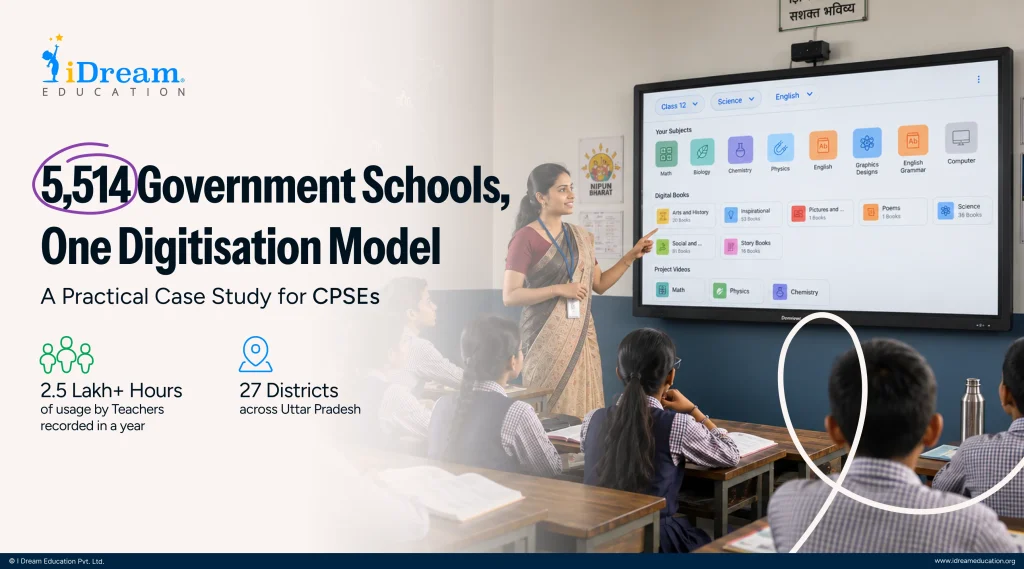
Across Sub-Saharan Africa — in the rural districts of Nigeria, Ghana, Kenya, Uganda, and Tanzania — more than half of all schools have no reliable internet access. That is not a projection. It is the present reality that any education technology programme targeting these schools must start from. And yet the vast majority of edtech products in the market are designed around an internet-first assumption: they require cloud login, they stream content, they sync to a server. In the schools that need them most, they simply do not work.
This is not a new observation. UNESCO, the World Bank, and a generation of NGO programme managers have documented it consistently. What is newer is the growing evidence that offline-first digital learning — when done well, with curriculum-aligned content, robust hardware, and minimal teacher training requirements — produces learning outcomes that are measurable and significant even in the most resource-constrained contexts.
The same is echoed when we speak to programme planners in East and West Africa. They are also leaning more towards offline-first models in the programmes they are planning with us. With programmes in India run by iDream that were deeply rooted in the belief that offline access is the key to success in rural areas and in government schools, there have been many proven success stories. One such instance was using a server-client model to digitize learning in Digital Libraries for almost 300 schools across Rajasthan. Curriculum-aligned content was pre-loaded on a server and the server was in turn connected to hardware devices used in schools. What this meant was that students had uninterrupted access to quality learning resources without any dependence on the internet. Models such as these backed by technology are enabling learning in regions where the internet is inaccessible or its access inconsistent. Such models are now fast catching up in Sub-Saharan Africa and are at the top of mind of education planners in Africa.

Why India’s Experience Is the Closest Available Proof of Concept
India has over 1.4 million government schools. A significant proportion — particularly in Jharkhand, Meghalaya, Assam, Uttar Pradesh, Uttarakhand, and Rajasthan — operate in conditions that map almost exactly onto rural Sub-Saharan Africa: absent or intermittent electricity, no broadband, single-teacher classrooms, multi-grade instruction, students whose home language is not the language of instruction, and teacher populations that are formally qualified but practically isolated from curriculum support and peer learning.
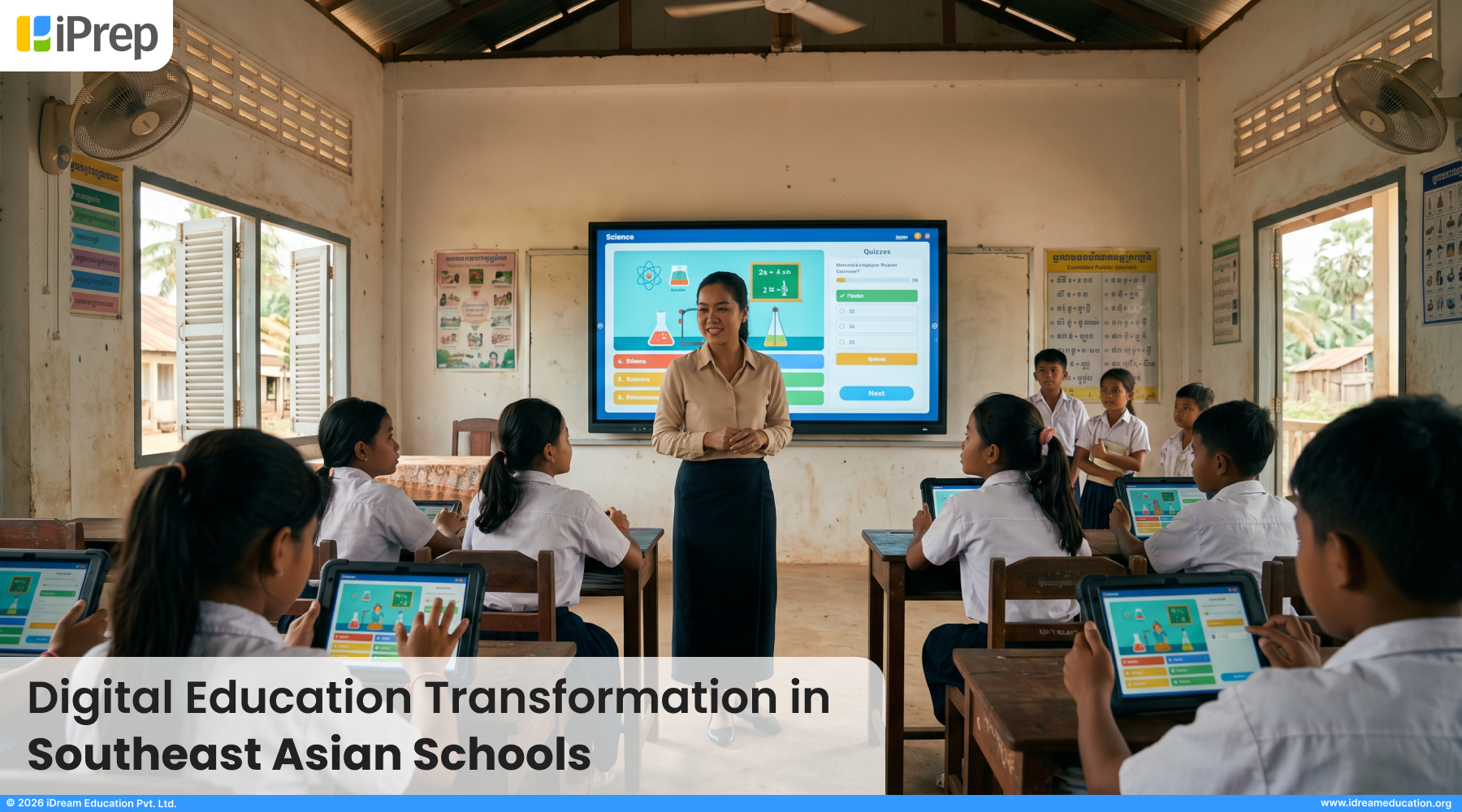
India did not solve these problems by waiting for connectivity to arrive. It was built around the constraint. At iDream Education, we have spent nearly a decade doing exactly that. iPrep works fully offline — content is preloaded onto SD cards or tablets. A teacher in a remote school in Meghalaya’s East Jaintia Hills can run an animated science lesson for Class 7 without a single byte of internet data. In 2025, iPrep deployment in that district produced a 92% improvement in Class 10 passing rates from 2022, when the programme was initiated. The challenge of lack of electricity supply is also tackled by what are called charging racks — devices that simultaneously charge tablets, notebooks, and laptops, thereby reducing dependence on not just the internet but also electricity. The same architecture is directly applicable to a school in rural Kwara State, Nigeria, or in Uganda’s Karamoja region.
The iDream KA-LAWEI Model
iDream Education implemented an integrated, offline-first digital learning model designed for low-connectivity regions. The model combined infrastructure deployment, teacher capacity building, structured assessments, and continuous on-ground support.
Key components of the model included: installation of 166 plug-and-play Smart Classrooms across 50 schools; deployment of 30 tablets with offline assessment capability for baseline and monthly evaluations; Bridge Courses via the iPrep app to address foundational learning gaps; a Cascade Model of Teacher Training using Master Trainers; and monthly monitoring, usage analytics, and academic support by field teams.
Theory of Change in Practice
The intervention began with baseline assessments and low initial adoption due to limited digital confidence among teachers. iDream responded by identifying and training Master Trainers within schools, providing repeated handholding, and aligning content progressively with the Meghalaya Board syllabus. By the second and third months, teacher adoption increased, classroom usage stabilized, and student participation in assessments improved.
During 2023–24, cumulative usage exceeded 4,529 hours across 50 schools, with Science (~38–39%) and Mathematics (~31–32%) emerging as the most utilized subjects and Video Lessons contributing ~81% of total content usage. In 2024–25, cumulative usage further increased to 57,416 hours across 50 schools, with the top 10 schools alone contributing over 30,800 hours across 32 devices and averaging 275 active usage days per school. Class 10 consistently recorded the highest engagement (~43%), while Science (36%) and Mathematics (28%) remained the most frequently accessed subjects. Video Lessons rose to nearly 97% of usage, reflecting deep integration of digital content into daily teaching. In 2025–26 (to date), across 20 schools, Smart Classes recorded 118 hours of usage, with the top 10 schools contributing 108 hours and averaging 26 active usage days.
What Offline-First Actually Means — and What It Doesn’t
The term ‘offline digital learning’ is used loosely by a lot of platforms. For iPrep, it means something specific: the complete K-12 content library — animated video lessons, practice assessments, digital textbooks, a reading library of over a thousand titles, life skills content — is stored locally on the device or on a local server. There is no cloud dependency for content delivery. No login required for basic student access. No periodic sync that fails when the network is unavailable at a critical moment.
This matters because many platforms marketed as ‘low-bandwidth’ still require occasional cloud calls to function — for authentication, for analytics, for content updates. In a school with no connectivity, ‘occasional’ is not acceptable. The software must be entirely self-contained. iPrep is built that way — not as a workaround, but as the founding design decision.
The Role of Local Language and Curriculum Alignment
The strongest lesson from our India deployments is that content only works if it is in the right language and aligned to the right curriculum. iPrep currently supports 11 languages including English, Hindi, Bengali, Kannada, Assamese, Punjabi, Marathi, Tamil, Telugu, Gujarati, and Odia. English-medium content aligned to the NCERT/CBSE framework is immediately deployable in any English-medium African school context. Customisation to curriculum of different countries is often done to ensure curriculum-aligned teaching and learning. For French-speaking West Africa or Swahili-speaking East Africa, a localisation pathway exists — the platform architecture supports it, and we are actively seeking co-development partners for these markets.
Who Should Be Talking to Us
The organisations best placed to act on this are those already operating in these markets: NGOs running community schools, INGOs with education programmes funded by USAID, FCDO, or the European Commission, government ministries exploring digital classroom pilots, and CSR foundations with education mandates in East or West Africa. If you have the reach and the relationships, iPrep has the content and the infrastructure. If you wish to explore how iPrep can support your learning programme, please write to us at [email protected].
Frequently Asked Questions -
1. Can iPrep work in schools with no grid electricity?
iPrep tablets can be charged via solar panels or portable battery packs. We have deployed this model in off-grid Indian schools and can advise on hardware configuration for solar-powered deployments.
2. Can the content be aligned to Nigerian or Kenyan national curricula?
The English-medium content library is immediately deployable. Full alignment to NERDC (Nigeria) or KICD (Kenya) curricula requires a mapping exercise, which we are open to undertaking with a committed programme partner.
3. What scale does iPrep work at — single school or national programme?
Both. We have deployed at the level of a single NGO school (50 students) and at the level of a state government programme (500,000 students). The platform scales cleanly in both directions.
Categories You may Explore
Related Articles