Talking about Edtech innovations, one of the popular searches is ICT lab meaning, so let us first start with
What is ICT Lab?
ICT stands for Information and Communication Technology and was first introduced in India in 2004. The education department then revised the ICT policy in 2010 to allow secondary students to learn with a blend of technology in the classroom. The Ministry of Education has revised the policy again, which we will discuss later in the blog.
Key Takeaways
- ICT (Information and Communication Technology) was first introduced in Indian schools in 2004, with the policy revised in 2010 to introduce blended technology learning for secondary students.
- Conventional ICT Labs relied on complex, wired hardware such as desktop computers, projectors, display screens, and sound systems. These setups proved difficult for government school teachers to maintain.
- The Ministry of Education found conventional ICT labs had not produced significant learning gains, partly because complex hardware raised maintenance costs and was hard for many teachers to manage.
- In March 2019, the Ministry of Education introduced a revised ICT Lab Scheme based on tablets, laptops, notebooks, and a charging rack, replacing the older wired computer-lab model.
- The revised ICT lab model aligns with how teachers and students already use smartphones, making devices easier to adopt and maintain than desktop-based labs.
Here’s where it all began: Genesis of ICT Lab
The Beginning
The foremost responsibility of schools and teachers is to ensure student’s engagement in learning to acquire growth skills and achieve something meaningful in their lives. Therefore, the constant effort of the people in the education ecosystem is to derive ways to make learning interactive and engaging for students.
Over the years, technology in classrooms has been introduced to build students’ genuine interest in studying through visuals, sound effects, and animations. Let us see the ICT Lab then and now.
The early forms of ICT Labs in schools:

For almost two decades, the way ICT Labs have been set up in schools has mostly been the same. Here is a list of equipment that is typically used:
- A desktop monitor or desktop with a processor, keyboard, and mouse
- Projector
- A display screen
- Sound system
- And a lot of wires to interlink all the equipments together
ICT Lab in Schools NOW:

As we have mentioned above, the Ministry of Education has recently revised the policy.
Let’s find out why?
The revision is done because it has been found that the ICT labs are interlinked with complex computing hardware & has not resulted in any significant change in student learning. The learning gaps still exist because it is difficult for government teachers to manage conventional ICT setup. Further, the non-usage of these labs has resulted in nothing but increased maintenance costs.
Hence, in March 2019, the ministry of education made provision and introduced a new form of technology for the classrooms. Under this, tablets, laptops, notebooks, and a charging rack, are a significant part of the revised ICT Lab Scheme. The teachers and students now have more easy-to-use solutions that naturally align with their psychology of using smartphones.

At iDream Education, we have been working on researching and finetuning the design of ICT Labs in schools to
- Make the hardware implementation, usage & maintenance very easy
- To build a proactive interest in students to learn and provide them with a personalised platform to learn at their own pace
- To empower teachers to teach through digital teaching solution that aligns with their natural psychology of using technical devices,
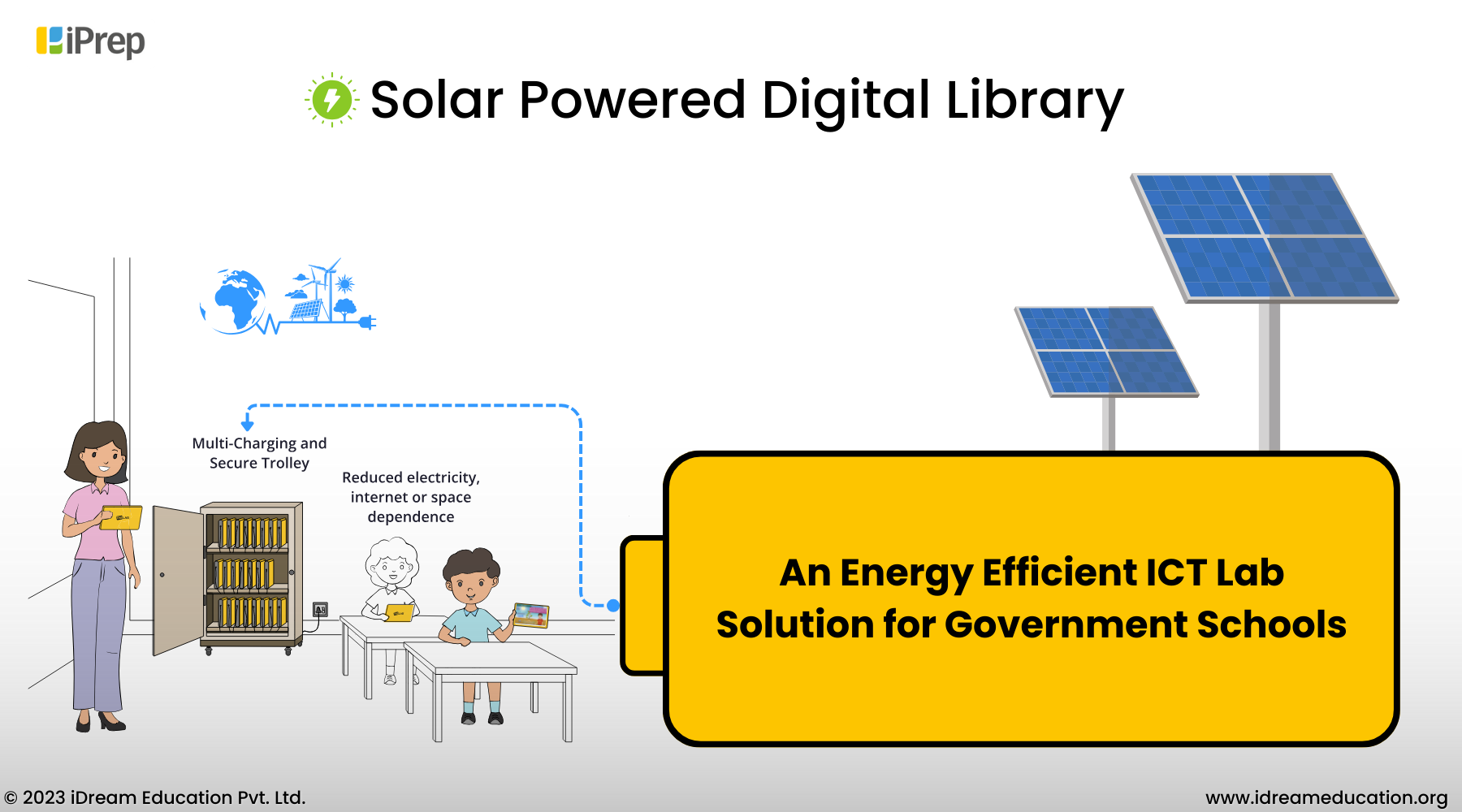
TABLAB is one way of setting up a Tablet-based Smart ICT Lab consisting of a certain number of tablets, storage, and a charging rack. It is a digital library designed to eliminate the infrastructural and psychological barrier that limits the use of technology in schools. It comprises android tablets with accessories and a tablet charging trolley, which is also used as a storage rack. Every tablet has an SD Card preloaded with customised digital content in Hindi, English & other local languages aligned as per CBSE and all major state boards. All the devices record student-wise reports, save them offline, and sync them periodically to an online reporting dashboard. This is for anytime, anywhere impact assessment.
Did you know?
Using the same Setup, multiple labs can be created in the same setup.
Learn more about:

To know more about the advantages of ICT Lab with learning tablets or tablet based learning with K12 LMS, and the challenges of the implementation of the old ICT Lab, and how the government is overcoming these challenges, please do read our more detailed blog on this link.
If you would like to know more about TabLab or more ICT solutions under Samagra Shiksha, you may contact us at +91 7678265039. You can also write to us at [email protected] or share your details here.
idreameducation.org
TabLab | Tablet based ICT Lab for Schools | Tab Lab
TabLab is the most effective way to use tablets in schools. It is a digital library that integrates learning tablets and an auto charging rack to charge tablets and multimedia digital content for schools.
Frequently Asked Questions -
1. What does ICT stand for in schools?
ICT stands for Information and Communication Technology. It refers to digital devices and systems used to support teaching and learning, such as computers, projectors, and tablets. ICT was first introduced in Indian schools in 2004 and has since been revised.
2. What is an ICT Lab?
An ICT Lab is a dedicated school space equipped with digital devices, such as tablets, laptops, or desktop computers, used to deliver computer-aided teaching and learning. Conventional ICT Labs relied on wired desktops and projectors; newer models use tablets, laptops, and notebooks with a charging rack for easier setup and maintenance.
3. What equipment did conventional ICT Labs use?
Conventional ICT labs typically used desktop computers (monitor, keyboard, mouse), a projector and screen, a sound system, and extensive wiring. This hardware-heavy setup was standard in many Indian schools for nearly two decades.
4. Why did the Ministry of Education revise the ICT Lab Scheme?
The Ministry revised the scheme because conventional ICT labs had not produced significant learning improvements. Complex wired hardware was difficult for many teachers to manage, and low usage increased maintenance costs without corresponding benefits.
5. What does the revised ICT Lab Scheme include?
The revised ICT Lab Scheme (March 2019) is built around tablets, laptops, notebooks, and a charging rack, replacing the older desktop-and-projector model. The setup is designed to be easier to use and maintain.
6. When was the ICT Lab Scheme revised?
The Ministry of Education introduced the revised ICT Lab Scheme in March 2019. This followed an earlier revision in 2010, which had updated the original 2004 ICT policy to bring blended technology learning to secondary school students.
7. How does the new ICT Lab differ from the old one?
The new ICT lab model replaces wired desktop computers, projectors, and sound systems with tablets, laptops, notebooks, and a charging rack. The model is easier to maintain and closer to how students and teachers already use everyday devices like smartphones.
Categories You may Explore
Related Articles