How Adaptive Learning Platform Can Positively Influence Students’ Confidence Levels?

Before diving into adaptive learning platforms, let’s imagine a scenario. 

Tara is a middle school student in a government or a private school. Classrooms are large and teaching follows a fixed pace. She struggles with mathematics, and she finds it hard to keep up. She hesitates to ask questions, fearing judgment. And gradually, she loses confidence in her ability to solve problems.

Despite growing investments in educational technology, many students like Tara continue to face challenges. This points to a deeper issue: traditional one-size-fits-all teaching approaches often fail to meet individual learning needs, leaving many learners disengaged.

Research increasingly shows that adaptive learning platforms can help change this. By personalising instruction to match each student’s level and learning pace, these tools offer a more supportive and responsive learning experience. 

But many schools and education programmes still doubt: How exactly do these platforms build student confidence? And do they truly lead to better outcomes

In this guide, we explore seven research-backed ways adaptive learning platforms support learner confidence, along with practical tips for implementation.

What is an adaptive learning platform?

An adaptive learning platform is an advanced form of educational technology. It personalises each student’s learning journey based on their understanding, grade level, and current stage of learning. 

These platforms don’t just deliver content. They actively track how students engage with specific topics, monitor their progress toward mastery, and respond to how many attempts they make to reach learning goals.

What sets adaptive platforms apart from traditional learning management systems is their use of real-time data. As students learn, the system adjusts, modifying the difficulty of content, recommending next steps, takes them to foundational topics of previous grades to bridge historical learning gaps and offering targeted support tailored to each learner’s performance. 

The result is a more responsive, student-centred learning experience that evolves as the student grows.
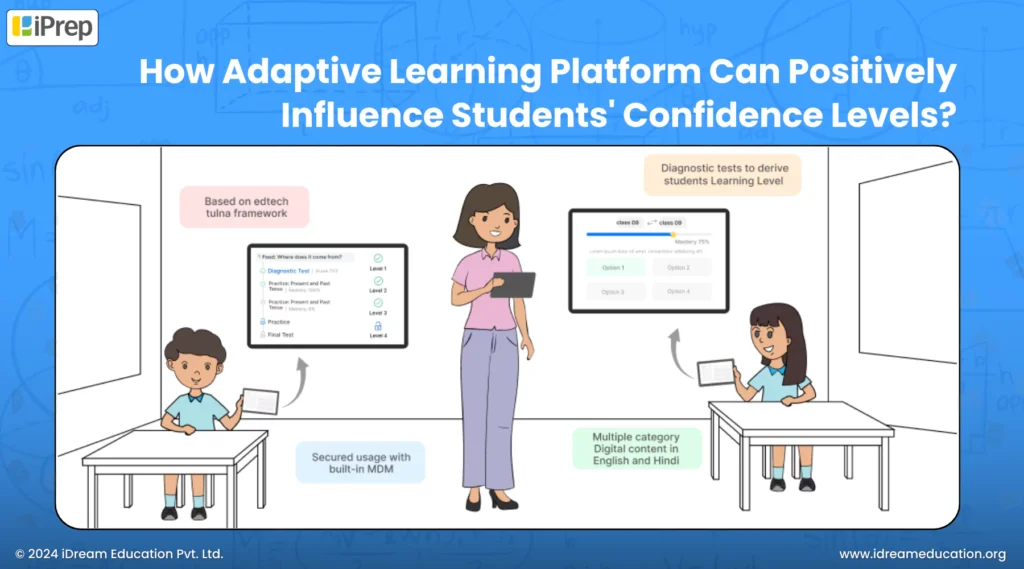
iPrep PAL (Personalized Adaptive Learning) platform positively influencing students' confidence levels

Why Do Educational Institutions Need Adaptive Learning Platforms?

Tara’s situation mirrors thousands of students who avoid challenging concepts they don’t understand, lose interest in difficult subjects, or simply memorise content to pass examinations.

These challenges create significant learning gaps that compound over time. Which affects academic performance and students’ overall confidence and engagement with education.

Unfortunately, traditional classroom settings often inadvertently create environments where struggling students feel left behind, whilst advanced learners become disengaged due to pace mismatches. 

This educational inequity demands structured solutions that can:

  • Cater to unique individual learning needs within diverse classrooms
  • Create non-judgmental learning environments free from peer comparison
  • Allow students to learn at personally appropriate paces
  • Foster positive learning outlooks both in school and at home
  • Promote genuine achievement and measurable improvement

7 Ways How Adaptive Learning Platforms Address Traditional Classroom Challenges
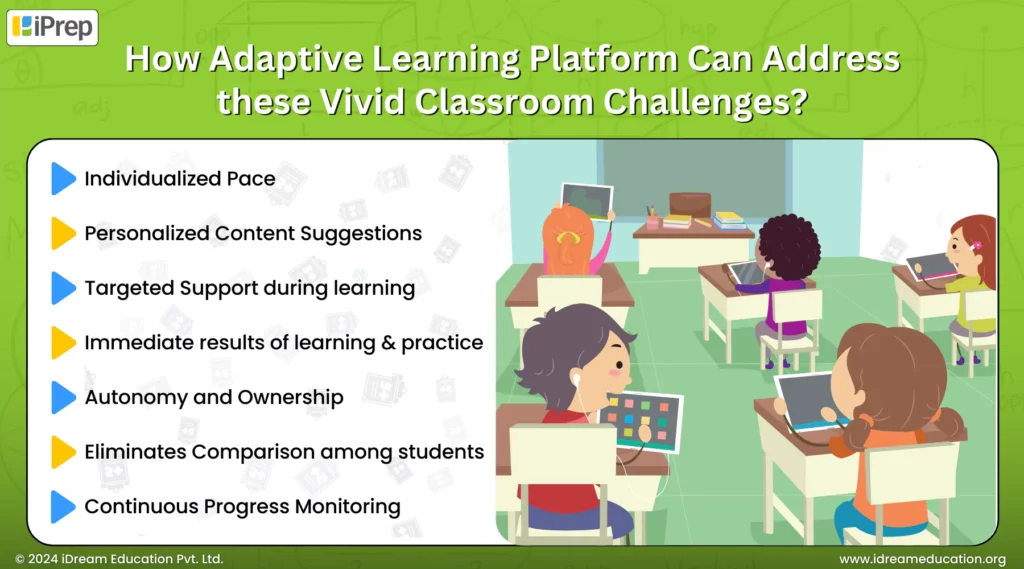
An illustration representing points on how a personalized adaptive learning platform addresses classroom challenges, helping students bridge historical learning gaps in a non-judgmental learning environment.

Adaptive learning platforms offer tailored approaches to help students build confidence in the classroom. Here’s how:

  • Individualized Pace

When students feel pressured to keep up with the classroom pace, their confidence often suffers. Personalised adaptive learning platforms fundamentally change this dynamic by allowing students to engage with content at their optimal learning speed.

Students encountering challenging concepts can spend additional time mastering fundamentals without feeling rushed or embarrassed. Conversely, those who quickly grasp concepts can engage in advanced practice, test their understanding, and build confidence before progressing to new material.

For example, iDream Education’s iPrep PAL effectively demonstrates this principle. Students maintain complete flexibility to revisit and relearn concepts, practising until they achieve mastery in specific chapters. This self-paced approach encourages genuine engagement while building authentic confidence.

  • Personalized Content Suggestions

Building on individualised pacing, adaptive platforms recognise that students learn differently and require varied content approaches. Rather than forcing all students through identical material, these systems offer diverse learning resources matching individual preferences and comprehension styles.
Platforms supporting this personalisation typically integrate multiple content sources to ensure comprehensive understanding opportunities. For example, iPrep PAL incorporates DIKSHA’s educational content, crafted specifically for easy comprehension and interactivity. This integration aims to foster positive learning outcomes by offering diverse content suggestions.

  • Targeted Learning Support

While personalised content addresses learning preferences, targeted support tackles specific knowledge gaps that undermine student confidence. Adaptive platforms identify precise areas where students struggle and provide relevant, focused assistance.

This diagnostic approach typically begins with assessment tools that evaluate current understanding levels. iPrep PAL exemplifies this through diagnostic testing that assesses students’ comprehension before providing foundational learning recommendations. Students must show mastery in foundational topics before progressing to new learning levels, ensuring solid knowledge foundations.

  •  Immediate Feedback and Results

Targeted support becomes most effective when combined with instant feedback mechanisms. Traditional education often delays assessment results, leaving students uncertain about their understanding for days or weeks.
Adaptive platforms eliminate this uncertainty through real-time performance indicators. Students using iPrep PAL see their learning progress displayed prominently on their devices, with indicators that respond immediately to their performance. This instant feedback enables positive reinforcement for correct responses and provides constructive guidance for areas needing improvement.

  • Autonomy and Ownership

Immediate feedback naturally supports another crucial confidence builder: student autonomy. When learners can make choices about what to study, at what pace, and how to approach their goals, they develop ownership over their educational journey.

This empowerment transforms students from passive recipients of instruction into active participants. Adaptive platforms facilitate this transformation by providing choice within structured learning frameworks.

  • Eliminates Comparison among students

Student autonomy addresses individual empowerment, while eliminating comparison pressure tackles social confidence barriers. Traditional classroom settings can inadvertently create competitive environments where struggling students feel inadequate compared to faster-learning peers.

Personalised adaptive learning minimises this pressure by allowing students to learn at individually appropriate paces.They can access their own progress data privately, and focus on areas requiring the most attention. This individual focus contributes significantly to increased confidence by removing external comparison pressures.

  • Continuous Progress Monitoring

Continuous progress monitoring provides this visibility through detailed tracking of learning advancement and skill development. iPrep PAL continuously monitors students’ progress, empowering them to observe improvement patterns over extended periods.

Adaptive Learning Platform: Real-World Results That Show the Impact
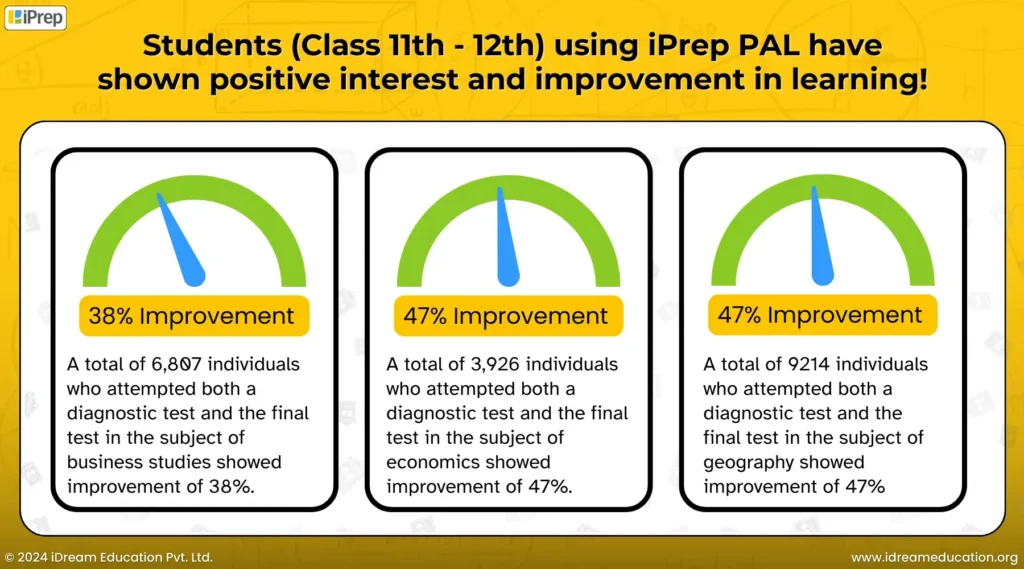
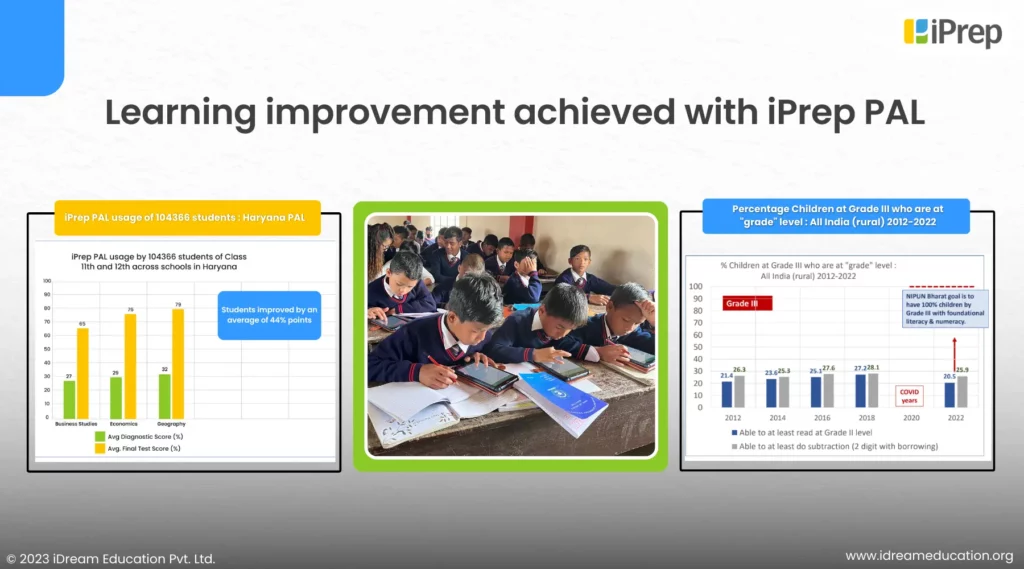
Image showing improvement in learning of students using personalized adaptive learning solution iPrep PAL in the e-Adhigam program by the Department of Education

iPrep PAL represents a structured adaptive learning platform designed specifically for positive student reinforcement and sustained learning engagement. 

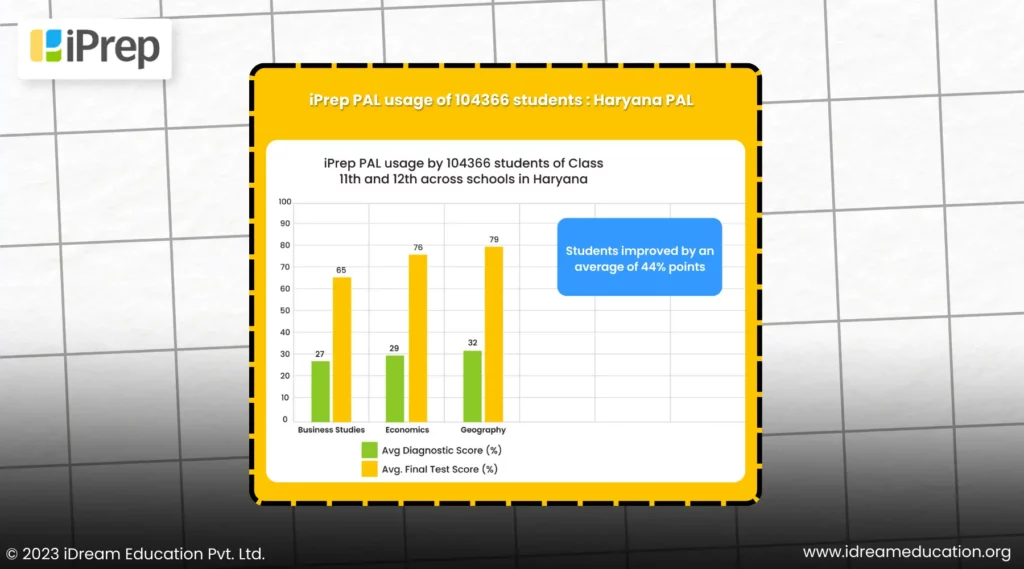
Currently utilised by 1.5 lakh students in grades 11th and 12th across Haryana schools under the e-Adhigam programme by the Department of Education, the platform demonstrates measurable confidence and performance improvements.

Documented Learning Improvements

Here are the key outcomes of PAL:

1. Business Studies Performance:

  • 6,807 students completed both diagnostic and final assessments
  • 38% improvement in learning outcomes demonstrated

2. Economics Performance:

  • 3,926 students completed the comprehensive assessment cycle
  • 47% improvement in subject mastery achieved

3. Geography Performance:

  • 9,214 students participated in the full diagnostic-to-final assessment process
  • 47% improvement recorded in geographical understanding

4. Overall Programme Impact:

  • 19,950 students across all three subjects demonstrated improvement
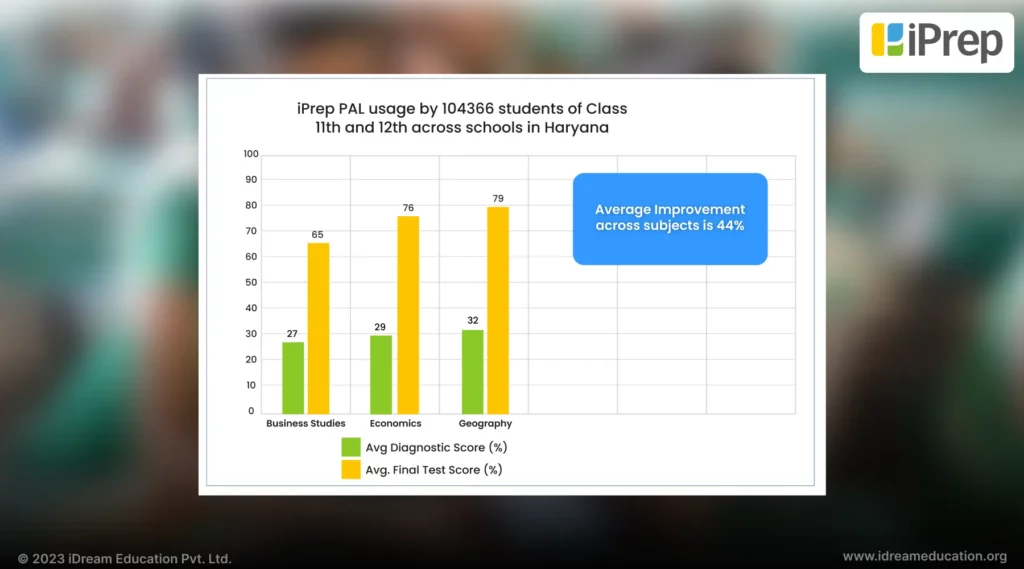
  • 44% average improvement achieved across business studies, economics, and geography
  • Students showing keen interest and active engagement in ongoing learning

These results demonstrate that students learning through adaptive platforms develop genuine enthusiasm for their studies whilst achieving measurable academic progress.

The evidence is clear: adaptive learning platforms can play a meaningful role in helping students build confidence. By creating personalised, supportive learning environments, these tools give students the chance to learn at their own pace, reflect on their progress, and feel a sense of achievement — without the pressure of comparison.

As schools and educators continue to look for ways to support diverse learning needs and close confidence gaps, adaptive learning platforms offer practical, research-backed strategies that have shown results across subjects and settings.

As a K12 educational app, iPrep provides comprehensive adaptive learning solutions designed specifically for positive student reinforcement and measurable improvement. Our platform’s success with 1.5 lakh students demonstrates practical confidence-building strategies that work in real educational environments.

Discover how adaptive learning can transform your students’ confidence and academic outcomes. Call +91 7678265039 or email share@idreameducation.org to explore implementation strategies tailored to your institution’s needs.
You can also contact us here.
Solar Power Enabled Classrooms to Enable Green Learning Schools

Discover how corporates, foundations, NGOs, and other people working to enable digital education in India can enable sustainable and green technology in classrooms by setting up Solar Power Enabled Classrooms. 

Solar power enabled classrooms by iDream Education, for sustainable CSR initiatives.

Over the years, the government has been actively pursuing initiatives to enhance school facilities. This has resulted in significant improvements in areas such as drinking water, midday meals, sanitation, electricity, and more. Despite commendable progress, achieving equitable distribution of educational resources remains a challenge. 
A recent survey and analysis of ASER 2022 across different Indian states underscore the need for sustainable infrastructure in many schools. 

Not only do some schools lack electricity connections, but often those that do experience unreliable electricity. This points towards the need for sustained efforts to bridge these gaps in educational resources.

A Closer Look at ASER 2022 Findings Across States

As per the ASER 2022 report, the status of electricity facilities in rural regions across states reveals:

Some schools lack electricity connections

Some schools did not have a proper electricity supply on the day of the survey

In Haryana, for instance, 98.8% of surveyed schools were equipped with electricity connections in 2022, but 86.3% had operational electricity during the visit. This trend is consistent in Jharkhand, where 92.4% of schools had electricity connections, yet 73.1% had electricity on the day of evaluation. Similarly, in Jammu and Kashmir, 88.9% of schools had electricity connections, but the operational rate on the visit day stood at 83.5%. The pattern persists across states such as Karnataka (97.8% with connections, 90.6% operational), and Madhya Pradesh (85.1% with connections, 73.1% operational), and is reflective of the broader scenario in other states.  

Food for thought for Civil Society Organizations? 

Both the government and the private sector are actively working to resolve the load-shedding issue by equipping schools with power backups.

Sohkymphor Secondary School, situated in the remote region of Sohkymphor within the East Jaintia Hills District, stands out as an inspiring example”, said Jayvrat Dubey, Assistant Manager – Analysis and Impact, iDream Education.

He further said, that despite facing extreme load-shedding issues for days, the students and teachers at Sohkymphor Secondary School did not lose hope of using a smart classroom setup. In the face of these difficulties, teachers took the initiative and approached the school authorities with a humble request— for a power backup system that would empower them to utilize at least one of the three smart classrooms implemented in their school. With a consistent electricity supply, the school now has the third-highest smart class usage record, totaling an impressive use of smart class content for 108 hours in 3 months.

Setting up power backup systems in every school comes with significant costs and the ongoing challenge of maintenance. 

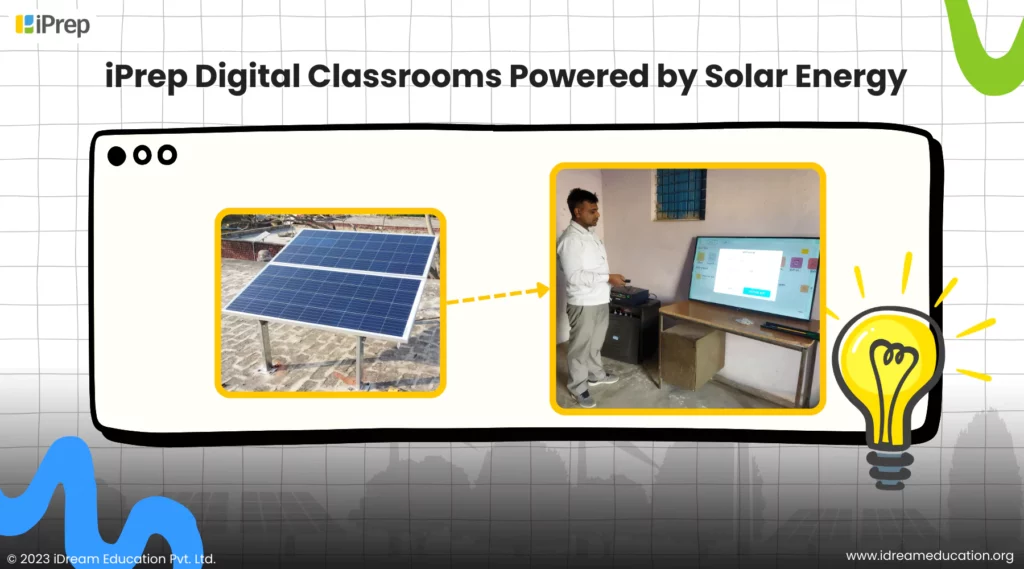
Acknowledging this, iDream Education is encouraging a forward-thinking approach by advocating for solar power enabled classrooms. 

Through this, they not only address the persistent issue of load-shedding in some rural regions but also align with a sustainable, eco-friendly ethos. iDream Education through its partnership with organizations such as R2V2 enables solar panels in rural households and schools. This not only reduces the financial burden on implementing partners but also helps them contribute positively to mitigating climate change. Through solar power enabled classrooms, iDream Education envisions an uninterrupted, environmentally responsible, and sustainable learning environment for students across India.

Image featuring solar power-enabled smart classes implemented by iDream Education in collaboration with Sehgal Foundation in schools of Haryana

How is it accomplished? 

The process begins with profiling the school and assessing infrastructure. This evaluation helps determine requirements for hardware and software in the solar power enabled classrooms project, with feedback from partners duly considered. 

Subsequently, the finalization phase begins. 

  • The solar energy requirements of targeted schools under the partners’ purview are scoped and fulfilled
  • The curriculum is then tailored to align with the specific board, classes, and language as per school. 
  • Experiential student-teacher training is conducted to ensure the smooth utilization of iPrep without the need for technical guidance.
  • We also conduct baseline, midline, and endline assessments to assess the current learning level of students, guide them to cover their gaps and achieve grade-level proficiency.

Solar Power Enabled Classrooms encourage a distinctive blend of environmentally friendly features and cutting-edge technologies:

Sustainable Energy Source: These classrooms harness eco-friendly solar energy to power digital classrooms.

Hardware and Software: Digital classrooms equipped with cutting-edge hardware and a diverse range of software, products, and technologies, including:

  • Education Technology: Interactive Digital Board, Interactive Flat Panel, Smart TV, ICT Labs for an immersive learning experience.
  • Learning Platform: The curriculum aligned K-12 content in Hindi, English, and local languages. Beyond academic subjects, the platform also offers life skills, vocational, project-based and more such content to facilitate holistic growth. Additionally, there are preparatory courses for competitive exams, and climate action courses, on iPrep to ensure the overall development of students.
  • Reporting Dashboard: A comprehensive reporting dashboard that allows teachers to monitor teaching and learning activities, providing data-driven insights to enhance the learning experience.

In conclusion, 

The integration of solar power enabled classrooms stands as a visionary and practical solution to address the persistent infrastructural challenges hindering effective digital teaching and learning in schools. This innovative approach not only ensures uninterrupted access to education technology but also aligns with the ethos of corporates, NGOs, foundations, hardware providers, and other ecosystem partners committed to Climate awareness and action. 

Amplify the impact of your social sector education initiative over the long term by fostering a culture of technological advancement, environmental responsibility, and societal progress with solar power enabled classrooms.

If in case you would like to know more about our digital learning solutions, visit our website, www.idreameducation.org, or write to us at share@idreameducation.org

A Closer Look at State of the Education Report for India 2023 by UNESCO

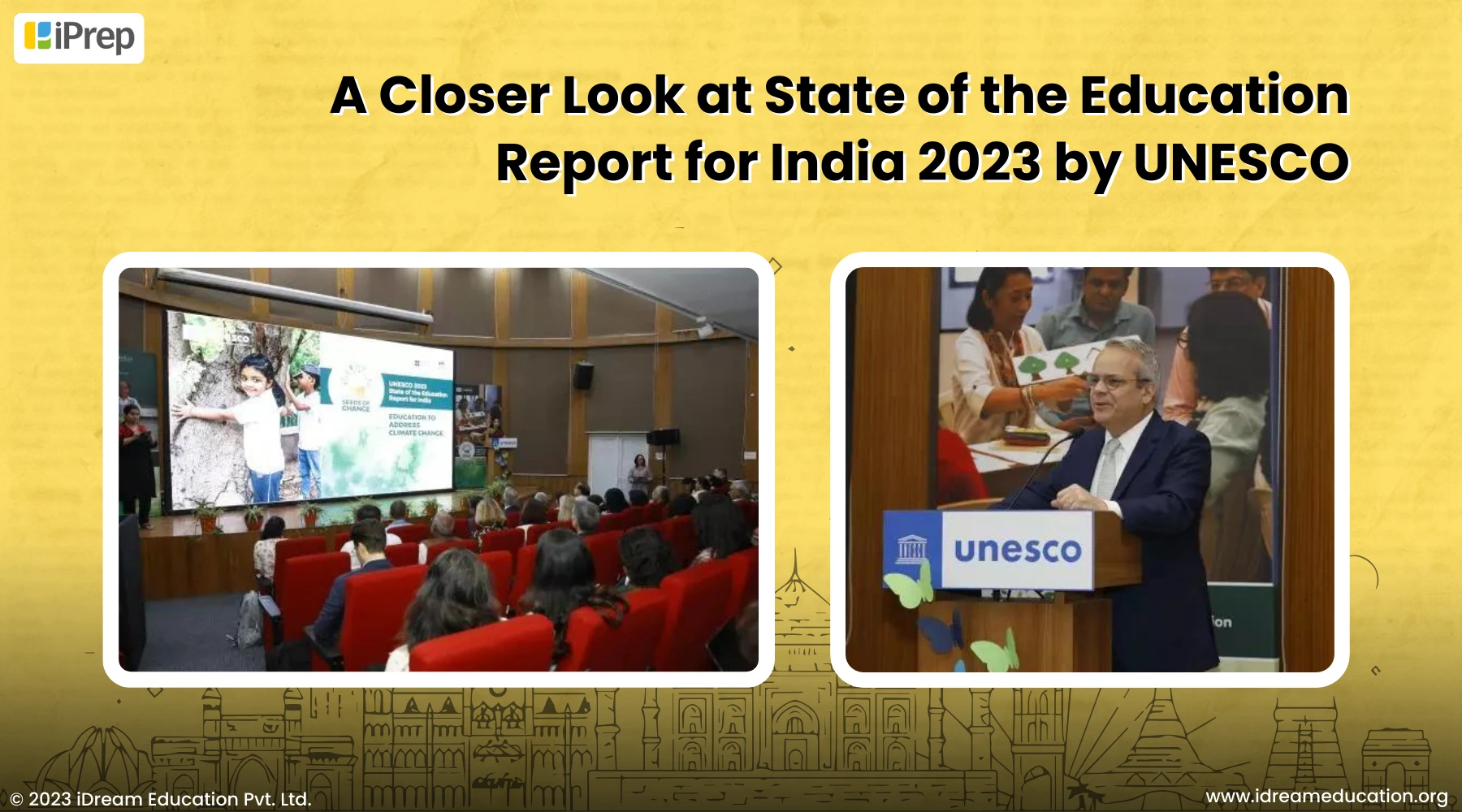
In 2023, UNESCO’s New Delhi Regional Office launched, Seeds of Change: State of the Education Report on India’s education system to address climate change. 

Cover image for the 'State of the Education Report for India 2023' by UNESCO, providing a detailed examination of how the education system in India can effectively address climate change.

In the Climate Change Performance Index of 2023, India is in 8th position among 59 countries and the European Union. Together they contribute to 92% of worldwide greenhouse gas emissions. 

UNESCO’s State of the Education Report sheds light on the significance of education in combating climate change

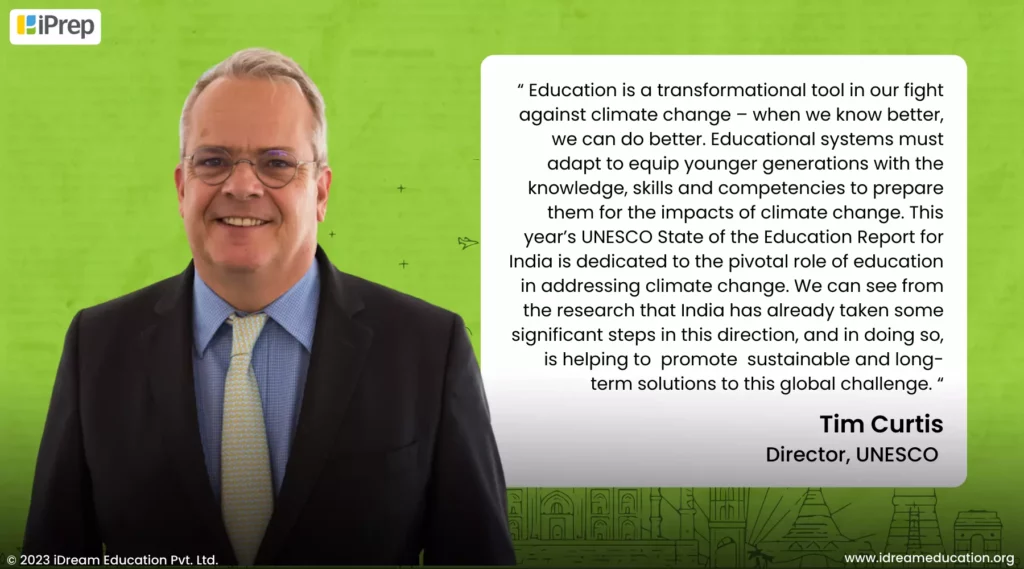
Photograph of Tim Curtis, Director UNESCO New Delhi Regional Office on Education, discussing the role of education as a tool for climate change action.
Tim Curtis, Director of UNESCO New Delhi, emphasizes education as a pivotal tool for climate change action

The revised National Curriculum Framework (NCF) 2023 mentions climate change 52 times. India is now well-positioned to explore climate education innovations, as highlighted by UNESCO’s State of the Education Report, which emphasizes best practices and future opportunities.

Sanjay Kumar, Secretary of the Department of School Education and Literacy, Ministry of Education, addressing climate change.
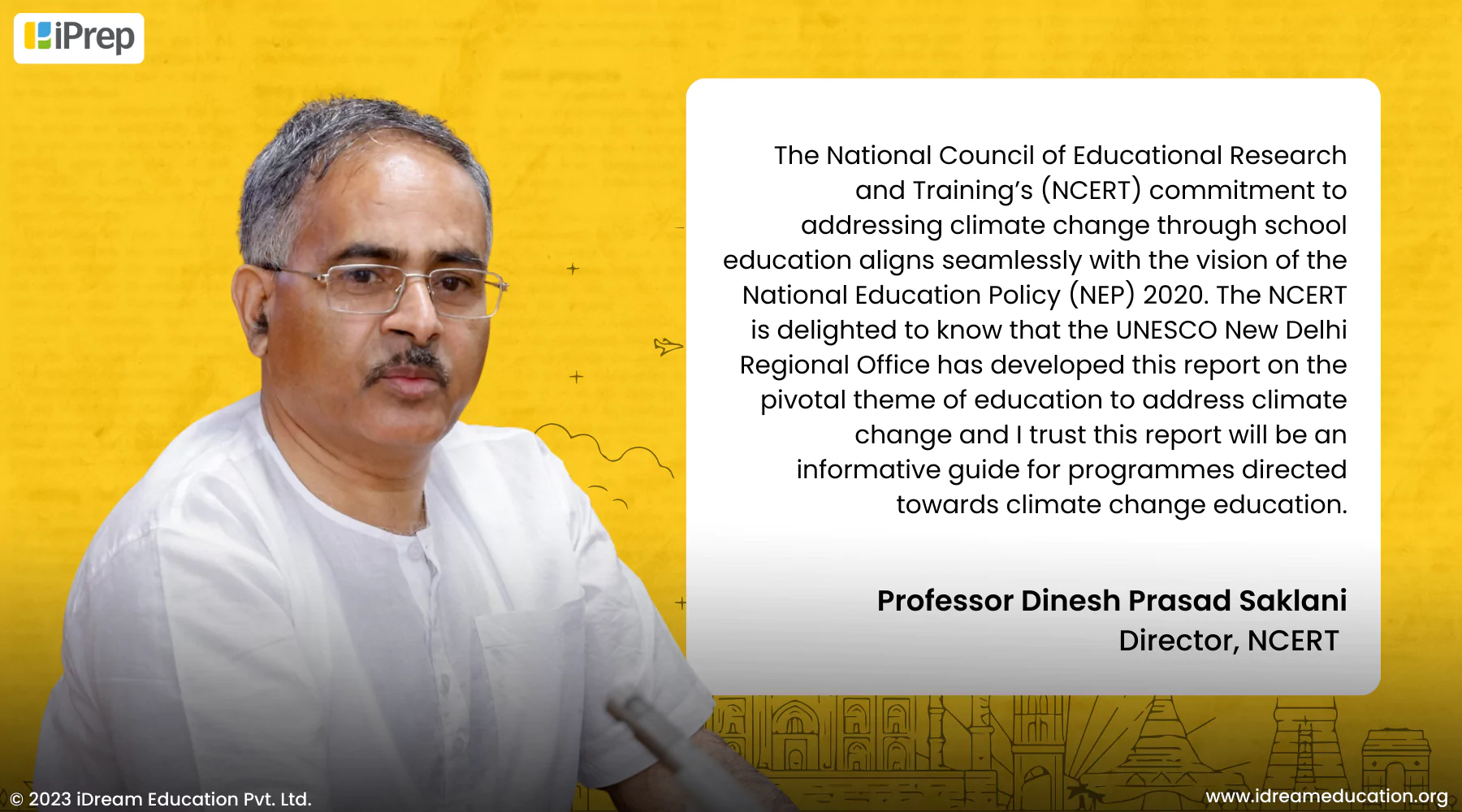
Dinesh Prasad Saklani Ji, Director, National Council of Educational Research and Training ( NCERT ), on making environmental education an integral part of the curriculum and NCERT’s commitment to addressing climate change

UNESCO serves as the secretariat to the Greening Education Partnership (GEP) 

UNESCO has promoted intersectoral partnerships, political commitments, and youth empowerment to leverage education for a greener and more sustainable future. UNESCO’s global programme, Education for Sustainable Development (ESD), contributes to this by laying the foundation for policy innovation and global collaboration. 

In line with this, the Greening Education Partnership (GEP), launched by the United Nations Secretary-General in 2022, enables a practical framework for stakeholders in the education sector to take further action. 

80 Member States have already joined the Partnership

UNESCO is serving as the secretariat with a commitment to green education systems, built around four pillars:

  • Greening schools
  • Greening curriculum
  • Greening teacher training and education systems’ capacities
  • Greening communities

These four pillars of the Greening Education Partnership (GEP) are used as a guide with which the UNESCO report analyzes India’s state of education to address climate change. The State of the Education Report is a synergy between UNESCO’s globally informed framework and the local expertise cultivated by the research team from the Centre for Environmental Education. 

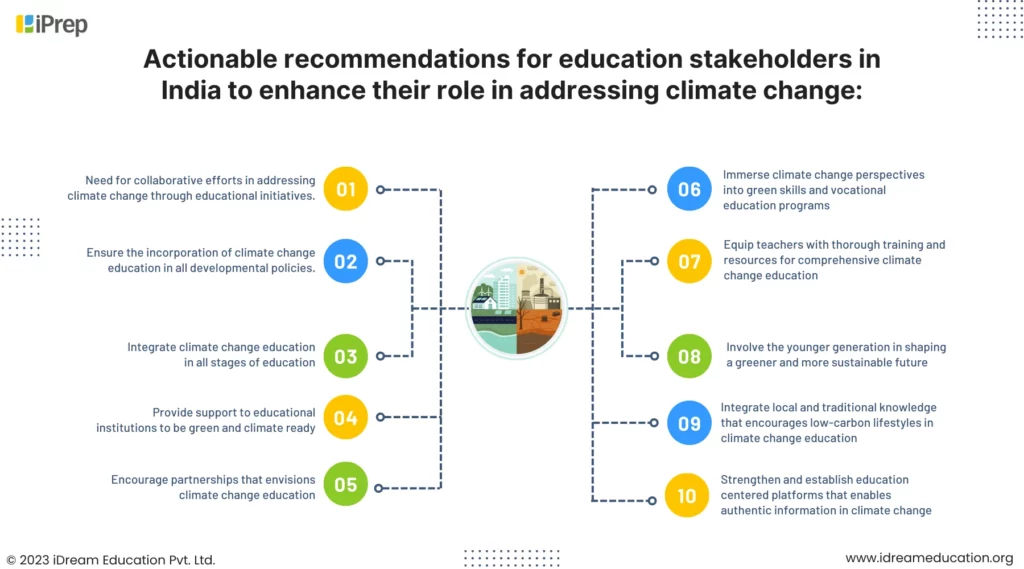
The report outlines ten actionable recommendations for education stakeholders in India to enhance their role in addressing climate change:

An image representing UNESCO's 10 recommendations on climate change action for education stakeholders.
  1. Need for collaborative efforts in addressing climate change through educational initiatives.
  2. Ensure the incorporation of climate change education in all developmental policies.
  3. Integrate climate change education in all stages of education
  4. Provide support to educational institutions to be green and climate-ready
  5. Immerse climate change perspectives into green skills and vocational education programs
  6. Equip teachers with thorough training and resources for comprehensive climate change education.
  7. Involve the younger generation in shaping a greener and more sustainable future.
  8. Integrate local and traditional knowledge that encourages low-carbon lifestyles in climate change education.
  9. Encourage partnerships that envision climate change education
  10. Strengthen and establish education-centered platforms that enable authentic information on climate change

The launch event of GEP showcased significant strides taken by India in addressing climate change through education. 

The State of the Education Report by UNESCO serves as a beacon, shedding light on the critical role education plays in addressing climate change. 

iDream Education happily aligns with this vision, recognizing the power of education in shaping future leaders committed to environmental sustainability. We anticipate partnerships with Foundations, NGOs, corporates, system integrators, and other ecosystem partners working to enable climate change awareness and action among  K-12 students. 

The integration of the iPrep Climate Action Course with K-12 education stands as a testament to our commitment. It offers a unique opportunity for students to engage with and contribute to climate action. With this we envision fostering a deep understanding of the environmental landscape and inspiring proactive measures, we aim to empower the next generation to emerge as true climate leaders, driving positive change for a sustainable future.

If in case you would like to know more about our digital learning solutions, visit our website, www.idreameducation.org, or write to us at share@idreameducation.org

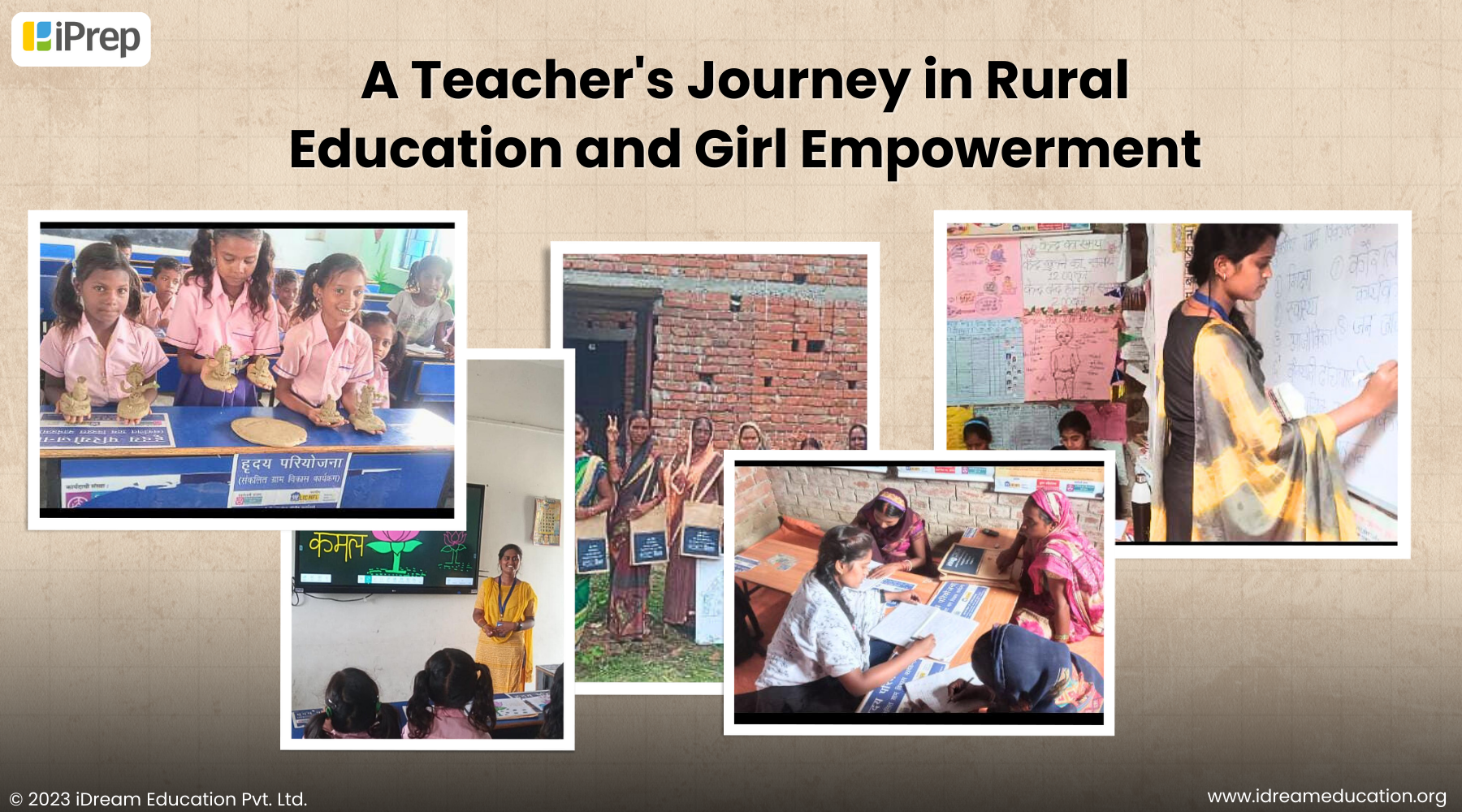
A Teacher’s Journey in Rural Education and Girl Empowerment

Amidst the scarcity of teachers in rural schools, Kanchan dedicates two hours daily, to develop strong connections with her students by teaching them through smart class. Know how she actively incorporates smart classes, leading by example and improving rural education.

Glimpse of Inspiring journey of teacher to enhance rural education and empower girls, making a positive impact on students, girls, and women of Palamu Jharkhand

Kanchan Kumari, a 25-year-old with a heart full of passion, hails from the remote village of Agheria near Hussainabad in Palamu District, Jharkhand. Born and raised in a supportive environment, Kanchan’s father played a significant role in encouraging her to pursue education and be a person who drives positive change in the lives of those who need it the most.

Fuelled by her father’s support, 

Kanchan studied till B.com and then became a dedicated NGO worker, focusing on rural education and awareness of girls in her village. Recognizing the scarcity of teachers in local schools, she dedicates two hours every day to teaching, forming strong bonds with her students and inspiring them not only to study but to excel in their lives.

Beyond rural education, Kanchan’s passion extended to empowering girls in her village. 

Kanchan, an NGO worker in Palamu district, conducting an awareness session to empower girls and women in her village

She conducts awareness sessions on their rights, teaching them how to navigate official processes, launch FIRs in case of wrongdoing, and access government initiatives supporting education and women’s rights. Kanchan’s commitment went beyond words as she accompanied girls to official departments, introducing them to government officials who they could reach out to whenever needed. 

How did we meet Kanchan?

Kanchan, an NGO worker in Palamu district, conducting an awareness session to empower girls and women in her village. The session focuses on government initiatives supporting education and women's rights.

Our ground team members met Kanchan during a retraining session of the iPrep Digital Class in the school of Palamu District in Jharkhand. It was inspiring to see her enthusiasm and awareness of the government’s efforts to develop model schools and improve rural education. Not only this, she is also aware of steps taken by Foundations and NGOs in implementing education technology. She is aware of how integrating advanced technology into schools can enhance the overall productivity and efficiency of teachers and enable a joyful learning environment for students.

Highlights from training on maximizing the benefits of smart classrooms in rural education

Kanchan, along with other teachers, eagerly participated in smart class retraining, showing a commitment to adopting education technology for the benefit of their students and making classroom teaching efficient. 

During the session, 

  • They were curious to explore how they could sync content categories of iPrep during teaching like video lessons and practice. 
  • They further came up with their questions about using functionalities of interactive flat display panels. 
  • Some teachers were intrigued by the idea of using IFP as a board, while others were enthusiastic about incorporating digital lessons to enhance the engagement of their teaching. 
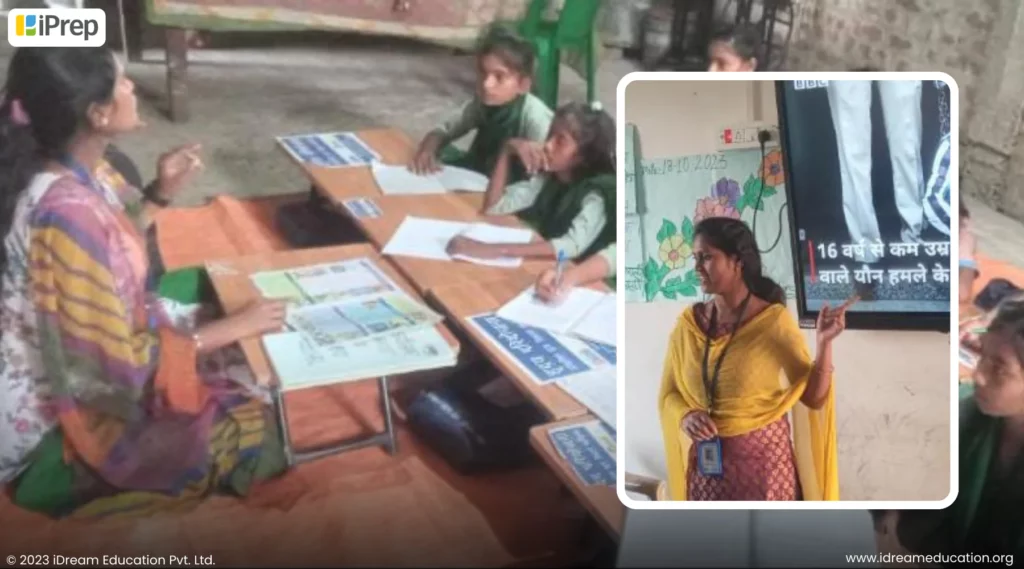
Image of Kanchan, an NGO worker, passionately teaching in Palamu district to support rural education. She empowers students by teaching them through education technology

It was gratifying to observe that among all teachers, Kanchan was already using poems for reading sessions, video lessons to help students comprehend complex concepts, and practice sessions to assess student learning in the classroom.

Experience the Joy of Book Reading on Interactive Digital Boards in Palamu, Jharkhand

Post-training, conversation with Kanchan, 

She shared insights into her use of smart class content to create engaging classrooms. She highlighted the significance of iPrep’s curated content, providing a hassle-free experience in accessing curriculum-aligned teaching material. Kanchan’s teaching approach showcased how iPrep can be used by teachers to enhance teaching efficiency. She said, “Smart class allows her to play lessons on TV, freeing up time for other crucial teaching activities like exam preparation and attendance management”.

Kanchan is an inspiration for all of us

Kanchan Kumari stands as an inspiration to all. Her journey from a remote village to becoming a catalyst for change in education exemplifies the power of passion and determination. Kanchan continues to be a guiding light and improving rural education, empowering girls, and creating a brighter tomorrow for the last mile learners.

We are grateful to meet teachers such as Kanchan with the support of our partners, such as Sahbhagi Shikshan Kendra (SSK), whose collaboration has been instrumental in making digital education a catalyst for enhancing infrastructure and improving the lives of people. 

Together, we look forward to continuing this meaningful collaboration with ecosystem partners, as we strive to create a lasting impact on rural education. Our collective efforts reaffirm the belief that by working together, we can build a brighter and more inclusive future for all.

If in case you would like to know more about our digital learning solutions, visit our website, www.idreameducation.org, or write to us at share@idreameducation.org

Learning Beyond the Classroom: Impact of Ed-Tech on Education

Learn about the profound impact of Ed-Tech on Education of 7000 girls,  most of whom were non-school-going learners. The ConveGenius Insights (CGI) report, shed light on the change in the level of proficiency from baseline to end line, as revealed in the Milaan Foundation Survey of 676 students.

Students engaged in at-home learning through the iPrep Learning Platform, showcasing the positive impact of ed-tech on education.

In India, the learning situation for non-school-going learners is diverse and often shaped by a variety of factors. Many individuals, for reasons such as economic constraints, societal pressures, or personal circumstances, find themselves outside the formal education system. Some of these non-school-going learners often engage in alternative learning environments, such as vocational training programs, skill development workshops, or informal educational initiatives. However, their foundational learning stops, resulting in a noticeable learning gap. 

To address this issue, home learning and guidance become imperative. 

In light of this, the Bharat EdTech Initiative collaborated with iDream Education to enable iPrep, a comprehensive learning platform designed for in-school and at-home learning. Over 7000 girls in districts across Uttar Pradesh and Madhya Pradesh got access to K-12 Content at their fingertips. While some of these girls attend school, the majority either remain unenrolled or have dropped out.

Milaan Foundation played a crucial role in managing this initiative and getting the impact of Ed-Tech on education of these learners

Girl Icons from the foundation visit the homes of these girls, providing teaching and guidance for learning through iPrep. Additionally, for students without smartphones, the Girl Icons installed iPrep on their phones and hand over the devices for learning purposes.

After months of ongoing learning through iPrep,

A survey was conducted to assess the impact of Ed-Tech on education through progress in students’ learning. 

Performance improvement was analyzed for a sample of 676 students, who were common in Baseline and Endline assessment. The detailed analysis has been outlined in the ConveGenius Insights (CGI) Report for students of grades 6 and 8 for 3 subjects: English, Science, and Maths. Using Equivalent Year of Schools (EYOS) as the analytical foundation, the report reflected insights into improvement in students over a single academic cycle without external interventions. 

As per the findings, over 40% of students demonstrated growth of more than 1 EYOS.

Read More: https://www.idreameducation.org/iprep-for-home-learning/ 

Change in Level of Proficiency from Baseline to Endline with PinAcLe Scale as Benchmark

  • In English class, 14 % of students in grade 6th and 35% of students in grade 6th who were at basic and intermediate levels moved to a higher level. But most students (70%) who were already advanced stayed at that level. 
  • In Math, most advanced 6th-grade students (67%) and 8th-grade students (52%) stayed at advanced level. However, half of the 6th-grade students (50%) moved up from beginner or basic levels, and the same goes for 30% of 8th-grade students.
  • In science, progress from basic to intermediate or advanced levels has been minimal. Over 90% of students of both the grades have consistently remained at basic and beginner levels. This shows room for further conceptual learning in science.

Overall, the findings suggest significant improvement in proficiency level in Math and English However, attaining an advanced level requires guided engagement of students with practical science videos, video lessons, and actively participating in science practice on iPrep. This comprehensive approach is essential to develop deep conceptual understanding and subsequently test and refine knowledge to achieve advanced proficiency.

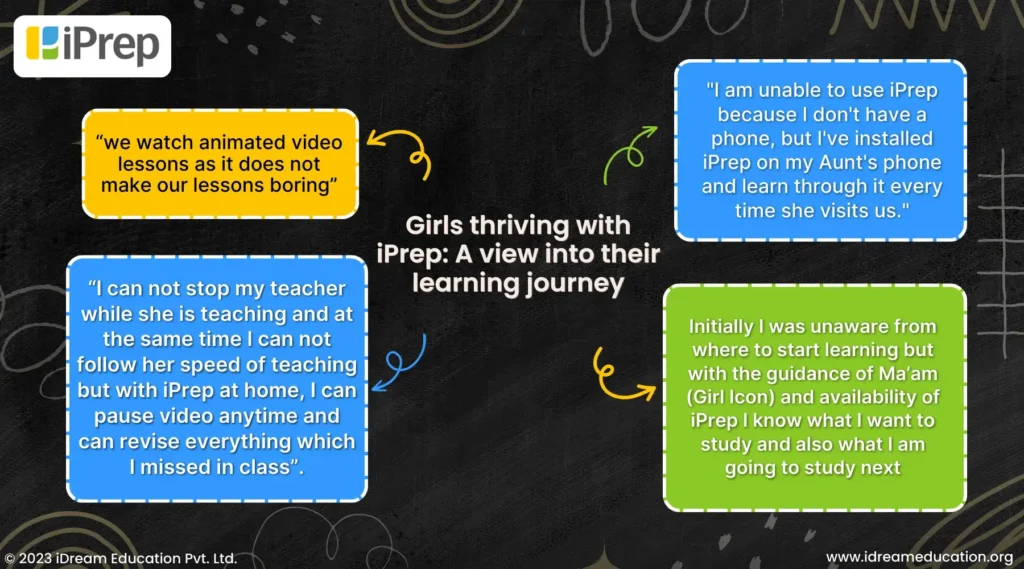
Key Observations of Girl Icons of Milaan Foundation from the Student Interaction on Using iPrep

Students' testimonial about the benefits of using the iPrep learning platform for home learning.
  • Girls enjoy learning through animated videos on iPrep because they say, 

“We watch animated video lessons as it does not make our lessons boring” 

Such a statement from students signifies that video-based learning on iPrep is leading to engagement subsequently helping them build conceptual understanding in different subjects while sitting at home. 

  • According to girls, iPrep’s content enables them to revise their lessons easily. Some of them who go to schools sometimes mentioned, 

“I can not stop my teacher while she is teaching and at the same time I can not follow her speed of teaching but with iPrep at home, I can pause video anytime and can revise everything which I missed in class”.

This suggests that iPrep is enabling flexibility of learning to these girls where they are able to learn at their own pace in the comfort of their homes. 

  • Girls are able to do the specific task using iPrep which is guided by girl icons. They say, 

Initially I was unaware of where to start learning but with the guidance of Ma’am (Girl Icon) and the availability of iPrep I know what I want to study and also what I am going to study next

With iPrep at home, students have a specific way to move forward as per their learning interests.

  • Students and Girl Icons are consistently dedicating themselves to enhance engagement time in learning and improving learning outcomes. One of the students shared, 

I am unable to use iPrep because I don’t have a phone, but I’ve installed iPrep on my Aunt’s phone and learn through it every time she visits us.” 

This showcases the motivation of students in using iPrep and expresses a keen interest in learning. It also underscores the significant impact of Ed-Tech on education in fostering students’ enthusiasm for education.

In Conclusion, 

The impact of Ed-Tech on education extends far beyond the confines of traditional classrooms, as evidenced by the findings of the ConveGenius Insights (CGI) Report. The report not only highlights the integration of technology in schools but also underscores the broader scope of using learning platforms in the comfort of home and improving proficiency levels. 

This inspiring progress in learning signifies a paradigm shift towards a more inclusive and dynamic learning environment. As we continue to embrace and leverage technological innovations, it becomes increasingly apparent that the integration of technology into education holds the key to unlocking the full potential of learners, empowering them to thrive as per interests and pace.

If in case you would like to know more about iPrep by iDream Education, visit our website, www.idreameducation.org, or write to us at share@idreameducation.org

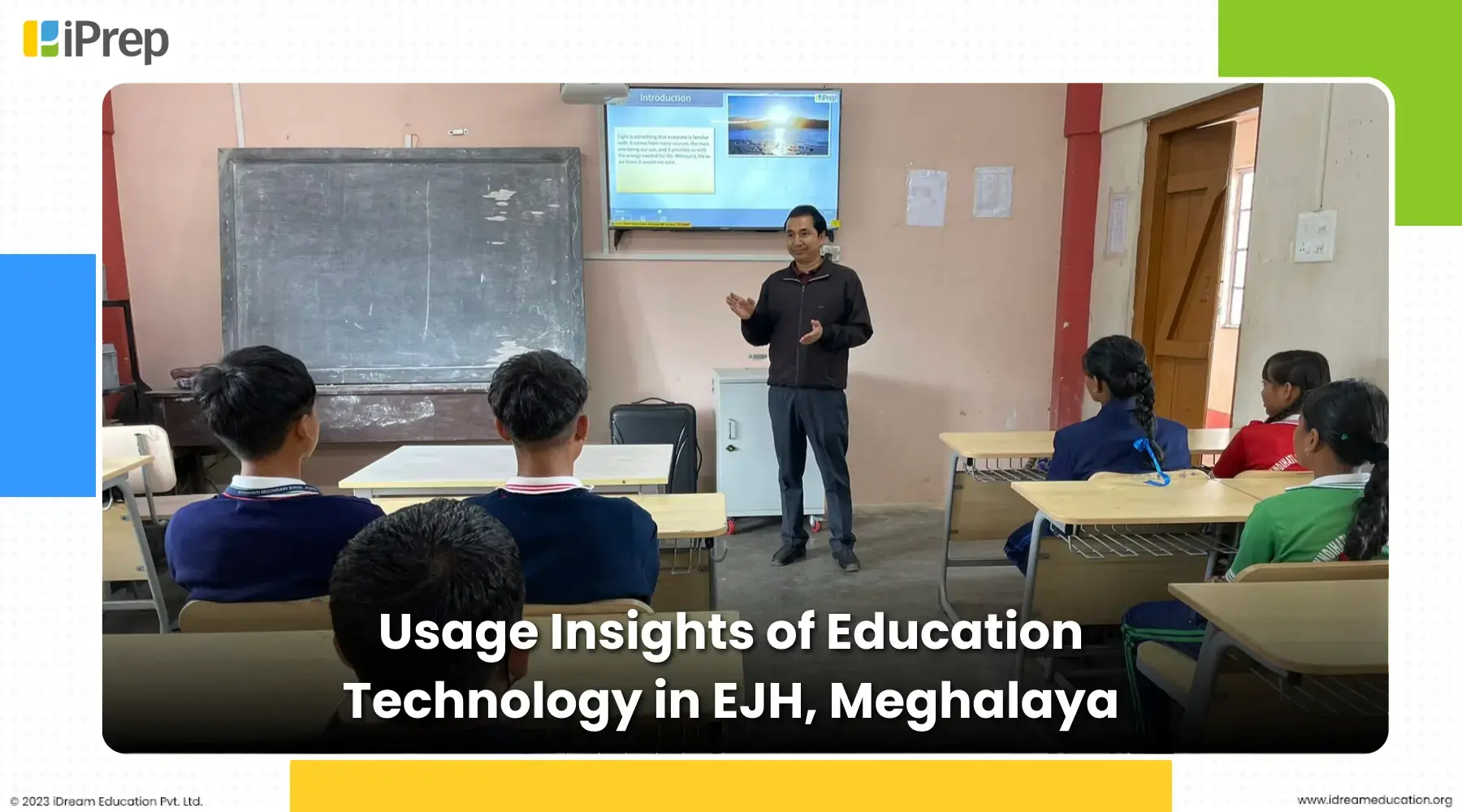
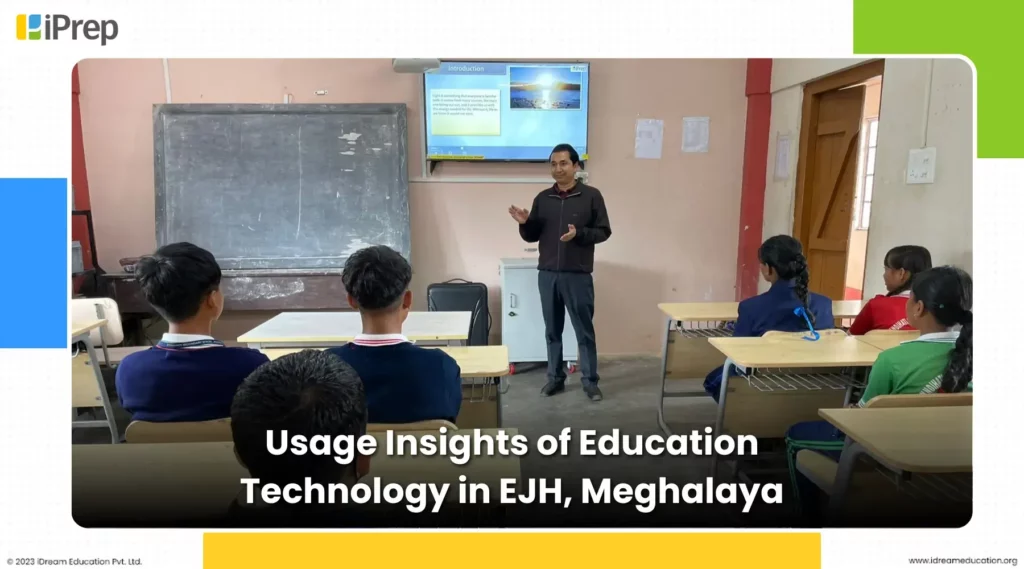
Usage Insights of Education Technology in EJH, Meghalaya

Learn about the benefits of implementing Samagra Shiksha Aligned smart classrooms. This involves the adoption and usage of education technology in schools of EJH, Meghalaya.

A smart class, an easy to setup, manage and use education technology being used in schools of Meghalaya

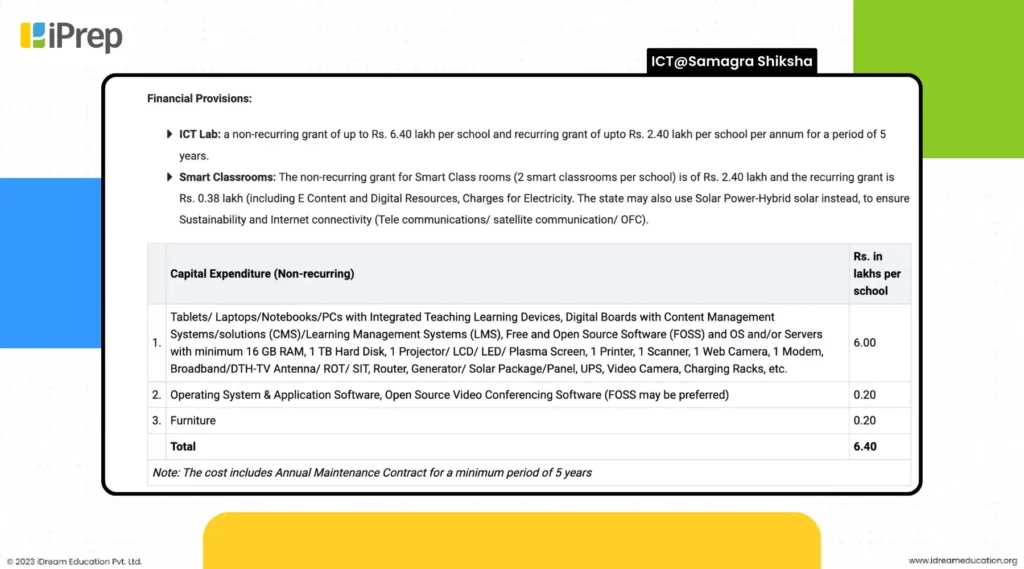
What does ICT@Samagra Shiksha Suggest? 

The ICT and Digital Initiatives segment of Samagra Shiksha focuses on Government and Aided Schools with classes VI to XII. This initiative aligns with the new education policy. Thus, aims to bridge the digital divide by establishing strong and reliable infrastructure. 

Samagra Shiksha recommends a smart classroom and ICT setup to enhance education infrastructure,  with strong and reliable education technology

To achieve this goal, the ministry has recommended viable options for implementing ICT and smart class technology, including:

  • Tablets, Laptops, Notebooks, PCs with Integrated Teaching Learning Devices, Digital Boards equipped with Content Management Systems/solutions (CMS)/Learning Management Systems (LMS), Free and Open Source Software (FOSS) and OS, along with Servers featuring a minimum of 16 GB RAM. 
  • The suggested setup also includes projector/LCD/LED/Plasma Screen, Printer, Scanner, Web Camera, Modem, Broadband/DTH-TV Antenna/ROT/SIT, Router, Generator/Solar Package/Panel, UPS, Video Camera, Charging Racks, etc. 

Challenges Existing ICT and Smart Classroom setups in Schools

Despite the availability of computers and smart classrooms, the underutilization of these resources hints at concerning issues of adoption. 

Infrastructural factors such as unreliable electricity in certain regions, complex computing/smart class hardware, and lack of internet connectivity. Further, psychological factors like technological resistance and insufficient teacher-student training may contribute to this phenomenon. These challenges highlight the need for strong and reliable infrastructure that addresses both infrastructural and human factors hindering the effective integration of education technology.

Samagra Shiksha Aligned and Thoughtfully Designed Smart Classroom  Overcoming the Above-mentioned Challenges

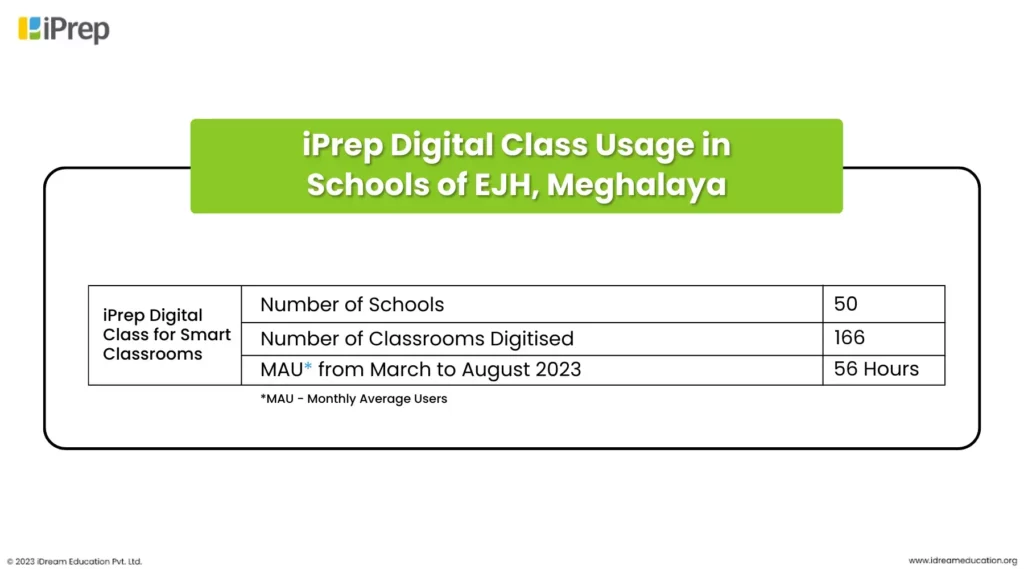
In the East Jaintia Hills District of Meghalaya, a visionary initiative named Project Ka Lawei has been initiated by DC Shri Abhilash Baranwal Ji, Deputy Commissioner, EJH Meghalaya. This initiative, aimed at enabling digital education in schools. Within a span of one year, from August 2022 to April 2023, we digitized 166 classrooms with Smart Classes.

The project addresses the challenges faced by schools in adopting technology, fostering engaging teaching-learning experiences.

To ensure the easy adoption of smart classrooms, iDream Education implemented 166 iPrep Digital Classes on  55-inch Smart TVs, LCDs, running on an Open Source Android platform. Notably, this solution is designed in alignment with the ICT@Samagra Shiksha Initiative by the Ministry of Education, ensuring a user-friendly and dependable setup. 

The solution is plug-and-play, allowing teachers to conduct lessons through multi-category digital content without connecting the devices to the internet connection. iPrep with curriculum-aligned content in the preferred medium of instruction, effectively eliminating concerns that hinder the adoption and use of educational technology.

Smart Class Usage Trends: A Paradigm Shift

A visual representation of the impact of smart classes in Meghalaya schools through the average monthly usage data of iPrep digital class

The usage trends of Smart Classes under Project Ka Lawei depict the benefit of implementing easy-to-set-up, manage, and use education technology in schools. From March to August 2023, the average smart class usage in 166 classrooms stood at an encouraging average of 56 hours of use. These figures reflect on selecting the reliable education technology for classrooms as mentioned in ICT@Samagra Shiksha. The progress of Project Ka Lawei serves as a beacon, showcasing the potential of education technology to improve learning in schools of Meghalaya and beyond.

How can you drive usage of education technology in schools?

The current setup of ICT and other technology in schools involves complex interconnected hardware. This makes devices hard to manage and operate. Therefore, in cases of hardware failure, the entire system becomes unusable. To promote the use of education technology in schools, it is crucial to adopt a solution that is easy to set up, use, and manage. 

iPrep Digital Class by iDream Education is one such solution. It is a plug-and-play system that can be seamlessly implemented in any classroom without requiring extensive infrastructure.

How does iPrep Digital Class, a smart classroom solution eliminate infrastructural and human factors hindering integration of technology in education?

  • Designed in alignment with ICT@Samagra Shiksha, it is compatible with all hardware and operating systems. It features a user-friendly interface that allows teachers to use it effortlessly, just like TV at home. 
  • The preloaded digital content on a pendrive/OPS/central server eliminates the need for Internet connectivity. This enables teachers to teach digital lessons without dependency on internet connectivity.
  • Further, the ground team of iDream Education conducts experiential teacher training. Here the focus is to guide teachers on maximizing the potential of iPrep on smart classes and its content categories. 
  • Furthermore, baseline and monthly assessments are conducted to assess learning level of each student. Additionally, subject teachers of all 50 schools receive bridge courses aligned with the lesson plans. This is to help them bridge the learning gap through classroom teaching. 

Teacher training along with assessment and bridge courses, has proven to be instrumental in improving the learning of students in EJH, Meghalaya. 

The potential of integrating education technology into school facilities cannot be overstated. The choice of easy to set up, manage and use education technology, can break barriers to enable digital education in any school across India.  

If in case you would like to know more about iPrep Digital Class, a Smart Classroom Solution by iDream Education, visit our website, www.idreameducation.org, or write to us at share@idreameducation.org

Insights from the Milaan Foundation Survey of 676 Students on the use of iPrep for Home Learning

Noteworthy Change in performance of students using iPrep for home learning in EYOS across Grades and Subjects

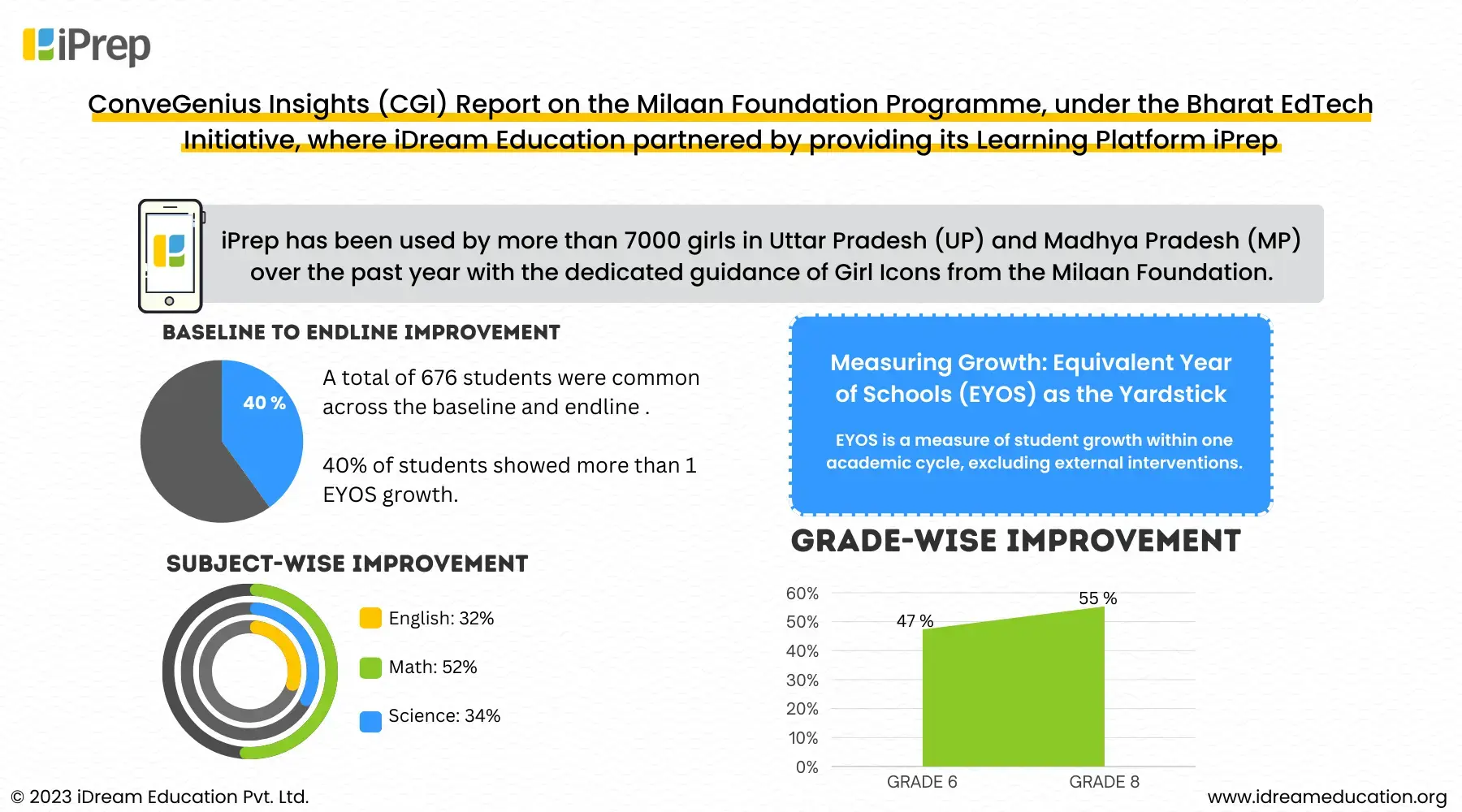
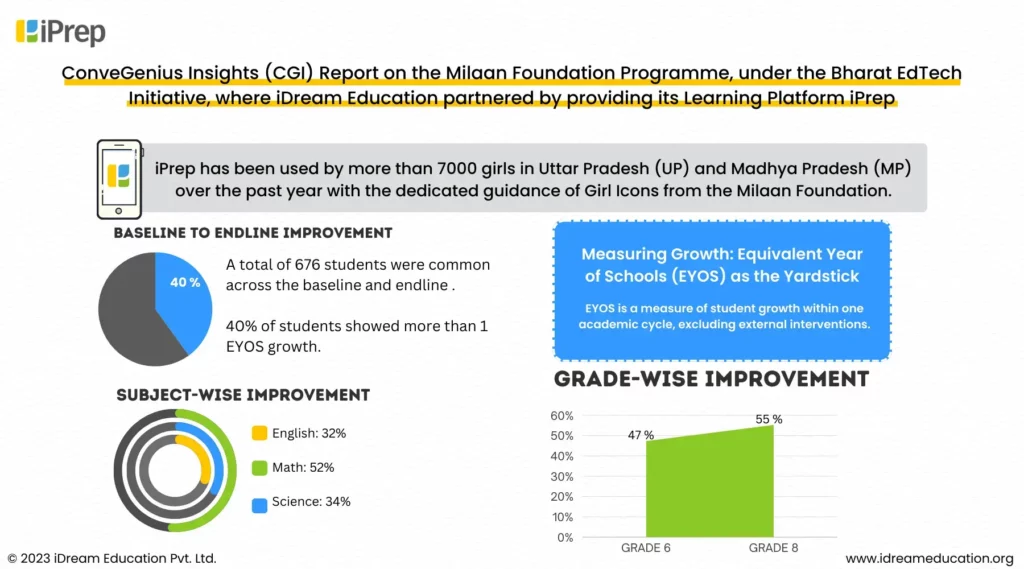
Image depicting the impact assessment of the learning platform iPrep by iDream Education for home learning. The assessment focuses on the educational impact of iPrep on non-school-going students in the field of EdTech

iPrep has been used by more than 7000 girls of Uttar Pradesh (UP) and Madhya Pradesh (MP) for Home Learning over the past year with the dedicated guidance of Girl Icons from the Milaan Foundation. 

Measuring Growth: Equivalent Year of Schools (EYOS) as the Yardstick

To gauge the effectiveness of iPrep for home learning in elevating the academic performance of students, the Milaan Foundation conducted a comprehensive survey. The survey was meticulously designed to examine the progress of these students over the span of a year, focusing on subjects, grades, and proficiency levels.  The Milaan Foundation utilized the Equivalent Year of Schools (EYOS) as the base of analysis, providing insights into the student’s progress within one academic cycle without any external intervention.

Baseline to End-line Growth:

A total of 676 students were common students in both the baseline and end-line assessments. As per findings, more than 40% of students exhibited growth equivalent to or exceeding 1 EYOS.

Quantifying Success: Subject-wise Improvement

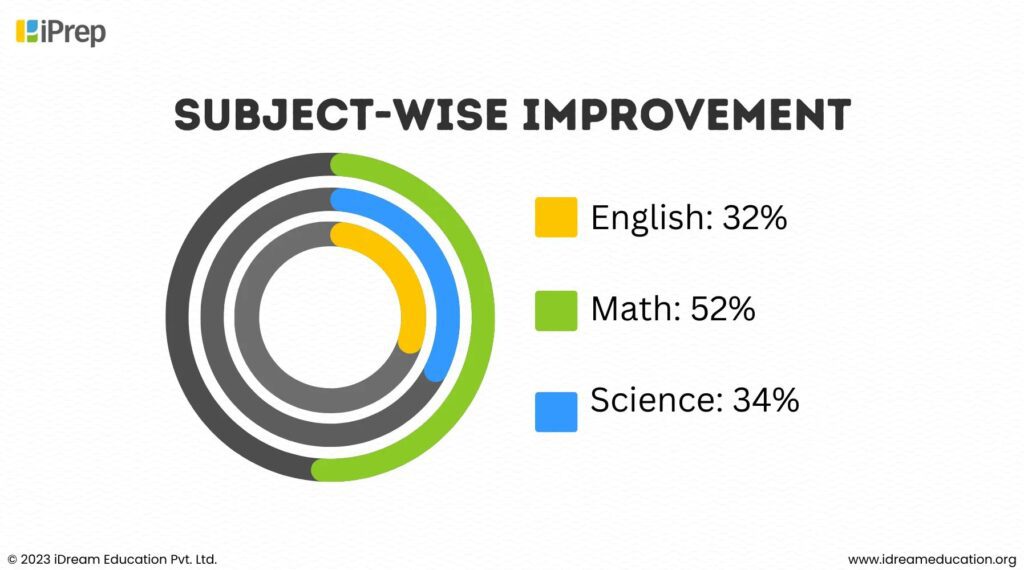
The survey demonstrates a significant upswing in performance across 3 Subjects:

Visual representation of impact assessment showcasing subject-wise improvement in student learning through the iPrep platform for home learning by iDream Education. Guided by the girl icons of the Milaan Foundation
  • English: Witnessing a 32% improvement,  students using iPrep displayed enhanced language proficiency.
  • Math: 52% of students exhibited elevated proficiency in mathematics, showcasing iPrep’s content comprehension in fostering a profound understanding of calculations, logic, and formulas.
  • Science: 34% growth in learning and understanding concepts of Science with the help of practical and project-based learning videos on iPrep.

The findings suggest more and more students are getting better at math, which is usually seen as a tough subject. This improvement is because of learning in the comfort of home with iPrep which lets students learn joyfully without the fear of being judged. iPrep makes math easy to understand by explaining things in a simple way, showing formulas clearly, and using visuals to make math concepts easy to grasp. It’s like playing a fun game while learning, and because of this, students end up understanding math ideas instead of just memorizing them. The improvement in performance from Baseline to endline is evident in iPrep’s math content which makes complex concepts less scary and more enjoyable for students.

Academic Progress: Grade-wise Improvement

Visual representation of impact assessment showcasing grade-wise improvement in student learning through the iPrep platform for home learning by iDream Education. Guided by the girl icons of the Milaan Foundation

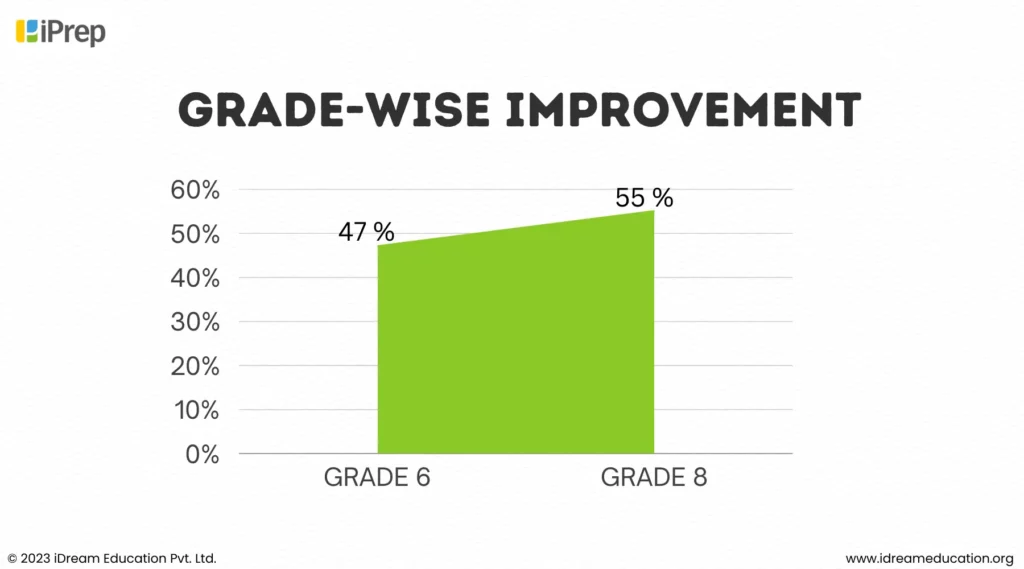
Sixth-grade students showed a 47% improvement in their overall performance. Meanwhile, eighth-grade students also did really well, with a significant 55% increase in their academic performance. The findings reveal a positive trend in student progress. It indicates significant improvement from baseline to endline assessment among 6th and 8th-grade students. This underscores the benefit of iPrep, a learning platform in helping non-school-going learners grow equivalent years of schooling. 

Subject matter experts at iDream Education work to curate content that aligns with students’ interests, ensuring engagement and comprehension. Committed to simplicity, we continuously strive to make learning easy and engaging for students. The content of iPrep is curated to ensure that all students are able to grasp the subject matter effortlessly, with or without guidance.

iPrep as a Catalyst for Change

The overall data underscores the positive impact of iPrep on students’ academic progress during home learning. It highlighted the consistent dedication of the Girl Icons of Milaan Foundation in guiding and teaching students through iPrep. While the results indicate encouraging strides, there remains room for improvement, emphasizing the need for ongoing enhancements.  The results show evidence of the impact of leveraging a comprehensive learning platform and the latter’s potential in terms of breaking barriers of learning and growth and paving the way for academic progress for every last-mile learner.

Stay Tuned for more insights from the programme which will hopefully give more insights and useful evidence for social sector programme planners.

If in case you would like to know more about iPrep by iDream Education, visit our website, www.idreameducation.org, or write to us at share@idreameducation.org

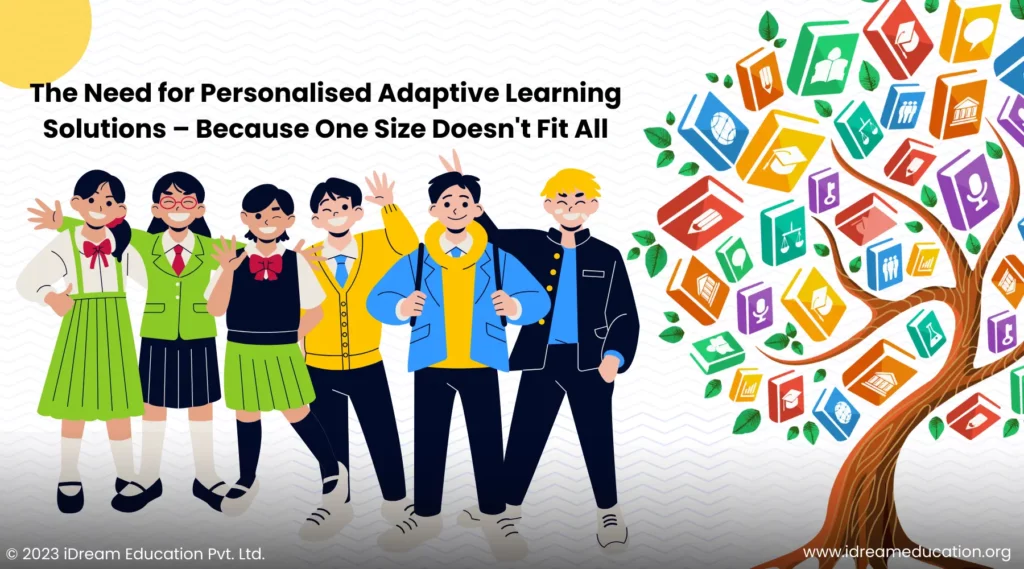
The Need for Personalized Adaptive Learning Solution – Because One Size Doesn’t Fit All

Personalized adaptive learning is emerging as a crucial concept to address the diverse and unique learning needs of individuals. In classroom settings, where teaching is a one-to-many approach, the challenge lies in the difficulty for teachers to tailor their teaching to suit the distinctive learning needs of each student. This limitation contributes to the emergence of learning gaps, stemming from factors such as irregularities in schools, student hesitancy to ask questions, language gaps, and more. 

Image illustrating need for personalized adaptive learning because one size does not fit all

The Rise of Personalized Adaptive Learning

The Rise of PAL is increasing because of shared awareness within the education system regarding the pervasive learning gaps. While traditional methods, such as in-person teaching and tuition after school, have been utilized for years to achieve this, there is still a gap.  

PAL enables Language Learning and fundamental Literacy and Numeracy and helps achieve NIPUN, Samagra Shiksha Abhiyan, PM e-vidya, PM SHRI, and India’s UN SDG 4 goals. 

Personalized adaptive learning is gaining popularity due to its ability to meet the unique pace and comprehension levels of each learner.  The concept of personalized adaptive learning is rising and is the need of the hour because it emphasizes assessing student’s current learning levels, identifying gaps in their understanding, and determining what they need to learn to bridge those gaps. 

How can Personalized Adaptive Learning Solutions be used to reduce the learning gap among students?

“You can do it before the lesson, you can do it during the lesson, you can do it after the lesson and you can do it for children who have never been in schools, said Asyia Kazmi, the Global Education Policy Lead at the Bill and Melinda Gates Foundation”

  • Before the Lesson: Teachers can use adaptive learning solutions to prepare students before the lesson, enabling them to cultivate a solid foundational understanding of the topic. This proves particularly beneficial during the actual teaching session, as students can then focus on the material, ask questions without hesitation, and engage more effectively.
  • During the lesson: During classroom teaching, PAL can be used by students under the guidance of their teachers. This approach minimizes the overall teaching burden on teachers. Instead, an optimal strategy involves students independently navigating through topics, taking assessments, and seeking assistance from teachers when they face challenges in comprehension. Alternatively, the class time can be split into 30-minute and 15-minute segments. During the initial 30 minutes, students can engage in PAL, while the remaining 15 minutes can be dedicated to targeted instruction and guidance from teachers on the specific topic.
  • After the lesson: PAL solution can also be given to students in the absence of teachers. To support student learning when teachers are occupied, students can engage in self-directed exercises. Alternatively, teachers assign exercises like homework, subsequently to assess their learning and progress. Through this teachers can gauge their learning levels, identify strengths and weaknesses, and tailor their teaching as per individual understanding.

Apart from this, PAL is an ideal solution for students who have either never attended school or dropped out, as it facilitates the bridging of knowledge gaps that may have accumulated in previous years. Students, without any hesitation or judgements, can use PAL to efficiently address and overcome their learning gap on an individual basis.

Is there an existing personalized adaptive solution that is already helping students overcome their learning gaps?

Yes, iPrep PAL by iDream Education given to more than 1.05L students of grade 11th and 12th by the Department of Education Haryana have improved the learning level of students to 44% percentage in 4 months across 3 subjects Business Studies, Geography and Economics.

What is iPrep PAL?

iPrep PAL is a structured app designed as per the EdTech Tulna Framework to assess students’ current learning levels and provide personalized guidance for them to attain grade-level proficiency. It can be given on tablets, notebooks, and mobile for classes 3rd to 12th all subjects in both English and Hindi medium. 

What does iPrep PAL offer?

It offers a diagnostic test for each chapter, followed by a personalized learning path for each student according to their current learning level. A combination of practice questions, along with constructive feedback, and remedial video content, guides students in addressing their learning gap. This comprehensive approach empowers students to grasp each topic thoroughly, bridging any historical gaps in understanding and enabling them to attain grade-level learning outcomes.

What makes the iPrep PAL Solution distinctive?

iPrep PAL is designed to meet individual learning needs and foster a positive learning environment for all students. 

  • iPrep PAL addresses individual learning needs and bridges historical gaps in students’ knowledge.
  • The PAL solution by iDream Education meets the unique pace and comprehension levels of each learner enabling a non-judgmental environment. With this students can focus on mastering concepts they may have previously struggled with or have skipped learning. 
  • iPrep PAL Solution eliminates comparisons between students fostering a positive learning environment.

Witness the Impact of iPrep Pal in Action

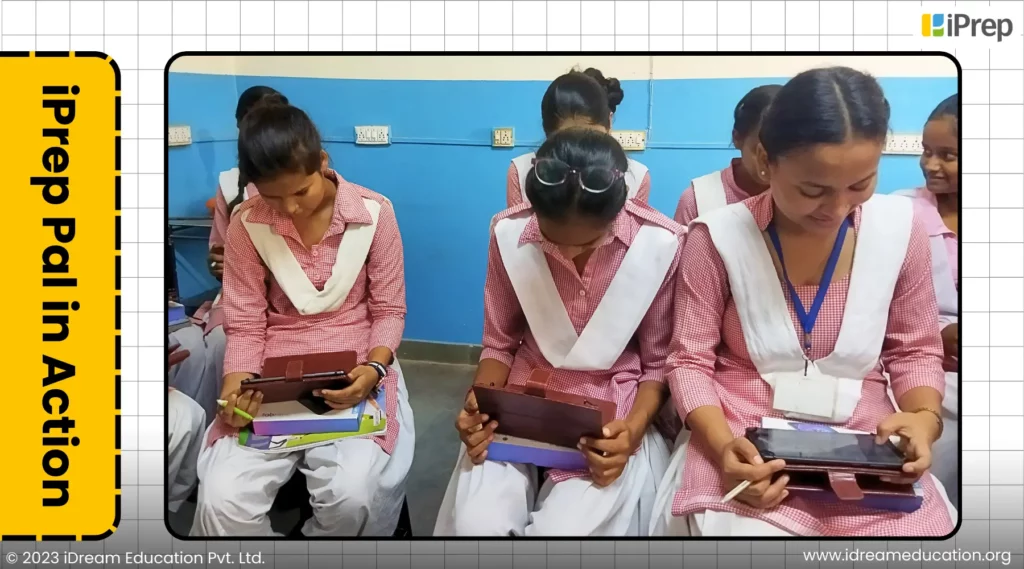
Students learning with iPrep PAL on tablets given to them under the e-Adhigam program initiated by the Department of Education, Haryana.

Presently, more than 150,000 students in Grades 11th and 12th in Haryana are using iPrep PAL for 4 subjects that is Geography, Business, Economics, and Accountancy. It is given as part of the PAL initiative under the e-Adhigam program by the Department of Education in Haryana. 

A photograph depicting the positive impact of iPrep PAL (Personalized Adaptive Learning) within the e-Adhigam Program of the Department of Education, Haryana.

The continuous use of iPrep PAL is showing positive results. It enables clearer grasp of foundational topics as per their individual learning levels. Usage data from the PAL initiative is demonstrating progressive outcomes, with students in Business, Economics, and Geography subjects exhibiting an average improvement of 44% as they transition from foundational learning to achieving proficiency at the grade level.

iPrep PAL Solution is on NEAT

iPrep PAL, a personalized and adaptive learning solution, is also listed on NEAT. NEAT is the initiative by the Ministry of Education (MoE) to establish a national alliance with EdTech companies through a Public-Private Partnership (PPP) model. 

If in case you would like to know about iPrep PAL, a personalized adaptive learning solution, visit our website, www.idreameducation.org, or write to us at share@idreameducation.org

Narrowing the Learning Gap to Meet FLN Goals under the NIPUN Bharat Mission

Explore how the PAL Solution addresses challenges highlighted in the ASER Report 2022, propelling us towards Foundational Literacy and Numeracy excellence to achieve the NIPUN Bharat Mission

An infographic showing the usage report of iPrep PAL Personalized Adaptive Learning Solution by iDream Education, narrowing the learning gap. The graph in image corresponds ASER Report 2022 emphasise on FLN Goals to attain Nipun Bharat Mission

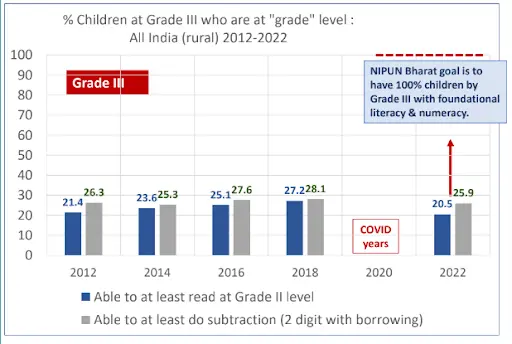
The ASER Report 2022 brings attention to nationwide statistics emphasizing fundamental reading and arithmetic skills among children aged 5-16. The examination reveals a steady enhancement in both basic reading and math from 2014 to 2018.

Unfortunately, the pandemic years disrupted the progress.

Percentage of Children in Grade III who are at “grade” level: All India (rural) 2012-2022

Image showcasing the ASER 2022 results, highlighting the grade-level proficiency of Class 3 students in mathematics and reading.

As of 2022, merely 25% of Grade III students demonstrated proficiency at the ‘grade level’ in mathematics, and approximately 20% achieved the same in reading.

However, the report also highlights significant disparities among states in both learning levels and the recovery process, particularly in Grade III. 

The report indicates that even before COVID-19, there was substantial variation in basic learning levels across states. The pandemic has further worsened the situation in numerous states. The degree of decline in math proficiency between 2018 and 2022 also varies significantly among states. Nevertheless, certain states have demonstrated that quick progress is achievable.

Key Insights: Takeaways from the Data

  • This implies that the majority of children require immediate assistance in developing Foundational Literacy Numeracy skills. 
  • A significant effort is necessary in the early grades to ensure that children can achieve the NIPUN Bharat Mission in the coming years.

How can we achieve Foundational Literacy and Numeracy skills to fulfill the NIPUN Bharat Mission?

We firmly believe that in classroom teaching, a one-to-many approach, assessing individual learning levels can be a concern for a teacher, leading to the emergence of learning gaps. The post-COVID era worsened these gaps, particularly in the early stages of learning, where students heavily depend on their teachers for guidance. 

This leads to an imperative need for Personalized Adaptive Learning Solutions

iPrep PAL is one such digital learning solution meticulously designed and tailored for adaptive learning, offering a suitable approach to help students from Grade 3 and beyond establish a strong foundation before progressing to higher grades.

Image showing usage reports of iPrep PAL solution Narrowing the Learning Gap to Meet FLN Goals under the NIPUN Bharat Mission

Already in use by students of Class 11th and 12th across schools in Haryana, PAL has demonstrated positive outcomes. Students are gaining clarity on foundational topics and chapters based on their unique learning levels. Data from PAL usage in Grades 11th and 12th indicates students in the subjects of Business, Economics, and Geography showed an average improvement of 44% as they transitioned from foundational learning to achieving proficiency at the grade level.

To ensure that “children who fall behind, don’t get left behind, as specified in Nipun Bharat Mission” requires a personalized adaptive learning approach. iPrep PAL is an adaptive learning solution for students from 3rd to 12th grade because we believe starting as early as 3rd grade, students exhibit curiosity and the ability to learn independently, guided by adaptive support, said

Abhinav Bhatnagar 

Senior Manager – Product and Growth at iDream Education

The PAL solution, crafted for adaptive learning, is well-suited for students from Grade 3 onward. 

If in case you would like to know more about iPrep PAL, a Personalized Adaptive Learning Solution by iDream Education, visit their website, www.idreameducation.org, or write at share@idreameducation.org

Adaptive Learning Technology: Guiding Us Why One-Size-Fits-All No Longer Works

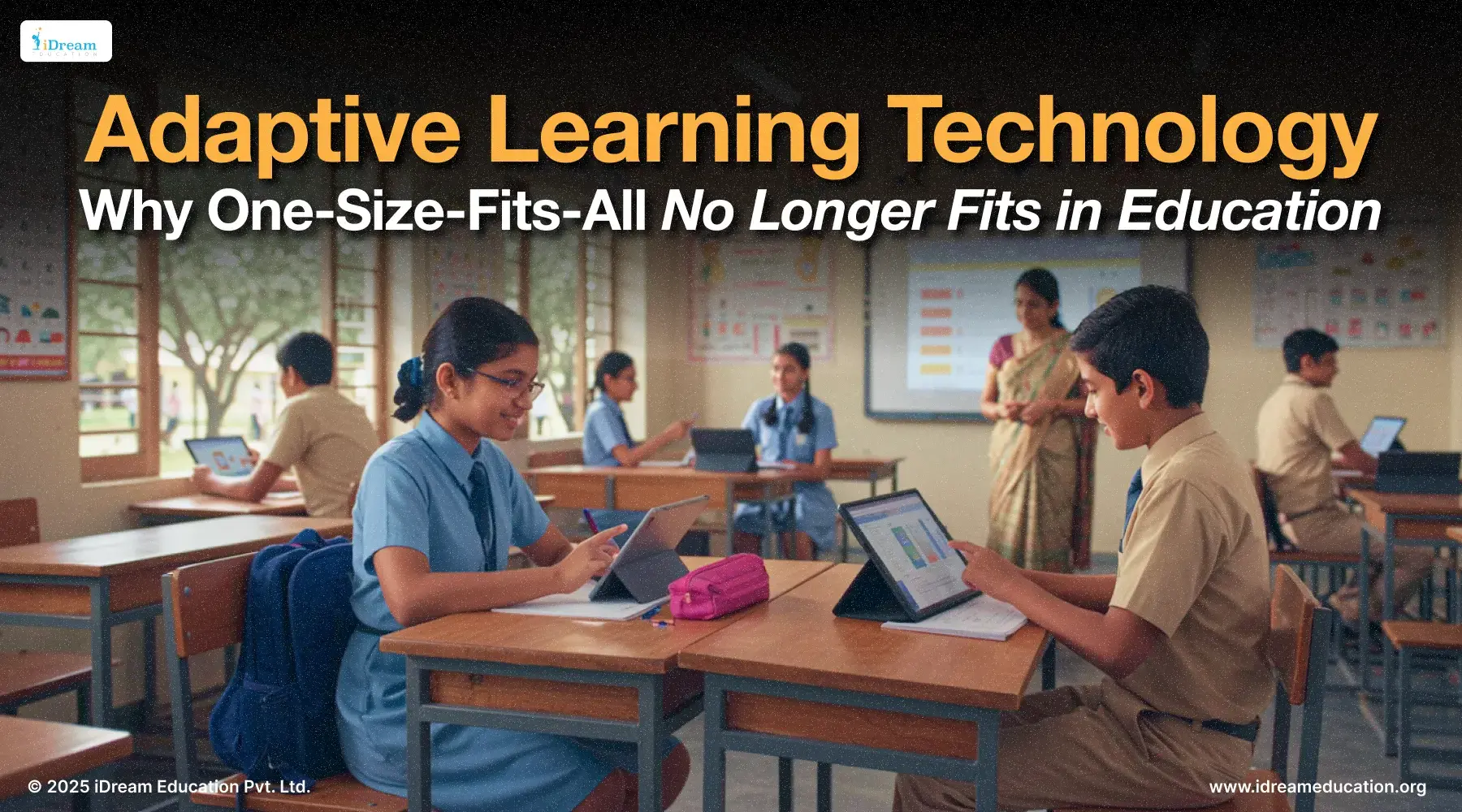
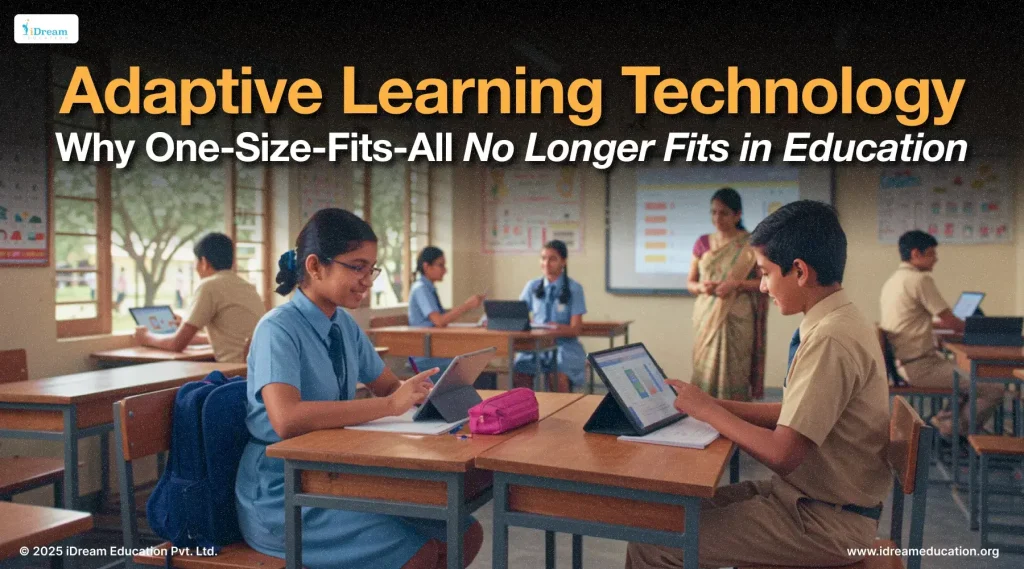
Illustration showing a student using a PAL software on a tablet on the blog's cover image that is focused on how adaptive learning technology customizes education based on individual needs and performance

Education in India and across the world is at a crucial crossroads. Over the years, rapid changes in curricula, digital integration, evolving student needs, and the push for equity have exposed a fundamental truth: every learner is different, and teaching must reflect that.

No two students learn the same way. Some grasp concepts quickly, while others need more time and support. Some thrive visually, others through practice or discussion. Yet, for decades, education systems have largely followed a standardised, one-size-fits-all approach—often leaving behind those who don’t fit the mold.

Adaptive learning technology challenges this norm. 

By using real-time data on student data, performance, and progress, it personalizes the learning journey. It shows content basis the foundational learning level and support based on each learner’s unique needs. This isn’t just an upgrade in digital learning; it’s a shift in mindset from delivering content to enabling learning outcomes. It is a step forward to empower students to cover their historical learning gaps.

When teachers, EdTech enablers, NGOs, policymakers, and other people in ecosystem rethink how to close learning gaps and make education truly inclusive, adaptive learning technology emerges as a powerful, necessary solution. It’s not just about using technology, it’s about using it intelligently to restore the core purpose of education: helping every child grow.

Let’s Get Deeper: What is Adaptive Learning Technology?

In every classroom, students arrive with a wide spectrum of learning levels. These differences are often the result of years of varied academic exposure, inconsistent teaching quality, limited access to learning resources, and personal challenges. Over time, such factors contribute to historical learning gaps that make it difficult for students to engage confidently with the current curriculum. These gaps don’t just affect performance in a single subject—they ripple across the entire learning journey, slowing progress and reducing confidence.

Adaptive learning technology offers a promising solution to this deeply rooted challenge. At its core, adaptive learning technology uses data-driven instruction to adjust and personalize educational content based on each learner’s needs. By continuously tracking student data such as usage, engagement and progress, personalized adaptive systems create dynamic learning paths that evolve in real-time, ensuring that students receive the right support at the right moment.

While equal access to education means every student gets the same resources, equity in education means every student gets what they need to succeed. This is where adaptive learning shines. By combining adaptive instruction, assessment, and remediation, it builds a more equitable learning experience. This ensures no student is left behind simply because they started from a different place.

Our own solution: iPrep PAL (Personalized and Adaptive Learning Technological Solution) is designed precisely with this mission in mind.

Built on the EdTech Tulna Framework, iPrep PAL begins each chapter with a Diagnostic Test to understand a student’s existing knowledge and gaps. Based on this, it creates a personalized learning path, directing learners through remedial video lessons and adaptive practice questions tailored to their unique needs. With every interaction, iPrep PAL helps students bridge historical learning gaps, master concepts, and reach their grade-level learning outcomes, empowering them with the confidence and competence to thrive.

Comparing adaptive learning with non-adaptive learning

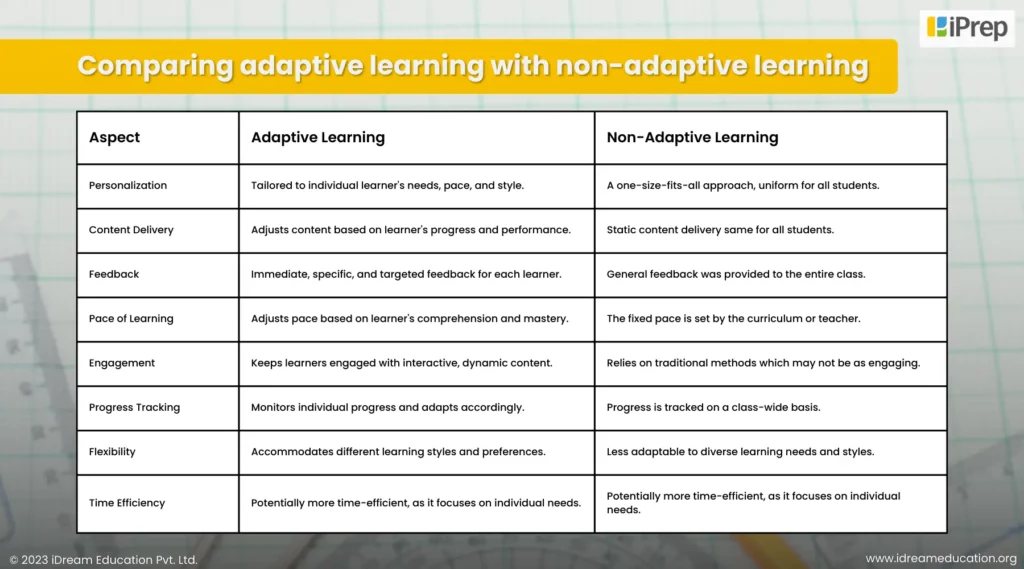
A visual showing Comparison of adaptive and non-adaptive learning technology for schools across key aspects.
Enhancing Education: Contrasting Adaptive and Non-Adaptive Learning Technology for Schools
AspectAdaptive LearningNon-Adaptive Learning
PersonalizationTailored to individual learner’s needs, pace, and style.A one-size-fits-all approach, uniform for all students.
Content DeliveryAdjusts content based on the learner’s progress and performance.Static content delivery  – same for all students.
FeedbackImmediate, specific, and targeted feedback or remedial content & practice for each learner.General feedback was provided to the entire class or every student.
The Pace of LearningAdjusts pace based on the learner’s comprehension and mastery.A fixed pace is set by the curriculum or teacher.
EngagementKeeps learners engaged with interactive, dynamic content.Relies on traditional methods which may not be as engaging.
Progress TrackingMonitors individual progress and adapts accordingly.Progress is tracked on a class-wide basis.
FlexibilityAccommodates different learning styles and preferences.Less adaptable to diverse learning needs and styles.
Time EfficiencyPotentially more time-efficient, as it focuses on individual needs and learning outcomes.Potentially less time-efficient, as it does not focus on individual needs and learning outcomes.

It’s important to note that both adaptive and non-adaptive learning approaches have their own strengths and can complement each other in an educational setting. Adaptive learning technology for schools aims to enhance the learning experience by providing personalized support, while non-adaptive methods offer structure and consistency across a broader group of learners.

What Makes Learning Truly Adaptive? Understanding Adaptivity Factors

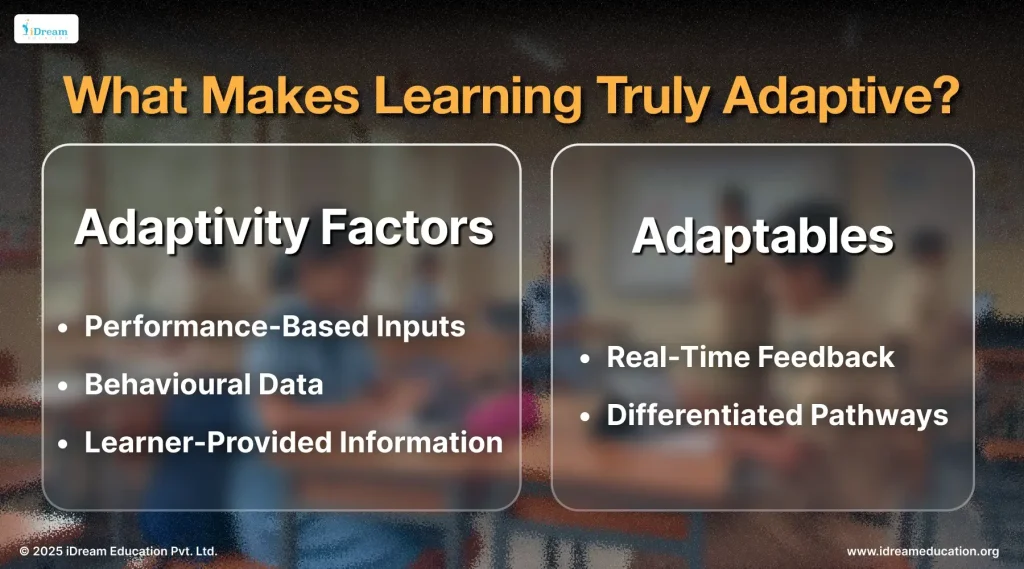
Visual highlighting key features of adaptive learning platform, like real-time feedback, personalised content recommendations, progress tracking, and student engagement designed to meet diverse learning needs

To deliver a truly personalized learning solution, adaptive systems must go beyond just surface-level data. They need to understand how each student learns, where they struggle, and what motivates them. This is made possible through various adaptivity factors—key inputs that help tailor the learning experience dynamically for each learner.

Here are the core factors that drive adaptivity:

1. Performance-Based Inputs

These are the most immediate and measurable indicators. Adaptive systems evaluate:

  • Whether the learner answered a question correctly or incorrectly
  • How their performance trends across a series of tasks, topics, or lessons
  • How often errors are repeated and where mastery has been achieved

Such data helps identify where reinforcement is needed or where a learner is ready to advance.

2. Behavioral Data

Not all insights come from correct answers. But, how a student interacts with the content also matters. Adaptive systems track:

  • Hesitations, skips, or repeated attempts
  • Patterns of engagement or disengagement

This behavioral layer adds nuance, helping the system adjust pacing, difficulty, and format to better suit the learner’s rhythm.

3. Learner-Provided Information

Sometimes, the best source of insight is the students themselves. Adaptive learning technological platforms gather:

  • Preferences for content types—like videos, quizzes, or reading material.
  • Profile details such as age, language comfort, or prior exposure to the subject basis diagnostic scores

This information allows the system to align content not just with a learner’s skill level, but also with their mindset and learning style. Together, these adaptivity factors are considered to build a solution such as iPrep PAL to evolve from simply delivering content to curating a journey—one that’s responsive, relevant, and rigorously focused on helping every student succeed

Ways Adaptive Learning Solution Adjusts to Student Needs

Once an adaptive learning system has captured and analyzed relevant learner data, the next critical step is how it responds. These responses can be called adaptables. These are the real-time changes made to the learning journey based on each student’s unique performance, behavior, and preferences.

Here are two of the most impactful adaptables in effective adaptive learning systems:

1. Real-Time Feedback

One of the most valuable features of adaptive learning technology is its ability to offer immediate and contextual guidance. Much like a tutor sitting beside a student, the system can:

  • Offer hints or prompts when students find themselves stuck
  • Provide explanatory feedback when a wrong answer is selected
  • Reinforce concepts when mastery is not yet achieved

This just-in-time support keeps learners from getting stuck or discouraged, encouraging a continuous flow of learning and self-correction.

2. Differentiated Pathways

No two learners need to walk the same path. Adaptive systems dynamically alter the sequence and nature of content delivery, enabling:

  • Remediation before progression: Students struggling with a concept receive extra support, such as simpler practice or remedial videos, before moving ahead.
  • Choice-driven learning: Learners are empowered to choose their next topic, promoting autonomy and engagement.

These adaptables ensure that the system isn’t just responding to performance, but actually guiding students toward better outcomes—each at their own pace, in their own way.

At iPrep PAL, both real-time feedback and differentiated learning pathways are deeply embedded in the design. Whether it’s through immediate hints after a diagnostic question or a restructured learning path based on ongoing performance, iPrep PAL adapts constantly just like an effective teacher would in a one-on-one session.

The Benefits of Adaptive Learning Technology

In today’s classrooms, where student-to-teacher ratios remain high and learning levels vary widely, adaptive learning technology emerges as a powerful tool for students as well as teachers. It’s becoming increasingly unrealistic to expect teachers to individually guide every student through each lesson. This is where adaptive learning steps in, enhancing the teaching experience and expanding the reach of quality instruction.

  • By leveraging real-time data, adaptive platforms dynamically respond to how each student learns. This helps teachers identify strengths, pinpoint gaps, and enhance teaching accordingly. For teachers, this means they no longer have to rely solely on standard lesson plans. Basis adaptive data, they can provide tailored support through differentiated tasks, and personalized feedback. It helps ensure that both advanced and at-risk learners get the attention they deserve.
  • From knowing diagnostics scores to remedial videos and remedial practice for revisiting complex concepts, adaptive technology empowers students to design inclusive learning journeys. It increases engagement in the learning, and, most importantly, helps them cover their historical learning gaps without judgement.

Explore More Advantages of Personalized Adaptive Learning

A Collective Leap Forward: Celebrating the Impact of Adaptive Learning Technology in India

The transformative potential of adaptive learning came into sharp focus in May 2025, during the launch of PAL Works in New Delhi — a landmark event for Personalized Adaptive Learning in India’s public education system. Bringing together over 100 senior leaders from government, EdTech, philanthropy, and research, the event served as a powerful testament to the growing momentum behind scalable, inclusive learning solutions.

We were happy to showcase our iPrep PAL solution at the event, in collaboration with two of our partners. Their on-ground support has been instrumental in demonstrating how adaptive learning technology can bridge foundational learning gaps while also enhancing teacher effectiveness. It was deeply rewarding to witness how regularly engaged students have shown tangible learning gains. This is proof that when thoughtfully implemented, adaptive learning technology can truly become a force multiplier in education.

As India continues its journey towards more equitable and outcome-driven education, adaptive learning technological solutions such as iPrep PAL will play a key role in bridging gaps, driving engagement, and empowering every stakeholder in the classroom.

If you would like to experience how iPrep PAL, our adaptive learning technology, works in action, we’d be happy to schedule a demo. You can reach us at +917678265039">+91 7678265039. You can also write to us at connectrohit@idreameducation.org or share your details here.