A new batch of laptops or smart boards arrives in a government school as part of an EdTech rollout, and a training session gets scheduled soon after. On paper, that’s the job done: hardware delivered, teachers trained. But whether teachers use what they were trained on is a different question, and almost nobody asks that.
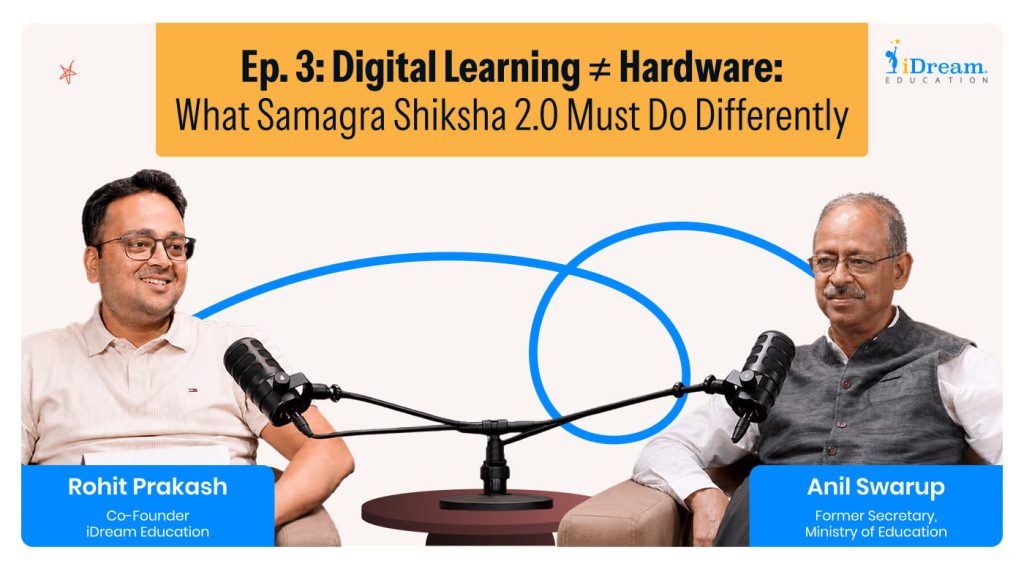
In episode one of Digital Learning ≠ Hardware, Shri Anil Swarup, former Secretary, Ministry of Education, explained why states buy hardware first and figure out the rest later. In episode two, Rohit Prakash, co-founder of iDream Education, sits down with him again. This time, the discussion is on teacher training.
Picture this: a state organises a training, teachers show up, sign the register, and leave. Ask the same teacher a week later what the training was about, and most won’t remember. This is true, and it happens. The laptops and smart boards that the training was meant to prepare them for stayed locked in the cupboard.
Mr. Swarup says the fix starts with one basic question most states never ask: who should be sent to training, and why.
Prefer to read? The key insights follow.
Why Teacher Selection Decides Whether Training Works
Most states treat training as a numbers exercise. A school is asked to send a teacher. Someone goes, often without anyone checking whether that person needs the training or can / will even use it.
Mr. Anil put it down to a single distinction, and that’s training gets designed around numbers, not individuals.
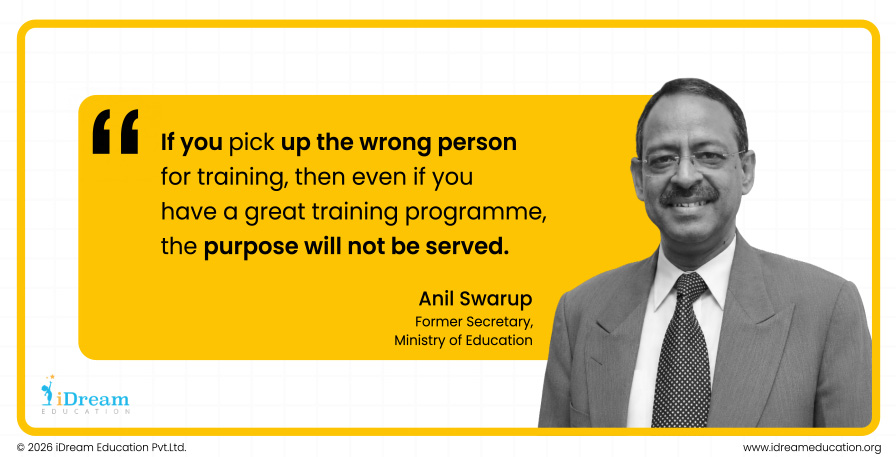
“If you pick up the wrong person there [for training], then even if you have a great training programme, the purpose will not be served.”
— Shri Anil Swarup, former Secretary, Ministry of Education
This shows up the moment a school picks who to send. An English teacher doesn’t need a session on operating a computer lab. Someone with no prior exposure to computers won’t be able to make sense of it either, at least not in a single sitting.
But DIKSHA changed that, ensuring it’s no longer guesswork. DIKSHA (Digital Infrastructure for Knowledge Sharing) is the Ministry of Education’s national database for teachers. holds each teacher’s subject, qualifications, and training history. That data makes it possible to match the right teacher to the right training, instead of just filling a quota.
But then again, getting the right teacher into the room solves one problem. It doesn’t solve the next one: getting that teacher to actually use what they were taught.
What Actually Gets a Teacher to Use the Technology
Financial incentives don’t fix this. Government school teachers already juggle teaching with a mountain of paperwork. What moves them isn’t more money; it’s less paperwork.
Take attendance, for example: a biometric system means a teacher no longer has to call out each name and mark a register by hand. The record happens on its own. The bigger saving is in routine reporting, where most of a monthly form repeats what was filled in the month before. Only the small part that’s actually changed needs updating, and software can fill in the rest. Leave applications that used to mean a trip to the block office, filing paperwork, and waiting for approval, now it happens entirely online.
“Reduction in all these activities [filling forms, marking attendance, applying for leave], which we did earlier, can be a value proposition to the teacher.”
—Shri Anil Swarup, on why less paperwork beats a bigger paycheck.
None of this needs a lecture about how data tracking improves outcomes. It needs to show the teacher what’s no longer on their desk. But showing that value depends on one thing: who’s standing in front of them, in that room.
The Trainer Matters as Much as the Training Itself
Most vendors running training sessions are hardware technicians. The same company that supplied the equipment usually sends them. They can explain which button does what. However, they can’t explain why a teacher should care, because they’ve never taught a classroom themselves.
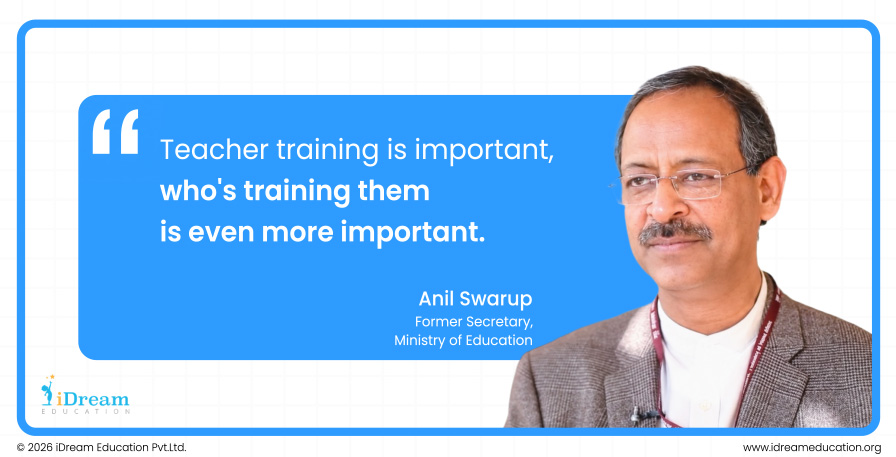
“Whereas [teacher] training is important, who’s training them is even more important.”
— Shri Anil Swarup, former Secretary, Ministry of Education
A hardware technician can walk a teacher through which menu to open. Only someone who has used the system in their own classroom can tell a teacher what changed because of it.
Shri Anil Swarup illustrated this with something from his own life. As a student, he couldn’t make sense of Archimedes’ principle from a textbook, no matter how many times he tried. Decades later, as Secretary of School Education, he watched a ninety-second video that explained the same idea in one sitting. The example matters because of where it came from. It wasn’t a vendor’s pitch. It came from someone who had felt that gap himself, between reading something and actually seeing it.
There’s a second reason experienced teachers make better trainers, and it has nothing to do with skill. It’s recognition.
A teacher known across their district as “the trainer” gets a kind of status no daily allowance can match. Once a few teachers earn that recognition, others start angling to be next.
But it all falls apart if nobody ever finds out whether the training worked.
Without Feedback, Teachers Forget the Training
One example came up directly in the conversation. Teachers gave good feedback right after a training session. But ten days later, the same teachers couldn’t recall what the training was even about.
“I’ve been in the government for 38 years. There are hardly any institutionalised feedback mechanisms in government.”
— Shri Anil Swarup, former Secretary, Ministry of Education
That’s not a comment about one training session. It describes how the whole system works: decisions get made; however, nobody checks if they worked. Teacher training is no different.
What he proposed instead is to collect feedback in two stages.
- One form goes out right after the session. And a second goes out a month later, asking what the teacher used and what they still need.
- The second form matters more. A teacher who knows a follow-up is coming has a reason to pay attention the first time.
None of this happens unless someone above the classroom decides it should.
The Fix Starts Above the Classroom
Training reform starts with the people who approve budgets, not the people who run sessions. State decision-makers need to treat better learning outcomes as the real goal. Get that wrong, and everything built afterward inherits the mistake. The fix sounds simple: test what children know before the hardware arrives, train teachers and roll it out, then check a year later if anything actually improved.
Across the smart classrooms iDream Education has worked on, two things consistently worked.
- One: training that shows teachers the value first, not just the operations.
- Two: a monthly review where usage data goes back to teachers and school leaders, instead of sitting in a report nobody reads.
Apart from the two above, what also helped was teacher groups on WhatsApp, where teachers share videos of what they’re doing in their own classrooms. Seeing a fellow teacher’s video carries more weight than hearing it from an outsider.
“Technology is just a tool. Hardware is just a tool. The guys who are going to make it happen are the teachers.”
— Shri Anil Swarup, former Secretary, Ministry of Education
Every point in this conversation (who gets picked, what motivates them, who trains them, whether anyone checks back) comes down to that one line. None of it is background work sitting under the technology. It is the work itself.
Watch the full conversation between Rohit Prakash and Shri Anil Swarup above for the complete discussion on building teacher training that doesn’t get forgotten in a week.
Categories You may Explore
Related Articles