

Rajasthan has historically faced significant challenges in girls’ education. Although enrolment and literacy have improved over the years, many girls from underserved communities continue to face barriers to accessing quality education and engaging learning experiences that build strong conceptual understanding.
To bridge this gap, the Government of India established Kasturba Gandhi Balika Vidyalaya (KGBV) residential schools, providing girls from disadvantaged and marginalized communities with a safe environment and access to education. These schools have played an important role in ensuring that girls who are at risk of dropping out are able to continue their education.
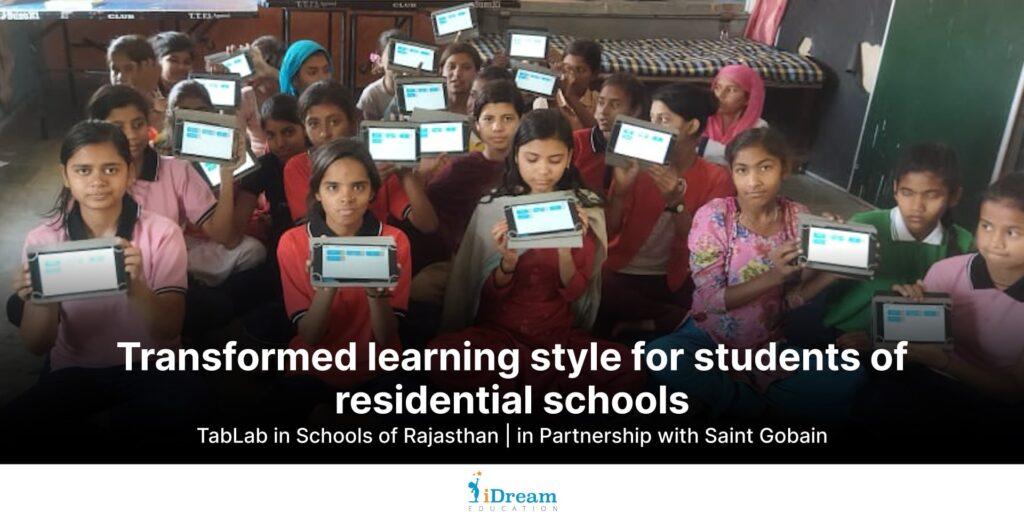
As part of its commitment to strengthening educational outcomes, the CSR arm of a leading French multinational corporation is closely working with these residential schools in Rajasthan. Through regular interactions with teachers and students, the Foundation’s project coordinators identified a common challenge – many girls found it difficult to grasp practical and abstract concepts through traditional classroom teaching. Teachers shared that students often requested videos and visual explanations to better understand classroom lessons. Recognizing this need, the Foundation partnered with us to introduce tablet-based digital learning. Equipped with curriculum-aligned, multimedia-rich content.
The project started with a need assessment. Our team validated the learning challenges identified through interactions with teachers and students. Based on these insights, the foundation partnered with us to implement the iPrep Digital Library across residential schools in Rajasthan. The solution was introduced as a TabLab – a tablet-based smart ICT lab comprising a secure tablet charging and storage trolley with tablets that students can use on a rotational basis. Designed to provide equitable access to high-quality digital learning resources, the TabLab enables engaging, curriculum-aligned learning experiences while maximizing the utilization of devices across classrooms.
Objective of implementing tablet based learning
To make learning enjoyable, easy, and engaging for students.
Project Components
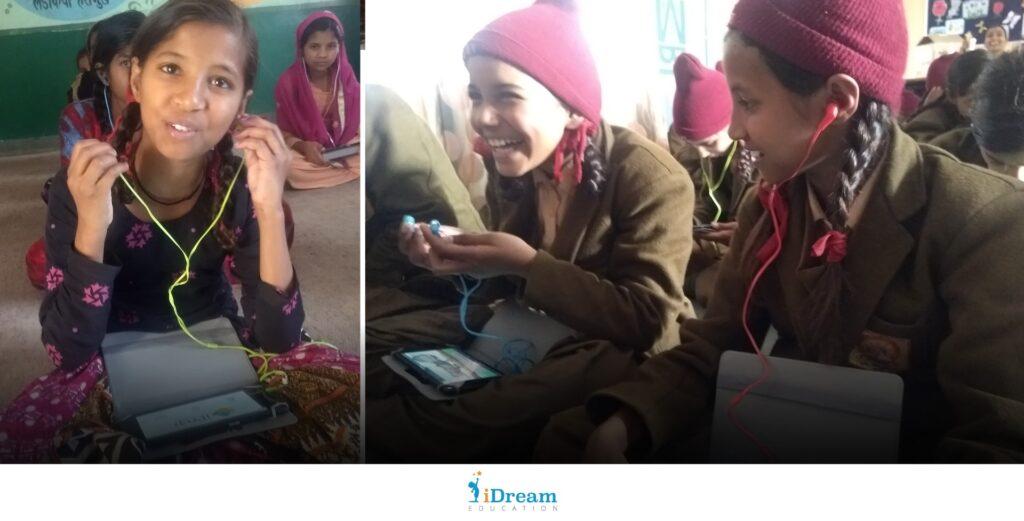
- In TabLab, we provided them with 20, 7inch Android tablets. Earphones and a book-style protective cover were also given with each tablet to make learning hassle free.
- The tablets were preloaded with Hindi digital content on SD cards. Further, all the content for classes 5th to 8th of all subjects was in alignment with Rajsthan Board. All of this, to make the adoption of digital content easy and natural.
- DIY and other activity videos for practical learning. Further, to make learning holistic we also enable access to books on health, safety, sanitation, inspirational biographies, and much more.
- Assessment and MCQ style practice questions to boost the confidence of girls on topics learned.
- Reporting dashboard for continuous monitoring of learning in progress. Through this, teachers, principals, and project partners can determine how effectively girls are using tablets for learning.
Project Impact
- Improved creative learning
When students got access to tablets and digital content they had wanted for a long time, they explored it to their maximum capacity. In a month, they explored most educational and activity videos to know the practicality of what they have been taught in the last few years. Additionally, all of them participated in activity day and prepared their own working models.
- Some developed a reading habit
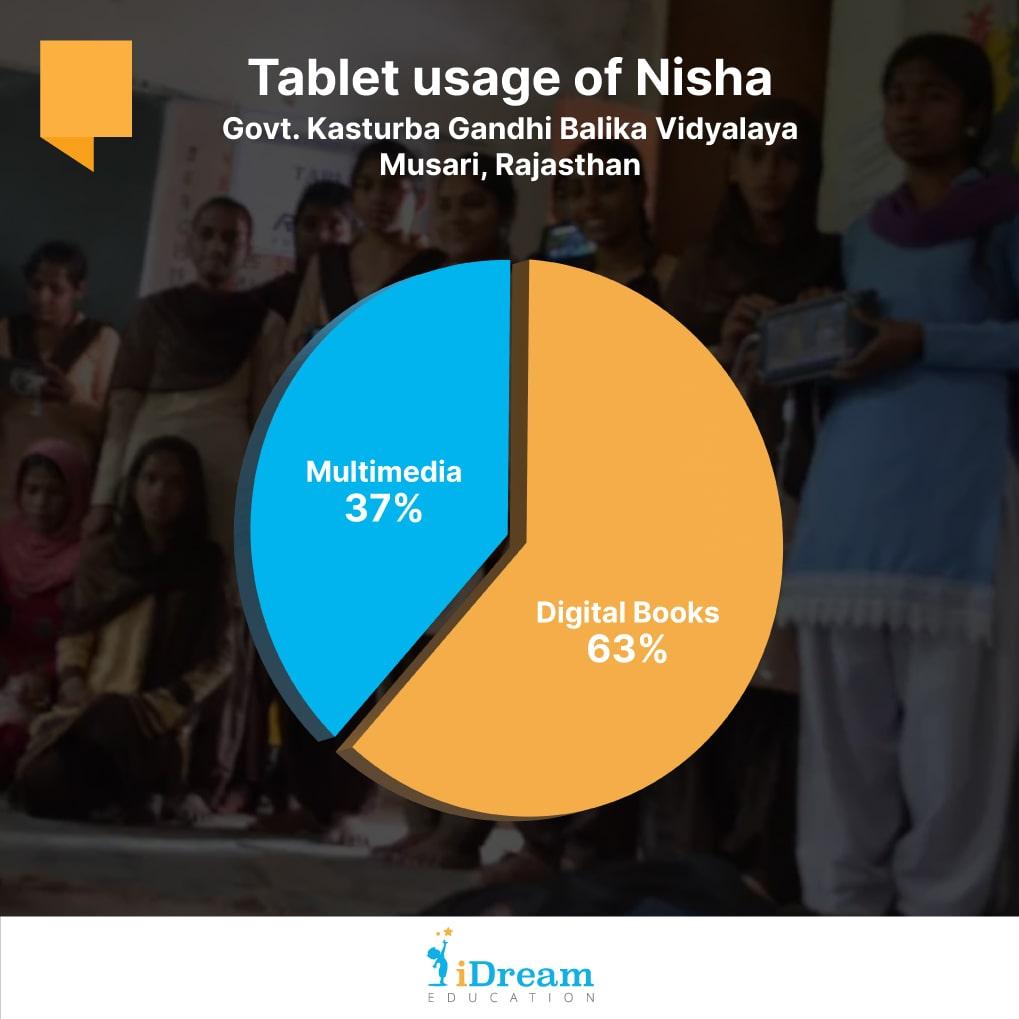
Because of the availability of digital books on inspirational biographies, poems, stories, safety, sanitation, and much more, girls from the residential school of Bhiwadi developed a reading habit. One such girl from the school is Nisha, who we haven’t personally met, but while we were reviewing usage reports, we found out that between multimedia and digital books, Nisha has spent a staggering 63% of the time reading digital books. Before this, she did not have access to books, and her interest would have waned off, but with the availability of digital books on tablets, she is now exploring her potential to the fullest.
- Better Result
Because students now had access to all the types of content they were looking for, their involvement in learning increased. Moreover, girls started staying back in classes, learning from the content of junior classes. This improved their understanding of concepts they missed in previous years, resulting in an improved understanding of students and better results.
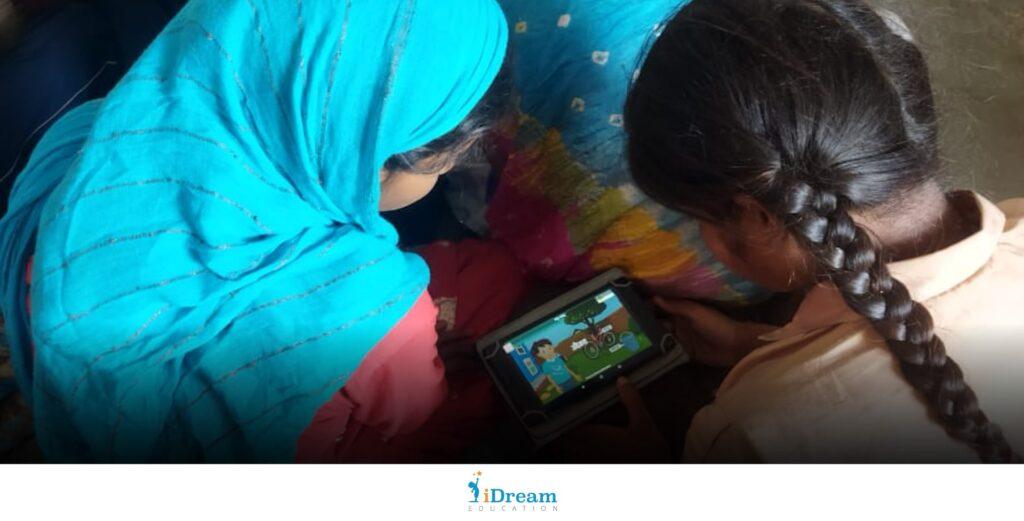
Thus, to ensure continuity in student learning, our team enables continuous support and coordinates with teachers and principals of Residential schools in Rajasthan regularly.
If in case you would like to know more about our digital learning solutions, comment below or write to us at [email protected]
idreameducation.org
Categories You may Explore
Related Articles