Digital Classroom for Government Schools: Cost & Implementation

Cover image of a blog on Digital Classroom for Government Schools, guiding you to cost and implementation details from iDream Education

The concept of Digital Classrooms has gained significant momentum in recent years, particularly in government schools where accessibility, affordability, and implementation challenges are critical. With governments, NGOs, and education-focused foundations working towards modernizing classrooms, integrating digital classroom solutions has become their key focus area. Therefore, decision-makers are actively exploring cost-effective and scalable digital classroom solutions. The focus is not just on adopting technology but also on ensuring its seamless implementation, training teachers, ensuring adoption, and maximizing student engagement. 

Evolution of Digital Classroom in Government Schools

Technology integration in education has shifted from being an alternative learning model to a core component of education systems. With advancements such as:

  • Smartboards and interactive learning platforms
  • Hybrid learning models integrating classroom & home-based education
  • Use of digital assessment tools & progress-tracking systems

Governments/ Foundations/ NGOs are actively working to revamp school infrastructure and standardize digital learning across public education.

With the rising adoption of digital classroom for government schools, cost considerations and implementation challenges have become key factors to consider for decision-makers.

Let’s break down the key investment and setup costs factors:

Initial Digital Classroom Costs

The cost of a digital classroom largely depends on the type of solution being implemented. Decision-makers need to determine whether they are opting for smart TVs, tablets, digital libraries, ICT labs, Chromebooks, interactive flat panels (IFPs), or other digital class hardware. The choice of hardware significantly influences the overall budget. Here are some price ranges for digital classroom hardware: 

Digital Classroom Cost Breakdown
Digital Classroom HardwareSolution TypePrice Range
Personalized TabletStudent- Centric12K to 15K
ICT Lab with TabletsStudent- Centric2.5 to 3.5 Lakh
ICT Lab with ChromebookStudent- Centric11 to 12 Lakh
ChromebookStudent- Centric30K to 32K
Adaptive Learning TabletStudent- Centric15K to 18K
Adaptive Learning  ChromebookStudent- Centric45K to 50K
Smart TVTeacher-Centric20K to 80K
Interactive Flat PanelTeacher-Centric80K to 2 Lakhs
ProjectorsTeacher-Centric20K to 60K
Digital Book Library Student- Centric2.5 to 3.5 Lakh

These are common digital classroom costs considered and requested by partners. You can choose the hardware of your preference, and our team will guide you in getting the best possible price. Additionally, we can enable LMS and digital content on your selected hardware.

Digital Classroom Add-Ons

Decision-makers planning and working to implement digital classroom projects often look for a setup that ensures backup, virtual lessons, and enhanced sound efficiency. The digital classroom setup cost typically includes essential tools such as a webcam for interactive virtual lessons, a sound bar for improved audio clarity, WiFi dongle for internet connectivity, a UPS and battery inverter with an interactive flat panel (IFP) to ensure an uninterrupted power supply, and digital content along with a learning management system (LMS) for structured learning and resource management. With these add-ons, the digital classroom cost increases, but they also enhance the teaching-learning experience in schools and expand the scope of digital classrooms by enabling virtual lessons, addressing large classrooms, and ensuring uninterrupted learning.

Location and Logistics

The location of schools plays a vital role in defining delivery costs and logistical challenges. Remote areas may require additional planning for transportation, special handling of devices, and securing proper infrastructure, all of which can increase or reduce the total digital classroom cost.

Teacher and Student Training

Training is another major cost factor. If the project requires on-ground training for teachers and students, expenses such as travel, accommodation, resource management, must be considered. These costs can vary depending on the scale and mode of training (online vs. in-person).

Long-term Sustainability

For long-term projects (three or more years), additional costs arise for maintenance, software updates, re-training, and digital content upgrades. While these costs may not be significant initially, they need to be considered as part of ongoing project expenses.

Custom Digital Content

The type of digital content provided also impacts digital classroom costs. If the digital classroom for government schools covers all grade levels and subjects, the pricing is usually standardized. However, for specialized content tailored to specific subjects or grade levels, the costs can vary based on customization requirements.

By carefully considering these digital classroom cost factors, decision-makers can better plan and optimize investment in digital classroom for government schools, ensuring effective implementation and sustainability.

Let’s break down the key factors to be considered when implementing digital classroom for government schools

Illustration highlighting key factors to consider when implementing a digital classroom for government schools

Willingness of Teachers and Students to Adopt Technology

One of the most crucial factors in successfully implementing digital classrooms is ensuring that both teachers and students are open to using the technology regularly. To achieve this, decision-makers should actively engage with them during the planning phase. This can be done during school profiling or project discussions, ensuring that the implementation aligns with their needs and maximizes the impact of the digital solutions.

Understanding the School’s Needs

Before implementing a digital classroom for government schools, it is essential to assess what the school actually requires. Some schools may already have digital classroom hardware but are unable to use it due to a lack of internet access, relevant content, or ease of use. In such cases, instead of investing in new hardware, decision-makers should focus on enabling a Learning Management System (LMS) that is compatible with existing devices and providing offline digital content aligned with the curriculum for seamless adoption.

Selecting the Best-Fit Solution

For schools without any existing digital classroom infrastructure, a needs assessment should be conducted to determine the most suitable solution. This includes deciding on the type of hardware (teacher-centric or student-centric), target grade levels, subjects, language preferences, and other factors to ensure the solution meets the specific needs of the school.

Experiential Training for Teachers and Students

Training is a critical component of digital classroom implementation, as it ensures that stakeholders are comfortable using the technology. Experiential training, which includes hands-on practice and interactive sessions, helps teachers and students gain confidence. Additionally, retraining should be provided as needed to reinforce learning and address any challenges that arise.

On-Ground Engagement and Community Involvement

Successful digital classroom implementation also requires continuous engagement with students through interactive activities, training sessions, and special events such as Science Day, STEM Day, and Children’s Day. These initiatives create a sense of belonging and encourage active participation. Strong partnerships of schools with implementing  and social sector partners further enhance the impact of digital learning solutions.

When implementing digital classrooms in government schools, there could be more factors to be considered. This can be achieved by having detailed discussions about the implementation with your implementing partners. Their on-ground teams, who work directly with schools, teachers, and students, play a crucial role in ensuring successful implementation. 

The Cost Dynamics of Implementing Digital Classrooms: Explore Real-World Implementation

Complete Digital Classroom Setup in CSR Education Projects: Components & Benefits

As part of one of the CSR in education projects, we have implemented a comprehensive digital classroom setup in 36 schools across Tamil Nadu, Telangana, and Bangalore. This includes a Webcam, Bluetooth Speaker, Battery, Sound Bar, UPS, and Battery Inverter, in addition to an Interactive Flat Panel (IFP), Digital Content, and a Learning Management System (LMS), turning the classroom into a fully digital learning environment.

  • While the cost of this project is higher than our other CSR in education initiatives, it has significantly enhanced the classroom experience. It is enabling teachers with advanced digital tools and provides students with seamless access to personalized, teacher-recorded lessons. The setup ensures uninterrupted digital learning, even in the absence of electricity.
  • This initiative addresses multiple challenges in traditional classrooms, improving the overall learning experience. Despite the cost of digital classroom hardware, we ensured procuring hardware at the most competitive rates and ensured end-to-end execution, from installation to teacher training, in every school.

CSR in Education Projects: Digital Classrooms with IFP, LMS, UPS & WiFi Dongle

In a recent CSR education initiative, in collaboration with the social arm of a global technology and services company, we implemented digital classrooms in 5 schools across Mysore. Each classroom is equipped with an Interactive Flat Panel (IFP), digital content, UPS, and a WiFi dongle to enhance teaching and learning experiences.

  • The primary objective was to ensure that teachers have seamless access to the internet for updating existing content, exploring additional online resources, and enriching their teaching methods. Additionally, the UPS ensures an uninterrupted digital learning experience, especially crucial for schools in remote rural areas that frequently experience prolonged power cuts.
  • This initiative is a step toward bridging the digital divide, providing teachers and students with the necessary digital classroom tools for an engaging and uninterrupted learning environment.

Closing Thoughts

While cost and implementation challenges exist, collaborating with the right digital classroom implementation partners can help create a sustainable model. With nearly eight years of experience working in over 22,000 classrooms across 21 states, we understand the needs of our partners and schools. Based on this experience, we recommend blended learning strategies that integrate low-cost technology with traditional teaching and can provide cost-effective and scalable solutions.

If you would like to learn more about the cost and implementation of digital classrooms for government schools, feel  you may connect with us at: +91 7678265039. You can also share your details here or write to us share@idreameducation.org

Sign Language Based K-12 Content: Making Mainstream Education Truly Inclusive

Cover image for a blog on accessing sign language based K-12 content from iDream Education to promote an inclusive education system

For education to be truly inclusive, it must cater to the diverse needs of all learners. This includes children with special needs (CWSN). A well-rounded, accessible curriculum should provide comprehensive content that supports various learning needs. Therefore, sign language based K-12 content is a crucial part of this framework. 

6.6% to 16.4% children in India suffer from hearing loss, that puts estimated the no. of children in India who have a hearing disability between 23.9 and 59.7 Million children. A 2019 report highlighted that only 5% of hearing-impaired children received basic schooling, and merely 1% had access to quality education. The National Education Policy (NEP) 2020 envisions to bridge this by building an inclusive education system, promoting the extensive use of technology, removing language barriers, and enhancing access for Divyang students. Yet, despite these progressive steps, educational equity remains unaddressed, leaving many Children with Special Needs (CWSN), especially those with hearing impairments, struggling to participate in mainstream education.

While we strive to achieve the five key pillars of NEP—Access, Quality, Equity, Affordability, and Accountability— we must ask ourselves: Can we truly succeed without ensuring equity? 

Without making learning accessible for all, especially through interactive content such as sign language based K-12 content, we risk leaving behind a significant section of learners. It’s time to bridge this gap and create classrooms where every student can see, understand, and interact with knowledge in a way that empowers them.  

Empowering Every Child with Learn Unlimited Resources

At iDream Education, our vision of Learn Unlimited drives us to create an inclusive education ecosystem where every child has equal access to learning resources and opportunities, ensuring education equity. With the resources available and we continuously create, we strive to provide digital content to all children, including those with special needs.

We began our journey by conducting a small experiment at the Rotary School for the Deaf and Mute in Panvel, Mumbai. 

A notable example of the progress of this implementation is Shadaf, a six-year-old student in Class 2. He experienced hearing impairment since birth. We met him at the time of introducing our content which was not specifically Sign Language Based K-12 Content but was relevant to cater to the needs of the children in the school. The inauguration ceremony for the distribution of learning tablets was a memorable event. It was followed by an interactive session where each student received their device. We then conducted training sessions for both students and teachers to help them get familiar with the technology and digital content.

What made this experience even more special was the active involvement of parents. The school setup wasn’t just about teachers—it also included parents who engaged deeply with our team, sharing their thoughts and staying connected. Some even shared heartwarming stories of their child’s learning journey with both teachers and our team after months, making the experience truly memorable. 

A year later, we were happy to hear from Shadaf’s teachers and mother about his progress.

They shared how he enjoyed watching animated video lessons, trying to read the text on screen, and even attempting to speak like the people in the videos. He would often ask his mother to explain stories and discuss them in his language, showing a deep engagement with sign language based digital content. Another most remarkable change was his transition from watching YouTube to using the learning tablets in a short span of time. His progress in learning was even evident in his classroom progress. 

After 1.5 years of learning through tablets, classroom activities, and interactive sign language based K-12 digital content, Shadad achieved a major milestone—he enrolled in a formal school! Hearing this news was an inspiring moment for us. You can read his complete story here

Although our digital content was not initially designed specifically for sign language, its inclusivity and comprehensiveness made it relevant for children with special needs. This experience strengthened our belief that accessible digital learning content has the power to create impact in lives. We realized that even if the content isn’t drastically different, as long as it is engaging and interactive, it can effectively support and empower children with special needs.

Beyond Rotary School in Panvel, we have also introduced digital content on tablets in the ICT Lab at Mook Badhir School in Indore, MP. This initiative was well received by teachers, as it brought joy to both teachers and students while making learning and teaching truly inclusive and engaging. Read More

How We Are Making Mainstream Education Material Truly Inclusive with Sign Language-Based K-12 Content?

To make learning truly inclusive, we have integrated sign language content across all subjects for classes 1 to 12. While our content spans from kindergarten to class 12 and is designed to be inclusive for children with special needs, we have specifically curated video lessons as a key component of our Sign Language-Based curriculum. This marks a significant step toward ensuring equal opportunities for all students, particularly those with special needs.

Let’s explore the comprehensive content categories designed to serve diverse learning needs, including sign language-based video lessons tailored for children with hearing impairments:

Animated Video Lessons

Animated video lessons, a Sign Language content category on iPrep, curated to help children with special needs
  • We have carefully curated extensive video lessons that form a key part of our Sign Language content. These videos feature in-person sign communication combined with visuals to enhance clarity and help students develop recall gestures. 
  • Additionally, our platform offers common video lessons to support the diverse learning needs of children with special needs. The textbook-aligned video lessons are easy to understand, featuring clear transliterations and well-structured written content. Grounded in real-life concepts and connections, these lessons help children with a hearing impairment read, and comprehend effectively, fostering deeper understanding and conceptual clarity. 
  • Furthermore, the video speed can be adjusted based on each student’s ability to understand and absorb the content. Apart from this, the bite-sized format keeps learning engaging, captures attention, and sparks curiosity among learners.

Practice Questions

  • We offer a comprehensive practice question bank for each topic and subject across all grade levels, designed to support children with special needs in learning and assessing their knowledge. This category includes content specifically designed for all children with special needs
  • Children with visual impairments can engage with the questions with the assistance of teachers or parents, while others can practice independently. The practice sessions are not time-bound, allowing learners to progress at their own pace, accommodating different learning styles and grasping abilities.
  • Additionally, the app provides a judgment-free environment, where attempts, answers, and scores are not used for evaluation, making the experience inclusive and stress-free for all learners.

Worksheets

  • We also offer downloadable PDF worksheets that can be used for both digital interactions and print. These worksheets cover nearly every chapter and subject, ensuring an engaging, interactive, and progressive learning experience for all children, including those with special needs.
  • For visually impaired students, teachers can read them aloud for oral practice sessions, making them accessible and inclusive. 

Sample Papers

  • We provide sample papers from previous years as part of our Sign Language-Based K-12 Content, helping students thoroughly prepare for exams. 
  • These resources are accessible to all children with special needs, including those with visual impairments. For visually impaired students, teachers and parents can offer oral explanations to enhance understanding and simplify learning.

Puzzles

  • We offer simple puzzle exercises with visuals to enhance interactivity and deepen learners’ understanding of objects and their surroundings. 
  • These activities make learning enjoyable as students solve puzzles using their knowledge, helping them develop critical thinking and problem-solving skills. 
  • Puzzle category is part of our Sign Language-Based K-12 Content and is beneficial for all students, including children with special needs

Notes

  • The notes for each chapter are provided for quick revision and easy reference, allowing students to review and recall key concepts before moving on to the next chapter. This section is also useful for exam preparation, offering a quick and effective way to revise. 
  • Designed for clarity and ease of understanding, these notes can be revisited multiple times and are accessible to all learners. Parents and teachers can also read in storytelling ways to support children’s learning. This makes the resource inclusive and beneficial for everyone.

Syllabus Books/Audio Books

  • The textbooks on iPrep are available in both text and audio formats, making them accessible for children with special needs. Students can zoom in and out on the content for visual clarity, and it adapts to each student’s learning pace based on their interaction with the device.
  • This ensures that the syllabus books are inclusive and suitable for all children with special needs. It allows them to learn in their preferred way and at their own speed.

Interactive Simulations

  • This category proves highly beneficial for many learners. It offers an engaging, hands-on learning experience, making it particularly suitable for children with hearing impairments or ADHD. 
  • By allowing students to interact intuitively with various elements of a topic, it enhances their understanding and critical thinking skills. This immersive approach helps them grasp how things function and the mechanisms behind different actions. As a form of gesture-based learning, interactive simulations spark curiosity and contribute to cognitive development.

Practical Lab Videos

  • This is another category which is  inclusive and can be enabled with Sign Language based K-12 content. This category is designed for senior-grade students. It is effective for all but particularly beneficial for those who may not be able to physically conduct experiments. They can still observe, experience, and grasp the underlying concepts.
  • This approach boosts their confidence in learning, enhances their ability to understand experiments, and provides clarity on how different elements and chemicals interact.

Book Library

  • This is a core category that could be enabled in Sign Language based K-12 content. It consists of thousands of books which are highly relevant to all children with specific needs. It can be accessed directly by students, as well as by parents and teachers, to keep learners engaged and motivated. 
  • The library includes a diverse collection of stories, poems, inspirational biographies, and more. Serving as a key motivator, this category fosters a love for reading and listening while helping students explore past and present events, as well as inspiring figures and ideas.

The categories on iPrep include both Sign Language based K-12 content and inclusive education material that can be accessed by all children with a hearing impairment. These categories support educational equity and promote inclusivity through digital learning.

If you are interested in enabling Sign Language based K-12 content with other mainstream education material, we would be happy to connect and explore collaboration opportunities. You may contact us at +91 7678265039. You can also share your details here or write to us share@idreameducation.org

Best Smart Class Software: 6 Features You Can’t Ignore

Looking to upgrade or integrate your Smart Class hardware with best smart class software for an enhanced learning experience?  Choose a Smart Class software which is user-friendly, effective and affordable. Know in detail

Cover image of a blog highlighting 6 key features of the best smart class software

A smart class software serves as the backbone of a smart classroom, empowering teachers to seamlessly access and utilize digital content without technical hassles. With the right software, teachers can effortlessly conduct digital lessons or create a blended learning environment, making technology as integral a part of teaching as traditional textbooks. 

But with so many options available, how do you choose the best Smart Class software? What key features ensure smooth integration with Smart Classroom hardware and a seamless teaching experience?

Here are 6 Must-Have features to consider when choosing the best smart class software

Universal Design

When selecting smart class software, prioritize one that follows universal design principles. The software should be intuitive and easy to navigate, requiring little to no training for teachers to use. It should align with the natural psychology of teachers of using mobile apps they use daily. This approach encourages seamless adoption, ensuring teachers view the smart classes as a complement to their traditional teaching methods rather than an added responsibility.

  • Based on our experience of implementing smart classrooms across 21 states in India, we have observed that many schools and programs have not opted for teacher training for using smart class software. This is primarily because teachers find the software intuitive and easy to use.
  • A key benefit of universally designed software for smart classrooms was noticed in our meeting with teachers following the implementation of IFPs in 10 Noida schools. The training was scheduled for one day per school over a span of 12-15 working days. In some schools, when our on-site training team arrived for training, they saw teachers already using smart classes for teaching. While some teachers were utilizing the interactive flat panel (IFP) notes feature, others were accessing video lessons to enhance their instruction.

Bilingual Interface

One of the key features of the smart class software you should consider is its bilingual capability. Unlike just translating for phones, this feature allows teachers to switch the entire application to their preferred language. This enhances familiarity with the software, leading to quicker adoption. It also makes navigation, switching between features, and overall usage much easier for teachers.

  • Based on our interactions with teachers using our iPrep Smart Classroom software, we’ve frequently heard that its bilingual interface makes it exceptionally easy to use in the classroom. Teachers appreciate that they don’t have to put in extra effort to understand the language, navigate the system, or switch between features. Similarly, students find it user-friendly, especially during exercises conducted directly on the smart class.

Seamless Hardware/OS Integration

A crucial feature of smart class software that every decision-maker should consider is its seamless integration with various smart class hardware, such as smart TVs, interactive flat panels (IFPs), smart boards, projectors, and other related devices. Additionally, compatibility with multiple operating systems, including Windows, Android, Linux, and Tizen, is essential. This ensures that stakeholders can scale their smart class projects based on cost and expectations without disruptions or last-minute changes.

  • Based on our work with various education decision-makers, schools, social sector organizations, NGOs, and hardware companies, we have designed our iPrep Smart Class software to be compatible with all smart class hardware, including smart TVs, interactive flat panels (IFPs), smart boards, projectors, and other related devices. It also supports multiple operating systems, such as Windows, Android, Linux, and Tizen. While we have been delivering our smart class software on Windows and Android for a long time, we have recently expanded support to Tizen and Linux devices as well.

Structured Learning Content

Another essential feature to look for in smart class software is the availability of structured educational material that aligns seamlessly with classroom and other learning needs. Teachers should be able to allocate multiple categories of educational content for each subject in one go, rather than constantly switching between screens. The ideal software should offer a well-organized flow of content, starting with curriculum-based academic subjects, followed by interactive co-curricular resources and beyond-academic learning materials.

  • Teachers highly appreciate the iPrep Smart Class software for its seamless integration of video lessons, notes, practice materials, and syllabus books for each subject—all accessible in one go. This eliminates the need to switch screens, allowing for a smooth transition from teaching through textbooks to video lessons and practice exercises. If you would like to know more about our software for smart classes, share your details here
  • With the smart class software available on their IFPs/TVs, teachers find it easier to keep students engaged in learning, even when they are occupied with other tasks. The app allows them to quickly scroll through and access beyond-academic content, ensuring productive learning activities during free periods. Additionally, the software eliminates the need to search the internet for relevant content, making it more convenient for teachers to keep students engaged effortlessly.

Usage Reporting 

A key feature to consider when selecting the best smart class software is usage reporting. The focus should not just be on implementation but on its measurable impact. Project stakeholders and school administrators need access to teacher and classroom usage data to assess effectiveness and make informed decisions. This data helps determine whether the implementation should be expanded, how it influences learning outcomes, student engagement, attendance, dropout rates, and enrollment growth. Therefore, when choosing software for smart classroom, prioritize one that offers detailed usage reporting for each teacher.

  • The iPrep Smart Class software features an integrated reporting dashboard that tracks teacher level usage by class, subject, and category, providing valuable insights to project stakeholders/schools. It also monitors school-wide smart class utilization with which we enable project-level monitoring and deliver impact reports to our partners and schools on a quarterly, half-yearly, and annual basis. Additionally, the usage report feature helps our on-ground team identify the need for retraining, encourage teachers to maximize smart class usage, and, when usage is high, support stakeholders in making data-driven decisions regarding project expansion, conducting school activities, and more.

Flexible Licensing Model 

The licensing model of a smart class software is a crucial factor to consider when making a selection. It directly impacts your budget and the overall cost of implementing smart classrooms in schools. Some software solutions require licensing on a per-teacher basis, meaning each teacher using the platform needs an individual license. However, an alternative licensing option allows a single software license to grant access to all teachers within a school. Evaluating these options can help schools choose the most cost-effective and scalable solution.

  • iPrep Smart Classroom Software is designed to provide multiple access under a single license, making smart class implementation cost-effective. This ensures that all students in a school can benefit from digital learning content. 
  • By integrating smart class hardware with software, we customize implementation based on the specific needs of stakeholders in each project. In some smart class projects, each classroom is equipped with a dedicated smart class software and device. However, in other schools, teachers of grades 1 to 12 may share one or two devices for all students, requiring only a 1 or 2 licenses. This flexibility makes iPrep Smart Class Software an efficient and affordable solution for implementing smart classes across an entire school.

See what teachers have to say about our iPrep Smart Class Software

Teacher reviews on iPrep Smart Class software - features and effectiveness of software in the classroom

Connect with us at +91 7678265039 for a live demo of our Smart Class Software and explore all its features to enhance the implementation and impact of smart classes in schools. You can also share your details here or email us at share@idreameducation.org. 

We’d be happy to showcase our Smart Classroom Software and discuss the implementation of smart classes across various states in India.

Exploring Digital Class Benefits for Students, Teachers, and Schools

Illustration guiding you to the blog on the digital class benefits for students, teachers, and schools highlighted by iDream education

In the present era, where the generation is deeply engaged with smart devices and interactive content. This is why the benefits of digital class are more significant than ever. The digital class benefits extends from classroom to home education.

The growing adoption of EdTech solutions among students, teachers, and schools—as well as parents—demonstrates the increasing trust in digital class solutions. 

According to the IAMAI EdTech Study 2024, 98% of teachers and 69% of parents acknowledge EdTech’s crucial role in overcoming geographical barriers. Additionally, 85% of students credit educational technology for improving their learning outcomes. Similarly, 98% of teachers recognize its impact in providing quality education to students from rural and marginalized communities. 

The Digital Class Benefits Powered by EdTech Products Extend Beyond Just Enhancing the Learning Experience 

To truly understand their significance, it’s essential to look at how they enhance education for different stakeholders—students, teachers, and schools as a whole. Each group interacts with digital class solutions in unique ways, experiencing shifts in teaching methodologies, engagement levels, and overall learning outcomes.

Image showcasing a list of digital class benefits for students, teachers, and schools

Understand Digital Class Benefits for Students

Personalised Learning

One of the key digital class benefits is personalized learning. This allows students to learn and progress at their own pace using individual devices such as tablets or Chromebooks. When set up for in-school use, these devices can function as shared learning tools, enabling personalized learning within classrooms. If assigned to individual students, they provide the flexibility to learn anytime, anywhere. Additionally, when equipped with a Personalized Adaptive Learning (PAL) application, these devices help students bridge learning gaps. The student learning progresses in a structured manner, further enhancing their personalized learning experience.

Instant Access to Multi-Category Curriculum-Aligned Content

With just a click, students can explore a diverse range of curriculum-aligned resources. This includes video lessons, syllabus books, practice exercises, notes, interactive simulations, and more. This seamless access is another digital class benefit that ensures students find the right learning materials suited to their needs in one place. This enhances their engagement, improves comprehension, and saves valuable time that would otherwise be spent searching across multiple platforms.

Uninterrupted Learning Anytime, Anywhere

Digital class solutions ensure a seamless learning experience by providing both offline and online access to content. Students in areas with limited or no internet connectivity can continue learning offline, while those with internet access can explore additional resources for the grades that are not enabled in the project. This flexibility ensures continuous learning without disruptions, regardless of connectivity challenges.

Ensuring Secure and Focused Learning

Another digital class benefit of student devices is that it can be safeguarded to ensure they are used exclusively for educational purposes. By integrating Mobile Device Management (MDM), access can be restricted to only the approved educational apps provided to students. This not only maximizes the benefits of digital class solutions  but also ensures a distraction-free and secure learning environment.

Building 21st-Century Skills

A key benefit of digital class is equipping students with essential digital literacy skills needed for higher education and future careers. Aligned with the vision of the National Education Policy (NEP) 2020, technology-driven learning ensures students are well-prepared to thrive as 21st-century learners in an increasingly digital world.

Understand Benefits of Digital Class for Teachers

Enhanced Teaching Efficiency

Integrating digital content with traditional textbook instruction in smart classrooms allows teachers to deliver more effective lessons. Instead of repeatedly explaining complex concepts, they can use video lessons and interactive resources to simplify comprehension, helping students relate topics to real-life scenarios while reducing teaching effort.

Helps Teachers Manage Time

Digital class solutions streamline teaching by reducing the time teachers spend searching for engaging and relevant content. With access to pre-created and curated video lessons and practice exercises aligned with the curriculum, students can engage in self-paced learning while teachers focus on other essential tasks, making classroom management more efficient.

Better Student Engagement:

In today’s technology-driven era, students are naturally inclined toward touch-based devices and digital content. Therefore, one of the digital class benefits for teachers is the ability to enhance student engagement. This includes encouraging collaborative learning on smart boards, using interactive simulations to help students grasp complex concepts, facilitating group reading sessions, and incorporating videos before hands-on practicals. These methods create an interactive and immersive learning experience, making lessons more engaging and effective.

Continuous Professional Development

Integrating digital class solutions supports the ongoing professional development of teachers, aligning with modern teaching pedagogies. It equips teachers with the skills to effectively use and integrate digital tools and content in their classrooms, enhancing their digital proficiency. This ensures they stay updated with evolving teaching methods while meeting the modern learning needs of students.

Understand Benefits of Digital Class for Schools

Scalability & Inclusivity

Digital class solutions provide the flexibility to choose between multiple classroom and at-home learning options. This ensures quality education is accessible to all students, including those in remote or underprivileged areas. These solutions enable the seamless scaling of education projects, transforming school-level learning environments into inclusive digital spaces. For example, a common smart classroom can be set up for all grades, allowing teachers to use it based on a timetable. Alternatively, a tablet or Chromebook-based ICT lab can serve as a shared resource, enabling students across different classes to engage in personalized learning as per their schedules.

Efficient Monitoring & Reporting: 

Digital class solutions, whether implemented at the school or classroom level, assist school administrators in tracking usage, monitoring learning progress, and making data-driven improvements. For example, when a smart classroom solution is set up across a school, the system records usage data, lessons taught, and academic progress, allowing administrators to assess how actively the solution is being utilized. Similarly, if tablets or Chromebooks are implemented as shared devices or assigned to individual students, teachers and school administrators can monitor their usage to understand how students engage with the devices and evaluate their impact on learning outcomes.

Cost-Effective & Sustainable Learning

Digital class solutions address various school needs by reducing reliance on physical textbooks and helping schools tackle challenges such as teacher shortages and balancing administrative tasks. These solutions also provide engaging and interactive resources to enhance classroom learning. Acting as a unified approach to common school challenges—such as student management and engagement—digital class solutions offer a long-term, cost-effective solution. Once implemented, they can be utilized by multiple student batches, ensuring continuous and sustainable learning

Improvement in Learning Outcomes

One of the digital class benefits in schools is improvement in student performance, higher retention rates, and increased school enrollment. These solutions provide an extra edge to both students and teachers by making learning easier, enhancing comprehension, modernizing classrooms, and fostering engagement. With consistent use, digital classroom solutions contribute to overall school performance improvement. A notable example is the implementation of smart classrooms in 50 schools across Meghalaya. At the time of implementation, the Class X passing percentage was just 28%. However, through the use of smart classrooms, customized bridge courses, and continuous assessments, the passing rate significantly improved, rising to 60%. Read the full story here.

State-of-the-Art Infrastructure

Implementing digital class solutions enhances a school’s infrastructure, aligning with NEP 2020 to create a technology-driven learning environment. It equips students with 21st-century skills such as digital literacy and critical thinking. This position schools as a leader in modern education and contributing to India’s vision of becoming a knowledge superpower.

These are just a few of the many benefits that digital classes bring to students, teachers, and schools, showcasing the immense potential of classroom digitization.

If you’re looking for expert guidance on implementing digital class solutions or want to explore the best solutions for your school or education project, you may contact us at +91 7678265039. You can also share your details here or write to us share@idreameducation.org

Digital Class vs Smart Class: Explore Key Differences & Benefits

Choosing the right digital learning solution for your school can be overwhelming. What should you go for a Digital Class vs Smart Class? While both enhance learning with technology, they differ in approach, features, and impact. In this blog, we break down the key differences, supported by real case studies and the unique benefits of each. Read on to explore which solution best fits your school’s needs and how it can drive better learning outcomes!

Discover the key differences between Digital Class vs Smart Class to choose the best solution for your school

In the education ecosystem, terms like digital class and smart class are often used interchangeably. However, having a clear understanding of what each term actually means is crucial when choosing the right digital learning solution.

Digital Class vs Smart Class: What is Actual Difference

A digital class is a broad concept that encompasses any form of digital learning integration in classrooms. This can include solutions such as tablets, Chromebooks, smart TVs, Interactive Flat Panels (IFPs), or any other digital tools that enhance learning. On the other hand, a smart class is a specific subset of a digital class, typically referring to a smart classroom setup that integrates technology with teaching pedagogy—such as an IFP, Smart TV or a smartboard.

Lets explore more key differences between a digital class and smart class, helping you make an informed decision about the most suitable solution for your Schools and Students

BasisDigital ClassSmart Class
Learning Approach & AccessibilityDesigned for both students and teachers, enabling self-paced learning for students and also includes teacher centric solutionsDigital smart classrooms are primarily teacher-centric. They are used as a classroom solution to deliver lessons via smart class content
Implementation ScopeCan be implemented in schools and extended for home learning Digital smart classrooms are limited to school settings
DevicesTablets, Chromebook, Mobile apps, web platforms for Desktop, Smart TV, IFP, Projectors and more hardware devices you may wish to enable in your digital classroom projectSmart Class includes hardware such as projectors, smart TV, interactive flat panels, smart board and other hardware you may wish to implement in your smart classroom project
FocusDigital Class is about empowering both students and the teachers Smart Class is only about empowering the teachers 
MotiveThe motive is to enable personalized learning, involve students in remedial learning, increase student engagement, reduce dropout, cover learning gaps and see tangible improvement in learning outcomesOne of the advantages of smart classrooms and motive is to increase student engagement and attendance, and perhaps to see some improvement in learning outcomes
Learning Management SystemYou can access a user-friendly and easily navigable K12 LMS for all digital class solutions, ensuring seamless curriculum alignmentYou can access a user-friendly and easily navigable LMS for all smart class solutions, ensuring seamless alignment with academic and lesson Plan

Both digital class and smart class solutions hold immense potential to enhance student engagement, bridge learning gaps, and improve overall learning outcomes.

This impact is clearly reflected in our implementations of both types of solutions in schools. However, to ensure tangible learning improvements, it is crucial to assess students’ learning levels before introducing smart class solutions. By doing so, we can design strategic interventions such as bridge courses that effectively address students’ learning gaps in a one-to-many classroom setup. A well-planned approach ensures that digital smart classrooms go beyond content delivery, actively contributing to meaningful learning progress for every student.

Digital Class vs Smart Class: Understanding the Benefits of Each Setup

Benefits of Digital Class

  • One of the biggest advantages of a digital class is the flexibility it offers in planning and implementing digital solutions in your education project. Whether you aim to enhance in-school learning programs or extend education to at-home learning, digital class solutions empower you to create an anytime-anywhere learning initiative.
  • Moreover, digital class solutions allow you to customize your project focus—whether student-centric, teacher-centric, or a balanced approach catering to both. This ensures maximum impact.
  • With a wide range of solutions available, from tablets to smart classrooms, you can design your program based on your budget and target audience. The ability to choose the right combination of tools ensures that your initiative is not only cost-effective but also well-suited to the specific needs of students and teachers.
  • Ultimately, a digital classroom provides a holistic learning solution, enabling program planners to align their goals with the needs of their audience. By integrating the right mix of digital class hardware and digital content, educational institutions and organizations can drive meaningful and sustainable learning outcomes.

Benefits of Smart Classrooms

  • One of the biggest advantages of smart classrooms is the flexibility they offer in choosing the right smart class hardware based on the specifications for your education program. 
  • With Smart Class solutions, schools and education project planners can optimize their budgets by selecting hardware that meets the basic infrastructure requirements while ensuring teachers have the right tools to make learning engaging. This adaptability makes it easier to implement a smart classroom setup that aligns with the learning goals of students and teachers.
  • Additionally, smart classrooms enable large-scale implementation by providing different ways of deployment. Schools can either set up dedicated smart classrooms for every grade or strategically install one or two digital smart classrooms that cater to multiple grades, allowing schools with budget constraints to still benefit from digital learning. This flexibility ensures that a large number of students get access to technology-enhanced education without the need for heavy investments in infrastructure.
  • Another key benefit of smart classrooms is that digital learning happens primarily under teacher supervision. Smart classrooms ensure a guided and monitored learning experience, with teachers actively facilitating lessons, students remain engaged in a focused environment. This structured approach enhances the effectiveness of digital education while ensuring responsible technology use.
  • For large-scale education programs, the ability to implement smart classes in a structured manner is one of the biggest advantages of smart classrooms. This makes them a powerful tool for digital transformation. Whether integrated into a few classrooms or set up in schools across an entire district, smart classes ensure that every student gets exposure to 21st century learning technology.

Above are some key benefits of digital class vs smart class. However, based on our experience working with schools, both have their own advantages and unique challenges, depending on the needs of the target audience. 

Here, we share two examples showcasing the implementation and impact of digital class and smart class in different states

Digitalisation of 128 Classrooms in Army Goodwill Schools, Kashmir

Digital class setup in Army Goodwill Schools, Kashmir, featuring projector based smart class, digital content, and students benefiting from technology-enhanced education

The digitalisation of 128 classrooms in 10 Army Goodwill Schools, Kashmir, included the implementation of a tablet-based ICT Lab, projector-based smart classrooms, and the iPrep App for home learning. This initiative began just before the COVID-19 lockdown. When schools were closed, students were given access to iPrep for home learning. They downloaded the app on their parents’ devices, allowing them to continue education from home. Teachers supported this process by sharing homework and assignments with parents through common communication groups.

Upon returning to school, students found their classrooms converted into quarantine centers. To ensure uninterrupted learning, teachers took charged tablets from the charging and storage rack and conducted lessons under the shade of trees outside the school. 

Once everything returned to normal, teachers began using smart classrooms for interactive lessons and engaging classroom instruction, while the ICT Lab functioned as a shared tablet-based library for personalized learning. More than four years now, students and teachers continue to actively use these digital class solutions, with an average usage of over 6000 hours in six months

Smart Class in 166 Classrooms of East Jaintia Hills, Meghalaya

Smart class setup in schools of Meghalaya, showcasing digital learning infrastructure, smart tv, and students engaging with technology for enhanced learning

As part of the digital education initiative led by the Office of the Deputy Commissioner, East Jaintia Hills, Meghalaya, “Project Ka Lawei”, 166 classrooms have been equipped with smart class hardware, including Smart TVs with pre-installed LMS and preloaded digital content, benefiting over 5,000 students.

To maximize the impact of this solution, technology-enabled assessments—baseline, monthly, and endline—have been conducted. The baseline assessment revealed learning gaps in 90% of students, leading to the development of a customized bridge course for teachers, aligned with lesson plans to help them address these gaps through smart classroom solutions.

With continuous assessments, regular visits, and ongoing guidance, the passing percentage of Class X improved significantly from 28% to 60% in the academic year 2023-2024 and 60% to 92% in the academic year 2024-2025 . The smart class initiative is ongoing, enhancing classroom engagement, improving attendance, and driving better learning outcomes.

Every solution and program is unique, shaped by its target audience, objectives, and implementation strategy. At iDream Education, we co-create programs with our partners, empowering them to design customized digital education initiatives that drive tangible impact. Our collaborative approach includes hands-on involvement in objective setting, need assessment, on-ground activities, stakeholder engagement, assessments, and more.

Whether it’s a smart class or a digital class, we provide expert guidance, hardware, LMS, digital content, services, and ongoing support to ensure the success of your program.

Still unsure about digital class vs smart class? Contact us at +91 7678265039 to explore the best solution for your needs. You also share your details here or write to us share@idreameducation.org 

In case you would like to know more about Smart Classroom. Read Here

In case you would like to know about Step by Step Guide to Set up a Digital Class. Read Here

How to Set Up a Digital Class in Schools: Step-by-Step Guide

Cover image of a blog guiding you to step-by-step process on how to set up a digital class with iDream Education

Classroom digitization has become a central focus of the education ecosystem. It is driven by initiatives such as the National Education Policy (NEP), the ICT scheme under Samagra Shiksha Abhiyan (SSA), and various other programs by the Ministry of Education. These efforts aim to enhance classroom teaching, personalize learning experiences, capacity building, and improve learning outcomes. With such advancements, classrooms can no longer be limited to traditional digital setups. Instead, they should evolve into comprehensive learning spaces that integrate technology seamlessly. 

But, before diving into how to set up a digital class, it is essential to first assess the specific needs of the classroom

Let’s understand factors that should be considered before setting up digital class:

Objective Behind Classroom Digitization

Decision-makers should have a clear objective. It could be enabling personalized learning for students at school and home. Further, it could be about implementing smart classrooms where teachers use digital to deliver lessons. Every digital class solution should aim to bridge learning gaps, enhance engagement, and improve learning outcomes. However, the pace at which results are achieved may vary based on the chosen solution.

Needs Assessment of Stakeholders

A thorough assessment is essential to define the focus areas for decision-makers. This includes evaluating teachers’ willingness to adopt technology and identifying learning gaps among students. It also involves analyzing school dropout rates and assessing existing infrastructure. Additionally, understanding the learning levels of students, particularly in critical grades such as 9th to 12th, is essential. This assessment can be conducted through school visits, profiling, and tech-enabled assessments.

Teacher and Student Readiness for Digital Class

Successful implementation depends on the alignment of all stakeholders—schools, students, and teachers. If they are not on the same page regarding the adoption of digital learning solutions, the effectiveness of digital class set up reduces.

Assessment of Existing Digital Class Hardware

Before deploying new solutions, it is important to evaluate whether schools already have any digital class infrastructure in place and if it can be leveraged. Utilizing existing technology where possible helps reduce costs and ensures that teachers remain comfortable with the tools they are already familiar with.

Considering all factors, if you choose to digitize classrooms, let’s explore the steps of how to set up digital class

Illustration highlighting key factors to consider when setting up a digital class

Choose a Digital Class Hardware

When choosing digital classroom hardware, it is crucial to choose between a student-centric or teacher-centric solution based on the objectives and target audience of your program. A student-centric approach may include tablet-based learning for in-school and at-home education, an adaptive learning app to bridge learning gaps, or a shared solution like an ICT lab for students across schools. On the other hand, a teacher-centric approach focuses on enhancing classroom instruction through smart classrooms equipped with Smart TVs or Interactive Flat Panels (IFPs) to improve student engagement and attendance.

How to Choose Teacher-Centric Hardware: Smart TV vs. Interactive Flat Panel (IFP): 

The choice between a Smart TV and an IFP should be based on the type of classroom experience you want to deliver and your budget.

  • A Smart TV is primarily used for teaching through digital content via educational apps or other platforms.
  • An Interactive Flat Panel (IFP) offers a more comprehensive classroom solution with touch-based interactivity, annotation and note-taking capabilities, access to digital content, and the ability to turn the screen into an interactive whiteboard for teaching.

The cost of these devices varies based on the brand and size you choose. To learn more, share your details here

How to Choose Student-Centric Hardware: Tablets vs. Chromebooks:

The choice between a tablet and a Chromebook depends on the learning experience you want to provide for students, both in school and at home.

  • Tablets enable personalized learning by allowing students to access educational apps and digital content.
  • Chromebooks offer a more comprehensive experience, allowing students to create presentations, spreadsheets, documents, and engage in various learning activities. They are designed as complete educational solutions.

Both devices can be powered with adaptive or non-adaptive learning applications. Further, the solution can be implemented only in schools for shared learning purposes, depending on your program’s needs.

Choose a classroom in the school where you want to set up a digital class

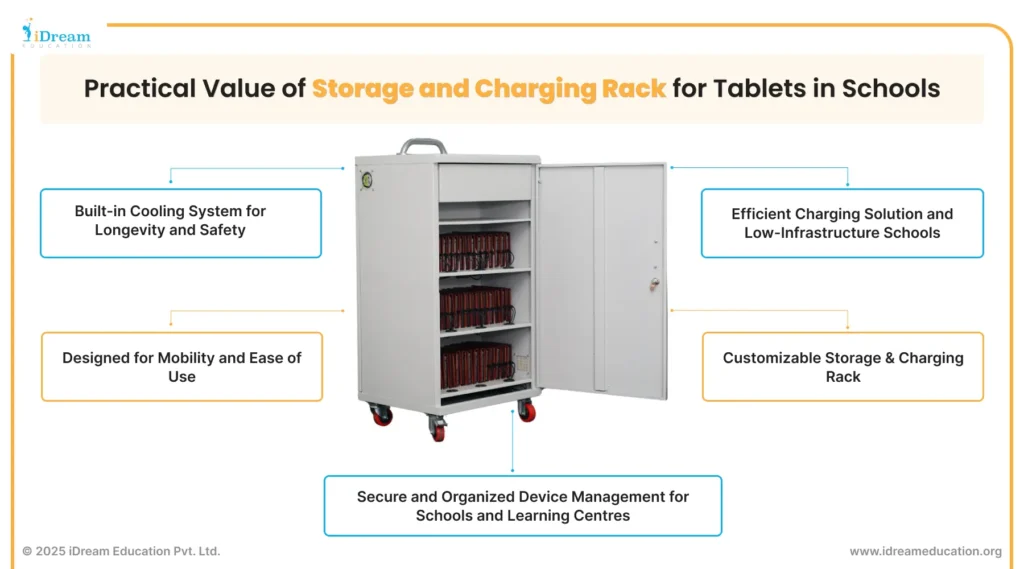
Ensure the room has at least one power plug. If you are implementing a tablet/Chromebook setup for schools, a charging and storage rack can be used to store and charge all devices simultaneously. However, if the devices are meant for both school and home learning, students can charge them at home and use them in the classroom.

For a smart classroom setup, choose a room with a power plug, minimal direct sunlight, and lockable windows to ensure clear visibility of digital content. The setup can be placed in a common room for shared access or implemented in individual classrooms based on the school’s requirements.

Choose an LMS with Seamless compatible across All Devices and OS

When looking for how to set up a digital class, the most important factor to consider is an LMS that is compatible with your chosen hardware, whether it is teacher-centric or student-centric. If your goal is to bridge learning gaps, opt for an LMS that offers Personalized Adaptive Learning to cater to individual student needs. The LMS should be user-friendly and easy to adopt, functioning as intuitively as everyday applications used by teachers and students. If you’re looking for such an LMS, feel free to contact us by sharing your details [here].

Choose Digital Content

Digital content is a key component of a digital class. Therefore, it’s important to select a provider that offers state or NCERT-aligned content in the language used in your chosen schools. Additionally, the content should be customizable based on class and subject, grade and language. This ensures that students have access to comprehensive digital learning resources in one place, catering to their curriculum and learning needs effectively.

Choose vendor for onsite training 

When selecting a digital class vendor, prioritize one that offers onsite experiential training for both teachers and students. Effective onsite training should focus on understanding students and teachers, along with their learning preferences. It should also provide guidance on effectively using digital class solutions and learning materials.

Look for LMS Offering Teacher/Student Level Monitoring

When implementing a digital class solution, ensure project-level monitoring by selecting a platform that tracks teacher and student usage. This data-driven approach helps in making informed decisions to enhance learning outcomes. Regular monitoring also ensures continuous usage of the implemented solution and enables strategic interventions to improve engagement and effectiveness.

Continuous Maintenance and Support

Technical issues may arise when using a digital class solution, so it’s crucial to choose a provider that offers prompt support—whether on call or onsite—with minimal turnaround time for issue resolution. To ensure reliability, consider vendors with proven experience in setting up digital class in multiple schools within your target state.

Want to Set Up a Digital Class in Schools?

Setting up a digital class requires careful consideration of both hardware and software. It should be tailored to your target audience and project objectives. If you’re looking to discuss and co-create a program, purchase hardware, software, or a complete solution, we’d be happy to connect with you. You may contact us at +91 7678265039 or share your details here. You can also write to us at share@idreameducation.org, We would be happy to guide you on how to set up a digital class in schools.

Everything You Need to Know About the Pariksha Pe Charcha 2025

Cover image for a blog guiding you to read key takeaways from Pariksha Pe Charcha 2025

Pariksha Pe Charcha sets a benchmark in addressing student pressure during exams, where PM Modi discusses societal expectations, failure, and self-reflection. With his visionary understanding, he guides students to overcome external pressures and focus on their studies to achieve success in life. Held annually, usually before annual exams, PPC has grown into a significant movement aimed at easing exam-related stress. In PPC 2025, Modi Ji emphasized the increasing impact of this initiative, highlighting how it has evolved into a nationwide effort to support students and help them be stress free during exams.

Pariksha Pe Charcha 2025 Engaged Students in a Lively Discussion on Exam Preparedness and Stress

This was the 8th edition of Pariksha Pe Charcha (PPC) 2025, held on February 10 at Sunder Nursery in New Delhi.

PPC 2025 experienced enthusiastic participation from students. The event was broadcasted live across multiple platforms, provided valuable insights on stress management, exam preparation, and personal growth. Pariksha Pe Charcha 2025 reinforced the importance of a positive mindset for academic growth among students.

Pariksha Pe Charcha 2025 featured two discussions: eight expert-led sessions and an interactive session with PM Modi Ji

The eight engaging episodes cover a wide range of topics, from effective exam strategies to healthcare, mental well-being, food, and nutrition. These interactive sessions provided students with holistic guidance to navigate their academic journey with confidence.

  • In this PPC format, past toppers stepped forward to share their experiences, enriching the discussions even further. Many students, parents, and teachers wrote to Modi Ji, appreciating the new format for enabling in-depth discussions on each topic and allowing participants to connect with others who had faced similar challenges during exams.
  • The majority of students watched these episodes on Instagram, while many also appreciated that the program was hosted at Sunder Nursery in Delhi. Students who missed the episodes and wish to watch them can find them on the NaMo App.
  • PPC 2025 insightful conversations also featured renowned personalities such as Deepika Padukone, Sadhguru, Mary Kom, Vikrant Massey, and Rujuta Diwekar. Their discussions with students were focused on holistic development, managing academic pressure, and cultivating a positive mindset during exams.

Key Takeaways from Modi Ji’s Final Address in Pariksha Pe Charcha 2025

Key points discussed by PM Modi with students during Pariksha Pe Charcha 2025, highlighting exam tips,  exam stress management, and motivational insights

On February 10, Modi Ji encouraged students appearing for board exams to stay positive and stress-free. He highlighted how Pariksha Pe Charcha has become a guiding force in helping young minds prepare for exams with confidence. Urging students to embrace a positive mindset, he said, “This is the season of Board Exams. I wish my young friends, the Exam Warriors, the best of luck. Appear for your papers without any stress and with a completely positive spirit.” 

He started the session by distributing Til Ke Laddoo for the post Makar Sakranti celebration. With this he initiated a conversation about the benefits of eating Til Ke Laddoo and why they are traditionally consumed in winter. He then engaged students in a discussion about nutrition, leading to a conversation on millets. He highlighted that the United Nations declared 2023 as the International Year of Millets, a global initiative proposed by India. Emphasizing the Government of India’s efforts to raise awareness about nutrition (Poshan), he encouraged students to incorporate millets and seasonal fruits into their diet. Additionally, he advised them to avoid junk food, oily foods, and products made from maida.

He began by expanding the discussion on nutrition, linking it to overall well-being, quality sleep, and fitness. 

While talking about rest he said, “Sleep is the most important factor that determines your health”. He further discussed the benefits of sunlight and daily bathing and encouraged children to spend a few minutes in the morning sun each day.

Mastering Pressure and Focusing on Goals 

Modi Ji then addressed how to handle pressure by sharing an example of how a batsman stays focused solely on the ball during a cricket match, regardless of the voices in the stadium that might be creating pressure on them. He mentioned you should have a specific target for yourself and there should be no distraction when preparing for it. 

Building on this, he spoke about self-reflection, encouraging students to regularly ask themselves:

  • What do I aspire to become?
  • What can I achieve?
  • Which actions will bring me true satisfaction?

When students asked Modi Ji about the art of leadership, seeking insights from him as a global leader.

He explained that true leadership is not defined by external appearance but by leading through actions. While explaining more precisely he said, “Leadership is not imposed but accepted by those around you.” He further explained the importance of understanding the challenges faced by team members and supporting them through difficulties. This approach builds their confidence and trust in person leading.

Hobbies, and Overcoming Struggles

Addressing a question from a Class 12 student in Tripura, PM Modi shared his insights on balancing hobbies with studies. In response, PM Modi urged parents and teachers not to confine children within a rigid academic structure, as it could hinder their overall growth. He highlighted that fostering an open atmosphere and interactive experiences is essential for the holistic development of students.

When asked how students who work hard but still struggle to succeed and stay motivated,

Modi Ji emphasized the importance of identifying each child’s unique strengths, as every student has distinct learning abilities and styles. He encouraged students to cultivate the habit of writing and stated, “Regardless of your age, writing helps you organize and bind your thoughts.” He shared the example of a student who spent more time in the tinkering lab rather than focusing solely on academics and eventually created a Robot. This was the same student who was once on the verge of dropping out of school. Modi Ji stressed the importance of recognizing each child’s unique potential and guiding them in the right direction.

As the Pariksha Pe Charcha 2025 reached its midpoint, students sought guidance on effective ways to balance time 

In response, he said that everyone has the same 24 hours in a day, but many end up wasting time on unproductive activities. He shared, “I spend most of my time on activities that I have planned and are important.” He encouraged students to develop the habit of noting down their planned tasks and tracking what they have accomplished. Emphasizing the power of reverse psychology, he advised students to start with the subjects they find most challenging instead of postponing them for later.

When asked about avoiding overthinking and staying focused, he gave a simple yet profound answer:

“Live in the moment.”

Further conversations covered academic pressure, anxiety, and stress

Here Modi ji said, pay attention to your behavior patterns—like coming home, opening a book, and closing it without actually studying. This could be a sign that something is bothering you. He advised students to openly discuss their concerns without hesitation.

While addressing Parental Expectations in Pariksha Pe Charcha 2025,

Modi Ji urged parents not to treat their children as trophies for display and to avoid unnecessary comparisons. He emphasized that parents’ expectations often arise from comparing their children with others and asked them to appreciate their children’s unique strengths rather than showcasing them as “models.” Instead, he encouraged parents to recognize and support their children’s skills and interests, monitor their progress, and provide guidance.

To the question of overcoming exam fear while also prioritizing health, 

Modi Ji emphasized that this anxiety often stems from parental expectations, where children are pressured to pursue careers as engineers or doctors. He urged parents to recognize that every child is unique and encouraged them to understand their child’s abilities, interests, and capabilities, supporting them accordingly. Additionally, he conveyed an important message to teachers about fostering an inclusive learning environment. He stressed the need to give equal attention to all students, rather than focusing solely on top performers, ensuring that no child is left behind.

Speaking on overcoming failure, 

He reassured students that even if 30-40% fail in their Class 10 or 12 exams, life does not end there. He emphasized the need to decide whether to succeed in life or only in academics. Additionally, he advised students to practice solving previous exam papers. This will help them develop the skill of writing concise answers and managing time efficiently.

In the final moments, Modi Ji touched upon the topic of mastering technology 

He emphasized that we should be grateful that our generation has technology all around us. Instead of running away from it, he urged students to critically analyze how they spend their time on technology. He urged students to question whether they are merely watching reels or truly exploring its depth. With depth he meant understanding the insights of reel, algorithms in which particular platform works, and functionality.

Modi Ji further shared an inspiring perspective. He highlighted that the people behind research, innovation, and technological development are working for the greater good. Therefore, it is our responsibility to learn, understand, and use technology optimally.

During a one-hour session, the discussion covered 21 insightful chapters 

The conversation was focused on personal growth, leadership, and well-being. It began with Nourish to Flourish and Nutrition & Wellness, emphasizing the importance of health in overall development. Topics like Mastering Pressure, Challenge Yourself, and The Art of Leadership highlighted strategies for handling stress and building leadership skills. The session also explored holistic growth through Beyond Books – 360 Degree Growth, Finding Positives, and Find Your Uniqueness, encouraging self-discovery and resilience.

Time management and mindfulness were key themes, with discussions on Master Your Time, Master Your Life, Live in the Moment, and The Power of Sharing. Participants also reflected on Follow Your Interests, Pause, Reflect, Reset, and Realising Your Potential, Achieving Targets, which focused on self-awareness and goal setting. Recognizing individuality was another important aspect, covered in Every Child is Unique and Self-Motivation, helping learners appreciate their strengths and inner drive.

The session also delved into handling setbacks and embracing growth, with discussions on Failure as Fuel, Mastering Tech, and How to Convince Your Parents. Additionally, academic stress and parental expectations were addressed through Dealing with Exam Pressure, equipping students with strategies to manage challenges effectively.

Lastly, environmental awareness was promoted with Caring for Nature and Growing Your Own Green Paradise, encouraging a sense of responsibility towards sustainability. This comprehensive discussion provided valuable insights into various aspects of life, guiding participants toward a well-rounded and purposeful journey.

Closing thoughts

At iDream Education, we work closely with students of different age groups and strongly believe in the positive impact of ‘Pariksha Pe Charcha.’ Over the years, it has evolved into a movement, inspiring both students and teachers across the country. The 8th edition in 2025 continues this tradition, introducing a revamped format that empowers students to approach exams with confidence and enthusiasm. The interactions with past participants have been a source of motivation, reassuring students that they are not alone and guiding them on how to manage stress, pressure, expectations, and other challenges.

The final address by Honorable PM Modi Ji reinforced the message: “Be happy and stress-free.” His guidance on maintaining focus, staying healthy, and managing time effectively resonated deeply with students. 

We are also glad to hear him emphasize the importance of using technology in the right way. 

At iDream Education, we are dedicated to developing student-centric learning solutions that ensure technology is not a distraction but a valuable support system. Our goal is to help students achieve grade-level proficiency without fear, judgment, stress, time constraints, or unhealthy comparisons.

If you are a student, teacher, parent, or from a social sector/education industry decision-maker, we would be happy to share how our solutions can empower students to learn stress-free and overcome their fears. Feel free to reach out to us at: +91 7678265039. You can also share your details here or write to us share@idreameducation.org

August 15′ 2025 Update: A Guinness World Record for Pariksha Pe Charcha

Pariksha Pe Charcha, Prime Minister Narendra Modi’s flagship initiative, has not only inspired millions of students, teachers, and parents but has also made history on the global stage. The PPC Program has achieved a Guinness World Record for the “most people registered on a citizen engagement platform in one month.” With 3.53 crore valid registrations and a staggering 21 crore viewers, Pariksha Pe Charcha stands as a testament to the nation’s collective commitment to fostering a positive and stress-free learning environment. This remarkable feat showcases the growing importance of open dialogue on exams and education in shaping the future of India’s youth.

How Learning TV for Anganwadi with Preloaded Content Helps Workers Balance Teaching & Other Tasks?

Cover Image of the blog showcasing Illustration of a Learning TV being used for teaching in an Anganwadi classroom

Anganwadi workers are a crucial part of the early childhood development ecosystem. Their responsibilities extend from teaching to managing daily meals, tracking children’s health, safety, and handling administrative duties such as data entry and reporting. With such a broad range of responsibilities, the time available for structured teaching is often limited. Moreover, the absence of a well-defined curriculum makes it challenging for them to focus on the holistic development of children.

To solve this biggest challenges of the Anganwadi system in India,

NEP 2020 has introduced a structured curriculum for the children of ages 3-6-officially designated as Preschool 1, Preschool 2 and Preschool 3 (Balvatika). This curriculum focusses on learning by playing, also creates space for holistic development of a preschooler in anganwadis in India. As such, a preschooler’s learning goals include developing not only foundational literacy and numeracy but also skills for environmental, physical and mental well-being and social emotional development.

The depth in FLN curriculum introduced by the NEP is a positive step forward, but it also risks adding to the workload of already burdened Anganwadi teachers.

This is where a digital learning solution—such as learning TV for Anganwadi with preloaded content can significantly ease their responsibilities

But how exactly does it help?

Since workers already have limited time due to other responsibilities, leaving them with limited/less time for lesson planning. Further, expecting them to independently curate and align teaching materials adds to their burden and reduces the time available for actual teaching. This is where Learning TV can make a big difference. By equipping centers with TVs preloaded with NEP-aligned and structured FLN content, we can significantly reduce the burden on workers, streamline their day-to-day activities, and enhance their teaching effectiveness.

Let’s explore why Learning TVs with Preloaded Content are the perfect fit for Anganwadi centres

Three reasons why Learning TV is the perfect solution for Anganwadi Centres by iDream Education

Learning TVs with Preloaded Content are a Simple, Plug-and-Play Solution for Any Anganwadi Centre

Learning TVs with preloaded content is a single-device solution that can be set up in Anganwadi centres, even with limited infrastructure. It requires only one power plug, and its plug-and-play functionality makes it incredibly easy to use. It requires only one power plug, and its plug-and-play functionality makes it incredibly easy to use. The content for early learners comes preloaded on a pen drive, eliminating the need for an internet connection. Since Learning TV functions just like a regular television and is as intuitive as a mobile device, Anganwadi workers can navigate through the interface effortlessly, ensuring a comfortable teaching experience.

Curriculum-Aligned Teaching-Learning Material (TLM) for Seamless Teaching

To ensure effective learning and adoption, all Teaching-Learning Material (TLM)  on Learning TV for Anganwadi is aligned with the National Curriculum Framework (NCF). This saves Anganwadi workers from the hassle of cross-checking content from different sources—instead, they can directly play video lessons, games, stories, puzzles, and activities as per the ECE curriculum. With structured access to curriculum-based content, Anganwadi workers can engage students meaningfully with minimal effort, allowing them to focus on quality teaching while managing their other responsibilities.

Flexible Setup for Long-Term, Sustainable Learning

Learning TV for Anaganwadi can be set up with smart TVs, LED screens, projectors or Interactive Flat Panels, which can be operated via a remote/touch. The choice of device can be tailored to the centre’s needs, teachers’ comfort, or the project’s budget, ensuring a flexible and cost-effective solution for every Anganwadi.

Enabling Structured Learning at Anganwadi Centres with Preloaded Teaching-Learning Material on Learning TV

At iDream Education, we recognize the challenges faced by Anganwadi workers, especially the absence of a structured schedule and the need to focus on the holistic development of children. To address this, we have created and curated structured, engaging early childhood education content aligned with the NEP 2020 curriculum goals for Anganwadi centres. To support this, we have:

  • Developed a comprehensive Teaching-Learning Material (TLM) aligned with the National Curriculum Framework (NCF) and NEP 2020. Our TLM is designed around 3 developmental goals and is further categorized into 13 competencies and 57 learning outcomes, ensuring a holistic approach to foundational learning.
  • We ensure seamless adoption of Teaching-Learning Material (TLM) through our easy to use LMS. It offers structured lesson delivery and is compatible with all hardware devices and operating systems. Therefore, making it easy for you to enable digital learning on new/existing devices at Anganwadi centres. 
  • Beyond hardware and content delivery, we also conduct experiential training to Anganwadi workers. This is done to equip them with the knowledge to utilize digital resources effectively.
  • Moreover, through instructional videos and guided lesson planning, we help workers understand their tasks clearly. They learn “What to do and How to do” when engaging with young learners.

With our structured Teaching-Learning Material on Learning TV, we ensure that Anganwadi workers have access to a well-organized FLN curriculum aligned content, ECE-aligned assessments, and a variety of play-based activities. This helps keep children engaged while enabling Anganwadi workers to manage their other responsibilities effectively.

How Workers Can Effectively Balance Teaching and Other Duties Using Preloaded Content on Learning TV for Anganwadi Centres?

Enabling ECE curriculum aligned preloaded content on Learning TV for Anganwadi workers, makes their teaching easier by keeping children engaged in structured learning—even when facilitators are busy. Let’s see how:

Learning Continues, Even When Facilitators Are Busy

Young children often have a short attention span, which makes it challenging to keep them engaged. That’s where animated video lessons—designed in line with NCF and NEP 2020 goals—become a powerful teaching tool for Anganwadi workers. While managing other tasks, they can simply play these engaging videos on a learning TV. Instead of pausing the lesson, children remain actively involved, watching fun, curriculum-based content that continues their learning journey uninterrupted. Even if the facilitator steps away briefly, the learning keeps going!

Interactive Learning through Classroom Activities

Classroom activities serve as an essential teaching aid for Anganwadi workers, playing a crucial role in keeping young learners engaged and connected to the learning process at Anganwadi centres. These activities—ranging from storytelling, songs, and games to simple hands-on tasks—create an interactive and joyful environment that stimulates curiosity and enhances understanding. By making learning more enjoyable and participatory, classroom activities help in developing foundational skills among children while also encouraging regular attendance and active involvement. This approach not only supports early childhood education but also strengthens the overall impact of the Anganwadi system. 

A Calm and Focused Environment During Meal Time

Managing a room full of energetic kids during meal time can be a challenging task. However, when children are engaged with content such as worksheets, it reduces distractions, minimizes noise, and creates a more peaceful atmosphere. The structured FLN curriculum aligned content, on Learning TV, helps Anganwadi workers foster a well-managed environment where children remain focused. This allows facilitators to seamlessly balance teaching with a calm mealtime experience.

Helping Children with Social and Emotional Growth

Most importantly, Anganwadi workers do more than teach—they contribute to shaping children’s behavior, emotions, and social skills. Our preloaded TLM on Learning TV includes content on Socio-Emotional Learning (SEL) and Health and Physical Well-being (HPW), giving facilitators the right tools to teach good habits, positive behavior, and essential life skills in a fun and engaging way.

Preloaded offline content on a learning TV for Anganwadi centres presents a highly effective solution

It empowers workers to nurture children’s development, ensuring a well-rounded learning experience aligned with the New Education Policy. At the same time, it helps Anganwadi workers manage their time more efficiently, reduce stress, and provide a fun, structured daily learning environment for the children. This simple, user-friendly, and easy-to-set-up solution not only makes the job of the workers easier but also fosters the overall growth and learning of the children.

If you work at or manage an Anganwadi center, or if you’re involved in improving Anganwadi-related activities and are looking for a preloaded ECE curriculum that aligns with the NEP 2020 goals of bringning depth and experiential learning, you may contact us +91 7678265039. You can also share your details here or write to us at share@idreameducation.org

NEP: What’s Happening, Key Expectations & What Could Change by NEP 2025?

Cover image of a blog highlighting key expectations from the NEP 2025 policy, based on Union Budget allocations, policy changes, UDISE+ data, and ASER 2024 findings

The National Education Policy (NEP) 2020 was introduced as a transformative vision for India’s education system. The policy aim to address deep-rooted challenges while laying the groundwork for a globally competitive, inclusive, and future-ready framework. Known as aspirational and revolutionary, the policy set an ambitious goal of being fully implemented by 2030-40, giving a preparation period of about 10 years to put all its recommendations into action.

Progress in NEP Implementation: Four Years On

Since its launch in 2020, the National Education Policy (NEP) has driven significant transformations in both school and higher education. Four years into its implementation, key milestones highlight India’s progress toward a more inclusive, flexible, and tech-driven education system.

  • One of the major achievements is the introduction of the National Curriculum Framework for the Foundational Stage (NCF-FS). Along with this, the policy has introduced the Jadui Pitara learning kit, designed for children aged 3-8. This initiative embraces play-based learning, fostering a strong foundation for early childhood education.
  • Additionally, NEP has emphasized linguistic inclusivity by enabling AICTE-approved engineering and medical courses in regional languages. National-level entrance exams such as JEE and NEET are now conducted in 13 languages. This is enhancing accessibility for students from diverse linguistic backgrounds.
  • Higher education has also seen a major shift with the adoption of the Four-Year Undergraduate Program (FYUP). Over 105 universities, including 19 central institutions, have implemented FYUP. This provides students with multiple exit options and a more flexible academic structure. 
  • Meanwhile, digital and multimodal learning initiatives such as PM e-VIDYA and DIKSHA have furthered educational equity. This offers students universal access to digital content and interactive learning resources.

These reforms mark a steady step toward achieving NEP’s vision of a holistic, inclusive, and technology-integrated education system. However, continuous efforts in implementation and adaptation will be crucial to realizing its full impact across all levels of learning.

Government’s Perspective on NEP Implementation

The Indian government remains steadfast in its commitment to implementing the National Education Policy (NEP) as a transformative reform for the education system. Jayant Chaudhary Ji, Minister of State for Education, recently reaffirmed in the Lok Sabha that NEP’s rollout is a collaborative effort between the Centre and states. Key initiatives such as the PM SHRI scheme aim to establish over 14,500 exemplar schools, while the NIPUN Bharat mission focuses on ensuring foundational literacy and numeracy by Grade 2. Despite some delays, the Government maintains that the policy’s full realization is on track for the 2030-40 timeline.

To evaluate and refine the policy’s effectiveness, the government has also facilitated extensive stakeholder consultations through national conferences and workshops. Mechanisms such as the PARAKH assessment framework have been introduced to monitor learning outcomes. The motive is to ensure a more comprehensive review of student progress. Additionally, digital platforms such as Vidya Samiksha Kendra enable real-time data collection, providing insights into educational advancements and helping authorities address gaps in implementation. The government’s continued efforts in strengthening policy execution reflect its long-term vision of a holistic and inclusive education system in India.

Now that five years have passed since its launch, we are at the halfway point. 

This is a good time to reflect on how far we have come,  progress made since the policy was first released and look at expectations from NEP 2025. However, since these changes take time to show results and detailed updates are not always easy to find, it can be tricky to judge the full impact right now.

Key Drivers of Change in NEP 2025: Policies, Curriculum, Budget, ASER Report, & Infrastructure Insights

NCERT is expected to revise the curriculum

The revision in NCERT curriculum for grades 7,9, 11 school will mark a significant shift towards competency-based learning. The National Syllabus and Teaching Learning Material Committee (NSTC), along with the Textbook Development Team, will oversee the creation of new textbooks aligned with well-defined learning outcomes. These textbooks will emphasize self-learning and peer-learning, reducing rote memorization and enhancing conceptual understanding and comprehension ability of students.

One of the key objectives behind introducing new textbooks is to rationalize the curriculum, ensuring students are not overwhelmed by excessive content. Revised textbooks will also focus on enhancing language proficiency and nurturing a creative mindset, preparing students for real-world problem-solving. By aligning with the goals of NEP, this curriculum update aims to make learning more engaging, inclusive, and skill-oriented. This update is expected to be a key highlight of NEP 5th anniversary celebration, reinforcing India’s commitment to modernizing education and making learning more engaging, holistic, and student-centric. Explore everything you need to know about NCERT changes after NEP in one comprehensive guide here.

Alongside the curriculum revision, Union Budget 2025-26 is set to bring significant shift in school education and upskilling

Centered around the theme of “Sabka Vikas,” the Union Budget 2025-26 highlights investment in people, the economy, and innovation as key drivers toward achieving the vision of “Viksit Bharat.” To bridge the skill gap and ensure quality education is accessible to all, the Ministry of Education has been allocated ₹1,28,650 crore—an increase of 6.22% over the 2024-25 budget estimate.

Record-Breaking Budget Allocation to Strengthen School Education in India

Of the total allocation, ₹78,572 crore (61.07%) has been allocated to the Department of School Education and Literacy, marking its highest-ever budget. This substantial allocation will be pivotal in strengthening school education and supporting various initiatives intended to enhance the quality of schooling across the country. It aligns with the ongoing mission of NEP 2020, which emphasizes accessibility, inclusivity, and quality education for all students, particularly at the foundational and secondary levels. With an expanding student base of 24.8 crore across 14.72 lakh schools and nearly 98 lakh teachers, these financial commitments will help bridge existing gaps in infrastructure, resources, and teacher training.

Strengthening Higher Education

Furthermore, a significant portion of the budget—INR 50,077.95 crore (39% of the total education budget)—is allocated to the Department of Higher Education.

This funding will drive the growth and expansion of higher education institutions, reinforcing the vision of NEP 2020 to increase Gross Enrolment Ratio (GER) in secondary and higher education, particularly as India strives towards achieving 100% GER by 2030.

PM SHRI Budget Increased

The budget for the PM Schools for Rising India (PM SHRI) initiative has been raised by INR 1,450 crore, bringing the total allocation to INR 7,500 crore. This initiative focuses on upgrading over 15,000 schools in alignment with the National Education Policy (NEP) 2020.

While the government’s focus on increasing funding for education is encouraging, the reality remains that public expenditure on education in India still falls short of the recommended 6% of GDP. This shortfall calls for concerted efforts to ensure that the education sector receives the necessary investments to meet the ambitious targets set by NEP 2020. As the NEP evolves to NEP 2025, there is an urgent need to reconsider policy implementation strategies and ensure that these financial allocations translate into effective and sustainable reforms at all levels of education. This will require strengthening public-private partnerships, enhancing teacher training programs, and improving the integration of digital tools for inclusive learning.

While the increased budget allocation, another change that is set to reshape the education landscape is the dismissal of the No Detention Policy

Originally introduced to reduce academic pressure, unintentionally led to learning gaps, affecting students’ preparedness and engagement. Its dismissal marks a shift toward accountability-driven solutions, focusing on addressing learning outcomes rather than just identifying challenges. As India will advance toward NEP 2025, the emphasis needs to be on Personalized Adaptive Learning (PAL)-based digital solutions. PAL is a data-driven tech NEP compliant education tool. It is designed to strengthen foundational skills and make learning more effective and inclusive. It would prepare students to reach their grade level learning before exams through personalized remedial support tailored to their learning needs and interests. 

As India undertakes significant shift such as increased budget allocation and the dismissal of the No Detention Policy – to enhance accountability and learning outcomes, another major milestone in foundational education comes from ASER 2024

The latest ASER 2024 report signals a long-awaited shift in foundational learning outcomes, with the highest recorded improvements in reading and arithmetic proficiency since ASER began tracking data. For the first time in two decades, government school students in Std III have shown a remarkable surge in their ability to read and solve basic math problems. These gains indicate that targeted interventions under the National Education Policy (NEP) 2020 may be taking effect.

Dr. Wilima Wadhwa, Director of the ASER Centre, said, “While this is not the first time that programs have been introduced to improve learning, what is different is that there has been a systemic national push to improve foundational learning outcomes.” This nationwide focus on early learning, driven by NEP 2020’s emphasis on foundational literacy and numeracy, has created a structured and measurable framework for progress. As July 2025 approaches, expectations from NEP 2025 are high. The challenge now lies in sustaining and scaling these gains, ensuring that foundational literacy and numeracy remain at the core of India’s education transformation. 

While ASER 2024 highlights progress in foundational learning, the quality of education is also deeply influenced by the infrastructure that supports it. The India’s 2023-24 School Infrastructure Report by UDISE+ provides a comprehensive overview of the advancements and gaps in school facilities. 

The UDISE+ data presents a mixed picture—while significant strides have been made in ensuring basic facilities like gender-specific toilets and functional drinking water, advanced infrastructure gaps remain a concern. Limited internet access, inadequate technology readiness, and the absence of inclusive infrastructure highlight the pressing need for digital equity. Only 57.2% of schools have functional computers, and just 53.9% have internet access, signaling a significant digital divide. Additionally, nearly 1.52 lakh schools still lack functional electricity, making it clear that infrastructure gaps continue to hinder the vision of modern, technology-driven education. As education policies evolve, budget increases and the Ministry of Education introduces progressive reforms, addressing these gaps must remain a priority to ensure equitable learning opportunities for all students.

Moving forward, accelerating NEP 2020 implementation will be key to achieving universal Gross Enrolment Ratio (GER) by 2030, with a stronger emphasis on integrating skill-based education. Inclusive education must be promoted through targeted programs for all students, ensuring equitable access to quality learning. Enhancing teacher training and addressing student-teacher ratio gaps will also be critical in improving learning outcomes. These focus areas will likely shape expectations from NEP 2025, where the next phase of policy must prioritize bridging infrastructure gaps, enhancing digital readiness, addressing learning gaps, and ensuring that policy-driven advancements translate into tangible improvements in learning environments across the country.

With National Education Policy now a central pillar of national development, NEP 2025 must build on these advancements to drive inclusive, data-driven, and future-ready education initiatives.

Key Expectations from NEP 2025: What Could Happen?

List of key expectations from NEP 2025 highlighted by iDream Education, showcasing essential focus areas for National Education Policy

Integration of Personalized and Adaptive Learning

  • To achieve the intended outcomes after the dismissal of the No Detention Policy, expectations from NEP 2025 is to emphasize the integration of Personalized and Adaptive Learning (PAL) solutions in schools. These NEP compliant educational tools will help students identify and bridge learning gaps, build a strong foundation, and progress at their own pace. 
  • Equipping teachers with the skills to interpret PAL data and using it to personalise their teaching approach
  • Ensuring regular assessment of the impact of PAL on student learning to refine and improve implementation.

Revision in ICT Scheme under Samagra Shiksha to Strengthen Digital Learning

  • NEP 2025 is also expected to bring a structured and detailed update to the ICT Scheme under Samagra Shiksha. The Ministry of Education is working on releasing comprehensive guidelines to streamline the implementation of NEP compliant educational tools such as smart classrooms, tablets for primary teachers, and ICT labs in schools. These guidelines will emphasize the integration of high-quality teaching and learning resources, ensuring that technology enhances student engagement and academic performance.
  • Additionally, a major focus will be placed on student-level data and analytics to enable continuous monitoring of learning outcomes. By leveraging data-driven insights, teachers and policymakers will be able to make informed decisions to improve classroom teaching, personalize learning experiences, and track progress effectively. 
  • With these enhancements, the ICT Scheme under Samagra Shiksha will play a crucial role in ensuring that digital learning solutions are effectively utilized to support the broader goals of NEP 2025.

Availability of Region-Specific Content for Contextualized and Inclusive Learning

  • While recent changes in senior secondary education have strengthened regional language content, it is essential for NEP 2025 to mandate region-specific digital content across all school levels. This will ensure contextualized and inclusive learning that aligns with students’ linguistic and cultural backgrounds, enhancing engagement and comprehension.
  • Additionally, introducing an extra language, such as English, can equip students with essential communication skills. This should be done by planning dedicated language learning initiatives such as setting up English Language Labs. This approach will prepare them for diverse workforce opportunities, foster inclusivity, and enhance their adaptability in a globalized world.

Structured Learning Content and Assessment for ECE Curriculum

To sustain the progress highlighted in FLN findings, key expectations from NEP 2025 is to emphasize the need for structured learning content and assessments for Early Childhood Education (ECE).

  • Teaching resources given to teachers should be structured exactly according to the ECE curriculum. This ensures consistency and effectiveness in foundational learning.
  • Easily accessible and well-organized content will reduce the time teachers spend searching for materials. This allows them to focus on interactive and engaging teaching methods.

Comprehensive Experiential Teacher Training Programs to ensure effective implementation of digital and 21st century teaching methods

For the successful integration of NEP compliant educational tools such as ICT labs, smart classrooms, and other digital solutions, teachers must be thoroughly trained in using it. This includes understanding how to operate the tools, effectively incorporate them into their teaching methodologies, and allocate dedicated time slots within the timetable for blended learning.

  • To ensure that technology-integrated classrooms achieve their intended learning outcomes, NEP 2025 is expected to mandate Experiential Teacher Training Programs. Every teacher should be required to participate in this after implementing any 21st-century classroom technology in their school. 
  • These hands-on training programs will equip teachers with the necessary skills and will also motivate them to regularly use digital solutions. 
  • Additionally, such programs will contribute to teachers’ continuous professional development (CPD), keeping them updated with evolving pedagogical strategies and technological advancements.

Community-Based Learning Initiatives to involve parents and local stakeholders in education

There are still many students who remain unenrolled in schools due to a lack of awareness about the long-term benefits of education. Community-based learning initiatives play a crucial role in bridging this gap by engaging parents and local stakeholders, spreading awareness, and fostering interest among students to learn and grow.

  • Another expectation from NEP 2025 would be to strengthen community-driven programs where NGOs and implementing organizations collaborate to bring education to underserved areas. 
  • These programs can include volunteer-driven efforts in villages, engaging with students, enabling mobile learning apps on smartphones, and even tutoring children using digital learning solutions such as preloaded learning tablets, adaptive learning on tablets. 
  • Based on our experience, these initiatives not only support continuous learning but also improve educational outcomes and motivate students to enroll in schools.
  • Our experience with community-based learning programs has shown a significant improvement in learning outcomes among girls of Uttar Pradesh. You can read more about it here.

State-of-the-Art School and Classroom Infrastructure for a better learning environment to ensure equity across all levels

While technology is being implemented in schools, it is crucial to ensure that it is easy to set up, manage, and use.  Thus, another key expectations from NEP 2025 is:

  • Establishment of state-of-the-art infrastructure that includes common digital learning solutions across schools. The solution will ensure uniform access to high-quality education for every student, regardless of location.
  • Additionally, one smart classroom per grade to enable systematic blended learning. Dedicated smart classrooms for each grade would ensure the regular use of digital learning tools. This will make 21st-century solutions more accessible and comfortable for both teachers and students.
  • From our experience in implementing dedicated smart classrooms, they can easily integrate technology into their regular lessons. Teachers can walk into the classroom, play video lessons, give verbal instructions, write on interactive boards, and engage students with ease. This streamlined approach enhances learning experiences and ensures that digital education becomes a natural part of the teaching-learning process. There is need for Anganwadi centers to implement a robust Early Childhood Education Program nationally, realising the framework and guidelines laid by the National Curricular Framework (NCF)

Project-Level Monitoring & Tech-Enabled Assessment

  • A significant budget allocation should be made for Robust Project-Level Monitoring. This will ensure comprehensive tracking of implementation and outcomes at every level of the education system.
  • Tech-enabled assessment must be integrated with project-level monitoring in all schools where educational initiatives are being implemented.
  • This will help maintain real-time tracking of progress, enabling targeted interventions to address gaps and challenges at every stage.
  • A well-structured monitoring and assessment framework ensures that no student or school is left behind. Further, fostering inclusive and data-driven educational development across the country.
Based on our nearly 8 years of experience working closely with government school teachers and students, adapting to policy changes, enhancing learning outcomes, and aligning with budget priorities, we believe these expectations from NEP 2025 have the potential to drive lasting change. What are your thoughts?

Let’s connect to discuss how we can collaborate to achieve the goals of the National Education Policy before the NEP 2025 update is released. You may contact us at +91 7678265039 or share your details here. You can also write to us share@idreameducation.org. we would be happy to connect and give you a demo of our NEP compliant educational tools.

Understanding CSR in Education: Detailed Analysis, Trends and the Road Ahead

Cover image of a blog providing key insights on CSR in education, highlighting progress, interventions, and impactful CSR projects

Did you know? Between FY 2014-23, education held its spot as the largest recipient, grabbing 29.07% of the total CSR allocation. Healthcare wasn’t far behind, securing 21.83%. These numbers clearly highlight where the priorities have been. 

It’s no surprise, then, that CSR in Education is recognized as the cornerstone of economic growth, human capital development, and social progress. Education and skill-building initiatives funded by CSR have proven to be instrumental in breaking the inter-generational cycle of poverty. This brings equity amongst current students and future youth and young adults who then go on to embrace meaningful and sustainable work. Over the years, these efforts have been enhancing the educational landscape, driving infrastructure improvements, promoting digital literacy, and enabling access to quality education in some of the most remote areas of the country.

In fact,  CSR in education is particularly critical in reaching the last-mile learners—those who face systemic barriers to education due to geography, socio-economic challenges, or lack of resources. Social sector organizations, leveraging CSR funding, enable custom educational solutions for in school and at home learning, ensuring accessibility and affordability. A clear example of this was seen during the COVID-induced lockdowns when the digital divide severely impacted rural communities. However, with the support of CSR-funded tablets/apps for home learning, some students were able to continue learning at home. These efforts didn’t just help during the lockdown but also proved invaluable post-COVID. When students returned to school with significant learning gaps, personalized learning devices equipped with digital content for multiple grades allowed them to catch up effectively. This not only bridged learning gaps but also contributed to a reduction in drop-out rates.

Now, with the National Education Policy (NEP) 2020 guiding the way, CSR in education is gaining even greater significance. The efforts are focused on addressing a diverse range of priorities: digitizing classrooms, providing regional-language content, aligning digital learning resources with curricula, supporting holistic development, and implementing tools for monitoring project-level impact. 

Why is CSR in Education So Important in India?

Education is a fundamental driver of socio-economic development, and in India, it serves as a critical tool for bridging societal disparities. Corporate Social Responsibility (CSR) initiatives play an important role in enhancing educational access and quality, for last mile learners. 

Before exploring how CSR in education can enhance educational infrastructure, let’s first review key data from the Unified District Information System for Education Plus (UDISE+) 2023-24 and similar reports:

  • Literacy Rates: As of 2022, India’s overall literacy rate was approximately 76.32%, with a notable gender disparity favoring males.
  • Technology Readiness: Only 57.2% of schools have functional computers, 53.9% have internet access, and 52.3% are equipped with ramps, highlighting critical gaps in accessibility and infrastructure readiness
  • School Enrollment: UDISE+ 2023-24 data highlights shift in enrollment % with the total number of students decreasing by 37 lakh to 24.8 crore in 2023-2024. Boys represent 51.9% of enrollments, while girls make up 48.1%.
  • Educational Attainment: A 2023 survey indicated that over 99% of children in rural India were enrolled in school when their parents had completed secondary but not higher secondary education. In contrast, children whose parents were illiterate or had education below the primary level had a lower school enrollment rate of 95% during the same period. 
  • Infrastructure: Out of the 14.71 lakh schools, only 7.48 lakh (50%) have access to computers for teaching and learning. Additionally, 7.92 lakh schools have Internet access, while 8.41 lakh schools offer computer facilities. Only 17.5% of schools, or 2.57 lakh out of the total 14.71 lakh, have co-curricular activity rooms or arts and crafts facilities. In government schools, the figure is even lower, with just 9.9% of the 10.17 lakh schools having an arts and crafts room. Apart from this, out of the 2.86 lakh schools with secondary sections, only 1.6 lakh have an integrated science laboratory. Among the 1.19 lakh government secondary schools, 50.2% (59,972 schools) are equipped with a science lab facility.

What Are Some of the Best Initiatives in CSR in Education?

Infosys Foundation

Have you heard about the incredible work the Infosys Foundation is doing to make education accessible for marginalized communities in India? They’re empowering girls to stay in school, bridging the gap between education and employability, and bringing STEM learning to rural areas such as Bodoland. The foundation has partnered with organizations to upskill women in technology, built inspiring schools such as Rajkumari Ratnavati Girls’ School, and supported initiatives such as midday meal schemes, rural libraries, and science education programs. Infosys Springboard created engaging, student-centric learning experiences, impacting 2,500 students and 250 teachers across 10 schools. What’s even more impactful is their focus on both infrastructure and curriculum development—ensuring these changes create lasting benefits. 

Tata Group:

Did you know that Tata Group’s commitment to education traces back to its founder, Jamsetji Tata, who believed that nation-building begins with educational upliftment? Their impact is seen across renowned institutions like the Indian Institute of Science and Tata Institute of Fundamental Research, alongside community-focused efforts.

For instance, Tata Trusts’ wide-reaching education programs, “Masti Ki Pathshala” for street children, and “Titan Kanya” for empowering girls showcase their dedication to inclusive learning. On top of that, there is Assam State Initiative (ASI) – Education, launched by Tata Trusts in 2019. This has positively impacted elementary education in Assam by addressing learning gaps and improving student retention. In its first phase, the programme reached 90 schools across four districts, offering remedial support to 5,850 students struggling with foundational literacy and numeracy. Additionally, 38 motivational camps facilitated the enrollment of 1,237 out-of-school children into government schools.

Adani Foundation

Access to quality education is not just a right—it’s the foundation for a brighter, more inclusive future. The Adani Foundation embodies this belief, working tirelessly to ensure every child, no matter their background, has the opportunity to learn and grow. Through initiatives like Project Utthan, which enhances learning outcomes in government schools, and Udaan, which inspires young minds to dream big, the Foundation is empowering thousands of children across the nation. The Adani Foundation has impacted over 37,000 students across 275 government schools through Project Utthan. 

Reliance Foundation

Reliance Foundation is making a big impact in education through its 14 Reliance Foundation Schools. These schools serve over 16,000 students with the support of nearly 800 dedicated teachers and staff. What makes their approach special is the focus on holistic education—blending academics, sports, and extracurricular activities to nurture well-rounded individuals. Beyond their schools, the foundation is also empowering rural education through partnerships, offering scholarships, and driving initiatives like the Education and Sports for All (ESA) program, which combines the power of education with sports to uplift underprivileged children. 

In the academic year 2021-22, Reliance Foundation Schools achieved remarkable success, earning 7 international awards, 27 national awards, and 125 awards at zonal, state, and district levels. Additionally, 38% of their students scored 90% or above in the CBSE Class 10 Board exams, while 28% secured above 90% in the CBSE Class 12 Board examinations.

Bharti Foundation

Bharti Foundation is leading education initiatives with its impactful programs such as the Satya Bharti School Program, Higher Education Initiative, and the Teacher App. By ensuring access to quality education, the Foundation is helping children unlock their true potential and fostering sustainable change in communities. Beyond academics, its initiatives aim to shape confident, self-reliant citizens who are not only responsible but also driven to make a difference. What sets Bharti Foundation apart is its commitment to collaboration—actively involving parents, communities, and like-minded organizations to build a shared vision for a better future, one child at a time. The Foundation has made a significant impact in education, reaching over 1.9 lakh teachers, more than 3 million students, 31,000 schools, and 22,000 villages across the country.

Ambuja Foundation 

Ambuja Foundation is driving meaningful change in local government schools by creating an environment that nurtures children’s learning and development. With a strong focus on enhancing educational outcomes, the foundation integrates physical education and reading into daily school activities, ensuring holistic growth for every child. Their commitment extends to supporting children with special needs through tailored education, rehabilitation, and allied services, empowering them to unlock their full potential. Notable milestones include transforming 12 schools with improved WASH stations and sanitation, achieving ISO certification for 15 schools, reaching 2,000 children through sports promotion, promoting reading across 47 schools, and training 430 children at Ambuja Manovikas Kendra. Through these efforts, Ambuja Foundation continues to champion inclusive and impactful education for all.

Aren’t these meaningful ways to drive CSR in education forward?

Absolutely! If you are planning to invest CSR funds in education, your CSR contributions can become more impactful by focusing on Digital Transformation in Education. The COVID-19 pandemic underscored the critical need for digital access, spurring companies to invest in digital infrastructure. 

Key areas where CSR intervention can bridge gaps in education

Key focus areas for CSR in education amidst evolving trends and priorities

CSR in education initiatives are instrumental in addressing these educational challenges by:

  • Improving Infrastructure: Investing in the construction and renovation of schools, equipping classrooms for technology readiness, and building robust e-learning setups with offline digital learning solutions such as Tablet based Smart ICT labs, ebook Libraries, science/Math/STEM/ Innovation & Tinkering  tailored to school needs through CSR initiatives can significantly improve learning environments and ensure greater accessibility in education. 
  • Enhancing Literacy: Utilizing CSR funds to introduce digital learning solutions and resources for both in-school and at-home learning can help bridge the digital divide between urban and rural students. These digital learning materials can foster greater engagement, spark interest in education, and support continuous learning, ultimately contributing to improved literacy rates.
  • Supporting Teacher Training: Allocating CSR funds to facilitate experiential teacher training can empower teachers with diverse teaching methods, enhance their engagement with students, and support their continuous professional development. This initiative would not only motivate teachers but will also build parental trust, improve teaching quality, and contribute to better educational outcomes and increased school enrollment. 
  • Promoting Inclusive Education: When planning CSR initiatives, it is crucial to ensure inclusivity so that every student benefits equally from the program. Some evolving initiatives are already making a difference, with foundations setting up dedicated smart classrooms or digital libraries for each grade, making digital learning easily accessible to all students. To see how this is being implemented, read more about the best digital library for schools and its impact on inclusive education.
  • Ensuring Holistic Development: CSR interventions should focus on developing programs that go beyond academics, emphasizing co-curricular activities through activity-based content, life skills, moral education, digital book libraries for reading, climate awareness courses, and more. These initiatives have the potential to engage students actively, and promote their holistic development.

By focusing on these areas, CSR in education initiatives can contribute significantly to make education accessible and affordable for last-mile learners.

Complexities of CSR in Education Implementation in India

Implementing initiatives for CSR in education across India comes with a unique set of challenges shaped by the country’s diverse socio-economic and cultural landscape. These complexities significantly impact the effectiveness of CSR education programs, making it crucial for corporations to plan with sensitivity and precision.

  • Regional Disparities: India’s vast geographical diversity creates significant variations in education infrastructure, teacher availability, and learning outcomes. CSR in education projects often need to tailor their approaches to address the specific challenges of the regions, which can lead to increased costs and operational complexity.
  • Alignment with Local Needs: Many education CSR initiatives face difficulties in aligning with the actual requirements of schools and communities. Generic programs may not address specific gaps, such as the lack of teacher training, inadequate digital infrastructure, or language barriers in teaching materials.
  • Policy Navigation and Compliance: The evolving landscape of government policies such as NEP 2020, Samagra Shiksha Abhiyan, and state-level educational schemes requires CSR in education programs to stay adaptive and compliant. A clear example of this is the integration of the 5+3+3+4 structure across states, which poses a significant challenge in aligning curricula and training teachers to adopt new teaching methods. Moreover, foundational textbooks for some grades have only been developed recently, further adding to the complexity.
  • Stakeholder Collaboration: Education CSR projects often involve multiple stakeholders, including schools, NGOs, and parents. Ensuring smooth collaboration among these groups can be challenging due to differing priorities, increased responsibilities and a lack of trust in corporate-led initiatives.
  • Measuring Impact: The intangible nature of education outcomes, such as improved learning levels or skill acquisition, makes it difficult to measure the immediate impact of CSR in education programs. Companies often struggle to establish meaningful data and track progress over time.
  • Sustainability of Projects: Many CSR in education initiatives falter after the initial implementation phase due to a lack of sustainability planning. Issues such as inadequate teacher engagement, non-maintenance of digital tools, and low community ownership can hinder long-term success.

The Way Forward

To overcome these complexities, companies need to focus on participatory program design, strong partnerships with implementing organizations, and sustained capacity-building efforts. Flexible execution strategies, custom solution, regular assessments, and deep alignment with  National Education Policy 2020 can ensure CSR initiatives in education leave a meaningful and lasting impact on last mile learners.

A Year-Wise and State-Wise Overview of CSR in Education

India’s Corporate Social Responsibility (CSR) spending has witnessed an increase over the years, with the education sector consistently receiving a significant portion of the total funds. According to recent data, of the over ₹29,000 crores spent on CSR initiatives, approximately 44% have been allocated towards education, differently-abled, and livelihood enhancement programs. This allocation reflects the growing emphasis on fostering quality education and addressing the diverse educational challenges faced across the country.

Year-Wise CSR Trends in Education

Over the years, CSR spending on education has fluctuated based on emerging trends, policy changes, and evolving corporate education responsibility. In the initial years of CSR implementation, a large portion of funds was directed towards infrastructure development, including building schools and providing educational materials. As the years progressed, a shift towards more impactful, long-term educational initiatives became evident, with a focus on:

  • Teacher training and capacity building
  • Technology integration in classrooms
  • Focusing on State of the Art Infrastructure
  • Scholarships and support for underprivileged students
  • Promoting STEM and vocational education

In 2020 and 2021, the pandemic significantly altered the landscape of CSR funding. With the sudden shift to online education. CSR initiatives quickly adapted to support digital learning platforms, distribute devices, and provide internet connectivity to last mile learners. The COVID-19 crisis highlighted the gap in educational equity, and CSR spending in these years was pivotal in bridging that gap.

State-Wise CSR Allocation and Regional Needs

The allocation of CSR funds for education also varies widely across states, reflecting the unique needs and challenges faced by different regions.

  • Maharashtra, Karnataka, and Gujarat have seen significant CSR investments in education due to their urban infrastructure, and better connectivity. These states have utilized CSR funds for digital literacy, infrastructure enhancement, and higher education scholarships.
  • Rural and backward regions such as Bihar, Uttar Pradesh, and Madhya Pradesh have received considerable support in the form of school infrastructure, teacher training, and remedial learning programs. CSR initiatives in these states are often designed to address issues like high dropout rates, low teacher-to-student ratios, and the need for improved learning materials.

The top ten states and union territories receiving CSR funding in education are: Maharashtra, Karnataka, Gujarat, Tamil Nadu, Delhi, Uttar Pradesh, Odisha, Telangana, Rajasthan Andhra Pradesh

Alongside this distribution, there is a growing shift towards customized, region-specific programs

As CSR initiatives continue to evolve, companies are recognizing the importance of tailoring their CSR in education programs to meet regional school needs. National-level CSR projects are becoming increasingly localized, with companies collaborating with state governments, NGOs, and local communities to implement effective, sustainable education programs. This approach ensures that the specific challenges—whether they be access to education, limited learning level, learning gap, or vocational training—are addressed in a manner that aligns with the local context.

Here’s how your CSR initiatives in education can create a meaningful difference:

Setting Up Smart Classrooms

Invest in smart classrooms that include hardware, a learning management system (LMS), and engaging digital content. Ensure the setup is user-friendly for teachers, making the transition to digital teaching seamless and effective.

Enabling E-Learning Platforms for Home Learning

Support students with e-learning platforms that allow them to learn from home using personal or on the devices of their parents. You can also partner with NGOs to implement community-based programs, especially for children who aren’t enrolled in formal schooling and do not have access to devices. This blog captures the impact of education-based NGO working across India.

Setting Up Digital Book Libraries

Create personalized learning environments by enabling access to digital book libraries in schools. These libraries can offer curriculum-aligned content or resources beyond the curriculum, catering to diverse student interests.

Enabling Adaptive Learning Solutions

Introduce personalized adaptive learning platforms to bridge learning gaps and bring students up to grade-level proficiency. This can enhance student engagement, reduce dropout rates, and make learning more enjoyable.

Experiential Teacher Training

Empower teachers to integrate technology into their classrooms with hands-on training. Help them understand that technology complements their teaching and contributes to their professional growth. This ensures better adoption and maximizes the impact of your CSR investment in education.

Broaden the Scope of Learning with by going Beyond K-12 Curriculum

Along with supporting K-12 education, CSR initiatives in education can focus on enabling NEET and JEE preparation for aspiring students, setting up English language training labs to enhance communication skills, providing career guidance to help students make informed decisions, introducing skill-based courses for employability, and embedding life skills education to foster holistic development. These additional interventions can significantly enrich learning programs, empower students for their future, and amplify the long-term impact of your CSR efforts.

By focusing on such initiatives, you can contribute to enhancing education, bridging the digital divide, and fostering a more inclusive learning ecosystem. If you’re exploring options to invest your CSR funds in education, these impactful initiatives can serve as a great starting point. 

To begin, you must focus on solutions that address the challenges of implementing CSR in education and empower you to make quality education accessible to all

Look at challenges and discover the ways to overcome them:

Lack of Transparency in CSR Fund Allocation

One common challenge when executing CSR education projects is the lack of transparency in fund allocation. It’s crucial to choose an implementation partner who provides a complete breakdown of services, including hardware, platforms, learning materials, teacher training, assessments, and more. This transparency ensures that all aspects of the initiative are clearly defined, allowing you to monitor and track each component.

Geographical Barriers

Accessing quality education in remote regions can often be a major hurdle. This is particularly true in India, where many areas still face connectivity and infrastructure challenges. To overcome this barrier, it is vital to partner with organizations that offer solutions tailored for remote locations. Look for implementation partners who provide offline, easy-to-setup digital learning solutions that can be deployed with minimal resources. These solutions should be capable of delivering education without relying heavily on internet connectivity, ensuring that students in even the most inaccessible parts of India have access to high-quality learning experiences.

Monitoring and Impact Assessment

Monitoring the progress and impact of CSR initiatives is essential for making informed decisions and improving future efforts. A key aspect of this is having access to real-time data on how the solution is being used at the teacher and student levels. Implementation partners who can provide detailed usage data enable you to track student engagement, teacher performance, and overall effectiveness. With this data, you can make data-driven decisions to fine-tune your approach, ensuring that your CSR education initiative is achieving its intended outcomes.

To address these challenges effectively and ensure your CSR initiative delivers meaningful impact, you need an implementing partner with on ground experience of large scale projects

At iDream Education, we’ve been working closely with government school students and teachers for the past 8 years, continuously developing and fine-tuning our digital learning solutions to meet their evolving needs. Our focus has been on providing last-mile learners with accessible education through offline LMS, offline digital content, easy-to-setup classroom technology, teacher training, integration monitoring, rewards and recognition, monthly assessments, and more. Learn how iDream Education’s multilingual offline digital libraries are enabling anytime, anywhere learning.

For CSR in education, it’s not just about funding but funding with purpose. This blog on where to spend CSR budget explores impactful areas like smart classrooms and digital tools.

If you’re looking for an affordable and impactful digital learning solution for schools or at home learning as part of your CSR in education initiative, we’d love to connect. Contact us at +91 7678265039 for a demo, to plan a custom solution, or to explore content modules and other solutions. You can also share your details here or reach out to us at share@idreameducation.org for more information.