We've received your request! Our team will be in touch within 24 hours to confirm your demo and discuss your
needs. We look forward to connecting with you!
Popular Searches
Smart class
NGO
Personalised Learning
CSR
Learning App
Government
State board content
Digital Library
Smart Board
Author: Rajeev Dudi
Rajeev is a dynamic Digital Marketing Associate at iDream Education. With a passion for content creation and SEO, Rajeev is a fresh talent in the industry, committed to delivering exceptional results.
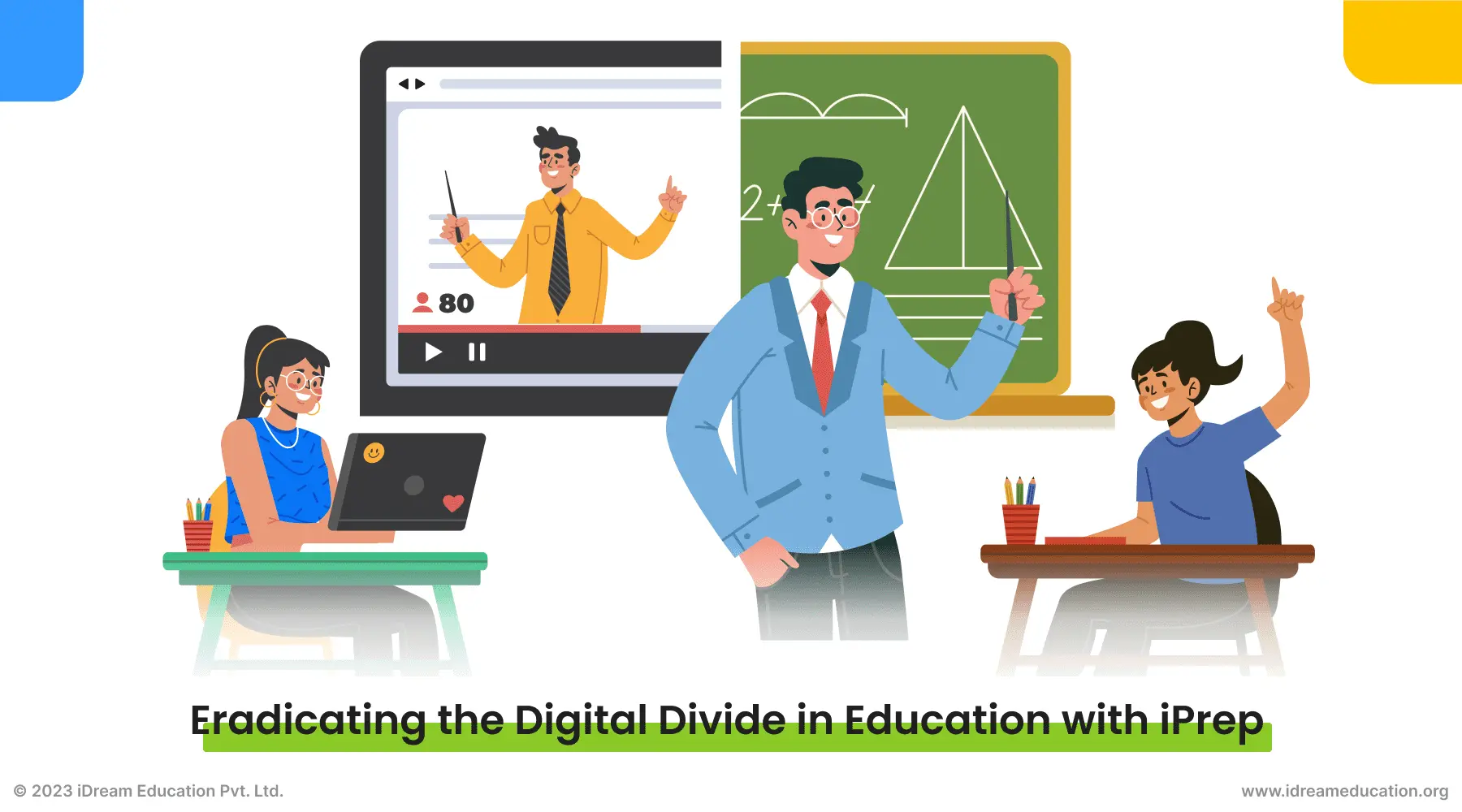
Eradicating the digital divide in education: A visual representation of iPrep’s role in closing the digital gap.
The significance of digital literacy and technology integration in education cannot be overstated in a rapidly evolving 21st century environment, where technology drives advancement and creativity. As we advance into the digital age, a significant obstacle, particularly concerning school students, remains the digital divide in education. The digital divide in education hampers the potential of those with limited access to contemporary technologies. In this context,
iPrep plays a pivotal role in dismantling barriers to educational equity. By providing accessible and inclusive resources, iPrep empowers learners, regardless of their background or circumstances. The platform’s innovative approach fosters a level playing field, ensuring that all students have equal opportunities to thrive academically. Through personalized learning experiences, iPrep contributes to creating a more equitable educational landscape, bridging gaps, and promoting fairness in access to quality education.
The digital divide in education in India presents a multifaceted challenge, manifesting in various forms due to geographical, infrastructural, and socioeconomic differences. While mobile connectivity is experiencing rapid expansion, it is not distributed evenly. Notably, girls are lagging behind, with studies revealing that girls are approximately 15% less likely to own a mobile phone compared to boys. This gender-based disparity in technology access adds a layer of complexity to the overall issue.
In educational environments across different regions of the country, students from underserved communities face a significant disadvantage in this digital divide. The unequal access to digital resources prevents them from tapping into the full spectrum of knowledge and opportunities available in the digital domain. Addressing these disparities is crucial for creating a more inclusive and equitable educational landscape in India.
Understanding the Digital Divide
The discrepancies in students’ access to and use of information and communication technology (ICT) are collectively referred to as the digital divide in education. A digital divide hinders equal learning opportunities, creating disparities between the digitally empowered and disadvantaged.
Socioeconomic disparities are one of the main causes of the digital divide in education. Many economically disadvantaged students do not have access to computers, tablets, or a reliable internet connection. Limited digital access creates an educational gap, depriving individuals of online learning benefits, collaborative tools, and a rich resource library, resulting in divergent educational outcomes.
Geographical differences make this gap even more obvious, as rural and isolated regions frequently experience infrastructure problems that make it difficult to incorporate technology into the teaching and learning process.
Understanding and addressing the digital divide in education is essential for fostering a truly inclusive educational environment. It guarantees every student has the chance to succeed in the digital age, as education increasingly depends on digital mediums for content delivery, collaboration, and skill development.
The Significance of Digital Literacy in Addressing the Digital Divide
In our contemporary era, marked by the pervasive influence of technology in various facets of life, the digital divide has emerged as a critical societal challenge. This gap, characterized by disparities in access to and proficiency with digital technologies, has the potential to perpetuate existing inequalities. Digital literacy, defined as the ability to use, understand, and critically evaluate digital information and technology, is identified as a key factor that could bridge this divide.
Digital literacy is a prerequisite for meaningful participation in the digital age, enabling individuals to harness the benefits of technology for accessing information, effective communication, and participation in the global economy.
Conversely, the digital divide can impede the widespread adoption of digital literacy initiatives. Access to technology is crucial for individuals to enhance their digital literacy skills. Without equitable access to digital resources, marginalized communities may find it challenging to navigate the digital landscape effectively.
Comprehensive strategies addressing the reciprocal relationship between digital literacy and the digital divide are essential. Bridging the divide requires providing technology access and fostering digital literacy, while efforts to enhance digital literacy should tackle structural and economic barriers contributing to the divide. Recognizing their intertwined nature is crucial for developing effective strategies, and promoting digital literacy alongside efforts to narrow the digital divide for a more inclusive and equitable digital future.
Now let’s look at the digital disparity in India in the next section.
Digital Disparity in India: Navigating the Urban-Rural Digital Divide
The digital divide in India, characterized by a significant gap in access to digital technologies, is most pronounced between urban and rural areas. According to a report by the National Statistical Office (NSO), in 2020 42% of homes in cities had internet access, while in rural India, only 15% were connected to the internet. Urban residents, with higher purchasing power, demonstrate greater digital literacy, facilitated by access to laptops, computers, smartphones, and tablets. In contrast, limited resources in rural areas, where schools and Anganwadis lack infrastructure for digital education, contribute to this disparity.
Economic constraints in rural regions exacerbate the gap, placing residents at a distinct disadvantage in digital literacy compared to their urban counterparts.
Since 2004-2005, government entities and corporate social responsibility (CSR) initiatives have actively worked to reduce this digital gap. Initiatives have included providing laptops, establishing computer labs, and distributing mobile devices.
While private schools adapted more easily, government schools faced challenges due to time constraints on teachers. These constraints arise from additional responsibilities, such as involvement in election campaigns, participation in polio vaccination camps, and engagement in various initiatives. These supplementary duties can lead to a lack of awareness about events in schools and may result in missing essential training sessions required for the effective utilization of devices.
Additionally, as per the India Inequality Report 2022: Digital Divide by Oxfam, 80 % of teachers experienced difficulties in teaching online and 20% of teachers reported that they did not receive adequate training in delivering education digitally. In fact, two out of every five teachers claimed not to have access to the devices needed for digital teaching; This situation highlights the need for a balanced approach to managing teachers’ responsibilities, ensuring they stay informed and adequately trained to enhance their effectiveness in utilizing educational technology.
The COVID-19 pandemic significantly altered the landscape, compelling schools to adopt digital methods for remote learning. Efforts were made to bridge the gap by distributing laptops and tablets, reaching 70-80% of students but leaving a 20% gap and resulting in notable learning disparities.
While progress has been made, challenges persist, even during the pandemic when online education could have been more widely embraced. The current scenario is an improvement from the past, but a substantial journey remains. The outbreak underscored the need for digital inclusivity in education, requiring collaborative efforts from government bodies, educational NGOs, and CSR initiatives like CSR Wings, which currently prioritizes fundamental needs such as clothing, shelter, and food. Bridging the remaining gaps demands ongoing commitment to create a more digitally inclusive educational landscape in India.
Across India, only one in ten households has a computer, laptop, or tablet. Online education remained a challenge for many, as access to the internet through any kind of device was found to be far better in urban India at 44% than in rural areas at 17%. The urban-rural disparity in the digital divide is evident from the extent of internet penetration in the country, as per the NSO, where there is less than 20% internet penetration even in states with software hubs, such as Karnataka and Tamil Nadu.
Now let us look at some of the government initiatives that help to bridge the gap for the digital divide in education.
Govt initiatives to Eliminate the Digital divide in education
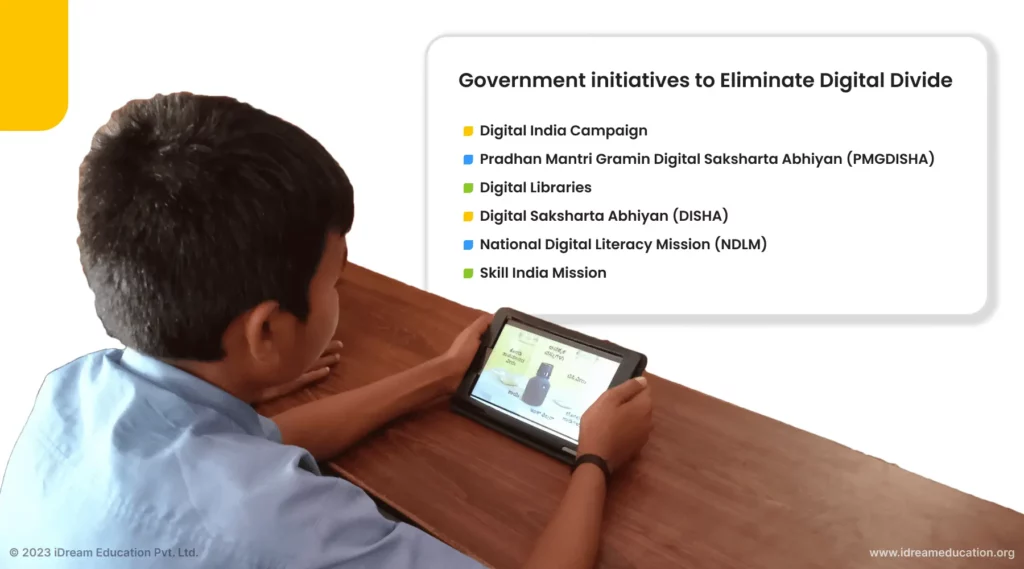
Visualizing Government Initiatives: Bridging the digital divide in education for equal opportunities and inclusive learning
India’s digital literacy initiatives aim to empower the masses by promoting technology adoption and increasing digital literacy nationwide. The government has taken several steps to bridge the digital divide in education and ensure that every citizen has access to digital resources and the skills required to utilize them effectively. Let’s explore some of the key digital literacy initiatives in India:
Digital India Campaign
The Digital India campaign, which Prime Minister Narendra Modi unveiled on July 1, 2015, is a flagship project to make India a society empowered by technology. It centres on three main elements: the development of digital infrastructure, the provision of digital services, and digital literacy. The initiative aims to increase digital literacy among individuals, encourage the use of digital platforms for service delivery, and provide high-speed internet connectivity in rural areas.
Pradhan Mantri Gramin Digital Saksharta Abhiyan (PMGDISHA)
PMGDISHA, a noteworthy project under the Digital India movement, was introduced in 2017. It seeks to make six crore rural households digitally literate by giving them access to digital gadgets, internet connectivity, and digital literacy training. The initiative provides free seminars on digital literacy that cover a range of topics, including utilizing cell phones, gaining access to e-services, and making purchases online.
Digital Libraries
To facilitate access to digital resources and encourage digital reading, the government has set up digital libraries across the nation. These libraries provide e-books, e-journals, and other instructional materials to encourage independent learning and improve digital literacy.
Digital Saksharta Abhiyan (DISHA)
The Ministry of Electronics and Information Technology launched DISHA as a program to improve digital literacy among government officials and non-IT workers. It offers training courses to advance one’s knowledge and proficiency in digital fields such as cybersecurity, digital payments, and e-governance.
National Digital Literacy Mission (NDLM)
The goal of the Ministry of Electronics and Information Technology’s NDLM program is to provide at least one member of every Indian family with digital literacy training. The program provides training modules on e-governance services, internet usage, online safety, and fundamental computer operations. Its main goal is to employ digital literacy to empower the underprivileged segments of society.
Skill India Mission
The Skill India initiative recognizes the significance of digital skills in the contemporary workforce, even though its focus is not exclusively on digital literacy. It provides a range of programs for skill development, including instruction in digital literacy, giving people the tools they need to succeed in the digital economy.
Awareness Campaigns
To encourage widespread digital literacy, the government, businesses, and non-governmental groups run awareness programs. The goal of these efforts is to increase public knowledge of digital technologies, their advantages, and practical applications. They also cover issues with cybersecurity, privacy, and internet safety.
These digital literacy initiatives are instrumental in bridging the digital divide in education and empowering individuals across all stages of society. By providing access to digital resources, imparting digital skills, and promoting technology adoption, India is paving the way for a digitally empowered and inclusive society. These initiatives not only enable individuals to access information and services more efficiently but also open up new avenues for employment, entrepreneurship, and personal growth finally resulting in closing the gap between digital divide in education.
How can iPrep be a driver for eradicating the digital divide among students?
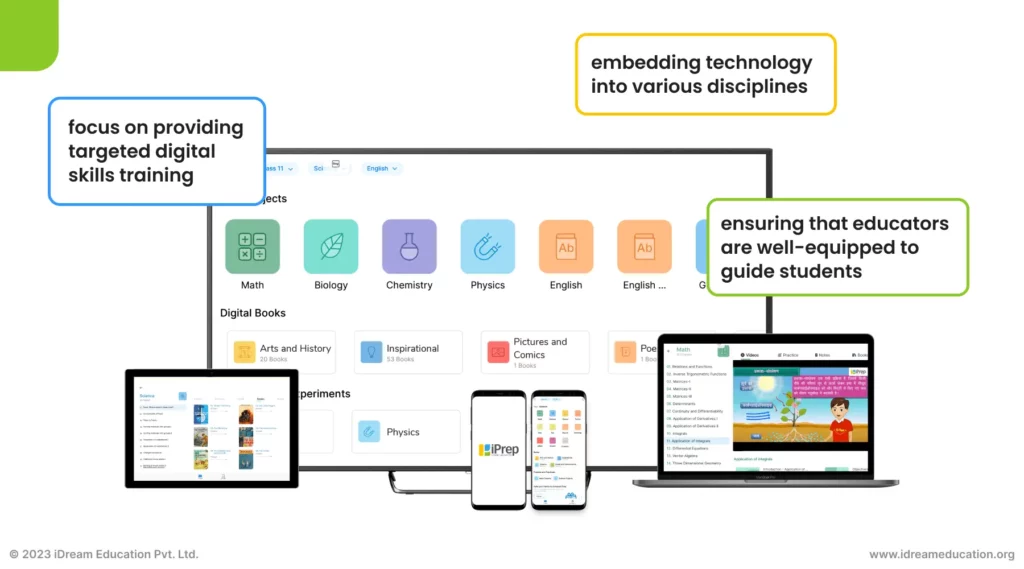
iPrep in Action: Driving educational equity by eradicating the digital divide in education, a visual representation of inclusive learning opportunities.
iPrep emerges as a powerful catalyst in narrowing the digital divide within education. Its comprehensive and affordable solution is dedicated to advancing digital literacy among students. The platform achieves this by ensuring a user-friendly interface for diverse learners, coupled with interactive and engaging content that elevates the learning experience. Moreover, iPrep champions personalized learning, tailoring educational content to individual needs and fostering inclusivity. These features collectively contribute to eradicating the digital divide, equipping all students with the tools necessary to thrive in an increasingly digital educational landscape.
To effectively address the digital divide in education, iPrep can initiate measures ensuring equitable access to digital devices and reliable internet connectivity for all students. This step is pivotal in bridging the gap between those with and without access to technology. Additionally, iDream solutions can focus on providing targeted digital skills training to students who may lack prior exposure to digital tools.
By seamlessly integrating technology into various disciplines, iPrep facilitates the organic development of students’ digital competencies as part of their overall education. This approach not only enhances their digital skills but also makes these skills integral to their academic success.
Crucially, iPrep prioritises teacher training to ensure educators are well-equipped to guide students in the digital realm. Teachers act as facilitators, guiding students through digital resources and cultivating a supportive learning environment.
In essence, iPrep stands as a driving force in tackling the digital divide in education by providing equal access to technology, offering targeted digital skills training, integrating technology into the curriculum, and empowering educators to effectively guide students in the digital age. Through these measures, iPrep contributes to creating a more equitable educational landscape, where all students have the opportunity to develop essential digital literacy skills.
Let’s conclude
In conclusion, the persistent challenge of the digital divide in education demands innovative solutions and collective efforts. Navigating the 21st century, we cannot overstate the transformative potential of digital literacy and access to technology. The disparities in students’ access to digital resources underscore the urgent need for initiatives like iPrep to bridge the gap. iPrep’s comprehensive approach, encompassing equitable access to devices, targeted skills training, and curriculum integration, positions it as a powerful driver in eradicating the digital divide in education.
Harnessing Tablets for Enhanced Classroom Interaction for Digital Education in India.
The term “digital education” has gained a great deal of popularity and importance, especially in relation to India. India is placing more focus on digital education, which is fitting given its critical role in improving the country’s educational system. The widespread adoption of digital education in India is a serious goal shared by governmental agencies, educational institutions, EdTech companies, and corporate social responsibility (CSR) initiatives.
With the current state of digital education in India, educators are realizing how important it is to include digital elements in their lesson plans. This covers the use of digital tests, smart classrooms, and an abundance of educational resources. These methods are now standard practice, ensuring that pupils are ready to manage a world that is becoming more and more digitally savvy.
Likewise, companies are pivotal in fortifying educational activities concerning digital education in India. They are focusing their resources on technology because they see its potential to improve education. These days, a lot of businesses fund educational initiatives, provide essential materials, and help build digital infrastructure for underserved areas and schools. This deliberate effort is leading to a big impact on how digital education in India is shaping up.
Let us first understand what is a digital education
Digital education is the incorporation and use of various digital technologies and tools in the educational environment to improve the learning experience and outcomes. It employs digital devices, software applications, and interactive content to facilitate the instructing and learning process. This strategy utilizes the capabilities of digital tools to make learning more engaging, individualized, and efficient.
Digital Education predominantly entails the use of smart classrooms, tablet-based digital libraries, learning tablets, and mobile/ web applications related to education. The purpose of these tools is to provide students with access to a vast assortment of educational resources, interactive content, and activities that go beyond traditional textbooks and classroom instruction.
Digital education can take many forms, including:
Courses and Platforms: These web-based systems or programs offer a broad range of courses on various topics.
Educational Apps: These smartphone apps aim to provide exercises, activities, and instructional information.
Interactive Multimedia: This includes instructive films, role-playing games, animated films, simulations, and other multimedia materials https://www.arabickeyboardonline.com/ that improve comprehension and interaction.
Assessments and Tests: Digital tools frequently provide students with rapid feedback during tests and assessments.
E-books and Digital Textbooks: Digital textbooks that can be viewed and read on digital devices are electronic-format versions of printed textbooks.
The iPrep platform integrates the several facets of digital education stated above. There is also a mobile application available. With the app, students may access and engage in more engaging and accessible learning while on the go. The platform is designed to deliver instructional information, exercises, and activities. It also includes a variety of multimedia content, such as interactive activities, animations, simulations, and videos. These resources offer a dynamic learning environment by improving comprehension and engagement. The platform works on almost all devices and operating systems and works online as well as offline in a classroom, lab, PC, web, tablet, or smartphone.
Digital instruments for administering tests and evaluations are part of iPrep. These tests frequently give students instant feedback, enabling them to monitor their development and pinpoint areas in need of improvement. Additionally, it offers electronic textbooks and instructional resources that are accessible and readable on a range of digital devices, including computers, tablets, and smartphones.
What is Digital Education In the Indian Context?
Thanks to a mix of increased demand for high-quality education and technical improvements, digital education has become a major force in India in recent years. In order to encourage digital education throughout the nation, the Indian government and a number of private companies have launched a number of initiatives and platforms.
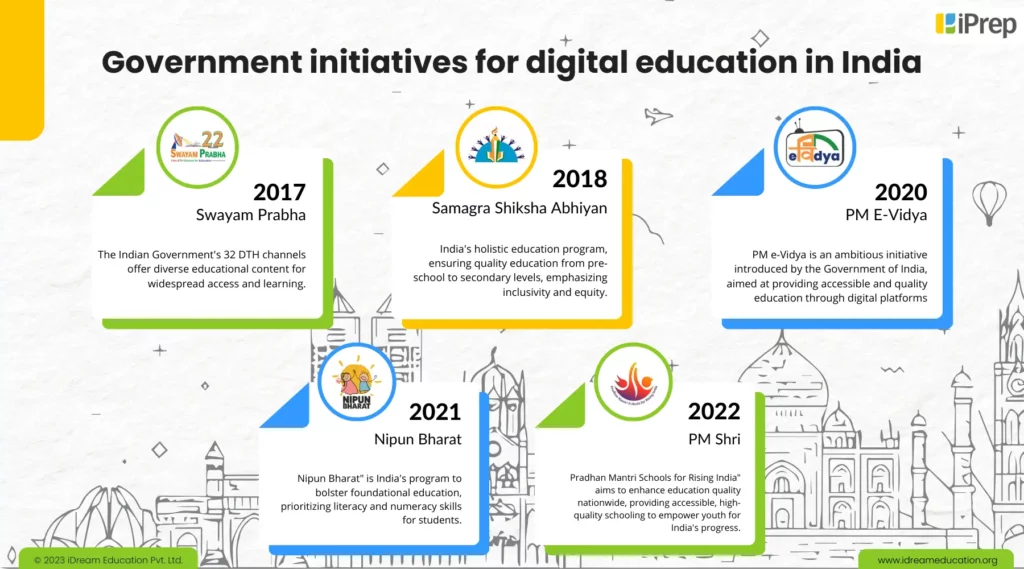
Initiatives such as the PM Shri, Samagra Shiksha Abhiyan, Nipun Bharat, PM E-Vidya, Swayam Prabha, VidyaDaan, and E-pathshala are pivotal in expanding access to high-quality educational resources. Additionally, educational institutions, both public and private, have been quick to adopt digital tools and platforms to ensure uninterrupted learning
Digital education in India has the power to close achievement gaps, raise standards, and broaden access to education. Digital education in India is a dynamic landscape, always expanding and changing to meet the country’s ever-changing demands and keep up with technological breakthroughs. It is seen as the way of the future for learning and education and its role is central in meeting UN SDGs and Economic Development Goals of India.
Discussed further in this blog are the initiatives taken up by the Government for Digital Education in India. Let us now understand the government initiatives that are trying to embrace digital education in India
Government initiatives for digital education in India
Government Initiatives for Digital Education in India – Launch Dates and Introductions
PM SHRI Initiative
PM SHRI is a visionary initiative launched by the Government of India, designed to improve school education in India. It is closely aligned with the New Education Policy (NEP) of 2020, reflecting a transformative approach to Digital education in India.
More than 14,500 PM Shri Schools are to be established under the PM Shri Scheme. The planned period of operation for this project is the 2022–2023 to 2026–2027 fiscal year. The PM Shri Scheme’s coverage has found and added 6,448 schools, with about 20 lakh kids in India expected to directly benefit from high-quality digital education as one of the program’s anticipated benefits.
PM Shri upholds the fundamental ideas of the NEP 2020, which enhances its goals. It encourages curricular flexibility, innovation, and critical thinking. In keeping with the NEP’s goal of a more dynamic and learner-centric educational system, it also places a strong emphasis on experiential learning and aims to lessen rote memorization (learning via repetition).
Objectives of PM Shri
Holistic Development: In addition to fostering academic achievement, PM Shri seeks to offer a holistic education that emphasizes mental health, physical fitness, and artistic expression. This is consistent with the NEP’s focus on a multifaceted, holistic approach to education.
Technological Integration: Technology integration in education is given a lot of weight in this project. In keeping with the NEP’s goal of utilizing technology for efficient teaching, it acknowledges the critical role that digital tools and platforms play in contemporary learning contexts.
Inclusivity and Accessibility: PM Shri is dedicated to ensuring that education is available to everyone, irrespective of socioeconomic status, geographic location, or any other possible obstacles. It is consistent with the NEP’s focus on inclusive education, which guarantees that all children have the chance to grow and develop.
The end results that PM Shri’s initiative is trying to achieve are as follows:-
Empowered Learners: The ultimate objective of PM Shri is to generate capable students who are not only academically adept but also have a variety of abilities and attributes necessary for success in the twenty-first century.
Technologically-Competent Citizens: PM Shri’s focus on technological integration is in line with the NEP’s emphasis on using technology to facilitate effective digital learning, as it seeks to provide students with the digital skills required for the modern workforce.
Inclusive Education Ecosystem: PM Shri is dedicated to fostering an inclusive and accessible learning environment where all children, regardless of background, have an equal chance to succeed.
Samagra Shiksha Abhiyan
A major initiative of the Indian government, the Samagra Shiksha Abhiyan seeks to offer inclusive, high-quality education to all children from preschool through upper secondary education. With over 1.6 million schools serving over 156 million students and 5.7 million government-employed teachers receiving educational support, the Samagra Shiksha program is the largest in the country. Notably, this program is essential to the advancement of digital education in India and is consistent with the country’s goal of using technology to improve learning outcomes.
Samagra Shiksha Abhiyan and the National Education Policy (NEP) of 2020 are closely related initiatives that aim to bring about a noticeable change in digital education in India. It takes into account the NEP’s focus on experiential learning, multidisciplinary approaches, holistic development, and foundational reading and numeracy.
Objectives of Samagra Shiksha Abhiyan
Foundational Learning: By the end or conclusion of Grade 3, the program seeks to ensure that every kid in India can read and perform basic math in addition to having had the opportunity to use digital learning resources. This aligns with the NEP’s emphasis on utilizing technology to enhance learning and begin school early.
Holistic Development: It seeks to provide every kid in India with a comprehensive education, encompassing both subject-specific learning and the use of digital learning resources. The main goals of this instruction are to ensure that children are technologically literate, creative, joyful, and healthy. This is in line with NEP’s holistic learning strategy, which emphasizes the value of traditional and digital teaching approaches for digital education in India.
Equitable Access, including Digital Education: The Samagra Shiksha Abhiyan works to close educational inequalities, particularly in underprivileged areas and groups, so that all children in India, regardless of their circumstances, have equitable access to high-quality digital education. This project recognizes technology as a critical instrument for improving learning possibilities and highlights the significance of digital education in India.
Quality Education, with a Focus on Digital Learning: By providing relevant training for educators, updating curricula, and improving instructional materials, the program seeks to improve the quality of digital education in India. Additionally, it highlights the incorporation of digital education in India, acknowledging the role that technology plays in enhancing the educational process.
The end result that the Samagra Shiksha Abhiyan initiative is trying to achieve is mentioned below
Aligned with the NEP, the ultimate aim of Samagra Shiksha Abhiyan is to provide every child with the values, knowledge, and skills required for their personal and societal well-being, including competency in digital education in India, in addition to academic brilliance. The program leverages the benefits of digital education in India to build a generation of empowered, creative, and critical thinkers who can meaningfully contribute to the nation’s advancement by emphasizing foundational learning, holistic development, and equitable access.
Nipun Bharat
One of the most important programs under the 2020 National Education Policy (NEP) is Nipun Bharat, which aims to improve digital education in India or children’s fundamental abilities. Early childhood education and basic literacy and numeracy skills are given a lot of weight. The Nipun Bharat Mission will give particular attention to kids between the ages of three and nine, which includes preschoolers through third graders. Those who don’t have the fundamentals will get committed, teacher-led help and support. Alongside this, the project will integrate digital education in India, guaranteeing a thorough strategy to support young students’ academic growth.
The NEP’s vision, which emphasizes the critical role that fundamental reading and numeracy play in a child’s educational path, is exactly aligned with Nipun Bharat. It fits in with the NEP’s emphasis on early education as a critical time for cognitive growth.
Objectives of Nipun Bharat
Foundational Learning with Digital Education: By the time children enter Grade 3, all children in the nation, regardless of background, should have acquired the fundamentals of reading and numeracy, according to Nipun Bharat. This goal is in line with the NEP’s focus on foundational education, which also acknowledges the critical role that it plays in digital education in India.
Holistic Development with Digital Education in India: The program recognizes that education is more than just academics. It highlights a child’s whole development, including their physical, social, and emotional health. It also emphasizes the necessity of incorporating digital education, which is consistent with India’s goal of developing technological learning approaches.
Early Childhood Education: Early childhood education is crucial, as Nipun Bharat emphasizes, as it lays a solid foundation for further learning.
Customized Learning Plans: It makes an effort to recognize and meet each child’s unique learning needs to create an atmosphere in which they can flourish both intellectually and socially.
The end result that the Nipun Bharat initiative is trying to achieve is mentioned below
In line with the NEP, Nipun Bharat seeks to embrace the advantages of digital education in India while making sure that every kid in the country has a solid foundation in reading and numeracy. With an emphasis on foundational learning and early education, the program hopes to inspire a lifelong love of learning in kids and provide them with the tools and resources they need to use digital tools and resources to reach their full potential.
PM E-Vidya
The Government established PM E-Vidya, an innovative effort with a clear goal of using technology to improve digital education in India. It is in perfect harmony with the 2020 National Education Policy (NEP), which places a strong emphasis on using technology in India’s digital educational ecosystem. Over 25 crore school-age children are expected to benefit from the Prime Minister’s E-Vidya project. This noble attempt also includes a crucial emphasis on digital education in India’s integration, which will provide the country’s youth with a comprehensive and technologically enhanced education.
The NEP’s goal of an educational landscape that is tech-savvy and aligned with PM E-Vidya is a great fit. It acknowledges the transformative power of digital technologies and platforms in offering students of all ages affordable, inclusive, and excellent digital education in India.
Objectives of PM E-Vidya
Multi-Mode Learning: With a focus on digital education in India, PM E-Vidya seeks to offer a multimodal learning experience that integrates online, offline, and broadcast learning modalities. This guarantees that a variety of students, regardless of their access to digital devices, can access educational content.
Universal Access: The effort aims to provide high-quality education, including digital education, to all regions of the nation, especially underserved and distant locations. It increases access to digital education in India by using technology to overcome geographic barriers.
Teacher training: The curriculum focuses a lot of emphasis on teaching Indian educators how to use digital technologies efficiently so they can design memorable and stimulating lessons in the realm of digital education.
The result that the PM E-Vidya initiative is trying to achieve is mentioned below
Aligned with the National Education Policy (NEP), PM E-Vidya aims to facilitate digital education in India by leveraging technology to develop digital education. The program intends to level the playing field for students nationwide by providing a wide variety of learning modes and guaranteeing universal access, ensuring that every student has the chance to gain from technological improvements in the education sector.
Swayam Prabha
A program by the Indian government called Swayam Prabha aims to provide Direct-to-Home (DTH) channels with top-notch educational content. This project perfectly aligns with the National Education Policy (NEP) of 2020, which emphasizes the importance of utilizing technology to offer high-quality education access. Swayam Prabha comprises 34 DTH channels dedicated solely to broadcasting top-notch educational content around the clock, 24 hours a day. This project makes use of the GSAT-15 Satellite to enable smooth information distribution. This technical development offers a broad and dependable platform for educational enrichment throughout the country, marking a noteworthy step towards improving digital education in India.
The educational programming available on the Swayam Prabha DTH channels is extensive and meets the needs of both higher education and classroom instruction (grades 9–12). These platforms provide carefully chosen curriculum-based courses, providing students in grades 11 and 12 with crucial support. This program is a significant step forward for digital education in India since it offers a wide range of academic levels and a full platform for academic progress.
Swayam Prabha completely agrees with the NEP’s goal of utilizing technology to make education easily accessible. It acknowledges that broadcasting has the potential to be an effective instrument for reaching students in underserved and rural places.
Objectives of Swayam Prabha
Reach Every Corner: Swayam Prabha wants to make sure that even the most isolated and unreachable regions of the nation have access to high-quality educational materials, including digital education. Through the use of DTH technology, learners in India can access digital education regardless of their geographic location.
Diverse Learning Resources: The program offers a wide variety of educational materials covering a range of topics and specializations. This meets the various interests and learning requirements of pupils in various age groups for digital education in India.
The end result that the Swayam Prabha initiative is trying to achieve is mentioned below
Swayam Prabha’s mission, as stated in the NEP, is to make digital education easily accessible in India by giving everyone, regardless of location or socioeconomic status, access to excellent learning resources, including digital education. The program seeks to enhance digital education in India by leveraging broadcasting technology to provide a more accessible and inclusive learning environment for all.
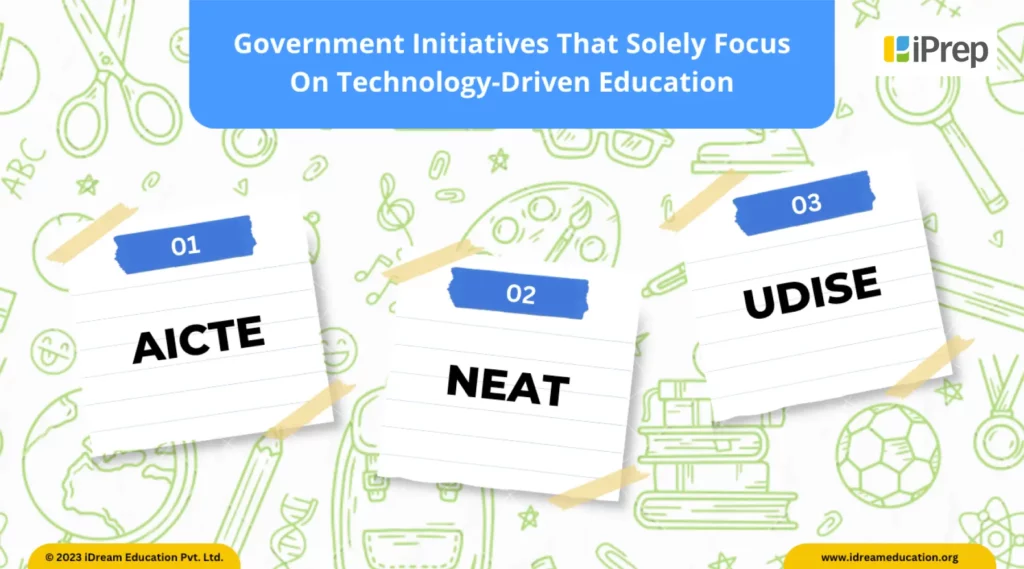
Now let’s talk about some initiatives that solely focus on technology-driven education.
Government Initiatives That Solely Focus On Technology-Driven Education
Digital Education for India: AICTE, NEAT, UDISE Government Initiatives Driving Technological Advancement for a Bright Future.
AICTE
The All India Council for Technical Education (AICTE) was established in 1945, gaining statutory status in 1987. It approves new technical institutions, courses, and intake variations, delegating some powers to state governments. AICTE sets norms, accredits programs, and promotes technical education through schemes for women, persons with disability, and weaker sections. It covers post-graduate, undergraduate, and diploma programs in engineering, canadian pharmacy, architecture, and more. Headquarters are in New Delhi with regional offices nationwide. A new office in Hyderabad is upcoming. The AICTE functions through an Executive Committee. The main distinction from the University Grants Commission (UGC) is AICTE’s focus on technical courses, while UGC oversees non-technical education.
Objectives of AICTE
Promotion of Quality Education: AICTE is responsible for promoting quality education in the field of technical and management education in India. It works towards maintaining and improving the standards of technical education.
Recognition and Accreditation: AICTE is involved in the recognition and accreditation of institutions offering technical education. It establishes norms and standards for the programs and ensures that institutions adhere to these standards.
Equity and Access: AICTE works towards promoting equity and access to technical education. It strives to ensure that education opportunities are accessible to all, regardless of socioeconomic factors or geographic location.
Steps taken by AICTE to achieve these objectives
To accomplish its main goals, the All India Council for Technical Education (AICTE) uses a variety of strategies. AICTE monitors colleges on a regular basis to guarantee compliance while enforcing strict norms and standards for technical and management programs in the interest of fostering high-quality education. The council takes an active role in curriculum creation, modifying course material to reflect changes in technology and industry standards. Fostering a culture of continuous growth, AICTE supports faculty development programs that strengthen teaching and research capacity.
AICTE conducts a methodical review procedure in order to obtain recognition and certification. Accrediting agencies work with AICTE to evaluate universities in comparison to predetermined quality criteria. In order to address issues of fairness and access, AICTE works to ensure that technical education is available to everyone, regardless of socioeconomic background. It also fosters inclusivity by implementing programs that improve possibilities for students from disadvantaged backgrounds and geographic areas. By means of these combined initiatives, AICTE hopes to improve technical education in India as a whole, making it more industry-responsive and inclusive of a wide range of students.
NEAT
National Education Alliance for Technology (NEAT) is a Public-Private Partnership model between the Government and the Education Technology companies of India. NEAT is a comprehensive platform for online education that provides access to a wide range of products from the industry. The Ministry of Human Resource Development ensures that students from rural areas or students having financial condition problems get access to some free coupons during their participation in the neat cell. This establishes a standard education procedure that is in alignment with the national education policy. When a student starts a question, his or her curiosity will be built and they will start learning on their own. If students look at the practical aspect of their knowledge, they will learn better. NEAT aims to help the student by providing different types of courses to Learn across the country.
This is the foundation of the future of India. This is the moment that is planting the seeds of a new era.
The Neat Initiatives also recognize the iPrep PAL as a prominent platform that places a strong emphasis on leveraging technology to facilitate digital education in India. To know more click here
Objectives of NEAT
It aims to make learning more convenient by providing a one-stop portal for the best ed-tech solutions.
It aims to improve the employability of young people by enabling them to learn skills that are in demand in the market.
Its focus is on skill areas that can translate into gainful employment.
It aims to make education and digital learning more accessible to socially and economically disadvantaged students.
It seeks to make the most of Artificial Intelligence and Adaptive Learning technologies to support personalized learning for diverse learners
Steps taken by NEAT to achieve these objectives.
NEAT has launched a user-friendly, centralized online portal that aggregates the best educational technology solutions. This one-stop platform provides learners with easy access to a diverse range of courses, materials, and tools, enhancing the convenience of their learning experience. It has also conducted thorough market research in collaboration with industry experts to identify skills in high demand. Based on this research, the alliance has curated a set of courses that directly address the current needs of the job market, with a specific focus on enhancing the employability of young learners. Recognizing the importance of gaining skills that lead to gainful employment, NEAT has tailored its course offerings to concentrate on specific skill areas that have a direct correlation with job placement and career advancement.
NEAT has implemented initiatives to improve accessibility, especially for socially and economically disadvantaged students. This includes offering subsidized or free courses, partnering with educational institutions to reach underserved communities, and leveraging technology to ensure that digital learning is accessible even in areas with limited infrastructure.NEAT has also integrated Artificial Intelligence and Adaptive Learning technologies into its platform. These technologies enable personalized learning experiences by adapting content and pacing to the individual needs of diverse learners. To amplify its impact, NEAT has forged strategic partnerships with educational institutions, industry leaders, and technology providers. Collaborations with government agencies and non-profit organizations have been established to broaden the reach of NEAT’s initiatives and ensure a more inclusive educational landscape.
UDISE
The Unified District Information System for Education (UDISE) was initiated in 2012-13. It is one of the largest Management Information Systems in School Education.
UDISE+ is an updated version of UDISE, where the data from the schools is collected online and in real-time. UDISE+ is a comprehensive Management Information System in School Education, covering over 15 lakh schools and more than 26.4 crore children. It addresses issues present in its predecessor. Developed in 2018-19, UDISE+ focuses on improving data capture, mapping, and verification.
In the 2020-21 academic year, 25.38 crore students were enrolled, with an increase of 28.32 lakh from the previous year. The Gross Enrolment Ratio improved across all levels. Teacher engagement increased to 96.96 lakh and 39.7 lakh students shifted to government schools due to the impact of COVID-19.
In 2021-22, enrolment increased to 25.57 crore, including growth in SC, ST, and OBC enrolments. The Gross Enrolment Ratio showed improvement, especially in higher secondary. The total enrolment of children with functional needs increased to 22.67 lakh.
Teacher numbers decreased in 2021-22, but PTR showed significant progress. Around 12.29 crore girls enrolled in primary to higher secondary education, showcasing increased participation. The total number of schools decreased to 14.89 lakhs, with 27% having special toilets for CWSN. Computer facilities were present in 44.85% of schools, and 77% had playground facilities.
These reports offer insights into the educational landscape, including enrolment trends, teacher statistics, gender representation, and school infrastructure status.
Objectives of UDISE
Data Collection and Maintenance: One of the main objectives of UDISE is to collect and maintain accurate and up-to-date data on various aspects of school education. This includes information on schools, students, teachers, infrastructure, and other relevant parameters.
Policy Planning and Implementation: UDISE serves as a crucial tool for policymakers in planning and implementing educational policies. The data collected through UDISE helps in understanding the current state of education, identifying areas that need improvement, and formulating targeted policies.
Identification of Trends and Patterns: UDISE helps in identifying trends and patterns in educational indicators. This information is valuable for understanding factors influencing enrollment, dropout rates, and academic performance, enabling targeted interventions.
Steps taken by UDISE to achieve these objectives.
The Unified District Information System for Education (UDISE) employs a multifaceted approach to achieve its primary objectives. Firstly, for the objective of Data Collection and Maintenance, UDISE implements a systematic data-gathering process that involves regular updates from educational institutions. This includes information on schools, students, teachers, and infrastructure. UDISE establishes protocols to ensure the accuracy and currency of the collected data, utilizing technology for efficient storage and retrieval.
Secondly, in pursuit of Policy Planning and Implementation, UDISE serves as a crucial tool for policymakers by providing comprehensive data insights. The system facilitates the identification of areas that require targeted interventions and helps in formulating evidence-based policies. UDISE actively engages with educational authorities to ensure that the collected data aligns with policy objectives, enabling informed decision-making in the planning and implementation of educational initiatives.
Thirdly, UDISE is designed to facilitate the Identification of Trends and Patterns in education. Through data analytics and reporting mechanisms, the system allows for the identification of trends related to enrollment, dropout rates, academic performance, and other key indicators. This information is crucial for education authorities to discern patterns and make strategic decisions aimed at improving overall educational outcomes.
Now that we have talked about government initiatives for digital education in India, let us talk about CSR initiatives for digital education in India
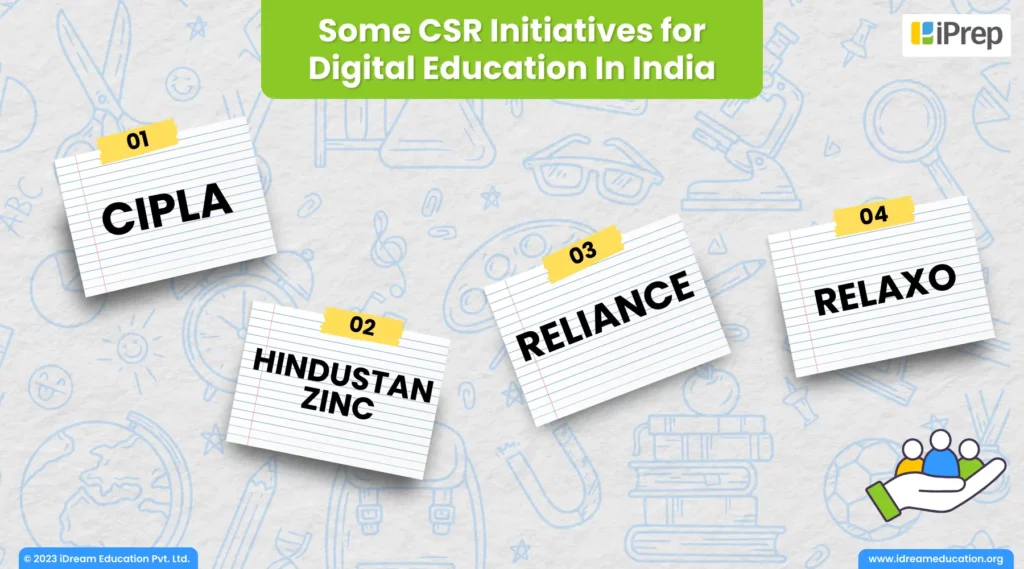
Some CSR Initiatives for Digital Education In India
Elevating Education: CSR Initiatives by Cipla, Reliance, Hindustan Zinc, and Relaxo for Digital Education in India
There are a lot of corporations that invest their CSR funds in the area of education as that is one of the most promising areas to plan CSR initiatives. Education has the potential to eventually eradicate the societal pains that every other CSR initiative may address. Whether it is food, shelter, unemployability, clean drinking water, electricity scarcity, etc, education has the power to uplift an individual, a family, or an entire locality out of these pains eventually. We here would like to highlight some of the Educational CSR initiatives that inspire us to a great extent.
1. Cipla
Cipla Foundation has partnered with various organizations to create wider access to education and learning opportunities for children. They aim to establish an enriching learning environment in identified Government and government-aided schools by providing facility enhancement support, ensuring that students have the necessary resources to continue their education.
The Cipla Foundation places particular emphasis on girl child education because gender crucially determines an individual’s level of education, disproportionately affecting women and girls. There is an evident disparity in literacy rates between males and females, creating a persistent barrier to education at both the primary and secondary levels. To address this issue, the Cipla Foundation has partnered with various potential organizations to support efforts that improve the enrolment and retention of out-of-school girls and enhance learning outcomes for primary-grade students in hundreds of villages in India. With the help of Cipla Foundation’s CSR initiatives, remedial learning has been provided to thousands of children.
During the COVID-19 pandemic, the Cipla Foundation partnered with NGOs to provide digital learning resources, equipment, and support for teachers in rural areas. They offered a Digital Library, Personalized Learning, and Digital Classrooms, benefiting thousands of students in India.
2. Hindustan Zinc
Hindustan Zinc is a subsidiary of Vedanta Limited. As part of its Corporate Social Responsibility (CSR) efforts, Hindustan Zinc has undertaken several initiatives to promote digital education in India. Here are some of their notable CSR initiatives in the field of education:
Khushi Nand Ghar (Anganwadi Programme)- This initiative primarily focuses on early childhood development and aims to comprehensively support children in their formative years by addressing holistic development, health, education, and community engagement. It has a positive and lasting impact on the lives of children and their families.
Shiksha Sambal– The program aims to address educational disparities and offer support to students, especially in rural and underserved areas. By addressing financial barriers, improving educational infrastructure, and providing skill-building opportunities, this program has the potential to significantly impact the educational landscape in the areas it serves.
Unchi Udaan- Hindustan Zinc operates this program to nurture the talents and aspirations of young individuals, particularly in the regions where it operates. By providing practical skills, career guidance, and entrepreneurial support, this program has the potential to make a substantial positive impact on the lives of young individuals.
3. Reliance
Through its Corporate Social Responsibility (CSR) initiatives, Reliance Industries actively promotes digital education in India.
It supports local schools with logistical and financial support, capacity building of teachers, and infrastructure development. It also nurtures and sponsors many projects designed to educate, employ, and empower women and youth in and around the catchment areas of its operations. One scheme of Reliance i.e. Dhirubhai Ambani Protsahan Scheme is a scheme for supporting meritorious students and providing financial aid to the toppers for pursuing higher studies in engineering and medical streams.
4. Relaxo
Relaxo is well recognized for its good corporate governance and CSR initiatives. At present, the Company is undertaking CSR projects in India which have directly & indirectly impacted the lives of approximately 2,00,000 people. The names of the projects are as follows:
Parivartan Model School Development Project- The project’s objectives include increasing public awareness of education, energizing school management committees, and carrying out construction and restoration projects inside the school.
Remedial Education Program: An educational initiative aims to provide targeted support and additional resources to students who may struggle with their studies.
It’s particularly important in addressing learning gaps and ensuring that every child has the opportunity to succeed academically.
Various organizations invest in the area of education through CSR with the aim of enhancing access to quality education for underserved learners in India. Altogether, we express great gratitude for all these organizations, and as an Ed-tech organization, we are ready to actively participate in any of these CSR initiatives directed towards enhancing access to quality digital education in India for the underserved.
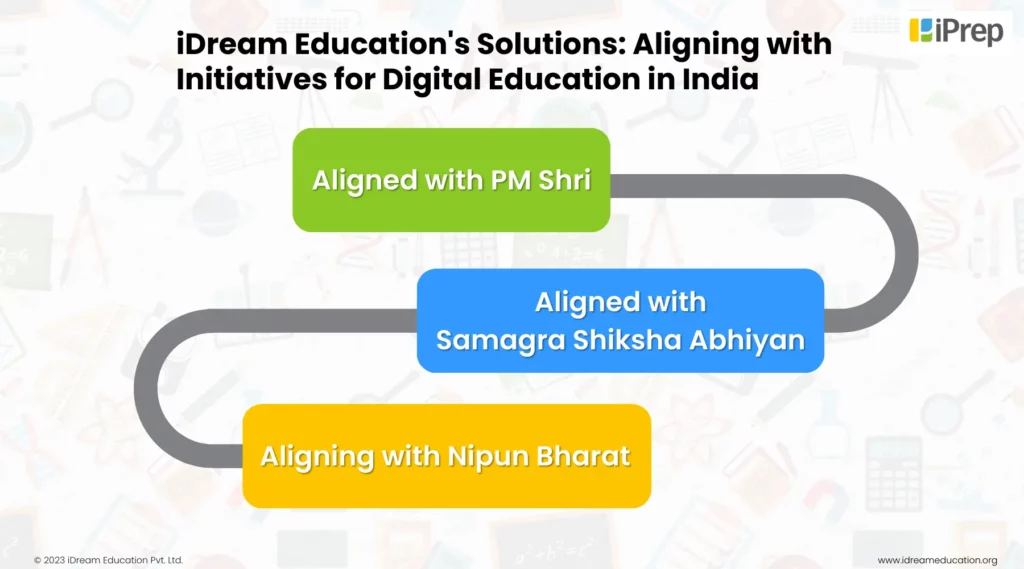
iDream Education’s Solutions: Aligning with Initiatives for Digital Education in India
Digital Education in India: iDream Solutions’ Strategic Alignment with PM Shri, Samagra Shiksha Abhiyan, and Nipun Bharat
Aligning with PM Shri
iDream Education Solutions significantly contributes to digital education in India, aligning with the PM Shri initiative in various key ways:
Technological Integration: iDream promotes education through technology by providing a full range of digital learning resources, such as interactive classes, e-books, and other tools.
Quality Content Access: One objective is to fulfil PM Shri’s digital education goals by providing high-quality, curriculum-aligned content and improving the entire educational experience.
Inclusivity and Accessibility: In line with PM Shri’s efforts to promote inclusive education, iDream has designed solutions to reach a broad spectrum of pupils, including those residing in rural or underserved areas.
Alignment with NEP: In line with PM Shri’s initiatives to develop digital education, iDream’s solutions adhere to the 2020 National Education Policy (NEP), which emphasizes the integration of technology in education.
Aligning with Samagra Shiksha Abhiyan
iDream Education Solutions provides technology-driven educational resources and solutions that support government initiatives to improve Digital education in India, therefore aligning with the goals of the Samagra Shiksha Abhiyan. iDream education complements Samagra Shiksha Abhiyan in the following ways:
Digital Content & Curriculum: Supplying digital resources for improved teaching and learning that are in line with NCERT.
Technology Integration: Properly applying technology to successful education in keeping with Samagra Shiksha Abhiyan’s tech-driven methodology.
Access to Underserved Areas: Expanding education to far-flung areas while maintaining inclusivity in line with the goals of Samagra Shiksha Abhiyan.
Aligning with Nipun Bharat
The iDream education system is in line with Nipun Bharat for digital education in India in a dynamic educational environment. Here how iDream education complements Nipun Bharat is as follows:
Interactive Learning: Students can study through interactive content that can inspire active engagement and increase their grasp of fundamental themes with the aid of the iDream education system and iPrep digital classes.
Visual Learning: Teachers can boost students’ knowledge of Foundational Literacy and Numeracy (FLN) principles by utilizing multimedia information and visual aids in a smart classroom setup that includes interactive flat panels, digital whiteboards, and smart TVs.
Access to Resources: iPrep Digital Libraries, an iDream education solution, gives users access to a variety of e-learning materials, including tools for enhancing their reading and numeracy abilities.
Multilingual Content: Students from a variety of language backgrounds can benefit from the multilingual material of the iDream education solution iPrep, which facilitates the acquisition of Foundational Literacy and Numeracy (FLN) skills.
Let’s Conclude
In conclusion, a growing demand for high-quality education and the meeting of technical breakthroughs have led to a remarkable expansion and transition in digital education in the Indian landscape. With a focus on integrating digital education in India, government initiatives including PM Shri, Samagra Shiksha Abhiyan, Nipun Bharat, PM E-Vidya, and Swayam Prabha have been instrumental in increasing access to high-quality educational resources.
In addition to being in line with the National Education Policy (NEP), these programs show a progressive attitude to ensuring that every child has the values, abilities, and information required for both individual and societal well-being. They stress inclusivity, accessibility, and quality in the educational ecosystem and acknowledge the critical role that technology is playing in changing education.
Government initiatives like AICTE, NEAT, and UDISE showcase a comprehensive commitment to advancing technology-driven education in India. AICTE focuses on promoting quality education, recognition, and equity in technical and management fields. NEAT, a Public-Private Partnership, aims to enhance learning accessibility, employability, and inclusivity through a centralized online platform. UDISE, as a massive information system, collects real-time data for informed policy planning, recognizing trends, and ensuring data-driven decision-making in the education sector. These initiatives collectively contribute to the transformative potential of digital education, aligning with the national agenda for inclusive and high-quality learning.
What’s More
Furthermore, the corporate social responsibility (CSR) endeavours of companies such as Cipla, Hindustan Zinc, Reliance, and Relaxo highlight the joint endeavour to augment the availability of high-quality education, with particular emphasis on digital learning. These programs demonstrate a deep awareness of the role that education plays as a potent catalyst for social advancement.
Digital education has the potential to close educational disparities, enhance learning outcomes, and make education more inclusive and available to all as it develops further.
Essentially, government and business initiatives are guiding India toward a future in which all children can flourish intellectually, digitally, and personally. This group effort is evidence of the revolutionary potential of digital education in India.
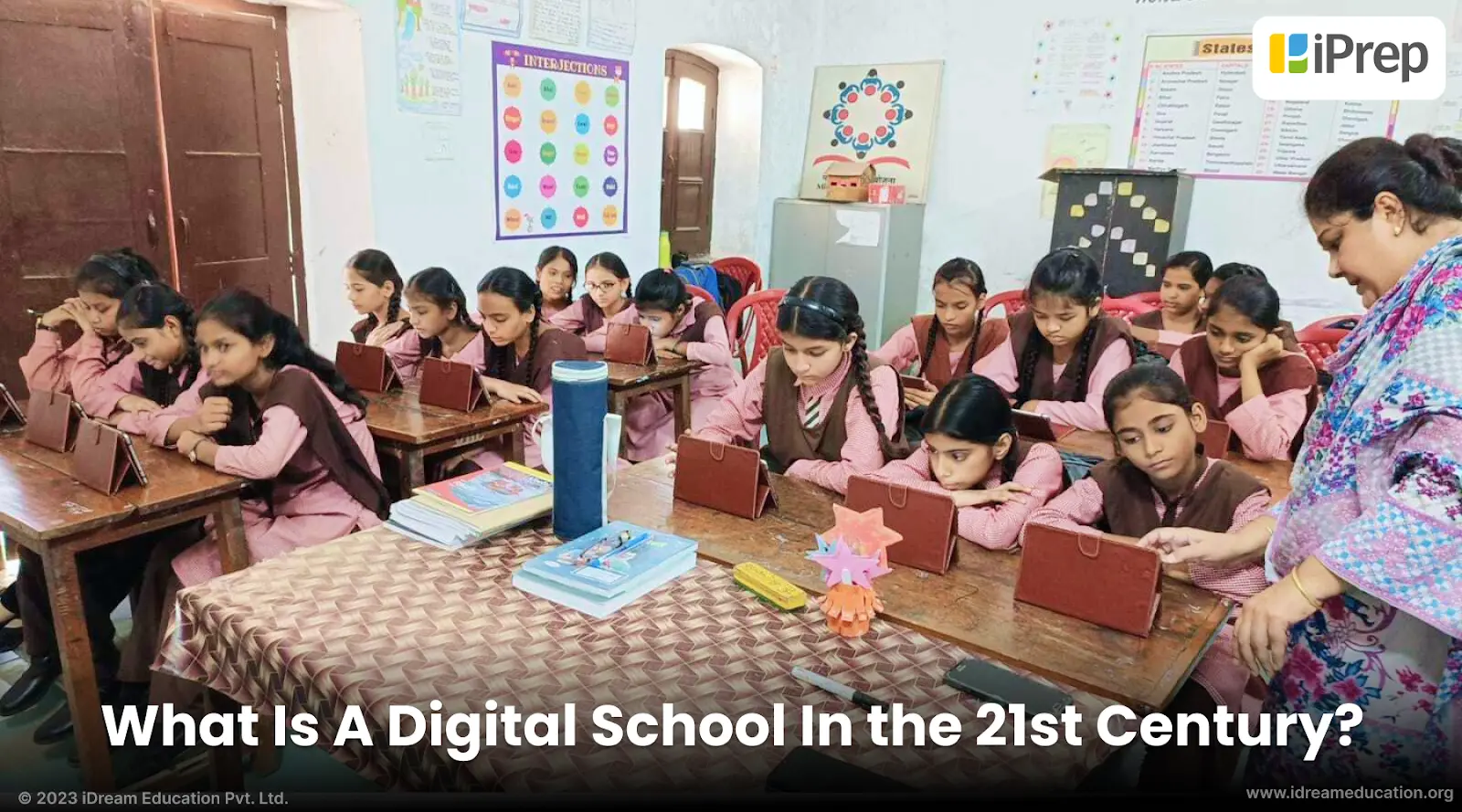
Unlocking Knowledge in the Digital School: Students immersed in interactive learning with a Tablet-Based Digital Library
As the 21st century continues to unfold, the face of education is undergoing a profound transformation. Traditional schools, with their chalkboards and textbooks, are gradually giving way to a new era of the smart classroom systems, where digital schools represent the future of learning. In this blog post, we embark on an illuminating journey to unravel the essence of a digital school in the modern age.
We’ll dive into the pivotal elements that differentiate a digital school from its conventional predecessors, from the transition in general and administrative practices to the innovations in educational practices. Moreover, we’ll shed light on the instrumental role that comprehensive K12 learning platforms like iPrep play in this exciting educational evolution, where technology and learning intertwine to shape the future of education.
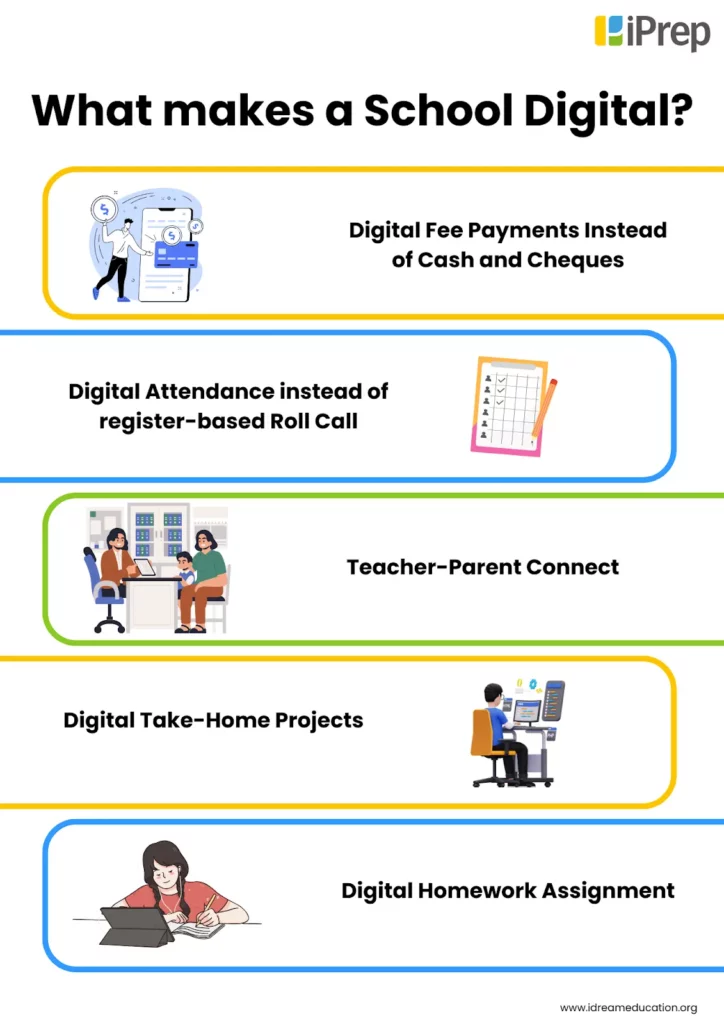
What Makes a Smart School Digital?
The school should undergo a transition to become a digital school, complementing traditional school-related practices with digital ones. This involves a combination of both general and administrative and educational practices becoming digital. Let’s start by understanding how the transition of General and administrative practices makes a digital school.
General & Administrative Practices for a Transition towards Becoming a Digital School.
Efficient Digital School: Streamlined Fee Payments, Homework Assignments, and More.
1. Digital Fee Payments Instead of Cash and Cheques
To make a transition to becoming a digital school, institutions are encouraged to transition towards digital fee payment methods as opposed to relying on conventional cash and cheque transactions. This shift promises to yield numerous benefits, chief among them being a substantial reduction in paperwork.
By embracing digital payment systems, schools stand to significantly curtail the costs associated with manual documentation processes. Additionally, this modern approach facilitates a smoother administrative experience, alleviating burdens on staff members.
Notably, the adoption of digital payment methods translates to substantial time savings for all stakeholders involved, including administration personnel, parents, and students. Schools should employ a reputable digital payment gateway to ensure the utmost security in these transactions.
It is worth highlighting that digital payments, as opposed to traditional payment methods like cheque transactions, typically require only a matter of minutes for processing, further emphasising the expediency and efficiency of this approach. Schools should adopt this as the first practice to transition towards setting up a digital classroom.
2. Digital Attendance Instead of Register-based Roll Call
Educational institutions should recommend transitioning to employing digital attendance methods, such as biometric recognition and ID card scanning, rather than relying on traditional manual roll calls. When students use biometric or ID card scanning for attendance, the system should automatically dispatch a message to notify parents of their child’s arrival at school. This initiative serves to diminish absenteeism and optimise instructional time by eliminating the need for teachers to manually record attendance in class.
The adoption of digital attendance systems contributes to environmental conservation by reducing paper consumption. Additionally, it is anticipated that the implementation of digital attendance will mitigate attendance-related issues, as students are entrusted with the responsibility of recording their attendance. If this attendance approach is adopted, then a normal school can easily become a digital school without any hindrances.
Teachers should start disseminating homework and assignments digitally, as opposed to conventional paper-based methods. This shift will yield several advantages, including time-saving benefits for teachers. Digital assignments allow instructors to review and assess student work remotely or at their convenience, rather than during class hours, thereby optimising instructional time.
Furthermore, this approach offers cost-effectiveness by reducing paper consumption, as printed assignments are often discarded after grading. By embracing digital homework and assignments, the educational community can contribute to paper conservation efforts.
With applications such as iPrep, teachers can efficiently onboard all students within their designated batch. Additionally, teachers are empowered to establish batches and subsequently control their students, providing them access to tailored learning content aligned with their curriculum.
Moreover, the iPre, a K12 Learning App, offers a comprehensive reporting feature, enabling teachers to maintain a detailed record of student progress and performance. This functionality enhances the educational experience by facilitating organised and data-driven instruction. With the help of apps like iPrep, a school can easily become a digital school, or we can say that by adopting the practice of distributing homework assignments, a school can transition towards becoming a digital school.
4. Digital Take-Home Projects
In these projects, students are asked to use digital tools and resources to complete assignments outside the classroom, making it a modern approach to academic assignments for creating a digital school. By leveraging digital technology, students have the opportunity to engage with materials interactively, fostering creativity, critical thinking, and digital literacy skills.
Students have the option to submit their projects in advance to facilitate timely assessment and feedback from teachers, providing them with an opportunity to make necessary amendments before final submission. From our perspective, the digital dissemination of projects offers an added advantage as it permits students to enjoy their vacations, as they have access to the requisite technology to complete their assignments.
Digital take-home projects are a necessity if a school wishes to transition towards becoming a digital school.
Another significant aspect that undergoes a transition when a school becomes a digital school is the Teacher-Parent connection. Facilitating a robust teacher-parent connection within educational institutions holds significant importance, affording parents valuable insights into their child’s scholastic progress. This interaction serves as a channel for Teachers to furnish constructive feedback to parents regarding their child’s performance in school. While conventional parent-teacher meetings certainly hold merit, a digital platform for this connection proves notably more effective.
Unlike periodic parent-teacher meetings, a digital meeting permits parents and teachers to engage every week, ensuring a more continuous and dynamic exchange of information. This proposed approach represents a commendable method for effecting enhancements toward the establishment of a digital school.
Furthermore, it is possible that traditional methods, such as requesting parental signatures on students’ diaries to acknowledge feedback, may occasionally encounter issues of authenticity. Haven’t we had that friend in our class who used to copy his/her mother’s or father’s signature on the report card just to avoid getting a scolding from them?
In this regard, a digital platform not only streamlines communication but also offers a more secure and verifiable means of parental engagement. This way of communicating, being a part of a digital school, can make the teamwork between teachers and parents stronger. It helps everyone work together better to support a child’s learning.
Now that we have discussed general and administrative practices for transitioning towards becoming a Digital School, let’s focus on education-focused practices that help in the transition from a traditional school to a new-age digital school.
Education Focused Practices
1. Teaching
For a school to truly embrace the digital age and become a “digital school,” it is essential that the teaching aspect evolves in tandem with technological developments. This transformation goes beyond the simple incorporation of digital tools; it requires a fundamental shift in how Teachers impart knowledge and interact with students. Teachers must adopt innovative strategies, interactive platforms, and the dynamic potential of technology to implement digital teaching methodologies in the context of a digital school.
Teachers can create a more immersive and engaging learning environment by incorporating digital technologies in education, such as smart classroom solutions and digital learning tools, learning tablets, tablet-based digital libraries, and learning apps. This transition enables students to explore, interact, and absorb knowledge in previously unimaginable ways throughlearning tablets and other digital tools.
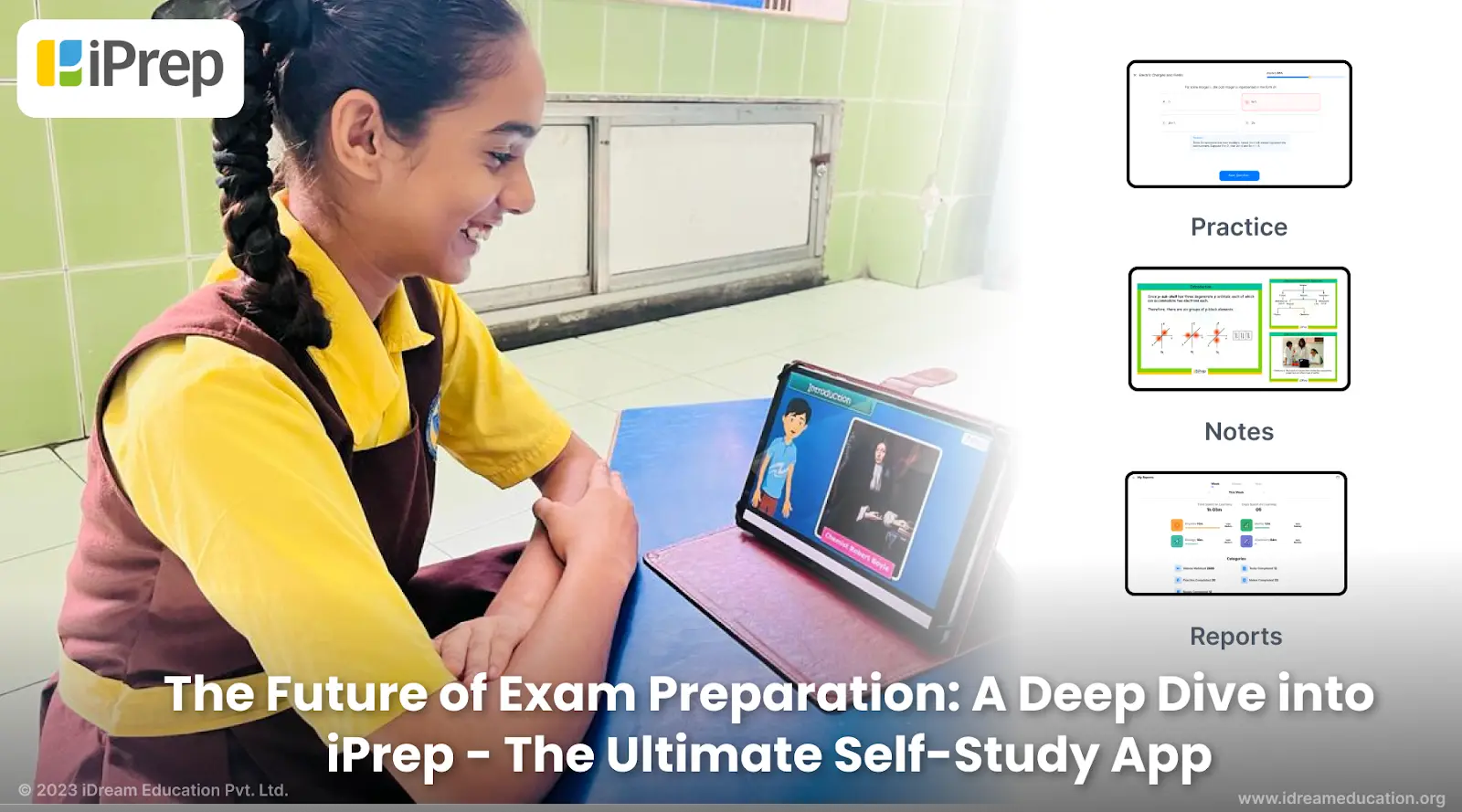
Furthermore, such digitalisation empowers Teachers with the capability to monitor and evaluate their instructional progress, including the range of topics covered during each instructional session. This technological advancement mirrors the innovative approach exemplified by the iPrep platform. Through its provision of captivating animated video lessons, proficiency-building multiple-choice question practices, and comprehensive study materials, iPrep offers a dynamic and interactive mode of learning.
Additionally, iPrep extends its educational resources to encompass supplementary content, allowing students to engage in enriching activities during their unallocated time in school. These activities serve to foster holistic development, thereby contributing to a well-rounded educational experience. If these digital methods of teaching are adopted, the transition to a digital school will be facilitated.
2. Learning
To transform a school into a digital school, students must experience a comprehensive digital educationthat evolves their learning into the digital realm. This transition does not necessitate the creation of virtual schools, but rather the incorporation of digital teaching and learning solutions into traditional educational settings. By implementing innovative tools such as smart classes, learning tablets, tablet-based digital libraries, and educational apps, schools can harness the power of technology to enhance the learning process and gradually transition towards becoming a digital school.
Similar to the solutions provided by iDream Education, these digital resources make education more engaging, interactive, and accessible, fostering a dynamic and contemporary educational environment. By incorporating digital elements into the learning process, schools can prepare students for the challenges of the digital age while simultaneously transforming education into an engaging and enriching journey.
3. Progress Reporting
The transformation of a traditional school into a true digital school in the digital age extends beyond teaching and learning alone. In addition to innovative tools such as smart classes, learning tablets, tablet-based digital libraries, and educational apps, the transition to a fully digital school must include the crucial aspect of progress reporting.
Adopting digital classroom progress reporting systems empowers educators, students, and parents with real-time insights and data-driven feedback, allowing schools to efficiently track and communicate student performance. This seamless integration of digital solutions fosters a comprehensive educational ecosystem where the entire educational journey is interconnected seamlessly, enabling improved communication, personalised learning, and, ultimately, advancing students’ overall learning.
Some digital learning solutions, like the ones offered by iDream Education, can come as a great helping hand in this case. Each of our solutions is powered by our one-stop learning platform “iPrep”, which comes with real-time progress tracking where the app, at every moment, records the usage of the content present on the platform with utmost detail, and the same is presented in the form of reports in the My Reports section, which is present within the app. Our Central Reporting Dashboard allows access to the same reports for one or multiple schools. Access can be shared with Heads of Departments (HODs), Principals, School Authorities, School Funders, Government authorities, and other stakeholders as per their requirements.
4. The Use of Learning Management Systems
The use of Learning Management Systems (LMS) in an Indian school has been instrumental in transforming a traditional educational institution into a digital school. LMS platforms enable schools to seamlessly transition from conventional teaching to online and blended classroom learning, providing students and teachers with a centralised platform for communication, collaboration, and content delivery. With the advent of LMS, schools can offer a wide range of courses and resources, fostering personalised learning experiences and enhancing overall educational quality.
Moreover, iPrep, an innovative educational technology provider, has been at the forefront of facilitating this digital shift. By integrating its wide library of digital education content and real-time reporting with LMS platforms through API integration, iPrep has been able to offer a one-stop and vastly comprehensive solution for schools. The company has already successfully collaborated with multiple service providers, such as “Teachmint,” further enhancing the capabilities and effectiveness of LMS in Indian schools.
These implementations demonstrate the advantages of smart classroom technology and highlight the benefits of smart classroom integration in modern education.
Conclusion
Transitioning all operational processes into a digital format is a foremost requirement for a school to achieve the status of being a digital school. This includes the transitions in the general and administrative practices, such as digital payment methods for fees, replacing traditional cash and cheque transactions, the digitisation of attendance records and homework assignments, as well as the incorporation of digital platforms for take-home projects. Moreover, fundamental educational practices such as teaching, learning, and progress reporting must also undergo digital transformation to qualify as a digital school.
In this context, comprehensive digital education platforms such as iPrep emerge as instrumental tools in creating a truly modern smart school. iPrep offers a comprehensive suite of digital resources and a dedicated application for personalised, adaptive learning. Notably, iPrep also integrates a feature known as Personalised Adaptive Learning (PAL), further augmenting its capacity to cater to individualised learning needs.
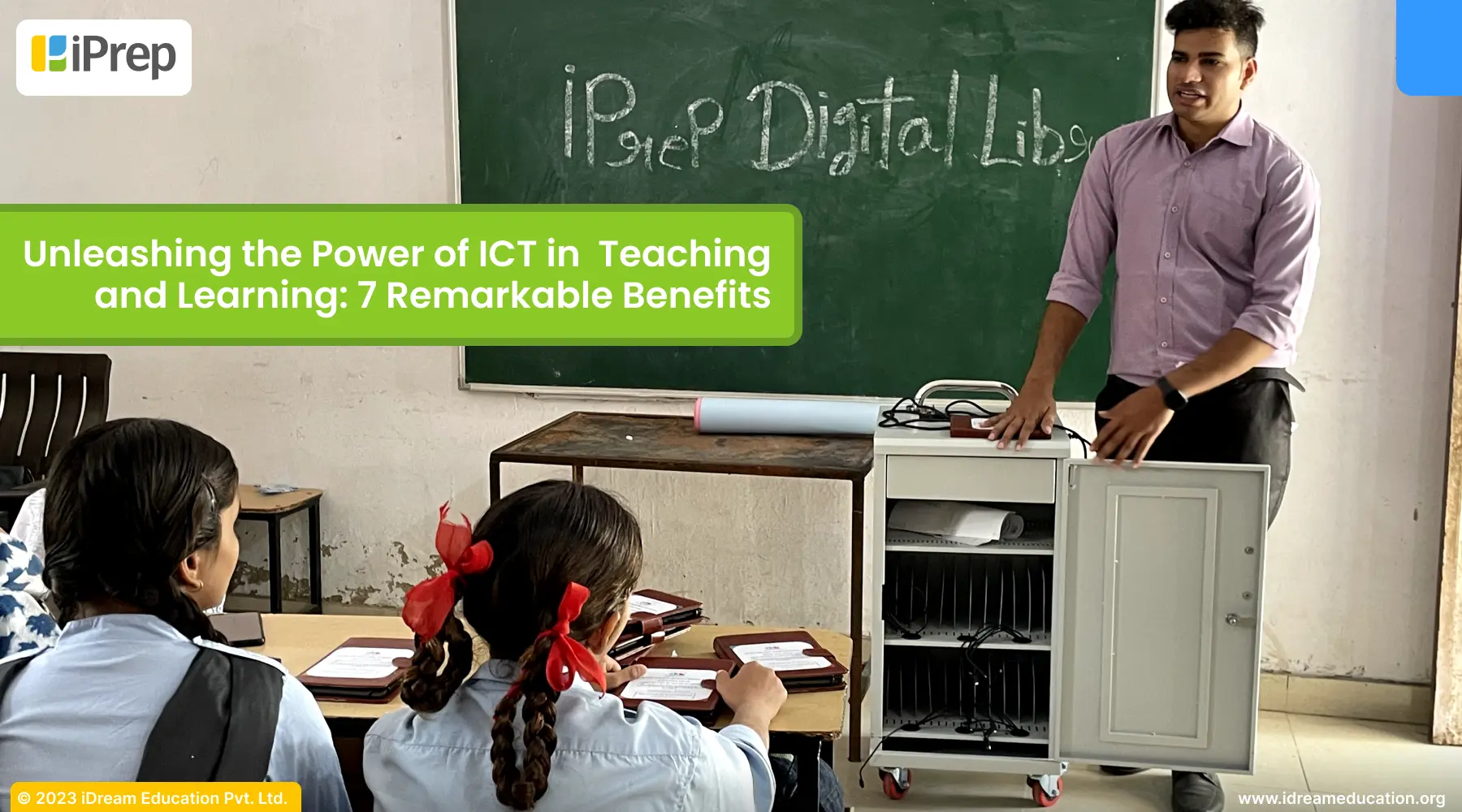
A Demonstration Of The Use of ICT In Teaching and Learning
As the world accelerates into the digital age, education is also undergoing a fundamental transformation. Information and Communication Technology (ICT) is central to this revolution, which is reshaping the way we teach and learn. In this article, we will discuss the astounding impact of ICT In Teaching and Learning, and education overall, revealing seven game-changing benefits that are changing classrooms around the world.
ICT in Teaching and Learning reshaping the educational landscape by eliminating geographical barriers, personalizing education, enhancing knowledge retention, and preparing students for the digital age. In addition, we will introduce you to the iPrep Digital Library, a game-changer in the world of ICT in education. Join us as we explore the future of teaching and learning in a world that is becoming increasingly digital.
About ICT In Teaching And Learning
Information and Communication Technology (ICT) has emerged as a powerful force for enhancing teaching and learning in the traditional educational environment. ICT in teaching and learning refers to the use of technology, such as notebooks (such as Chromebooks and Primebooks), and tablets with learning applications, with or without the Internet, to improve the educational experience for both teachers and students.
It involves the implementation of various software applications and methodologies designed to enhance the quality and effectiveness of education. This integration seeks to streamline instructional practices, making them more accessible and effective for all stakeholders, going beyond mere hardware and software.
Extensive research supports the incorporation of ICT into teaching and learning, demonstrating its positive impact on student engagement, achievement, and overall learning outcomes. Simply introducing technology into the classroom is not sufficient; educators must utilize it to create dynamic and interactive learning environments. ICT provides educators with tools that facilitate personalized learning experiences, adapt to the unique needs of each student, and enhance knowledge retention. In addition, it improves the transparency of attendance and grading processes, facilitating communication among teachers, students, and parents. This comprehensive approach generates a more engaging, effective, and student-centered learning environment that prepares students for success in the digital age.
What is ICT in the context of schools?
In the educational context, Information and Communication Technology (ICT) pertains to the utilization of computers, tablets, and the Internet to facilitate the teaching and learning processes for both educators and students. ICT encompasses the deployment of software applications and methodologies aimed at enhancing the quality and efficiency of education. Essentially, ICT in schools endeavors to streamline instructional practices, rendering them more accessible and effective for all stakeholders involved.
Extensive research supports the integration of ICT in teaching and learning processes. It highlights its positive impact on student engagement, achievement, and overall learning outcomes. Let us have a look at one of them in the below section.
The digital component of ASER 2023 report attempted to gauge whether rural youth in India have the digital access and skills needed in a digitally driven world. A key component of measuring this is also ICT literacy and use of ICT tools in school can go a long way in improving digital access and skills of the rural Indian youth. An example of an ICT tool for schools is a Digital Class, enabled with Digital board or a Smart board for teaching. Other examples are Learning Tablets with Digital NCERT Content.
Government research on ICT
Government research envisions the National Mission in Education through ICT in teaching and learning as a highly beneficial future initiative to enhance the educational experience for all learners in higher education institutions, providing the flexibility of access from any location.
During the XI five-year plan period, it was anticipated that ICT would play a pivotal role in increasing the Gross Enrollment Ratio (GER) in higher education by 5 percent.
The comprehensive principles of the education policy are access, equity, and quality.
These principles can be effectively served by ensuring connectivity to all schools, colleges, and institutions, as well as by providing students and learners with low-cost and easily accessible resources. The National Mission on Education through ICT (NMEICT) comprehensively addresses all three of these essential elements.
One of the primary objectives of the NMEICT is to bridge the digital divide, which refers to the disparity in proficiency in using computing devices for educational purposes between rural and urban teachers/learners. Additionally, ICT in teaching and learning plays a crucial role in empowering those who have yet to benefit from the digital revolution. The NMEICT also places a strong emphasis on adopting appropriate methods for e-learning and offers facilities for conducting experiments through virtual laboratories and online testing. This initiative is instrumental in training and empowering teachers to effectively utilize these new methods of teaching and learning, among other benefits. For more details, click here: www.nmeict.ac.in
Now let us talk about what benefits ICT in teaching and learning offers in the next section.
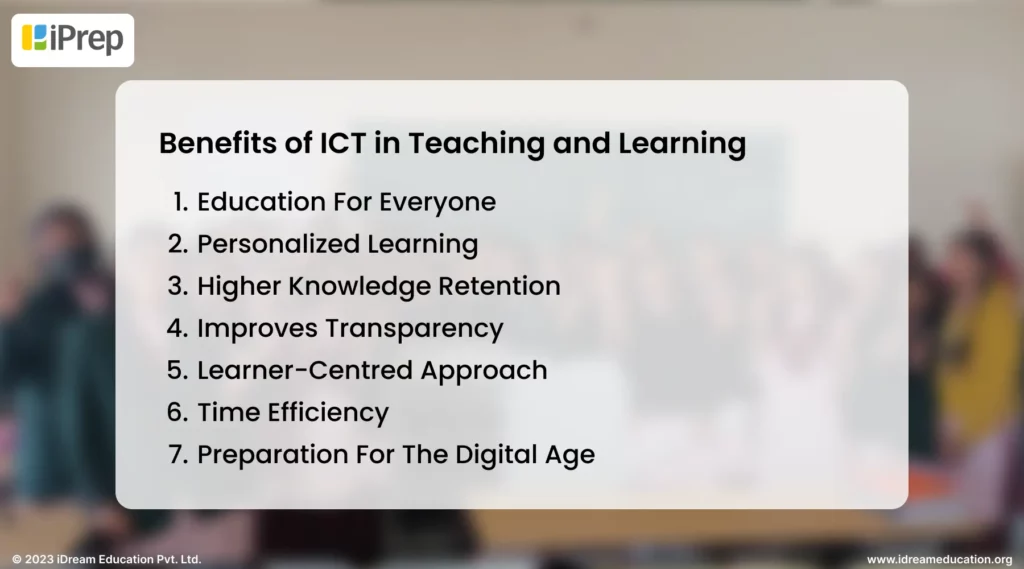
Benefits of ICT in teaching and learning
Seven Key Benefits Of ICT in Teaching and Learning.
Benefit 1: Education for Everyone
Education for everyone is undeniably one of the most significant benefits of ICT in teaching and learning. It helps break down geographical barriers, providing access to quality education for students regardless of their location, while all the resources are available in the classroom room students can also access them outside school while sitting at home or enjoying a vacation with family. This especially benefits students who prefer learning at their own pace. Such students can go over the lesson as many times as they want to understand the topic thoroughly. Virtual classrooms and digital resources ensure that education is no longer confined to traditional ways of teaching and learning. This inclusivity is particularly crucial for remote or underserved areas, changing access to knowledge.
iPrep is an National Education Policy (NEP) aligned innovative K12 LMS designed to cater to a diverse range of learners, ensuring education is accessible to everyone. It offers a variety of content formats including text, videos, interactive simulations, and more. iPrep provides content in multiple languages, breaking down language barriers and this online platform enables students to learn from anywhere with an internet connection making education accessible to a global audience.
Benefit 2: Personalized Learning
One of the most significant benefits of ICT in teaching and learning is Personalized learning. One-size-fits-all approaches are no longer that effective in education. ICT(Information communication technology) enables personalized learning experiences to adapt to individual student needs, preferences, and pace of learning. Personalized learning helps ensure every student easily reaches their full potential.
iPrep’s approach to personalized learning leverages technology to create a dynamic and adaptive learning environment. It tailors content, feedback, and resources to the specific needs of each student, and maximizes their potential for academic success.
Benefit 3: Higher Knowledge Retention
Higher knowledge retention stands among the most crucial benefits of ICT in teaching and learning. Visual learning is seen to be more effective for students than regular chalk and talk. The education sector has seen that integrating technology in studies, such as videos, simulations, interactive activities, and practicals significantly improves knowledge retention which is a great way to increase the teaching capacities of teachers. This is because our brains process and retain images and videos faster as compared to texts. ICT in teaching and learning makes learning more immersive and memorable which ultimately leads to a deeper understanding and long-term retention of information.
iPrep employs a visual approach on its platform to enhance the memorization of topics over an extended period, minimizing any unnecessary difficulties. iPrep achieves this by offering educational videos, simulations, and interactive activities for each subject. These resources significantly contribute to better knowledge retention.
Benefit 4: Improves Transparency
Transparency is another highly advantageous benefit of ICT in teaching and learning. It helps to maintain a transparent attendance and grading process. The data can be shared with schools, teachers, students, and their parents. Data is also stored in ICT that can help serve as proof in case of student absenteeism. This eliminates uncomfortable questions and accusations, as all actions are based on proof.ICT tools facilitate seamless communication between teachers, students, and parents by making them connect digitally. These digital connections between parents and teachers enhance transparency as the teacher can regularly provide the child feedback to their parents directly without even waiting for the traditional parent-teacher meeting that takes place quarterly.
Digital platforms and learning management systems provide real-time access to grades, assignments, and progress reports. This transparency fosters a collaborative learning environment, where stakeholders work together to support the student’s educational journey.
iPrep is a platform where students can access a wide range of learning materials, including textbooks, multimedia resources, and interactive simulations. This ensures that all students have equal access to the same resources, promoting transparency in content delivery. iPrep allows for prompt feedback on assignments and assessments. This immediate response fosters transparency by providing students with a clear understanding of their strengths and areas for improvement.
Benefit 5: Learner-Centered Approach
A learner-centered approach puts students at the forefront which is a major benefit of ICT in teaching and learning, this approach encourages active participation, collaboration, and critical thinking empowering students to take ownership of their learning journey. It also prioritizes the student’s individual needs and interests.
Leveraging Information and Communication Technology (ICT), iPrep provides a good example of how education can be designed around a learner-centered approach. iPrep achieves this by offering personalized learning and a wide variety of rich multimedia resources such as e-books, interactive simulations, and videos. Additionally, it enables immediate feedback on assignments and assessments. This timely input helps learners understand their strengths and areas for improvement, enabling them to take ownership of their learning journey.
Overall, a learner-centered approach with ICT in teaching and learning fosters a more engaging, effective, and student-focused educational experience.
Benefit 6: Time Efficiency
ICT in teaching and learning brings about significant time efficiency which is another benefit of ICT in education. It allows for quick access to a vast array of resources, reducing the time spent on doing manual research. Communication is sped up, enabling instant feedback and collaboration. Additionally, digital tools streamline administrative tasks, such as grading and record-keeping. This efficiency affords educators more time for personalized instruction and creative lesson planning, ultimately enhancing the quality of education. For students, it means faster access to information, interactive learning, and quicker feedback, optimizing their learning experience.
iPrep allows for real-time assessment and feedback. Students receive instant input on their performance, enabling them to address misconceptions or gaps in knowledge promptly. iPrep reduces the time spent on unproductive study paths and provides students with 24/7 access to rich offline learning content. This platform is loaded with offline content, which helps in reducing the need for hours of manual research.
Benefit 7: Preparation for the Digital Age
In today’s era which is technology dominant, equipping students with ICT skills is a crucial benefit of ICT. Integrating technology or ICT in teaching and learning increases teachers’ and students’ digital literacy, which is a fundamental requirement for their future or current careers. They learn not only how to use tools but also how to adapt to and thrive in an ever-evolving technological landscape.
iPrep stands at the forefront of preparing students for the digital age through its strategic integration of ICT in teaching and learning. Through interactive online platforms, personalized learning experiences, and collaborative projects, students gain hands-on experience with the technologies that define the modern world. iPrep not only equips students with technical proficiency but also fosters adaptability, creativity, and the ability to navigate a rapidly evolving digital landscape. In fact, through its FLN Material, iPrep is now engaging early learners in digital learning from the age of 3.
Introducing iPrep Digital Library a Perfect Fit for ICT in Teaching and Learning
iPrep Digital Library is designed as an easy-to-use and maintain Smart ICT Lab on Tablets, the iPrep Digital Libraries provide a comprehensive hub of knowledge. It replaces traditional classrooms, libraries, and computer labs with immersive learning environments. You can call it the lab of all Learning labs viz. English Lab, Science Lab, Math Lab & Smart ICT Lab. Let’s take a closer look at the benefits of the iPrep Digital Libraries.
No Infrastructure Barriers
The iPrep digital library gives a distinct advantage over traditional computer labs in that it is entirely free from infrastructural constraints. This is due to the inclusion of a trolley accompanying the digital library, facilitating seamless mobility between rooms. Remarkably, this trolley can accommodate either 20 or 30 tablets, thereby significantly saving on space when compared to the spatial requirements of conventional computer laboratories. Furthermore, the iPrep digital library affords the flexibility to be employed in open environments, affording educators the adaptability to conduct classes even in the absence of a dedicated room.
Reduced to No Electricity Dependency
In government schools and rural areas, where access to electricity is only sometimes assured, the implementation of smart ICT labs proves instrumental in mitigating the challenge of consistent power supply. Notably, the iPrep digital library addresses this concern effectively by incorporating tablets with a charging cycle of 2-3 hours, subsequently enabling their use throughout the day. Furthermore, a pivotal component of the iPrep digital library is a trolley designed to charge all tablets concurrently. These combined features substantially reduce the dependency on a steady electricity source.
Makes Reporting Easy
The iPrep Digital Library comes with an advanced automated progress tracking system, providing real-time updates in the form of detailed reports. These reports offer a comprehensive overview of a student’s engagement with the platform, showcasing metrics such as the number of videos viewed, the duration of viewing, the literature consumed, and proficiency attained in practice exercises. This invaluable tool greatly facilitates educators in understanding the current status of each student’s academic journey.
Moreover, this reporting mechanism extends to the school’s principal, who can conveniently access this information through the centralized reporting dashboard. This feature not only promotes transparency but also enables administrative leadership to stay informed about individual student progress, thereby contributing to a more informed and responsive educational environment.
Bilingual Learning
The iPrep Digital Library has a bilingual feature, allowing both students and teachers to select their preferred language for instruction. This flexible option acknowledges the diverse linguistic backgrounds of learners. For some students, comprehending lessons in their mother tongue, such as Hindi, proves to be more effective for learning. This linguistic adaptation enhances comprehension and aids in the retention of concepts over an extended period. It enables students to grasp complex subject matter with greater ease, particularly within the bilingual context.
Addressing Learning Gaps
The iPrep Digital Library offers a unique capability to explain foundational concepts, even at an advanced level. This happens due to the feature that allows students to switch between classes. For instance, if a student encounters difficulty in comprehending a specific chapter in 12th-grade mathematics, they have the option to transition to the 11th-grade curriculum. This enables them to reinforce their understanding of fundamental concepts, which in turn, serves as a solid groundwork for comprehending the 12th-grade material effectively. This adaptability ensures that students possess a strong grasp of the underlying principles, regardless of the academic level they currently engage
Conclusion
The integration of ICT in teaching and learning stands as a pivotal force in reshaping the way we teach and learn. This shift brings with it a lot of benefits that are changing classrooms worldwide.
From breaking down geographical barriers to providing personalized learning experiences, ICT in teaching and learning is changing education, ensuring that every student has access to quality resources and instruction. The iPrep Digital Library stands as a beacon of this transformative approach, offering a comprehensive and adaptable platform that empowers both educators and students.
The way Forward
With iPrep, education rises above traditional boundaries, offering a wealth of resources that cater to diverse learning needs. It embraces a learner-centered approach, putting students at the forefront of their educational journey, and encouraging critical thinking, collaboration, and active participation. This not only prepares students for the digital age but also equips them with the skills and adaptability needed to thrive in an ever-evolving technological landscape.
Furthermore, iPrep addresses practical concerns, such as infrastructure and electricity dependency, ensuring that even in resource-constrained environments, access to quality education remains uninterrupted. Its reporting system provides invaluable insights into student progress, fostering transparency and informed decision-making for educators and administrators alike.
Incorporating bilingual capabilities and allowing for the bridging of learning gaps, the iPrep Digital Library empowers students to learn in a way that best suits their individual needs and preferences. This adaptability ensures a strong foundation in fundamental concepts, setting the stage for more advanced learning.
In conclusion, the integration of ICT in teaching and learning, exemplified by the iPrep Digital Library, is changing the learning experience. It not only equips students with essential skills for the digital age but also fosters a dynamic, inclusive, and learner-centered environment. As we continue on this technological trajectory, platforms like iPrep pave the way for a future of education that is accessible, adaptable, and empowering for all.
In today’s rapidly developing educational landscape, traditional methods of teaching are gradually making way for more and more innovative and tech-savvy approaches. One such development is the introduction of smart class solutions in schools. These tools are changing the way teachers deliver lessons and students learn in class for good. In this blog post, we’ll explore what smart class solutions are, their benefits, and how they can significantly enhance teaching outcomes. Let’s start by understanding what a smart class solution is.
What Is a Smart Class Solution?
A smart class solution is an integrated educational technology platform that leverages digital tools to create an immersive and interactive learning environment with a visual approach. It makes it easy for teachers to deliver lessons and for students to absorb all the knowledge. It combines hardware, software, and digital content to enhance the overall classroom experience and atmosphere. These solutions typically include interactive whiteboards, projectors, and IFP (Interactive Flat Panels), all designed to engage students and facilitate effective teaching and learning.
Benefits of Using a Smart Class Solution
Now that we’ve explored what smart class solutions are let’s dive into their benefits:
Enhanced Engagement
Smart class solutions make learning more interactive and engaging. The visual approach, animations, and projects capture students’ attention, making lectures easier to understand and remember.
Improved Retention
Digital elements in smart classes stimulate multiple senses, aiding in better remembrance of things taught in classes. Students are more likely to remember what they see and interact with. This is done using a visual approach method in smart class solutions compared to traditional textbook-based learning.
Access to Rich Content
With smart class solutions, Teachers and learners can access a vast library of digital resources at any point in time during the class, including multimedia videos, presentations, etc. This rich content helps improve the learning experience, and teachers can illustrate concepts effectively.
How Can These Smart Class Solutions Enhance Teaching Outcomes?
Having explored the benefits, let’s now dive into how smart class solutions can significantly enhance teaching outcomes effectively:
Improved Teacher Effectiveness
Smart class solutions act as a tool that empowers teachers to make their lessons more engaging and effective. They can incorporate digital content, conduct virtual experiments, use simulations, and adapt their teaching methods to suit individual student needs. One thing to remember is that smart class solutions are teacher-centric; they are not a replacement for teachers but a supplement that teachers can always use.
Increased Student Participation
The interactive lectures and visual approach of smart class solutions encourage the active participation of students. Students are more likely to indulge in asking questions, discuss topics, and collaborate on projects when they have access to interactive tools.
Enhanced Concept Clarity
Complex concepts become easier to grasp when illustrated using a visual approach through animations, videos, and interactive simulations. Students gain a deeper understanding of all subjects and practicals, leading to improved academic performance.
Continuous Professional Development
Teachers can use smart class solutions to access professional development resources and stay updated with the latest teaching methodologies. However, teachers are given proper training on how to use smart class solutions as a precaution so that the training part doesn’t become a hindrance to their professional development. This ongoing growth positively impacts their ability to deliver quality education.
Better Preparation for Exams
In the domain of intelligent educational solutions, there is a suite of tools designed to enhance learning outcomes. Among these are practice and assessment tools, which play a pivotal role in helping teachers guide their students toward effective exam preparation. Through careful utilization of these resources, students gain a clear understanding of the material they have covered and the desired learning objectives.
Our platform, iPrep, provides a comprehensive set of multiple-choice question (MCQ) based practice and assessment modules. In the practice sessions, students receive immediate feedback, facilitating a deeper comprehension of the logic behind each answer. Additionally, during assessments, students are given scores, which can be reviewed at a later time. The review of these assessments also incorporates feedback, enabling students to refine their understanding further.
Engaging in structured practice and assessment, coupled with the invaluable feedback feature built-in in iPrep, leads to a substantial enhancement of students’ exam readiness. This, in turn, translates to improved educational outcomes, as the efficiency of teaching is ultimately measured by a student’s performance in examinations.
Introducing iPrep Digital Class: A One-Stop Smart Class Solution for Schools
To harness the full potential of smart class solutions, schools need a comprehensive and user-friendly platform. That’s where iPrep Digital Class comes in. iPrep is a one-stop learning platform designed to meet the needs of K-12 schools for digital education.
Now let us talk about what iPrep Digital Class offers:
Flexible Hardware options like Interactive whiteboards, Projectors, IFP (Interactive Flat Panel), Smart TVs, etc. And compatibility with all major Operating Systems like Android, IOS, Linux, Windows, etc.
An enriched repository of digital educational content.
A supplement to teaching with interactive tools and unlimited access to resources.
Real-time assessment and progress tracking. It can be integrated with State MIS for easy tracking and ensuring data-driven results.
Teacher training and support for their professional development.
iPrep Digital Class aims to improve the way teachers teach, and students learn and grasp the concepts, creating a more engaging and effective educational environment.
Conclusion
In conclusion, these solutions are transforming the education sector by enhancing teaching outcomes. The smart class solution helps foster engagement, improve the retention rate of students, and provide an engaging and efficient learning experience. With platforms like iPrep Digital Class, schools can fully utilize the benefits of smart class solutions, as iPrep offers bilingual content and runs both offline and online, which makes learning not dependent on the internet, ensuring that students receive a well-rounded and dynamic education, leading to the holistic development that prepares them for the challenges of the future. When language and internet are barriers, offline digital libraries in local languages bridge the gap and open up access to joyful learning. Embrace the future of education today with smart class solutions like iPrep Digital Class.
The Ultimate One-stop Self-Study App For K-12 School Students
In today’s digital age, exam preparation has taken on a whole new extent. Gone are the days of carrying around heavy traditional textbooks and paper notes. Instead, students are turning to digital and innovative self-study apps like iPrep to enhance their exam readiness. In this blog post, we’ll explore the changing scenario of exam preparation in-depth, highlighting the increasing escalation of a self-study app and focusing mainly on iPrep as a prime example of the future of studying.
The Need for Modern Exam Preparation Tools Like Self-Study Apps
As education continues to evolve in the digital era, the need for modern examination preparation tools has never been greater. Education is no longer limited to traditional textbooks and classroom lectures. Everyone, including teachers, students, and their parents, wants a way for students to learn interactively and quickly. In short, we can say that the days of carrying heavy guidebooks or notes to prepare for exams have long gone. Students mostly spend their time on Google searching for notes, presentations or content that help them score well in their exams.
There’s also a need to provide students with a quick and easy way of revising in a shorter period as compared to traditional ones, this helps them gain confidence in themselves, saving their time and overcoming the fear of giving tests to revise previous topics. Most students prefer to avoid revising because they think it’s boring and time-consuming. Still, with the help of modern tools, we can use interactive and visual approaches to make revision fun and engaging, creating a positive environment.
Challenges in Traditional Exam Preparation
In the principality of academic examination preparedness, students often encounter a challenge characterized by a scarcity of essential resources. Let’s talk about the challenges in depth:
Resource Accessibility and Learning Preferences: Challenges in Exam Preparation
A substantial portion of students lack access to educational resources, such as textbooks and notes which are essential for exam preparation. Many students face challenges related to effective note-taking. The inability to maintain comprehensive notes adversely impacts their capacity to grasp and retain important subject matter.
Some students possess varying learning preferences, finding notes and books insufficient for understanding complex concepts, and preferring a more visual approach to grasp those concepts effectively.
While some self-study apps offer access to educational resources, the subscriptions for these apps are very costly, making them financially inaccessible to a broad demographic of learners.
Learning Gaps and Foundation Deficits
A prevailing challenge currently faced by students is learning gaps and foundational deficits of previous academic classes. These gaps create challenges for students reflecting upon their ability to understand the concepts and curriculum of current academic classes. As a result, the lack of a solid foundation from earlier classes creates a hindrance to their current education progress.
Language Barriers and the Necessity for Bilingual Instruction
A major challenge in schools that students face is the presence of language gaps, particularly when they have a limited understanding of the English language. In these cases attempting to convey concepts in English often proves ineffective; there arises the need for a bilingual approach where students are provided with resources in their native language.
Lack of Progress Tracking and the Necessity for Data-Driven Study Records
A notable challenge faced by students is their inability to effectively monitor their progress, especially in terms of tracking the chapter or topics they have covered in school or at home. In response to this challenge, there arises a captivating need for a data-driven solution that allows students to assess and record their study efforts.
How iPrep Caters to All These Challenges
iPrep, as a complete self-study app, is designed to cater to the multiple challenges faced by students in their academic journeys. Let’s explore how iPrep addresses above-mentioned challenges:
Resource Accessibility and Learning Preferences
The iPrep app provides digital educational content including textbooks, notes, and multimedia content available anytime. This self-study app offers interactive videos, visual aids, and audio material to accommodate various learning styles. This approach will help ensure that students can more easily remember complex concepts.
Learning Gaps and Foundation Deficits
The iPrep self-study app is designed to close the learning gap and address foundation deficits. It offers educational content for all classes in one subscription that helps students build foundational knowledge from the previous academic year and progressively advance to more advanced topics. This allows students to strengthen their understanding of previous classes while preparing for current educational challenges.
Language Barriers and Bilingual Instruction
The iPrep app offers bilingual instructions and provides educational content in multiple languages including the native language of students. This helps to ensure that language barriers are overcome, and students can easily learn in their language, facilitating better comprehension.
Lack of Progress Tracking and Data-Driven Study Records
The self-study app iPrep integrates progress-tracking features. Students don’t have to worry about recording their study efforts, Mark completed chapters and assessed their comprehension through assessments. The self-study app iPrep has data-driven tools that enable students to maintain a structured study routine and monitor their progress, fostering a more organized and effective learning experience.
In summary, iPrep is a versatile platform that addresses the challenges of resource accessibility, diverse learning preferences, learning gaps, language barriers, and progress tracking thus ensuring a broad demography of students can benefit from accessible, effective, and personalized exam preparation.
Benefits of Using iPrep
Let’s discuss the benefits of this self-study app in detail:
Unlimited Access
iPrep as a self-study app for schools is your portal to a vast, ever-expanding repository of educational materials. iPrep provides students with unrestricted access to a vast array of knowledge, ranging from the complexities of science to the depths of the arts, the complexities of mathematics, and the nuances of languages. Further, this extensive library enables students to delve deeply into their areas of interest, investigate new subjects, and revisit topics for a deeper understanding—all at their fingertips.
Bilingual Learning
In the interconnected world of today, iPrep recognizes the significance of eliminating language barriers in education. iPrep as a self-study app for schools provides bilingual support to promote a more inclusive learning environment. This further allows students to interact with educational content in their preferred language, be it their native dialect or a language they are learning. This linguistic versatility not only improves comprehension but also fosters an appreciation for cultural diversity.
Supplementing Teacher-Guided Learning
iPrep is intended to supplement traditional classroom instruction rather than supplant it. It enables teachers to reinforce their lectures with an abundance of video lessons, notes, textbooks, assessments, and other supplementary materials. Further, this blended approach enhances student comprehension and makes learning more dynamic and engaging.
How to Start Your Self-Study with iPrep?
iPrep does not assert that it is tailored to individual perfection, nor does it insist on immediate subscription. Instead, it offers a complimentary trial period of 7 days, allowing users to comprehensively acquaint themselves with the application, its bilingual capabilities, and its array of features before committing to a yearly subscription plan.
During this 7-day trial period, users can explore iPrep’s extensive library of study materials, practice tests, and interactive lessons across various subjects and exams. After the 7-day trial, if you find iPrep to be a valuable tool for your self-study journey, you can choose to subscribe to one of our affordable yearly plans. Our subscription model ensures that you have uninterrupted access to our resources, updates, and any new content that we add throughout the year. At iPrep, we are committed to supporting your educational and professional aspirations, making self-study more accessible and effective than ever before.
So, What are you waiting for? If you are ready to transform your exam preparation from traditional methods to modern ones, then download the iPrep app now or visit our Web app.
In conclusion, exam preparation in the digital age has evolved, and self-study apps like iPrep are leading the way in helping students prepare for exams. With its interactive features and affordability, and the digital content it offers for K-12, iPrep has become the ultimate choice for students looking to excel in their exams.
Join the community of successful students who have embraced the future of exam preparation with iPrep – the ultimate Self-Study app. Share your experiences in the comments below, and don’t hesitate to reach out with any questions or feedback. Your journey to exam success begins here!