We've received your request! Our team will be in touch within 24 hours to confirm your demo and discuss your
needs. We look forward to connecting with you!
India’s EdTech market is experiencing remarkable growth, with its valuation reaching $7.5 billion in 2024 and projected to soar to $29 billion by 2030. This expansion signifies not only a boom in the sector but also its increasing role in India’s economic landscape. By 2029, EdTech is expected to contribute 0.4% to India’s GDP, a significant rise from 0.1% in 2020.
IAMAI’s EdTech Impact Study was released at the 19th India Digital Summit. The study was undertaken by the Internet and Mobile Association of India (IAMAI) in collaboration with Grant Thornton. IAMAI’s EdTech Impact Study 2025 outlines key trends and insights into India’s Ed Tech sector. It also highlights the potential of ed-tech in driving innovation, creating new opportunities, and reshaping the future of education in India.
Here are the key points highlighted in IAMAI EdTech Impact Study
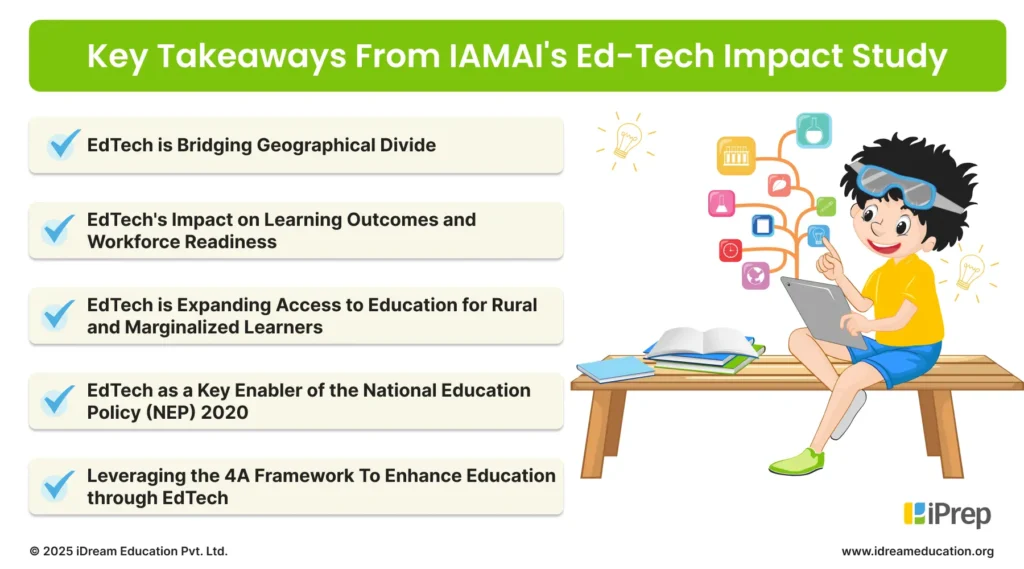
EdTech is Bridging Geographical Divide
The study indicates that 98% of teachers and 69% of parents recognize the significant role of EdTech in bridging geographical barriers. It is making education more accessible across remote and underserved areas. This alignment is enhancing employability across various sectors, contributing to India’s goal of creating an inclusive, future-ready education system.
The report emphasizes that EdTech platforms offer access to high-quality educational services, resources, and courses that may not be available locally. These include interactive modules, video lectures, and virtual classrooms, ensuring students from all backgrounds can access quality education, regardless of their geographic location.
EdTech’s Impact on Learning Outcomes and Workforce Readiness
The IAMAI’s Ed-Tech Impact Study reveals that 85% of students give credit to EdTech for their improved learning outcomes. Moreover, 86% of users emphasize the affordability of EdTech courses, and 87% of students appreciate its role in developing real-world skills such as coding and AI, highlighting its importance in workforce readiness.
EdTech is Expanding Access to Education for Rural and Marginalized Learners
The report highlights that 98% of teachers recognize EdTech’s contribution in providing quality education to learners from rural and marginalized backgrounds, while 61% of students appreciate the availability of content in regional languages. However, challenges such as connectivity issues and a lack of adequate support for Divyang students persist, offering opportunities for further growth and innovation.
EdTech as a Key Enabler of the National Education Policy (NEP) 2020
With rapid adoption and continuous innovation, the EdTech sector has become a key enabler of the National Education Policy (NEP) 2020. The NEP advocates for personalized, multidisciplinary learning and the seamless integration of technology. EdTech platforms are turning these visionary principles into tangible outcomes by offering interactive content and flexible learning modules that cater to diverse learning needs.
Leveraging the 4A Framework To Enhance Education through EdTech
The report highlights how the Indian EdTech sector has effectively addressed critical gaps in traditional education systems by applying the 4A Framework: Academic Quality, Accessibility, Affordability, and Advancing Employment. A standout achievement is EdTech’s commitment to accessibility, particularly in rural and underserved areas, where it has played a pivotal role in increasing student participation and bridging geographical divides.
Recommendations in IAMAI EdTech Impact Study for Advancing the Sector
The report outlines several key recommendations for stakeholders to enhance the EdTech sector’s growth and impact such as:
It is recommended that the 18% GST on EdTech services be revised to improve affordability. Additionally, targeted subsidies and stronger public-private collaborations are proposed to foster greater accessibility.
Service providers are encouraged to adopt hybrid learning models, offer skill-based courses in high-demand fields like AI and data analytics, and maintain transparency in their operations.
The ecosystem should also prioritize last-mile solutions, including offline access and regional language content, while promoting responsible technology use, ethical AI practices, and enhanced cybersecurity.
These strategic measures will enable the sector to scale effectively and create lasting impact through EdTech.
At iDream Education, we are happy to see the findings of the IAMAI EdTech Impact Study align with our core mission
Having spent over eight years in the EdTech industry, we deeply believe in the potential of digital learning solutions to make education accessible, affordable, and impactful, particularly for last mile learners. iDream Education is one of India’s digital education content providers
Our offline, bilingual NEP-aligned LMS and digital content, designed to work seamlessly across all hardware and operating systems. We work in collaboration with CSR initiatives, NGOs, foundations, hardware partners, and other ecosystem players to enable digital learning in schools across India, overcoming geographical barriers. Some of the solutions we bring are Smart Classes, Learning Tablets, Digital NCERT Content, Smart ICT Labs for schools. Together, we strive to break geographical barriers and deliver digital learning opportunities in schools and at homes across India. In addition, our Personalized Adaptive Learning (PAL) LMS bridges learning gaps and empowers students to reach their grade-level competencies, driving improvements in learning outcomes.
If you are looking for a comprehensive and impactful EdTech solution for school or at home learning, we would be happy to collaborate with you. Contact us at +91 7678265039. Let’s connect to bring education and technology closer to learners, improve learning outcomes, ensure workforce readiness, and contribute to the expected growth of EdTech in India. You can also share your details here or write to us share@idreameducation.org
While significant progress has been made in ensuring basic facilities such as gender-specific toilets and functional drinking water, the report underscores critical challenges in advanced infrastructure. Issues such as limited internet access and inadequate technology readiness highlight a significant digital divide. Additionally, the absence of inclusive infrastructure, such as ramps with handrails and functional desktops, underscores the accessibility gap.
The Persistent Digital Divide and Accessibility Challenges
In a world increasingly driven by technology, the limited availability of internet connectivity and digital devices in schools raises significant concerns about the preparedness of students for a 21st century learning environment. Additionally, the lack of ramps with handrails and inclusive facilities continues to hinder accessibility for students with disabilities, leaving room for substantial improvement in creating equitable learning environments.
Let’s Look at Some Key Data Points and Insights from India’s 2023-24 School Infrastructure Report
Only 57.2% of schools have functional computers, 53.9% have internet access, and 52.3% are equipped with ramps. This highlight critical gaps in accessibility and infrastructure readiness
The enrollment landscape has shifted, with the total number of students decreasing by 37 lakh to 24.8 crore in 2023-2024. Boys represent 51.9% of enrollments, while girls make up 48.1%
School dropout rates increase from 5.2% at the middle school level to 10.9% at the secondary stage
Out of 10.17 lakh government schools, only 3.37 lakh (33.2%) have disabled-friendly toilets, and among them, just 30.6% are functional
According to the 2023-24 data from the (UDISE+) under the Ministry of Education, out of over 14.71 lakh schools in India, nearly 1.52 lakh schools lack functional electricity. Out of the 14.71 lakh schools, 10.17 lakh are government-run. Among these, 9.12 lakh have functional electricity, while 1.52 lakh do not have electricity access. Aside from government-run schools, there are 4.54 lakh government-aided, private, unaided, and other schools, of which 4.07 lakh have functional electricity
Out of the 14.71 lakh schools, only 7.48 lakh (50%) have access to computers for teaching and learning. Additionally, 7.92 lakh schools have Internet access, while 8.41 lakh schools offer computer facilities.
Only 17.5% of schools, or 2.57 lakh out of the total 14.71 lakh, have co-curricular activity rooms or arts and crafts facilities. In government schools, the figure is even lower, with just 9.9% of the 10.17 lakh schools having an arts and crafts room
Out of the 2.86 lakh schools with secondary sections, only 1.6 lakh have an integrated science laboratory. Among the 1.19 lakh government secondary schools, 50.2% (59,972 schools) are equipped with a science lab facility.
The adoption of solar panels in schools is also low, with only 1.54 lakh schools (10.5%) out of the total 14.71 lakh having solar panel facilities. In government schools, just 89,746 out of 10.17 lakh (8.8%) have installed solar panels
With the education landscape continuously evolving and the Ministry of Education introducing progressive changes in education policy, it’s eye-opening to realize that many schools still lack basic facilities. While the government is making commendable strides towards improving accessibility and inclusivity, there is a pressing need for greater collaboration from corporates, foundations, and large scale NGOs to further enhance school infrastructure.
Way Forward as Suggested in the UDISE 2023-24 Report
Policy Implementation: Accelerate NEP 2020 initiatives to achieve universal Gross Enrolment Ratio (GER) by 2030, with an emphasis on integrating skill-based education.
Inclusive Education: Promote equitable access to education for SC, ST, OBC, and minority students through focused and inclusive programs.
Teacher Training: Prioritize enhancing teacher quality and addressing gaps in the student-teacher ratio to ensure effective learning outcomes.
Infrastructure Optimization: Align school infrastructure with enrollment trends to ensure efficient use of resources and improved accessibility.
Monitoring and Data: Utilize student-level data tracking to identify dropouts and allocate resources more effectively.
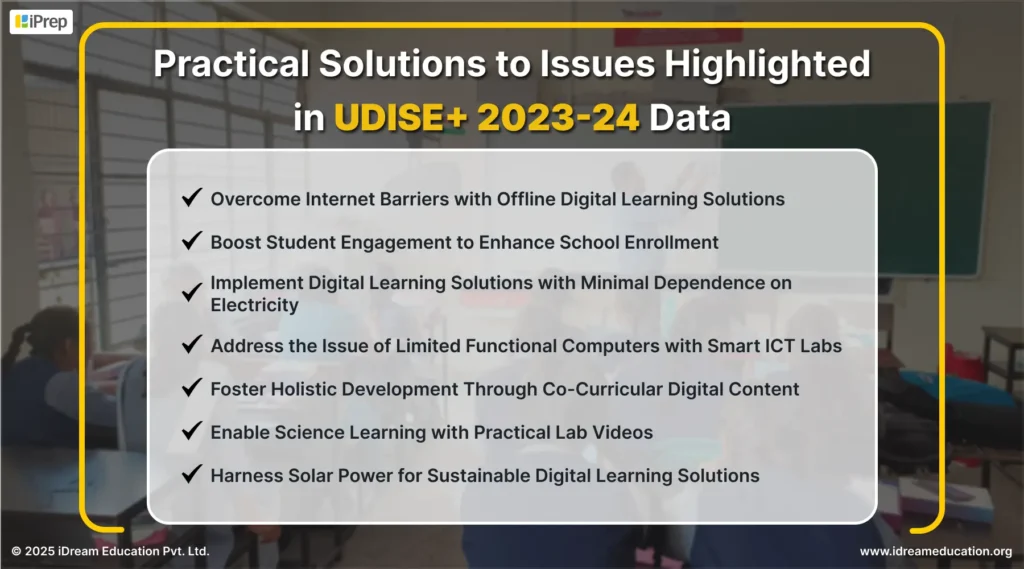
At iDream Education, we recognize these challenges and are therefore highlighting practical ways aligned with the core principles of NEP 2020 and the Samagra Shiksha Abhiyan to resolve these gaps
Overcome Internet Barriers with Offline Digital Learning Solutions
One effective solution to address the issue of limited internet access in schools is enabling offline digital learning content that aligns with the curriculum. This allows teachers to seamlessly integrate digital resources into their teaching practices without the reliance on a constant internet connection.
Boost Student Engagement to Enhance School Enrollment
A major factor contributing to decreased school enrollment is the lack of student engagement. In the 21st century, students have shorter attention spans, making it crucial to find ways to keep them engaged throughout the year. One solution is to incorporate smart classrooms and personalized learning devices, which cater to individual learning styles. By offering adaptive learning, students can follow personalized learning paths, identify their own gaps, and work at their own pace to address historical learning gaps. This combination of smart classroom teaching and personalized learning can help schools maintain student engagement, fostering a sense of encouragement and, ultimately, boosting enrollment.
Implement Digital Learning Solutions with Minimal Dependence on Electricity
One effective way to enhance the learning experience while minimizing reliance on electricity. This can be achieved by enabling tablet, Chromebook, or laptop-based ICT labs. The smart ICT Lab setup is also suggested in the ICT scheme of Samagra Shiksha. These labs are designed to store and charge devices in a rack . These racks charge all the devices simultaneously using a single power plug. Once charged for 3-4 hours, the devices can be used for 7-8 hours, covering the entire school day. This solution ensures that digital learning can continue seamlessly without constant electricity access.
Address the Issue of Limited Functional Computers with Smart ICT Labs
The issue of limited functional computers in schools can be addressed by setting up smart ICT Labs. These are easy to set up, maintain, and use and can accommodate learning devices such as laptops, Chromebooks, and tablets. Unlike desktops, which rely on interconnected hardware like a mouse, CPU, and keyboard, these portable devices are more resilient. In a desktop setup, if one component fails, the entire system becomes unusable. In rural or remote areas, finding technicians is often challenging, and taking each part for repair can be difficult for teachers and school authorities. Portable devices, on the other hand, offer a practical solution by ensuring that teaching and learning can continue without interruption.
Foster Holistic Development Through Co-Curricular Digital Content
Holistic development goes beyond academics, emphasizing the importance of creativity, skills, and life lessons in every student’s journey. Regardless of whether they study in a private or government school, all students should have access to spaces for co-curricular activities. To make this accessible even for schools with limited space and resources, a practical solution is setting up digital libraries equipped with devices such as tablets/Chromebooks. On devices, digital content could include an extensive book library with genres for all interests, activity-based videos for creating DIY models using readily available materials, life skills and value education content, climate action courses, and more Co-Curricular content This can ensure a comprehensive setup for co-curricular activity rooms, fostering creativity, skills, and overall development.
Enable Science Learning with Practical Lab Videos
An integrated science laboratory is vital, especially for senior classes, where students can practically experiment with what they’ve learned. However, many schools still lack the resources to set up such laboratories. To address this, enabling practical lab videos on learning devices can be a viable option. While a fully equipped science lab may not always be available in schools, practical lab videos can empower students to visually experience and understand how different elements interact. Through this, they can gain essential practical knowledge and will be prepared to perform experiments when the opportunity arises.
Harness Solar Power for Sustainable Digital Learning Solutions
Electricity challenges in schools can be effectively addressed by setting up digital learning solutions powered by solar panels. This not only overcomes the limitation of unreliable electricity but also makes digital setups eco-friendly and accessible for all. However, collaborating with organizations such as R2V2, present an option to equip rural schools and households with solar panels. This approach will reduce the financial burden on government/implementing partners while empowering communities to actively participate in enabling education for their children.
At iDream Education, we are working to simplify the implementation of digital learning solutions in schools and at home learning
We collaborate with corporates, NGOs, governments, and other partners in the education ecosystem. From us you get customized products specific to the needs of your schools and projects, addressing the challenges highlighted in the School Infrastructure Report. Our solutions are designed in alignment with the core principles of NEP 2020, enabling schools to overcome barriers. They help create an inclusive, 21st-century learning environment with integrated reporting and monitoring.
To learn more about how we can help you customize solutions for schools and improve their infrastructure, you may contact us at +91 7678265039. You can also share your details here or write to us at share@idreameducation.org
The Centre’s decision to dismiss the ‘No Detention Policy’ marks a significant shift on how we look at addressing the challenge of learning gaps in our country. Read on to discover how personalized and adaptive learning can support this transition.
What is No Detention Policy?
The No Detention Policy was introduced under the Right to Education (RTE) Act, 2009 in India. Its core idea was that students from Classes 1 to 8 should not be failed or held back in the same grade, regardless of their academic performance. The policy aimed to promote a stress-free and child-friendly learning environment.
Why Was It Introduced?
To reduce the fear of failure and encourage students to stay in school
To lower dropout rates, especially in underprivileged communities
Challenges Faced due to the Policy
Declining Academic Standards: Automatic promotion often led to students progressing without mastering foundational concepts.
Teacher Accountability: Teachers often found it difficult to ensure that students were learning effectively when promotions were guaranteed.
Incremental Learning Gaps: Over time, students who struggled in earlier grades carried those gaps forward, making it harder for them to cope in higher grades.
In 2019, the RTE Act was amended to allow states the discretion to reintroduce detention policies. Following this, at least 16 states and two Union Territories have already implemented this change.
Centre on Dec’16, 2024 Scrapped the No-Detention Policy Leading To A New Era in Accountability for Students of Classes 5 and 8
The central government has officially abolished the “no-detention policy” for Classes 5 and 8 in schools such as Sainik Schools, Kendriya Vidyalayas, Navodaya Vidyalayas and over 300 more schools governed by central authorities. This change marks a significant shift in the education framework, emphasizing accountability, and bringing back the focus on addressing the learning outcomes and not just identifying them as a challenge.
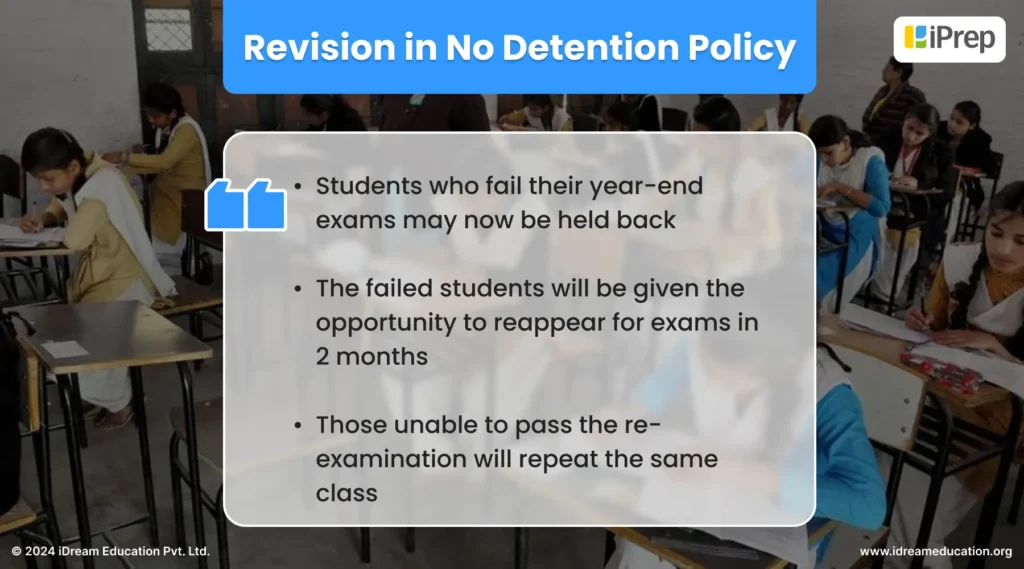
Under the revised policy:
Students who fail their year-end exams may now be held back
The failed students will be given the opportunity to reappear for exams in 2 months
Those unable to pass the re-examination will repeat the same class
A Shift from No Detention to Accountability: Competency-Based Exams Take Center Stage
A senior official from the Ministry of Education stated,
“The examination and reexamination shall be competency-based to ensure holistic development of students, moving beyond rote memorization and procedural skills.”
The official also mentioned that this change aims to identify and address learning gaps at various stages, with class teachers playing a key role in guiding students and their parents through the process.
He also said,
“Specialized inputs will be provided to students who are held back, and their progress will be closely monitored,”
The Officials also Explained Delay in Implementation of New Policy
The new policy was officially announced following the completion of the National Curriculum Framework (NCF) in 2023. A senior official explained the delay, saying, “After the RTE amendment in 2019 and the subsequent announcement of the new National Education Policy (NEP), it was decided to wait for the NCF’s recommendations to ensure a comprehensive approach. Once the NCF was finalized, the Ministry of Education revised the rules to implement the RTE provisions.
As per the official notification,
Students who do not meet the promotion criteria will receive additional instruction and be given an opportunity to reappear for the exam. If they fail again, they will remain in the same grade. However, the government has emphasized that no student will be expelled before completing elementary education. During this period, teachers will offer targeted support to address learning gaps.
iDream Education’s Perspective on the Policy Change
At iDream Education, we applaud the decision to abolish the no-detention policy for Classes 5 and 8. While the original policy aimed to maintain student morale, it unintentionally contributed to incremental learning gaps. These gaps have been a major factor in students struggling in senior grades or losing interest in specific topics/subjects, ultimately disengaging from their education.
This Policy Change may see a strong acceptance of PAL based digital learning solution
The learning gap among students is a well-recognized challenge for schools, social sector organizations, and industry leaders alike. This has made the emergence of Personalized Adaptive Learning (PAL) a growing priority for both governments and social sector initiatives. While PAL adoption was predominantly driven by government efforts until last year, 2024 has been a turning point, with several large foundations integrating remedial learning in their education programmes. We’ve had the opportunity to work on implementing PAL on tablets, PAL-based digital libraries and even PAL on smart class.
How Does PAL Address Learning Gaps?
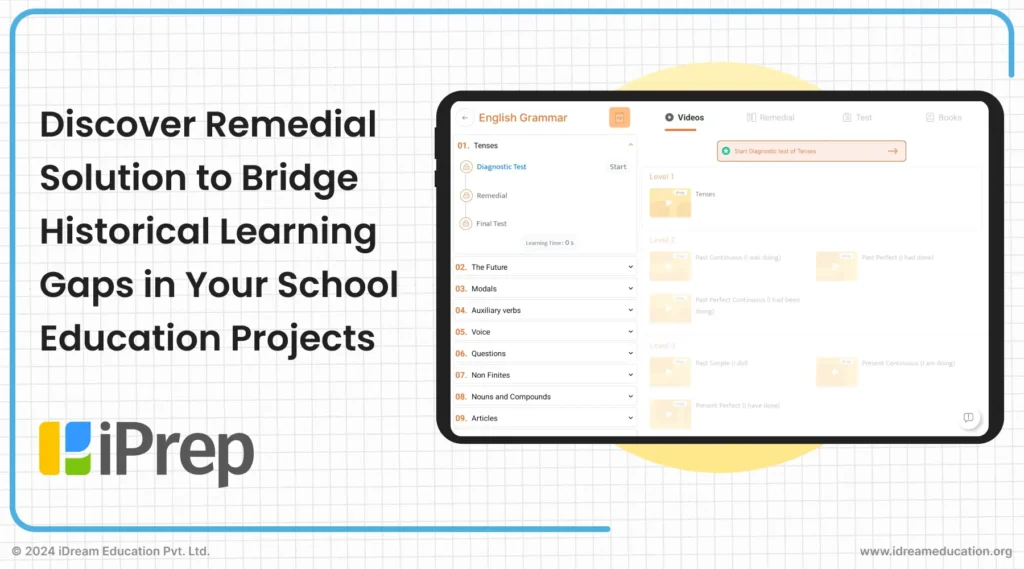
PAL bridges historical learning gaps by creating personalized learning paths tailored to each student’s needs, focusing on remedial learning. Guided by the EdTech Tuna Framework, most PAL solution starts with a diagnostic test for each chapter. Based on the results, it generates a personalized learning path with adaptive practice questions and remedial video lessons. This ensures students can address their historical learning gaps and achieve grade-level proficiency, mastering every chapter step by step.
iPrep PAL solution is used by more than 2 lakh students, empowering them to cover their gaps in a non judgemental learning environment. In 2024, our iPrep PAL solution recorded over 1.75 lakh hours of usage. In a government implementation of PAL on tablets, we observed a 38% to 44% improvement in learning, from the initial diagnostic test to the final test, highlighting students’ progress toward achieving grade-level proficiency.
If you are looking for a practical solution to complement the revised no-detention policy and support students, teachers and parents, you can take a demo of our PAL Solution by contacting us +91 7678265039. You can also share your details here or write to us share@idreameducation.org
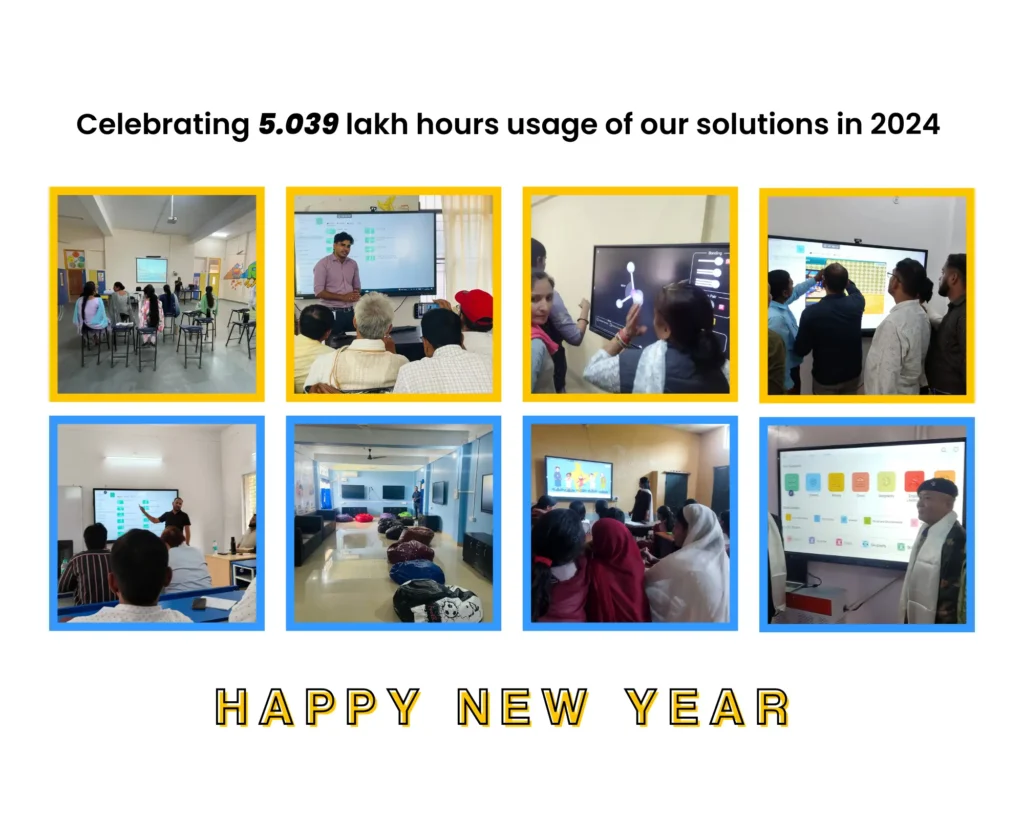
Wishing you a very Happy New Year! Here’s to a great year ahead, filled with meaningful collaborations to empower last-mile learners and make a lasting impact in education.
As 2024 comes to a close, we wanted to highlight some of the emerging trends which we are deducing from the kind of implementation we are doing through our social sector and government partnerships. We believe these will be relevant and NGOs, CSR, System Integrators, government and other partners in the education ecosystem must watch out for them as they plan projects in the year 2025.
Emerging EdTech Trends
One of the most impactful and emerging EdTech trends we’ve observed is the growing adoption of a dedicated smart classroom for each grade. This eliminates the hassle of complicated timetables, avoids the scramble to align teacher schedules, or waiting for the smart class slot. Subject teachers can simply step into their classrooms and teach seamlessly using textbooks, digital boards, and engaging digital content in one go. While it may cost more per school, but utilisation is better and hence the impact is more
District government offices are increasingly investing in setting up learning centres in a district. This combines vibrant learning spaces with bean bags, colorful walls, motivational posters, digital learning options, tablet based digital libraries and more such equipment. These centers are built to attract local students, encouraging play-based learning and becoming a starting point to experience digital learning.
The emergence of PAL in the social sector for adaptive learning has gained traction. Until last year, we saw PAL being mostly adopted at the government level. But this year, it’s been exciting to work with several large foundations to set up PAL-based digital libraries. The focus on bridging historical learning gaps through remedial learning has grown significantly this year, making it a key consideration for impactful education initiatives in 2025.
Another increasing focus of the government and social sector is on experiential teacher training. This has always been a gap but now even state and central governments are working on creating guidelines to prioritize experiential teacher training for seamless adoption of digital learning solutions.
One of the most significant trends emerging in social sector and government initiatives is the shift towards project-level monitoring of usage. In earlier years, NGOs and CSRs primarily relied on qualitative data gathered through stakeholder surveys, often conducted by the implementing organization. This approach carried the risk of data manipulation and lacked transparency. However, things are evolving rapidly. Today, NGOs and CSR organizations are demanding data-driven insights and measurable outcomes. It’s becoming essential for implementing agencies to provide regular, seamless data updates—ideally through monthly dashboards that enable transparency, continuous monitoring, and actionable reporting.
Looking Ahead
As we prepare for 2025, these emerging trends offer a roadmap for anyone seeking to make a significant impact in education. From empowering teachers to engaging students, the focus remains on creating joyful, effective, and inclusive learning environments with strong adoption of implemented solutions.
We look forward to working with NGOs, CSR, system integrators, government and other partners in the education ecosystem in 2025 to enable digital learning for more learners through strategic investments. If you’d like to know more about our digital classroom solutions, you may contact us at +91 7678265039. You can also share your details here or write to us at share@idreameducation.org.
Classroom teaching has always been about more than just textbooks and blackboards. At its core, classroom teaching aims to bridge the gap between theoretical concepts and real-world applications, helping students see how their lessons relate to everyday life. However, engaging every student in a classroom can be challenging, especially with varying learning styles and interests. So, how can we make learning more interactive and relevant for all? That’s where the essence of NCERT Content approaches comes into play, turning lessons into engaging, real-life learning experiences.
Rationalising Textbooks is a Significant Step of NCERT Towards Meaningful Learning
The COVID-19 pandemic brought unprecedented challenges to education, pushing teachers and policymakers to rethink traditional approaches to teaching and learning. One such step was the rationalisation of NCERT textbooks. This exercise, grounded in the principles of the National Education Policy 2020, aimed to lighten the academic burden on students while enhancing the quality of learning.
By streamlining content across subjects and classes, NCERT ensured that textbooks focus on essential learning outcomes, leaving room for students to explore concepts in depth. Here are the key aspects of this rationalisation:
Focus on Literature Genres: The revised NCERT textbooks ensure that literary works included are appropriate for the cognitive and emotional stages of learners. This thoughtful selection promotes an appreciation for language and literature, fostering language proficiency in a structured manner.
Emphasis on Learning Outcomes: Each chapter and exercise is now aligned with specific learning outcomes, helping teachers and students focus on achieving measurable skills and understanding. This clarity ensures that learning objectives are met effectively at every stage.
Reducing Curriculum Load: By eliminating redundant or non-essential content, the curriculum addresses the stress and challenges students faced during the pandemic. This lighter load encourages better retention and engagement without the pressure of excessive examination content.
Promoting Self and Peer Learning: Content has been curated to support independent and peer-based learning. This empowers students to explore concepts at their own pace, making learning more inclusive and accessible, even with minimal teacher intervention.
Contextual Relevance: Irrelevant or outdated content has been removed to keep the material aligned with current educational and societal needs. This ensures that students engage with meaningful content that resonates with the present context.
These updates in NCERT textbooks reflect its commitment to making education not just more manageable but also more meaningful. By prioritising experiential and outcome-driven learning, the rationalised textbooks set the stage for classrooms to evolve into hubs of creativity and critical thinking.
NCERT content is diverse and caters to the holistic development of students across different educational levels. Here are the primary types of NCERT content:
1. Textbooks
Standardized textbooks for K-12, aligned with the CBSE curriculum and NEP guidelines
Available in multiple languages such as Hindi, English, and regional languages
Cover subjects such as Mathematics, Science, Social Science, Languages, and more
2. Exemplar Problems
Practice books with advanced questions to help students enhance problem-solving skills
Focus on critical thinking and conceptual clarity in subjects like Mathematics and Science
3. Lab Manuals
Step-by-step guides for conducting experiments in subjects like Physics, Chemistry, and Biology
Include safety guidelines, observations, and practical questions
This is aligned with NCERT’s efforts for inclusive and equitable education
10. Skill Development Resources
NCERT also offers vocational education content aligned with 21st-century skills
Focus areas of content includes IT, agriculture, retail, and other vocational subjects
The diversity of NCERT content reflects its comprehensive approach to addressing various aspects of learning. From textbooks and supplementary readers to activity books and practice materials, NCERT covers a wide range of educational needs. This well-rounded approach ensures that students not only achieve academic excellence but also develop critical thinking, practical learning, theoretical understanding, creativity, and development of 21st century skills.
However, with such a broad spectrum of resources, it becomes essential to provide students and teachers with centralized access to all these materials in one place.
This is where NCERT digital content on iPrep can support your teachers
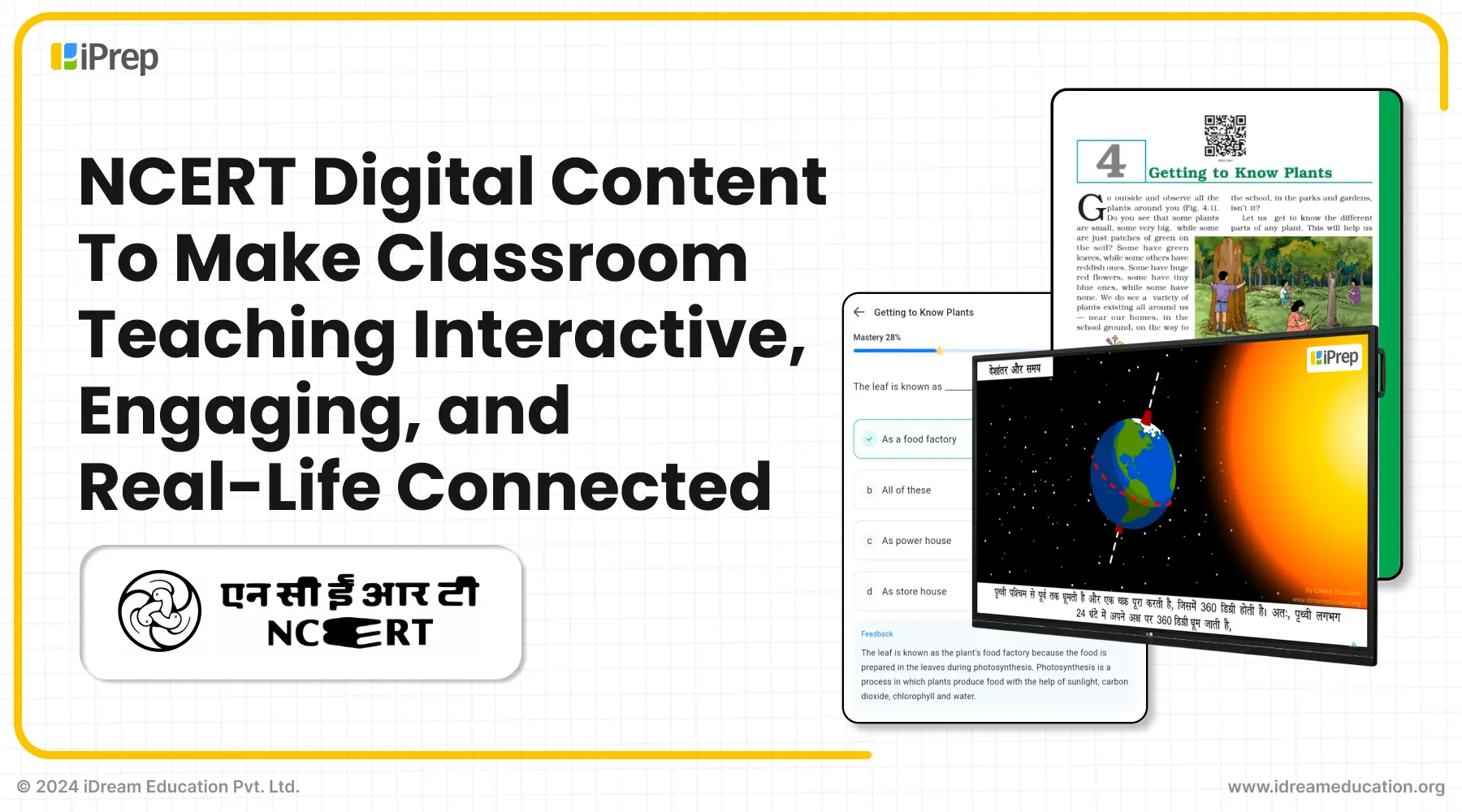
iPrep brings together all types of NCERT content in a unified way, making it easier for teachers to teach and for students to learn. Whether you need to clarify a concept, prepare for exams, or engage in experiential learning you can use NCERT digital content on iPrep to make classroom teaching interactive, engaging, and real-life connected.
Want to Know About What NCERT Digital Content on iPrep Has for You?
NCERT digital content on iPrep brings to you a comprehensive collection in both English and Hindi, covering a wide range of subjects for a well-rounded K-12 learning experience. Whether you’re a student, teacher, or parent, you can access engaging and interactive digital content designed to simplify complex concepts and make learning enjoyable.
In English, the NCERT digital content on iPrep spans core subjects such as Math, EVS, English Grammar, Literature, Science, Physics, Chemistry, Biology, and History, along with subjects that foster critical thinking, such as Economics, Psychology, and Political Science. You’ll also find specialized topics like Micro Economics, Statistics, Business Studies, Accountancy, and Informatics Practices. To support academic learning and early learners, the platform includes Book Library, Structured Assessment, Puzzles, Rhymes, Life Skills, Safety Rules, and Story-Based Learning, ensuring holistic growth.
In Hindi, the NCERT digital content covers a similar breadth, including गणित, पर्यावरण विज्ञान, भौतिक विज्ञान, and जीवविज्ञान, along with enriching subjects like इतिहास, नागरिक शास्त्र, and भारतीय अर्थव्यवस्था. There’s also ample focus on हिन्दी साहित्य, हिन्दी व्याकरण, and संस्कृत, ensuring students get access to culturally relevant content. Early learners benefit from resources on सामान्य जागरूकता and कहानी आधारित शिक्षा, which nurture curiosity and foundational skills.
With iPrep, students and teachers don’t just get access to NCERT digital content—they get an ecosystem that encourages bilingual learning, supports diverse educational needs, and aligns with the latest NEP 2024 guidelines.
Seamless Access to Multicategory NCERT Digital Content on iPrep
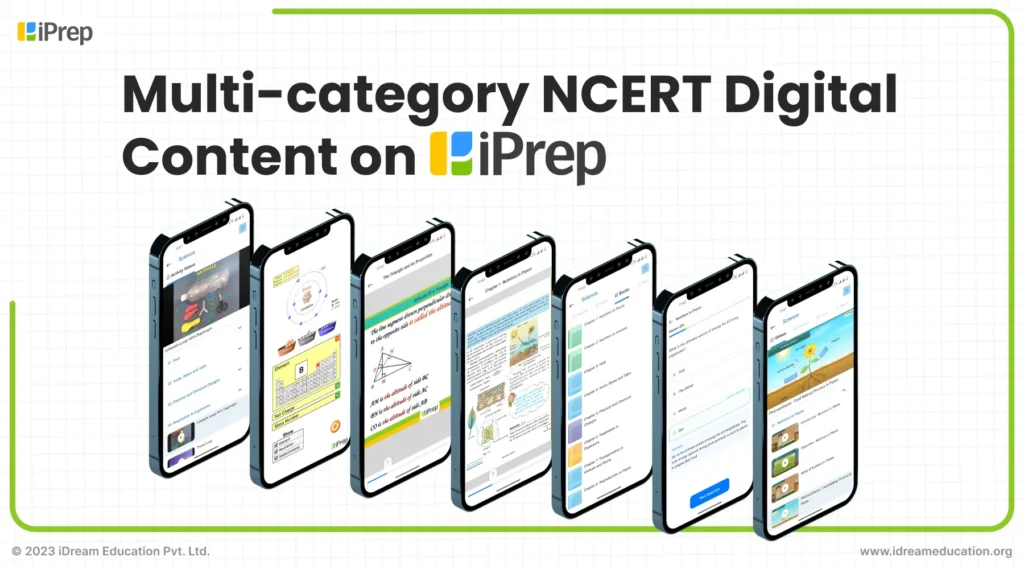
Understanding the diverse learning needs and styles of students, iPrep offers a curated and created comprehensive collection of NCERT digital content. This ensures that teaching and learning are seamless, interactive, and accessible to all.
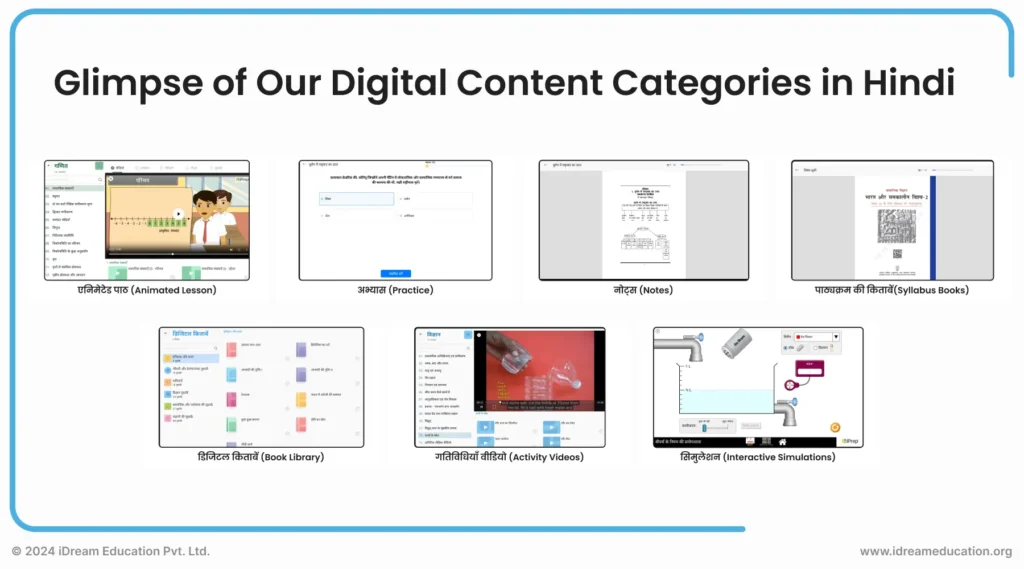
An image showcasing multiple categories of NCERT digital content available on iPrep by iDream Education, highlighting animated video lessons, practice questions, interactive simulations, practical syllabus books, notes, designed for K-12 students
Look at iPrep’s NCERT digital content categories
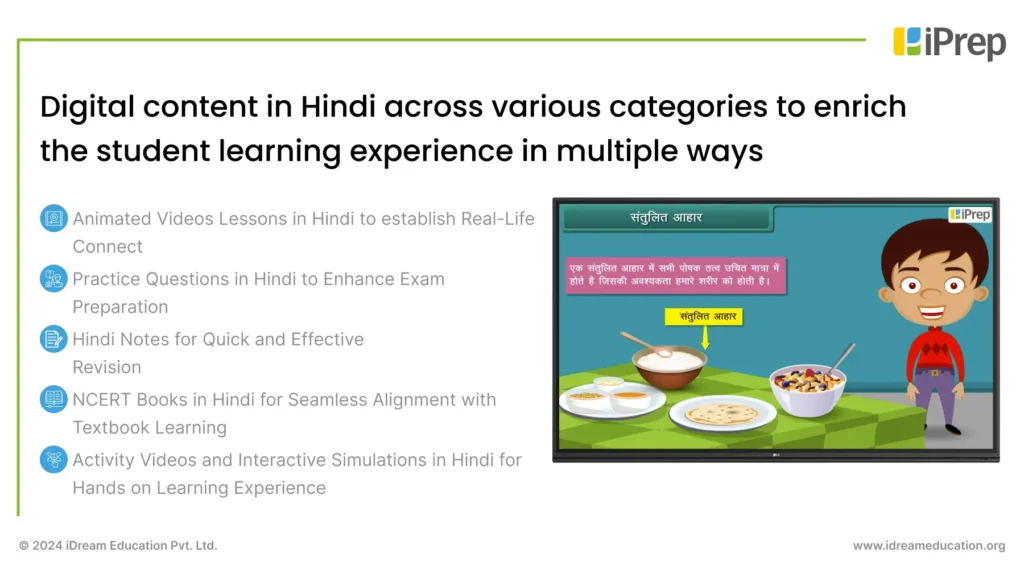
Animated Video Lessons: Designed in Hindi and English, these video lessons for all subjects and classes bridge classroom learning with real-life applications/concepts. This simplifies concepts, enhances comprehension, and ensures long-term retention. Students grasp topics more effectively through relatable and visually engaging content.
Practice Questions: Our in-house repository of NCERT-aligned practice questions helps students evaluate their understanding topic by topic. This hands-on approach gives them foundational clarity and prepares them for exams.
NCERT Syllabus Books (PDFs): Digital replicas of NCERT textbooks are available for quick reference. The ability to zoom into PDFs enhances the visual experience in classrooms, making them ideal for both teaching and learning.
Revision Notes: For quick preparation before exams or lessons, iPrep offers concise notes aligned with NCERT content. These are perfect for students and teachers looking to reinforce key concepts.
STEM Activity Videos: STEM activity videos for Science (Classes 5–12) add a gamified layer to learning. They encourage students to strategize, analyze, and make real-time decisions, making Science lessons both interactive and engaging.
Practical Video: These lab practical videos help students visually understand how experiments should be conducted, providing guidance on measurements, quality, solutions, and the proper use of lab equipment.
Interactive Simulations: For Math and Science topics, iPrep provides interactive simulations in Hindi and English. These allow students to engage with key concepts in real time, deepening their understanding of topics such as friction, Ohm’s Law and more.
Activity Videos: Curated from DIKSHA and other Open Educational Resources (OER), iPrep also offers activity videos for subjects such as Math, EVS, Science, Physics, and Chemistry providing students with an engaging, experiential learning approach.
Digital Book Library: iPrep’s digital library offers a diverse collection of books across subjects such as Arts, History, Science, and Social Studies. Students can also explore biographies, storybooks, and comics, fostering in-depth understanding, awareness and knowledge exploration.
With this comprehensive NCERT digital content on iPrep, teachers can make classroom teaching interactive, engaging, and real-life connected.
How can teachers use different categories of NCERT Digital content in their teaching and classrooms?
Animated Video Lessons:
Teachers can utilize animated video lessons as a supplement to their explanations. After introducing concepts themselves, they can play these videos to reinforce understanding. The visual and engaging format enhances comprehension, making lessons more engaging and easier to grasp. These videos can be particularly useful for:
Reviewing topics after teaching
Simplifying complex or challenging concepts for students
Practice Activities
After teaching a specific topic, teachers can use practice exercises to assess students’ comprehension. These can also serve as:
Tools for conducting quick games or quizzes
Surprise tests or interactive sessions to reinforce lessons
NCERT Syllabus Books:
Digital NCERT textbooks are valuable in schools where students lack physical textbooks. Also, it can be used by teachers in multiple ways:
Teachers can conduct reading sessions with students, explaining concepts as they go
Using smart class hardware like Interactive Flat Panels (IFPs), these books can be zoomed in or out to enhance the visual experience for all students in the classroom
Notes for Revision:
Teachers can use topic wise pre-prepared notes to:
Revisit foundational concepts before starting a new chapter, ensuring no gaps in prior learning
Revise entire lessons for the whole class or for students who missed previous sessions
STEM Videos for Projects:
STEM-focused videos can be a great resource when assigning science and math projects. They help:
It can be used to inspire students to apply problem-solving skills and make real-time decisions
Stem Video can be used by teachers to prepare students for interschool competitions or enhance regular classroom activities
Lab Practical Videos:
This category of NCERT digital content can be used by teachers for:
Visual demonstration of experiments before students perform them
Before conducting actual experiments, reducing the risk of mishaps
These videos are also helpful for teachers in schools that don’t have proper labs, with this at least students get experience of lab equipment, solutions, and how experiments are performed.
Interactive Simulations:
Teachers can bring life to lessons by using the simulations category of NCERT digital content. This content categories can help teachers conduct engaging classroom session by:
Conducting group exercises where students interact with variables such as weight, pressure, motion. This will enhance their understanding of interrelated real phenomena and how they work by practically experiencing it.
Activity Videos for Projects:
This NCERT digital content category on iPrep can be used by teachers for achieving curriculum and beyond curriculum goals where:
They can use activity-based videos to guide students in creating their own projects.
These videos are useful for encouraging hands-on learning using easily available material around students
Digital Book Library:
The digital book library can be a resource during free periods or when teachers are absent. Students can:
Explore NCERT content independently
Dive deeper into topics of personal interest, fostering curiosity and self-learning
By integrating iPrep’s NCERT digital content categories creatively and purposefully, teachers can enhance their classroom experience, making learning interactive, engaging, and real-life connected for students.
If you’re looking to integrate NCERT digital content into your school or education project on any digital classroom device of your choice, you may contact us at +91 7678265039. You can also share your details here or write to us at share@idreameducation.org. To ensure a smooth experience, we can also provide smart classroom hardware preinstalled with LMS and preloaded NCERT Digital Content for your schools.
Foundational Literacy and Numeracy (FLN) refers to the essential skills in reading, writing, and basic arithmetic that children need to build a strong learning foundation during their early years (0-8 years). As highlighted in the NEP 2020, amongst all the initiatives the NIPUN Bharat Mission stands out as a key priority. The Nipun Bharat mission aims at ensuring that every child achieves foundational literacy and numeracy by the end of Grade 3.
According to NEP 2020, over five crore children in India’s elementary schools lack foundational literacy and numeracy (FLN) skills. This challenge is even greater for first-generation learners who lack a supportive home environment for early learning. Without FLN, these children are left grappling with gaps that hinder their ability to learn and grow, creating a cycle of educational disadvantage.
To address this, the NIPUN Bharat program, launched in 2021, aims to ensure every child in India achieves FLN by the end of Class 3 by 2026-27.
As part of the Centrally Sponsored Scheme of Samagra Shiksha, NIPUN Bharat program introduced a five-tier implementation framework encompassing the National, State, District, Block, and school levels in every State and Union Territory. With FLN as its cornerstone, the program envisions a future where foundational learning is no longer a barrier but a bridge to greater academic achievements.
What makes FLN so essential?
Foundational Literacy and Numeracy (FLN), as outlined in NEP 2020, is more than just the basics of reading, writing, and arithmetic. It’s about engaging children in ways that feel meaningful and fun. Think of it as helping them discover how to communicate effectively, solve everyday problems, and think critically. It’s not just about books—it’s about building self-confidence and curiosity, creating a strong foundation for them to explore and understand the world around them while setting the stage for lifelong learning.
What does FLN Include as per NEP 2020?
The NIPUN Bharat Mission was launched by the Ministry of Education as a flagship initiative under NEP 2020. FLN aims to create a joyful, engaging, and inclusive learning environment where children can thrive. Activities such as storytelling, play-based learning, rhymes, music, art, and local crafts are integral to the curriculum. The FLN skills not only promote academic learning but also enhance a child’s creativity, empathy, and cultural understanding.
For instance, storytelling introduces children to new perspectives and helps them understand the world around them. Through stories, they learn about diverse cultures, values, and ways of thinking, which sparks their imagination and enhances comprehending abilities. Similarly, play and hands-on activities stimulate curiosity and encourage active exploration, while rhymes and music support language rhythm and memorization. These interactive methods help children develop essential skills like critical thinking, problem-solving, and motor coordination in a fun and joyful way.
FLN under NEP 2020 adopts a structured yet flexible approach, focusing on holistic learning outcomes for children from preschool to Grade 3. These outcomes are outlined in a spiraling manner, meaning they gradually build upon previous knowledge and skills as children progress through their early education years. This approach ensures that every child achieves a solid foundation for reading, writing, and arithmetic, alongside emotional and social well-being. By integrating creative and experiential learning, NEP 2020 envisions FLN as the stepping stone to healthy, happy, and well-rounded development for every child.
State-Led Initiatives Driving the NIPUN Bharat Vision
The Government of India launched the NIPUN Bharat (National Initiative for Proficiency in Reading with Understanding and Numeracy) mission as part of the National Education Policy (NEP) 2020. States across the country have adopted this vision with unique localized programs aimed at enhancing the quality of foundational education. Some noteworthy examples are:
Mission Prerna by UP Government
Mission Prerna, a flagship program under the Basic Shiksha Department of Uttar Pradesh, was conceptualized to transform education in over 1.6 lakh schools. This initiative emphasizes achieving foundational literacy and numeracy for children in grades 1-5, enabling them to read with comprehension and perform basic arithmetic calculations—critical skills that set the stage for lifelong learning.
Key goals and features of Mission Prerna include:
Ensuring 80% of students in every school, block, and district achieve foundational learning skills.
Schools and regions meeting the benchmarks are declared as Prerak Blocks, Prerak Districts, Prerak Mandals, and ultimately contributing to a Prerak Pradesh.
Achieving foundational literacy numeracy for all children by March 2022 to boost overall student outcomes statewide.
Nipun Haryana by Haryana Government
Launched on July 30, 2021, Nipun Haryana aligns with NEP 2020 to prioritize foundational literacy and numeracy. The mission aims to ensure that children in Haryana achieve grade-level proficiency in Hindi, English, and mathematics by Grade 3.
Key initiatives include:
A 5-day program designed to train and equip teachers with strategies to enhance FLN skills
Endline assessments conducted at the close of each academic year to measure progress and refine interventions
Padhi Punjab and Padhao Punjab
Punjab has been at the forefront of addressing foundational literacy and numeracy (FLN) challenges through its comprehensive Padho Punjab Padhao Punjab program. Punjab’s Project Management Unit (PMU) facilitated a baseline study across grades 2, 3, and 4 using the Tangerine app. It is a digital tool optimized for offline data collection. This study aimed to assess students’ current learning levels and establish district-specific targets to achieve foundational literacy and numeracy (FLN) goals, ensuring data-driven and targeted educational interventions
Key initiatives include:
Providing teachers with lesson plans, teaching materials, and assessment tools. These resources are designed to make learning more engaging and effective, shifting the focus from rote learning to conceptual understanding.
The program includes teacher training in areas such as English language skills, soft skills, and interactive teaching techniques.
Mission Ankur by Madhya Pradesh Government
Mission Ankur is a state-led initiative by the Madhya Pradesh government. The initiative is dedicated to improving Foundational Literacy and Numeracy (FLN) for students in grades 1–3. With the ambitious goal of achieving universal FLN skills by 2026–2027, Mission Ankur embodies the spirit of the National Education Policy (NEP) 2020 and aligns with the NIPUN Bharat initiative.
Key initiatives include:
Developing learning materials tailored to foundational skills for creating inclusive learning experience for children
Capacity building for teachers through targeted training programs on using learning material and engaging children in learning activities.
These statewide focus on FLN demonstrate how state-specific efforts can complement the national vision of NIPUN Bharat. These initiatives are critical for bridging learning gaps, equipping students with foundational skills, and empowering them to excel academically and beyond.
What are The Key Components of Foundational Literacy and Numeracy for Achieving the NIPUN Bharat Mission
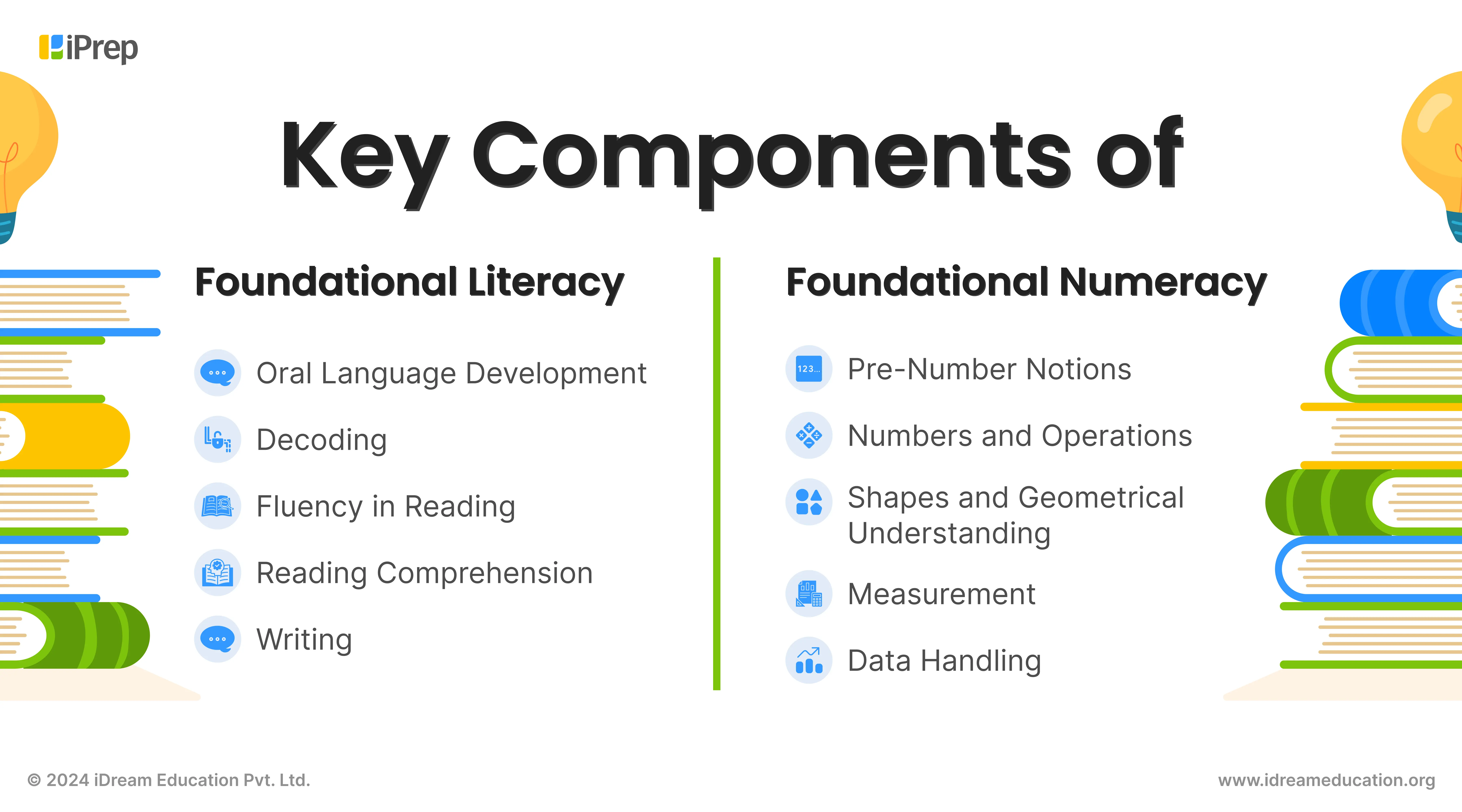
Key Components of Foundational Literacy
Oral Language Development:
Developing oral language lays the foundation for effective communication. Activities focus on enhancing listening comprehension, expanding oral vocabulary, and nurturing meaningful conversation skills. Interactive learning material such as storytelling, audio-based exercises, and role-playing conversations make learning engaging and relatable for early learners.
Decoding:
Decoding bridges the gap between written symbols and their corresponding sounds. This helps early learners to recognize words accurately. Interactive phonics games, letter-sound matching, and picture library help children connect sounds with letters in a fun way.
Fluency in Reading:
Fluency combines accuracy, speed, comprehension, and expression to build confident readers. Activities such as interactive read-aloud sessions, and expressive storytelling encourage children to read smoothly while understanding the text.
Reading Comprehension:
In this skill, early learners start by understanding what a text says, picking out important information, and thinking about its meaning. It helps them make sense of stories and learn from what they read
Writing:
Building writing skills involves learning to write “aksharas” and simple words, and gradually using writing as a tool to express ideas, tell stories, and share feelings.
Key Components of Foundational Numeracy
Foundational numeracy is the ability of early learners to understand and use basic math concepts in real-life situations. Here are its five essential components of Foundational Numeracy:
Pre-Number Notions
This involves early understanding of numbers, such as counting, recognizing numbers, comparing, and sequencing. It’s the foundation for understanding the number system.
Numbers and Operations
Students learn to represent numbers using the base-ten system and apply mathematical concepts such as addition, subtraction, multiplication, and division to solve simple problems.
Shapes and Geometrical Understanding
Recognizing and working with shapes helps early learners understand symmetry, patterns, and spatial relationships, enabling them to apply these concepts in everyday contexts.
Measurement
From measuring lengths to understanding weight, time, and volume, students apply these skills in practical scenarios while mastering standard units and basic calculations.
Data Handling
In early age, children learn to identify and interpret patterns, organize data, and draw conclusions from simple charts, graphs, and tables, making sense of everyday information.
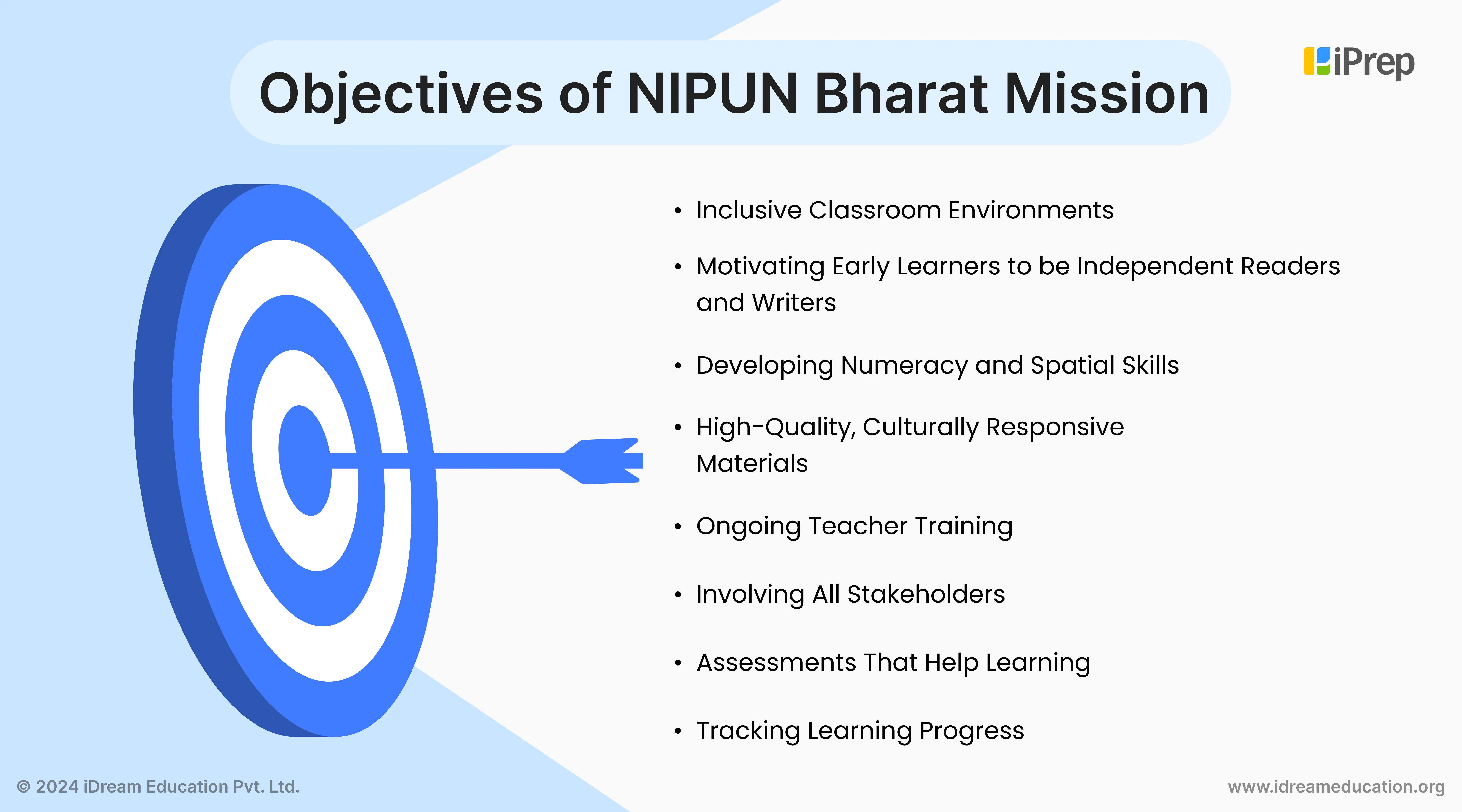
Building a strong foundation for lifelong learning is essential, and the NIPUN Bharat Mission under NEP 2020 gives us clear objectives on how to achieve this. Here’s how we can approach it:
Objective 1 of Nipun Bharat: Inclusive Classroom Environments
We need to make sure our classrooms are welcoming to every child. This means incorporating play, discovery, and activity-based teaching methods that connect to what children experience in their daily lives. Using children’s home languages in teaching also helps them feel included and valued.
Objective 2 of Nipun Bharat: Motivating Early Learners to be Independent Readers and Writers
Our goal needs to inspire children to become independent readers and writers. By focusing on their comprehension and practical skills, we can help them build reading and writing habits that last a lifetime. This way, they learn to enjoy and benefit from books and writing as they grow.
Objective 3 of Nipun Bharat: Developing Numeracy and Spatial Skills
Teaching children to understand reasoning in areas like numbers, measurements, and shapes helps them build strong problem-solving skills. By developing numeracy and spatial understanding, we prepare them to approach challenges independently and confidently.
Objective 4 of Nipun Bharat: High-Quality, Culturally Responsive Materials
Providing teaching materials that are high-quality and culturally relevant is a must. When materials are in children’s familiar languages and reflect their culture, they learn better and stay more engaged. This makes learning meaningful and relatable.
Objective 5 of Nipun Bharat: Ongoing Teacher Training
Teachers are the backbone of education, so we need to support them continuously. Capacity building of teachers, head teachers, academic resource persons, and education administrators stay informed and effective in teaching pedagogies and learning materials.
Objective 6 of Nipun Bharat: Involving All Stakeholders
Lifelong learning is not just about what happens in the classroom. Teachers, parents, students, communities, and policymakers all need to be involved. When everyone contributes, we create a strong support system that helps children learn and grow.
Objective 7 of Nipun Bharat: Assessments That Help Learning
Assessments should be part of the learning process. For this, we need to include activities like group work, project work, quizzes, role plays, games, and oral presentations. These methods make assessments less stressful and more useful in understanding how well a child is learning.
Objective 8 of Nipun Bharat: Tracking Learning Progress
Keeping track of each child’s progress helps us see how they are developing and what support they need. Regular tracking ensures that every child’s learning needs are met and helps identify areas that need attention.
At iDream Education, we’ve designed iPrep FLN digital content to align with these objectives. Our content for early learners addresses the focus areas of foundational literacy and foundational numeracy. Adding a quick FLN Content summary for you:
Comprehensive Subject Coverage: Multimedia content for Literacy (English and Hindi), Numeracy (Maths), EVS, Socio-Emotional Learning, and Health & Physical Well-being for classes PS1 to 2.
ECE Curriculum aligned Assessments: Image-based assessments for Literacy, Numeracy, and EVS, tailored to classes PS1 to 2.
Engaging Worksheets: We offer worksheets covering Literacy, Numeracy, EVS, Socio-Emotional Learning, and Health & Physical Well-being for early learners.
Classroom Activities and activity video: Playful and engaging activities designed for Numeracy, EVS, Hindi, and English for PS1 to 2, enabling hands-on learning experiences.
Puzzles and Multimedia: Age-appropriate problem solving content for children aged 3-8 to stimulate curiosity and critical thinking.
Syllabus and audio Books: While there are no prescribed syllabus books, we’ve aligned relevant books with essential topics for these foundational classes.
Extensive Digital Library: iPrep’s FLN content also includes storybooks, picture books, rhymes, and other age-appropriate materials to make learning fun and engaging.
Instructional Handbook for Teachers and Parents:
For Anganwadi Facilitators/Primary School teachers: Videos on how to plan daily activities and effectively use the provided material to teach concepts easily.
For Parents: Multimedia guides with activity ideas to help parents teach basic concepts at home.
Additional Resources: First aid multimedia, picture libraries, and more to support holistic learning.
Through iPrep FLN content, we aim to empower teachers, parents, and Anganwadi workers with resources that simplify teaching and make learning joyful for children. If you are working to enhance foundational literacy and numeracy under NEP 2020, we would be happy to give you a demo of our NCF and NCERT aligned FLN Content. To schedule a demo, you can contact us at +91 7678265039 or share your details here. You can also write to us share@idreameducation.org
As the world rapidly shifts toward digital innovation, education must keep pace to prepare students for a future brimming with digital opportunities. Yet, traditional teaching methods often fall short in engaging students and addressing diverse learning needs, especially in underserved schools. The National Education Policy (NEP) has emphasized the need for technology-driven classrooms to bridge these gaps. A Smart classroom, also known as a Digital Classroom with its interactive digital content and curriculum alignment, complements teaching and learning in classrooms. With support from government programs, CSR initiatives, and educational foundations, many schools now have access to smart class technology. These smart classes are bringing lessons to life with digital content, videos, and interactive tools, helping students understand and enjoy learning better.
The Government of India has been making significant strides in integrating smart classroom solutions across schools to leverage technology and make learning more engaging and impactful
With initiatives such as the ICT under Samagra Shiksha Abhiyan, Operation Digital Board, PM eVIDYA program, and more the focus has shifted towards leveraging technology to address the challenges of traditional teaching methods. Smart classrooms equipped with LMS, digital content, interactive tools, multimedia resources, tech enabled assessment, bridge courses are helping teachers bridge learning gaps, enhance teacher-student interaction, and cater to diverse learning needs. These initiatives are aligned with the National Education Policy (NEP) 2020, which emphasizes the integration of technology to foster experiential and personalized learning.
Focused efforts of Government on smart classroom implementation includes:
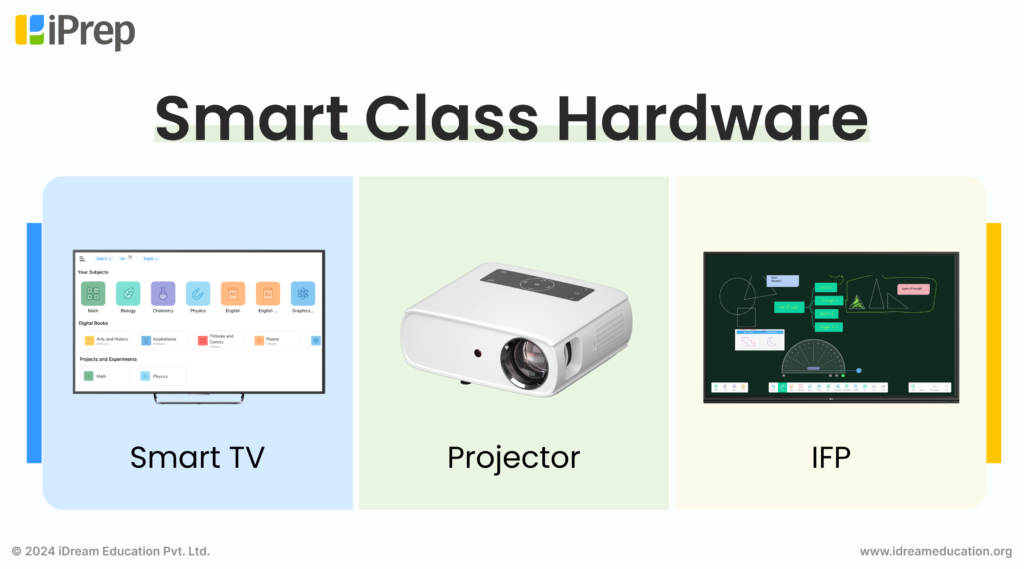
Equipping government schools with projectors, interactive digital boards, interactive white boards, interactive flat panels, smart TVs, laptops, and more such devices.
Enabling devices with preinstalled Learning Management system also known as LMS software
Providing created and curated digital content in Hindi, English and Local languages aligned with National/StateBoard education goals
Integrated monitoring and reporting for tracking usage and taking data driven decisions to improve learning outcomes.
The push for smart classrooms highlights the government’s commitment to equipping students with 21st-century skills and preparing them for a technology-driven future.
Explore the Types of Smart Classrooms: Which One Fits Your School?
India’s journey towards digitizing education has brought a variety of smart classroom solutions to suit every school’s unique needs and budget. But how do you know which setup is right for your school? Let’s break it down into three types:
Basic Smart Classrooms
Intermediate Smart Classrooms
Advanced Smart Classrooms
These setups are ideal for schools with limited budgets or infrastructure. Typically, they include a projector or Smart TV, a computing device like a laptop, and pre-loaded digital content aligned with the curriculum.
Perfect for schools with limited resources, this setup supplements traditional teaching into a more engaging experience without the need for hefty investments. It’s a great starting point to introduce digital learning in your schools.
These setups build upon the basic model with the inclusion of interactive features like touch-enabled display panels or digital whiteboards that let teachers write, draw, and interact directly on the screen.
This type of smart classroom setup integrated with LMS and digital content balances cost and functionality, making it a popular choice for semi-urban and urban schools.
For schools ready to go all-in on tech, Advanced Smart Classrooms are the way to go. This includes hardware such as Interactive Flat Panels (IFPs), adaptive learning, AI-enabled tools, and real-time collaboration software.
They often include capabilities for virtual reality (VR) experiences, personalized learning modules, and reporting and analytics for tracking student usage and progress.
Advanced setups align with the vision of 21st-century classrooms, where education is immersive and technology-driven.
So, which type of smart classroom resonates with your school’s vision? To Plan with us you may contact us at: +91 7678265039 or share your details here
Must-Have Smart Classroom Equipments for Setting Up Smart Classes in Your Schools or in Education Program
Smart Class hardware
When planning a smart classroom setup, your choice of hardware should align with your teaching goals, classroom size, and budget. Interactive flat panels (IFPs) are great for high-end setups offering touch-based interactivity, while projectors and Smart TVs are more budget-friendly options. Each smart class hardware type serves a unique purpose, ensuring schools can customize solutions to meet specific learning needs effectively.
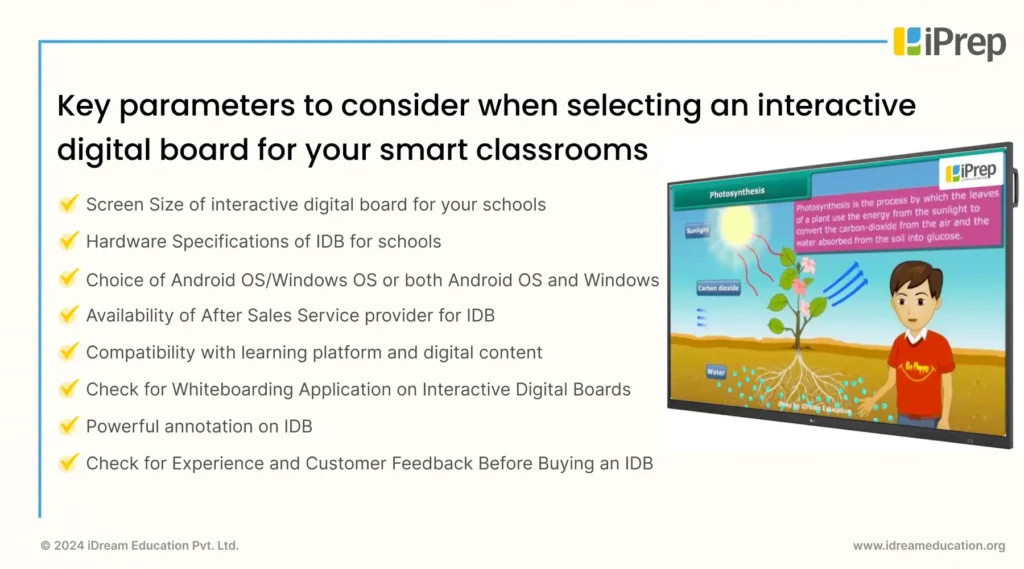
Interactive flat panels, also known as smart boards, digital boards, or interactive white boards, are gaining popularity among government projects, CSR initiatives, NGOs, and schools due to their user-friendly design and specs of flat panels. These interactive touch panels combine display and interaction, enabling teachers to use multimedia content to enhance their instruction and facilitate better student engagement. Their durability, ease of installation, and ability to operate without external devices make them a preferred choice for organizations looking to create sustainable smart classroom solutions.
Tablet for Teachers
Based on our extensive collaboration with teachers, we’ve observed that teachers are most at ease with Android-based mobile devices. This familiarity makes Android tablets a seamless and intuitive choice for integrating technology into teaching practices, particularly in a smart classroom setup. Tablets leverage their comfort with smartphones while offering a larger, more versatile platform to explore advanced teaching methods.
When paired with a teacher-focused app designed for practical teaching needs—such as lesson planning, resource curation, creating personalized tests, and assignments—Android tablets for teachers in smart classrooms become powerful tools for enhancing classroom learning. With our iPrep Coach app, teachers can plan lessons, craft engaging content, and deliver tailored learning experiences that align with what they want students to learn, making the transition to smart classrooms both smooth and effective.
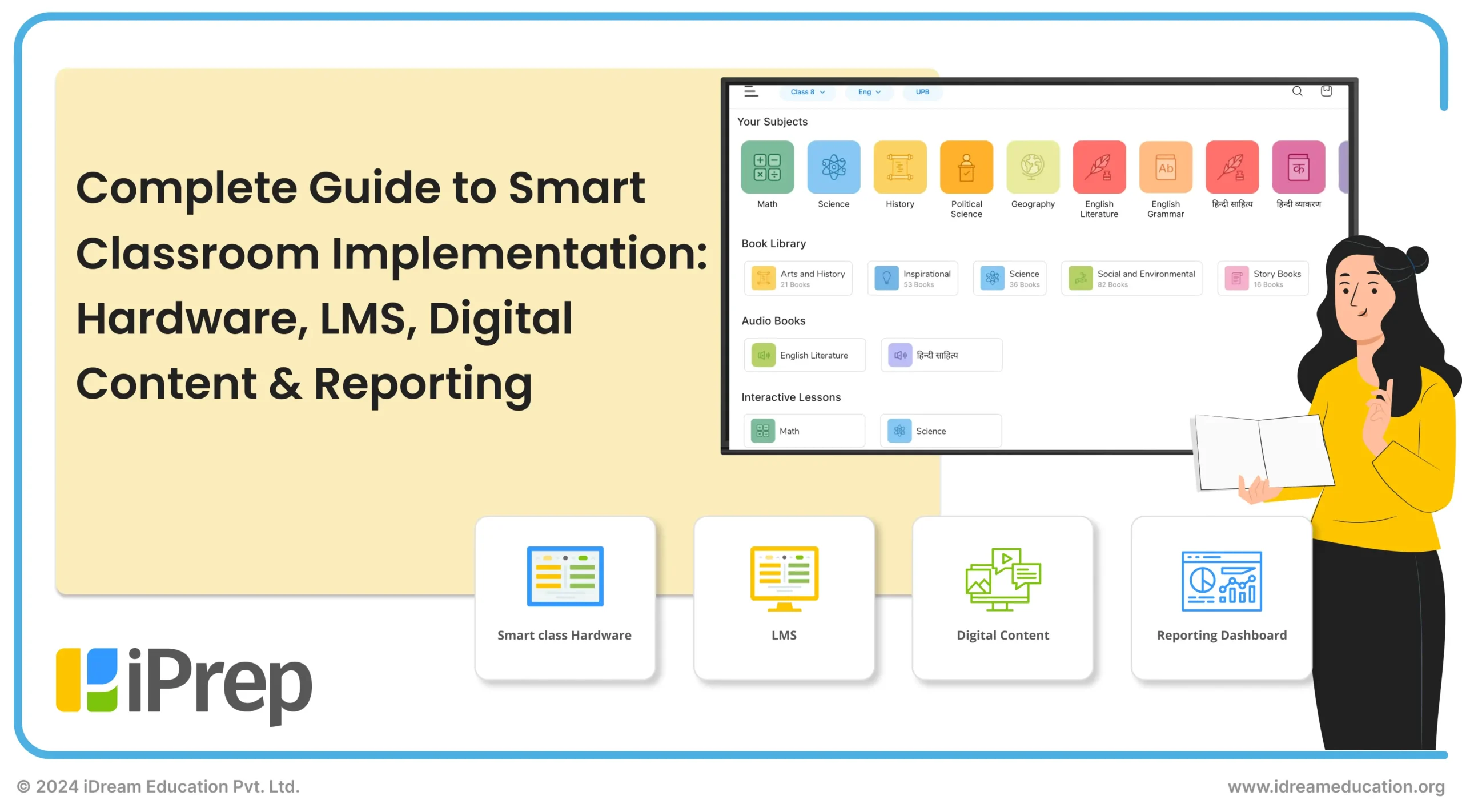
Learning Management System
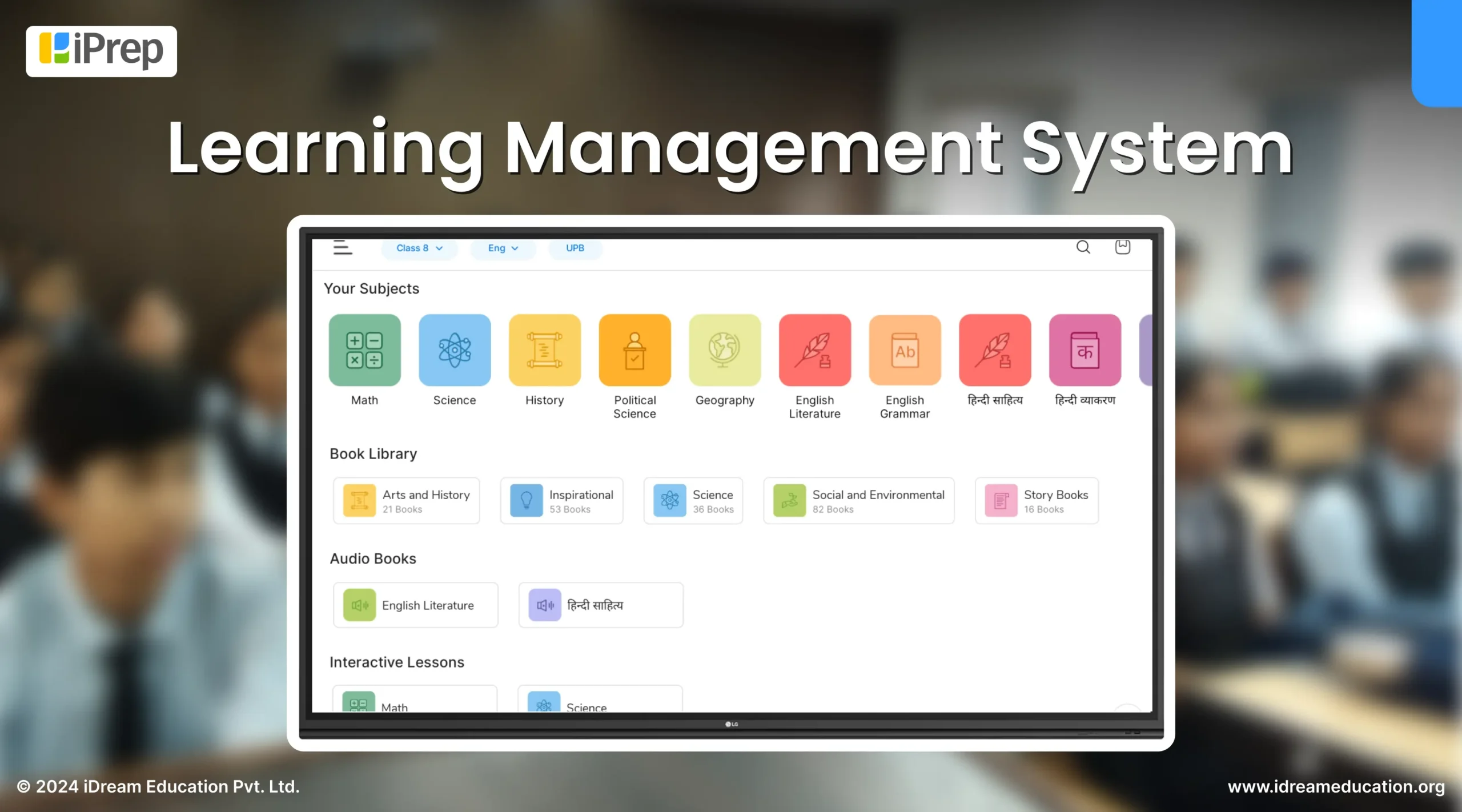
A well-designed Learning Management System (LMS) is the pillar of effective e-learning infrastructure in smart classrooms. It empowers teachers with structured and seamless access to digital learning resources, ensuring a user-friendly experience. An intuitive LMS allows teachers to effortlessly switch between grades, language and subjects, aligning the content with their specific teaching goals. This structured approach not only saves time but also ensures that digital learning on smart classroom devices becomes a natural extension of everyday classroom teaching.
iPrep, our smart classroom LMS is thoughtfully designed based on universal design principles, ensuring inclusivity and ease of use. With its intuitive, bilingual user interface, teachers can navigate the platform and access content with minimal effort. This design supports efficient classroom instruction, enabling teachers to focus on teaching rather than the complexity of technology.
Digital Learning Content
Smart classrooms without preloaded digital learning content leave teachers struggling to find relevant teaching material online. This wastes valuable teaching time and compromises the quality of lessons. With curriculum-aligned content preloaded on smart classroom devices, teachers can focus entirely on teaching. They simply plug in the device, play the content, and deliver engaging lessons effortlessly.
Our rich and comprehensive digital learning content, aligned with National and State boards, is available for all teachers from kindergarten to class 12 in Hindi, English, and regional languages. Covering multiple categories like animated video lessons, revision notes, quizzes, and simulations, it empowers teachers to address different learning objectives—whether enhancing comprehension, conducting assessments, or bringing concepts to life through interactive experiences.
Our digital content goes beyond academics by offering a rich digital library with over 5,000 titles, including stories, poems, life skills, value education, inspirational biographies, Ramayana and more. This ensures that students can engage in meaningful, holistic learning experiences during free periods or when a subject teacher is unavailable, fostering curiosity, creativity, and personal growth.
Data Driven Insights with Integrated Reporting and Analytics
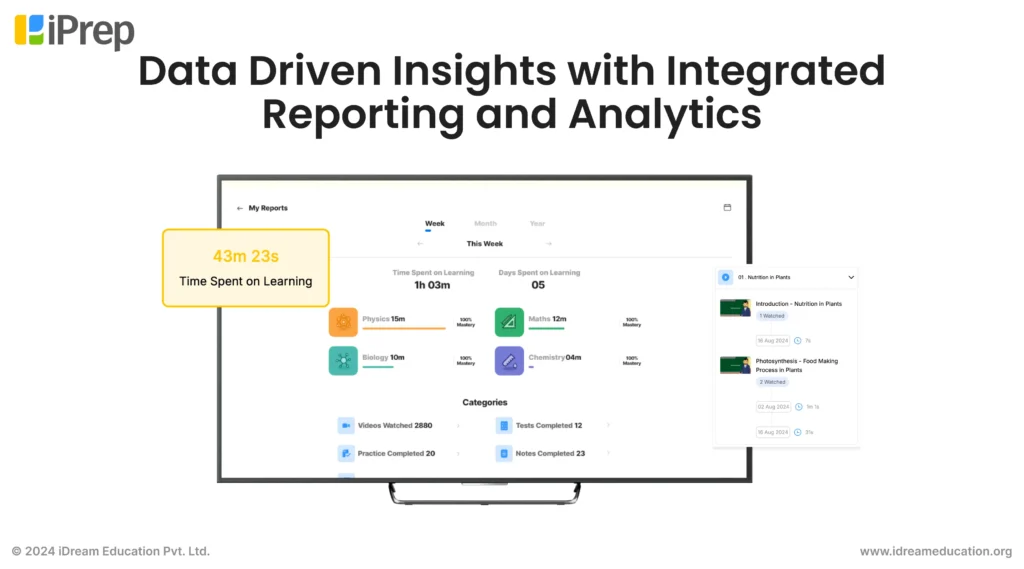
Smart classrooms without integrated reporting often lead to underutilization, leaving stakeholders such as government agencies, CSR funders, and NGOs unable to measure the impact of their investment. Therefore when choosing smart classroom equipment, choose LMS that provides integrated reporting features, where you can track smart classroom usage. This will help you ensure accountability and enable better allocation of resources and funds to drive meaningful outcomes.
Our Smart Classroom LMS records smart classroom usage offline and syncs reports to a project-level dashboard whenever the device connects to the internet. This allows project officials to monitor real-time performance and identify gaps in adoption. Data-driven insights from the dashboard empower them to implement targeted strategies to increase teacher usage and optimize the usage of smart classroom solutions.
Explore our buy smart class guide for CSR, NGO, Government and Private School Projects
Benefits of Smart Classrooms: Why It is Needed in 21st Century Schools
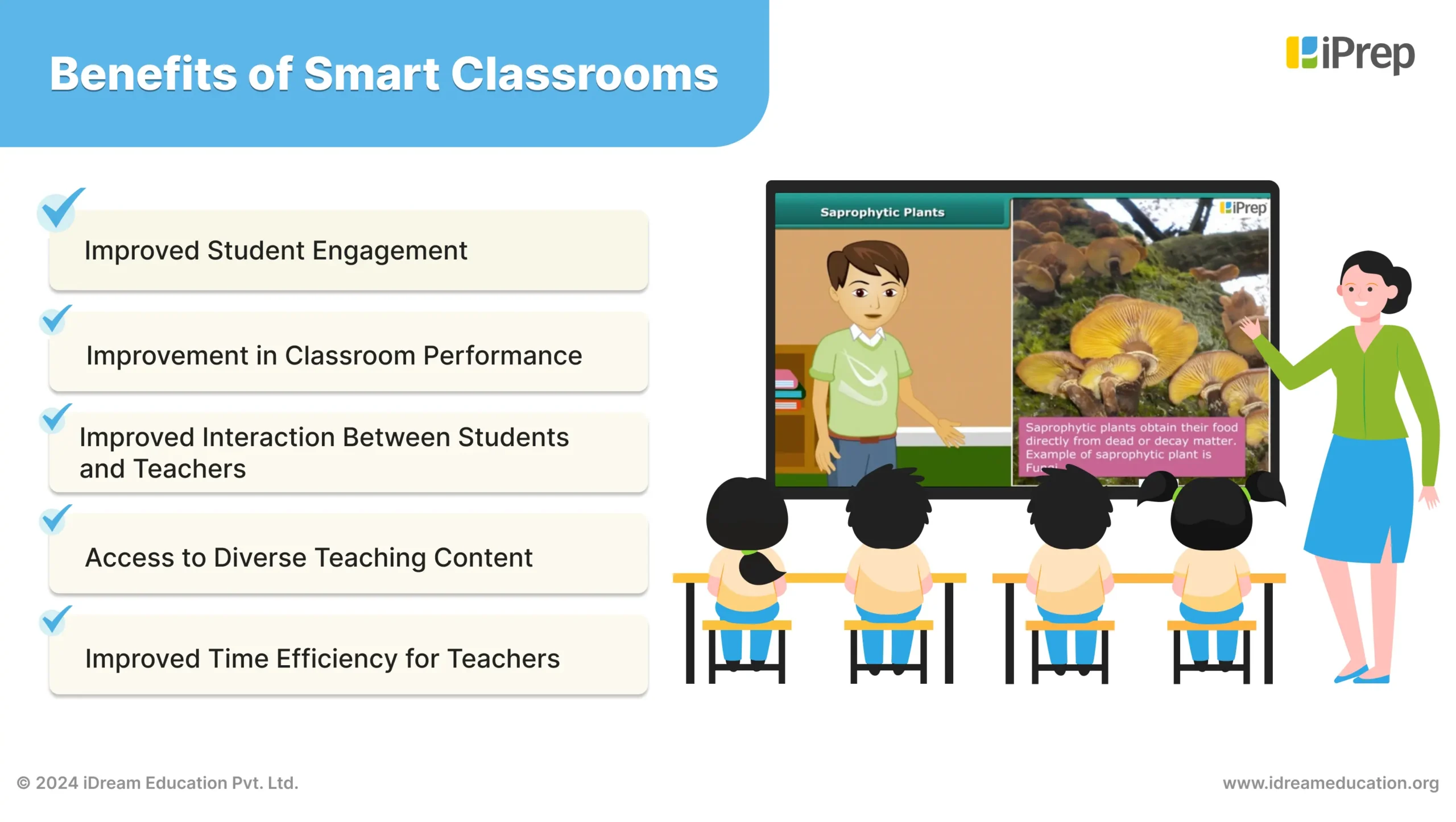
Improved Student Engagement
Smart classroom setup significantly enhances student engagement by offering teachers a variety of tools and resources to make learning more dynamic and interactive. With access to textbook-aligned content in multiple formats, teachers can tailor their teaching approach based on the day’s objectives or the students’ needs. For instance, they can use video lessons to simplify complex concepts for better comprehension, conduct surprise practice sessions to gauge students’ learning levels in an engaging way, or leverage interactive whiteboards to break down instructions visually. Moreover, these tools allow teachers to involve students actively, such as asking them to explain concepts to the other students. This fosters collaborative and interactive learning experiences that make classroom sessions more lively, impactful and engaging.
An example of this is our smart classrooms implementation in 10 Army Goodwill Schools, Kashmir along with digital libraries and a mobile app. Two years after implementing the setup, we conducted a midline assessment of students in Grades 6 to 10 to measure their improvement and engagement. The results were promising: student attendance increased from 70% to 90%, indicating a clear boost in student engagement. Additionally, over 3,000 hours of Smart Class usage were logged, along with extensive use of tablets in digital libraries, further highlighting the positive impact of the intervention on both learning and engagement.
Improvement in Classroom Performance
Smart classrooms contribute significantly to improved classroom performance by fostering interactivity, enhancing comprehension, and increasing student engagement. When teachers can actively engage students and make concepts easier to understand, it not only helps students retain information more effectively but also encourages them to take an interest in classroom learning. This combination of factors creates an environment conducive to better academic outcomes.
An example of this is our large-scale implementation of 50 smart classrooms in schools across East Jaintia Hills, Meghalaya, in collaboration with the district government. With consistent efforts from teachers, project funders, and our team, this initiative has led to a significant improvement in student outcomes, increasing the Class X board exam pass rate from 25-28% to an impressive 60% in 2023 -24, and further accelerating it to 92% in 2024 – 25. This improvement in performance highlights the potential of smart classrooms to enhance educational outcomes when implemented thoughtfully.” Read More about the implementation
Improved Interaction Between Students and Teachers
A key factor in boosting engagement and performance is fostering meaningful interaction between students and teachers. The more they engage on lesson concepts, comprehension, and understanding, the more the focus shifts from rote learning to genuine understanding. Smart classroom setups provide teachers with multiple ways to interact with students, such as through visual aids, digital tools, and interactive activities. This diversity not only enhances teacher-student interaction but also helps teachers gauge each student’s understanding level. With this insight, teachers can adjust their teaching methods to accommodate everyone’s needs and ensure no student is left behind. Additionally, students who are less active in traditional classroom settings can be engaged through innovative teaching pedagogies, ensuring they feel included and supported in their learning journey.
An example of the impact of smart classrooms on teacher student interaction is seen at the iMpower Centre of Aide et Action, where Interactive Flat Panel (IFP) technology, integrated with LMS and digital content, is implemented. Facilitators at the center have shared a noticeable shift in student behavior. Students, who previously sat quietly with their books and rarely engaged unless asked, are now actively seeking to attend the center. They are showing enthusiasm for learning through the smart class and are even suggesting specific content they would like to explore. This is a clear indication on how smart classroom implementation is increasing interaction between students and teachers.
Access to Diverse Teaching Content:
Smart classrooms equipped with preloaded, curriculum-aligned digital content provide teachers with a wide range of resources to enhance their teaching. These include textbooks, video lessons, real-time concept demonstrations, and more, allowing teachers to plan lessons that are both engaging and effective. This variety not only enriches lesson planning but also enables teachers to deliver instructions in dynamic ways that cater to different learning styles. Additionally, when the digital content is closely aligned with the curriculum, it seamlessly integrates into the teachers’ lesson plans, making the adoption of smart classrooms feel natural and intuitive. This alignment ensures that teachers can effortlessly incorporate smart classrooms into their everyday teaching, improving both the quality of education and the overall learning experience.
In our close collaboration with teachers and by analyzing usage data from reporting dashboards, we observed that teachers have diverse approaches to utilizing smart class content. Based on our reports and interactions, the most favored content among teachers includes animated video lessons, practice exercises, and notes. Teachers often use practice content to engage students through quiz games, integrating learning with fun. Video lessons are preferred for explaining complex concepts, allowing them to better comprehend. Meanwhile, notes are used for quick revision before starting new chapters, helping students retain key information effectively.
Improved Time Efficiency for Teachers:
Smart classrooms significantly enhance teachers’ time efficiency by providing them with textbook-aligned content in multiple formats, all conveniently accessible in one place. This eliminates the need for extensive research to make lessons engaging and effective. With smart class content, teachers can seamlessly teach concepts, show video lessons for a more comprehensive understanding, and instantly conduct practice sessions to assess how well students have grasped the lesson. Additionally, interactive simulations and hands-on practice bring concepts to life, making lessons more impactful without requiring additional preparation time. This streamlined process allows teachers to focus more on delivering quality education and addressing students’ needs effectively.
Teachers often spend hours planning lessons, gathering resources, and finding ways to make their teaching more engaging. With our smart classroom solutions, this effort is significantly reduced. Through close collaboration with teachers, we’ve received testimonials highlighting how curriculum-aligned smart class content across various categories—animated video lessons for complex concepts, practice exercises to assess student understanding, and concise notes for quick reviews is enhancing their teaching process. By seamlessly integrating these resources, teachers now save valuable time and focus more on meaningful teaching and connecting with students, enhancing overall learning outcomes.
With all these benefits, you might assume that implementing smart classrooms would be expensive. However, that’s not the case.
Smart classroom setups can be tailored to fit your budget, with hardware options that meet your specifications and the unique needs of your classrooms. Additionally, digital content can be customized to align with your school’s curriculum and learning objectives, making it a highly adaptable and budget-friendly solution for schools.
Addressing Smart Classroom Challenges, So You Don’t Have to Worry!
Limited School Infrastructure
We understand that many schools face constraints like a lack of internet connectivity, limited/old/no hardware, or inadequate space for setting up smart classrooms. That’s why we’ve designed our smart class solutions to work seamlessly within these limitations:
Offline Access: Our LMS and digital content are fully functional offline after installation. No continuous internet connectivity is required, ensuring uninterrupted learning even in remote areas.
Affordable Hardware Options: If your schools lack smart class hardware, we provide budget-friendly solutions tailored to your needs. Already have a setup? No problem! We can integrate our smart classroom LMS and content into your existing system, saving your additional hardware expenses.
Flexible Setup: We implement our solutions based on your space and requirements, whether you prefer a single centralized smart class or dedicated setups for individual classes.
Teachers Resistant to Technology
We understand that many teachers hesitate to use technology due to unfamiliarity and concerns about it consuming valuable classroom time. That’s why we’ve designed our smart class solutions to be simple, intuitive, and teacher-friendly:
User-Friendly LMS: Our LMS is based on universal design principles, making it as easy to use just like they use an Android app on a smartphone. The interface is intuitive and familiar, ensuring teachers can navigate it without prior technical expertise.
Textbook-Aligned Content: The digital content on our smart class setup mirrors textbooks, ensuring teachers feel at ease and confident integrating it into their lessons without any sense of disconnect.
Natural Technology Adoption: Teachers can operate the smart classroom setup just like the devices they already use at home, such as TVs or smartphones, leading to natural adoption.
Experiential Teacher Training: We provide hands-on training where our on-ground team assists with the setup, installation, and practical guidance. Teachers learn how to use the smart class for diverse purposes—conducting surprise tests, simplifying complex topics through videos, utilizing interactive whiteboards for engaging lessons, and much more.
Confidentiality of Teachers’ Data
We understand that funders, schools, and teachers may have concerns about the privacy of their login details, classroom sessions, and instructional data. That’s why our smart classroom LMS is built with secure and transparent features to ensure confidentiality and effective usage:
Unique Login IDs: Each teacher gets a unique login ID, enabling secure access to the learning platform.
Shared Access with Flexibility: A single license allows multiple teachers to log in with their IDs and switch seamlessly between grades and languages of their choice, ensuring flexibility in use.
Data Transparency: Usage data, such as smart classroom sessions and category usage metrics, is securely recorded. Teachers, school administrators, and project funders can access this data to make informed, data-driven decisions to improve learning outcomes.
Budget Constraints
Worried that implementing a smart classroom might be too expensive? We’ve simplified the process to make it accessible and affordable:
Customizable Solutions: Whether you need a complete smart classroom setup or just an LMS and digital content, we tailor the solution to fit your specific needs and budget.
Affordable Hardware Coordination: We collaborate with hardware providers on your behalf to ensure you get the required setup at the most competitive price possible.
Cost-Effective Implementation: By offering custom solutions, we ensure that smart classrooms are within reach for every school, regardless of budget constraints. Our goal is to make smart classrooms an affordable reality for schools, enabling impactful learning without financial stress.
Time-Consuming Setup
Concerned that setting up smart classrooms might disrupt your school’s routine or take too much time? We’ve streamlined the process to make implementation quick and hassle-free:
Efficient Installation and Simplified Setup Requirements: Our on-ground team handles the entire setup and installation process, ensuring minimal disruption to your school’s daily tasks. All it requires is a stand, a screen to mount the device, and a preloaded drive to install the LMS and content. The system is ready for teachers to plug and play content whenever needed.
Easy Access for Any Location: Whether your school is in an urban or a remote area, we design our solutions for quick and efficient implementation anywhere.
With our approach, smart classroom implementation and use is effortless, letting schools focus on teaching while we take care of the rest.
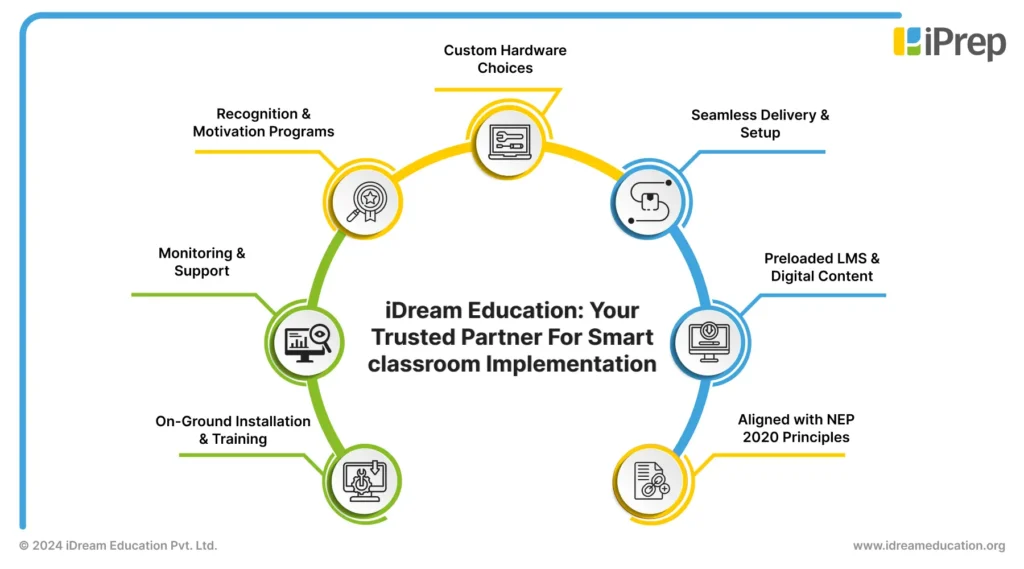
Why We Can be Your Trusted Partner for Smart Classroom Success Implementation?
We simplify your journey towards smart classroom adoption with an end-to-end solution that eliminates the need to coordinate with multiple smart class vendors.
Custom Hardware Choices: Whether your budget suits smart TVs, interactive flat panels, digital boards, or interactive white boards, projectors, we provide curated options from the best brands, tailored to your needs.
Seamless Delivery & Setup: From hardware delivery to setup, installation, and warranty support, we ensure you get the best smart classroom experience.
Preloaded LMS & Digital Content: Your smart classroom devices come equipped with preinstalled LMS and custom digital content aligned with your curriculum, language preferences, and classes. Digital content includes, animated video lessons, syllabus books, repository of practice questions, test, notes, interactive simulations (math and science), practicals, and more. Teachers also get access to content beyond academics including book library, life skills and value education, climate action course and more for holistic growth of students.
Aligned with NEP 2020 Principles: Our LMS and digital content are thoughtfully designed to align with the foundational principles of NEP 2020. It emphasizes on experiential learning, curriculum aligned multilingual education, competency-based approaches, inclusivity, equity and holistic growth.
On-Ground Installation & Training: Our on-ground team visits each school, installs the setup, and conducts experiential teacher training as per the schedule, ensuring teachers are fully aligned to use the smart classroom regularly.
Monitoring & Support: We monitor smart classroom usage and provide detailed reports to project administrators, enabling data-driven decisions for improving learning outcomes. Based on these trends, we also conduct retraining sessions and provide ongoing support to teachers.
Recognition & Motivation Programs: To foster a culture of effective technology use, we organize training recognition programs where we certify and reward teachers who regularly use smart classrooms, inspiring others to follow the same.
If you’re planning to implement smart classrooms in your schools or education project, we’d love to connect with you! Let us present the details of our comprehensive end-to-end smart classroom solution tailored for schools. You may call us at +91 7678265039 or share your details here. You can also write to us share@idreameducation.org
Are your students struggling to catch up on years of missed learning? Explore practical ways to address those historical learning gaps using a targeted remedial solution in your school education projects.
Imagine yourself as a student who, over the years, has consistently missed key math concepts, like struggling to understand fractions in elementary school. This makes it nearly impossible to grasp algebra in middle school, leaving gaps in your understanding. By the time you reach higher grades, the problem isn’t just about grasping new concepts, but dealing with a shaky foundation that limits your ability to progress.
This scenario is not isolated, and in fact, is common across many students
Without targeted remedial action, these historical learning gaps continue to widen, leading to cumulative learning loss. But what if there was a way to identify and address these gaps early on? Addressing these gaps is not just about fixing what’s broken, but creating and enabling a remedial learning solution that ensures every student achieves grade level proficiency.
What are remedial learning solutions?
Remedial learning solutions are designed to support specific learning gaps of students which could be in some concepts, subject, chapter or over all class. The remedial solutions identifies historical learning gaps and provide targeted support. All this to help your students catch up with grade level learning. This personalized approach ensures that each student receives the support they need to cover their gaps and thrive academically.
In practice, remedial learning can involve various strategies, such as one-on-one tutoring, small group instruction, or the use of adaptive learning solutions. These solutions provide personalized learning paths through remedial video lessons, remedial practice exercises, and tests tailored to each student’s needs.
Why are remedial solutions important for your Students?
To Bridge Historical Learning Gaps
Remedial solutions are invaluable for bridging historical learning gaps that your students may have because of missed classes, misunderstood topics, or any other reason because of which your student has fallen behind. Whether a student missed a crucial classroom session, struggled to grasp a particular concept, or was absent for an extended period, remedial learning acts as a safety net. By identifying specific learning gaps and enabling a personalized learning path, remedial solutions empower students to catch up and build a strong foundation for grade level learning.
To Enable Personalized Learning Path
Remedial solutions create personalized learning paths that ensure each student receives the specific support they need based on their individual learning gaps. Unlike a one-size-fits-all method, these solutions are designed to acknowledge that every student learns at their own pace and has unique strengths and weaknesses. With the help of adaptive learning software, your students undergo an initial assessment which identifies their gaps. This is then used to craft a customized learning path focused on closing those gaps. This personalized approach not only helps students catch up but also encourages greater ownership and engagement in their learning journey.
To Foster a Positive Learning Environment
Remedial solutions are important to boost students’ confidence and self-esteem by providing a supportive, non-judgmental environment where they can address their learning gaps without the fear of comparison. These solutions empower students to revisit and strengthen foundational concepts from lower grade levels without the stigma of grade demotion. This approach fosters a deeper understanding of key topics, helping your students to rebuild their academic confidence and encouraging them to engage more actively in their learning journey. By focusing on their individual needs, remedial solutions create a positive learning experience that promotes learning and growth.
To Improve Academic Performance
Remedial solutions are crucial for improving academic performance by addressing the specific learning gaps that may be holding your students back. Through targeted instruction, these solutions focus on the areas where your students need the most help, allowing them to grasp key concepts more effectively. As a result, your students will not only catch up on missed or misunderstood topics but will also gain a stronger foundation for future grade learning. This focused support leads to better grades, and improvement in learning outcomes.
To Prevent Future Academic Struggles
Remedial solutions are key to preventing future academic struggles by offering timely intervention that helps your students overcome learning challenges early on. By addressing gaps in understanding as soon as they appear, remedial learning solutions ensure that small gaps don’t escalate into more significant difficulties down the line. This proactive approach will keep your students on track, enabling them to build a strong foundation for future learning and preventing the frustration and disengagement that can come from falling too far behind.
How can you identify that your students are in need of remedial learning?
Identifying students in need of remedial solutions requires a multi-faceted approach due to the varied nature of learning gaps. Some students may struggle with specific topics or chapters. These gaps can result from factors such as absenteeism, disrupted learning experiences, or the significant interruptions caused by situations such as COVID-19 lockdowns.
Therefore, to identify the need, a reliable way to assess students’ learning levels is through tech-enabled assessments. Tablets or other digital devices can be used to conduct baseline assessments that include questions from different grades and related topics, allowing you to evaluate where each student stands.
While technology-driven assessments provide quantifiable data, other traditional methods like teacher feedback, classroom observations, and consultations with guardians also play a crucial role. These methods, although subjective, offer valuable insights into students’ learning behaviors and challenges. Since teachers and parents interact closely with students, their input can often highlight areas that may not emerge in digital assessments. Combining these approaches will give you a well-rounded understanding of your students’ learning needs. Basis this, you can enable targeted and effective remedial learning interventions in your schools or school education projects.
What Makes a Good Remedial Learning Solution?
Non-judgmental learning
A good remedial learning solution is centered around the principle of non-judgmental learning, where students are not judged/questioned for their learning pace or proficiency level. This is especially important when a student’s grade level is adjusted to a lower grade to help them catch up. In such a scenario, the remedial solution should ensure that students do not feel stigmatized but instead are encouraged to embrace learning as a continuous, personalized process.
Remove time constraints
A key feature of an effective remedial learning solution is the removal of time constraints. Students should be able to learn and practice without the pressure of deadlines, allowing them to explore subjects according to their interests and at a comfortable pace. This flexibility enables deeper understanding and retention, fostering a more engaged and motivated learner.
Accessibility
A good remedial learning solution should offer students the freedom to learn anytime, anywhere—whether indoors or outdoors, in schools, or from the comfort of their homes. It should also support offline learning to ensure uninterrupted education, particularly in areas with limited internet access. This can be achieved through an integrated system, such as an LMS that consolidates remedial learning content, remedial practice exercises, and progress monitoring all in one place, eliminating the need for back-and-forth processes and streamlining the learning journey of your students.
Continuous learning
Continuous learning is also an essential aspect that makes a remedial solution a good fit for school education. The solution should have restricted access remedial video lessons and practice exercises of chapters. This ensures students are not able to complete learning of any chapter until they pass the final test and achieve grade-level proficiency. Students should be able to revisit lessons and continue practicing until they are fully prepared to take the final test, ensuring they achieve mastery before progressing.
Aligned with the curriculum
Finally, remedial content must align with the curriculum to ensure coherence and relevance in the learning experience. Whether your students are practicing or learning through remedial video lessons, the content should be tailored to meet national/state educational standards.
How can you plan and implement remedial learning solutions in school education projects?
Implementing a successful remedial learning solution in schools is a well-thought-out process that begins with strategic planning.
Need Assessment
The first step is identifying the target group of students and gauging their willingness to adopt remedial solutions. This can vary depending on their current learning levels, interest in bridging gaps, and how familiar they are with digital learning solutions.
After identifying your target students, profiling schools based on their existing digital infrastructure becomes crucial. You may either work with what is available or plan to set up the necessary tools and devices to enable remedial learning. Schools with some level of digital access, such as smart classrooms, tablets, chromebooks, desktops or laptops, may only need LMS and content integration. For those without infrastructure, additional steps would include installing or upgrading systems for smooth implementation.
Assessment to identify learning gaps
An assessment framework must be in place before implementation begins. These assessments will help categorize students based on learning gaps, allowing the solution to be tailored to their specific needs. Deciding on the classes or age groups to target further defines the scope of your school education project. This ensures resources are effectively allocated.
When moving into implementation,
You should look for a remedial learning solution that is compatible with the school’s infrastructure or with the device of your choice.
You should then look for a remedial learning solution provider that provides an all inclusive LMS with remedial content that can support the identified learning gaps and works for the age group you plan to improve learning outcomes.
You should review the structure of the remedial learning solution to ensure it follows a guided approach. The remedial solution developed with guided mechanism, allows students to engage with content from different grades in a way that feels relatable. This helps personalize their learning experience, making the material more relevant and meaningful as per your student needs.
Finally, you should choose a remedial learning solution that keeps ongoing track of students’ remedial learning process for students. This establishes a positive learning environment while addressing their historical learning gaps. Thus, empowering them to overcome challenges in a supportive and engaging way.
When Implementing
Training: It’s important to choose a remedial solution provider that offers experiential training on using the solution. This ensures students are able to navigate remedial platforms seamlessly and enjoy benefit from its features.
Progress Monitoring: Select a provider that delivers regular usage reports—whether weekly, monthly, or quarterly. Further, the data should so, that it also reflects on improvements in learning outcomes. This helps you track the impact of the remedial solution in your school education projects effectively.
By following a structured approach to integrating remedial learning solutions, you can effectively address historical learning gaps in your school education projects. At iDream Education, we have implemented our remedial solution, iPrep PAL, on a large scale. One such example is, over 2.2 lakh students in Haryana using PAL on tablets distributed through the e-Adhigam initiative. In this project, we’ve observed a 44% improvement in their learning outcomes.
We would be happy to demonstrate and implement iPrep PAL our remedial solution in your school education projects. Feel free to share your details here, or contact us at +917678265039">+91 7678265039. You can also write to us at share@idreameducation.org.
In India, over 60% of students in government schools study in the Hindi medium. Yet for many years, the EdTech sector primarily enabled content in English Medium. Early on, much of the digital content available was a “copy-paste” of existing English material, leaving a gap in a learning curve.
However, the landscape is changing
With increasing awareness of the importance of local languages and the government’s push for regional education—particularly through the National Education Policy (NEP) 2020, which advocates for mother tongue instruction in early education—there’s a growing need for high-quality digital content in Hindi, English and other local languages. This shift is not just essential for equity but also for fostering deeper learning and comprehension among students across India.
Our Journey of Building a Relevant Digital Content in Hindi for Classrooms
At iDream Education, when we launched the first version of iPrep LMS in 2017, we searched for relevant digital content to integrate. But, we quickly realized that much of what was available consisted of teacher-centric videos and a lot of this content was available only in English mediumThrough our work with teachers, we understood that digital content should naturally complement classroom instruction, and teacher acceptance of this content is crucial for its effective use. As we couldn’t find anything suitable at the time, we started creating our own animated content which aligned with our philosophy of enjoyable, joyful and engaging. Initially, we began creating content for Math and Science in Hindi medium, and today, we have comprehensive coverage of K-12 digital content in Hindi, and English for all subjects, fully aligned with NCERT and NEP guidelines.
Our Ground-Up Approach of Developing Digital Content in Hindi
We believe in creating truly immersive learning experiences. Therefore, we started creating digital content in hindi keeping in mind Hindi comprehension of Hindi medium school students. We ensure that our digital content isn’t just dubbed or translated – it’s crafted from the ground up in Hindi. It was important for us to ensure students connect with the digital content in a way that feels familiar. To achieve this, we focused on:
Creating digital content where both text and audio are in Hindi, with a neutral Hindi accent. This is done to ensure learning with digital content feels natural and familiar to students
All our educational content, whether in text or audio, is in Hindi and has no awkward English-to-Hindi transitions. This makes our content easily understandable for students just like their daily life interactions
Our digital content in Hindi covers all curriculum topics and subjects across all grades from K-12. This ensures that your students receive a thorough understanding of each concept
We also offer audiobooks in Hindi. This adds an auditory learning element, which connects with students in a way that supports their reading and listening skills simultaneously
Additionally, we have integrated digital content in Hindi across various categories to enrich the student learning experience in multiple ways
Animated Videos Lessons in Hindi to establish Real-Life Connect
We understand that last-mile learners need more than just theoretical content. That’s why our animated video lessons in Hindi are designed with real-life scenarios and local contexts. Based on Bloom’s taxonomy, these videos improve student’s comprehending ability, encourage participation, and fosters a deeper connection with the curriculum aligned learning. Moreover, when students learn through relatable examples and familiar language, their ability to retain information significantly improves.
Practice Questions in Hindi to Enhance Exam Preparation
In addition to providing animated video lessons in Hindi to boost students’ comprehension, we focus on ensuring that they can effectively prepare for exams. To support this, we have developed a chapter wise repository of a question bank in Hindi for grades K to 12. This practice simplifies exam preparation, boosts students’ confidence and enables them to tackle exam-related challenges with ease.
Hindi Notes for Quick and Effective Revision
As digital content continues to evolve, we have introduced notes in Hindi, featuring concise chapter summaries to facilitate quick revision. It’s important that during revision, students have access to content in a language they are familiar with, allowing them to easily review and progress without getting stuck on a topic due to lack of comprehension.
NCERT Books in Hindi for Seamless Alignment with Textbook Learning
NCERT textbooks have long been regarded as the gold standard for students nationwide. To maintain alignment with the school curriculum, we offer digital versions of NCERT books in Hindi for all K-12 classes. By integrating these digital textbooks, we ensure that both teachers and students experience a seamless transition to digital learning while staying connected with familiar content.
Activity Videos and Interactive Simulations in Hindi for Hands on Learning Experience
We have introduced interactive simulations in Hindi to help students grasp complex concepts like friction, gravity, Ohm’s Law, and more very easily. By performing actions such as movement or adjusting weight with touch-based instructions in Hindi, students can experience these concepts in real time. Moreover, we also offer activity-based content in Hindi for subjects such as Math, Science, and EVS, through which students can create DIY projects using easily available materials around them. This hands-on approach promotes deeper learning by allowing students to apply concepts in practical ways. We create and curate this to make learning more engaging and impactful for your students.
Digital book library in Hindi medium
We’ve curated a rich repository of Hindi e-books to inspire a love for reading while engaging students in digital learning. Our goal is to help students gain knowledge through reading fictional stories, learning from history and more. One example of students developing passion for reading is Nisha, a class 6th student from the KGBV school in Bhiwadi, who has developed a deep passion for reading. She has spent an impressive 63% of her time in reading books on iPrep, as highlighted by a pie chart from our reporting dashboard.
In addition to all the above content categories,
We also offer digital content in Hindi across more categories, including tests, skill based courses such as Digital Literacy, Financial Literacy, Sports, Music, Climate change and much more. We have worked and are working on this to cater to the needs of students whose first language is Hindi and who attend Hindi medium schools.
A Key Feature of iPrep LMS
One of the unique features of iPrep LMS, through which we deliver digital content in Hindi, is its bilingual interface. Both students and teachers can easily navigate through content categories and LMS features in Hindi, significantly reducing the need for additional training. This natural and joyful adoption of digital learning fosters a positive learning environment, allowing students to focus on understanding the material instead of struggling with unfamiliar technology or language barriers.
Impact of learning in local language: Insights from our experience of working with Hindi medium government schools
From our experience working in Hindi medium government schools in Rajasthan, Haryana, Uttar Pradesh, we have seen an increase in student engagement in learning. Students demonstrated better attention, retention, and understanding of concepts when taught using digital content in Hindi, compared to content delivered in other languages. The increased engagement we’ve seen among students highlights the powerful impact that learning in one’s local language has on their educational outcomes.
We would be happy to speak with you if you are working with such government schools for whom the primary medium of learning is Hindi medium and understand how we can support your students with digital learning. You can share your details with us here or connect us at +91 7678265039 to take it ahead. You can also write to us share@idreameducation.org. Additionally, we also provide complete content in English medium and through iPrep, you can let your teachers and students use either of the medium or both the mediums through one single platform.
The evolution of smart classrooms over the years has been impressive. Just a decade ago, setting up a smart classroom meant dealing with projectors, screens, keyboards, and a complex range of equipment that made the setup complex to manage and use. As Android technology advanced, the idea of a PC Free smart classroom emerged, making smart class adoption much simpler. A single device, controlled as easily as a TV remote, changed the game. However, the one thing missing was interactivity.
Then came interactive digital boards (IDB) for schools, serving three key purposes:
Interactive digital boards replaced traditional blackboards with a built-in whiteboarding application. Therefore, some call it an interactive whiteboard. This enables teachers to teach, write, and draw instructions just as they did before, but with the convenience of digital tools.
IDB allowed teachers to easily use learning platforms and content, enriching the classroom experience.
Interactive digital boards introduced interactivity, encouraging students to engage with the material through touch-based interactions, which they naturally inclined towards, making learning more joyful and engaging.
As their acceptance in classrooms increased, the market became flooded with brands, making it confusing for buyers to choose the right one.
In this blog, we’ll guide you through the key parameters to consider when selecting an interactive digital board for schools
Screen Size of interactive digital board for your schools
When choosing an interactive digital board for your school, it’s important to consider the size of the classroom to ensure optimal visibility and audibility for all students. IDBs come in various sizes— 65″, 75″, 86″, and 98″—but the 65″ model is often the most preferred for schools. It strikes a balance between affordability and functionality, with a screen large enough for clear text visibility and audio. A 65-inch panel works well for classrooms with 30-40 students. If your class is larger or in a bigger hall, you might want to opt for a 75-inch panel. The availability of different screen sizes makes IDB an ideal choice for enhancing digital learning experiences in schools.
Hardware Specifications of IDB for schools
When selecting an Interactive Digital Board for schools, RAM plays a crucial role in ensuring high performance, speed, and smooth functioning. If you only plan to use the whiteboarding tool and won’t be running many apps or high-definition videos, a device with 4GB RAM will be sufficient. However, if you plan to run digital content, use multimedia, and various learning apps, or want interactive classroom sessions where students engage with the device, opting for an 8GB RAM device will give you better performance, speed, and longevity. 8GB devices are now easily available at affordable prices. While internal memory is not as important, additional content storage can be easily managed with external devices such as a pendrive for Android-based IDBs or an OPS device for Windows-based setups, ensuring your digital board remains flexible and efficient.
Choice of Android OS/Windows OS or both Android OS and Windows
When choosing between Android OS, Windows OS, or a combination of both for interactive digital boards for schools, it’s important to know that most IDBs come equipped with Android by default, with Android version 11 and above. This choice of version is key in decision making because there are many archived versions of android still available. A highly suitable version for the classroom is Android 11 as it meets all the used cases of the classrooms and is cost effective. If you opt for Windows, you would need to attach an additional device or OPS. This will increase your budget by 25-30K depending on which OPS you buy.
Availability of After Sales Service provider for IDB
When selecting a service provider for an interactive digital board for schools, it’s essential to prioritize after-sales support. Many organizations sell affordable options, but the true value lies in having a reliable partner who can ensure continuity in learning in your classrooms. Brands like LG and BenQ stand out for their commitment to a quick turnaround time of 24 to 48 hours, with this you don’t have to deal with manufacturers who believe in buying and moving on after-sale service. To avoid the risk of downtime, it’s crucial to choose a provider that delivers consistently, and who is located closer to you to ensure a turnaround time of 24-48 hours, whenever needed.
Compatibility with learning platform and digital content
It is most likely that, if you are considering buying an interactive digital board for schools, you will use it for smart classroom purposes. Therefore, it is essential to ensure compatibility of the learning platform and digital content you plan to use. While most apps designed for Android should work with interactive digital boards (IDB), not all platforms and content are optimized for every device. To avoid any technical issues, you should thoroughly check if the learning platform and digital content you’ve chosen are fully compatible with the IDB model you’re purchasing. This ensures seamless integration for an effective and engaging smart classroom experience.
Check for Whiteboarding Application on Interactive Digital Boards
When selecting an Interactive Digital Board for schools, ensure that it includes a whiteboarding application. This feature is crucial as it allows teachers to effectively replace traditional blackboards. With the whiteboarding app, teachers can teach, write, draw, and share classroom instructions in real-time, enhancing classroom interaction and making lessons more engaging. It’s a versatile tool that supports a wide range of teaching methods, from simple explanations to interactive learning experiences.
Powerful annotation on IDB
Choose Interactive Digital Board for schools which provides built-in annotation tools that allow teachers to effortlessly draw, highlight, and interact with lesson content in real-time. Equipped with features like figures, shapes, rulers, and more, the digital board saves valuable class time, eliminating the need for repetitive blackboard work. Teachers can easily add pages without erasing previous explanations, creating a seamless teaching experience.
Check for Experience and Customer Feedback Before Buying an IDB
Before purchasing an Interactive Digital Board for schools, it’s essential to verify the company’s experience. Ask how many schools they have equipped and in how many states they’ve set up their solutions. Speak with current customers to understand their brand and service experience firsthand. Additionally, ensure that you do thorough testing of the device and get hands-on experience of teachers with the device, allowing them to test its functionality in real-world classroom scenarios. This practical approach will help ensure that the technology meets your educational needs before finalizing your decision.
Here’s a quick video guide to help you choose the right interactive digital board for teaching
Want to buy an Interactive Digital Board for Schools
Get our advice, not just price tags! Contact our executive at +917678265039">+91 7678265039 for personalized guidance. They’ll help you explore different models, compare features, and find the ideal Interactive Digital Board that fits both your needs and budget.
Key Points to Be Cautious About When Choosing Interactive Digital Board Brands
Be cautious of IFP manufacturers claiming their displays are AI-enabled. Many brands are now using AI as a buzzword to justify higher prices, adding thousands to the cost while advertising “free” AI features. Avoid falling for this gimmick. You should thoroughly check what AI features do they have and whether those features solve any use case for your teachers. Eventually it is all about empowering the teachers and such features will be of no use if they do not make the work of teachers easier and more efficient.
Many IFP brands claim their devices come preloaded with digital content. Remember, you’re likely purchasing these devices for teachers to use in Smart Classrooms, where the content will be consumed by your students. It is therefore important that this content should align with your way of teaching and should be genuinely of good quality which adds incremental learning value for your students. Make sure to go through the content thoroughly if any manufacturer or brand claims to provide you with the devices pre loaded with content.
To Know More From Us:
You can also connect with us by sharing your details here or can write to us at share@idreameducation.org to start exploring the exciting possibilities that Interactive Digital Board can bring to your Schools.