State-Led Initiatives: Familiarizing CBSE Teachers to Implement the NCERT’s National Curriculum Framework for School Education

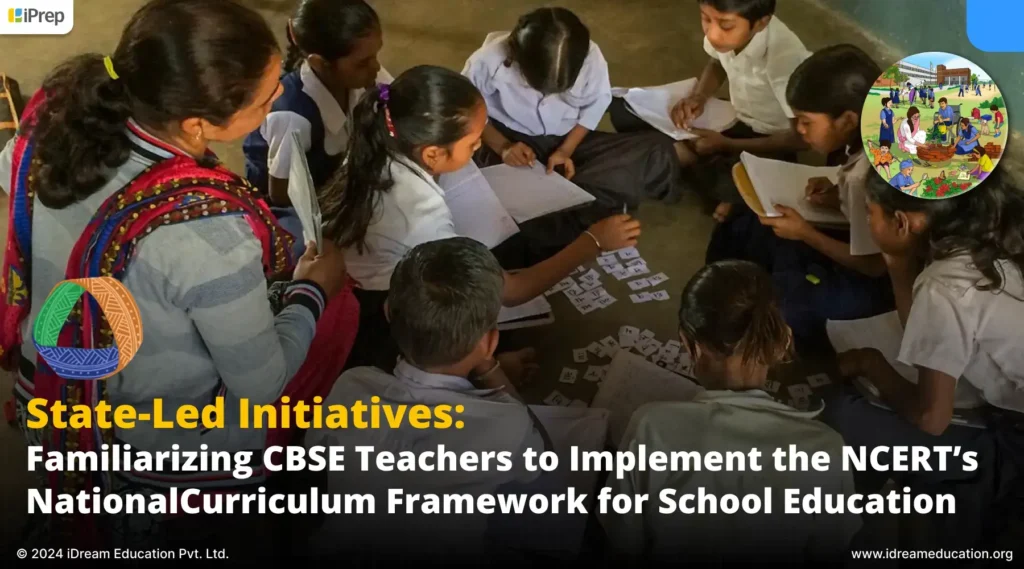
An illustration of a classroom with a teacher teaching and an image highlighting State-Led Initiatives to familiarize CBSE Teachers to Implement the NCERT’s National Curriculum Framework for School Education

In a significant shift from the traditional ’10+2′ format, India’s new education system is gearing up for a change under the National Education Policy (NEP) 2020. The new structure (5+3+4+4) aims to provide a holistic learning experience for students from the age of 3 to 18. The focus is on early childhood care and foundational learning.

To equip teachers for this paradigm shift, 

CBSE teachers across Kerala are set to undergo comprehensive training, starting May 27th. The program, led by experts from the National Council of Educational Research and Training (NCERT), will delve into the intricacies of the NCERT’s NCF for School Education, 2023. This framework aligns with the new school education structure and encompasses innovative teaching methodologies, evaluation techniques, and other pedagogical aspects.

The training sessions, held in Kozhikode, Kochi, and Kottayam, will be crucial in facilitating a smooth transition to the new system. By familiarizing teachers with the nuances of the National Curriculum Framework, the program seeks to empower teachers to effectively implement the NEP 2020’s vision, ultimately benefiting students across the state.

India’s National Education Policy 2020: A New Era for Schooling

India’s education system is undergoing a significant transformation with the implementation of the National Education Policy (NEP) 2020. This policy introduced a new school education system in 2023 structured as 5+3+3+4, spanning from the age of 3 to 18. This system divides the learning journey into four distinct stages: Foundational, Preparatory, Middle, and Secondary.

Foundational Stage: Nurturing the Youngest Learners

The Foundational Stage encompasses pre-school to Class V (ages three to eight).  This stage prioritizes holistic development, emphasizing nutrition, cultural understanding, and a supportive environment at home and school. Teachers are trained to nurture curiosity and instill a love of learning through play-based and activity-based approaches.

Preparatory Stage: Strengthening Foundational Skills

The Preparatory Stage covers Classes III to V (ages eight to 11).  Here, the focus shifts to solidifying fundamental literacy and numeracy skills. Teachers ensure that students master language comprehension and arithmetic, laying the groundwork for more complex learning in subsequent stages. This stage also introduces students to basic scientific concepts and social studies.

Middle Stage: Exploring Interests and Practical Skills

Classes VI to VIII (ages 11 to 14) comprise the Middle Stage. While continuing their academic journey, students are exposed to a broader range of subjects. The subjects include arts, vocational skills, and introductory coding. This stage encourages exploration, allowing students to discover their interests and aptitudes. It aims to equip them with practical skills that could prove valuable for future career paths.

Secondary Stage: Preparing for Higher Education and Beyond

The Secondary Stage, spanning Classes IX to XII (ages 14 to 18), marks the culmination of school education. Students delve deeper into subjects like science, mathematics, social sciences, and humanities. This stage prepares them for higher education by offering subject specialization based on individual interests and career goals. Through this, NEP emphasizes critical thinking, problem-solving, and vocational training. This is to ensure students are well-rounded and ready for the challenges of the modern world.

iDream Education wholeheartedly applauds the changes in education structure and NCERT’s National Curriculum Framework for School Education

This framework stands out due to its meticulously defined developmental goals, competencies, and expected outcomes for each age group, establishing a clear and progressive pathway for students’ learning and growth. By focusing on holistic development and aligning with 21st-century skills, the NCF sets the stage for a transformative shift in Indian education, empowering learners with the strong foundation, life skills, and knowledge needed to thrive in the 21st century.

Considering the changes in the NCERT’s National Curriculum Framework for School Education and National Education Policy, we also enable flexibility to our stakeholders such as CSR/NGO/Foundation in customizing their education program for different stages. 
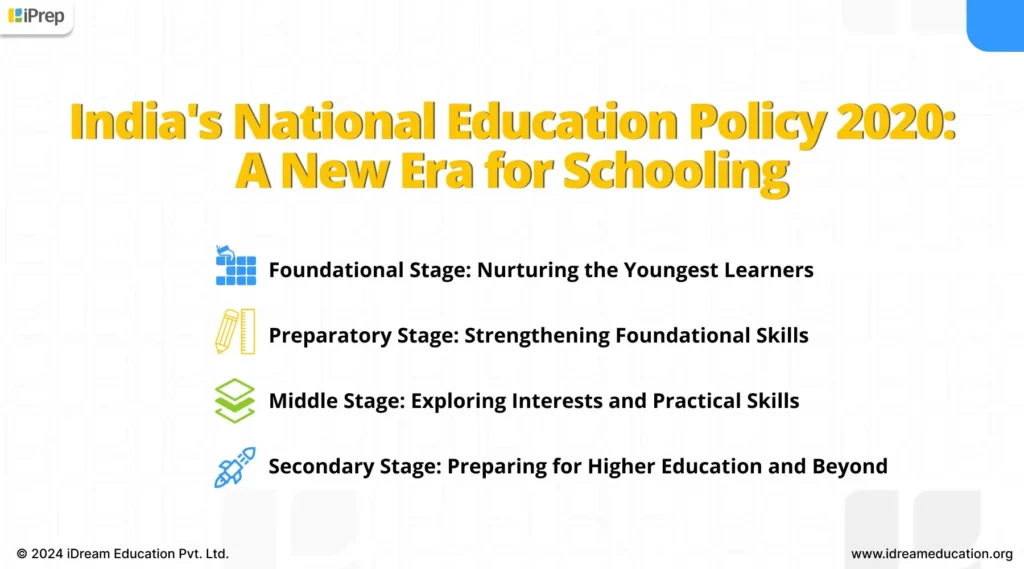
Diagram illustrating the structure of the new school education system as specified in NEP 2023. The system is divided into four stages: Foundational Stage (ages 3-8, including 3 years of preschool and Grades 1-2), Preparatory Stage (ages 8-11, Grades 3-5), Middle Stage (ages 11-14, Grades 6-8), and Secondary Stage (ages 14-18, Grades 9-12)

For the Foundational Stage, iPrep offers FLN curriculum-aligned play-based learning content. This includes stories, rhymes, activities, and local art, all aligned with the developmental goals of the NCERT’s National Curriculum Framework. This ensures a joyful and engaging start to a child’s educational journey.

For the Preparatory, Middle, and Secondary stages, iPrep provides a comprehensive suite of learning resources, including animated lessons, notes, practice exercises, syllabus books, and more. This content covers basic scientific concepts, social studies, arts, vocational skills, and practical skills, equipping students with valuable knowledge and skills for future career paths. Additionally, iPrep offers easily comprehensible content in science, mathematics, social sciences, and humanities, ensuring students have a strong foundation for higher education and future careers.

By tailoring our content in alignment with NCERT’s National Curriculum Framework and the specific objectives of the education program, we enable our partners to deliver the most relevant and impactful educational experiences to students across India. This flexibility, coupled with our commitment to joyful and comprehensive learning, ensures that iPrep remains a valuable tool in shaping the future of education in India, in accordance with the progressive changes laid out in the National Education Policy.

Our vision is to empower teachers with digital content that aligns seamlessly with NCERT’s National Curriculum Framework for School Education and also provide comprehensive teacher training. Hence, this will ensure that every child experiences structured learning and is exposed to unlimited learning opportunities.

In case you would like to know more about iPrep and our other solutions, visit our website. You can also write to us at share@idreameducation.org
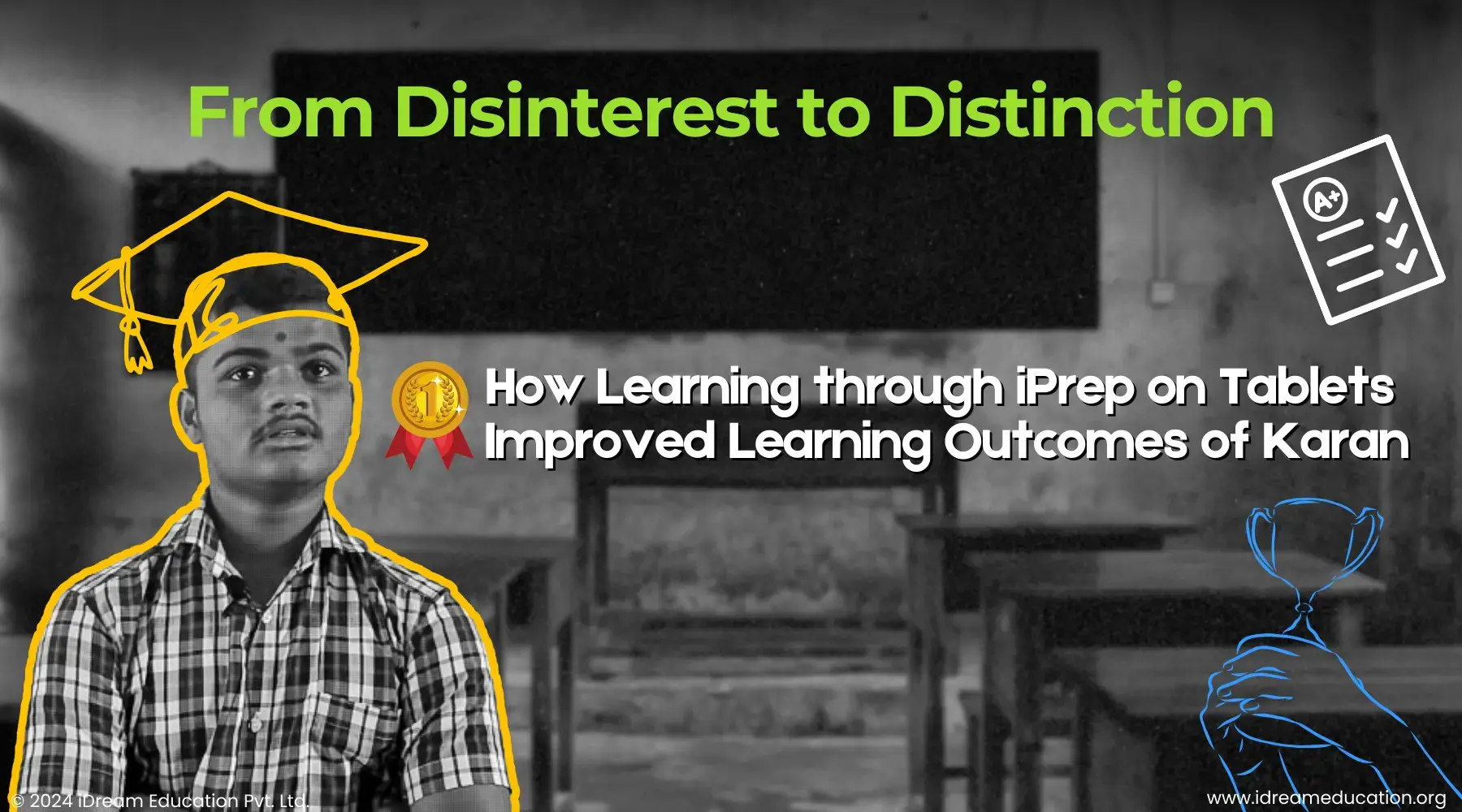
From Disinterest to Distinction: How Learning through iPrep on Tablets Improved Learning Outcomes of Karan

Over the 2023-2024 academic session, Karan, a class 10th student was celebrated as the Top User of iPrep Tablets in Maharashtra, with over 1693 hours of usage in a single year. 

An image showing Karan who showed improvement in his learning outcomes after learning through iPrep

Karan’s Proactive Approach to Learning through iPrep

Our on-ground team in Maharashtra met Karan before his pre-board exams in early 2024. They were immediately struck by his dedication to his studies and his enthusiasm for learning through iPrep.  He shared how he strategically uses iPrep’s video lessons and practice modules to learn subjects such as Maths, and Science. What resonated with us was his proactive approach – rewatching videos multiple times to solidify his understanding. when he said, “The format of video lessons simplifies concepts I used to find difficult… I never get tired of learning through them.”

Karan went beyond academic learning 

Karan’s proficiency in English was initially a challenge as his primary language is Marathi.  However, with the help of iPrep, he even showed interest in learning English. Reflecting on his journey, he said, “I struggled with English before, but with iPrep on Tablets, I’ve been learning in English, and now I can read it fluently.”

Karan’s parents and teachers recounted a different story from just a year ago. 

They shared that Karan had lost interest in his studies, and his academic future seemed bleak. His parents were considering the possibility of him dropping out of school altogether. During this challenging phase, Karan received a learning tablet from his school, and it became a turning point in his learning journey.

With access to a wealth of content in various forms especially animated lessons and practice—Karan began to explore and engage with his studies in a new way. The animated lessons allowed him to grasp complex concepts at his own pace, free from the fear of judgment. He started to enjoy learning and shared that the previously complex subjects now seemed manageable and even enjoyable.

One of his teachers candidly admitted, “We were unsure if he would pass class 10th. But, now seeing his interest and dedication, we hope he passes.”

Their hope was realized on May 27th, 2024, when the results of the 10th board exams were announced. 

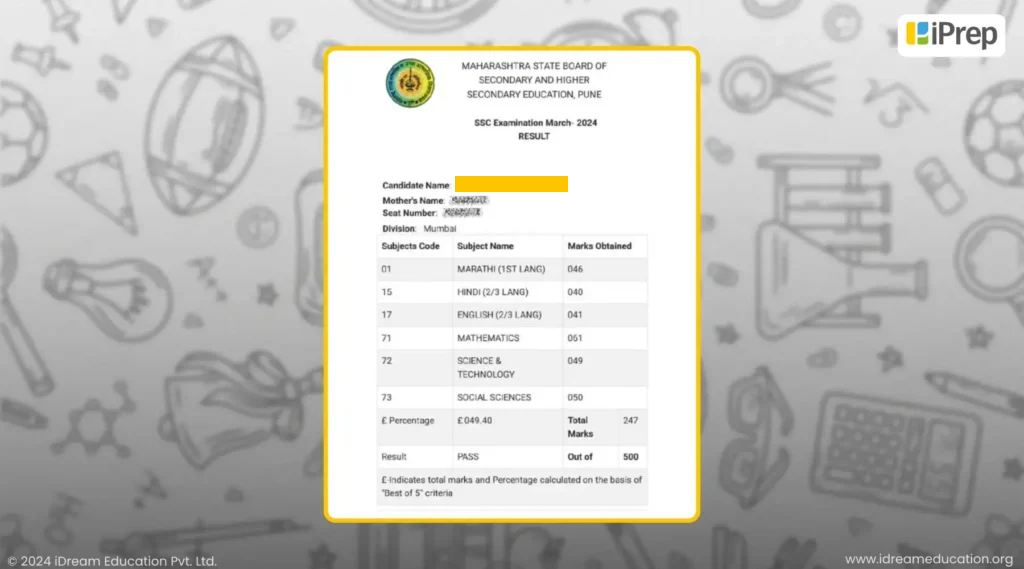
Karan had passed with 49%, a result that left his parents, friends, and teachers both shocked and immensely proud. The boy who once seemed lost interest in his studies had persevered and succeeded against the odds.

His report card paints a clear picture of his growth in various subjects. 

Image showing mark sheet of Karan a class 10th student of Maharastra Board

Notably, he

  • Scored 41 marks in English: A language he initially found challenging to learn as his local language is Marathi. This score is just 5 marks less than his score in Marathi, where he achieved 46 marks.  This shows his newfound interest and improvement fostered by learning on iPrep.
  • Scored 61 in Math: The highest among all subjects, demonstrating his improved understanding and interest in the subject. Similarly, he achieved 49 in Science, 50 in Social Science, and 40 in Hindi.

His academic performance has markedly improved and reflects a greater interest and deeper understanding of subjects he once struggled with.

Our entire team at iDream Education is happy and proud of Karan for his dedication to learning, utilizing both the learning resources he had and those received through social sector partnerships. We are deeply grateful to our social sector partners for their support in bringing iPrep to last-mile learners, helping us improve learning outcomes and create meaningful impact.

Karan’s Story exemplifies the impact of designing iPrep with a user-friendly interface that aligns with the digital-era psychology of students. By integrating multiple categories, we provide textbook content in various formats, ensuring each student can access the content of their preferred learning style to get meaningful outcomes.

Disclaimer: Names used here have been changed to protect the identity of the project and its beneficiaries.

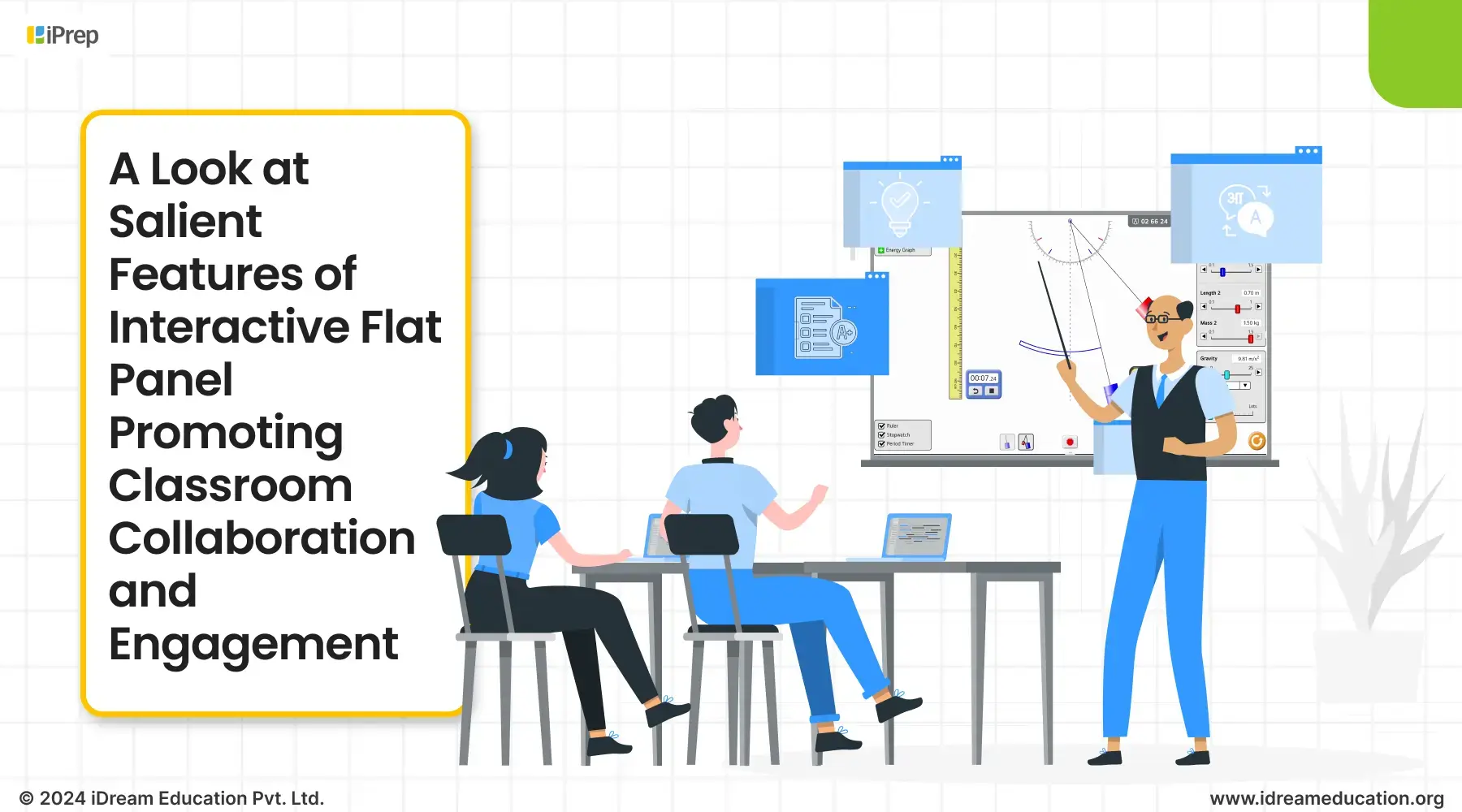
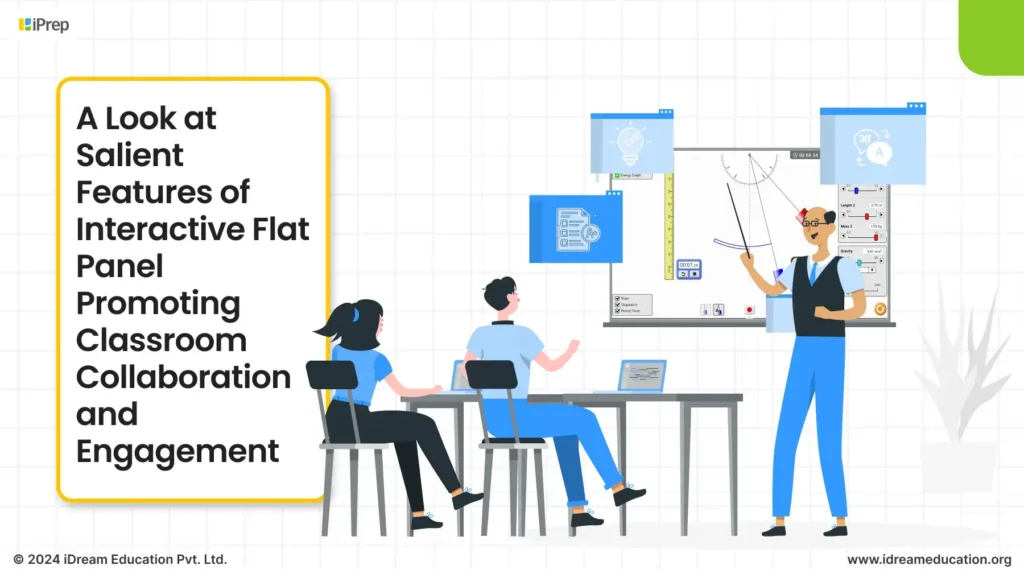
A Look at  Salient Features of Interactive Flat Panel Promoting Classroom Collaboration and Engagement

Enhance your educational environment with interactive flat panels for smart classrooms, fostering engaging and dynamic learning experiences.

In today’s digital age, touch-based devices like smartphones and tablets have become very common. These devices captivate user attention with their intuitive interfaces and seamless interaction. This preference for touch technology extends beyond personal gadgets to more devices such as Interactive Flat Panels (IFPs). Touch Panels enhances education and business environments by offering a dynamic and engaging user experience.

Interactive Flat Panels (IFPs) are enhancing the education sector 

IFP panels are contributing to classrooms by seamlessly blending traditional teaching methods with technology. Complementing existing classroom settings, IFPs offer a single, integrated solution, fostering versatility, interactivity, and ease of use in the classroom. With a wide range of devices designed to benefit both teachers and students, IFPs are enhancing the way knowledge is imparted and absorbed.

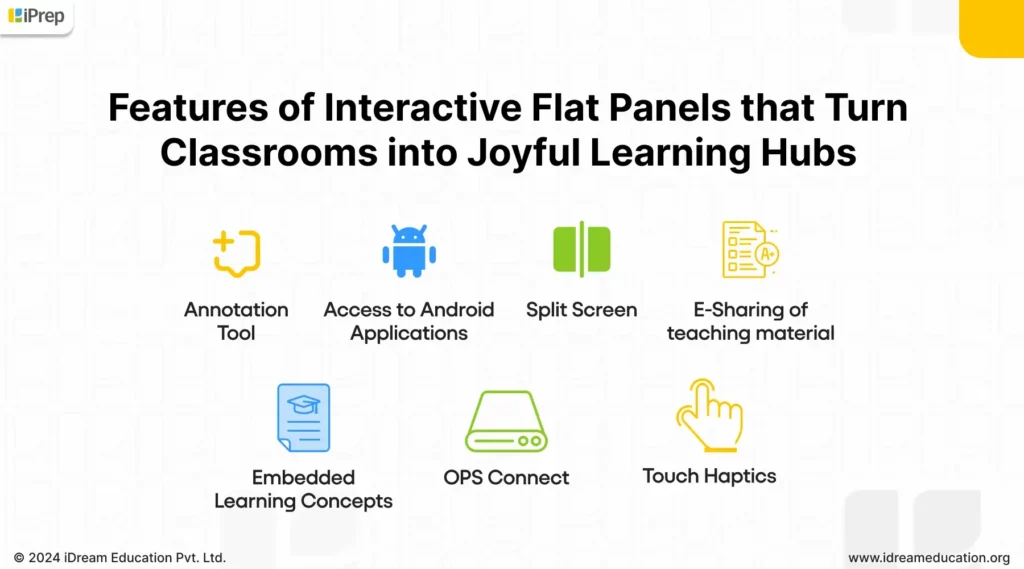
How Features of Interactive Flat Panel Turn Classrooms into Joyful Learning Hubs?

An Interactive Flat Panel (IFP) in government classrooms can significantly enhance the engagement of both students and teachers by leveraging its interactive features such as:

Image highlighting Features of Interactive Flat Panel Promoting Classroom Collaboration and Engagement

Touch Haptics: 

Touch haptics on interactive panels provides a tactile response to the user’s finger through vibrations or other sensations. This technology enhances the user experience by simulating the feeling of physical buttons or textures on touch panels. Haptic makes accessing and navigation on IFP panels more interactive, intuitive, and engaging. Teachers can call two or more students to the IFP panel to write answers, draw, and participate in hands-on exercises together. This tactile element fosters excitement and encourages active participation, making learning a more enjoyable experience for students. 

Annotation Tool: 

Annotation makes the IFP panel into an interactive board that can be accessed by touch-eliminating the need for chalks, dusters, and markers. This empowers teachers/students to draw, write, highlight, and manipulate content directly on the screen. From simple markups to complex diagrams, the tool empowers teachers to express ideas visually and make concepts easily comprehensible for students. For instance, during a geography lesson, a teacher can display a world map on the IFP. They can then invite students to come forward to touch and highlight different countries,  fostering a hands-on learning experience. Further, students can draw routes of historical explorations directly on the map, and with a simple gesture, they can erase and correct any mistakes. This makes learning more dynamic and interactive. This tactile interaction not only keeps students’ attention focused but also allows teachers to assess understanding in real time, adapting their instruction based on immediate feedback. 

OPS Connect: 

Open Pluggable Specification (OPS) Connect is one of the hardware features of Interactive Flat Panel (IFPs), empowering teachers by bridging the familiarity of traditional computers with the dynamic capabilities of IFPs. Enabling OPS provides direct access to the Windows operating system on the panel itself. Teachers can seamlessly utilize familiar tools like Word for note preparation, Excel for lesson planning and timetable creation, and PowerPoint for crafting engaging presentations and activities. This integration streamlines teaching workflows, fosters creativity, and facilitates a structured, visually rich approach to teaching, ultimately enhancing the learning experience for both teachers and students.

Access to Android Applications: 

One of the features of Interactive Flat Panel is free access to Android applications. Through this, teachers can access a wealth of educational content from various sources. Further, with the ability to run Android applications, teachers have the flexibility to use preloaded educational software for curriculum-aligned content, even without the Internet. Additionally, they can download applications of their choice, including engaging activity games to enhance classroom engagement and collaboration. This versatility makes IFPs a comprehensive and adaptable solution for schools, empowering teachers  to create dynamic and effective learning experiences

Split Screen

Split Screen, another unique feature of Interactive flat panels. It empowers teachers and students to view and interact with multiple applications or content sources simultaneously. This enhances productivity by enabling efficient multitasking and seamless comparison of information. Split-screen feature of IFP offers a dynamic approach to teaching, enhancing both engagement and efficiency in the classroom. By simultaneously displaying a board, syllabus, or textbook alongside educational videos, teachers create a multimedia learning experience that caters to diverse learning styles. This integrated approach not only strengthens students’ comprehension but also streamlines lesson delivery, eliminating the need to switch between different ways of teaching. This innovative feature of IFP exemplifies how technology can seamlessly integrate with traditional instruction, maximizing the benefits for both teachers and students.

E-Sharing of teaching material: 

E-sharing on interactive flat panels enables seamless wireless screen sharing on multiple devices, fostering real-time collaboration and sharing of content. It simplifies the sharing of documents, images, and videos, enhancing engagement and productivity of classroom instruction. Teachers can also save their explanations given on the smart board and share it with students through the QR scan feature on IFP. The intuitive E-Sharing feature lets students conveniently revisit lesson explanations for revision or clarification, extending the classroom experience beyond school hours and ensuring continuous learning support.

  • Embedded Learning Concepts

Smart Boards integrated with Interactive Flat Panels (IFPs) are enhancing classroom teaching by offering embedded tools and resources that simplify complex concepts and foster active learning. For example, in the past, explaining the solar system might have involved time-consuming chalkboard drawings and limited student interaction. Now, with a simple click, teachers can access detailed solar system models directly on the IFP screen. This dynamic platform allows for freehand annotations, and interactive demonstrations, and even invites students to participate by drawing and explaining planetary positions themselves. Features like this, result in a deeper and more comprehensive understanding of the concepts, achieved through an engaging and collaborative learning experience. 

These multi-faceted features of Interactive flat panel empower teachers to deliver captivating lessons, foster collaboration, and personalize instruction, while students benefit from intuitive experiences that lead to curiosity and deepen understanding.  Their ability to enhance teaching and learning outcomes makes them a sound investment in the future of education.

It’s no surprise that IFP panels are rapidly becoming the preferred smart classroom hardware for CSR, NGOs, PSUs, and other ecosystem partners.

Ready to enhance the classroom into an interactive learning environment? Contact us today to schedule a demo and take the first step toward a more engaging and effective classroom experience.

Aligning with NEP 2020: How Can You Empower Students with Teacher-Created Content at Their Fingertips

Image Showing iPrep content creation platform designed in alignment with National Education Policy 2020 (NEP 2020) for comprehensive goals for teacher development

In the digital age, the vast expanse of online educational content promises a world of knowledge at our fingertips. However, the ambiguity lies in the fact that while there are abound resources, students and teachers alike still struggle to navigate this sea of information and locate materials that truly align with their specific curriculum and state standards. The overwhelming volume of content can make it difficult to decide what is truly relevant and applicable to their unique educational needs.

This is where the crucial role of teacher-created content comes to the forefront. 

Teachers are the heart of the education system. They possess an understanding of learning needs, interests, styles, curriculum objectives, and state requirements. Their expertise allows them to create content and deliver lessons that are not only directly relevant but also engaging and effective for their students. This personalized approach to teaching makes a world of difference in enhancing student learning outcomes. Further, personalized classroom instruction empowers students to revisit explanations and develop a deeper understanding. This can bridge the gap between available resources and actual educational needs.

What are we doing?

The National Education Policy 2020 (NEP 2020) outlines comprehensive goals for teacher development. 

  • It aims to foster Continuous Professional Development for teachers. This is to ensure they are updated with the latest pedagogical approaches and subject matter expertise. 
  • Additionally, NEP 2020 aims to strengthen teacher training programs. This is to equip teachers with the necessary skills and knowledge from the outset of their careers. 
  • The National Education Policy also emphasizes the integration of technology in education. With this, the aim is to enhance teaching methodologies and provide teachers with tools to create engaging and effective learning experiences.

In alignment with the National Education Policy (NEP) 2020’s vision to empower teachers and leverage technology for educational enhancement, we have developed the iPrep Content Creation Platform. The platform is designed and developed to recognize the invaluable expertise that teachers possess in their respective subjects. The platform provides a user-friendly and accessible way for teachers to create high-quality, engaging educational content. 

By enabling teachers to share their deep understanding of topics on a large scale, we are directly fulfilling several key goals of the National Education Policy (NEP) 2020 as well:

  • Equitable and Inclusive Education:  Providing access to high-quality content from teachers across the state/country helps bridge educational disparities between students from different socioeconomic backgrounds. This ensures that all students, regardless of their location or school, have equal learning opportunities. 
  • Promoting Excellence in Teaching:  Recognizing and rewarding teachers for their expertise through wider reach and recognition encourages them to continuously improve their teaching methods and content. This fosters a culture of excellence in the teaching profession, ultimately benefiting students and their outcomes.
  • Encouraging Use of Technology: Sharing educational content online aligns with NEP 2020’s emphasis on leveraging technology to enhance learning experiences. This not only makes quality education more accessible but also prepares students for a digital future.
  • Teacher Empowerment:  Providing a platform for teachers to showcase their knowledge and skills empowers them as professionals. This empowerment motivates them to innovate and create better learning materials, contributing to a more dynamic and effective education system.
  • Multidisciplinary Education: The diverse expertise of teachers can be shared across subjects and disciplines, enriching the learning experience for students. This aligns with NEP 2020’s vision of a multidisciplinary approach to education that nurtures well-rounded individuals.

By facilitating the large-scale sharing of teacher-created content, we can create a more engaging and inclusive learning system, that aligns with the core principles of NEP 2020. This approach not only benefits students directly but also has a positive ripple effect on the entire education system. 

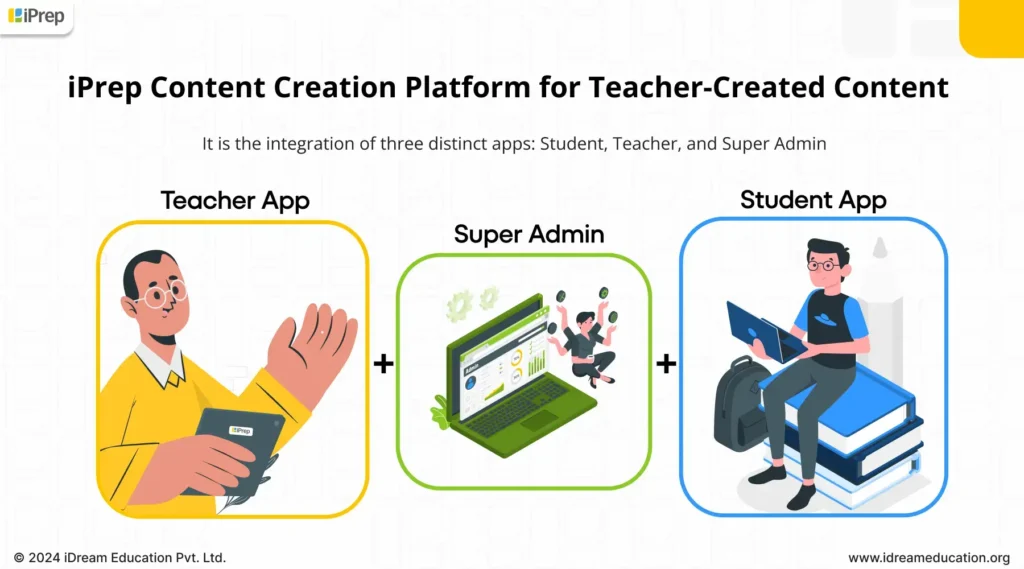
iPrep Content Creation Platform for Teacher-Created Content

Image showing Comprehensive learning solution: iPrep content creation platform for teacher-created content by iDream Education
  •  It is the integration of three distinct apps: Student, Teacher, and Super Admin 
  • The access to content is only with beneficiaries of the program
  • Students can access both pre-loaded content and teacher-created content.
  • Teachers, on the other hand, have access to both iPrep’s extensive content library and a creation mode. This empowers them to record lessons, design assessments, and create videos tailored to individual students or entire classes.
  • Crucially, the Super Admin app plays a quality control role. All teacher-created content undergoes review and approval by the Super Admin (program heads). With the approval of the program manager, the content is visible to all students using iPrep in the particular program. This ensures the rollout of a high standard of learning materials to the students in the program across the state. Additionally, teachers can easily track the approval status of their content within the app.

Empowering teachers to create content can help us enable personalized instruction, deepen student understanding, nurture teacher growth, and promote quality education. As we move forward, embracing this approach can be key to creating a dynamic and content-centric educational landscape where every student thrives and teachers are recognized as the creators of their classrooms.

Stay tuned for the comprehensive blog on how the iPrep Content Creation works! Or in case you would like to plan a comprehensive education program visit us at Facilitating Universal Access to Learning & Growth (idreameducation.org) or write to us share@idreameducation.org

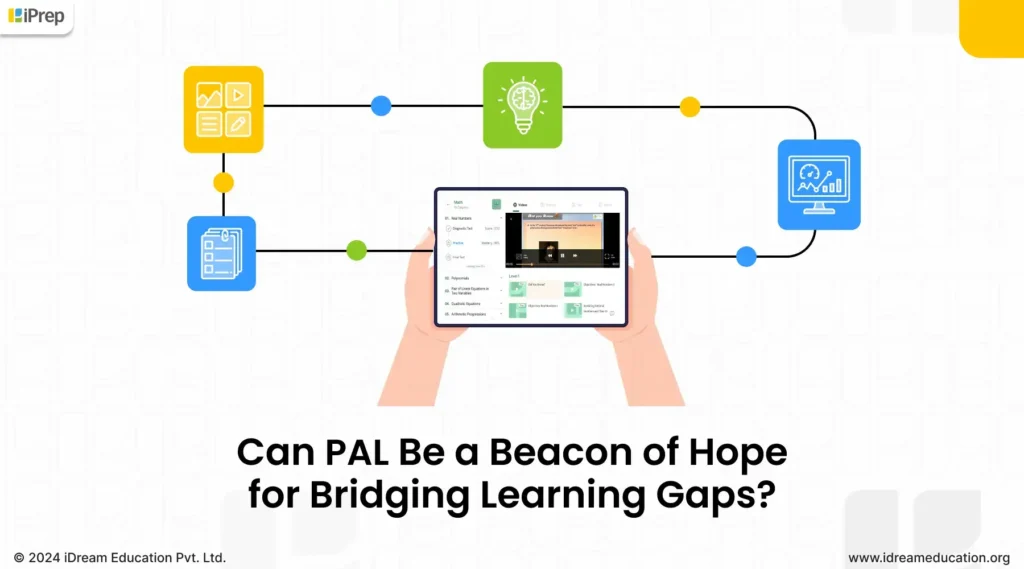
Personalized & Adaptive Learning: Can It Be a Beacon of Hope for Bridging Learning Gaps?

Illustration depicting personalized and adaptive learning is a guided mechanism that can bridge learning gaps in Indian students

Millions of children in developing countries are going to school more than ever before. That’s Great! But here’s the surprising thing – even though more kids are in classrooms, they often aren’t learning as much as they should because of the low learning level. 

To tackle this,  educational technology is coming out as a promising solution,

While educational technology promises exciting possibilities, we still don’t have enough proof that it improves the learning level of children. 

Research exploring the significance of personalized learning for students also remains limited. 

A primary factor contributing to this is the lack of device access among students. Looking back five to six years, it becomes apparent that students did not have much access to devices, which hindered the large-scale implementation of personalized learning initiatives. Further, in 2018, the Government of India released comprehensive guidelines on PAL. However, there was minimal experience in implementing it on a large scale.

The Haryana government has taken the first step in scaling personalized & adaptive learning with the introduction of the e-Adhigam Initiative, marking the earliest instances of large-scale implementation in this field.

e-Adhigam Initiative: A Formidable Initiative

  • The e-Adhigam initiative, introduced by the Department of School Education, Haryana Govt. The initiative aims to provide tablets to all students in grades 10th to 12th, enabling them to access learning materials that foster 21st-century skills and open up new opportunities. 
  • Initially, under the e-Adhigam scheme, approximately 300,000 tablets were distributed to students in government schools in Classes 10 and 12. The government then extended this e-Adhigam initiative to benefit 500,000 students in Classes 10-12. 
  • These devices are equipped with pre-loaded content, personalized & adaptive learning (PAL) software, and with 2GB of free data. 

Through a two-phase tendering and evaluation process, the Department has selected 3 PAL vendors for the Personalized & Adaptive Learning platform on student tablets. iDream Education is one of the PAL vendors providing its PAL solution iPrep PAL for five subjects to more than 2.2 Lakh students of grades 11 and 12.

The Data Speaks: Is PAL Improving Student’s Learning Outcomes?

Recent data indicates that out of our 19,950 students who underwent both diagnostic and final tests, there was an average improvement of 44% from the diagnostic to the final tests in three subjects : business studies, economics, and geography. 

Aman’s Learning Journey and Improvement on PAL App, which he received under e-Adhigam Initiative

Aman Kumar, is a 12th-grade Commerce student. Aman utilized PAL to enhance his comprehension of business studies. Following the PAL framework, he initially undertook a diagnostic test, scoring 3/12 marks in the chapter on “नियुक्तिकरण,” indicating a 41.67% understanding of the chapter. Subsequently, he engaged with 11 remedial video lessons related to the same chapter, revisiting them a total of 18 times. Through repetitive practice, he achieved mastery seven times, attaining perfect scores 5 times. Afterward, he took the final test on eight occasions, eventually achieving a score of 9 out of 12, equating to a 91% mastery level, indicative of a grade-level understanding.

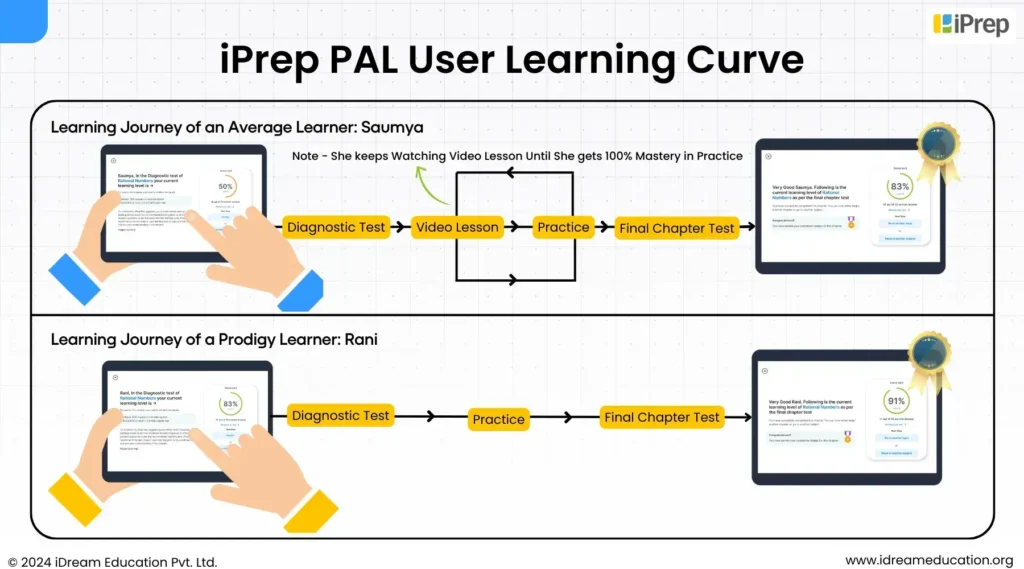
Read through the Example of 2 students Saumya and Rani to know how iPrep PAL Works

Image showing How Adaptive Learning Software Adapts to the Learning Needs of Individual Students

Learning Journey of an Average Learner: Saumya

iPrep PAL adapts to individual learning levels like Saumya, a 10th-grade student. She began with a diagnostic test on Rational Numbers in Math. After scoring 6 out of 12, the app presented Saumya with the option of focused practice or remedial video lessons. Saumya decided to first watch video lessons before engaging in practice sessions. Encouraged by her progress, she revisited the video lessons twice and eventually achieved a perfect score of 100% in her subsequent practice session.  She then attempted the final test and achieved 83% mastery. Saumya’s journey with iPrep PAL highlights how PAL guided her to achieve 83 % mastery through various steps. It can be said that with each practice session and video lesson, Saumya’s understanding deepened, leading to her eventual mastery of Rational Numbers. Like Saumya, students can achieve grade-level proficiency with the adaptive, supportive learning environment provided by PAL

Learning Journey of a Prodigy Learner: Rani

Rani, a 10th-grade student. She began with a diagnostic test on Rational Numbers in Math. She scored 10/12,  which is a good score at the diagnostic level. To help her achieve grade-level learning, the app offered a choice of targeted practice or remedial video lessons. Saumya chose to watch video lessons first and then practice. She got 100% at the practice level on the first attempt itself.  She then attempted the final test and achieved 91% mastery. 

Rani’s story with iPrep PAL shows how the app supports learners at every level. Even with a strong initial score, iPrep PAL recognized areas for further growth and offered custom content to help Rani achieve mastery. 

PAL holds immense promise as a beacon of hope, but it’s still in its very early stages. 

To fully realize this potential, we must address key challenges. Simply providing tablets and the PAL application will not get us to the desired results.

Here’s what must be prioritized:

  • Teacher Training: Teachers are the heart of the education system and it is our responsibility to train them to adapt to education trends. They need in-depth training on accessing student reports, interpreting the data, and personalizing their classroom instruction based on PAL insights. We must create an ecosystem where teachers are empowered to analyze and act.
  • Government Data-Driven Decision Making: Secondly, it is important to ensure accurate data reaches key stakeholders, and train them to translate it into actionable policy decisions. This will maximize PAL’s impact and drive better results.
  • Student Engagement is Key: The third and most important is to make the PAL application interesting by providing content beyond academics. PAL should be one comprehensive application offering growth content, and playful learning through simulations, stories, biographies, and more. Further, implementing partners should conduct weekly/monthly student engagement activities to make learning engaging and inspiring.

Why is Personalized & Adaptive Learning Needed?

Teaching is a one-to-many approach which limits the capability of teachers to cater to individual needs. This is where adaptive learning solutions can be a bridge to a problem. With PAL, teachers can help students overcome their learning gaps, provide timely interventions, and ensure no student is left behind.

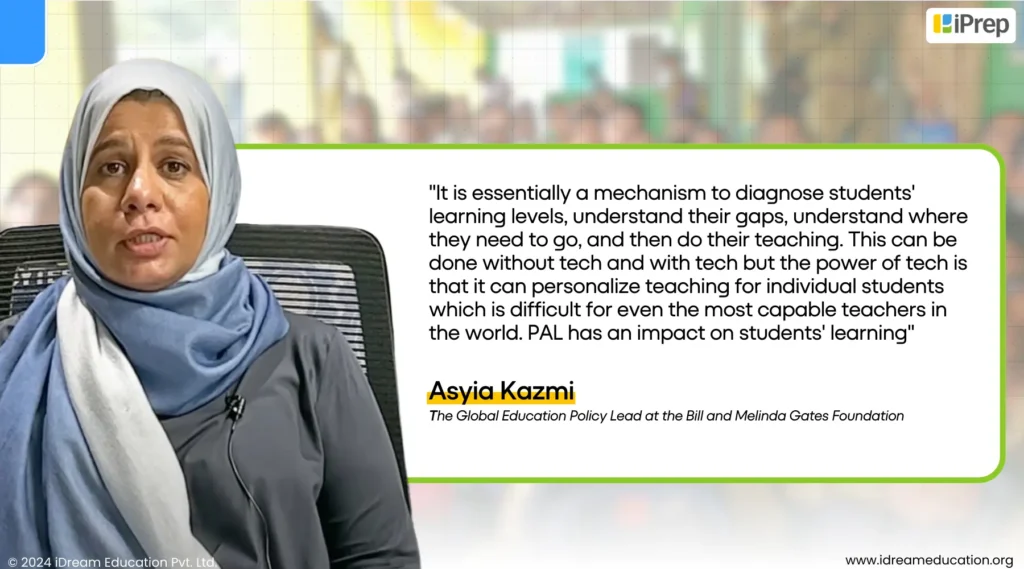
Understand the Need of Adaptive Learning from Asyia Kazmi, the Global Education Policy Lead at the Bill and Melinda Gates Foundation

It is essentially a mechanism to diagnose students’ learning levels, understand their gaps, understand where they need to go, and then do their teaching. This can be done without tech and with tech but the power of tech is that it can personalize teaching for individual students which is difficult for even the most capable teachers in the world. PAL has an impact on students’ learning”  said Asyia Kazmi, the Global Education Policy Lead at the Bill and Melinda Gates Foundation

Further, as per EdTech Tulna Research, there is evidence that PAL is an effective means of addressing the diverse needs of different learners. There is also a rich supply of PAL solutions in the Indian EdTech ecosystem.

The data regarding the use of iPrep PAL does not constitute conclusive research. These initial findings suggest a PAL Application can be a beacon of hope for bridging learning gaps and enhancing learning outcomes.

In case you would like to know more about our PAL Solution, visit our website. You can also write to us at share@idreameducation.org
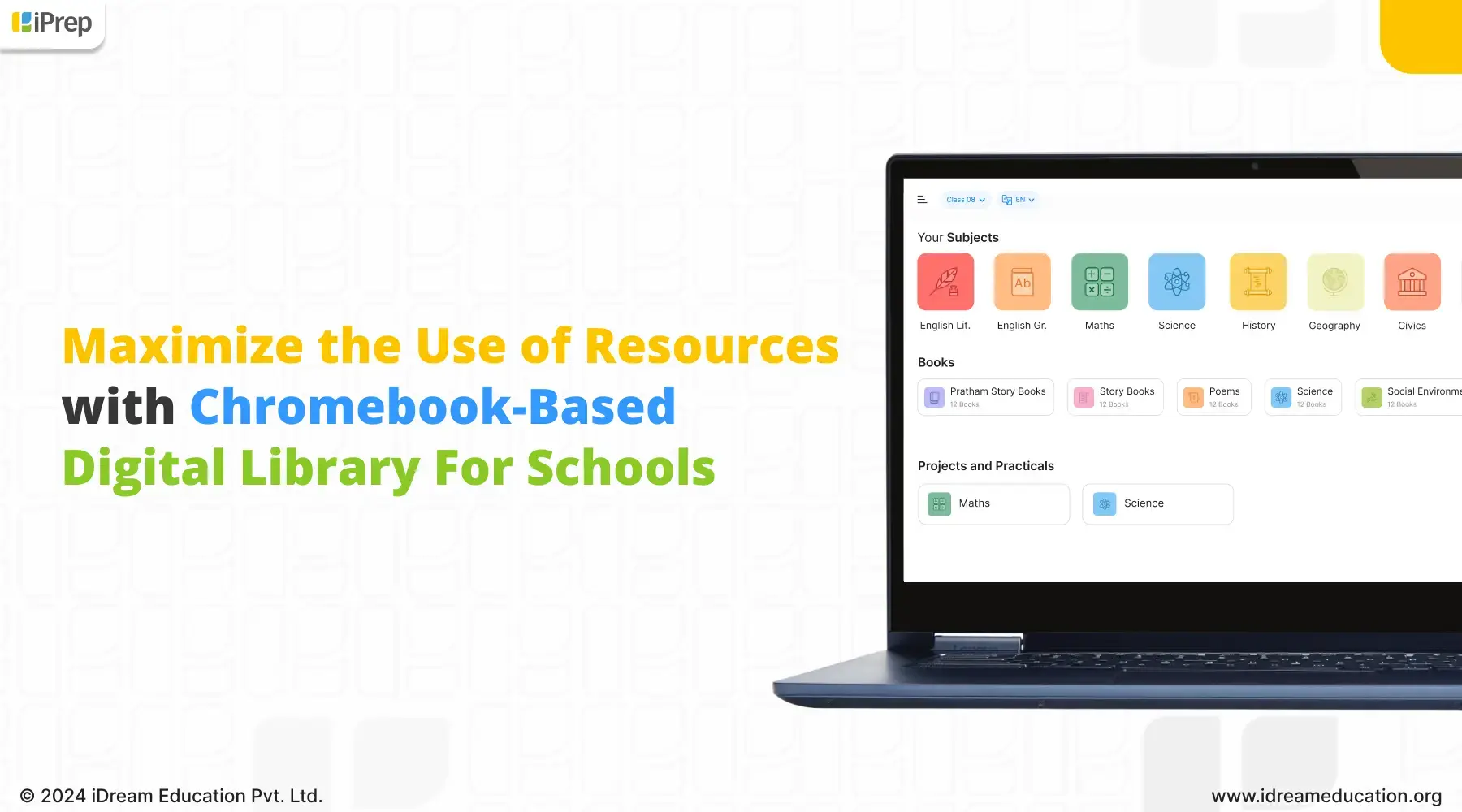
Maximize the Use of ICT Labs with Chromebook-Based Digital Library For Schools

An image highlighting Chromebook-based-digital-library-by iDream Education to maximize the use of resources in schools

The adoption of technology has experienced a swift evolution in recent years, spanning from traditional computer labs to projector-equipped smart classrooms, PC-Free smart classes, tablet-based learning, digital libraries accessible via tablets, and beyond. Despite these advancements, many teachers remain hesitant to fully embrace technology in their daily routines. 

A recent news article from Kashmir reveals a concerning trend: only 15% of teachers in Jammu and Kashmir (J&K) are trained in using computers for teaching. This limited training raises serious questions about the quality of education within public institutions. Out of 167,000 teachers in the Department of School Education, a mere 26,180 were trained in use of computers. Official figures reveal a huge lack of computer-based education training for teachers in pre-primary through higher secondary levels. Only 2037 pre-primary teachers are able to teach through at computers. This number increases slightly for upper primary (7852 teachers), but declines at the secondary (5083 teachers) and higher secondary (2272 teachers) levels.

In Addition, the research highlights:

Nearly 5000 government schools situated in remote and mountainous regions of Jammu and Kashmir face infrastructural gaps. The ‘JK Vision document 2047’ highlights that “Infrastructure gaps exist in 5000 schools located in remote and hilly terrain.”

Through our extensive work with teachers in schools across various districts of India, we’ve identified three reasons contributing to this resistance:

  • Difficulty in managing and using computers and its interconnected hardware devices
  • Lack of familiarity with technological devices
  • Insufficient training in incorporating technology into daily teaching practices

We’ve also built insight into how we can fix this.

The challenge extends beyond Jammu and Kashmir to all public schools in India, especially the ones located in remote regions. Many teachers face difficulty in managing and using computer-like devices, leading them to avoid regular usage. This issue is compounded by the necessity for interconnected devices, stable internet connections, uninterrupted electricity, and ongoing maintenance of the devices. 

Therefore, 

The aim should not be just to introduce teachers to new devices, but also to make sure they’re familiar with the ones they already use. Teachers have mostly switched from watching TV to using smartphones. They have not experienced using desktops or laptops in between. Many went straight from TV to smartphones, while some used basic phones before upgrading. So, most of them are comfortable with Android devices. That’s why our focus should be on enabling technology such as Android-based smart classes, or Tablet/Notebook/Chromebook-based digital library that they’ll find easy to adopt and use.

One way to achieve this is to set up a Tablet/Chromebooks-based Digital Library for Schools!

Why?

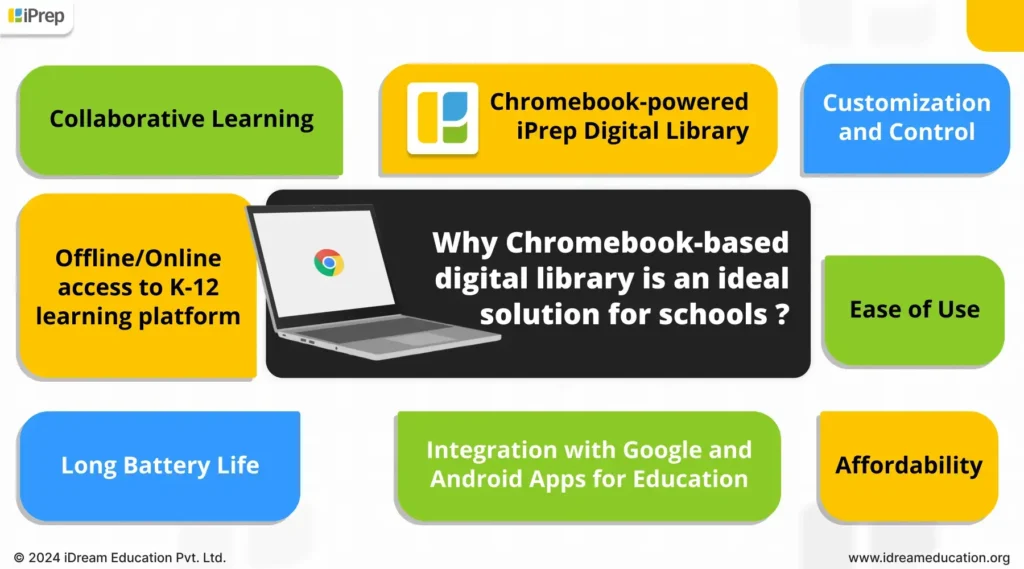
 Image showcasing the benefits of implementing Chromebook-based digital library in schools as emphasized by iDream Education

Ease of Use: 

Chromebook Laptops are designed with an intuitive and familiar interface and are low maintenance compared to computers. Further, the Chromebook can be enabled in an ICT Lab setup which is a Chromebook-based digital library that can be set up/moved to any classroom, hall, or lab. 

Long Battery Life

Chromebooks have long battery life and once charged, can be used for 7-8 hours, that is for the entire school duration without needing a power supply. This eliminates the need for continuous electricity,  allowing for uninterrupted learning. Additionally, the Chromebook-based digital library is set up with a charging rack that can simultaneously charge 20 Chromebooks using a single power plug. This capability allows the Chromebook-based digital library to be set up without requiring extensive wiring in any classroom.

Integration with Google and Android Apps for Education: 

Chromebooks seamlessly integrate with Google’s suite of productivity and collaboration tools, such as Google Classroom, Google Drive, and Google Docs. This integration simplifies tasks such as sharing assignments, collaborating on projects, and providing feedback to students. Further, Chrome OS, supports Android applications, offering versatility not found in Computer-based ICT Labs reliant on paid Windows operating systems. 

Offline/Online access to K-12 learning platform

Each Chromebook in the digital library comes equipped with the iPrep learning platform and preloaded offline K-12 content, ready for immediate classroom use. This offers schools a comprehensive digital library solution that seamlessly addresses the needs of students and teachers alike. This integrated approach empowers students with offline access to a multi-category curriculum-aligned content, fostering a joyful personalized learning environment in schools. Teachers benefit from a centralized resource hub, streamlining their lesson planning and enabling richer teaching experiences in classrooms.

Collaborative Learning

Individual Chromebooks at home or Chromebook-based digital library in schools support collaborative learning environments, where students can work together on projects in real-time using Google’s collaborative tools. This fosters teamwork, communication, and problem-solving skills among students.

iDream Education is a leading provider of Digital Libraries in India. If you wish to setup the best digital library solution, get in touch with iDream Education today.

Customization and Control: 

Chromebooks offer features that allow teachers and administrators to customize and control the devices to suit their specific needs. For example, schools can manage device settings, install or block apps and extensions, and enforce safe browsing policies through the Google Admin console.

Long-Term Affordability

Chromebooks are generally more affordable than traditional laptops or desktop computers as these are very low maintenance. This makes them more accessible to schools, education programs for corporates, and NGOs. We designed the Chromebook-based digital library to be easy to setup and use, making it suitable for schools with limited infrastructure, electricity, and internet. 

Chromebook-powered iPrep Digital Library

We’ve tested our iPrep learning platform on Chromebooks, ensuring smooth and seamless operation. Additionally, our new Chromebook charging rack solution simplifies setup, making Chromebook-powered iPrep digital libraries a viable option for schools across India.

The Chromebook-based digital library is designed keeping in mind the revision of ICT lab@Samagra Shiksha. It offers an affordable and highly effective way to personalize learning experiences in schools. By eliminating the complexities of computer-based ICT labs, teachers are empowered to focus on instruction, facilitating a more engaging, creative, and impactful learning environment.  

As a final note, we’d like to draw attention to

We digitized 128 classrooms in 10 Army Goodwill Schools in collaboration with the Indian Army (Northern Command). This digitalization included the implementation of smart classrooms, tablet-based digital libraries, and access to the iPrep mobile app for home learning. We also gave students access to the app for home learning during the COVID-induced lockdown when they could not attend school. With minimal training, teachers are consistently utilizing tablet-based smart ICT labs. This indicates that simplifying digital learning solutions according to teachers’ familiarity can reduce the necessity for extensive training. This further ensures consistent use of technology in classrooms. Further, we have a dedicated team in Jammu and Kashmir that continuously trains, coordinates, guides, and assesses the use of these digital learning solutions for teachers and students. They also measure the impact of digital content on the learning outcomes of students by conducting baseline and endline assessments.

iDream Education will be happy to contribute to Jammu & Kashmir’s vision for enhancing school infrastructure. 

If you’re planning to enhance the ICT Lab infrastructure of the school’s ICT, our Chrome-based digital library can be an ideal solution. Plan your education program with iPrep by writing to us at share@idreameducation.org

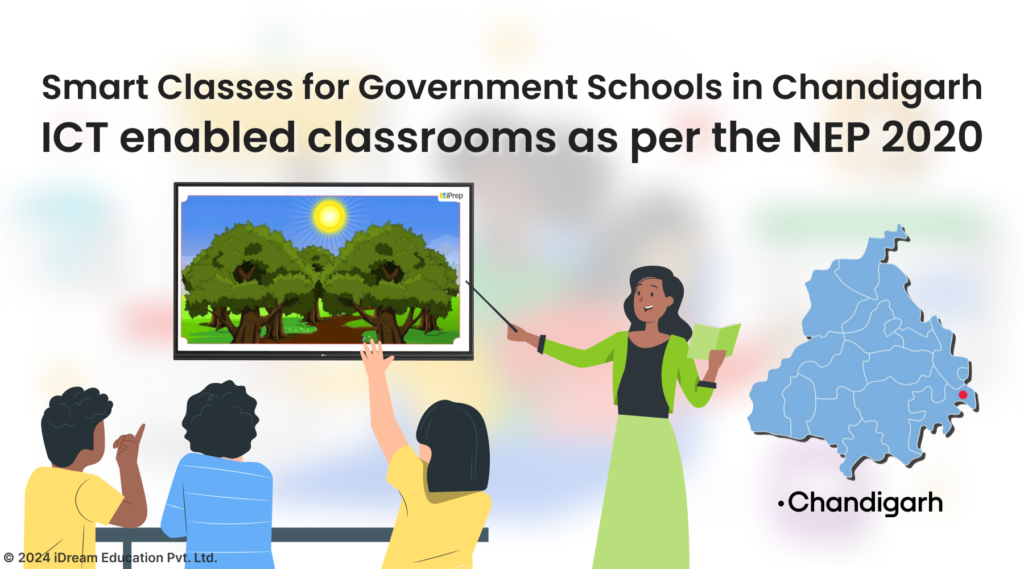
Smart Classes for Government Schools in Chandigarh – ICT Enabled Classrooms as per the NEP 2020

Smart Classes for Government Schools in Chandigarh - ICT enabled classrooms as per the NEP 2020

Gone are the days of passive learning for students of Chandigarh. The Chandigarh Administration is making significant efforts to empower students and teachers through smart classroom initiatives such as Chandigarh Smart City, Samagra Shiksha, and more.  These programs prioritize a student-centric approach, providing the resources and digital infrastructure to:

  • Create a technology-powered space where teachers can deliver engaging and practical learning. While, students can explore their creative potential, conduct/watch experiments, and learn through meaningful comprehension and collaboration. 
  • Equip and Enhance the Education System with State of the Art Amenities and Infrastructure. This is to involve students and teachers in a More Audio/Visual Learning

One notable case study is the Smart Classroom Initiative under Samagra Shiksha Chandigarh by the Department Of School Education And Literacy

This ambitious project is for 106 government schools where 201 smart classrooms have been set up with 65-inch Interactive Panels with OPS, and extensive multimedia educational content aligned with NCERT/CBSE curriculum for Classes I to XII in both English and Hindi, as per NEP guidelines. Additionally, the project prioritizes comprehensive teacher training on the seamless use of hardware and software. The initiative also includes project management support for a full five years (including a three-year warranty and a two-year AMC) to ensure long-term success and sustainability.

How these Smart Classes for Government Schools with Digital Content will improve teaching/learning effectiveness?

  • Uninterrupted learning with offline content: Teachers and students will always have access to multimedia educational content, even when the internet is unavailable.
  • All-in-one teaching-learning hub: Teachers have access to curriculum-aligned lessons, practice exercises, simulations, and other engaging resources on iPrep, a comprehensive learning platform.
  • Simple Content Navigation: Multimedia educational materials on iPrep categorized as per class and subject simplify navigation. This enables teachers to swiftly access content relevant to their grade levels and desired topics. 
  • Enhanced Learning Through Visuals: Compelling graphics within syllabus books and imaginative bite-size 2D and 3D animated video lessons as per curriculum break down complex concepts into easily digestible bites improving comprehension and deepening student understanding.
  • Access to Up-to-date Content: With iPrep’s content on smart class, teachers have access to the most up-to-date content through its auto-update functionality. The content on the smart class will get updated based on updates in the curriculum and teacher’s feedback. The content gets updated in small chunks whenever the device connects to the internet. This makes the latest resources available as per the vision of Smart Classroom Initiative of Samagra Shiksha, Chandigarh.
  • Interactive Teaching: The touch panel’s interactive feature gives teachers powerful control over multimedia content. This includes the ability to pause, highlight sections of interest, and resume video lessons as needed. This seamlessly integrates personalized teaching instruction with digital resources.
  • Teacher Training: Comprehensive teacher training is done on IFP Panels and iPrep smart class content. This is to facilitate regular integration of smart classes, promoting meaningful learning outcomes.
  • Equitable digital access: Smart class timetables in schools ensure equitable access to digital educational resources. This promotes a standardized learning experience across all classrooms.
  • Learning Analytics through Reporting Dashboards: All learning usage is recorded on reporting dashboards with access to all stakeholders of the Smart Classroom Initiative of Samagra Shiksha, Chandigarh. This is to empower them to assess and improve the effectiveness of the project. 

Smart classrooms are becoming a key project for digital education initiatives by the Govt due to their potential in enhancing the teaching/learning experience. 

By investing in smart classrooms, governments are showing their commitment to preparing students and teachers for a future where digital literacy and empowerment is essential.


Contact us at +91 7678265039, to know more about our smart classroom for your education initiative. You can also write to us at share@idreameducation.org
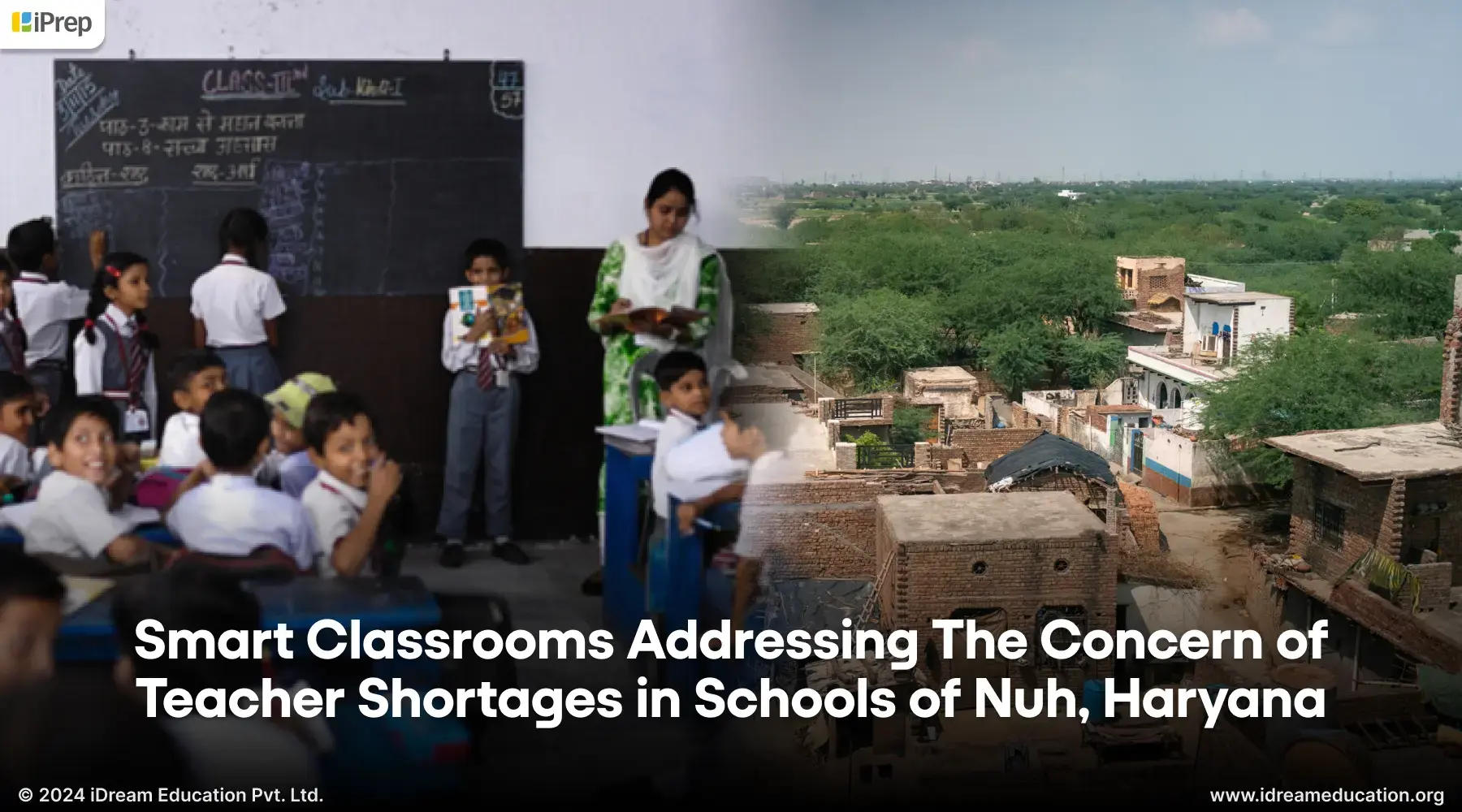
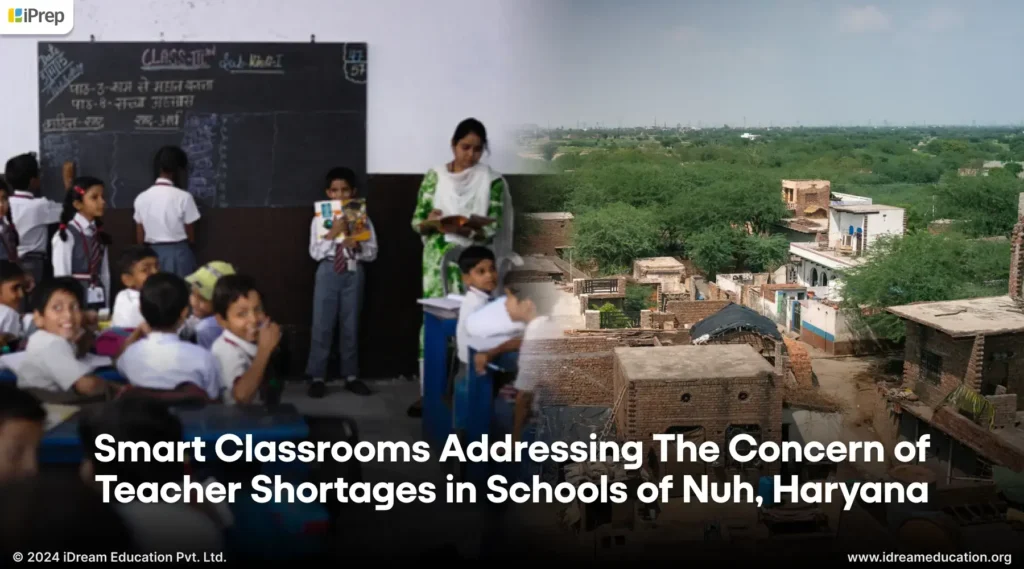
Smart Class Implementation Addressing The Concern of Teacher Shortages in Schools of Nuh, Haryana

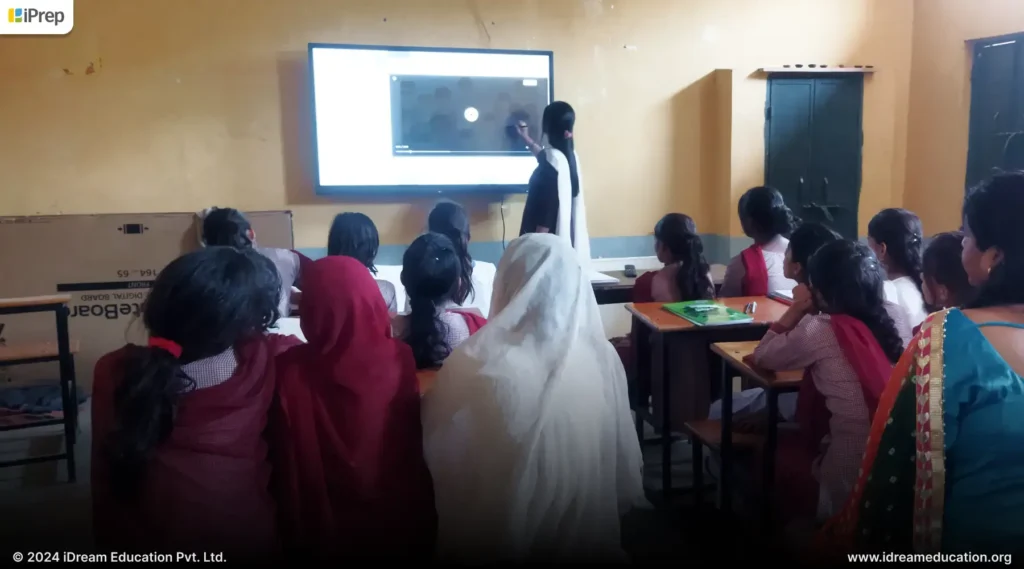
Image showing smart classroom set up in schools of Nuh, Haryana implemented by iDream Education in collaboration with M3M Foundation to address concern teacher shortages in the district.

The shortage of qualified teachers in Nuh, Haryana has raised significant concerns among parents, government officials, students, and members of the social sector dedicated to enhancing education in the region. According to reports, several schools in Nuh, a district of Haryana, are operating without a single teacher. Official records indicate that out of 17 primary schools in the district, accommodating 1501 students, none have any teaching staff. In one school, 411 students rely on the guidance of just one teacher. Furthermore, there are 21 secondary/senior schools with 3091 students but without any teachers.

High enrollment of students and the inadequacy of teachers in Schools of Nuh, Haryana

These alarming statistics of the high enrollment of students and the inadequacy of teachers deeply concerned the project coordinators and managers of M3M Foundation. These are the ones who work closely with the schools in Nuh, Haryana. They frequently notice students struggling with learning challenges, increasing the burden on existing teaching staff. Moreover, parents express apprehension about whether their children are receiving adequate education due to the lack of teachers.

Smart Classrooms To Address Teacher Shortages in Schools of Nuh, Haryana

To minimize the workload and provide assistance to teachers at the school, project coordinators of M3M Foundation have devised a plan to introduce smart classrooms in senior secondary schools. 

Why Smart Classrooms?

In schools where the teacher-to-student ratio is lower, smart classrooms play a significant role in optimizing the educational experience. Teaching, inherently, follows a one-to-many approach, where a single teacher imparts knowledge to a group of students. However, the integration of smart technologies elevates this by complementing the teacher’s ability to engage students and help them comprehend and retain concepts. Further, smart classes often rely on pre-recorded lessons, interactive modules, and well-structured curriculum-aligned content. This ensures that all students receive the same high-quality instruction, regardless of individual teacher variations.

Smart Class Setup in 10 Schools of Nuh, Haryana Addressing Teacher Shortages in Schools of Nuh

Image depicting a teacher training by iDream Education to use an Interactive Flat Panel (IFP) for smart class teaching

To integrate smart classrooms, the M3M Foundation partnered with iDream Education and introduced smart classes on 65-inch LG Interactive Flat Panel (IFP) screens preloaded with educational content tailored to students from grades 1 to 12, aligned with the NCERT curriculum in both Hindi and English. Additionally, to enable teachers with personalized devices for lesson plans, tablets containing the same content in each school have been given. This is to empower teachers to prepare lesson plans and synchronize their teaching with the smart class.

How Smart Classes are benefitting teachers, students, and parents?

Teachers:

  • Smart classes free up teacher time and maximize effectiveness. The seamless integration of smart class content with existing textbooks allows teachers to multitask. They can facilitate active video-based learning in one class while providing focused instruction in another.
  • Visual-led teaching enhances the overall classroom experience. It is becoming easier for teachers to help students comprehend complicated concepts more clearly and in less time reducing the need for lengthy explanations. This translates to shorter, more effective lessons and the capacity to teach even more classes within a day.

Students:

Parents:

  • Parents expressed satisfaction with the school for embracing technological advancements to address the shortage of teachers and integrating smart class devices into the learning environment.

Thoughts of Coordinators of M3M Foundation 

From the regular communication of M3M Foundation coordinators with teachers and students, we know teachers and students are really enjoying the smart class content, especially practicals.  Science experiments are usually tough to explain in theory and can not be performed in schools without science labs. But with smart classes, students are learning by watching these experiments on screen. It makes learning easier and helps them understand the chemical formulas and equipment better. 

To Conclude

Implementing smart classes is just the first step in our journey to support schools in delivering quality education, even with staffing limitations. We’re committed to continuous improvement, working closely with teachers to ensure they are using smart classes in the best possible ways.  

Keep an eye out for further developments  in our next update
In case you would like to know more about our smart classroom for your education initiative, visit our website. You can also write to us at share@idreameducation.org
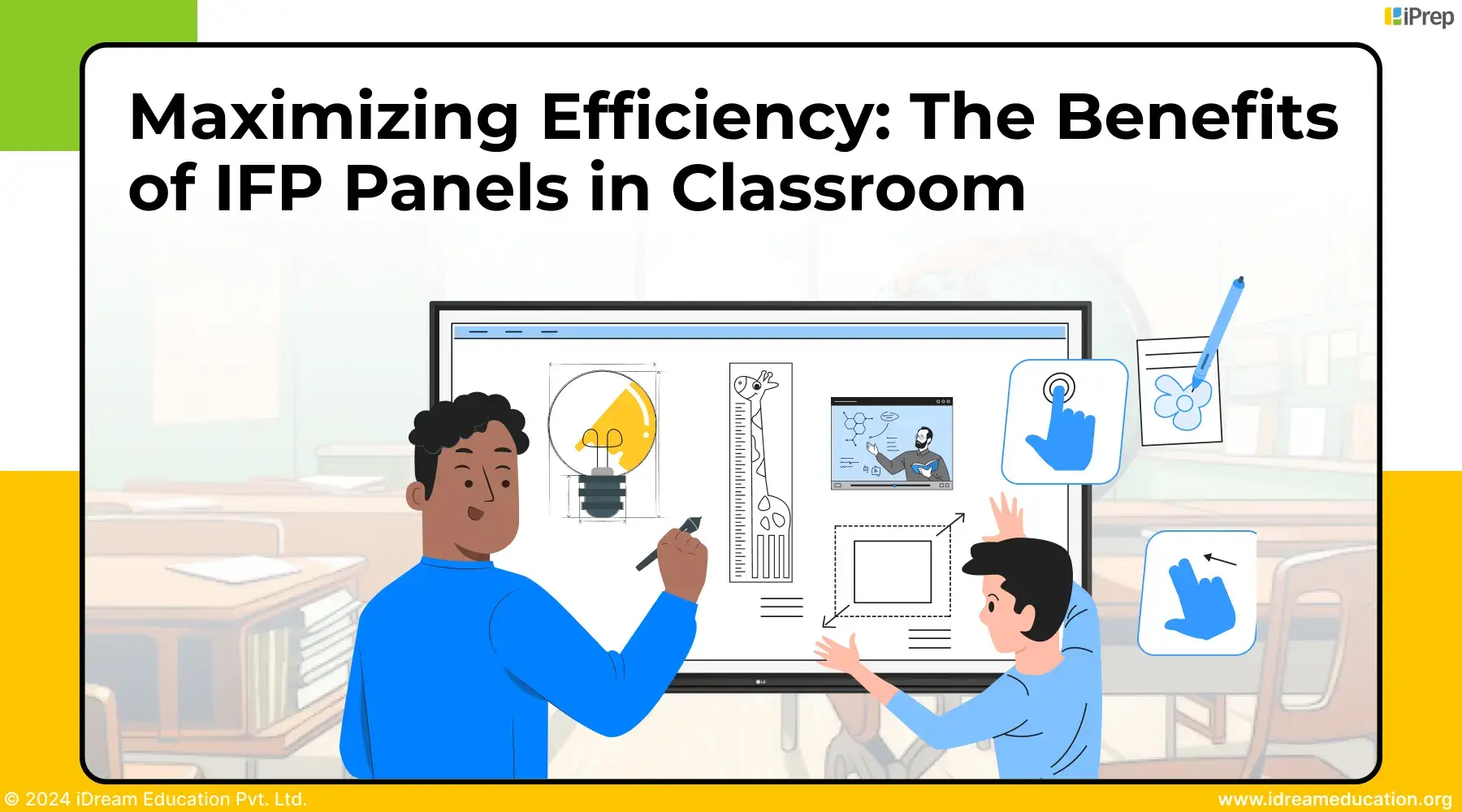
Maximizing Efficiency: The Benefits of IFP Panels in Classroom

Know what teachers have to say about the benefits of IFP panels in classrooms! Find out why IFPs are the ultimate choice for digital education initiatives.

An image depicting a classroom setting with an interactive flat panel (IFP)

It’s no secret that students today are easily distracted and teachers often struggle to keep them engaged in learning. However, with the increasing integration of technology in the classroom, teachers now have access to innovative solutions to cope with challenges such as student engagement and uniqueness in classroom instruction. Interactive flat panels (IFPs) are at the forefront of this technological revolution. An Interactive Flat Panel is also known as Interactive Digital Board. These touchscreen devices are similar to televisions in appearance but far more interactive, enabling a dynamic learning experience. 

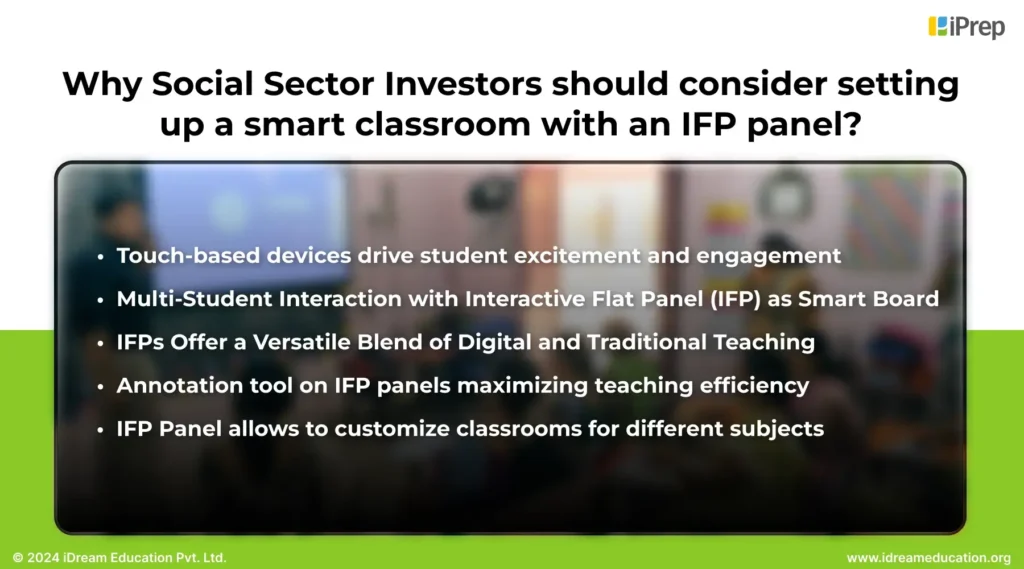
Why Social Sector Investors should consider setting up a smart classroom with an IFP panel?

Benefits of IFP Panels in Classroom -Exploring Insights from Teachers 

Photo highlighting benefits of IFP Panels in Classroom outlined by teachers

Touch-based devices drive student excitement and engagement:

Teachers consistently observe that interactive flat panels (IFPs) with touch-based interfaces lead to significant excitement among students. Teachers say, “Students in our schools had limited exposure to large screens and touch devices.” Consequently, when IFP panels were introduced, their excitement to interact and explore IFP Panels and its various features increased. Students feel happy while engaging and learning through IFPs in the classroom. One of the benefits of IFP panels in a classroom is increased energy and focus of students in learning.

Multi-Student Interaction with Interactive Flat Panel (IFP) as Smart Board

Another benefit of IFP panels in classrooms is the capability to turn them into smart boards. Large, multi-touch display of an IFP or a digital board, function like smart boards, enabling multiple students to simultaneously interact with content. This allows teachers to plan exercises and games where students can write answers, draw images, write tables, and engage in other hands-on learning activities. This way, “Our entire class remains engaged and connected to the classroom learning, leading to improved performance”, said one of the teachers from schools of Noida where we had implemented iPrep Digital Class on the IFP panel.

IFPs Offer a Versatile Blend of Digital and Traditional Teaching

Teachers greatly appreciate the ability to use a pen on the IFP panel screen, as it allows them to integrate multimedia teaching resources and smart boards seamlessly. In our interactions with teachers who have adopted interactive flat panels, we’ve observed their enthusiasm for leveraging tools like iPrep, a preloaded learning platform on the IFP, to enhance their lessons. They frequently use video lessons from iPrep, pausing at key moments to elaborate on concepts independently. This interactive approach enables them to provide personalized explanations by pausing the video, highlighting specific aspects, and then resuming the video. Thus, they maintain the personal touch of their teaching with technology. This underscores one of the key benefits of IFP panels as a smart teaching tool, combining the advantages of multimedia resources with personalized classroom instruction.

Annotation tool on IFP panels maximizing teaching efficiency

Many teachers using IFP Panels implemented in their schools have discussed the benefits of using annotation tools that turn interactive flat panels (IFP) into smart teaching boards. With the annotation tool on the IFP, teachers are finding it easier to illustrate various concepts during explanations. For instance, they can effortlessly use mind maps to explain the flow or processes of concepts. Further, using elements like shapes, rulers, and compasses facilitates an easy explanation of mathematical figures and concepts. One of the teachers from the school of Noida said, “Previously, ensuring accuracy in drawings, particularly concerning lines and angles, was time-consuming. However, with the use of elements such as mind maps, figures, and shapes through the annotation tool on the IFP panel, we can now draw and explain more efficiently.” This not only simplifies the teaching but also enhances engagement for students, who are called forward to present their learning.

IFP Panel allows to customize classrooms for different subjects

Several teachers appreciate the option to incorporate varied subject backgrounds on the board, such as Math, English, Hindi, and Music. “Using the smart board’s background feature enables us to customize the classroom environment for different subjects”, said one of the teachers using an IFP panel. She added, “We leverage this functionality for conducting writing exercises. This we especially do with students in lower grades. This brings them great joy as they eagerly participate and practice writing on the board.” Using a smart class setup enhances overall class engagement and makes students want all of their classes to be conducted in the smart classroom.

IFPs Becoming cost-effective digital education solution for Social Sector Initiatives?

  • IFPs (Interactive Flat Panels) are becoming increasingly cost-effective for smart classrooms. While premium brands offer high-quality products and superior service, emerging brands provide more affordable options. To bridge the service gap, companies such as iDream Education offer comprehensive on-site support, teacher training, device monitoring, timetable preparation, progress tracking, usage updates, and more.

With the numerous benefits of IFP Panels classroom, it is also an affordable way to integrate touch IFP panels in classrooms. Just a few years ago, smart TVs were the standard for budget-friendly smart classrooms. Now, IFPs are a budget-conscious way to integrate a premium smart class experience. Further, it helps NGOs, corporates, PSUs, and other ecosystem partners drive the meaningful impact of social sector education initiatives.

To conclude,

The seamless integration of whiteboard functionality and access to dynamic digital content makes IFP Panels a popular choice for social sector investors. This means teachers can use them for writing and showing digital content without switching the modes of teaching. This explains their rising popularity among NGOs, corporates, PSUs, and forward-thinking investors who are looking to invest in technology-enhanced education.

If you want to buy IFP panels for your Education Program, contact us at +91 9501110665 or write to us at share@idreameducation.org
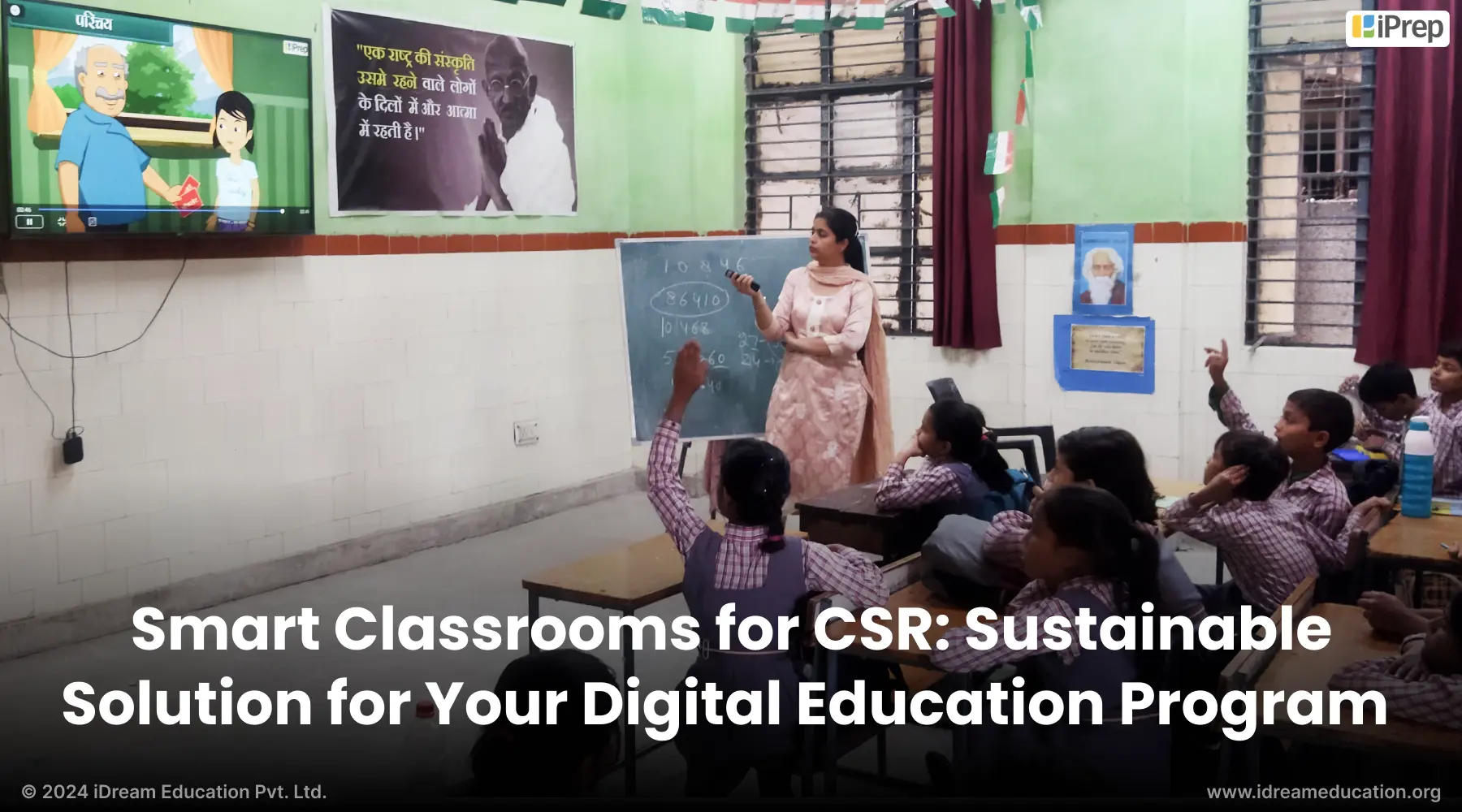
Smart Classroom for CSR: Sustainable Solution for Your Digital Education Program

In our last blog, we discussed how NGOs and CSR initiatives can build sustainable digital programs. Through this blog, we’ll explain why a smart classroom for CSR is a sustainable solution for your digital education program.

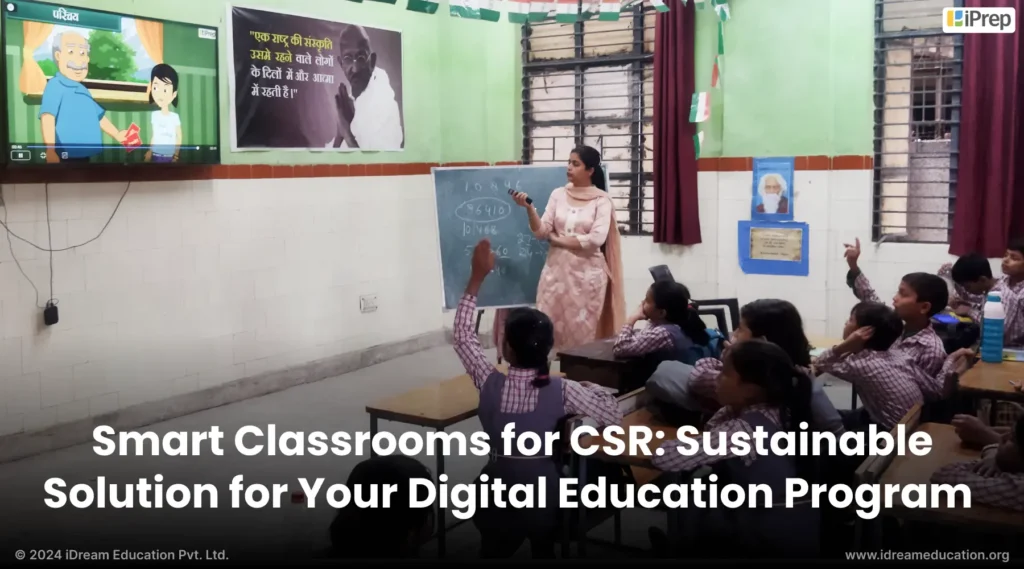
 Image depicting setup of the smart classroom for CSR education projects by iDream Education

Smart classrooms have become common in schools across India. This is due to the increasing focus of government, corporate, hardware companies, and NGOs on integrating technology in schools. Recently, smart classes have been getting even more focus from social sector investors. This is because of the mention of smart class integration in PM Shri Scheme. For stakeholders looking for easy-to-set-up, manage, and use solutions, Smart Classrooms for CSR offer an exciting way to blend technology and education. 

Need for Sustainable Solution for Your Digital Education Program

The exponential growth of technology has made educational resources much more accessible. This breaks down geographical and psychological barriers, allowing for diverse demographics to pursue learning opportunities. Therefore, sustainable solutions in digital education programs are needed to ensure that technology is smoothly integrated into existing educational frameworks. While choosing sustainable smart classroom for CSR, the program heads should prioritize user-friendly interfaces, easy-to-manage and maintain hardware, and access to relevant content.  

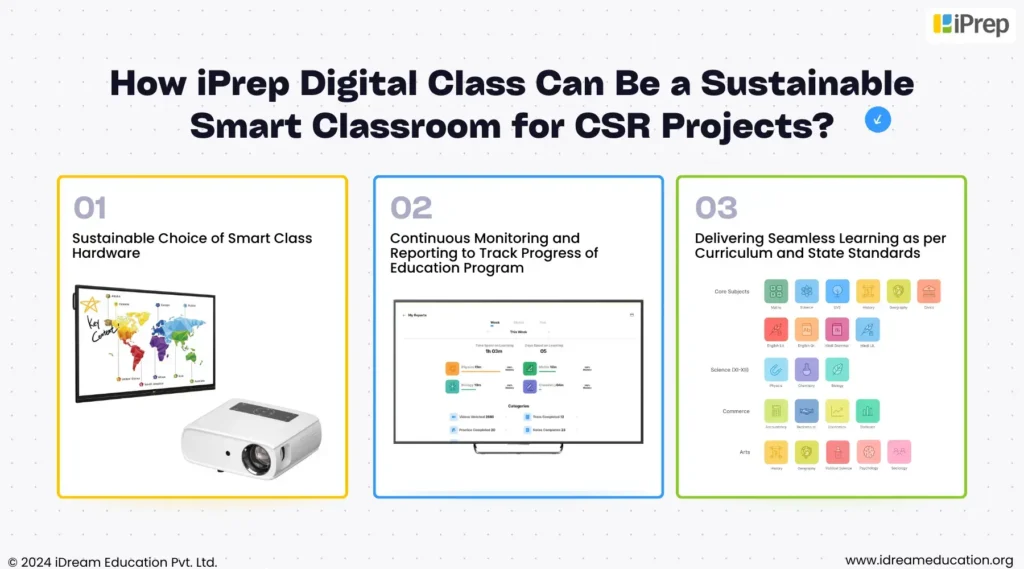
How iPrep Digital Class Can Be a Sustainable Smart Classroom for CSR Projects?

iPrep Digital Class by iDream Education, a sustainable smart classroom solution for CSR education projects

Sustainable Choice of Smart Class Hardware

iPrep Digital Class, a smart classroom solution is designed to seamlessly integrate with leading Smart Class hardware, including Smart TVs, Interactive Flat Panels (IFPs), and Projectors. 

Explore Further

  • Among these options, the Interactive Flat Panel emerges as the favorite choice of hardware for smart classrooms for CSR projects. Its integration of interactive whiteboards and other features transforms it into a comprehensive teaching tool for teachers. The sustainability of the Interactive Flat Panel (IFP) stems from its Android-based platform, interactive whiteboard, ability to record and share lessons, and more. Teachers’ familiarity with Android devices enables seamless integration into their teaching routines. Interactive whiteboards simplify classroom explanations through the use of shapes, mind maps, diagrams, and more. Additionally, teachers can save lessons for sharing with students on their parents’ devices, facilitating revision sessions. 
  • Enabling iPrep on smart class hardware makes smart classroom solutions a sustainable choice. This is because iPrep’s intuitive user interface is rooted in Universal Design Principles, promoting effortless navigation. The interface meticulously organizes content into user-friendly categories, ensuring teachers can easily find materials tailored to their classes and subjects. Each section of iPrep fulfills distinct teaching purposes, empowering teachers to swiftly access desired content. Furthermore, navigating iPrep becomes more seamless with the language of the category. Furthermore, when teachers transition to their preferred language, they not only see curriculum content in that language but the entire platform as well. This makes the user interface suited for teachers of different states. 

Explore the impact of Smart Class technology, paired with an Interactive Flat Panel, on teachers’ daily routines in this video: https://youtu.be/ahS30k2lltw?si=-ll-PSn8TcMlFr2p 

Delivering Seamless Learning as per Curriculum and State Standards

iPrep on any smart classroom hardware/OS offers access to curriculum-aligned digital content for grades 1-12, across all subjects. This content includes animated lessons, practice with instant feedback, practicals, syllabus books, assessments, life skill content, and more for the holistic growth of diverse student populations. 

Explore Further

  • Even with limited internet, the automatic updates for teachers make iPrep Digital Class a sustainable solution for your digital education program. We have developed a capability to keep teachers equipped with the most up-to-date content through an auto-update functionality. The content on the smart class starts getting updated in the background whenever the device connects to the internet, making the latest resources available. Even schools with limited internet access to offline content on Pendrive/OPS can take advantage of updated content. They just need to check and accept update notifications. Then, iPrep’s small-chunk update capability starts updating learning material. This solution guarantees that teachers, even in remote locations, have access to current and relevant content that aligns with curriculum and state standards.
  • We also prioritize the holistic development of students and adhere to the educational objectives set forth in government schemes and by social sector investors for their program. We do this by enabling curated and created custom content covering various thematic domains including health, safety, and sanitation, catering to specific student demographics. This approach fosters the holistic advancement of students and fosters a culture of inclusivity in school.

Continuous Monitoring and Reporting to Track Progress of Education Program

The smart class reporting dashboard is designed and developed to provide officials and school administrators with real-time updates on various metrics such as overall solution usage, usage by class, school, and category, among others. Its purpose is to ensure stakeholders stay informed about the program’s impact, facilitating adjustments or targeted actions to maximize effectiveness.

Explore Further

  • All usage reports are securely stored offline. These reports seamlessly synchronize with cloud-based reporting dashboards whenever the smart class device connects to internet. These reports can easily integrate with any Management Information System (MIS) or Command Control Center. This ensures continuous focus on data-driven learning outcomes, making iPrep smart classroom solution sustainable for social sector education programs.
  • To maintain transparency and facilitate informed decision-making, we can implement an automated system to send regular usage reports to stakeholders. Further, we can send these reports on a daily, weekly, or monthly basis to provide valuable insights into smart class usage patterns, trends, and potential areas of optimization. This ensures proactive communication with stakeholders on project usage which then helps them analyze and make strategic decisions. One of the examples of this is the e-Adhigam Haryana PAL initiative, where we have enabled our PAL solution on tablets. The usage and learning outcomes data of every student is deeply tracked through a central reporting dashboard and is shared daily with officials for impact assessment and tracking.

Plan your Digital Education Program with iPrep Digital Class

iPrep Digital Class,  a smart classroom solution, is a beacon of sustainability for digital education initiatives undertaken by CSR, NGOs, PSUs, and other stakeholders. By embracing iPrep, you will not only advance your educational agendas but also contribute tangibly to a more sustainable future, fostering a generation empowered with unlimited learning opportunities.

If in case you would like to know more about our smart classroom for your CSR project, visit our website. You can also write to us at share@idreameducation.org