We've received your request! Our team will be in touch within 24 hours to confirm your demo and discuss your
needs. We look forward to connecting with you!
Educational App Amid Pandemic For School Students for Non-stop Learning
When COVID stuck, and the lockdown happened, there was no source of learning for students in Kashmir for whom we had just set up an iPrep Digital Library which is a tablet-based digital library, and iPrep Digital Class a smart class solution on Interactive Flat panels (IFPs) in their school. Because immediately after setup, a lockdown happened, schools closed, and the principal and teachers worried about how they would ensure student continuity in learning.
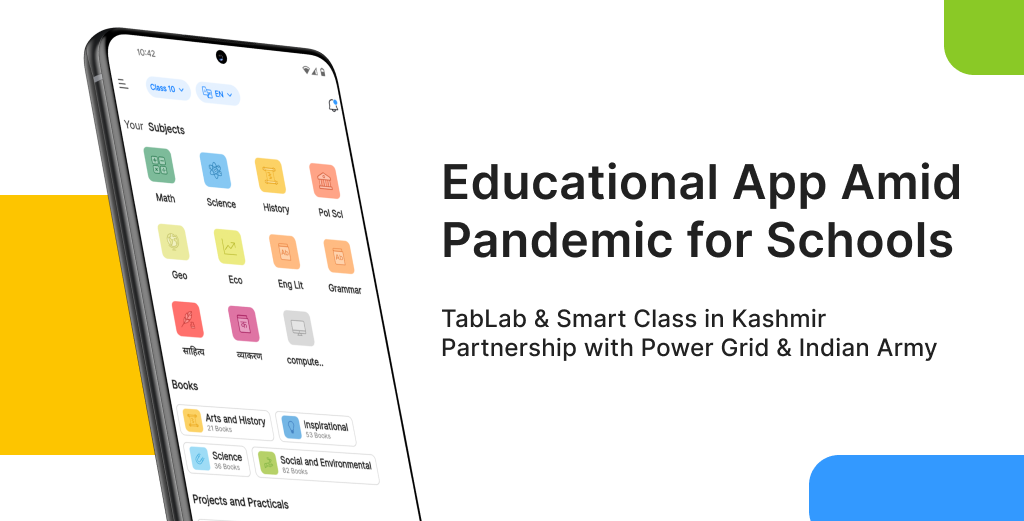
During this time, we at iDream Education took a call to give students access to the iDream Learning App which is now called the iPrep Learning App through a network of teachers. Teachers were happy to share it through the Whatsapp group they have with parents. Students happily downloaded the app on their parent’s smartphones and were able to learn from home. This way, we made our educational app reach thousands of students in 10 regions of Kashmir.
Because of the availability of the iPrep learning app at home, students continued to learn with all-time teacher guidance.
Reduced Learning Gap
When students returned to school after 2 years of lockdown, they continued learning at the same pace with the help of TabLab implemented in their schools before lockdown.
How did we achieve this impact?
On the iPrep Learning app, we gave students access to the same content that students have been learning in school. As a result, they very easily continued learning from home. Also, it was easy for teachers to recommend videos and practice from the app because it is in sync with the lesson plan they were following in school. The added advantage of the app to students was access to content for junior classes.
Many students switched to the content of the junior class and motivated and engaged their younger siblings in learning. Another advantage of home learning was an increase in parents’ engagement with their kids and learning. During an online session with students, we found out that they had started storytelling. They first read inspirational books and stories from life skill content and then share the same with their parents in their leisure time. Through this, we saw many learning from junior class content, and many students involved in life skill content, and all this was possible because they got a chance to learn in a non-judgemental environment with the learning app at home.
Here to one of the teachers from AGS in Wayne Kashmir
“…During covid lockdown in May 2020, we encouraged parents to install the iDream learning app which is now called the iPrep Learning app to maintain continuity in their child’s learning. With this, we noticed that 70 % of students learned from it regularly at their own pace. With this, we realized the importance of a learning app that has everything required to meet the diverse learning needs of students…”.
– Principal Tariq Ah Tariq Ji
When the lockdown ended & students came back to school, they started using tablets, and teachers started teaching through Smart Class. However, the iDream Education’s learning app which is now called the iPrep App ensured that from lockdown to students returning to school, there is continuity in student learning, and no students suffer a learning gap.
If in case you would like to know more about our digital learning solutions, comment below or write to us at share@idreameducation.org
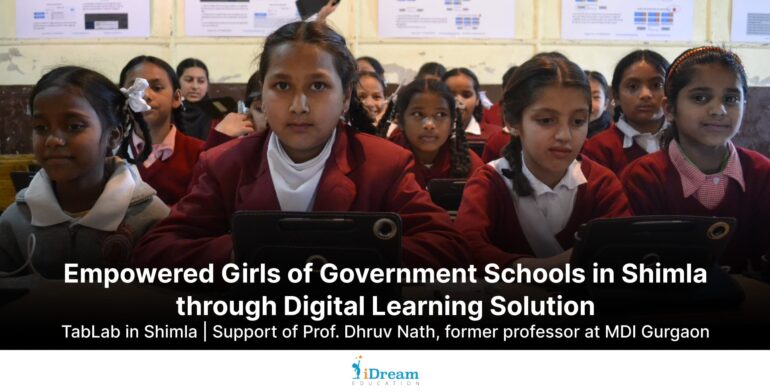
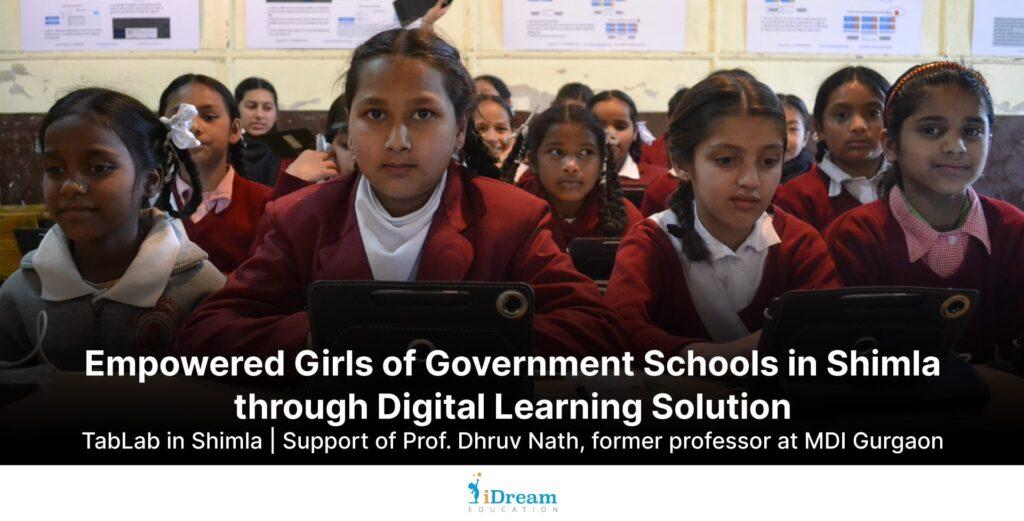
Setting up iPrep Digital Library – tablet based ICT lab in the schools of Shimla, holds a special place in our hearts. Here, we met a number of inquisitive girls who wanted to learn, grow and thrive. As soon as our team reached the school to set up a digital library with tablets. They came across various issues the girls face in their regular learning routine. Teachers mentioned,
“…we have monitors and smart panels in our school, but only 2 or 3 of them work. We even report the issue to principals, but it takes time for technicians to visit us and fix our computers because our school is located at a high altitude, and it is difficult for them to visit us in every ten days…”.
On the other hand, girls shared that they access youtube on their parent’s phones to see videos of lessons that are hard to understand. However, a few girls also mentioned that because their parents do not have smartphones or internet connectivity on their phones, therefore they are unable to learn through videos and visuals.
At this time, we knew that collaboration of iDream Education with local school authorities of Shimla to set up TabLab, would give them all they were looking to improve their learning.
Was it easy for us to set up a digital library with tablets in such a high-altitude region?
Digital Library with tablets is TabLab which comes with a tablet charging trolley & storage rack. It requires no extra space, furniture, or wiring to set up. In no time, our team, with the help of students, was successful in placing TabLab in their schools.
Here is one incident from one school in Shimla
The school was located at a height where transportation was risky. But because TabLab is a 3ft trolley of 30 Kg, 5 students from the school came, picked up the tablet trolley, and placed it in the school.
This way, we were successful in establishing an uninterrupted source of learning. Now, with the help of a tablet and enjoyable learning content, girls can learn, grow and break the conventional norms of society.
Key Components of the Implementation
1 TabLab with 20 learning tablets designed to be used by 100 students on a rotational basis.
Android tablets with earphones and a book-style protective cover. Every tablet had an SD Card preloaded with digital content aligned to HP Board in Hindi, making it easy for teachers to integrate their lesson plans with the digital content available on the platform.
To suit the different learning styles of students, tablets are given with multiple categories of digital content. The content is in the form of animated video lessons to build concepts. Digital syllabus books to refer to anytime. Further, there are notes for quick revision, and DIY project videos for practical and fun learning,
Apart from videos, we also gave girls access to a comprehensive digital book library with 1000s of books on stories, poems and biographies for their holistic growth.
We also provided topic-wise MCQ-style practice questions to help girls achieve mastery in every topic they learn.
Centralised reporting dashboard to track content usage and derive students’ progress and then personalise learning for them.
Girls showed a remarkable change in their learning
In no time, girls made tablet based learning a part of their daily routine. They successfully quenched their thirst for knowledge and growth. Now, when they could learn anytime, anywhere in the vicinity of school because the entire content was offline. Many girls started staying back and using tablets after regular classes to revise lessons taught in class. Teachers were also happy to support these girls in learning from tablets because the content was aligned with their curriculum.
As a result, many girls choose fancy DIY project videos for practical learning and created working models. One such girl is Meenal Kashyap, who prepared working models of Area of Triangle (Maths) and Electric Circuit (Physics); for this, she won a district-level award by participating in a Scientific Activity Corner in the Himachal Pradesh Children Science Congress. It was a remarkable achievement because such a thing was unheard of in the school.
We Believe
“Technology has the potential to achieve universal quality education and improve learning outcomes.”
If in case you would like to know more about our digital learning solutions, comment below or write to us at share@idreameducation.org
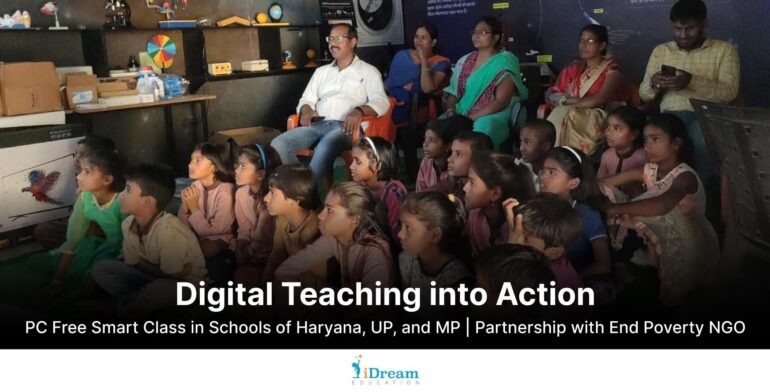
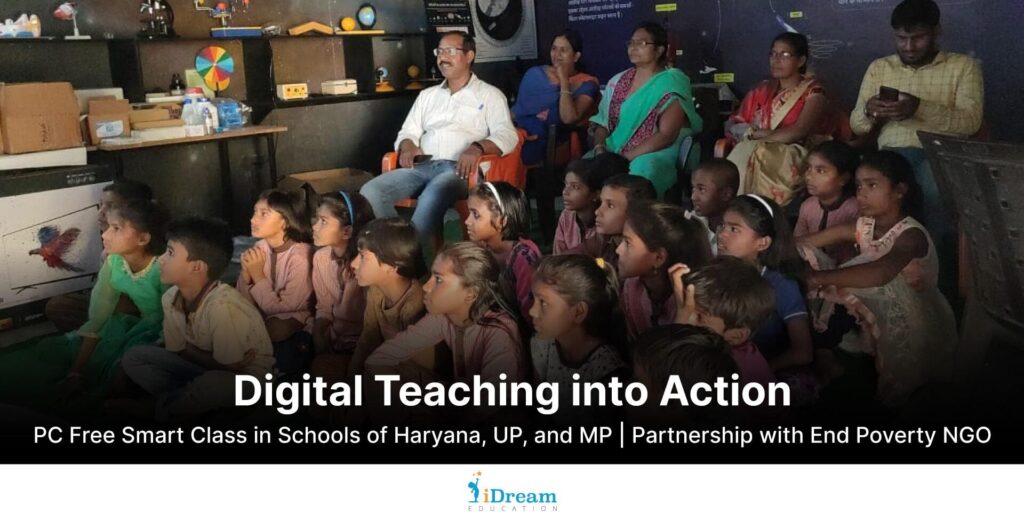
Govt. Sr. Sec. School Nangal Jamalpur in Rewari, Haryana, has had a computer lab for many years but is not used regularly. The time we visited schools, most desktops were covered in dirt, and some were kept like scrap. When enquired, teachers said that it is too complex to take students to the lab room every day. If we manage to do this, then it takes half of our time in switching on computing equipments. They say it is much simpler to use a blackboard and a textbooks. They say, “…we understand the significance of teaching through digital content to make teaching engaging, still find it difficult to take students to lab room…”
After listening to this, project coordinators of End Poverty NGO wanted to allocate resource more precisely.
What did they do?
This is when the NGO collaborated with iDream Education to implement iPrep Digital Class in Government schools across 16 districts of Haryana, Madhya Pradesh, and Uttar Pradesh.
In the school mentioned above, teachers asked us to set up Smart class in their Chemistry Lab. When we visited them the second time after the training, it was fascinating for us to see the teachers showing the experiment on the big screen while students simultaneously doing the same experiment in the lab.
Re-envisioning teaching through digital adoption
This one pattern emerged across all the schools supported under this project. Digital has become a natural part of teaching, and the hardware along with the digital content has begun to be used regularly by the teachers for experimental videos, academic video lessons, and also for tracking their own usage of digital content through a reporting dashboard. This project successfully eliminated the infrastructural and psychological challenges that limit the use of technology by teachers.
But how did this happen?
Unlike a computer lab or a conventional smart class setup that requires a lot of accessories, iPrep Digital Class is a single equipment Smart Class that is set up using either an Interactive Flat Panel Display or Smart TV for classrooms.
In this implementation with End Poverty NGO, a 50inch Mi TV has been used for which we just need a wall in the room or lab to hang the TV with one stand and 4 screws. It is a simple setup process that the local electrician can easily perform in less than 30 minutes.
Reaction of Teachers
When teachers experienced such ease in setup, it suddenly made them think that if it is this easy to set up, it should not be too difficult to use and manage either. And that’s exactly what they witnessed when we visited the school for training. Just like they use the TV at home, in a similar way, they access the education TV in their school and used digital content with their remote in front of us.
One teacher at the end of our training came forward and said,
“…Oh, with content, its display is also in Hindi. Glad! I would be able to navigate through it very easily; as you can see, the settings on my phone are also in Hindi….”
Therefore, we say iPrep Digital Class fits in the natural psychology of teachers using a TV in their homes. On top of that, all digital content is made available OFFLINE, removing their dependence on the internet; they don’t have to spend time searching for relevant study material. They just plug the Pendrive, play their lesson videos, and teach through it.
The Result
Teachers no longer resist using technology for teaching. In fact, they have happily supplemented their classroom teaching with digital content provided in the Smart Class setup. Regular usage with no hassles has enabled them to increase classroom engagement. They now strongly believe that they would also be able to achieve improvement in educational outcomes.
At iDream Education, we continue to support schools, students and teachers through our different digital learning and teaching solutions. Additionally, we keep in regular touch with them by sharing usage data with them every month, which helps the school principal to help them evaluate teachers’ contributions in every class, identify challenges and organise repetitive training whenever required.
If in case you would like to know more about our digital learning solutions, comment below or write to us at share@idreameducation.org
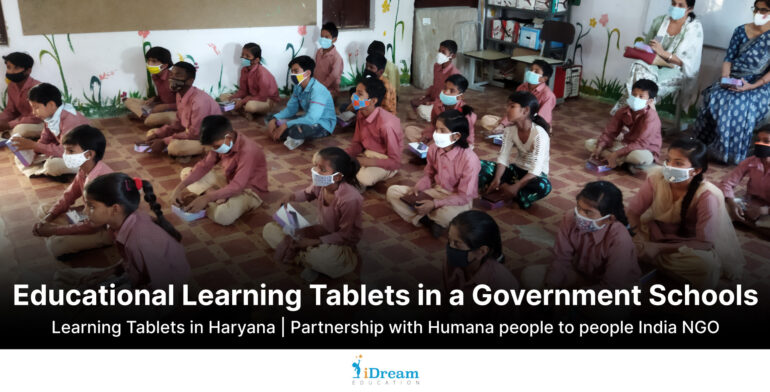
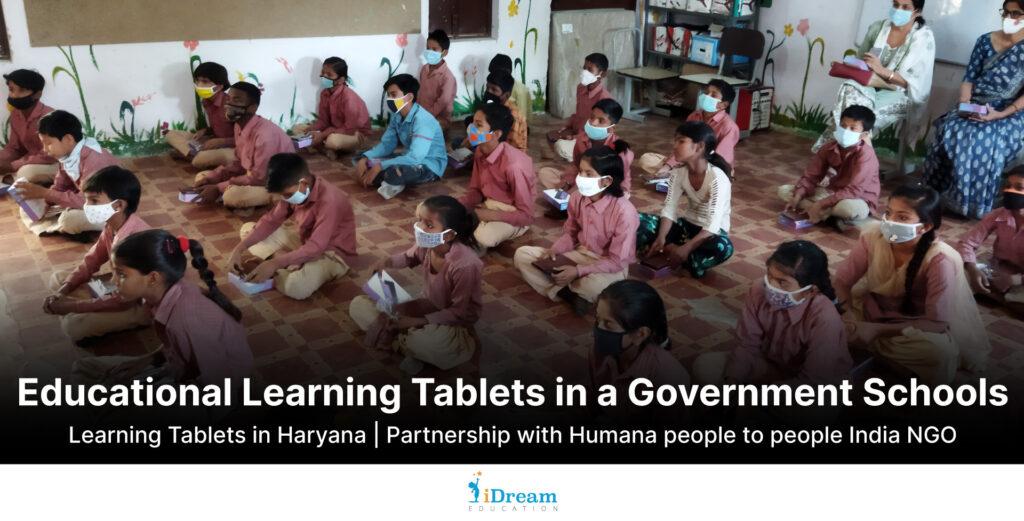
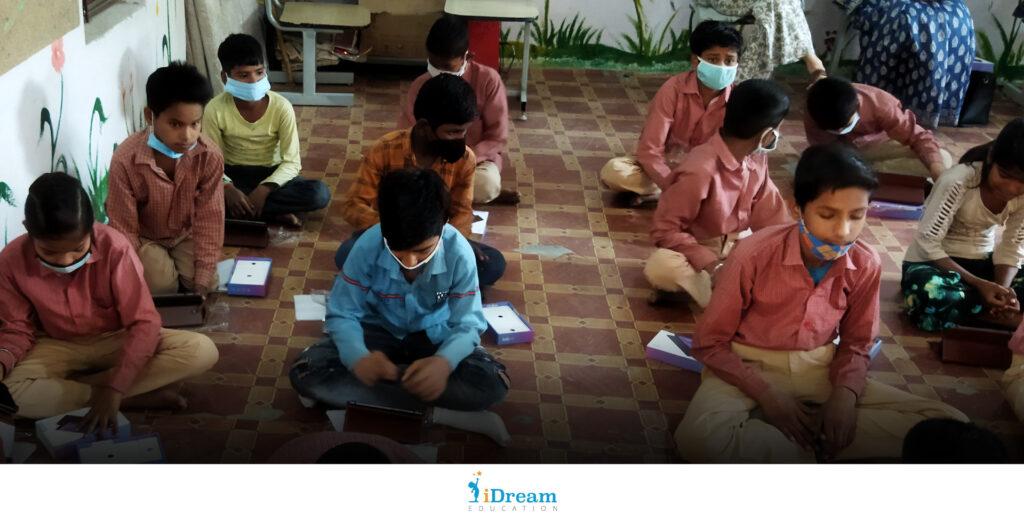
Under the partnership with Humana people to people India NGO, iDream Education set up iPrep tablets in the government schools of Rewari in Haryana. The objective of the implementation was to enable a non-judgmental learning environment for students to help them cover the learning gap that occurred due to the sudden closure of schools during Covid. To help them cope with the learning gap, these students were given educational tablets so that they could learn at their own pace, based on their learning levels. This way, individual learning progress could also be tracked and provided personalised guidance.
When Covid Stuck students, Coordinators of Humana centre lost touch with students, and at-home students did not have access to educational resources. When they returned, teachers noticed the difference in students’ confidence and learning. Some students were struggling with several months of the academic gap, and it varied for all students. For teachers, it became difficult to first identify the learning gaps of individual students and then work with each of them to fill their individual learning gaps. To solve this, it was decided that these students should be given personalised learning tablets with offline digital content.
What did we do to help them cope with the learning gap?
With the support of the Humana people, all students supported by the NGO were given a personalised iPrep tablet. Giving hardware is just one piece of the puzzle. What enabled the transformation was the digital content given on preinstalled iPrep Learning App on their tablets.
The entire platform was in Hindi, which means when students opened their tablets, they could see all instructions and buttons in the language that they were familiar with. Hence, it became easy for them to use the learning tablets.
Secondly, all the learning tablets had content in Hindi for classes 1 to 5th aligned with the Haryana Board. While it enabled students to learn as per their curriculum, an important point here was that irrespective of the grade a student had mentioned while logging in, all students were given access to the content of all the grades. The app had a feature that allowed students to change their classes comfortably and look at the content of junior classes. This was transformational because students felt safe and in a non-judgemental environment, joyfully explored the content of junior grades and could slowly get back to their age-appropriate level.
Teachers and coordinators were continuously looking at the student-wise reports on the reporting dashboard. They were aware of the learning level of each student. And hence they were quickly able to customise their teachings and provide personalised guidance to students where needed.
Students learning on their personalised tablets
As a result, the time it would have otherwise taken the coordinators to bring back the students to their age-appropriate grade level and fill up the learning gaps got reduced significantly. And, because students had their personalised devices, they learned joyfully at their own pace by switching content to the junior class.
If in case you would like to know more about our digital learning solutions, comment below or write to us at share@idreameducation.org
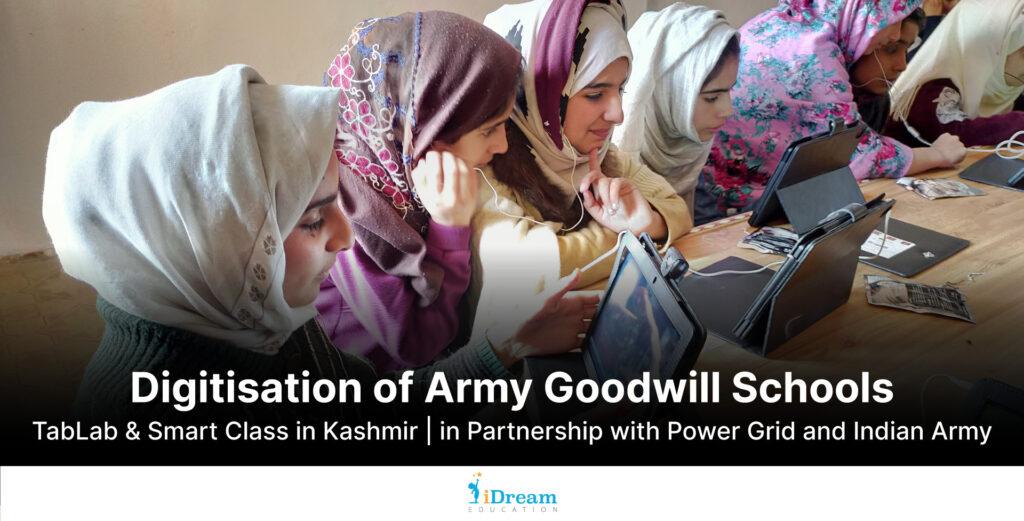
The Indian Army has a team of people that manages private school-like schools in Kashmir for the children of the local population. They call these as Army Goodwill schools and have been set up to offer quality education for K-12. The blog will outline a glimpse of the digitisation of AGS with Tablet based learning and Smart Classrooms.
Students here are like students of any other region across India. Some want to learn, some want to grow, while some just want to play. However, they face challenges which are unique to them like,
First, less involvement in education because due to extreme weather conditions and ongoing insurgency. Due to this, students here do not get to spend the usual time in school. Their academic calendar tends to be smaller because of political unrest. This is why they have to cover the same amount of syllabus and learn all concepts in less time than students of other regions.
Second and perhaps the most critical is the lack of exposure. These students get about the life and opportunities outside their district and the state, and only few manage to cross these boundaries.
Indian Army identified that to be able to address the above challenges above; they will have to do the following:
Empower teachers with tablet based learning and smart class. Digital content can enable them to finish their syllabus faster and achieve the desired learning outcomes.
Provide a personalised learning set-up for the students to track their individual growth. This will further will help teachers give personalise attention to individual students to fill in their gaps.
Partnership with iDream Education
This was when the Indian Army, with Power Grid’s support, collaborated with iDream Education to set up TabLab (Tablet-based Smart ICT Lab) and Smart Class in Army Goodwill Schools. Educational Tablets and the Smart Class set up were given with preloaded content on SD cards and Pendrives. Content for all classes 1st to 12th is aligned to J&K Board in both Hindi and English Medium.
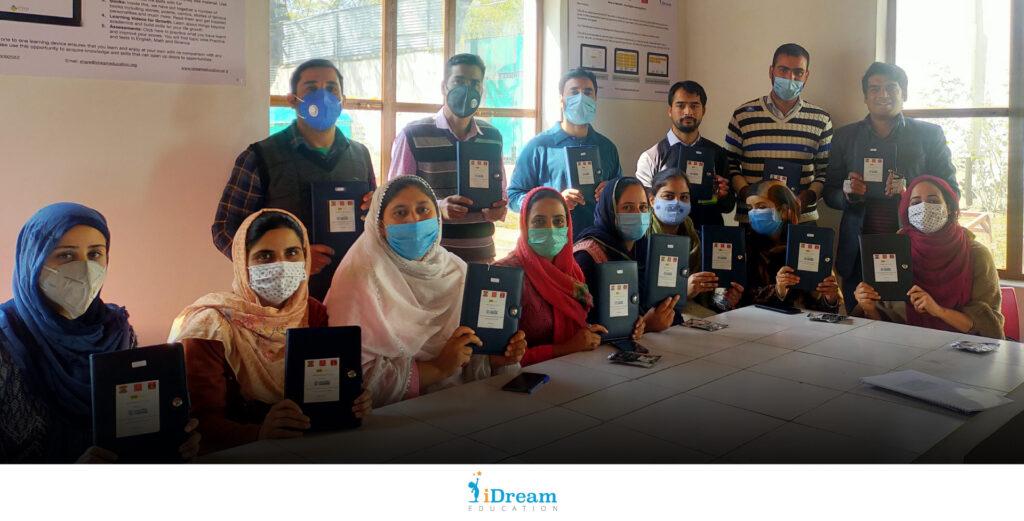
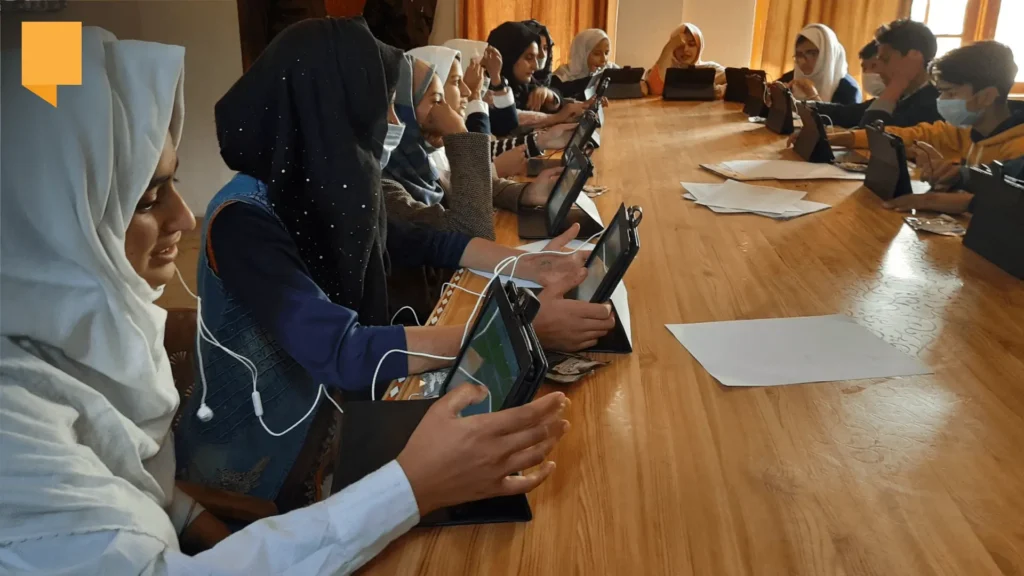
Teachers with their personalised tablets to conduct classes in TabLab Room
How did the project solve the challenges faced by Army Goodwill Schools?
Very easy-to-use Hardware setup
The entire smart class setup could be switched ON/OFF with just one plug. Extremely easy for the teachers to just walk into the classroom and immediately begin teaching through smart class. All this is possible because they don’t have to invest time in connecting a device to the internet or in the search for relevant content.
Same with the Tablab based learning, all tablets were securely locked and charged inside the charging rack. When students have to use the devices, the teacher simply unlocks the rack, takes out the tablets, distributes them and uses them as guided by their teacher. Once the class gets over, one of the students collects all the devices, counts and keeps them securely back in the rack. This eliminates the hustle of management or safety.
So, once the teachers and students realised that it is extremely easy to use digital set-up, it led to a very natural adoption, resulting in regular usage with minimal training.
Offline access to digital content of all classes
All the digital content was preloaded on the SD Cards (in each educational tablet) and in the pen drives for the Smart Class set-up. There was hence no internet dependence, and they were able to continue their teaching and learning whether it was raining or snowing.
Extensive content coverage for all subjects and classes
The digital content covered all classes from 1st to 12th and for all subjects. also covered all subjects in all streams for classes 11th and 12th. This led to collective usage by all the teachers and students in the school. No one felt that they were left behind, so they encouraged each other to use and see the impact of their progress.
The content coverage also included stories, poems, biographies, many other books, life skills videos on health, hygiene, sanitation, and so much more. And hence even when a particular teacher was absent, and the students had to be engaged, the teachers used such content to happily connect with them and guide them in critical life skills.
Supplemented Classroom teaching with Digital Content on Smart Class and on educational tablets
This was perhaps the significant benefit experienced by the schools and the Indian Army officials. What the teachers taught in the classroom, they could show it on a big screen in the smart classroom, and then the students can also practice the same concept on their tablets. Individual reports were generated, and teachers could know the student-wise gaps they need to address in their class.
This resulted in course completion in less time than it was expected, increased classroom engagement, and improved learning outcomes, exactly the challenges that the Indian Army wanted to address.
Growth beyond the life they live
Digital not only has the potential to make students learn better and enable teachers to teach better but can also expose them to life and opportunities beyond what they are experiencing right now. Once students and their parents realise that smart devices can also be used for learning, it opened up a whole new world of opportunities for them. In our observation, we found many students who shared how they go back home and then use their parents’ smartphones to search for educational videos and stories on Google and Youtube.
In fact, this was a reason that these students could seamlessly adjust to online learning when the Covid-induced lockdown happened. For continued learning, we introduced iPrep – A Learning App. This gave students access to the same content they saw in their Smart Classrooms and educational tablets. With decent internet connections available in their homes, the teachers and students wasted no time being online, starting online classes, and using the digital content on the iPrep Learning App, resulting in no learning loss.
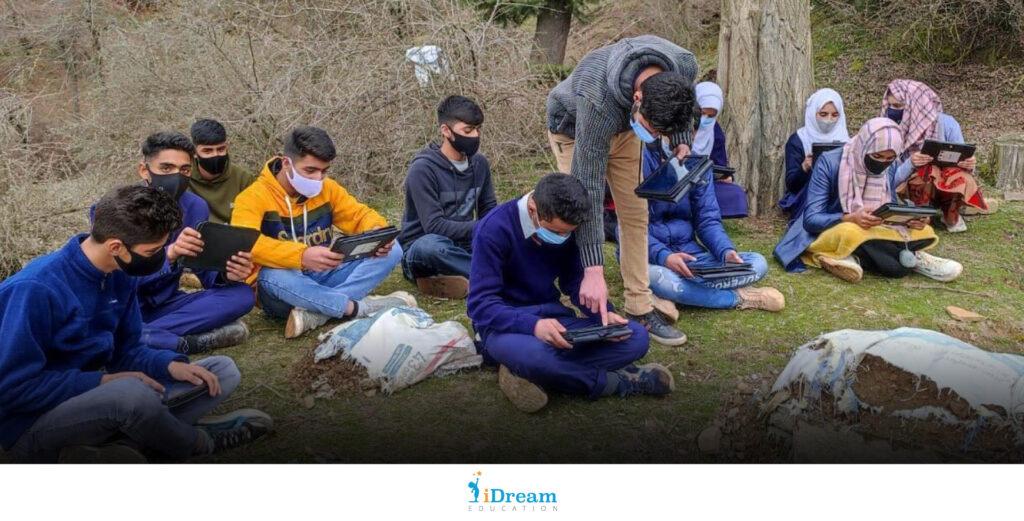
Students took out tablets from TabLab and continued their learning on a mountain under the shade of a tree when their schools turned into covid centers
Kashmir holds a special place in our hearts. It has been inspiring to see these changes take place in the teaching and learning styles of teachers and students of these AGS. Thanks to the Indian Army and Power Grid India Limited, who helped us transform learning and teaching in schools of Kashmir.
Before you go, listen to what some teachers and students have said about our work.
“…With TabLab set up in schools, parents seem to be very happy with the expansion of schools. Further, the burden of our teachers is reduced, resulting in increased personalised attention to students…”.
-Principal Tariq Ah Tariq Ji, AGS in Wayne Kashmir
“…Gone are the days when you needed 4 boards and a marker. Now we have smart boards, which is a wonderful initiative by iDream Education….”
-Vice Principal of AGS IN Chandigaon, Kashmir
“…We learned through videos and digital books from smart class and also used Tablets from TabLab to perform practicals and practice questions. After lockdown, we had no resources, resulting in loss of learning. But, our teachers suggested downloading the iDream Learning App, which is free of cost, and because of this, we were able to matin continuity in our learning….”
-Nafia, a class 9th student in AGS, Krusan in Kashmir
People in Kashmir live at high altitudes, under extreme weather conditions, near India-Pakistan Border with minimal facilities. With tablets in Tablab and Smart Class, we have successfully accelerated the use of digital content in schools located at high altitudes near the India-Pakistan Border.
If in case you would like to know more about our digital learning solutions, comment below or write to us at share@idreameducation.org
Know From Principal Rizwi Ji how Smart Classes and an ICT Lab with Tablets solved a long-pending problem. His story reveals how technology can break barriers to education in schools located in remote regions.
Syed Aabid Hussain Rizwi is the principal of Army Goodwill School, Boniyar, in Kashmir. This school is located in a village that is just a stone throw away from the Pakistan border and falls under the Sikh Regiment.
In a project commissioned by Power Grid and the Indian Army in 2021, we set up the Smart Classes and ICT Lab in various Army Goodwill Schools in Kashmir. The project’s objective was to provide uninterrupted learning as the region faces a lot of political unrest and regular internet outage. AGS Boniyar was also one such school covered under the implementation.
The scope of the project included digitizing 128 Classrooms with Smart Classes and ICT Lab and Mobile App based Digital Education in Army Goodwill Schools.
While our teams were visiting the school for the setup and training, we got into a discussion with Rizvi Sir. What he shared next is, unfortunately, are the challenges in the education system faced by most teachers and government schools across Kashmir. Adding to this, Kashmir’s literacy rate is also very low compared to many other states. But with little innovation and a basic understanding of the natural psychology of our teachers. We can fine-tune digital learning solutions to empower teachers to manage work easily and efficiently. Read on to find out how.
One significant issue that teachers of his school were facing:
Not able to use already available hardware due to complex functioning and unavailability of relevant offline content
As per our discussion with teachers, we found it very difficult for them to conduct classes using their existing hardware. Their existing system takes 10 minutes to boot and arrive at the home screen. Further, entering personal details and passwords every time is also a time-consuming process for them. One of the teachers mentioned,
“When I access learning material, I get stuck on one type of content. And, switching again to different content is restricted with passwords. So, to avoid this hassle, I prefer teaching with textbooks in hand”.
Our discussion with Principal Rizvi Ji, after the implementation of Smart Classes and ICT Lab
“Implementation of Smart Classes and ICT Lab has solved the long-pending problem of the school. Smart classes and educational tabletshave made teaching and learning very easy. Like, access to all types of content through a single login feature. Now teachers in the school are well aware of the content they need to teach in every class; thus, they don’t waste time accessing passwords or in the search for relevant content. ” Teachers just plug and play the classroom sessions,” said Principal Rizwi Ji.
Further, he added,
“High-quality animated video lessons, and books on life stories, poems, and inspirational biographies in Smart Class helps teachers keep students intact and encourage interaction. This has eliminated two main challenges of the school that is decreasing student engagement and increasing absenteeism”.
What enabled this to happen?
Single login:
We simplified the usage of the application by setting up one local server. A server where all type of content is uploaded and is accessible to all teachers via a single login. This made teachers more comfortable using the learning application. Not just this, but they can now use different types of content without the need for repeated logins.
Bilingual Platform:
Content navigation became easy because of the availability of the option to use the platform in the teacher’s preferred language. When teachers see an interface in their preferred language, they naturally wish to access content and teach through it.
State Board Aligned Digital Content:
All the digital content on the tablets and the smart classes is in Hindi and English. Aside from that, teachers can switch between textbooks and digital books easily since the content aligns with the J&K Board. This enables teachers to integrate their lesson plans with the digital content available on the platform, making it easy for them to supplement their teaching with digital.
Enjoyable teaching/learning Content:
Multiple digital content categories have been provided on the platform to suit different teaching pedagogies and learning styles. There are videos to build concepts, digital syllabus books to refer to any time, notes for quick revision, DIY project videos for practical and fun learning, stories, poems, and biographies for holistic growth, and MCQ-style Practice questions for an interactive classroom experience and personalized mastery development on different topics.
Availability of Monthly Reports:
To ensure regular usage of digital content in smart class, we share monthly usage reports of students and teachers with the principal and implementation partners. This helps them keep track of their teachers’ involvement in teaching through digital content and student’s content usage.
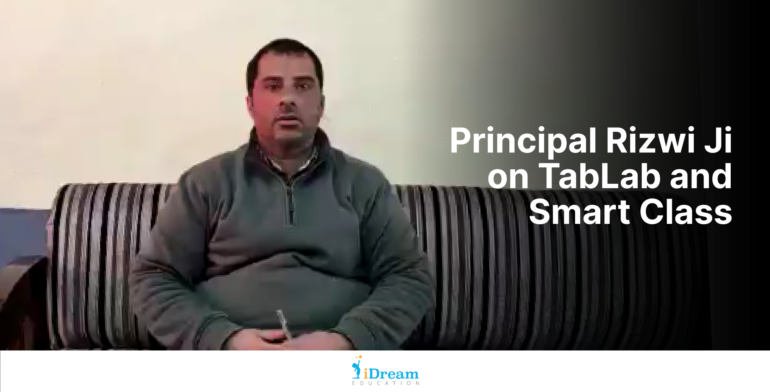
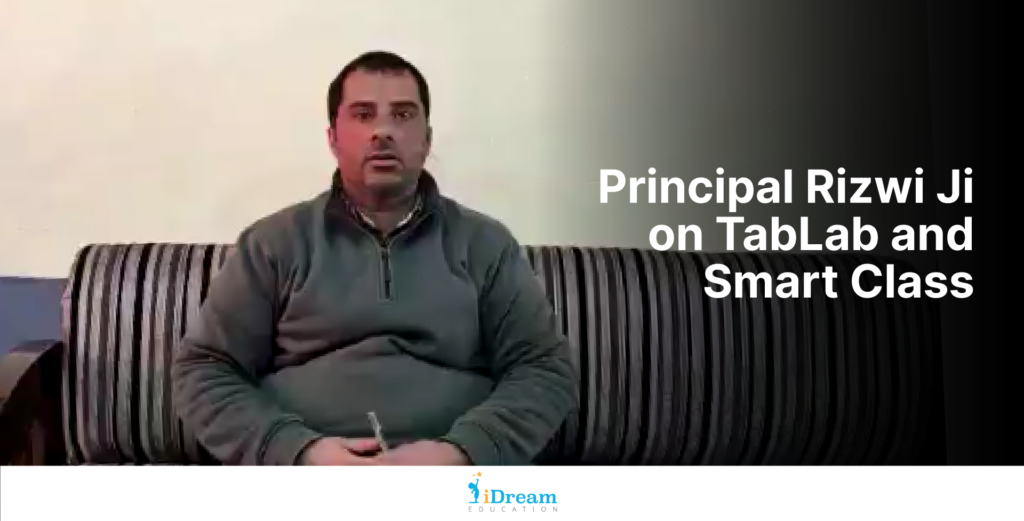
Here’s the video link of Shri Rizvi ji sharing his observations and experiences with us:
Education in Kashmir faces paralysis because of unpredictable conditions like political instability, regular internet outages, lack of resources and many more such issues. Hence, going forward, we expect this new digital learning setup to change how students learn, and teachers teach collectively to improve overall educational outcomes.
If in case you would like to know more about Smart Classes and ICT Lab, please write to us at share@idreameducation.org. You can also leave your comments below and we will be happy to get back to you.
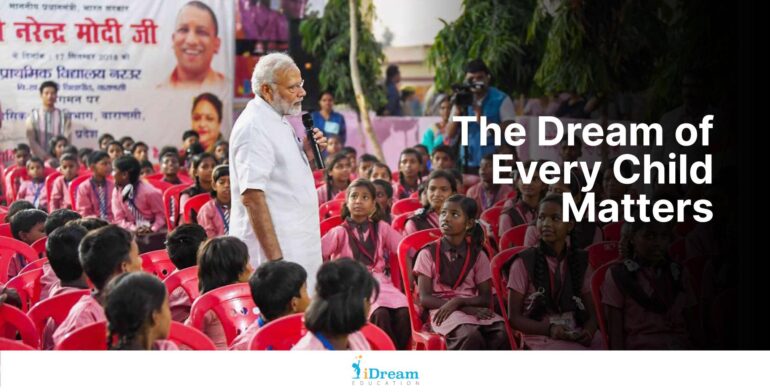
More than 4000 children across India will get support from the PM Cares Fund.
“Maa Bharti is Always with you,” said Honorable PM Modi Ji. This was to show compassion to the ones suffering from the loss.
In an emotional personal letter sent to over 4,000 beneficiaries, PM Modi ji highlighted the grief his family had suffered several years ago, when he had lost his maternal grandmother due to a pandemic. He wrote about how he has seen his mother suffer from the pain of losing her mother at a very early age. He further added, “My mother spent her entire life in the absence of her mother”. Therefore, “I can totally understand the turmoil in your head and heart”, -said Modi Ji.
Addressing beneficiaries across the Indian States via video conference PM Modi Ji also said, “At present, poorest of poor is confident because they know they will be supported by government schemes”.
Children who lost their parents in the span of 11th March 2020 to 28th February 2022 are eligible for PM Cares Scheme. Almost 4439 children have been approved for the same.
Benefits covered under the PM cares scheme for children
Some benefits the PM cares scheme will cover for these children are as below:
Free school education, uniforms, and textbooks from the nearest government schools. The children who are in private schools can apply for fee reimbursement under the Right to Education Act, 2005
Monthly financial assistance to an individual before they attain the age of 18 years and Rs10 lakh to be given when the beneficiaries turn 23 Years old
Beneficiaries in classes 1st to 12th will also receive a monthly scholarship worth Rs 20,000 from the Ministry of Social Justice and Empowerment
Scholarship of Rs. 2.5 lakh per year to the beneficiaries for studying in higher educational institutions like IITs and IIMs
Up to Rs 5 lakh of health insurance coverage up to the age of 18 under the Ayushman Bharat Yojana
Payment of insurance premium by PM Cares Fund
This scheme will help children dream freely as PM Modi ji has assured that there will be no lack of efforts in helping these children realise their dreams. These 4000 letters were written in English, Hindi, and other local languages to reach the head and heart of each child across Indian districts.
In resonation with the step taken by our Honorable PM Modi Ji to benefit children who have lost their parents during COVID-19, it is important for each one of us to help these children fulfil their dream to learn and grow.
How iDream Education aligns with the vision of our Honourable PM Narendra Modi Ji?
The golden future of children suffering from loss could turn into a golden future for a country. We at iDream Education align with the vision of our Honourable PM Narendra Modi Ji of empowering every student to dream of education and fulfilling it. In line with PM Modi’s aspirations, we are working to empower every student across India by facilitating access to enjoyable academic & skill-based digital learning content. Further, just like the approach of Modi Ji of writing letters in English, Hindi, and other local languages, we also understand the diverse learning needs of our students and hence facilitate access to content in Hindi, English, and other regional languages like Gujarati, Marathi, Tamil, Telugu, Kannada, Bengali and Oriya via our tablet, Chromebook, mobile and Smart class-based solutions.
The dream of every child is our dream, and to accomplish this, we have been closely working with state governments, government schools, and our CSR partners to make education accessible for all.
The Dream of Every Child Matters
-iDream Education
If in case you would like to know more about our digital learning solutions, comment below or write to us at share@idreameducation.org.
Once a luxury, smart classes are now simple, scalable, and designed for every school – even in the remotest corners. With evolving tech, they’re easier than ever to set up, manage, and use. Step into the future of education with the power of Smart Classes.
After COVID-19, the way we look at education has completely changed. Schools, teachers, and students all realized that technology is not just a support but a necessity for learning. This is where smart classes are making a big difference. Instead of only blackboards and books, classrooms today are equipped with interactive flat panels, smart TVs, digital whiteboards, and other modern tools that make learning more interesting and easy to understand. What’s even more inspiring is that governments, NGOs, CSR projects, and even hardware companies are working together to bring smart classes to schools across India. The idea is simple – every child should get access to comprehensive, and engaging learning experience, regardless of their location.
Government’s Role in Making Smart Classes a Reality
The Indian government has been taking strong steps to ensure that technology reaches every classroom, especially after COVID-19 highlighted the gaps in digital access. Various schemes and initiatives are being launched to make learning more inclusive and equitable. Programs such as
Among 3 major Digital Education Projects under the ICT Scheme of Samagra Shiksha Abhiyan one is smart classes The Ministry of Education centrally promotes smart classrooms for all government schools in India.
Operation Digital Board (ODB), a smart class specific initiative launched by the Ministry of Human Resource Development (now MoE) in 2019 is also a step towards enhancing the future of education. ODB aims to transform classrooms from class 9 onwards in government and aided schools into blended digital learning spaces.
Under the PM SHRI scheme, ICT and Digital Initiatives have been identified as key drivers in transforming schools for students of Classes VI to XII. As part of this, smart classrooms are to be used for at least two periods per week per subject, ensuring that teachers regularly integrate digital resources into their teaching.
The Delhi government has also taken a big step by approving an investment of ₹900 crore to convert 18,966 classrooms into smart classrooms across public schools. Under this initiative, classrooms will be equipped with interactive panels, audiovisual tools, and smart blackboards, bringing technology into everyday teaching and transforming the learning experience for students in government schools.
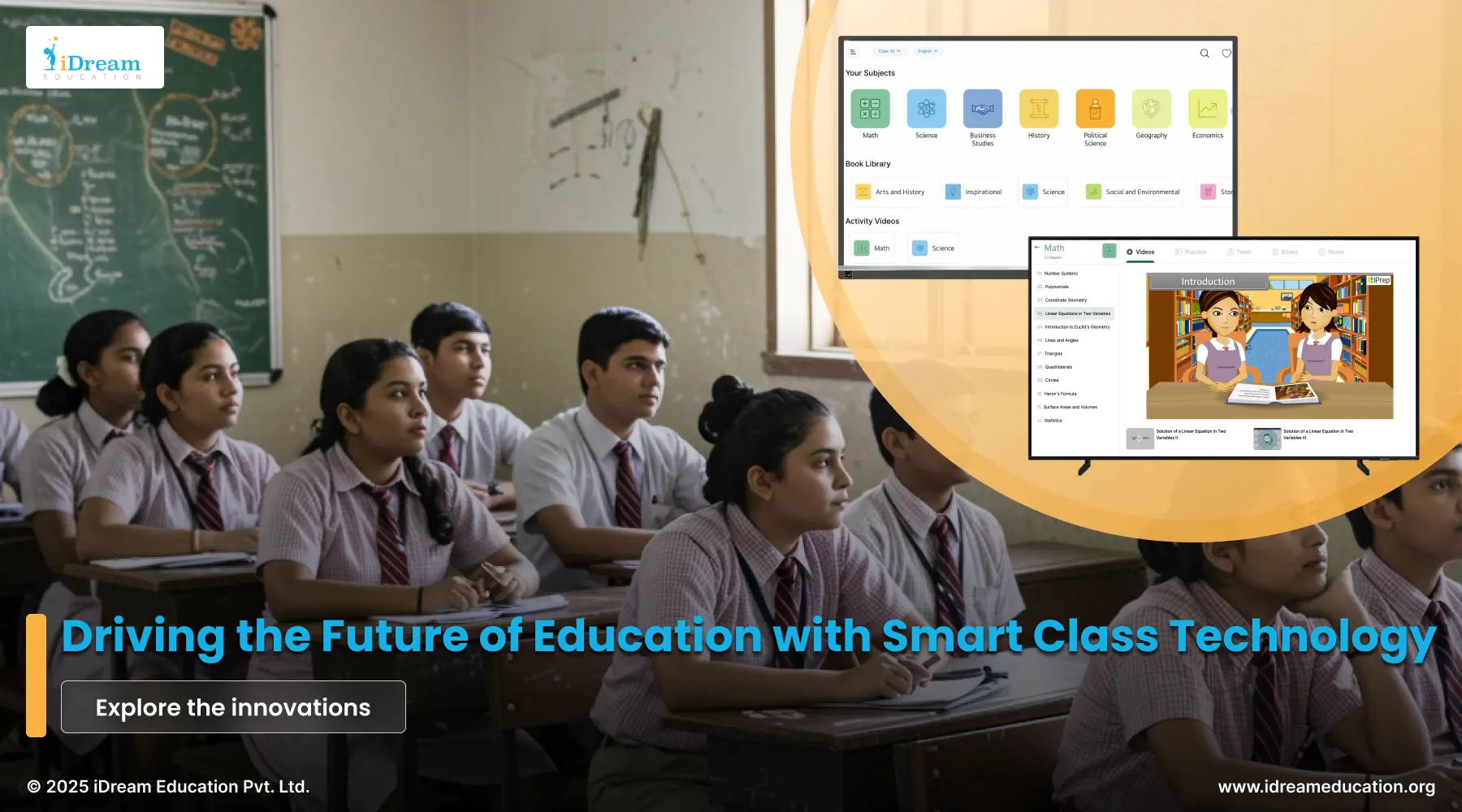
Smart Class is a digitally equipped classroom with a range of teaching and learning tools such as interactive flat panels, projectors, smart TVs, e learning platform, and digital content to make teaching and learning more engaging. When teaching through a smart classes, teachers can bring their lessons to life with animated videos, real-life examples, interactive diagrams, digital quizzes, and subject-specific multimedia content. Instead of only listening to theory, students get to see concepts in action, which makes even abstract or complex topics much easier to understand.
Further, smart classes cater to different learning styles. Some students learn best by watching, some by listening, and others by doing. With multimedia-based lessons, every type of learner finds something that helps them understand and remember better.
By integrating smart classroom technology into daily teaching, schools create a more inclusive, engaging, and student-friendly environment where learning feels less like memorizing and more like experiencing.
So, What Are the Main Objectives of Smart Classes?
Smart Classes are not just about putting a digital board or a screen in front of students. Their real purpose is to change the way teaching and learning happen. At the core, Smart Classes aim to make classrooms more engaging, inclusive, and effective for both students and teachers. Here’s how:
To Create an Active Learning Environment: Smart Classes are designed to move beyond one-way teaching. By using multimedia and interactive content, the objective is to make students active participants in every lesson.
To Encourage Experiential Learning: One key objective is to help students learn by doing. Through simulations, digital experiments, and practice activities, Smart Classes ensure that students apply concepts instead of only memorizing them.
To Personalize Learning for Every Student: Smart Classes aim to support students with different learning speeds and styles. The objective is to give each child a fair chance to understand—whether they need visuals, repetition, or hands-on tasks.
To Keep Students Attentive and Focused: Another objective is to make classrooms more engaging so that students stay interested. With interactive quizzes, real-life examples, and visually rich content, Smart Classes reduce distractions and hold attention.
To Empower Teachers with Better Teaching Tools: Finally, Smart Classes aim to make teaching easier and more impactful. With curriculum-aligned digital resources, teachers can plan better, explain concepts more clearly, and create dynamic lessons.
Why Every School Today Needs Smart Classes?
Children today are already used to learning through visuals, videos, and mobile screens outside the classroom. If schools continue to teach only through chalk and talk, there will always be a gap between how students are wired to learn and how lessons are delivered.
Smart Classes bridge this gap. By using animations, syllabus-aligned videos, and interactive content, they bring subjects to life in a way that captures students’ attention and sustains it long enough for real learning to happen.
From our field experiences in both rural and urban government schools, we’ve seen the change first-hand:
Teachers find it easier to handle classrooms and explain complex concepts of subjects such as Math and Science.
Students who once stayed silent start participating through interactive simulation, practice, video lessons and lot more.
Attendance improves because children look forward to smart class periods and learning from smart class content.
This is not about replacing blackboards, but about strengthening them with tools that match how children learn today. And that is why Smart Classes are no longer an extra, they are the bridge every school needs to connect with its students in today’s world.
Smart Classes Are Powerful, But Do They Really Work in Government Schools?
Smart Classes have been introduced in schools for more than a decade now. They promised to transform classrooms, and in many ways they have. But when we look closely at government schools, the story is not always so smooth. Despite the potential, many schools still struggle to use Smart Classes to their full benefit.
Complicated Setup and Maintenance: Old smart class hardware-heavy setups such as projectors, CPU-based systems, required technical knowledge to operate. Further, turning on and off the entire setup takes time since every component is linked to one or the other device. Hence, when something stopped working, there was usually no local support to fix it quickly, leading to weeks or months of disuse.
High Maintenance & Frequent Technical Breakdowns: Dusty environments, power fluctuations, and lack of regular servicing made the equipment unreliable. Even a simple issue like a loose cable or remote/keyword not working could stall an entire class. Teachers often gave up on using the system altogether after a few such failed attempts.
So, What’s the Fix? The Need for Smarter, Simpler Hardware
From our work across government schools in many states, one thing is clear: Smart Classes will only work if teachers feel comfortable using them every day. If the setup is complicated, teachers naturally hesitate. But when the technology feels simple and familiar, adoption becomes easy.
Think about it: when television first entered rural households, no one needed training to use it. Within a short time, people of all ages became comfortable with it because it was easy and natural to operate. The same psychology applies to teachers in schools.
That’s why the future of Smart Classes lies in simplifying the hardware. Instead of multiple components such as projectors, CPUs, remotes, speakers – imagine replacing everything with a single device, like a Smart TV. This not only reduces maintenance but also matches the comfort level teachers already have with using TVs.
By aligning Smart Class technology with tools teachers are familiar with, we can reduce resistance, encourage regular use, and truly integrate digital learning into everyday teaching in government schools.
From Ground Realities to Innovation: Introducing iPrep Digital Class
After visits to government schools, closely working with teachers, and real ground-level experiences. One thing we were certain about: for smart classes to be adopted widely, they must be easy to set up, simple to manage, and effortless to use. With this in mind, iPrep Digital Class is built as a single, integrated Smart Class setup that removes all the complexity of projectors, CPUs, and multiple devices.
It can be set up with a single piece of hardware that comes with a pre-installed K-12 LMS and preloaded digital content for all classes, ready to use from day one. It is designed to work smoothly in classrooms where infrastructure is often limited, and where teachers may not have technical training. By combining everything into one simple setup, iPrep Digital Class ensures that technology becomes a teacher’s friend, not a burden. Further, it allows for offline delivery of digital content, complete with reporting features, so there’s no need to connect to the internet before each session. This offline capability also tracks usage, which syncs to project-level dashboards once the device reconnects to the internet. This usage data can be utilized by government officials and project stakeholders to monitor progress and implement data-driven strategies to enhance learning outcomes.
This is not just another Smart Class, it’s a solution designed for the real needs of schools, teachers, and students in India.
Let us Now Look at the Practical Benefits of a Single-Unit Smart Class Setup like iPrep Digital Class
The setup is extremely convenient. It requires no heavy wiring, no big infrastructure changes. It can be mounted on any wall with just one stand and four screws. This means schools don’t have to wait for renovations; classrooms can be ready in no time.
Using it is just as easy. Teachers only need to switch it on, navigate through the built-in Smart Class LMS, and access digital lessons with a simple remote or touch option. No technical expertise, no extra hassle.
What makes it even more practical is that it works completely offline. With just a pen drive plugged in, all content becomes accessible. There is no dependence on internet connectivity, which is a major challenge in many government schools.
And smart classes can be setup for all grades. From a Learning TV in Anganwadis to Interactive Panels for secondary and higher grades. With the right content, Smart Classes can support teachers across all subjects and classes.
With iPrep Digital Class, Smart Classes don’t feel alien technology – it’s familiar, simple, and built to fit into the natural teaching flow of our schools.
Why Are Smart Classes Becoming the Future of Education?
The real reason Smart Classes are gaining momentum across schools is not just because they look modern, but because they are easy for teachers to adopt and use every day. Here’s Why iPrep Digital Class is Driving Smart Classes Towards the Future of Education
Learning Content in Local Languages
When teachers and students get to learn in their own mother tongue, learning becomes natural and comfortable. That’s why iPrep smart class offers content in Hindi, English, and multiple regional languages. This motivates teachers to use it regularly as they don’t have to struggle with language gap, it feels like an extension of their own teaching style.
Curriculum Aligned content
When all the smart class content is mapped with CBSE and State Board curricula, it empower teacher to integrate it with their regular lesson planning and teaching instruction. This alignment ensures seamless teaching and drives higher adoption of Smart Classes in government schools.
Easy-to-Use, Just Like TV
Navigating content on iPrep smart class is as simple as changing channels on a television. The categories are organized just like textbooks and chapters, making it quick for teachers to find exactly what they need, without wasting time. This simplicity encourages teachers to use Smart Classes every day.
Usage Analytics & Monitoring
Our Smart Classroom LMS doesn’t just stop at providing content, it also tracks how often teachers use it. This data is regularly assessed us and shared with project stakeholders, creating an accountable ecosystem. Monitoring usage helps ensure Smart Classes are not lying unused, but are actively improving learning outcomes.
These focused innovations in Smart Classes, aligned with NEP, are shaping it for the future of education in India
Watch this video to see what a 21st-century smart class looks like and what it offers.
Closing Thoughts
Government initiatives are steadily pushing the implementation and usage of smart classes in schools. At the same time, smart class providers are bringing in technological innovations that make these setups simpler, teacher-friendly, and effective for students. Together, these efforts are driving the future of education in India – where classrooms are not just about teaching, but about engaging, inspiring, and preparing every student for the 21st century.
If you’re looking to set up smart classes or need a partner for complete end-to-end implementation of smart classes, we would be happy to connect. You may contact us at +91- 7678265039 or share your details here
If you want to see the real-life impact of smart classes, check out:
Discover Shadaf’s inspiring journey as he bravely tackles challenges to learn independently with an iPrep tablet by his side.
More than 20% of the poor population of the world is disabled. Children with disability in India rarely go beyond primary education because of a lack of resources in rural areas. This further alleviates issues like limited employment opportunities resulting in a lack of growth.
Filling the education gap for children with disability in India
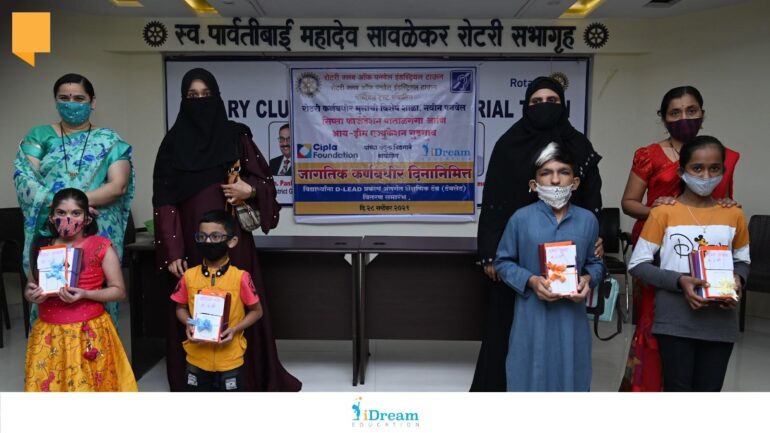
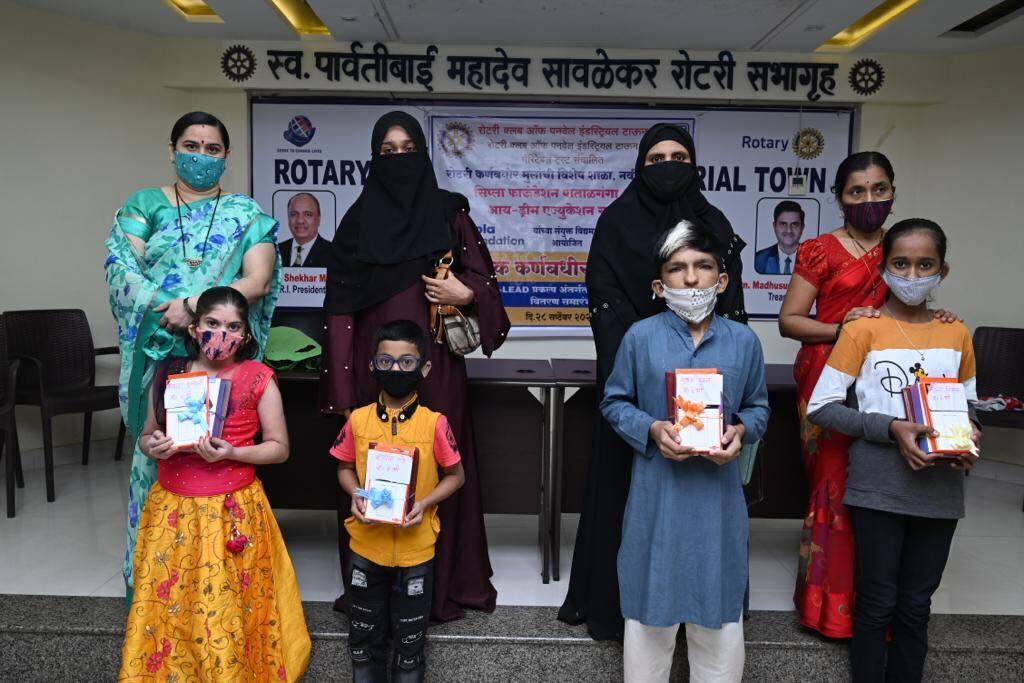
The government and many foundations are making considerable efforts to include special children in mainstream education and have access to growth opportunities. Through the efforts of various foundations, Rotary School for Special Children in Panvel, Mumbai, has seen several infrastructural changes over the years, all designed to make life and learning easy for special students.
An outbreak of the pandemic affected the overall learning of children with disability in India. They had absolutely no support at home to continue their learning. Unfortunately, there isn’t much online digital content that can suit their learning style. At this juncture, we got into a discussion with an NGO, to empower students with OFFLINE access to digital content to meet the specific learning needs of children on their personalized devices. As a result, to enable access to enjoyable and personalized learning content, we provided iPrep Tablets to all the students of Rotary School.
One student who amused us with his growth after the implementation of iPrep Tablets was Shadaf. Let us walk you through his journey of learning on a tablet shared by his mother.
Never Give Up Attitude: Story of Shadaf
The growth of Shadaf, a six-year-old studying in class 2, is evidence of how he started enjoying on learning tablets in a non-judgemental environment.
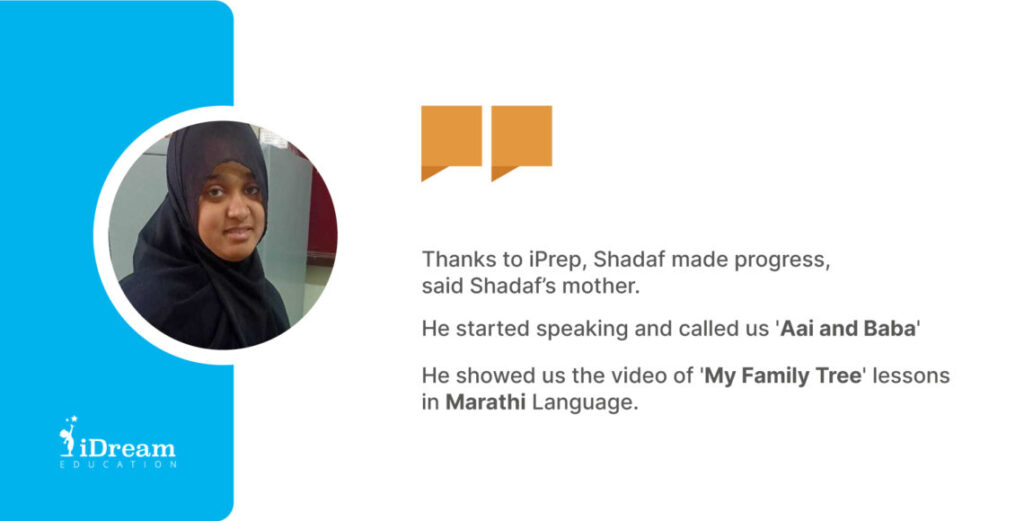
“He is a curious learner who came out of his resentment in very little time with his strong willpower”, said Shadaf’s Mother.
His mother, trying to pull him out of resentment.
She says a lot of hard work is required to be put in to educate children experiencing hearing loss. I was stressed for years when Shadaf used to put his efforts into learning and being like every other kid but never succeeded. He just used to watch YouTube cartoon videos or TV to build interactive relationships. This always bothered me because, being a mother, I wanted my child to grow and be a part of this world despite his disability. But, I couldn’t ever force him to study because repeating everything becomes irritating. The learning tablets given in school were a blessing to my child where:
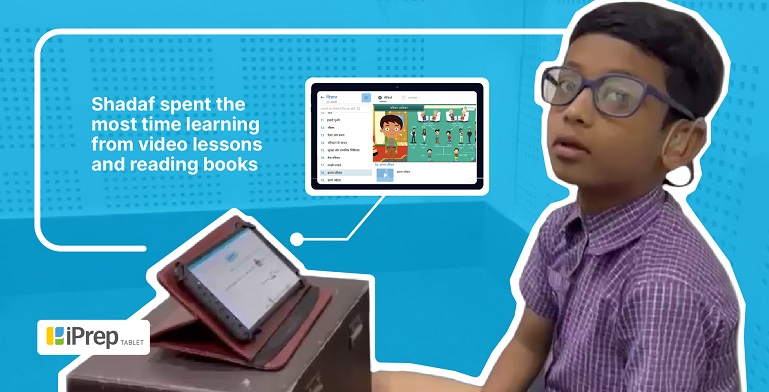
I saw him studying on his own through multiple digital content categories such as videos, assessments, and books.
Shadaf switched from mobile and TV videos, and now he sits with learning tablets for hours and continuously writes or draws as shown on the learning tablet.
He sees video lessons and tries to speak like the people in those video lessons.
He also asks me to make him understand a few stories and talk about them in his language.
With learning tablets, I saw a life in my child, life in his voice, life in his actions, and most of all, zeal to grow and stand up like every other kid in this world
-Shadaf’s Mother
Now, let’s know the views of teachers of the Rotary school
Educating children with disabilities demands special efforts from teachers to ensure engagement. This includes the inclusion of innovative methods for reading, storytelling, and more. The teachers at Rotary School have emphasized the effectiveness of digital learning materials such as inspiring stories, animated lessons, books, and interactive lessons. Learning Tablets have not only motivated our Divyang students but also contributed to their overall personality development. As a result, students are now attending school regularly.
Teachers’ perspectives on Shadaf’s progress:
We observed Shadaf attempting to communicate when he played a video lesson and made his first attempt at speaking.
Teachers also noted that Shadaf’s usage report demonstrated full engagement, with 100% participation in animated lessons, interactive lessons, and inspirational stories.
From Silence to Speech: How is Shadaf now?
For 1.5 years now, teachers and his mother have worked tirelessly with Shadaf, pushing him to learn from the digital learning content of his current class and of junior classes as well as to cover up his learning gap of 2 years. As the tablet had various forms of content like videos, books, and questions to solve, Shadaf never got bored and explored most of it.
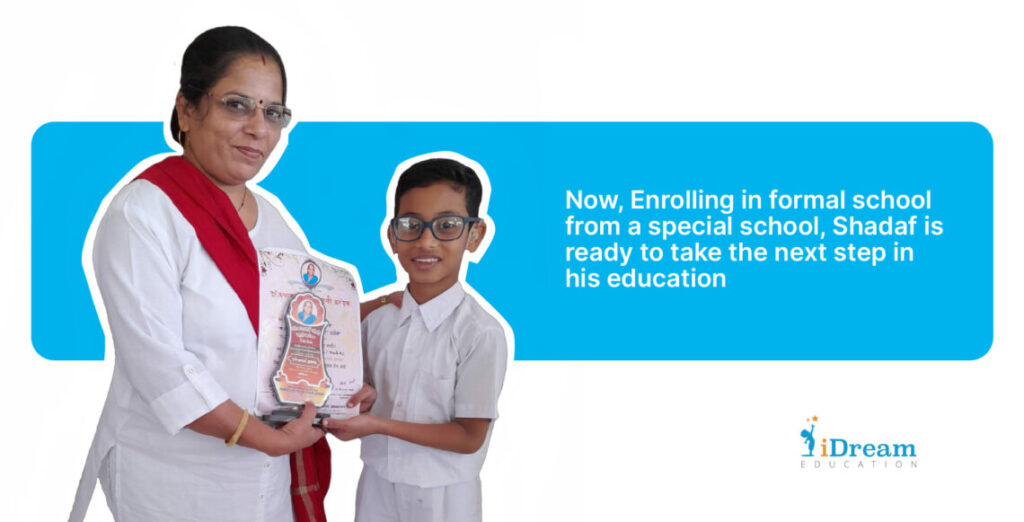
Shadaf is now able to speak, perhaps not as fluently, but it is still a huge progress for him. Having this confidence, his mother is ready to enroll Shadaf in a formal school.
In last, we would summarise by stating that,
Not just Shadaf but, the lack of resources is one big obstruction to education and growth opportunities for children with disabilities. But, the selfless efforts of Shadaf’s mother and teachers in Rotary are the biggest inspiration for the people across India not to let any child feel any less. Also, helping children with disabilities gave us a sense of belongingness and also motivated them to learn and grow.
iDream Education aligns with core principles outlined in the National Education Policy (NEP) 2020, which advocates for the widespread integration of technology in educational practices. By leveraging technology, we aim to eliminate language barriers, enhance accessibility for students with disabilities, and streamline educational planning and management processes. We are enthusiastic about collaborating on initiatives that align with these objectives, striving to empower every student with the ability to learn unlimited. Through iPrep’s content, which includes animated lessons, audiobooks, and various other resources, we aspire to create a dynamic learning environment conducive to holistic growth and development for all learners.
If in case you would like to support children with disability in India, write to us at share@idreameducation.org. You can also leave your comments below, and we will be happy to get back to you. And if you have any similar story or a case study to share with us, please let us know. It would be wonderful to learn and continue to improve the experience of our students and teachers.
A dramatic change in education by COVID induced school lockdown
A natural way of teaching has changed dramatically in the past two years, fuelled by COVID induced school lockdown. While it led to a lot of uncertainty initially, we are seeing an emergence of a hybrid model of learning where physical or online teaching by the teachers will be supplemented by digital learning by the students at home.
However, to facilitate this transition successfully, all stakeholders will have to come together and collaborate seamlessly. This would require a strong intention and a lot of funds. Therefore, it has been encouraging to see an increase in the Union Education Budget 2022.
But is it enough? Let us see.
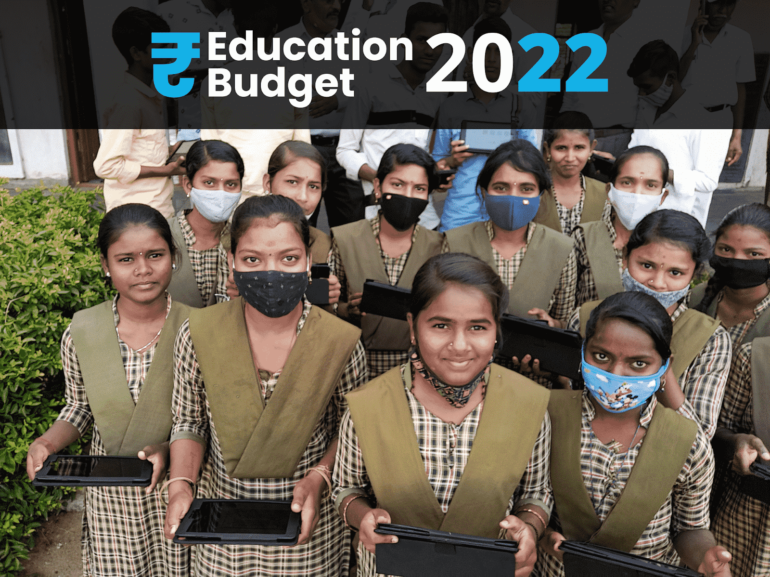
To cope with the learning loss that occurred due to the closures of schools, the budget has been increased by 11.86 % compared to the previous year. An amount of Rs. 1,04,278 Crore has been allocated to the overall Education Budget of 2022-23.
It is expected that the rise of Rs 11,054 Crore is expected to create opportunities that may lead to change in the development of digital universities, digital education, skill development of programmers, and many more such empowering developments.
Let us look at it in more detail:
25% increase in National Education Mission to increase Gross Enrolment Ratio
National Education Mission is an umbrella for education schemes like Saakshar Bharat, Sarva Shiksha Abhiyan and Rashtriya Madhyamika Shiksha Abhiyan. Through this, the government aims to fill the learning gap by revamping the educational system into a digital infrastructure. Increased education budget for National Education Mission will lead to:
Improvement of universal access to school education at all levels
Becoming focused on promoting content in regional languages
Simplifying school infrastructures by adding digital resources
20.40% increase in the Samagra Shiksha initiative from 2021 to enhance the overall educational infrastructure
The objective of the Samagra Shiksha initiative is to establish quality education and improve learning outcomes for students. Increased education budget for Samagra Shiksha initiative will lead to:
Addition in Operation Digital Board, Technological Integration through Smart Classroom and improving ICT infrastructure
Contribution to DIKSHA, which is a digital portal used for upgrading the skills of the teacher
Consequently, increased inclusion of students will fulfil its commitment to ‘Sabko Shiksha Achhi Shiksha’.
Increase of 12-200 TV channels in PM e-Vidya scheme
PM e-Vidya scheme is a one-class and TV channel program that will impart education in regional language to students of classes 1-12. The increase will contribute to every child’s education without any discrimination.
An amount of Rs. 600 Crore allocated to the Accelerating State Education Program to Improve Results (ASPIRE)
The budget for ASPIRE was approved by parliament in 2021 December. Through ASPIRE, the Indian government aims to improve the quality of education via its flagship program, Samagra Shiksha. The program targets five particular states: Jharkhand, Gujarat, Assam, Tamil Nadu, and Uttarakhand. With this, the focus is on improving educational outcomes by emphasising on:
Transforming government schools into standard schools by adding essential learning resources
Establishing student-centred interventions like learning tablets to boost learning
Strengthening the core elements of state education to target overall improvements
Also, mitigating the impact of COVID-19 on students’ learning by improving digital learning and teaching capability across schools
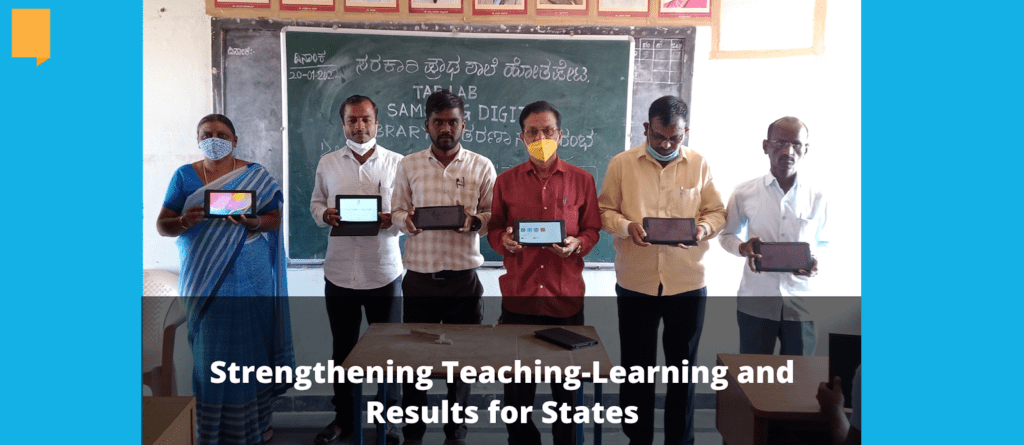
Increase of 13.40 % Strengthening Teaching-Learning and Results for States (STARS) from 2021
STARS project Govt of India will be a big digital push for the development of the education sector
On 14 Oct. 2020, Cabinet approved Rs. 5718 crore for STARS Project with the financial support of the World Bank amounting to the US $ 500 million (approximately Rs. 3700 crores) to improve the governance and quality of school education.
The motive is to introduce new interventions like a learning assessment system, deploying ICT-enabled approaches in education, vocational education, teacher development, etc.
Through the STARS project, the Ministry of Education aims to improve the overall monitoring and measurement activities in the Indian school. The full form of the STARS project itself reflects the impact, the initiative would result in, that is Strengthening Teaching-Learning and Results for States and the six target states are Himachal Pradesh, Rajasthan, Maharashtra, Madhya Pradesh, Kerala, and Odisha. The existing structure of the STARS project will be drawn under Samagra Shiksha with the Department of School Education and Literacy.
Thus, to enhance digital infrastructure, especially in rural India, Rs. 550 Crore is allocated to the STARS project in budgetary allocation for 2022.
Teacher Empowerment
It is one of the most exemplary steps that have been focused to build a competitive mechanism in classroom teaching sessions. The aim is to equip teachers with digital teaching tools to facilitate better learning outcomes.
Now, let’s see the areas that are not covered but should have been focused on:
2 % increase inNational Council Educational Research and Training;
The minimal increase in NCERT will impact the in-service training of teachers and the development of education kits & digital multimedia materials. However, considering the present scenario where the council has to make many additional changes in content, minimal budgetary allocation can impact the education quality and learning outcomes.
No amount is allocated toNational Scheme for Incentive to Girl Child for Secondary Education
The National Scheme for Incentive to Girl Child for Secondary Education aims to promote girls’ enrollment in the schools at the secondary stage that is in the age group of 14-18, particularly girls who have passed Class VIII.
However, no allocation to the scheme is the biggest limitation of the budget plan.
After the pandemic, a survey of 3,176 households by People Archive of Rural India was conducted to understand the impact of the pandemic on the lives of school-going children, especially girls. The survey results indicated that 71 % of girls are responsible for doing household chores. Only 26 % of girls had access to phones, as opposed to 37 % of boys. The girl child was expected to contribute to household duties more than the boys. Thus, this gender disparity led to more girls dropping out of school, mainly because social norms devalue their Education.
Supporting girl education would have been a significant step to cope with the economic impact of COVID-19, where most low-income families are unable to afford girls’ Education because of a belief that girls may need to help or work for household chores.
Decrease of 49.2% from 2021 in Teachers Training and Adult Education
An amount of Rs 127 Crore was allocated to Teachers Training and Adult Education, which is less because post-pandemic, it was difficult for educators to teach through digital content due to lack of tech expertise. The initiative aims to train teachers to integrate the skills required to teach adult students. However, the lack of training for educators can impact the quality of education, especially in the hybrid schooling model. Thus, teacher training could have been increased to enhance the current knowledge of educators as per changing pedagogical trends.
Thus, the Budget Allocation of 2022-2023 shows significantly increased contributions to schemes and initiatives that we hope will enable the transition to the emerging hybrid learning model. In the present era, where internet penetration is increasing exponentially, digital learning will be a significant step to a digitally empowered India.
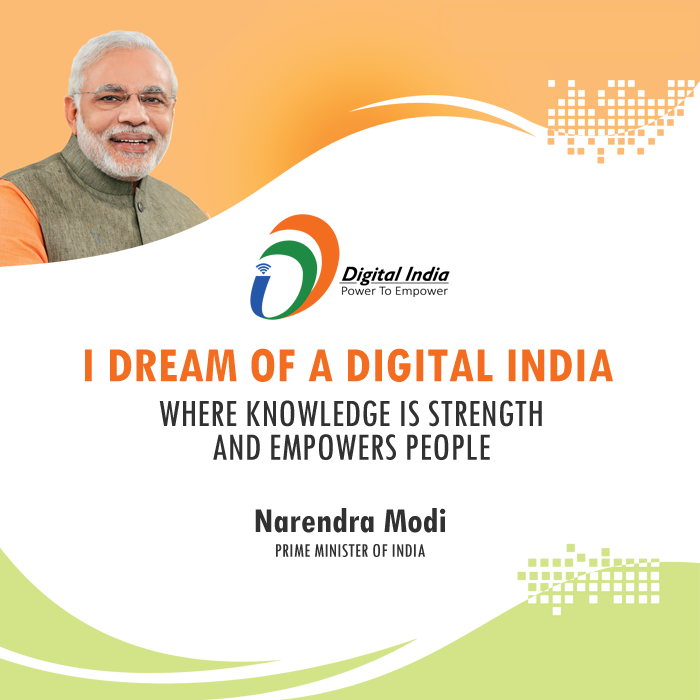
In Inspiration with the Vision of Digitial India by our Honourable Prime Minister
At iDream Education, we feel inspired by our honourable prime minister’s vision and will continue to create products to transform the last mile learning. If you would like to connect with us and be a part of this journey, leave your comments below or write to us at share@idreameducation.org
Let’s see change take shape & reach to last-mile learners!