How Do You Build Sustainable Digital Learning Programs in Government Schools?

Cover Image by iDream Education Guiding through the way to build sustainable digital learning programs in government schools

Through our work with NGOs/CSR, we’ve consistently come across one common question: how to achieve true sustainability within their programs. While the desire for sustainability is universal, NGOs/CSR express a deep commitment to lasting change. However, they also acknowledge the significant challenges that often stand in their way.  Understanding these challenges is important before knowing the solutions that can help build sustainable digital learning programs in government schools. 

Some challenges:
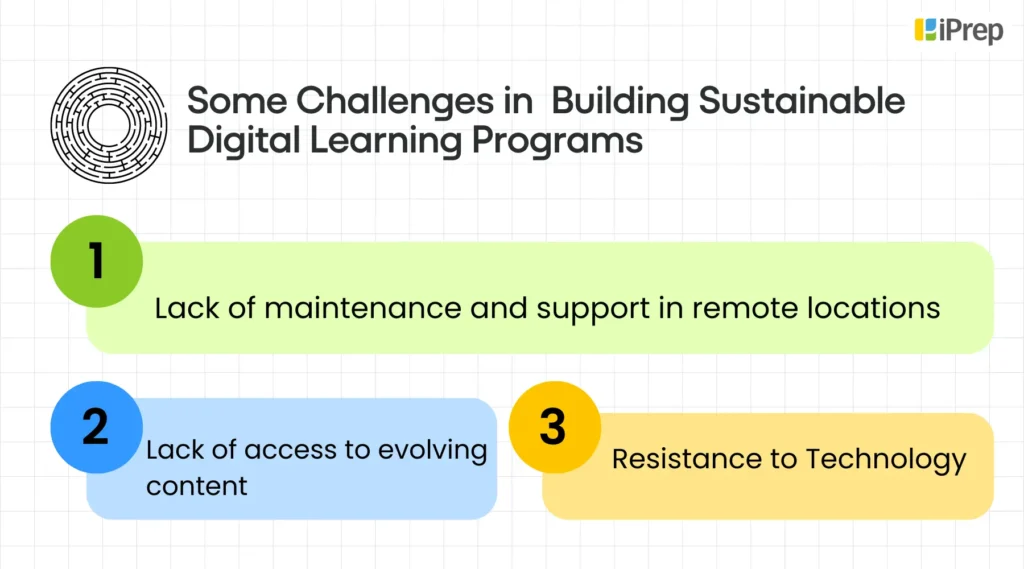
Image illustrating the challenges in building sustainable digital learning programs in government schools, as highlighted by iDream Education

Challenge 1: Lack of maintenance and support in remote location 

Delivering and installing hardware in far-flung locations is just the first step. Ongoing maintenance and repairs are far more difficult and costly.

Here’s an account from a school, in Shimla. It happened during one of our implementations of the iPrep Digital Library, our tablet-based smart ICT lab solution. The school is situated at a height where transportation is risky. Upon arrival, we observed that computers and other interconnected equipment were covered in dust. Unable to overlook this, we asked teachers why the devices were in such a state. Their response was disheartening: ‘Computers remain unused because keyboards and mouse are not working. For some wiring is the issue”. From further conversation, we learned that, “Repairing a component every time it fails is costly and time-consuming for teachers. However, those who can get the equipment fixed, reside in distant cities, and for them making frequent visits to the school is difficult. This either leads to delayed maintenance or the setups get neglected. The situation makes it difficult for teachers to use the implemented setup, resulting in unused technology.”

This is an example reflecting how maintenance and support in remote locations is a challenge. Hence, hindering the overall benefit of the education program.

Challenge 2: Lack of access to evolving content

State Board guidelines, the National Education Policy (NEP), and other initiatives drive regular updates to the curriculum. These updates necessitate frequent content revisions. However, schools in rural areas often struggle to keep their educational materials up-to-date. If we want teachers and students to have access to the latest learning material, we need to share it with them on a regular basis. But this needs high-speed internet for downloading. Sadly, many government schools in rural areas don’t have internet or it’s very slow. So, we can’t send updates regularly because they can’t download it at school. This means students and teachers end up using the same content for a long time, which might or might not be updated. Also, if teachers and students don’t find the delivered content relevant or engaging, there’s no way to change it without high-speed internet. These issues make it difficult for teachers and students in rural areas to learn compared to students of other regions and also become a barrier to holistic growth.

Challenge 3: Resistance to Technology 

A third challenge is that teachers find it difficult to adopt technology naturally since they lack familiarity with desktops and laptops. This is because their exposure to technology has transitioned from TV to mobile devices. They haven’t experienced a structured transition from TV to desktops, laptops, and then to mobile phones or smartphones. The majority of them have shifted directly from TV to smartphones, while some have gone from TV to keypad phones before adopting smartphones. This lack of a gradual transition is the reason why teachers resist using education technology in the classroom. 

Overcoming Challenges! How Do We Build Sustainable Digital Learning Programs?

Effortless, Easy, and Low Maintenance Setup

We prioritize ease of use, simplified setup, and minimal maintenance in our digital learning solutions.  To ensure seamless adoption of technology by teachers, we have focused on teacher’s familiarity with Android-based devices. Further, we’ve streamlined digital learning in classrooms with a single device, whether it’s a smart TV or interactive panel. Our devices can be set up in just 30 minutes without specialized technical assistance. It just requires just four screws and a stand, to mount on any wall. Teachers simply plug in the pen drive and start playing curriculum-aligned content on iPrep, just like they access any other app on their phones. Smart TVs are operated via remote control whereas interactive flat panels are via touch, removing the need for complex computing hardware that’s hard to set up, manage and use.

This approach helps our CSR and other partners in building sustainable digital learning programs in remote or resource-limited areas, where finding technical support can be challenging. 
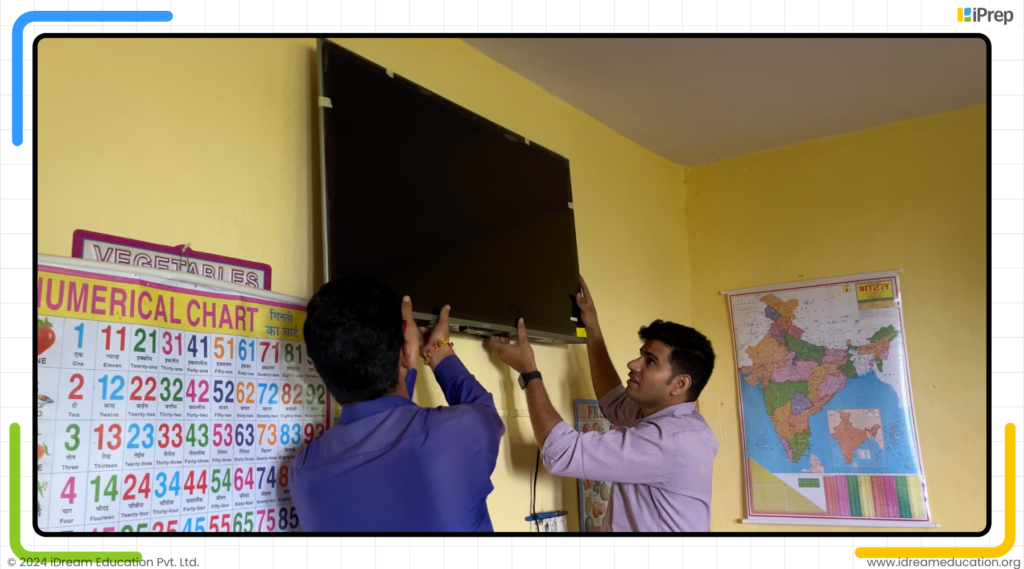
Image showing team members of iDream Education mounting their easy to setup manage and use smart class in government schools

One example explaining the situation is from our smart class implementation with Mount Valley Development Association in schools located within the Tehri Garhwal district of Uttarakhand, India. Here, when our team visited for the implementation and training of smart classes, they could not find a local technician to mount smart TVs on the wall. Therefore, our trainers took the initiative, successfully mounting and setting up smart classes within an hour on their own. The picture below showcases their resourcefulness.

Overcoming Content Update Challenges in Rural Areas

To ensure seamless access to updated content in government schools located in any region, we’ve developed a capability to update content in small chunks, significantly reducing the need for high-speed internet. Our iPrep platform continuously and automatically updates content whenever a device connects to the internet. If the content has been delivered offline, teachers receive a simple update notification on iPrep which they simply have to accept, and the content gets updated in small chunks. Teachers can also keep a check for updates on iPrep. This greatly enhances the amount of content in the device as per the updates in the curriculum. 

As an extension of this capability, and to make CSR initiatives more balanced, we also enable Satellite-Based Content Delivery. Corporates seeking to build sustainable digital learning programs can explore setting up satellite-based servers to store educational content. The stored content can then be distributed throughout a region, ensuring access to updated content, and reducing the dependency on the internet. 

An example of this is the smart class program in 20 schools of Saharanpur through a centrally managed server at the Nagar Nigam office. A centralized server setup within the Nagar Nigam office, connected to a Local Area Network (LAN), has scaled the implementation of our learning platform iPrep. We connected this setup with 20 Interactive Flat Panels (IFPs) implemented in 20 schools. The central server stores all the content, streamlining its distribution across schools.  This setup has significantly reduced the cost of the project and ensured the availability of offline smart class content. 

Simplified Technology Adoption by Teachers

We understand teachers’ familiarity with the Android platform, leading to its natural adoption within the classroom. This familiarity ensures minimal training requirements. It also eliminates the need for the continuous support often required when integrating digital teaching-learning tools.

A common question during CSR and other partnerships is: how frequently teacher training will need to be conducted – monthly, quarterly, or half-yearly?  But, with our easy-to-adopt devices and intuitive learning platform, the need for frequent, time-consuming training sessions is not needed, significantly reducing implementation costs.

An example of this is from our implementation of 166 smart classrooms in EJH, Meghalaya. This serves as a prime example of easy adoption, usage, and building of sustainable digital learning programs.  A recent analysis of the top 10 most active schools using iPrep Digital Class reveals that, on average, teachers are using smart classes for 23 minutes daily. Further communication with teachers of these schools confirms they frequently dedicate a full 45-minute period to smart class teaching. Teachers may spend 10 minutes settling students. Teachers effectively using the remaining time for teaching, particularly through engaging video lessons. This serves as a clear indication. Enabling technology that teachers are already familiar with, will help social sector investors build sustainable digital learning programs in government schools.

To Conclude

Building sustainable digital learning programs in government schools is a journey, not a destination. By enabling effortless setup, overcoming content challenges, and simplifying technological adoption, we create a powerful foundation for learning and growth. Let’s continue to collaborate, innovate, and invest in solutions. These efforts will empower teachers and students and ensure quality education reaches every corner of our nation.

In case you would like to know more about our digital learning solutions, visit our website, www.idreameducation.org,  or write to us at share@idreameducation.org

PM Modi Ji’s Perspective on Technology-Driven Teaching: Smart Classrooms to Empower Teachers

Learn about PM Modi Ji’s vision on Technology-Driven Teaching to empower teachers to enhance their teaching. Discover the key strategies paving the way for seamless integration and use of technology in classrooms.

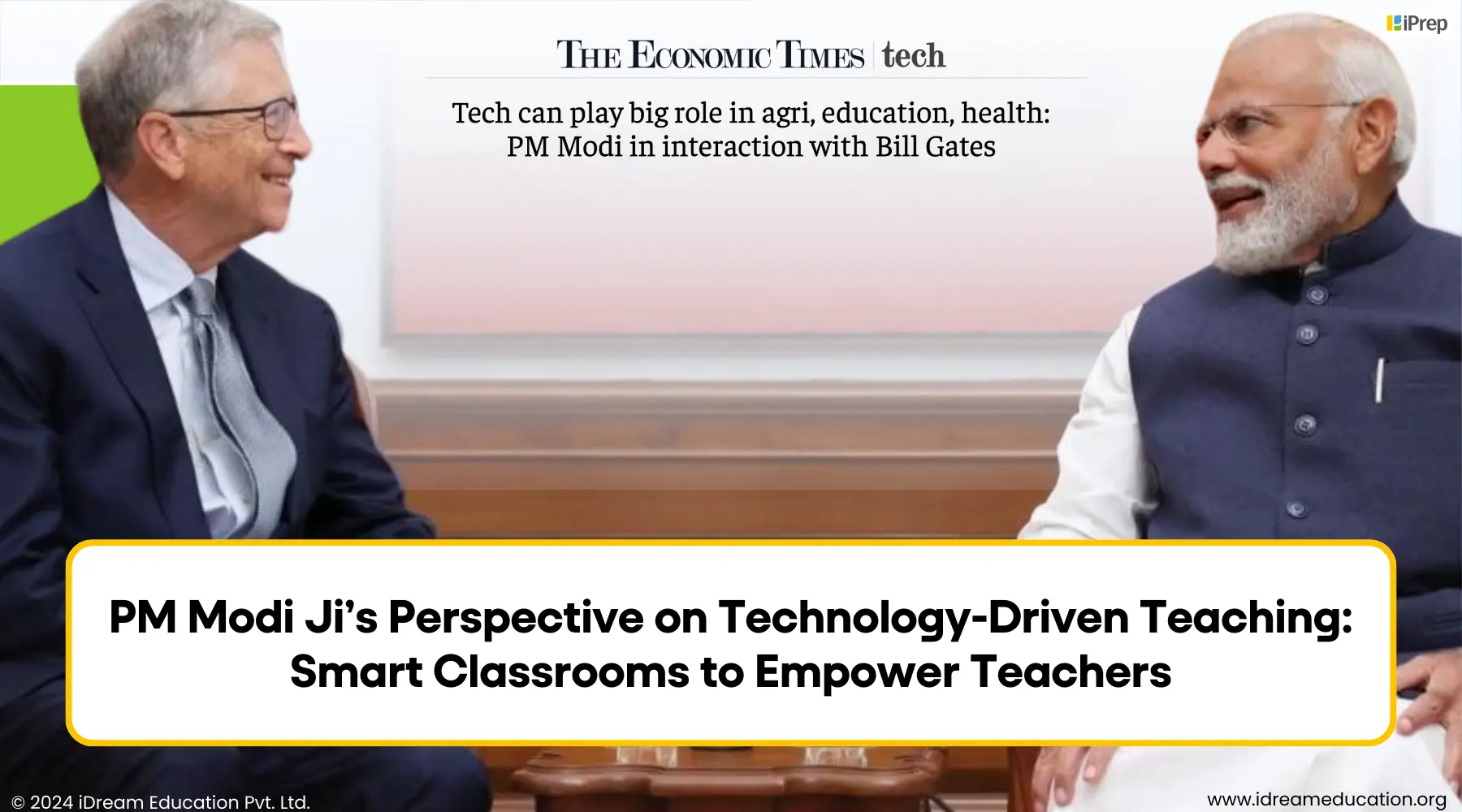
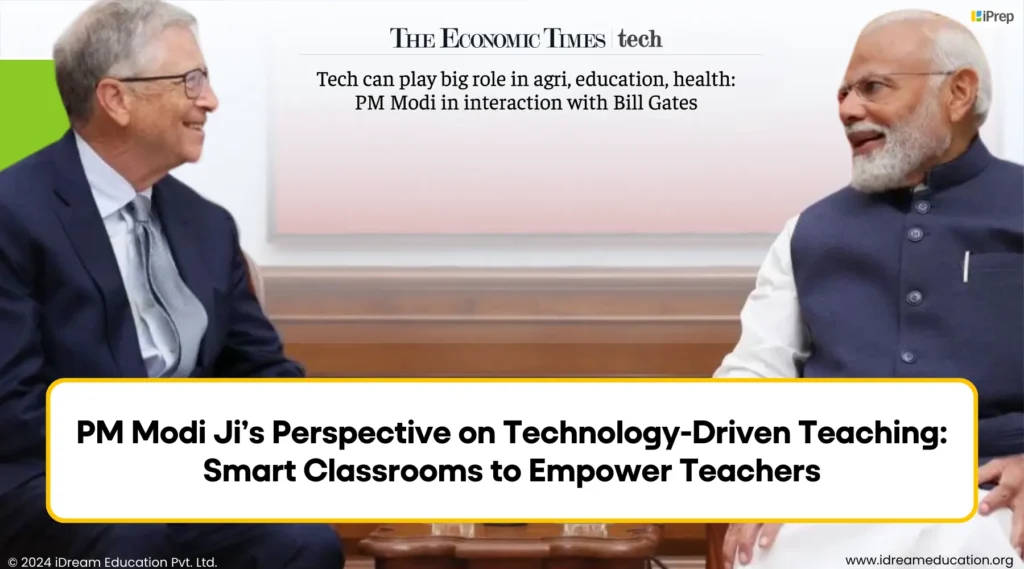
Photograph depicting Prime Minister Modi engaged in a candid conversation with Bill Gates on topics such as artificial intelligence, digital infrastructure, and technology-driven teaching

In a recent conversation between Bill Gates and Prime Minister Narendra Modi on March 29th, an intriguing question surfaced: “What technological advancements are you most excited about?” Gates, known for his keen interest in innovation and progress, sought insights from Modi. In response, the Prime Minister highlighted three critical sectors: Agriculture, Health, and Education. This exchange underscores the intersection of global leadership and technological innovation in addressing some of humanity’s most pressing challenges.

Regarding technology in education, 

Prime Minister Modi Ji rightly highlighted, “Technology is being used to address shortcomings of teachers.” In our work with teachers across 21 Indian states, we’ve encountered many challenges. Some of those are, teacher absences due to administrative duties, limited staffing, and student disengagement. Technology can address these issues and enhance teachers’ capabilities. For instance, during absences, video lessons on smart classroom devices can ensure continuity of learning. Additionally, teachers can conduct collaborative quizzes to identify learning gaps and need for personalized instruction.

Smart classrooms offer a powerful avenue for realizing this vision of Modi Ji for the Education Sector but,

Technology-Driven Teaching requires effective implementation, considering the needs and perspectives of teachers, who are the primary stakeholders of this enhancement.

While technology holds vast potential to improve education, it’s undeniable that some teachers may experience initial apprehension about adopting education technology. 

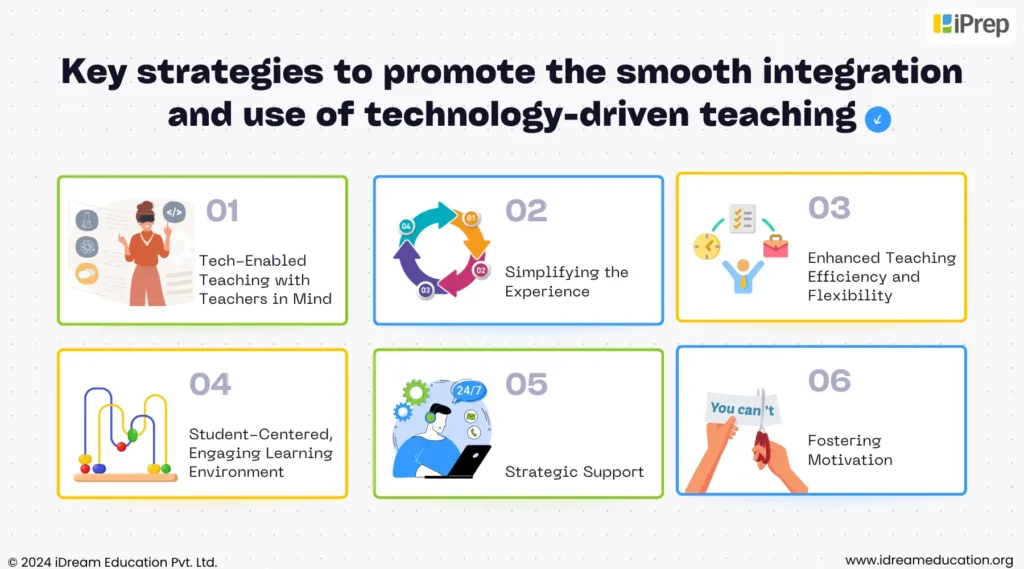
Here are key strategies to promote the smooth integration and use of technology-driven teaching:

  • Familiar and User-Friendly Technology: Focus on solutions that are intuitive and mirror technologies teachers may already use in their daily lives. Smart TVs and Interactive Flat Panels (IFPs) provide a familiar interface, minimizing the psychological barriers associated with complex new devices.
  • Simplified Teaching Experience: Technology should enhance—not complicate—the teaching process. A comprehensive learning platform that consolidates curriculum-aligned content into one easily accessible hub streamlines lesson delivery. This further eliminates time-consuming searches for relevant material.
  • Integrated Teaching Resources: When possible, technology should build upon existing practices. For example, IFPs for schools can feature digital boards with enhanced functionality such as option to save lessons, explain through digital content and more. This lets teachers retain familiar methods while gaining the power of digital resources.
  • Focus on Pedagogy, Not Just Technology:  Training of EdTech solutions should be focused on how technology can improve student outcomes, make lesson comprehension simpler, and help address diverse learning styles. This will not just enhance the technical skills required to use them but will also boost their interest in using technology in regular teaching practices.
  • Phased Implementation: Begin with basic use of smart devices in classrooms, ensuring thorough training and guidance over navigation, content, and basic tools. Gradually, as confidence and fluency grow introduce more advanced features such as courses to bridge learning gaps in students, track usage, do lesson planning, and more. This prevents teachers from feeling overwhelmed.
  • Celebrate Successes: Actively recognize teachers who excel in using implemented technology, showcasing their achievements to them and their colleagues. This builds a positive culture of technological innovation and motivates others to adopt best practices.

Complementing, Not Replacing, the Role of the Teacher

Education technology is a powerful tool in the hands of teachers. It should augment the teacher’s existing toolkit,  empowering them to deliver more impactful lessons, provide personalized attention, and foster student engagement. This aligns directly with Modi Ji’s vision of addressing teacher gaps and raising the overall quality of education.

With the integration of tech-enabled teaching through smart classes, digital libraries, and personalized adaptive learning we ensure:

An image illustrating strategies to enable technology-driven teaching with a smart classroom to enhance student engagement.
  • Tech-Enabled Teaching with Teachers in Mind

To make this tech-enabled shift truly successful, we’ve designed our learning platform with teachers and students at the forefront. Our universal interface requires minimal training, fostering enthusiasm for technology in the classroom. Plus, our platform works seamlessly across different hardware, and operating systems, enabling technology-driven teaching that fits with the natural psychology of teachers and they do not hesitate to use it. 

  • Simplifying the Experience

We understand that a smooth teaching experience is crucial.  That’s why we offer curriculum-aligned content for all grades, available in Hindi, English, and other 7 regional languages. Further, the content on iPrep is customizable as per the needs of schools and our partners!  Plus, we provide textbook content in a variety of formats such as animated lessons, practice, and more, making teaching both comprehensive and enjoyable.

  • Enhanced Teaching Efficiency and Flexibility

For integrated teaching, we generally suggest the implementation of interactive flat panels (IFPs) with our comprehensive learning platform iPrep. This is suggested to streamline lesson preparation and delivery, making technology-driven teaching a part of regular classrooms. One example of this, teachers can annotate their lessons directly on the screen, access multimedia resources, and seamlessly access preloaded curriculum-aligned content. This saves time, boosts efficiency, and empowers teachers to create dynamic, multifaceted lessons.

  • Student-Centered, Engaging Learning Environment

Technology-driven teaching fosters a learning atmosphere that’s interactive and tailored to diverse student needs. By merging pedagogy over technology, we guide teachers to use different content for different purposes such as video lessons for comprehension of complex concepts, practice for quick quiz sessions, syllabus for reading sessions, and more. Teachers are guided to follow this to ensure regular usage and create differentiated learning experiences that resonate with students.

  • Strategic Support

To ensure a smooth transition to Technology-driven teaching, a phased implementation plan is essential. We start by providing training on the basics of smart devices, navigation, and core content access. As teachers gain confidence, we gradually introduce more advanced feature. Some of these are, bridge courses for addressing learning gaps, tools for tracking student progress, batch creation and more.  This structured approach prevents teachers from feeling overwhelmed and ensures they gain the necessary skills to use technology effectively.

  • Fostering Motivation

We actively recognize and celebrate teachers who excel using smart classes. We then designate them as “master trainers,” empowering them to mentor their peers. This positive reinforcement motivates other teachers to embrace technology and creates a collaborative environment where best practices are shared.

The Path Forward

Technology-driven teaching is not a mere trend, but a necessity in preparing students for the 21st century. By carefully addressing the concerns and needs of teachers while providing user-friendly devices in schools, we can empower them to embrace technology regularly in their classrooms. This approach ultimately benefits teachers as well as students and aligns with Modi Ji’s vision of modern, innovative, and technology-driven teaching. 

In case you would like to know more about iPrep Digital Class, our smart classroom solution or any other digital learning solutions, visit our website, www.idreameducation.org, or write to us at share@idreameducation.org
The Hidden Cost of Learning Gaps: Why We Need to Close the Divide?

Image displaying the students who could have learning gaps and need of PAL Solution by iDream Education

Learning gaps pose a significant concern within the Indian education system. The Annual Status of Education Report (ASER) 2023 reveals alarming statistics: only half of all students in grade 5 can read a grade 2 level text fluently, and a substantial number of students in grades 3 and 4 lack foundational arithmetic skills. This gap becomes further pronounced amongst rural learners; Pratham’s ASER report indicates that over 50% of rural students aged 14-18 struggle with basic mathematics. 

These are just two examples of the learning gap, but this troubling pattern extends across numerous subjects

The roots of the learning gap in India are multifaceted and deeply intertwined.  

  • A system focusing on aggregate scores rather than subject-specific mastery often leads to students being promoted to the next grade despite significant gaps in foundational skills. 
  • Further, absenteeism in schools – whether due to economic pressures on families or illness – creates a discontinuity in education, leading to an incremental learning gap. 
  • Additionally, a lack of adequate infrastructure, including overcrowded classrooms and insufficient teaching materials, hinders effective learning.  Limited resources within many schools, especially in rural areas, further exacerbate the problem. 
  • Absenteeism among teachers, often related to other administrative duties assigned, disrupts the flow of instruction. When combined with a lack of engaging, stimulating lessons focused on understanding, students become disinterested in learning. 
  • An overemphasis on rote memorization, geared toward passing exams rather than developing critical thinking skills, leaves students less equipped to apply knowledge in real-world settings.

Beyond these immediate consequences, learning gaps create a dangerous ripple effect

  • Students who struggle to keep up with grade-level learning may become discouraged and lose motivation altogether. This disengagement can lead to dropping out of school, limiting their future opportunities, and increasing the likelihood of involvement in risky or harmful behaviors.
  • Furthermore, learning gaps can deeply damage a student’s self-esteem. The constant feeling of being behind their peers can lead to a feeling of being judged, a reluctance to participate in class, and an overall belief that they are not capable of learning. This diminished self-confidence can hinder their development both inside and outside of the classroom.
  • The effects of learning gaps extend far beyond the classroom. Students who haven’t mastered foundational skills will face challenges in real-world setting.  Individuals less equipped with critical skills and knowledge are more likely to face unemployment and underemployment. This places a burden on the economy and hinders overall progress.

“COVID-induced lockdowns significantly widened existing learning gaps. Students who lacked access to digital resources were unable to attend online classes/learn on their own for two years, putting them at a considerable disadvantage. This unequal access to remote learning exacerbated educational disparities and created a pressing need for targeted interventions to get students back on track”

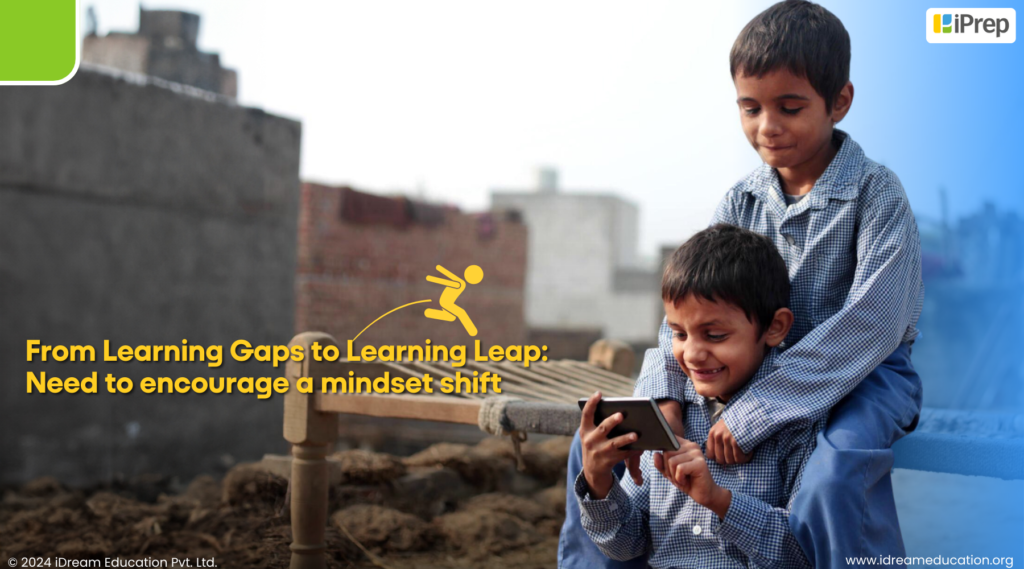
From Learning Gaps to Learning Leap: Need to encourage a mindset shift

Image illustrating the necessity of CSR projects in India to scale education initiatives for bridging learning gaps

To address learning gaps, it’s crucial to first identify the specific areas where students are struggling through diagnostic assessments. Then, focus on targeted instruction and individualized support, which might include one-on-one tutoring, adaptive learning, technology integration, or additional practice in foundational skills. 

  • Differentiating instruction by providing varied learning activities and materials caters to different learning styles. 
  • Utilizing technology-based solutions such as adaptive learning can be engaging and help students learn and cover their historical learning gaps at their own pace.  Regular formative assessments allow teachers to track progress and offer timely feedback. 

Haryana has made history by becoming the first Indian state to implement personalized and adaptive learning. This e-Adhigam initiative of the Haryana Government is benefitting 500,000 students in Classes 10-12. Students are given a Samsung Tablet equipped with pre-loaded content, personalized and adaptive learning (PAL) software, and with 2GB of free data. 

We have also enabled our PAL Solution in eAdhigam initiative for students of classes 11th and 12 for 5 subjects, and students have started to download and use iPrep PAL. From the recent evaluation, it is analyzed that on average students have shown a remarkable 44% improvement in their learning.

Scaling Education and Closing the Learning Gap with Adaptive Learning Solutions

The need for effective, scalable solutions to address learning disparities is more crucial than ever. Personalized learning paths, facilitated by tailored educational technology, offer a powerful avenue to bridge historical gaps and empower students toward academic improvement. Here’s why:

  • Personalized Learning Paths:  Diagnostic assessments play a pivotal role in crafting personalized learning plans. By identifying a student’s knowledge level, these solutions map out a custom path that strengthens foundational concepts and ensures grade-level mastery.
  • Bridging Historical Learning Gaps: Instead of a one-size-fits-all approach, adaptive learning platforms guide students to content from previous grades if foundational concepts are weak. This targeted revision strengthens their understanding before they progress to current grade-level material.
  • Encouraging Self-Directed Learning:  These platforms foster self-paced exploration, allowing students to switch between subjects, revisit concepts, and practice until they feel confident. This flexible and judgment-free environment promotes ownership of the learning process and can spark interest in learning.
  • Inclusive and Adaptable: A well-designed personalized and adaptive learning solution is for everyone. Students with diverse learning styles benefit from multiple content formats such as curriculum-aligned videos, syllabus books, practice questions, and more. 
  • Data-Driven Insights: Detailed reporting dashboard track student progress, learning patterns, and assessment performance. This valuable data empowers students, teachers, parents, and administrators to identify individual needs, provide targeted support, and measure the success of educational initiatives.

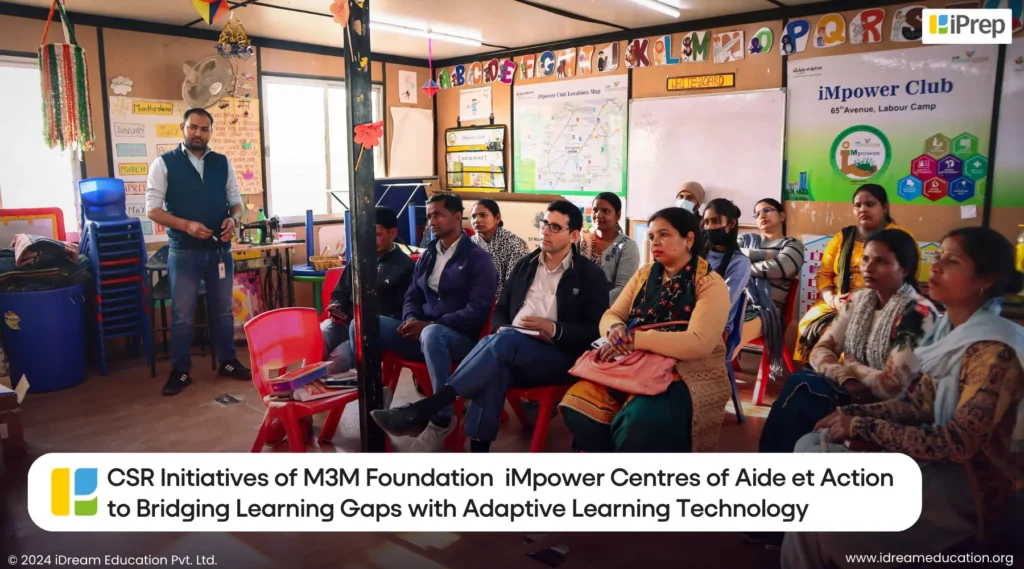
An Example of CSR Initiatives to Bridging Learning Gaps with Adaptive Learning Technology

 Image depicting a CSR education project of M3M Foundation aiming to bridge learning gaps through PAL labs at the iMpower Centre of Aide et Action by iDream Education

Considering these facets of adaptive learning solutions, M3M Foundation has introduced PAL Labs at iMpower Centres of Aide et Action. This initiative is primarily aimed at addressing the longstanding learning gaps experienced by students at these centers. Given that the students attending iMpower clubs are often the children of construction workers who frequently relocate for work, their education is disrupted due to the transient nature of their parents’ employment. Consequently, upon their arrival at the center, these children exhibit varying levels of learning, necessitating personalized educational approaches.

To facilitate their progress towards grade-level proficiency in a conducive learning environment, we in partnership with M3M Foundation have implemented the PAL solution on tablets in a digital library also known as PAL Labs. PAL on tablets allows students to engage with content from any grade level, with the app guiding them from foundational concepts to grade-appropriate learning materials. Access to student reports is restricted to teachers, coordinators, and authorized personnel, fostering a monitoring-focused yet non-judgmental learning environment for the students. 

The recent implementation of PAL Labs holds promise for learning improvement, and we anticipate witnessing positive outcomes soon.

Let’s bridge the learning gap in India together!  

PAL’s impactful approach has the potential to close the learning gap nationwide. By joining forces – CSR investors, impact investors, philanthropists, NGOs, hardware companies, and other stakeholders in the ecosystem– we can scale PAL’s implementation across India, empowering countless children to address their learning gap and find joy in education.

Together, let’s make a lasting difference in the lives of millions.

In case you would like to know more about iPrep PAL and other digital learning solutions, visit our website, www.idreameducation.org, or write to us at share@idreameducation.org
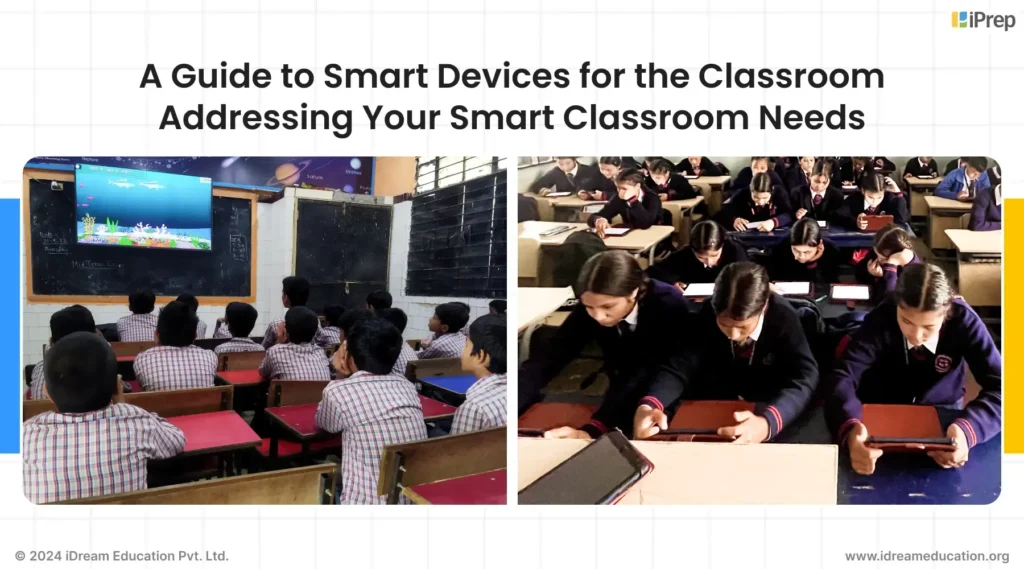
A Guide to Smart Devices for the Classroom: Addressing Your Digital Classroom Needs

In today’s tech-driven world, classrooms are undergoing a transformation. Government, NGOs, foundation, corporate, and other stakeholders in the education ecosystem are working to strengthen school infrastructure. 

An array of smart devices for classroom needs by iDream Education, including interactive flat panels, smart tv, educational tablet, pal and educational software

Gone are the days when classrooms were just about static blackboards, chalk, textbooks. Teachers need smart devices for the classroom to create dynamic, interactive learning environments. Studies have shown that incorporating EdTech can boost student engagement by up to 50% [Journal of Educational Psychology, 2023]. Tech-enabled classrooms improve information retention, eliminate rote learning, and personalize the learning experience for students of all backgrounds. This guide will equip you with the knowledge you need to navigate the exciting world of digital classroom devices. This will help you address your specific needs and enhance your classroom into a hub of innovation and engagement.

Leveraging Smart Devices for the Classroom to Address Your Digital Classroom Needs

Smart Classes: Your Impact Investment in the Future of Learning

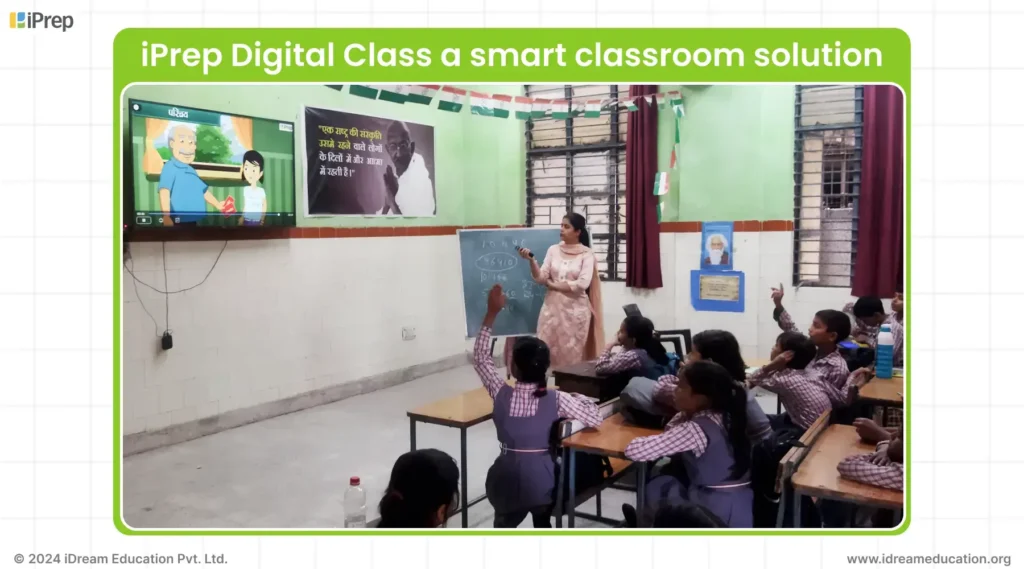
Smart classes are one of the smart devices for the classroom that offers a compelling investment opportunity for CSR and impact investors. Digital Class empowers teachers, inspires learners, creates a more equitable education landscape, and delivers measurable social impact. It is a powerful proposition for investors seeking to drive positive change.

Image showcasing smart classroom setups in schools implemented in collaboration with Foundation for their CSR initiatives in education by iDream Education

Affordable smart devices for the classroom. Innovation within your reach:

Empower teachers to engage students with easy-to-use smart classroom solutions. iPrep Digital Class simplifies technology integration with versatile hardware options and preloaded, curriculum-aligned content that works offline. This makes it ideal for diverse educational settings across India.

  • Teacher Empowerment: iPrep Digital Class is a new age smart classroom solution. This combines suitable smart devices for the classroom with preloaded curriculum-aligned content for K-12. Teachers can access all the content on iPrep which is given preinstalled on hardware to empower teachers to deliver dynamic, easily understood lessons.
  • Seamless Setup: Cut down on technical glitches with flexible hardware choices such as interactive flat panel (IFP), Smart TV, projector, and more
  • Reduced Tech Barriers: Works on various operating systems such as Windows, Linux, Android for flexible deployment.
  • Teacher-Focused Design: Intuitive interface makes it easy for teachers to integrate the digital into their existing lesson plans.
  • Data-Empowered Teaching: Teachers can monitor lessons/topics taught through a smart class on a comprehensive reporting dashboard. The dashboard tracks usage based on individual teacher login.

Teachers have been using iPrep Digital Class, one of the smart devices for the classroom effectively for various purposes. Some use it for post-syllabus revision, while others incorporate it regularly to explain complex concepts. Nonetheless, in certain schools, smart classes are being used to cover for teacher absences during periods of engagement in administrative duties across multiple school sites.

Experience the Joy of Book Reading on Interactive Digital Boards in Palamu, Jharkhand

Smart ICT Labs: The Key to Scalable, High-Impact Education

Clubbing a Smart Class with a Smart ICT lab is a powerful model for bringing meaningful and tangible impact. Smart ICT Labs represent a highly adaptable solution for schools, designed in alignment with ICT Lab Scheme of Samagra Shiksha. By replacing complex computing hardware with a streamlined, user-centric approach, smart ICT Labs enables scalable digital learning that transcends traditional infrastructure constraints. This cost-effective solution ensures that the benefits of digital education reach all students, regardless of a school’s location or existing infrastructure.

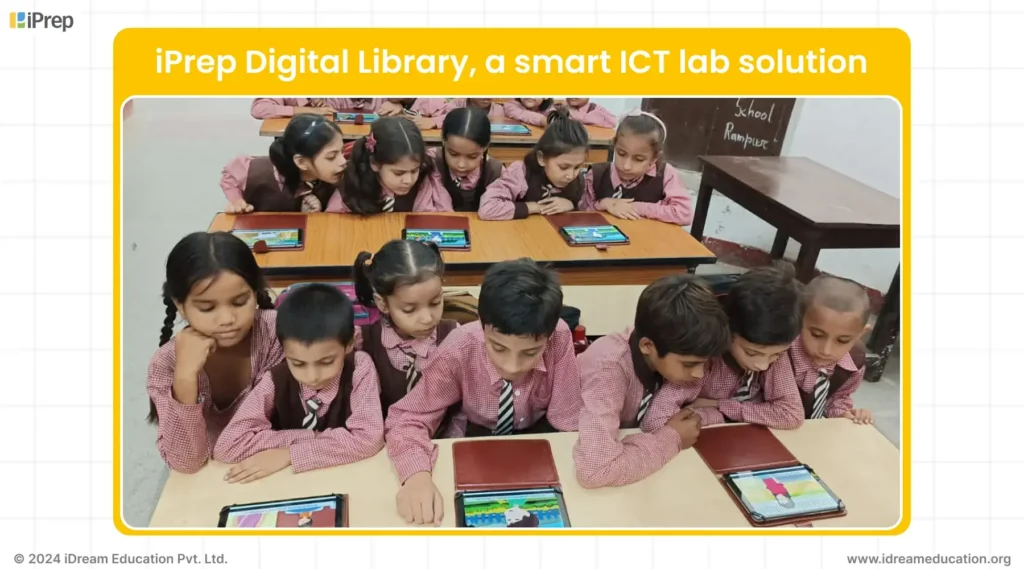
Image showing a tablet-based digital library, representing an smart ICT lab for schools implemented by iDream Education

Personalized learning solutions for schools :

Upgrade personalized learning with these scalable, smart ICT labs, seamlessly fitting into schools and class timetables. iPrep Digital Libraries give students personalized learning experiences on tablets or notebooks, all supported by preloaded K-12 content in preferred language and insightful usage reports.

  • Flexible Sizes: You can choose the lab size (5 to 45 devices) that best fits your school’s needs and budget.
  • Collaborative and Personalized: Designed for rotational use, promoting student-led learning on shared devices.
  • Knowledge at Their Fingertips: The extensive digital content for K-12 and beyond academics to address the diverse learning needs of students.
  • Data-Empowered Teaching: Teachers can monitor individual student progress through a comprehensive reporting dashboard that tracks usage based on individual login.

Implemented and being used in many schools across India, iPrep Digital Library enhance classroom efficiency by integrating seamlessly into the timetable for rotational use. Supporting a range of devices including tablets, primebooks, and notebooks, the digital library aligns with educational program planning, catering to diverse needs.

Tablet/notebook-based Blended Learning in for Classrooms 

Tablet/notebook-based blended learning is a solution that bridges educational gaps, empowering students both inside and outside the classroom. This approach seamlessly integrates smart devices for the classroom with accessible, at-home tablet-based learning. By complementing at home learning with EdTech, you enable equity and inclusion, ensuring all students have the resources to succeed regardless of their socioeconomic background. For social sector investors, this translates into a high-impact investment that promotes educational improvement, delivers measurable student outcomes, and drives long-term societal change.

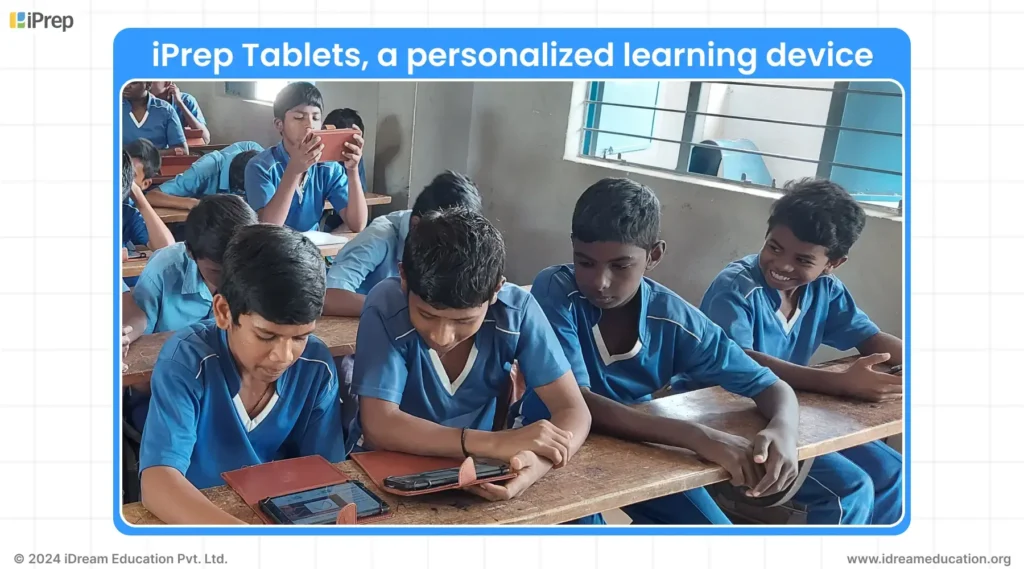
Personalized educational tablets designed for CSR initiatives in education by iDream Education

Tablet based learning solution at home to complement Smart Classroom Learning

iPrep Tablets, is a personalized learning device within your reach! iPrep Tablet puts engaging digital content for students in grades 1st through 12th right in the palm of your hand. Whether at home, school, or on the go, students can learn at their own pace, catch up on past concepts, and strive for mastery.

  • Offline First: Pre-installed content (customizable per need) ensures learning isn’t limited by connectivity, with online options for broader exploration.
  • Multi-grade Access: Flexibility to switch between grade levels supports personalized learning and revision.
  • Growth Beyond Grades: Enable students to go beyond K-12 with books, interactive lessons, and resources on health, safety, and inspiration.
  • Insightful Learning: Offline usage reports to empower students, parents, and teachers to track progress and make informed decisions.

Personalized Learning on tablets empowers students to take charge of their education, fostering independence and a love of learning.

PAL for Need-Based Learning: Adapt and Excel

Adaptive learning solutions are poised to enhance education. Personalized and adaptive learning solutions hold the key to addressing the long-standing challenge of delivering truly individualized instruction at scale. While the classroom setting offers valuable social interaction and structure, adaptive learning supplements this by personalizing content, learning path, and feedback to each learner’s unique needs and progress. 

Adaptive learning isn’t a replacement of the classroom – it’s a powerful complement 

Pal is a complement to classroom learning as it empowers teachers to become more effective guides and paves the way for a future where every student has the best possible chance to succeed. With many state governments, corporates, NGO, and Hardware companies enabling adaptive learning solutions in schools, personalized adaptive learning is emerging as a promising solution. 

Designed with the Edtech Tuna Framework, the PAL Solution by iDream Education offers a personalized and enjoyable learning experience for students in classes 3rd to 12th on tablets, notebooks, and mobile devices.  Available in both English and Hindi, the solution addresses the critical need to bridge historical learning gaps for improved student outcomes.

How PAL Works for Students:

  • Personalized Learning Paths: PAL starts by understanding each student’s foundation through diagnostic tests. Based on the results, it creates tailored learning paths to help students master essential concepts, including those they may have struggled with in previous years.
  • Engaging Practice and Targeted Support: Students receive instant feedback on practice questions and access targeted video lessons, ensuring they grasp every concept and reach their grade-level potential.

PAL Coach App is an Extension of Classroom Teaching

  • Monitor Progress: Teachers get access to a centralized reporting dashboard to track individual student progress. With this, they are able to identify areas where additional support may be needed for a student.
  • Provide Personalized Guidance: Address student questions and assign homework through a convenient chat feature.
  • Support At-Home Learning: Allocate time for individualized guidance, optimize learning beyond the classroom. Not only this, but PAL also encourages today’s ‘coaching culture mentioned in NEP 2020.

Enhance learning outcomes and empower students to cover their historical learning gaps in a joyful learning environment with the PAL Solution!

In addition to the installation of iPrep on smart devices in classrooms, iPrep can also be accessed as a mobile app for at-home learning. This makes iPrep a versatile learning platform for students from both public and private schools.

Key advantage of incorporating iPrep-enabled smart devices in classrooms is the user-friendly interface, designed according to universal design principles. This intuitive design makes iPrep exceptionally easy to navigate and utilize, requiring minimal training for effective implementation.

To deliver a truly enhancing educational experience, iPrep seamlessly integrates with the digital classroom devices of your choice. This flexibility is crucial when designing your digital classroom environment. By offering a range of compatible devices,  iPrep empowers you to select the hardware and OS setup. All this to best align with your school’s specific needs, budget, existing infrastructure, classes, content, curriculum, and language preferences. This adaptability maximizes the reach and positive impact of your education initiatives, ensuring a solution that perfectly complements your unique learning environment.

In case you would like to buy end to end Digital class hardware for your education CSR/NGO project, please contact us at +91 9501110665 or write to us at share@idreameducation.org

Importance of Personalized Adaptive Learning (PAL) in the National Education Policy’s Implementation

"Image showing a visual representation of the National Education Policy 2020, with emphasis on Personalized Adaptive Learning (PAL)

The National Education Policy (NEP) 2020 envisions a profound transformation in the field of education, emphasizing core values and principles that prioritize foundational skills such as literacy and numeracy, high-order skills including critical thinking and problem-solving, and all round, holistic growth of students in a life connected approach.

To achieve this, there has been a significant change in NEP 2020 till 2023 which is a transition from the conventional 10+2 model to the ever-growing 5+3+3+4 structure.

The revised framework prioritizes essential skills and life competencies at all educational levels. Its goal is to assist students in addressing historical learning gaps, achieving grade-appropriate proficiency, and fostering holistic development.

How do we achieve this?

EdTech companies are actively researching, innovating, and developing solutions to cater to the diverse learning needs of students, while concurrently assisting them in addressing historical learning gaps, attaining grade level learning, and promoting holistic development.

“A notable approach similar to guidelines of NEP 2020 has been outlined and is implemented by the Haryana Government under the e-Adhigam Initiative where 5 lakh students have been provided tablets with integrated personalized adaptive learning (PAL) solutions to cover their learning gaps that occurred due to school closures during Covid induced lockdown ”. 

Positioned as a forefront technology in education, PAL solution provides a framework where each student can tailor their unique learning journey. Despite the Indian government’s issuance of comprehensive PAL guidelines in 2018, widespread implementation has been limited. This may be because of lack of awareness regarding PAL solutions that can make every student feel welcomed, cared for, and safe, as  mentioned in fundamental principles (Pg. No. 5) of NEP 2020. 

Importance of Personalized Adaptive Learning (PAL) in the National Education Policy’s Implementation 

Personalized Learning Experience

  • Personalized adaptive learning allows students to first understand their current proficiency level and then create a personalized learning path, catering to their individual learning preferences.
  • This aligns with the NEP’s focus on providing a flexible and inclusive education system that recognizes, identifies, and fosters unique capabilities of students [Pg. No. 5, Point 1, 3].

Addressing Historical Learning Gaps

  • Personalized adaptive learning empowers students to progress from their existing level of understanding, addressing historical learning gaps along the way, and ultimately gain mastery of each chapter.
  • This aligns with NEP’s goal to ensure foundational literacy and numeracy (FLN) for all students [Pg. No. 5, Point 2].

Lifelong Learning and Skill Development

  • PAL solution promotes a lifelong learning approach by encouraging self-directed learning and skill development. With adaptive learning solutions students get control over their learning journey, allowing them to progress at their own pace.
  • This aligns with the NEP’s vision of creating a holistic and flexible education system that prepares students for the challenges of the 21st century [Pg. No. 5, Point 5].

Inclusive Education

  • Personalized adaptive learning (PAL) advocates an inclusivity in education because one size doesn’t fit all. PAL enables access to learning material that aligns with different abilities and learning styles such as audio books, video lessons, and more to accommodate diverse needs.
  • This supports the NEP 2020 emphasis on inclusive education, ensuring equitable opportunities for all learners, including those with special needs [Pg. No.5, Point 1, 14].

Student Engagement

  • The PAL solution delivers curriculum-aligned PAL content that enhances student engagement and deepens conceptual understanding of every topic, chapter, and subject in a joyful, textbook-aligned learning environment – free from comparison or judgment.
  • This aligns with NEP 2020 vision of increasing engagement by creating a positive attitude towards learning, fostering a lifelong love for education.

Data-Driven Decision Making

  • Personalized adaptive learning solutions generate valuable data on individual student progress, learning patterns, and areas of strength and weakness.
  • This aligns with National Education Policy 2020, of making informed decisions. With PAL solution teachers can personalize teaching strategies to meet the specific needs of each student [Pg. No. 5, Point 19].

iPrep PAL: Designed to Enable Personalized & Adaptive Learning to Fulfill NEP Goals

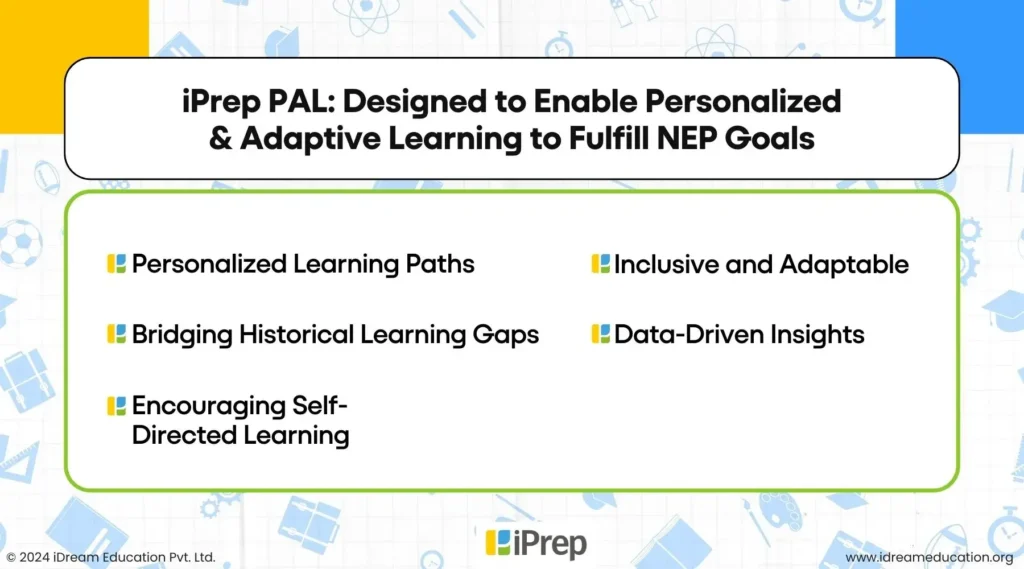
Image depicting iPrep PAL, a personalized adaptive learning solution designed to enable to fulfill National Education Policy (NEP) goals
  • Personalized Learning Paths: iPrep PAL is a structured application based on Edtech Tulna Framework. It uses diagnostic tests to assess a student’s knowledge and builds custom learning paths to address historical learning gaps and ensure grade-level mastery.
  • Bridging Historical Learning Gaps: Students are guided to content from lower grades based on the score of a diagnostic test. This ensures they build a strong foundation of understanding before progressing to learning of existing grades.
  • Encouraging Self-Directed Learning: iPrep PAL promotes self-paced learning. It allows students to freely switch between subjects, revisit PAL content, and retake practice sessions until they achieve mastery. This flexible, judgment-free approach encourages student engagement and fosters a lifelong love for learning.
  • Inclusive and Adaptable: iPrep PAL is a comprehensive learning solution designed for all students. It offers diverse types of content such as videos, syllabus books, practice questions, and more to cater to different learning styles.  Plus, its extensive curricular and extracurricular content ensures every student finds something engaging, making it an invaluable tool for learners.
  • Data-Driven Insights: The reporting dashboard of iPrep PAL provides detailed insights into student progress, learning patterns, and test performance. This data helps students, teachers, parents, and other stakeholders identify learning level and progress of individual students to provide targeted support and measure program impact.

Additionally, the PAL content on the iPrep PAL App is closely aligned with the school curriculum, ensuring that learning feels seamless and connected to what students experience in the classroom. This alignment helps students stay engaged while supporting the NEP 2020 goals, keeping them on track with grade-level learning as defined by their schools

To conclude,

The implementation of Personalized Adaptive Learning (PAL) within the framework of the New Education Policy (NEP) holds significance for the educational landscape. PAL solution seamlessly aligns with the NEP’s vision of fostering personalized learning paths, bridging historical learning gaps, promoting lifelong learning, and facilitating skill development. Its inclusive nature ensures that every student, regardless of learning gap or pace, receives tailored learning experiences. 

The iPrep PAL solution stands as a testament to this alignment, offering a framework for driving meaningful impact for India’s students through Govt. and social sector education initiatives. By addressing diverse needs, enhancing student engagement, and enabling data-driven decision-making, PAL emerges as a catalyst for the transformation of education in line with the progressive goals set forth by the New Education Policy 2020. 

As we move forward in enhancing the education system, personalized adaptive learning becomes not just a platform but a foundation for shaping a more equitable, inclusive, and effective educational ecosystem.

If in case you would like to know more about iPrep PAL, A Personalized Adaptive Learning Solution, visit our website, www.idreameducation.org, or write to us at share@idreameducation.org

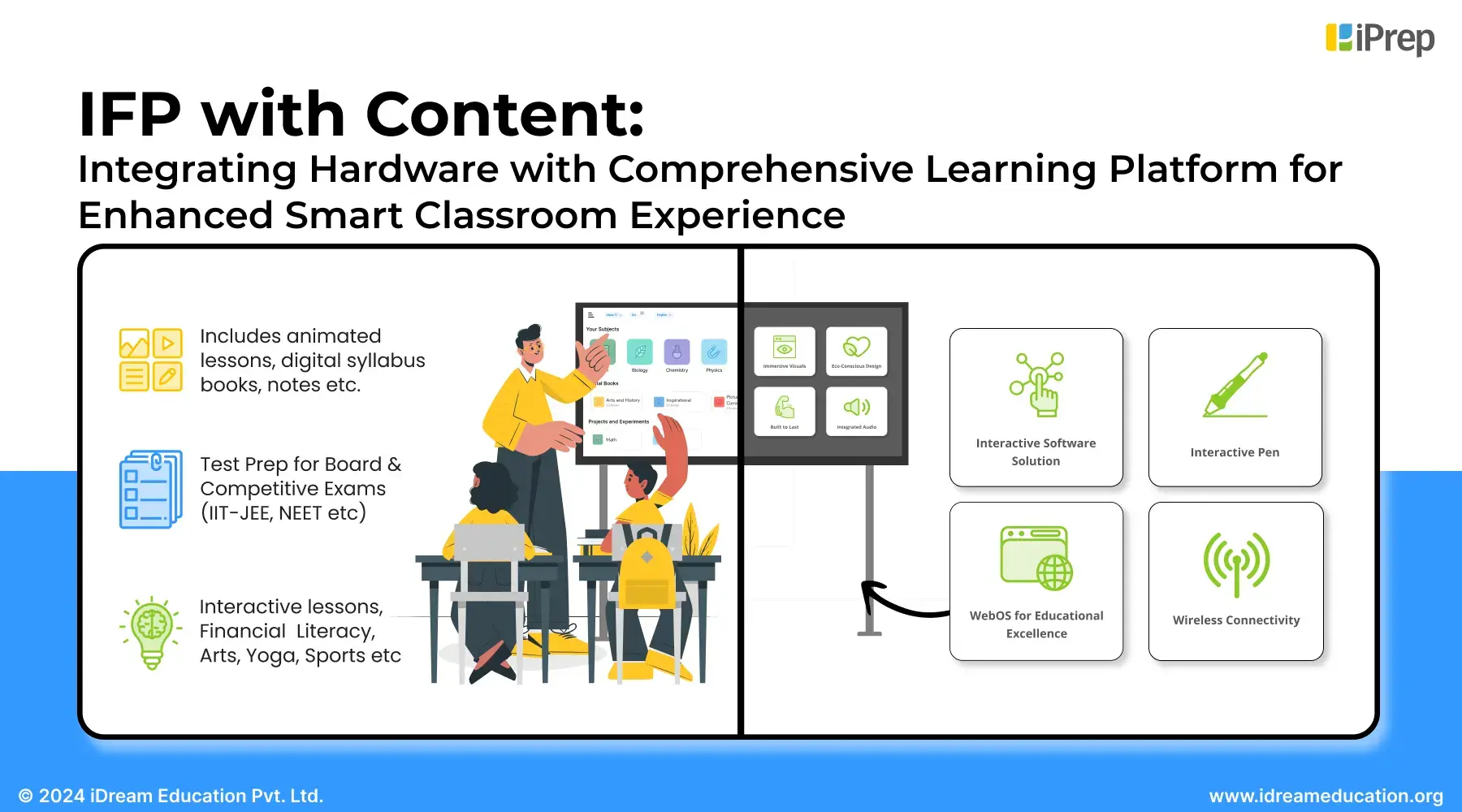
IFP with Content: Integrating Hardware with Comprehensive Learning Platform for Enhanced Smart Classroom Experience

Image depicting the presence of iDream Education's IFP with content across various states in India, including Delhi, Haryana, Uttar Pradesh, Madhya Pradesh, Tamil Nadu, Rajasthan, Punjab, Gujarat, Maharashtra, and others

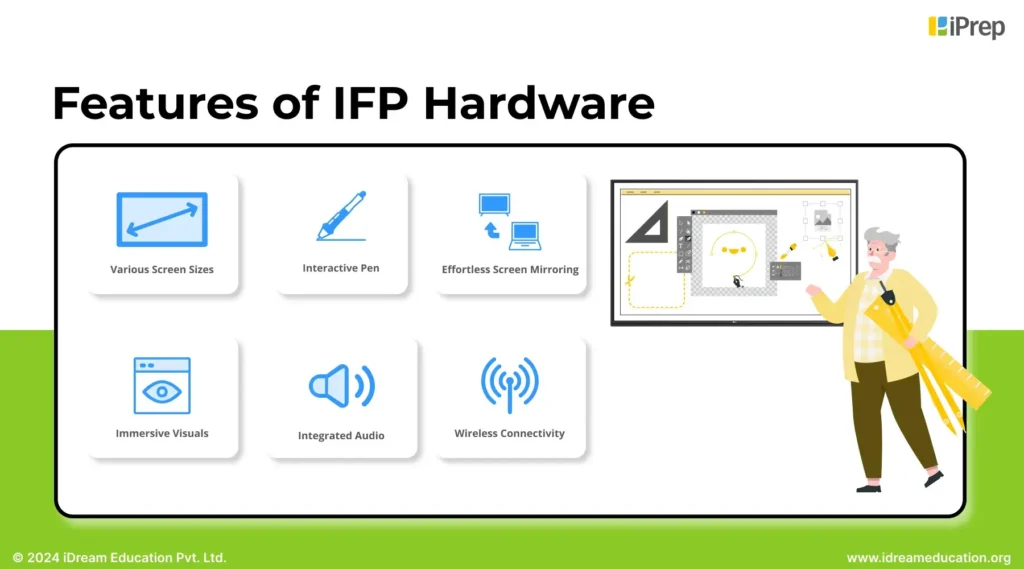
With education continually evolving, Interactive Flat Panels (IFPs) have emerged as flexible tool for classrooms. Beyond serving as mere display screens, IFPs have evolved into versatile digital boards, offering teachers unparalleled flexibility during teaching sessions. With a simple touch, teachers can easily switch to an annotation tool, seamlessly drawing shapes, writing, using sticky notes, creating mind maps, and more to enhance classroom instruction. 

Yet, the potential of IFPs extends even further with the integration of learning platforms, where they transcend being just interactive screens to become hubs of curriculum-aligned educational content. This fusion, known as IFP with content, seamlessly merges textbook materials across multiple categories, effectively transforming teaching into an effortless, engaging, and enjoyable experience for both teachers and students alike. As the educational landscape continues to evolve, IFPs stand as an emblematic gateway to futuristic classrooms. 

Choose the Best IFP with Content for Futuristic Smart Classrooms

When selecting an Interactive Flat Panel (IFP) with content, opt for a smart class vendor that seamlessly integrates hardware with a comprehensive Learning Platform. iDream Education stands out as one such provider. Our ethos revolves around advising investors on selecting economical, enduring, and advantageous smart class technology experiences as IFP. Moreover, we seamlessly integrate our all-in-one K-12 learning platform into smart class devices such as IFP, streamlining both educational program planning and usage in schools.

Enabling IFP with content represents the most effective approach for educational initiatives, minimizing reliance on multiple partners and consolidating efforts into a singular, streamlined solution.

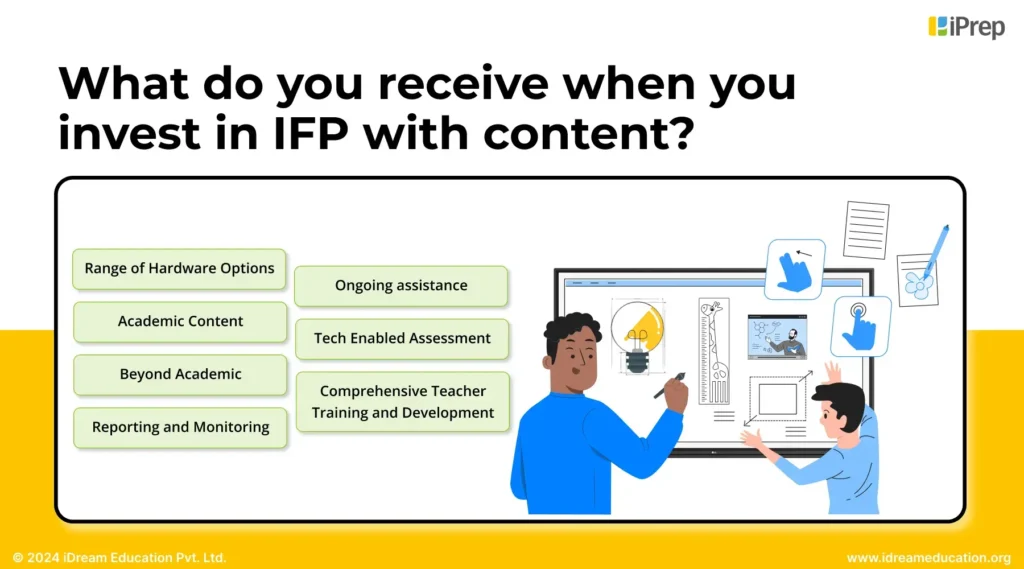
What do you receive when you invest in IFP with content?

An interactive flat panel by iDream Education showcasing its features, including touch functionality, high-resolution display, built-in speakers, and connectivity options

Range of Hardware Options

Smart Class Hardware such as Interactive Flat Panel (IFP), offers a variety of specifications to cater to diverse needs of stakeholders. These include sizes ranging from 65 inches to 110 inches, along with different operating systems such as Android, Windows, and Linux. IFPs boast an array of features that enhance teaching flexibility, including audio-video settings, touch capabilities, and system memory. Our role is to assist stakeholders in selecting the optimal IFP hardware for their projects. Moreover, we developed our learning platform, iPrep, to seamlessly integrate with all hardware and operating systems, enabling you to set up IFP with content according to your project requirements.

Academic Content

iPrep offers a K-12 curriculum aligned with comprehensive digital content for classes 1st to 12th across all major subjects in English, Hindi mediums and other regional languages. Further, we ensure content alignment with NCERT or State Board curriculum, as per the requirements of respective Government schools. iPrep integrates a diverse range of learning materials, including animated lessons, syllabus books, a digital library, assessments with real-time feedback, engaging activities, notes, and practical exercises, providing a comprehensive learning experience.

Beyond Academic

Our digital book library offers thousands comprising stories, inspirational biographies, poems, and beyond, catering to diverse interests. Alongside these resources, we provide life skills content covering morals, values, health, safety, ethics, and more to foster holistic student growth. Additionally, we offer content including Competitive Exam Prep for thorough preparation for olympiads, IIT JEE, and more, a Climate Action Course to promote environmental stewardship, a Career orientation course to help students navigate the professional path with confidence and clarity, Digital Literacy to thrive in an interconnected world, and Financial Literacy to build a secure foundation for wealth management, ensuring comprehensive support for student’s personal and professional growth.

Reporting and Monitoring

Teachers, principals, project partners, and other stakeholders involved in implementation are given access to iPrep’s reporting dashboard, where usage reports are stored offline and automatically synced to cloud-based reporting dashboards. This feature is integrated into every implementation to maintain a continuous emphasis on data-driven learning outcomes and to maximize impact.

Comprehensive Teacher Training and Development

We offer comprehensive teacher training programs tailored to each implementation. These trainings are planned and organized for teachers across all schools involved in the education initiative of our partners. The training equips teachers with the necessary skills to effectively utilize IFP with content. This includes instruction on using various features such as annotation tools, digital boards, navigating IFP functionalities, accessing iPrep on IFP, incorporating iPrep content into daily teaching, and utilizing reporting dashboards. Additionally, teachers are guided on how to seamlessly integrate IFPs into their teaching practices to ensure uninterrupted student learning, even in their absence.

Ongoing assistance

Integrating IFP with content goes beyond just mere implementation; it entails continuous support via on-call or messaging assistance, as well as guiding teachers in schools. Additionally, quarterly visits are conducted to ensure that smart classes are being used effectively to achieve desired learning outcomes and improve the classroom experience.

Tech Enabled Assessment

In the implementation of our digital learning solution such as IFP with content, we integrate tech-enabled assessments as per the project’s scope. These assessments include Baseline Assessment to gauge current learning levels, Monthly/Midline Assessment for ongoing progress evaluation and retraining needs, Endline Assessment to measure improvement in learning levels, and Bridge Courses to help teachers address historical learning gaps in classrooms. By strategically incorporating these assessments, we aim to optimize the impact of education initiatives, ensuring enhanced learning outcomes and continuous improvement.

Image highlighting the benefits of Interactive Flat Panel (IFP) with offline, curriculum-aligned digital content for schools.

What is the need to enable IFP with Content?

  • Enhanced comprehension and practice

Implementing IFP with content significantly enhances student engagement and interaction in the classroom. Imagine if teachers could use animated videos to explain the concepts in textbooks, and seamlessly transition into practice sessions. Such a dynamic approach enhances learning across all subjects, captivating students’ attention and fostering a deeper understanding of the content. For example, in a science class, instead of passively absorbing information about the water cycle through reading, teachers can involve students in an animated video that vividly illustrates the process. This hands-on engagement allows them to learn and then practice applying their knowledge, leading to a more profound comprehension of the topic. This helps teachers gain invaluable insights into students’ learning levels in real time, enabling them to personalize instruction and cater to individual needs more effectively. 

  • Personalised Teaching Experience: 

Teaching is a one-to-many approach, making it challenging for teachers to personalize instruction for individual students. However, the use of Interactive Flat Panels IFP with content changes this dynamic. By incorporating diverse types of content, such as interactive simulations, videos, and multimedia presentations, teachers can address the diverse learning styles within their classrooms. For instance, visual learners may benefit from animated explanations, while some learners may prefer learning by doing using interactive content such as simulations or practice. The flexibility of IFP with content allows teachers to adapt their teaching materials on the touch, ensuring they meet the academic levels, preferences, and interests of their students. This adaptability promotes a personalized learning experience that enhances student comprehension and retention across various subjects and topics.

  • Empowering Digital Literacy Skills

As technology continues to play an increasingly integral role in modern society. It is crucial to equip students with essential digital literacy skills from an early age. By integrating IFPs with  K-12 content into the educational ecosystem, teachers as well as students gain hands-on experience with digital tools. It fosters proficiency in navigating digital interfaces, collaborating through digital content, and critically evaluating multimedia content—skills vital for success in the digital age.

  • Sustainable and Long-term Classroom solution

Beyond the immediate educational benefits, investing in IFP with content aligns with sustainability goals and offers long-term cost efficiency. Consider the traditional classroom scenario where students carry textbooks, notebooks, and other printed materials. It’s not uncommon for students to forget their textbooks or carry heavy bags filled with materials. However, by integrating IFPs with  content, this hassle is greatly reduced. Students no longer need to worry about forgetting their textbooks or carrying heavy bags. Instead, they can access all their learning materials through a single device—the IFP in the classroom. 

Adopting IFPs with content is a forward-thinking approach. It not only enhances educational outcomes but also aligns with sustainable development Goal 4 which encourages enabling quality education. 

iDream Education’s IFP with content has been implemented across classrooms in India. It encompasses a variety of smart class hardware options from different brands, sizes, and specifications with iPrep’s content to meet the diverse needs of stakeholders. As we strive to foster a vibrant and captivating learning environment in schools throughout India, we eagerly anticipate expanding the implementation of IFP with content to even more classrooms. Our vision includes forging partnerships with individuals, hardware ecosystems, NGOs, corporates, governmental bodies, and beyond, as we collectively endeavor to enrich educational experiences nationwide.

If you are looking for IFP with content please contact us at +91 9501110665 or write to us at share@idreameducation.org

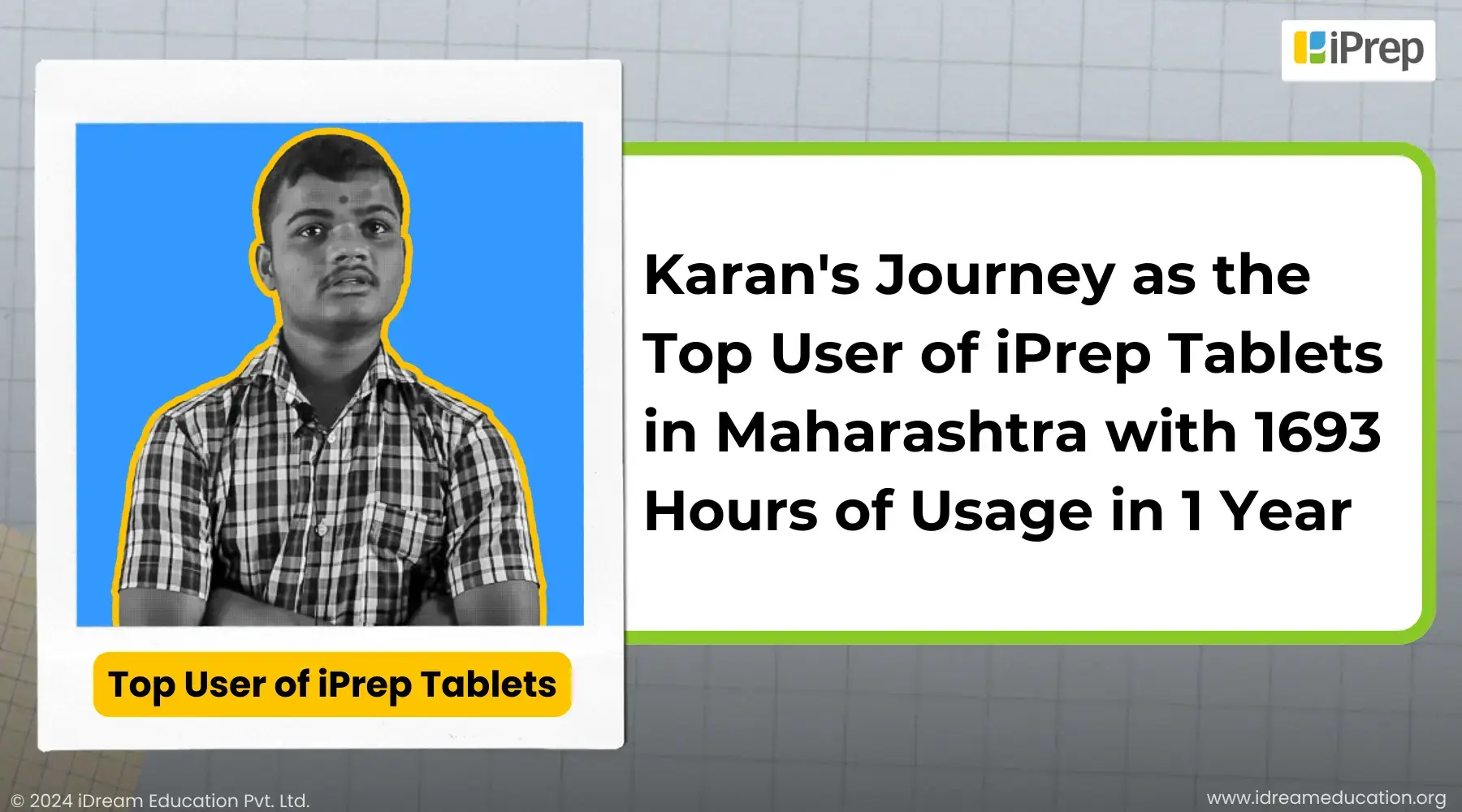
Karan’s Journey as the Top User of iPrep Tablets in Maharashtra with 1693 Hours of Usage in 1 Year

Image showing students using personalized educational tablets for in-school and at-home learning

Sometime back in February 2024, our team members in Maharashtra visited schools to connect with students preparing for their 10th board exams. 

The Purpose of the visit was to:

Extend our heartfelt wishes for success and, crucially, to guide effective revision strategies using content on iPrep Tablet which they received through CIPLA Foundation under their D-LEAD Project, 

During our visits, 

We had the pleasure of meeting Karan, a 10th-grade student at New English School in Wavarle, Maharashtra, affiliated with Sansthan. Among all the students utilizing iPrep Tablets across Maharashtra, Karan stood out for his highest usage with 1693 hours in 12 months. 

Karan’s Usage of iPrep for 1693 hours Before 10th board exams

Teachers at Karan’s schools and our team members are happy to see students embracing digital tools for their learning. Over 1 Year, Karan has had a significant 1693 hours of digital usage. This shows a significant time dedicated to iPrep for core learning daily. 

Analyzing Karan’s Usage Patterns:

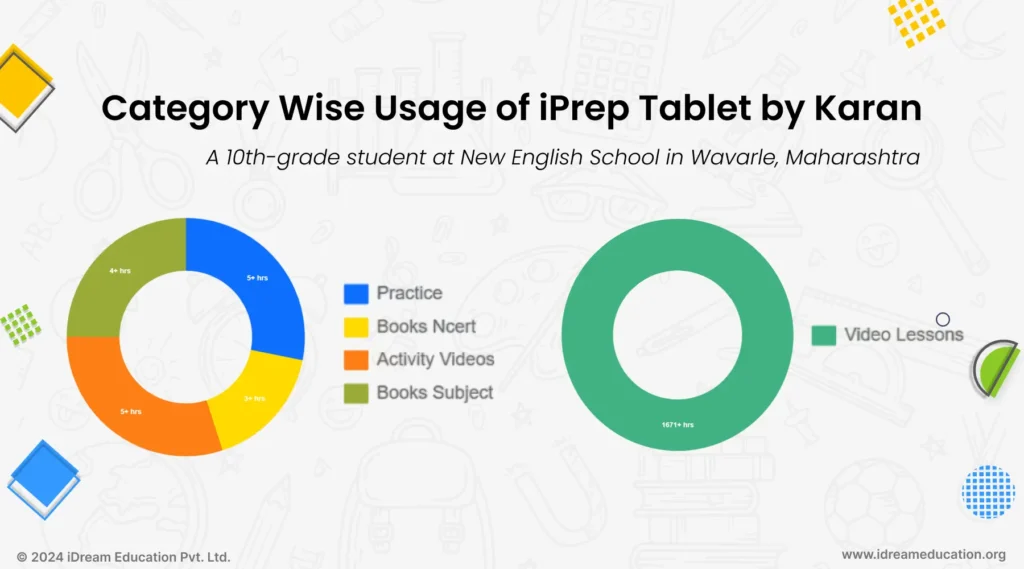
  • Category Wise Usage of iPrep Tablet by Karan

During our discussion with Karan regarding his experience using iPrep for learning, he especially talked about video lessons. He said, “The format of video lessons simplifies the process of grasping and comprehending concepts for him. He mentioned, “I don’t hesitate to replay videos five or more times if necessary for better understanding and revision. The concise nature of video lessons keeps me engaged, and I never get tired of learning through them.”

Image showing category-wise usage of iPrep learning tablet of Karan, a student from a government school in Maharashtra

This is when we analyzed his usage based on categories which made it evident that Karan predominantly was engaging with video lessons with 1671 hours of usage,  and around 5 hours of each category such as practice, syllabus books, activity videos, and books in the digital library.

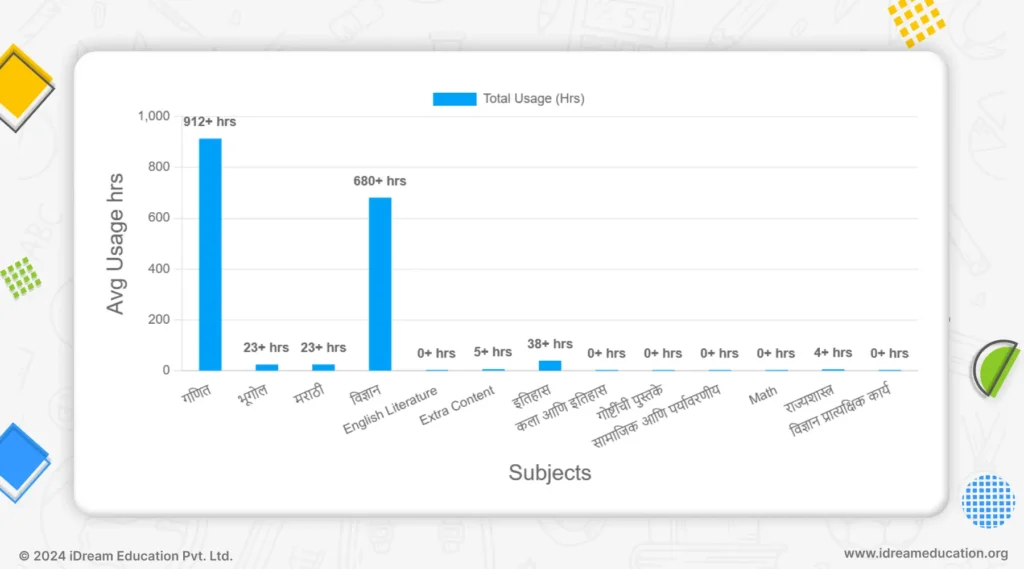
  • Subject Wise Usage of iPrep Tablet by Karan

With further communication, we got to know that he faced difficulties with Mathematics, which significantly impacted his studies and marks. But, iPrep’s comprehensive content such as bite-size animated lessons, and practice of math made his learning enjoyable, easy, and engaging, reigniting his enthusiasm for learning. Karan expressed, “Not just language but I also used to struggle with Math, but iPrep’s content solved this as well because of which there is an increase in my study time. Since I got the tablet, my interest in studying has increased even more”. With iPrep engaging animated lessons, practice, and practicals, Karan found math more accessible, leading to an improvement in his learning.

Image showing subject-wise usage of iPrep learning tablet of Karan, a student from a government school in Maharashtra

This is further supported by a subject-specific usage report, indicating his predominant use of iPrep for science learning, totaling over 680 hours, and for math, over 912 hours.

Through further conversation with Karan, we learned,

Karan’s proficiency in English was initially a challenge due to his primary language being Marathi. However, with the help of iPrep, he successfully transitioned to learning in English, marking a significant change in personal learning. Reflecting on his journey, Karan shared, “I struggled with English before, but since I received the iPrep Tablet, I’ve been learning in English, and now I can read it fluently.”

Teacher’s Perspective

  • Upon learning about his interests and learning patterns, teachers expressed satisfaction that iPrep is assisting students in both school and at home learning. This highlights the crucial aspect of fostering a positive and non-judgmental learning environment, allowing students such as Karan to progress at their own pace and address their learning gaps without fear of judgment.

Witnessing students take ownership of their learning journey and actively utilizing iPrep to advance is truly gratifying. This underscores the significance of providing personalized devices to students, as it empowers them to engage deeply with their education and take control of their academic growth. Such personalized digital learning solutions not only foster independent learning but also facilitate a more dynamic and effective learning experience for each student.

By enabling personalized devices equipped with bilingual learning content tailored to the curriculum, alongside continuous monitoring via a dashboard, we can empower students to engage in joyful learning experiences. Simultaneously, stakeholders can effectively track school, grade, student, class, and subject progress to ensure desired learning outcomes are achieved and maximize impact.

As Karan and his peers gear up for their 10th Maharashtra board exams, we extend our heartfelt wishes for success and wait for his results.

To be continued

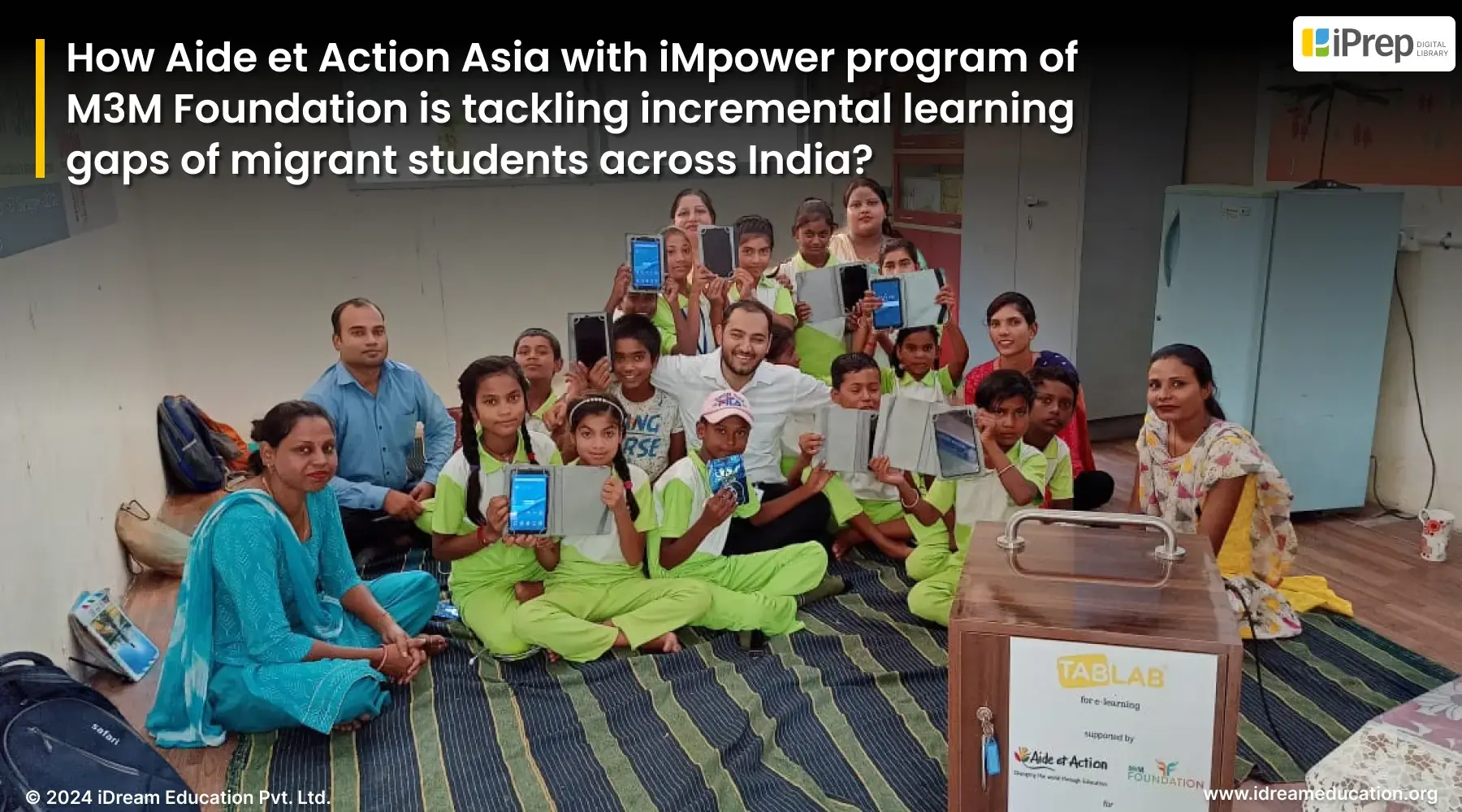
How Aide et Action Asia with iMpower program of M3M Foundation is tackling incremental learning gaps of migrant students across India

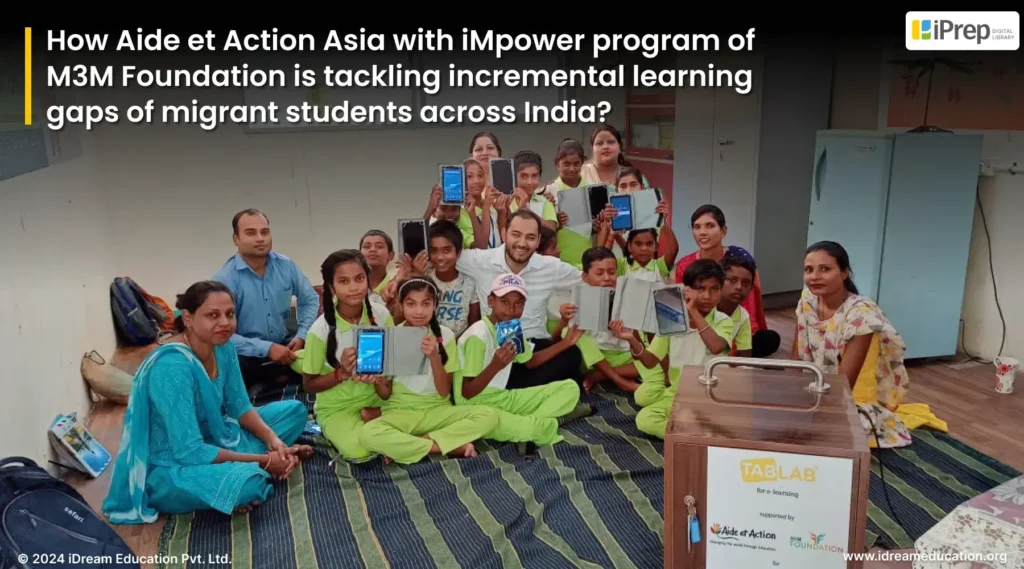
Image showing students with tablets at iMpower Club within the iMpower program of the M3M Foundation. This initiative aims to empower migrant journeys through education and technology.

iMpower is a program of the M3M Foundation initiated with the vision of iMpowering migrant journeys. It is a holistic development initiative aimed at providing necessary resources to enhance the abilities of migrant workers, their children, and their families. iMpower centres are managed by Aide et Action to provide educational, health, and nutritional support to children of construction workers. Their children often accompany their parents to work due to frequent changes in their place of employment. 

Sometime back, iDream Education enabled its assessment-based adaptive learning solution iPrep PAL for students. This is enabled as a part of a collaboration between Aide et Action Asia and M3M Foundation through iMpower clubs.

Since children at iMpower Clubs are part of migrant families, they frequently move from place to place with their parents. This is why they often fail to enroll in school, and even if they do, they end up withdrawing due to the necessity of migrating to different locations, consequently disrupting the continuity of their education. The unique challenge they face atop the overarching challenge of lack of resources and awareness is that students keep moving every few months. This breaks the learning cycle of these learners and intensifies their learning gaps leading to Incremental learning gaps in them.

Challenges Faced by Coordinators and Facilitators at iMpower Clubs in Promoting Students to Grade-Level Proficiency

The coordinators and facilitators at iMpower clubs strive to instill regularity and facilitate age-appropriate grade-level learning for these students. However, they encounter significant challenges due to the diverse learning levels of children across different age groups. As expressed by their team, “We work with children of all ages and attempt to engage them collectively in learning activities. However, due to the considerable gap in their learning levels, even students of the same age exhibit varying levels of proficiency. This makes it challenging to tailor our teaching methods to their individual needs, thus, we end up wasting a lot of time.”

Furthermore, the team highlights the heartbreaking scenario where they invest considerable effort in preparing students for enrollment in new academic sessions, only to discover that they are migrating to another location. This situation often leaves bright students with incremental learning gaps due to discontinuity in their education caused by a lack of awareness and personal circumstances.

To foster student engagement and enrich the learning journeys of migrants, 

The M3M Foundation has seamlessly integrated educational technology. Since 2022, we have introduced tablet-based digital libraries, which have seen consistent usage by students. Some have begun cultivating reading habits, while others enjoy engaging with activity videos, and some prefer practicing. Leveraging EdTech solutions, we have started to maximize efforts to kindle students’ interest in learning. Through digital books, coordinators of iMpower clubs started organizing reading sessions where students enthusiastically participated, delving into diverse stories and inspirational biographies available on the tablets.

Building upon the growing interest in digital learning, 

The Partnership expanded in 2023 with the implementation of iPrep Digital Class and iPrep PAL solutions on Tablets within the Digital Library framework. With PAL, we aim to propel students toward grade-level proficiency, PAL fosters a sense of belonging by addressing lingering learning gaps in the continuous learning process without any judgment and comparison.

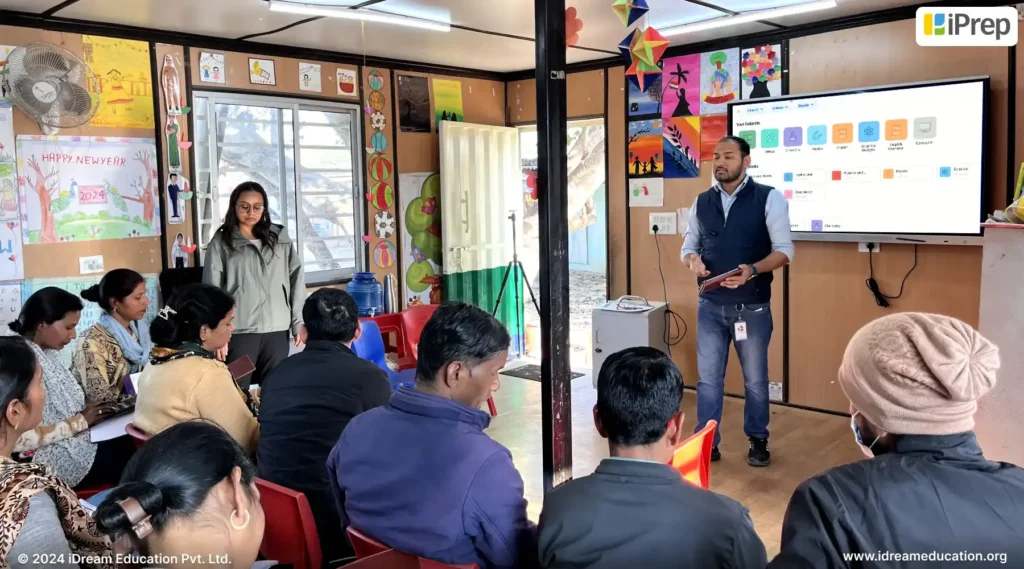
Teachers engaged in smart class training at iMpower club of Aide et Action by iDream Education

A simple solution to an institutional problem

The question is where does one start? Students are at different learning levels within a class. Atop they have unique challenges and personal circumstances.

Theory of change

  • Instilling interest in students by exposing them to tools and devices that provide them with something tangible. Interest in these students is kindled through various engagement sessions and exercises. Students start reading, using the content available on their tablets
  • Gamify their journey to overcome learning gaps by enabling an assessment-based learning solution that evaluates their level and then intuitively carves out an individual learning path where the very basics where the student is lacking are tackled with remedial learning content and practice questions; with students given a goal to complete one chapter at a time

Results?

A screenshot showing usage and monitoring on iPrep reporting dashboard an EdTech solution by iDream Education, utilized for impact assessment purposes
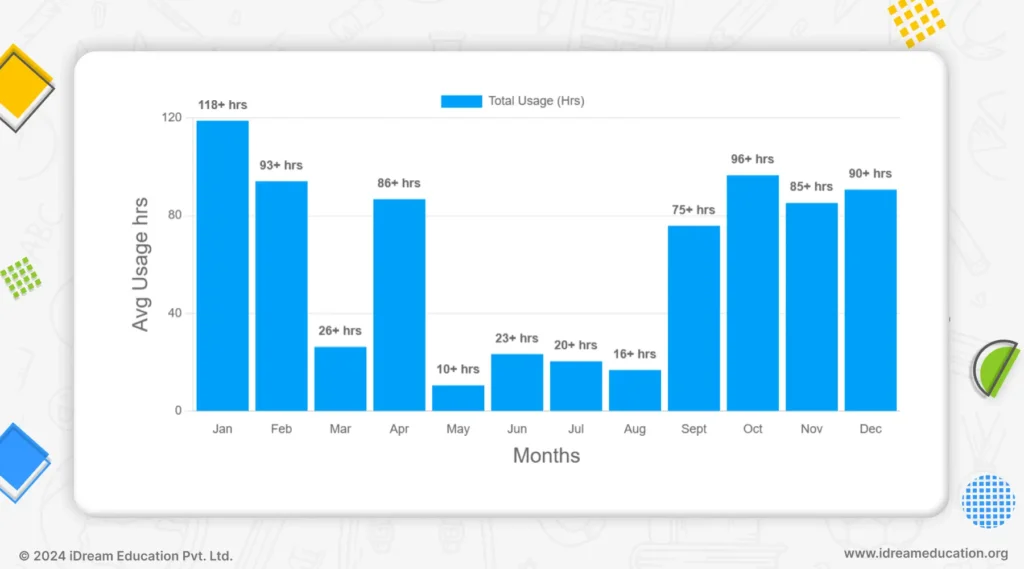
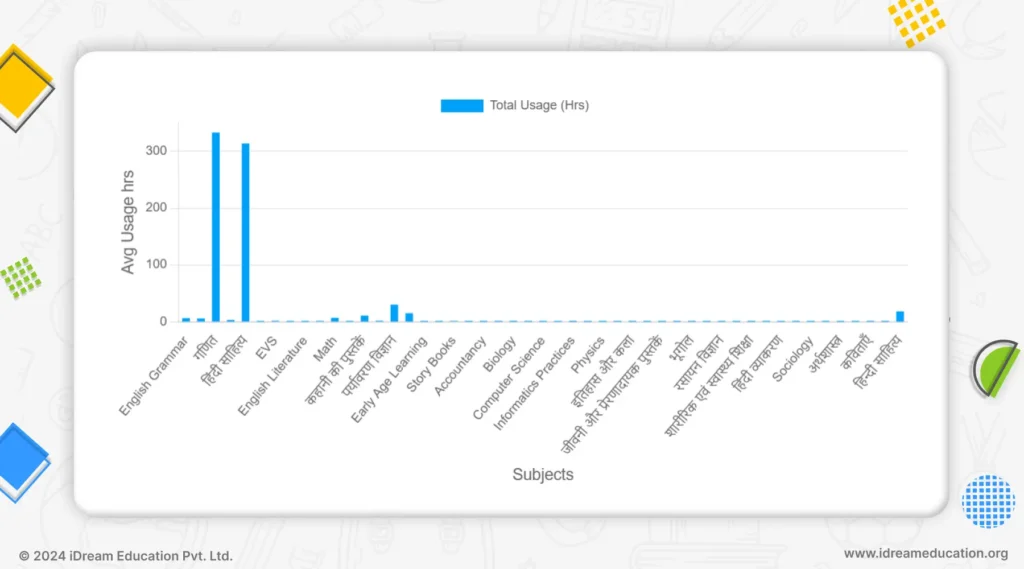
  • On average, iPrep on tablets in a digital library implemented in 2022 is utilized for 744 hours over 189 days at the center. When examining usage by subject, the highest usage is observed in Math for 332 hours, followed closely by Hindi Literature for 330 hours, environmental science for 29 hours, and science for 14 hours, among others. 
 A screenshot showing subject-wise usage and monitoring on iPrep, an EdTech solution by iDream Education, utilized for impact assessment purposes
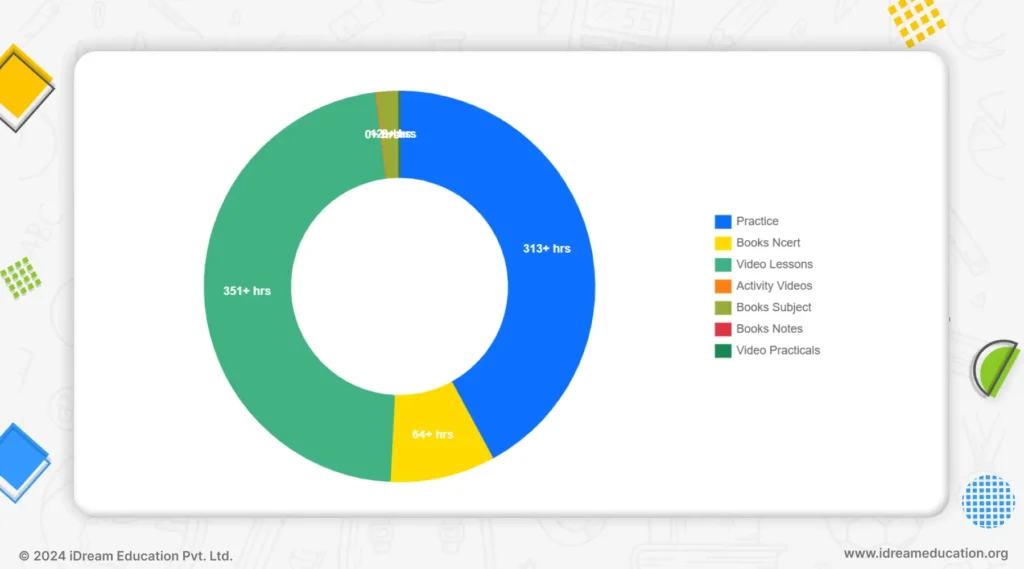
  • However, when considering usage by category, it’s evident that the majority of students dedicate their time to learning through video lessons, totaling over 351 hours, followed by practicing for more than 313 hours. Additionally, students spend approximately 64 hours studying from syllabus books, with the remaining time allocated to video practicals, activity videos, and other resources.
A screenshot showing category-wise usage and monitoring on iPrep, an EdTech solution by iDream Education, utilized for impact assessment purposes

The data underscores the significant involvement of students in learning with iPrep. The extensive usage across various subjects and categories highlights the versatility and accessibility of digital content. Students find digital resources engaging, as evidenced by their enthusiastic engagement with video lessons, practice sessions, and interactive materials. This underscores the potential of education technology to enhance interest in learning and make education more accessible and enjoyable for students of all backgrounds. By leveraging digital resources effectively, we can further tailor learning experiences to meet the diverse needs and preferences of last mile learners, ultimately fostering a more dynamic and enriching educational environment. Students are ready to enroll in formal schools.

Progress is underway in utilizing the newly implemented 5 smart classrooms and 8 digital libraries equipped with PAL on tablets. We have set the stage to monitor the usage and improvement resulting from the recent implementation.

Teachers Speak: Insights on the Impact of Digital Classrooms

We are hopeful that if such interventions happen at scale, we will unleash the immense potential of these students. Organizations such as Aide et Action Asia and M3M Foundation simply need to continue to do what they are doing, with proper care, guidance, continuity, and usage, students shall not only advance academically but also in confidence and their overall well-being and careers.


In case you would like to know more about iPrep PAL and other digital learning solutions, visit our website, www.idreameducation.org, or write to us at share@idreameducation.org

How to Choose the Best Smart Class Vendor for Your School

Are you on the hunt for a smart class vendor that perfectly aligns with your education goals? Amidst the lot of options out there, it’s crucial to find a vendor who not only offers smart solutions but also understands the importance of cost-effectiveness, simplicity, and meaningful impact. 

An illustration by iDream Education one of the best smart class vendor in India, showcasing the interactive flat panel, digital content and Learning Management System (LMS)

Picture this: a seamless setup, easy-to-use interface, and most importantly, solutions tailored to amplify the impact of your education initiatives. Know about smart class vendors in India who are always within your reach and are a perfect fit for your needs!

Define the scope and objectives

Prior to commencing an assessment of a smart class vendor, it is important to understand the scope and objectives of the project. This entails specifying the locations, schools involved, number and type of devices required, overarching goals, and aspirations of your educational program. Crucial aspects include expected outcomes and the anticipated impact of smart class integration. Ensuring that the chosen EdTech solution provider aligns seamlessly with your educational vision is also essential.

With a well-defined framework in place, you can identify a smart class vendor capable of integrating solutions effortlessly across various locations in India, necessitating no additional infrastructure for device setup. Moreover, the selected vendors should possess the capability to tailor solutions precisely to fit the parameters of your educational program, whether it entails setting up a single smart classroom or scaling to a hundred or more.

The ideal smart class vendor for your educational program is one that not only offers guidance on suitable smart class devices but also assists in selecting cost-effective yet dependable options capable of sustaining long-term usage in schools, thereby amplifying the efficacy of your initiative. 

iDream Education comprehensively comprehends and aligns with the requirements of government entities, corporations, NGOs, and other ecosystem partners. 

  • We adeptly steer you towards the most fitting smart class solutions for education programs, regardless of the geographical location across the nation.
  • We guide our stakeholders through a selection of smart classroom hardware options and have integrated iPrep Digital Class on interactive flat panels (IFPs), smart TVs, and other smart class hardware devices such as OPS.
  • We personalize smart classroom setups, whether it’s for a single classroom or scaling up to hundreds. Our experience ranges from setting up one smart class at Modern Montessori School in Rampur UP, to deploying 166 smart classrooms across 50 schools in EJH, Meghalaya, and even expanding to 1400 smart classrooms equipped with digital content and learning management systems in Himachal Pradesh.

Choose the right learning platform

When selecting a smart class vendor, a crucial consideration is finding the appropriate learning platform that enhances the educational program’s value. Various options exist, spanning from open-source software to commercial vendors, cloud-based services to local servers, and web-based interfaces. The choice of platform should align with the project’s specific requirements and preferences, such as user-friendly interfaces and adaptable learning platforms compatible with various operating systems such as Android, Windows, Linux OS, or OPS, and compatible with smart class hardware such as IFPs, Smart TVs, Projectors, and Interactive Whiteboards. This level of customization, functionality, reliability, and budget management by a single smart class vendor streamlines the education program.

iDream Education stands out as one of the best smart class vendors, offering:

  • The comprehensive K-12 learning platform, iPrep, which works seamlessly on all major smart class hardware, including Android-based Smart TVs, Interactive Flat Panels, Projectors, and Interactive Whiteboards. Moreover, we deploy our smart classrooms through a Server-Client model, where content streams via a central server over a local area network. 
  • iPrep provides rich digital content for classes 1st to 12th, covering all subjects, including animated lessons, instant feedback practice sessions, practical exercises, syllabus books, notes, and assessments, with exam preparation materials available in English, Hindi, and other languages. 
  • Integrated with a bilingual and user-friendly Learning Platform, iPrep facilitates easy class switching and supports both offline and online content for NCERT & various State Boards.

The Smart Class Project initiated by Nagar Nigam in Smart City Saharanpur, UP, exemplifies a local server-based smart class infrastructure. 

In this project, iPrep digital classes have been introduced across 20 schools in Saharanpur, using a central server setup located at the Nagar Nigam office. This centralized server arrangement, integrated with a Local Area Network (LAN), has scaled the implementation of iPrep. The system is seamlessly connected with Interactive Flat Panels (IFPs) installed across 20 schools. Notably, this approach streamlined content distribution, a significant reduction in costs, and enabled access to offline smart class content as well, eliminating the necessity for continuous internet connectivity.

Collaborate and Share

Collaboration and sharing play a crucial role in cutting costs and boosting efficiency for smart classroom projects or for that matter any digital education projects. Whether it’s corporations teaming up with NGOs or hardware companies partnering with governments, pooling resources, expertise, infrastructure, and educational content is key. This collaborative approach minimizes redundant efforts, enriches the quality and variety of resources, and sparks innovation. 

iDream Education eagerly embraces opportunities for collaboration and sharing, aspiring to serve as a Learning Management System (LMS) and content delivery partner for smart class initiatives across educational technology initiatives in India.

  • PC World, a hardware company, partnered with iDream Education to provide Learning Management Systems (LMS) and digital content for smart classes as part of the smart class initiative by the Chhattisgarh Government. This collaboration has facilitated the implementation of 126 smart classes in schools across Chhattisgarh, This reflects on collaborative integration of smart classrooms with smart class vendors.

Evaluation and Personalization

Evaluation and Personalization stand as important factors for choosing cost-effective smart class vendors. It begins with assessing the performance and impact of smart classrooms through diverse methods and metrics, encompassing user feedback, usage data, quality benchmarks, and cost-benefit analysis. This process helps in pinpointing both strengths and weaknesses of the smart class, while also highlighting opportunities and threats for its future integration. Personalization, on the other hand, involves adapting and refining the smart classroom based on evaluation findings to amplify its value and relevance within stakeholders’ educational programs. 

iDream Education welcomes evaluation and assists stakeholders in assessing smart classroom solutions based on factors like location, school environment, internet connectivity, device quality, usage of already implemented smart classes in schools and personalization, facilitating informed decisions before commencing implementation processes.

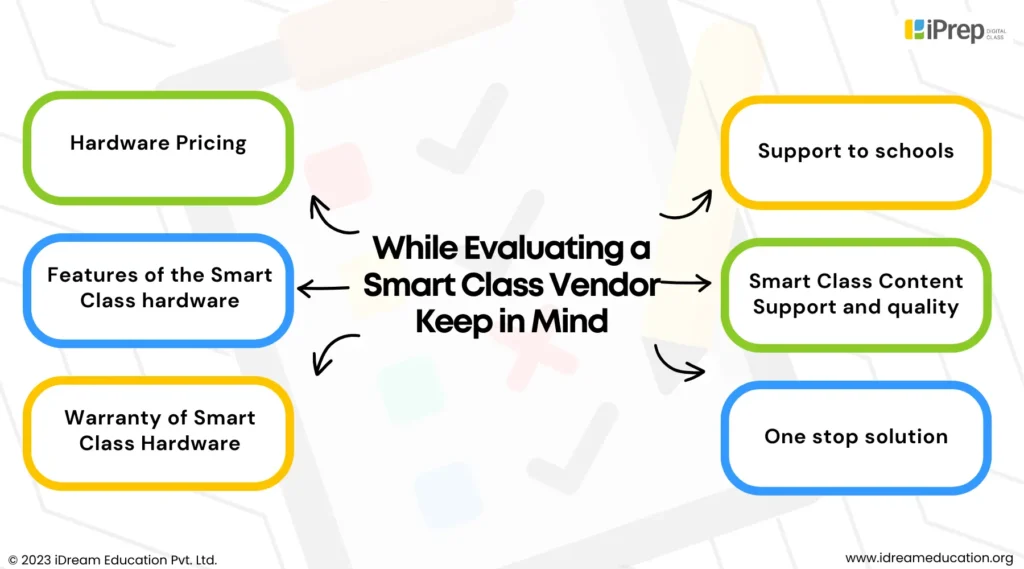
While Evaluating a Smart Class Vendor, Keep in Mind:

Image showing list of Things to keep in mind while looking for a smart class provider near you
  • Hardware Pricing

When assessing a smart class vendor, prioritize those who tailor pricing structures to align with your project’s needs. This includes accommodating additional hardware requirements like interactive boards, IFPs, smart tv, UPS, power backup, cameras, casings, security features and more. By offering personalized pricing slabs, vendors ensure that smart class solutions are optimally suited to your educational program while remaining within your budgetary constraints.

  • Features of the Smart Class hardware

The Smart Class hardware offers an array of features designed to enhance classroom engagement and facilitate effective teaching. One such feature comes with interactive boards that stand out as invaluable tools, providing teachers with dynamic digital boards that makes teaching interactive and digitized. Smart Class hardware and their features allow seamless integration of multimedia content, interactive exercises, and real-time feedback, empowering teachers to tailor their lessons to diverse learning styles and capture students’ attention more effectively. Additionally, the Smart Class hardware facilitates seamless integration with various educational resources, allowing teachers to access a wealth of learning content curated to enrich their lessons and engage students in meaningful ways. Overall, these features foster an environment conducive to active learning and collaboration, ultimately enhancing the educational experience for both teachers and students alike.

  • Warranty of Smart Class Hardware

Warranty for smart class hardware is important for ensuring the longevity and reliability of these technological investments in educational programs. It provides a safety net against unforeseen malfunctions or defects, offering ease of managing and using. Opting for a smart class vendor that offers warranties ranging from 1 to 3 years or more is crucial as it signifies their commitment to product quality and customer satisfaction. Such extended warranty periods not only safeguard against potential issues but also reflect the vendor’s confidence in the durability and performance of their smart class hardware solutions. Therefore, when selecting a smart class vendor, prioritizing those that provide warranty terms which can ensure a smoother integration of technology into the classroom environment and contribute to the overall success of educational programs.

  • Smart Class Content Support and quality

Smart class vendors offering hardware solutions with comprehensive learning platforms that can be effortlessly integrated across various hardware setups, ensure the efficacy of educational programs. Moreover, the content hosted on these platforms must exhibit high-quality standards to facilitate engaging and effective learning experiences, optimized for both educational and recreational use on digital devices. Choose the smart class vendor that combines seamless installation capabilities with premium content offerings. These vendors can significantly enhance the classroom environment, fostering learning that is conducive to holistic student development.

  • Support to schools

Effective customer support is paramount for smart class vendors in education programs. It encompasses providing continuous technical assistance, comprehensive teacher training, and ongoing support to ensure optimal utilization of the implemented solution. By prioritizing support mechanisms, vendors not only empower teachers to navigate technological challenges but also facilitate seamless integration of education technology in schools, ultimately enhancing the learning experience for students.

  • One stop solution

A smart class vendor should also be an OPS vendor and should be able to offer all services such as installation, security, branding, transport, setup,  enablement through either pen drives or loading content on devices locally or through a network, content, Learning Management System, teacher/stakeholder training as well as seamless & integrated monitoring and reporting; and integration if and as needed with other databases. Most importantly, the smart class vendor must be able to deliver online or offline solutions at scale across various geographies and regions both urban as well as rural.

Select the smart class vendor that gives you the capability to seamlessly update content on the cloud in alignment with evolving curriculum frameworks across various state boards. This provider should facilitate content in mother languages, offer both online and offline accessibility, deliver user-friendly learning platforms, provide thorough smart classroom training, ensure content alignment with state boards, and cover all subjects and grades comprehensively.

Observations made as a smart class vendor in India

  • Smart classrooms in schools are enhancing student performance by leveraging visual learning methods, which aid in better retention of information.
  • Personalized features such as bridge courses, integrated into learning platforms by smart class vendors, allow teachers to tailor lessons according to individual learning styles, thereby improving classroom learning experiences.
  • Smart classrooms are helping in reducing distractions, leading to increased student-teacher engagement and better focus on learning.
  • The interactive nature of smart classrooms fosters greater interaction between students and teachers, facilitating a deeper understanding of concepts and easier comprehension of educational material.

In recent years, there has been a notable surge in the integration of smart class technology within schools, marking a significant paradigm shift in pedagogical approaches. This transformative trend is propelled by the recognition of technology’s potential to enhance learning experiences, improve student engagement, and foster critical thinking skills. 

As PSUs, Government, corporates, foundations, NGOs and other stakeholders increasingly recognize the need to nurture 21st-century skills, including financial literacy, digital literacy, career orientation, vocational learning, biographies and more, the integration of these and smart classes emerges as a cornerstone of educational initiatives across India. 

Selecting the best smart class vendor is a critical decision that can significantly impact the planning, cost, reach and impact of your education program. By thoroughly researching and evaluating potential vendors based on factors such as technology offerings, customization options, support services, affordability, and impact assessment you can ensure that you partner with a vendor who aligns with your specific needs and goals.
If you are looking for a best smart class vendor, we offer a comprehensive smart classroom solution that includes engaging digital content with LMS & reporting and complete smart class infrastructure, where our approach goes beyond smart class implementation to structured programmatic interventions to ensure effective implementation and measurable learning outcomes. For more information, please contact us at +91 7678265039 or write to us at share@idreameducation.org. You can also share your details here.

Case Studies Reflecting Cost-Effective Digital Library Solutions Implemented as per ICT under Samagra Shiksha

Finding a cost effective digital library solution can often feel like navigating a maze of infrastructural demands: a dedicated room, specific space for setting up devices, continuous power supply, and internet connectivity. 

A setup of ICT Lab designed as per Samagra Shiksha initiative including charging racks, tablets, notebooks, Primebooks, and Chromebooks pre-installed with iPrep by iDream Education, a K-12 learning platform

But what if we introduce you to an innovative solution that defies these conventional constraints? 

Picture this: a digital library that can be seamlessly integrated into any classroom, without the need for dedicated spaces or extensive power setups, and internet connectivity & can be set up in the classroom/hall/lab of any school.

The ICT Under Samagra Shiksha by the Ministry of Education redefines the possibilities of digital learning. Say goodbye to the limitations of traditional ICT setups and embrace a new era of cost effective digital library solutions.” 

ICT under Samagra Shiksha Aligned Cost Effective Digital Library Solution

The revised ICT Initiative of Samagra Shiksha is shifting how schools enable, manage, and use technology.  Through revision in the ICT Labs Scheme of Samagra Shiksha, MoE endeavors to bridge the gap between urban and rural educational disparities. This is done to ensure that every child, regardless of their geographical location or socio-economic background, has equal access to educational resources.

The iPrep Digital Library aligns with the revised ICT Scheme of Samagra Shiksha Abhiyan. It is designed to facilitate digital learning in any school regardless of infrastructure or location. It is a cost effective digital library solution that does not require extensive digital infrastructure. This solution is an easy-to-use and maintain Smart ICT Lab on Tablets/Notebooks. This comes with a charging rack, preloaded K-12 digital content, and integrated reporting for assessing impact. 

Case Studies Showcasing Cost-Effective Digital Library Solutions in Action

Flexibility in Device No. and Allocation: Personalize your Digital Library Experience

The implementation of the iPrep Digital Library by corporations, NGOs, hardware partners, and other stakeholders can be customized. Customization is done to match the specific requirements and budget of educational programs to maximize reach and impact. Whether implementing with as few as 10 tablets/notebooks or scaling up to 40 and more, it ensures seamless integration into diverse school settings. 

A Samagra Shiksha aligned ICT lab, also known as a digital library, can be implemented with chosen hardware and any number, making it a cost-effective digital learning solution for education programs of CSR projects

292 Digital Libraries with 20 Tablets each  in Karnataka and Samsung

292 digital libraries, each equipped with 20 tablets, across 292 schools in Karnataka, impacting over 5000 students. This is an example of collaboration with Samsung.  Students in every school are utilizing tablets on a rotational basis. The majority of schools have a digital library timetable to facilitate the effective use of implemented K-12 digital learning solutions. 

Digital Library with 10 Tablets at  iMpower centre, Aide at Action in Gurugram

Customized implementation of iPrep Digital Library with 10 Tablets at the iMpower centre, Aide at Action in Gurugram. The centre has children of various age groups, and they endeavor to foster collective learning experiences. However, the learning level of each child is different, even in children of the same age group. Thus, with 10 devices within the digital library, they are able to engage each child in personalized learning as per individual needs and pace, on a rotational basis.

This reflects on the flexibility to customize digital library solutions with hardware and no. of devices according to the educational programs which ultimately fits in the budget and maximise reach.

Compatibility Across Devices and Customizable Implementation for Tablets, Primebooks, and Chromebooks

The iPrep digital library aligns with the ICT initiative of Samagra Shikha, ensuring compatibility with tablets, and notebooks (primebook, and chromebook). This enables stakeholders the flexibility to select devices based on their educational program requirements and budget allocations.

Image showing an ICT lab, also known as a digital library, featuring compatibility with various devices such as tablets, Primebooks, and Chromebooks. The setup is customizable to meet specific implementation requirements.

Digital Libraries with Notebooks in schools of Nuh, Haryana with M3M Foundation

M3M Foundation, driven by its goal to integrate digital learning into schools, initiated the implementation of 30 Primebooks preinstalled with iPrep (learning platform) in Government Model Sanskriti School, located in the Nuh District of Haryana in 2023. This initiative provided students with offline educational content for classes 1-12, available in both Hindi and English. The Primebooks are set up within the school’s ICT lab rooms, also known as digital libraries. By aligning the usage of digital resources with the school timetable, every student could effectively use iPrep for learning. This makes the implementation both cost-efficient and effective. Following the regular use of the digital library, in one school the M3M Foundation expanded its implementation in 2024 to two additional schools. The expansion was again in schools of Nuh, with 50 Primebooks preinstalled with iPrep, 25 devices per school.

Digital Libraries with Tablets in schools of Bhiwadi, Rajasthan with Saint Gobain

Implemented three digital libraries, each equipped with 20 tablets, in 3 schools across Bhiwadi through collaboration with Saint Gobain. Initially, the rollout commenced with just one digital library in schools. However, due to its adoption and regular use of tablets among students across all classes, the partnership has expanded to two more schools in Bhiwadi. 

Digital libraries with tablets, Primebooks, or Chromebooks offer cost-effective solutions as they can be implemented with the device of choice and serve as a solution accessible to all students in schools.

Effortless Implementation: iPrep Digital Library – Minimal Infrastructure, Maximum Impact

The iPrep Digital Library is a cost-effective solution for educational programs as it eliminates the need for specific infrastructure. It can be seamlessly set up in any classroom, hall, or lab,  It replaces the complex hardware setup of computers with tablets/notebooks and a charging rack and offers comprehensive digital content for classes 1st to 12th all subjects including ICT with student-wise data for learning outcomes. 

To charge each device within the library requires just one power plug and can be charged simultaneously. Further, the devices can be used for 7-8 hours, equivalent to the entire school day. As a result, stakeholders are not required to set up any additional infrastructure to implement digital libraries in schools. 

Bring the best digital library experience to your ICT Lab with iDream Education, recognized as a leading digital library provider in India.

“As part of our ongoing commitment to advancement, we are now enabling a solar-powered Digital Library. This makes it an energy-efficient ICT lab solution. This sustainable approach not only enhances energy efficiency. It also facilitates technology integration in regions with unreliable power infrastructure.”

iPrep Digital Library: Your all in one solution for Smart ICT Labs on Tablets/Notebooks – Watch the Video for Insights!

The integration of ICT labs is an opportunity for enhancing school infrastructure in a cost effective way. Leveraging affordable solutions in your education programs, such as the iPrep Digital Library, can help bring inclusivity and achieve desired learning outcomes. By prioritizing simplicity and affordability, the solution ensures that students in every school, regardless of location. Through concerted efforts and innovative solutions, we can bridge the digital divide and pave the way for a more equitable and empowered generation of learners.

In case you would like to set up solutions aligned with ICT Scheme under Samagra Shiksha, contact us at +919501110665">+91 7678265039 or write to us at share@idreameducation.org. You can also share your details here.