We've received your request! Our team will be in touch within 24 hours to confirm your demo and discuss your
needs. We look forward to connecting with you!
Finding a cost effective digital library solution can often feel like navigating a maze of infrastructural demands: a dedicated room, specific space for setting up devices, continuous power supply, and internet connectivity.
But what if we introduce you to an innovative solution that defies these conventional constraints?
Picture this: a digital library that can be seamlessly integrated into any classroom, without the need for dedicated spaces or extensive power setups, and internet connectivity & can be set up in the classroom/hall/lab of any school.
“The ICT Under Samagra Shiksha by the Ministry of Education redefines the possibilities of digital learning. Say goodbye to the limitations of traditional ICT setups and embrace a new era of cost effective digital library solutions.”
ICT under Samagra Shiksha Aligned Cost Effective Digital Library Solution
The revised ICT Initiative of Samagra Shiksha is shifting how schools enable, manage, and use technology. Through revision in the ICT Labs Scheme of Samagra Shiksha, MoE endeavors to bridge the gap between urban and rural educational disparities. This is done to ensure that every child, regardless of their geographical location or socio-economic background, has equal access to educational resources.
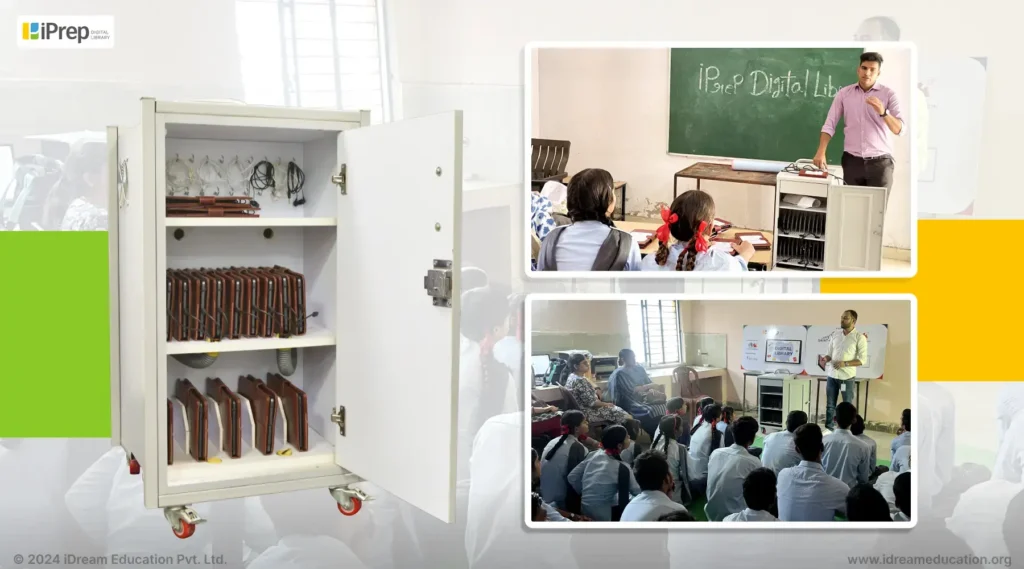
The iPrep Digital Library aligns with the revised ICT Scheme of Samagra Shiksha Abhiyan. It is designed to facilitate digital learning in any school regardless of infrastructure or location. It is a cost effective digital library solution that does not require extensive digital infrastructure. This solution is an easy-to-use and maintain Smart ICT Lab on Tablets/Notebooks. This comes with a charging rack, preloaded K-12 digital content, and integrated reporting for assessing impact.
Case Studies Showcasing Cost-Effective Digital Library Solutions in Action
Flexibility in Device No. and Allocation: Personalize your Digital Library Experience
The implementation of the iPrep Digital Library by corporations, NGOs, hardware partners, and other stakeholders can be customized. Customization is done to match the specific requirements and budget of educational programs to maximize reach and impact. Whether implementing with as few as 10 tablets/notebooks or scaling up to 40 and more, it ensures seamless integration into diverse school settings.
292 Digital Libraries with 20 Tablets each in Karnataka and Samsung
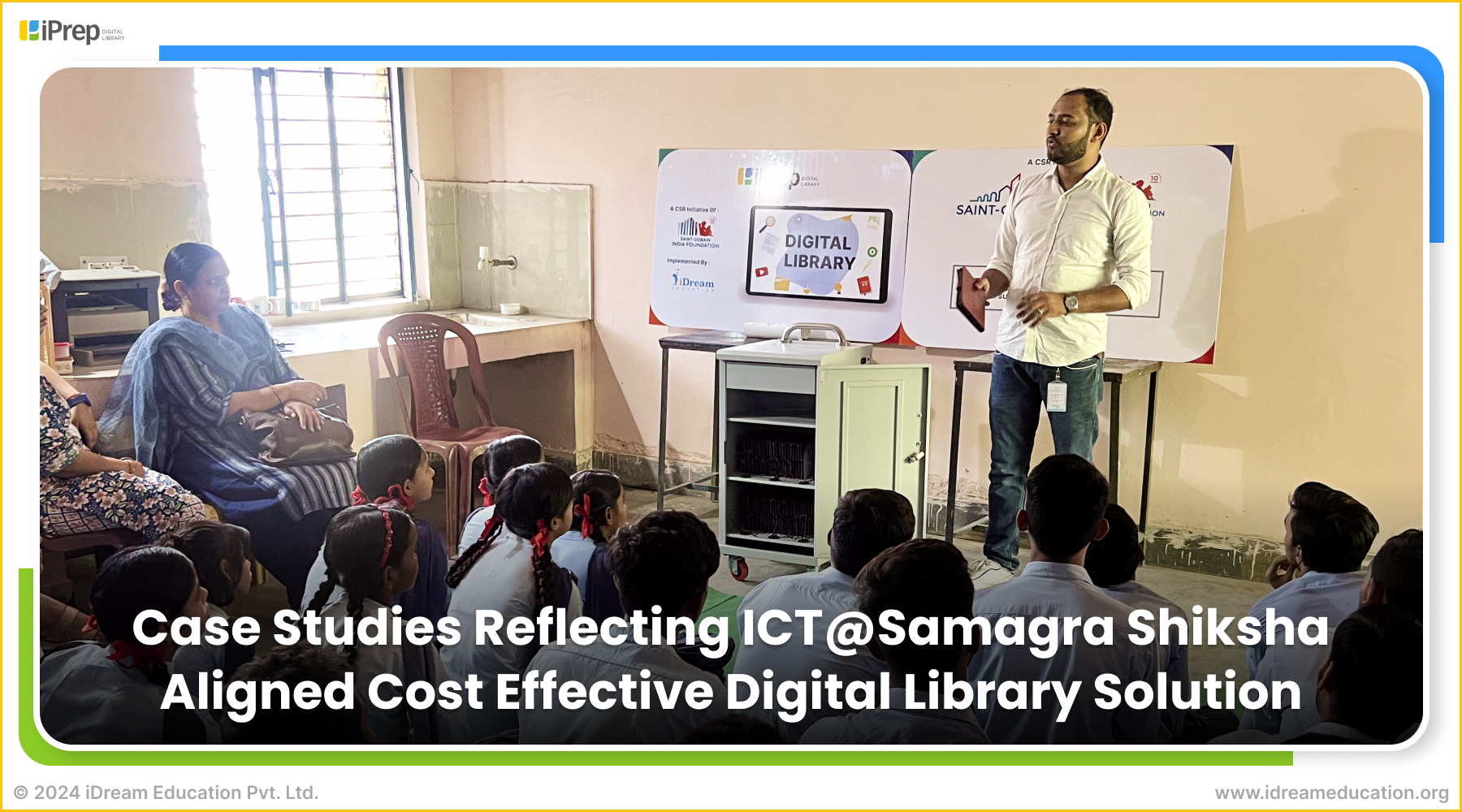
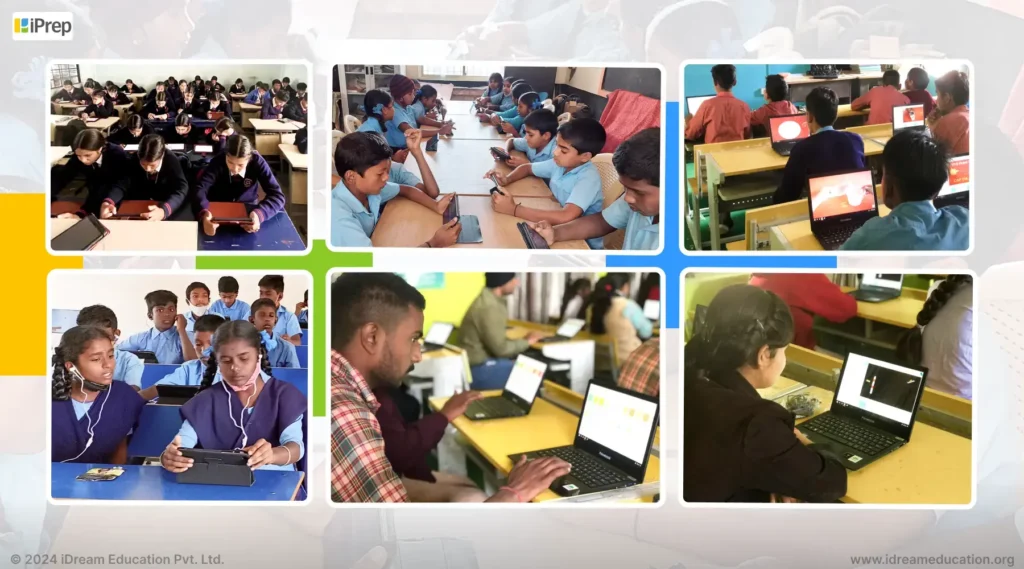
292 digital libraries, each equipped with 20 tablets, across 292 schools in Karnataka, impacting over 5000 students. This is an example of collaboration with Samsung. Students in every school are utilizing tablets on a rotational basis. The majority of schools have a digital library timetable to facilitate the effective use of implemented K-12 digital learning solutions.
Digital Library with 10 Tablets at iMpower centre, Aide at Action in Gurugram
Customized implementation of iPrep Digital Library with 10 Tablets at the iMpower centre, Aide at Action in Gurugram. The centre has children of various age groups, and they endeavor to foster collective learning experiences. However, the learning level of each child is different, even in children of the same age group. Thus, with 10 devices within the digital library, they are able to engage each child in personalized learning as per individual needs and pace, on a rotational basis.
This reflects on the flexibility to customize digital library solutions with hardware and no. of devices according to the educational programs which ultimately fits in the budget and maximise reach.
Compatibility Across Devices and Customizable Implementation for Tablets, Primebooks, and Chromebooks
The iPrep digital library aligns with the ICT initiative of Samagra Shikha, ensuring compatibility with tablets, and notebooks (primebook, and chromebook). This enables stakeholders the flexibility to select devices based on their educational program requirements and budget allocations.
Digital Libraries with Notebooks in schools of Nuh, Haryana with M3M Foundation
M3M Foundation, driven by its goal to integrate digital learning into schools, initiated the implementation of 30 Primebooks preinstalled with iPrep (learning platform) in Government Model Sanskriti School, located in the Nuh District of Haryana in 2023. This initiative provided students with offline educational content for classes 1-12, available in both Hindi and English. The Primebooks are set up within the school’s ICT lab rooms, also known as digital libraries. By aligning the usage of digital resources with the school timetable, every student could effectively use iPrep for learning. This makes the implementation both cost-efficient and effective. Following the regular use of the digital library, in one school the M3M Foundation expanded its implementation in 2024 to two additional schools. The expansion was again in schools of Nuh, with 50 Primebooks preinstalled with iPrep, 25 devices per school.
Digital Libraries with Tablets in schools of Bhiwadi, Rajasthan with Saint Gobain
Implemented three digital libraries, each equipped with 20 tablets, in 3 schools across Bhiwadi through collaboration with Saint Gobain. Initially, the rollout commenced with just one digital library in schools. However, due to its adoption and regular use of tablets among students across all classes, the partnership has expanded to two more schools in Bhiwadi.
Digital libraries with tablets, Primebooks, or Chromebooks offer cost-effective solutions as they can be implemented with the device of choice and serve as a solution accessible to all students in schools.
Effortless Implementation: iPrep Digital Library – Minimal Infrastructure, Maximum Impact
The iPrep Digital Library is a cost-effective solution for educational programs as it eliminates the need for specific infrastructure. It can be seamlessly set up in any classroom, hall, or lab, It replaces the complex hardware setup of computers with tablets/notebooks and a charging rack and offers comprehensive digital content for classes 1st to 12th all subjects including ICT with student-wise data for learning outcomes.
To charge each device within the library requires just one power plug and can be charged simultaneously. Further, the devices can be used for 7-8 hours, equivalent to the entire school day. As a result, stakeholders are not required to set up any additional infrastructure to implement digital libraries in schools.
Bring the best digital library experience to your ICT Lab with iDream Education, recognized as a leading digital library provider in India.
“As part of our ongoing commitment to advancement, we are now enabling a solar-powered Digital Library. This makes it an energy-efficient ICT lab solution.This sustainable approach not only enhances energy efficiency. It also facilitates technology integration in regions with unreliable power infrastructure.”
iPrep Digital Library: Your all in one solution for Smart ICT Labs on Tablets/Notebooks – Watch the Video for Insights!
The integration of ICT labs is an opportunity for enhancing school infrastructure in a cost effective way. Leveraging affordable solutions in your education programs, such as the iPrep Digital Library, can help bring inclusivity and achieve desired learning outcomes. By prioritizing simplicity and affordability, the solution ensures that students in every school, regardless of location. Through concerted efforts and innovative solutions, we can bridge the digital divide and pave the way for a more equitable and empowered generation of learners.
Welcome to our comprehensive guide to UP Board content on iPrep! If you’re a government official, corporate, NGO, student, or teacher, you’re in the right place. Navigate to the vast landscape of educational resources in UP Board Curriculum.
The content of the state board is unique and aligns with the cultural, social, and economic context of the state. It is structured by considering the local language and cultural elements in the syllabus. This fosters a deeper comprehension of regional dynamics among students. This approach facilitates a stronger connection between students and their local surroundings, making education meaningful and relatable.
Each board periodically revises its curriculum to ensure alignment with updates in educational policy and NCERT guidelines. Most importantly, the board also considers the evolving learning needs and demands.
Revision in Uttar Pradesh Madhyamik Shiksha Parishad (UPMSP)
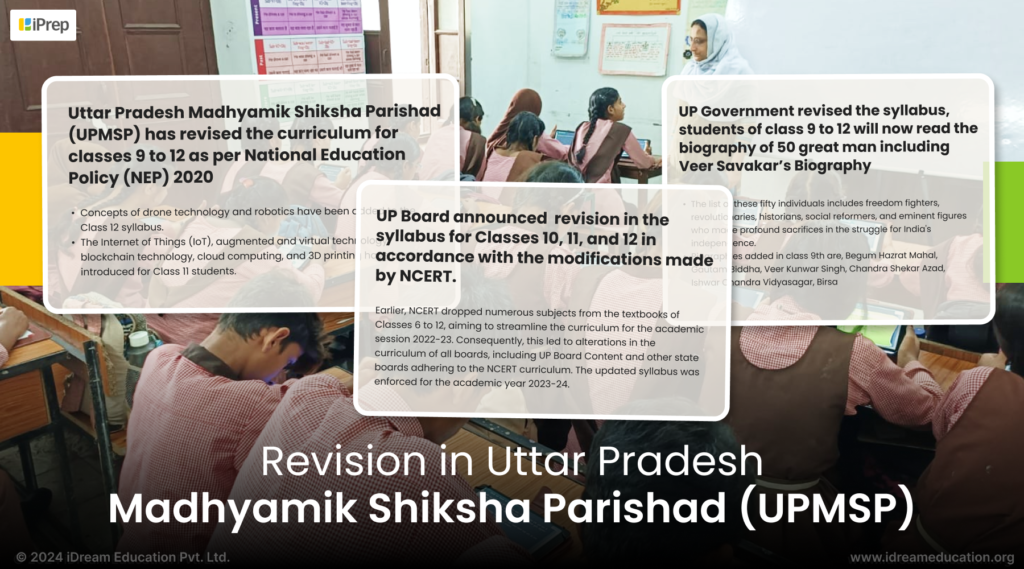
UP Board announced a revision in the syllabus for Classes 10, 11, and 12 following the modifications made by NCERT.
Earlier, NCERT dropped numerous subjects from the textbooks of Classes 6 to 12. This is done to streamline the curriculum for the academic session 2022-23. Consequently, this led to alterations in the curriculum of all boards, including UP Board Content adhering to the NCERT curriculum. The updated syllabus was enforced for the academic year 2023-24.
NCERT has revised the curriculum for Classes 10 and 11, dropping specific textbooks. In the Class 11 textbook ‘Themes In World History,’ chapters such as ‘Central Islamic lands,’ ‘Confrontation of Cultures,’ and ‘The Industrial Revolution’ have been dropped. Similarly, from the Class 10 ‘Democratic Politics-II’ textbook, chapters such as ‘Democracy and Diversity’, ‘Popular Struggles and Movement’, and ‘Challenges to Democracy’ have been removed.
Uttar Pradesh Madhyamik Shiksha Parishad (UPMSP) has revised the curriculum for classes 9 to 12 as per the National Education Policy (NEP) 2020
Concepts of drone technology and robotics have been added to the Class 12 syllabus.
The Internet of Things (IoT), augmented and virtual technology blockchain technology, cloud computing, and 3D printing have been introduced for Class 11 students.
Class 10 students will be taught the basics of how to avoid hacking, cyber fraud, phishing, and E-governance.
Commuter communication, programming techniques and networking which were earlier taught to students of class 10th will now be taught in class 9th.
“Substantial revisions have been implemented in the UP Board Content. The revisions are done particularly in the computer syllabus, with the vision to educate students on modern topics and prepare them for the demands of modern times”, said, Dibyakant Shukla- UP Board Secretary
UP Government revised the syllabus, students of classes 9 to 12 will now read the biography of 50 great men including Veer Savakar’s Biography
The list of these fifty individuals includes freedom fighters, revolutionaries, historians, social reformers, and eminent figures. The ones who made profound sacrifices in the struggle for India’s independence.
Biographies added in class 9th are Begum Hazrat Mahal, Gautam Buddha, Veer Kunwar Singh, Chandra Shekar Azad, Ishwar Chandra Vidyasagar, Birsa Munda, Chhatrapati Shivaji, Jyotiba Phule, Vinoba Bhave, Vinayak Damodar Savarkar, Jagdish Chandra Bose, and Srinivasa Ramanujan.
Biographies added in class 10th are life stories of Roshan Singh, Sukhdev, Mangal Pandey, Gopal Krishna Gokhale, Lokmanya Tilak, Khudiram Bose, Swami Vivekananda, and Mahatma Gandhi.
Biographies added in class 11th are Bhagat Singh, Dr, Bhim Rao Ambedkar, Ramprasad Bismil, Pandit Deendayal Upadhyay, Sardar Vallabhbhai Patel, Bharat Ratna Pandit Madan Mohan Malviya, Mahavir Jain, Raja Rammohan Roy, Arvind Ghosh, Nana Saheb, Sarojini Naidu, Shalya Physician Sushrut, MaharishI Patanjali, and Dr. Homi Jehangir Bhabha.
Class 12th will read about, Ganesh Shankar Vidyarthi, Ramakrishna Paramhansa, Lal Bahadur Shastri, Rajguru Rabindranath Tagore, Maharana Pratap, Rani Laxmibai, Adi Shankaracharya, Bankim Chandra Chatterjee, Dr, APJ Abdul Kalam, Guru Nanak Dev, Panini, Ramanujacharya, C.V. Raman and Aryabhatta.
The revisions to the UP Board curriculum were directed by Chief Minister Yogi Adityanath Ji, to introduce students to the rich heritage and culture of our nation.
These revisions ensure that education remains relevant and responsive to local needs. They promote inclusivity and empower learners to engage meaningfully with their immediate surroundings.
iPrep is a comprehensive learning platform serving K-12 schools throughout India. It is designed in alignment with the National Education Policy (NEP) to ensure that the educational experiences of K-12 students closely adhere to state board frameworks.
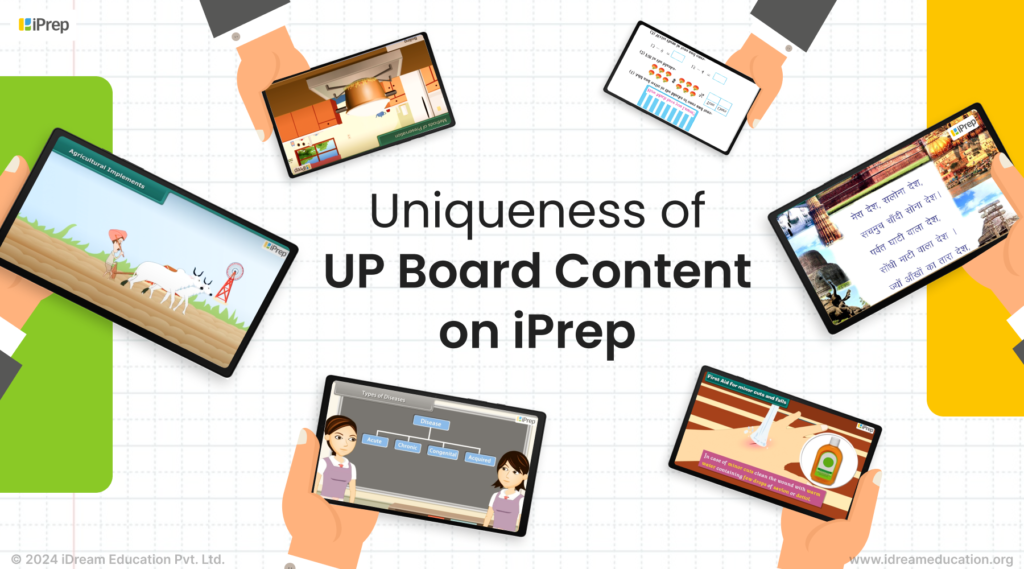
The uniqueness of UP Board Content on iPrep
iPrep offers fully aligned and updated content as per UP State Board guidelines. Some of the recent additions include:
The predominant language medium followed in government schools of UP is Hindi. Therefore, while working on a large-scale implementation of iPrep in schools of UP, all the content is provided in the Hindi language.
Added new content on iPrep such as Scout Guide (स्काउट गाइड शिक्षा), Sports and Health (खेल और स्वास्थय), Home Science (गृह शिल्प), Agricultural science (कृषि विज्ञान) to align completely with the UP board content .
Renamed syllabus books on iPrep in alignment with the Uttar Pradesh Board curriculum, to facilitate easier comprehension among students.
Added one book named “KALRAV” (कलरव) for Class 1, encompassing all subjects as followed in the UP Board curriculum.
We add and update content on iPrep according to the UP Board Content to uniquely personalize education and align with the state’s specific needs and culture.
Guide to UP Board Content on iPrep
iPrep is a bilingual learning platform providing K-12 content in Hindi, English, and various regional languages, personalized to the language needs of stakeholders in their educational programs. Across our major implementations of smart classes, educational tablets, mobile applications, and digital libraries across UP, Hindi consistently serves as one of the primary mediums for content delivery.
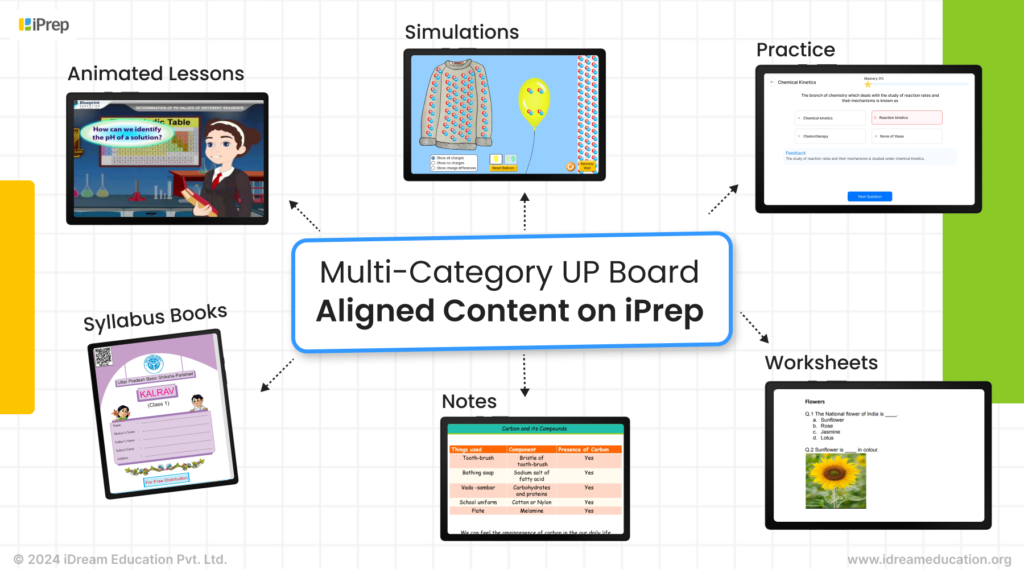
Multi-category UP Board aligned content on iPrep
Syllabus Books
iPrep offers syllabus books for all classes aligned with UP board content, presented in PDF format identical to textbooks. The benefit is the convenience of having all the books consolidated in one accessible location. Moreover, teachers/students can seamlessly zoom in and out content on any device. Additionally, iPrep enables effortless navigation through chapters. It eliminates the hassle of flipping through pages to locate desired content for learning or teaching purposes.
The titles of syllabus books on iPrep are also customised to match the UP board content. An example of this customization is our large-scale implementation of the digital learning solution in UP schools, where we not only present the book and chapter names in Hindi but also ensure they exactly match those mentioned in the textbooks. This alignment ensures that students and teachers can easily relate to the content provided on iPrep.
Animated Lessons
The educational video lessons on iPrep feature animated lessons tailored to UP board content and other state boards. The incorporation of chapter-specific animations on iPrep aims to facilitate easy comprehension of complex concepts. This further makes the learning experience engaging and enjoyable. UP Board’s animated lessons mirror textbook content, presented in digestible bite-size videos to enhance the joy of learning. Additionally, students and teachers have the flexibility to adjust the video play speed to match the students’ comprehension levels.
Practice
iPrep provides practice sessions for every chapter, focusing solely on syllabus content aligned with the UP Board curriculum and other state boards as well. This tailored approach to practice enhances interactivity and enables students to assess their comprehension of specific subjects or chapters.
An illustrative instance of UP Board-aligned practice is the adoption of iPrep by over 7000 girls in UP and MP. As per the majority of girls, the curriculum-aligned practice sessions help them pinpoint areas for further study and attain proficiency in each topic. By tracking their progress and recognizing areas that need improvement, these girls now have track of their learning journey, ultimately improving their confidence.
Notes
We prepare and add iPrep notes to facilitate quick revision in schools and at home. We also align these notes with UP board content as well as other state boards, ensuring comprehensive coverage and relevance.
Simulations
Simulations available on iPrep aim to improve logical understanding of concepts like motion, friction, gravity, and others. Through these simulations, students can actively engage by performing actions such as movement or adjusting weight, experiencing concepts in real-time. This interactive approach facilitates learning through hands-on interaction, enabling the use of games and activities to enhance comprehension.
Moreover, we align the simulations with the curriculum. In a large-scale implementation of our digital learning solution in schools of UP, we customized simulations according to chapters of different subjects. We do this to ensure that students can easily understand complex topics. Further, simulations are specifically titled to complement UP Board content across various subjects.
Worksheets
Worksheets resemble practice exercises on iPrep. They are downloadable, enabling teachers to conduct quizzes, practice sessions, and other interactive learning activities in the classroom. These worksheets are created based on topics and chapters in the state board curriculum. In the large-scale implementation of iPrep in Uttar Pradesh, topic-specific worksheets aligned with UP Board Content have been added. This is to ensure easy access to a diverse range of curriculum-aligned materials for teachers and students.
Beyond Academic UP Board aligned content on iPrep
Interactive lessons
Interactive videos available on iPrep serve as Do It Yourself (DIY) tutorials aimed at promoting learning by doing, thereby enhancing engagement and enjoyment in the learning process. This section of iPrep features a diverse array of videos meticulously crafted to facilitate experiential learning in Math and Science concepts such as chemical color changes, fireless flames, robotic scribing, helicopter fans, paper static experiments, and geometric series using paper-cutting techniques, and many more
In the large-scale implementations of our digital learning solution in schools UP, we thoughtfully aligned the interactive lessons with the chapter and topic structure outlined in the UP Board content. By consolidating various learning materials within a single platform, teachers gain the flexibility to integrate these resources seamlessly into their teaching. They can seamlessly blend traditional classroom teaching with video-based revision, followed by interactive hands-on sessions, fostering a holistic and dynamic learning experience for students.
Rich Book Library
iPrep offers an extensive book library comprising thousands of books including inspirational biographies, storybooks, and works on social and environmental education, science, art, and history. Books are added to foster early reading habits among children. These books further cultivate awareness, inspiration, and learning. Some of the biographies on iPrep are Salim Ali, Satyendra Nath Bose, AP Mitra, and others. Apart from this, there are captivating storybooks like “Laxman’s Questions,” “Savitri Bai,” “The Legend of Sleepy Hollow,” and more. Additionally, the library also has books such as “The Story of Rani of Jhansi” and a wealth of other engaging reads.
Life Skills and Value Education
The inclusion of life skills and value education content on iPrep serves as a crucial pillar in fostering moral values, citizenship, humanity, compassion, health, and more among students. By integrating such content, iPrep facilitates the holistic growth and development of students. Through this, they engage with diverse narratives concerning moral values and manners, health and safety, hygiene, and beyond.
Moreover, iPrep offers this content in Hindi, English, and local languages ensuring accessibility and understanding for every student. This multi-lingual approach underscores iPrep’s commitment to nurturing well-rounded individuals. It equips them with essential life skills and a strong foundation in moral values, irrespective of linguistic background.
Climate Change Action Course
The newly launched Climate Action Course on iPrep aims to familiarize students with sustainability concepts. This helps students understand the causes of climate change, and introduce preventive measures and safeguards. It further fosters leadership in climate action by encouraging students to reassess their daily behaviors. As per the requirement of the projects, we add the course to iPrep and also customize it according to language needs.
UP is one of the largest boards in the country. The uniqueness of UP Board content and implementation reflects the rich educational heritage of the state.
The predominant medium of instruction in schools of UP being Hindi is commendable. It fosters a deep connection to the cultural and linguistic roots of the students. This connection is essential for their holistic development and identity formation. Apart from this, personalization in chapter names and topics as per state-specific curriculum enhances the clarity and coherence of the learning experience. This approach not only facilitates comprehensive understanding but also instills a sense of belonging and ownership in the learners.
To Conclude
As we navigate the evolving landscape of education, it’s crucial to uphold the value of state board content such as UP board content and their revisions. These updates prepare students for modern times while also fostering an awareness of India’s rich civilization.
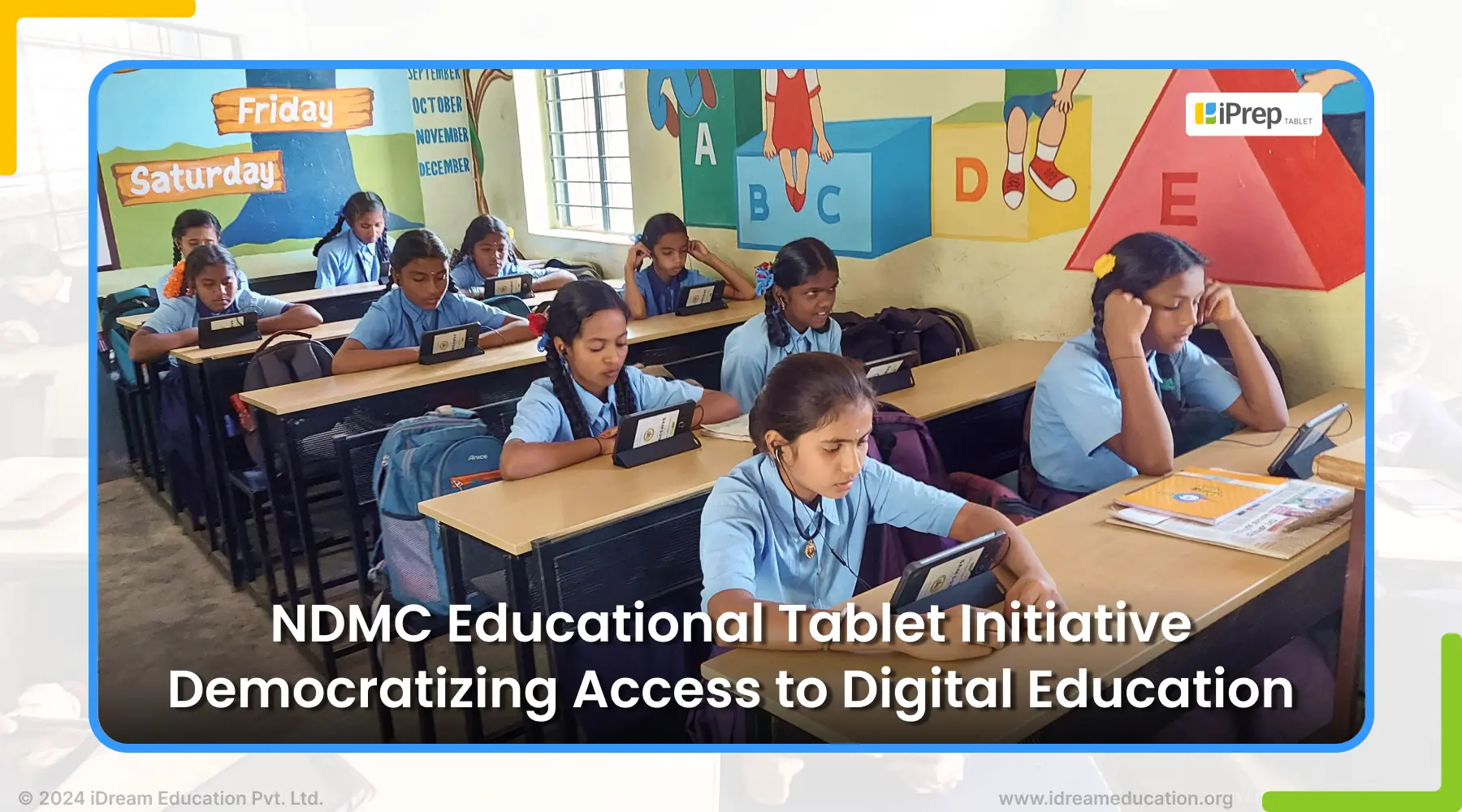
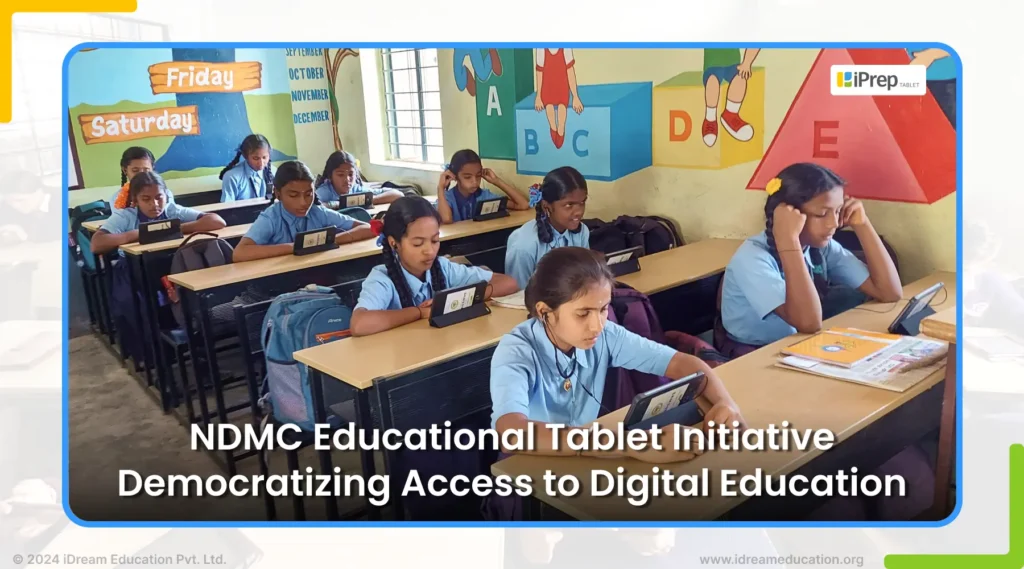
In a step towards fostering digital learning, the New Delhi Municipal Council (NDMC) has announced the distribution of 8,766 tablets to students and teachers of classes IX to XII. With a budget allocation of ₹24.7 crore. This initiative aligns with the central government’s Digital India campaign, aiming to enhance access to digital education.
This initiative is builded upon NDMC’s earlier pilot project
In this 811 tablets were distributed among students of classes 10 and 12 in four schools. Encouraged by the success of the pilot, NDMC is now scaling up the program to reach a broader student base.
Key Highlights of the NDMC Educational Tablet Initiative
Distribution of more than 8,766 tablets to students and teachers across Atal Adarsh and Navyug Schools
Educational tablets will come preloaded with digital content
Content includes study materials, videos, and question papers relevant to the curriculum
NDMC will procure the tablets through the GeM portal.
The learning tablets will be procured through the GeM portal during the ongoing academic session (2023-24) and distributed in the following session (2024-25)
Will implement measures to prevent non-educational use.
With this move, NDMC is taking a definitive step towards integrating technology in classrooms, supporting the vision of the Digital India scheme and the objectives outlined in the National Education Policy.
NDMC’s Educational Tablet Initiative Driving Digital India and NEP 2020 Goals
“The project will go a long way in achieving the goal of the Digital India Scheme and fulfil requirements as per the new education policy”, said NDMC Chairman Satish Upadhyay.
The NDMC educational tablet initiative directly addresses the Digital India scheme by fostering access to technology-driven learning resources. Also, the scheme resonates with the ethos of NEP 2020 by promoting holistic development and personalized learning. Through the provision of study materials, videos, and question papers tailored to the curriculum, the tablets empower students to explore diverse subjects at their own pace, fostering a culture of self-directed learning advocated by the NEP.
iDream Education Applauds the NDMC Educational Tablet Initiative
iDream Education has long been committed to enabling personalized learning through innovative educational technologies in partnership with the social sector/NGO. We have witnessed the positive impact of learning tablets on students, not just in school but also in the comfort of their homes. These tablets provide a unique space for students to learn at their own pace, anytime and anywhere, offering a flexible learning environment. Since the onset of the Covid-19 pandemic and in the post-Covid world, there has been a significant surge in the adoption of educational tablets, with students gaining greater access to personalised education.
One inspiring example of personalized learning through education tablets is the story of Shreya Namdev Girme, a Class 10 student
She is from the small town of Daund Tehsil in Pune, Maharashtra. Despite the disruptions caused by the pandemic, including a two-year break from school, Shreya demonstrated resilience and determination to overcome learning gaps. While the pandemic forced her to take on additional household responsibilities, the return to school posed new challenges for both her and her classmates, many of whom were struggling with gaps in their knowledge.
Recognizing the severity of the issue in the school, the principal of Rajya Rakhiv Police Public Madhyamik School collaborated with a social sector organization to introduce personalized learning solutions through the iPrep Tablet for students in Classes 9 and 10. This initiative aimed to help students bridge the academic gaps they faced, particularly as they were preparing for their Board Exams. Shreya eagerly adopted educational tablets, using animated lessons to enhance her understanding of textbook material and engaging with practice exercises to test her knowledge. With the tablet’s built-in reporting feature, she could track her progress and identify areas where she needed improvement.
Shreya’s dedication to her studies paid off when she entered the examination hall with confidence. The hard work and focus she put into using the iPrep learning tablet throughout the year paid off in the results – she not only passed her exams but topped Class 10th in the entire Pune District. Her story is a testament to the power of personalized learning through educational tablets. Read Shreya’s complete story here
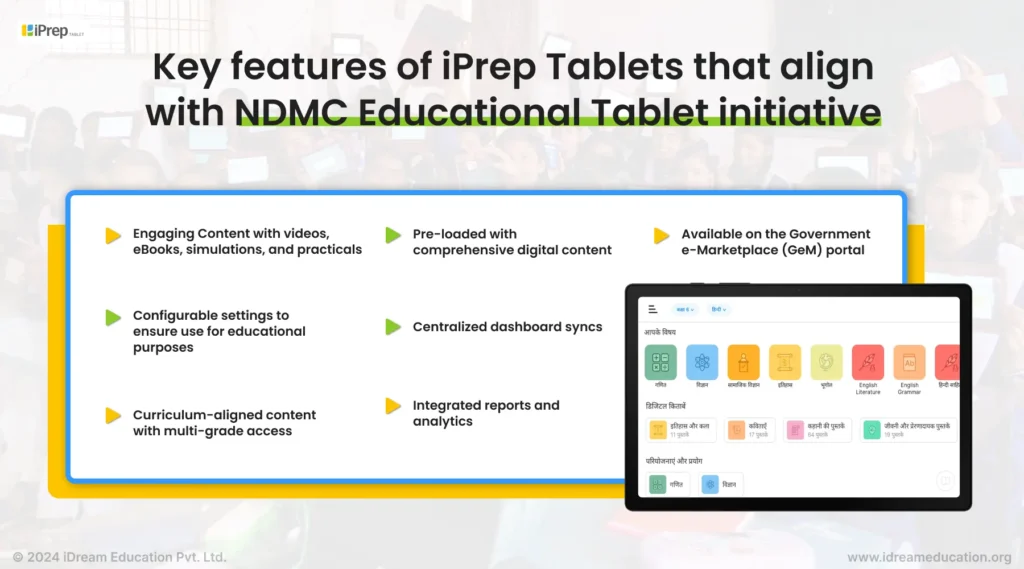
Key features of iPrep Tablets that resonate with the NDMC Educational Tablet initiative:
Features of iPrep Tablets that resonate with the NDMC Educational Tablet Initiative
iPrep learning tablets come pre-loaded with curriculum-aligned digital content, accessible both online and offline.
Students can explore content across all grades, enabling seamless revision and independent learning to bridge any gaps.
iPrep provides textbook-aligned content in multiple categories, including animated video lessons, practice exercises, practicals, notes, interactive simulations, and more—allowing students to learn in their preferred style.
Integrated reports and analytics track student usage, while a centralized dashboard syncs data for stakeholders to monitor progress and make data-driven decisions to enhance learning outcomes.
Additionally, MDM (Mobile Device Management) ensures that tablets are used exclusively for educational purposes by restricting access to non-learning features.
The iPrep Tablets are also provided as part of an easy-to-set-up and mobile digital library for schools and can also be powered with adaptive learning software PAL.
GeM: Where the Government and Trusted Buyers Meet
NDMC’s choice to procure tablets via the GeM portal underscores its dedication to acquiring dependable and effective products. The Government e-Marketplace (GeM) functions as the primary procurement hub for various governmental entities, encompassing Central Government and State Government Ministries, Departments, and Public Sector Units (PSUs). GeM’s overarching objective is to streamline and bolster the public procurement process, fostering transparency, efficiency, and inclusivity. For iPrep Tablets, being showcased on GeM bolsters its credibility, given the hub’s esteemed status as a reliable procurement platform. It also provides an avenue for iPrep Tablets to contribute meaningfully to the education sector and the nation’s development goals.
If you’re interested in purchasing an educational tablet or would like to book a live demo, feel free to contact us at +91 7678265039. You can also share your details here or share your details at share@idreameducation.org.
In the 7th edition of Pariksha Pe Charcha 2024 (PPC) held at Bharat Mandapam in New Delhi. PM Modi Ji in PPC emphasized a connection between students and teachers that goes beyond mere syllabus and curriculum.
Pariksha Pe Charcha PPC is initiated by Prime Minister Narendra Modi Ji. It is a collective effort aimed at uniting students, parents, teachers, and society. Its goal is to cultivate an environment that celebrates, encourages, and enables each child to fully express their unique individuality.
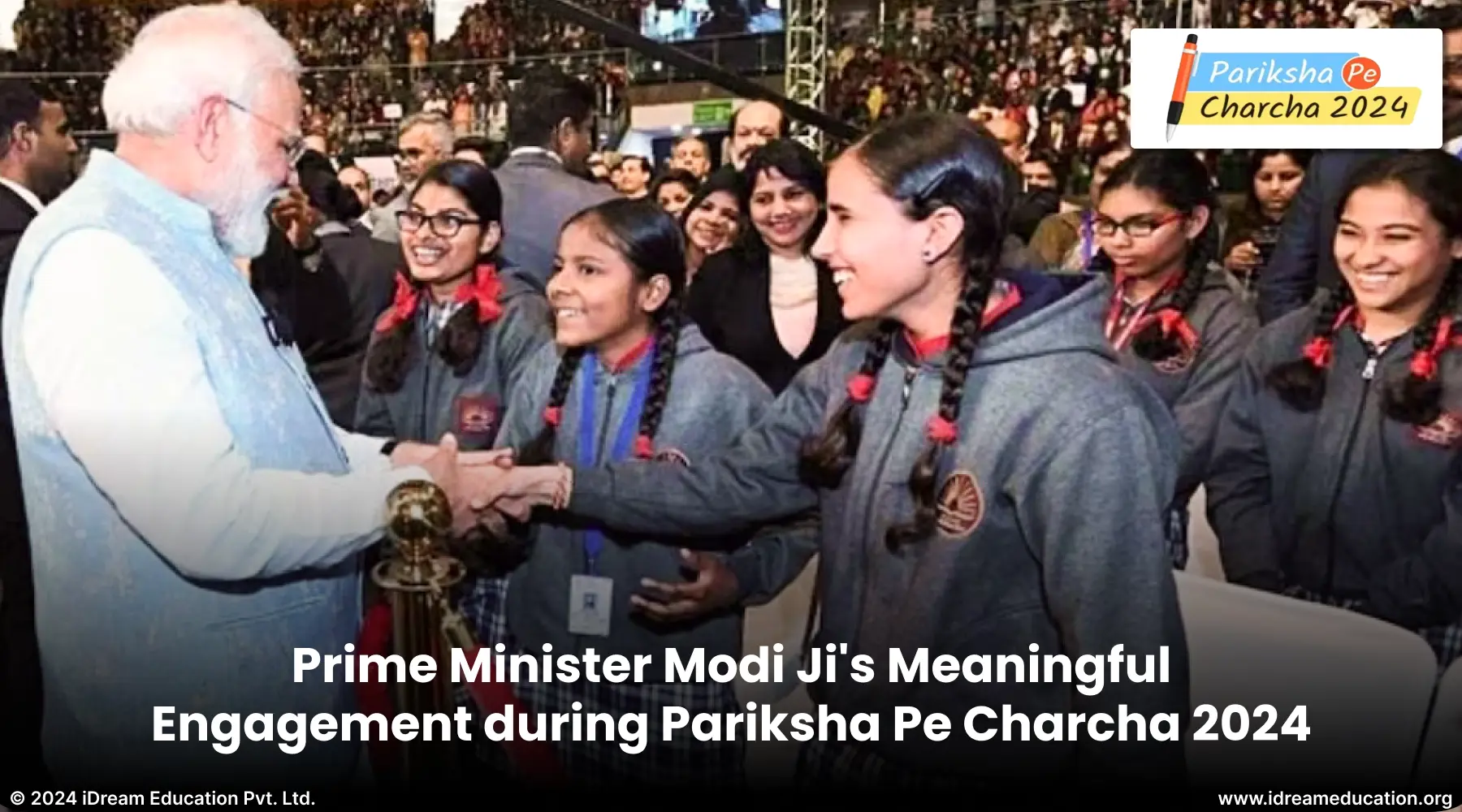
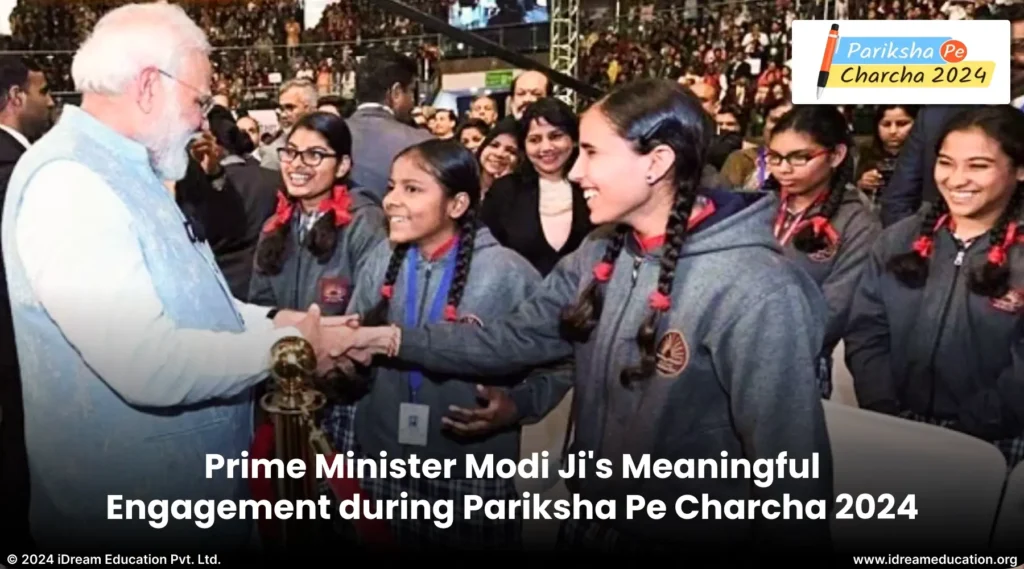
Prime Minister Modi Ji’s Meaningful Engagement during Pariksha Pe Charcha 2024
The Prime Minister’s immersive engagement at the art and crafts exhibition, underscores Modi Ji’s genuine interest in understanding the creative intent behind each student’s project. This direct involvement serves as a clear testament to the value placed on students and their innovative contributions to society. It emphasizes on students’ primary need of being heard and valued and such direct participation by the Prime Minister is sure to inspire and motivate students.
Similarly, while starting Pariksha Pe Charcha,
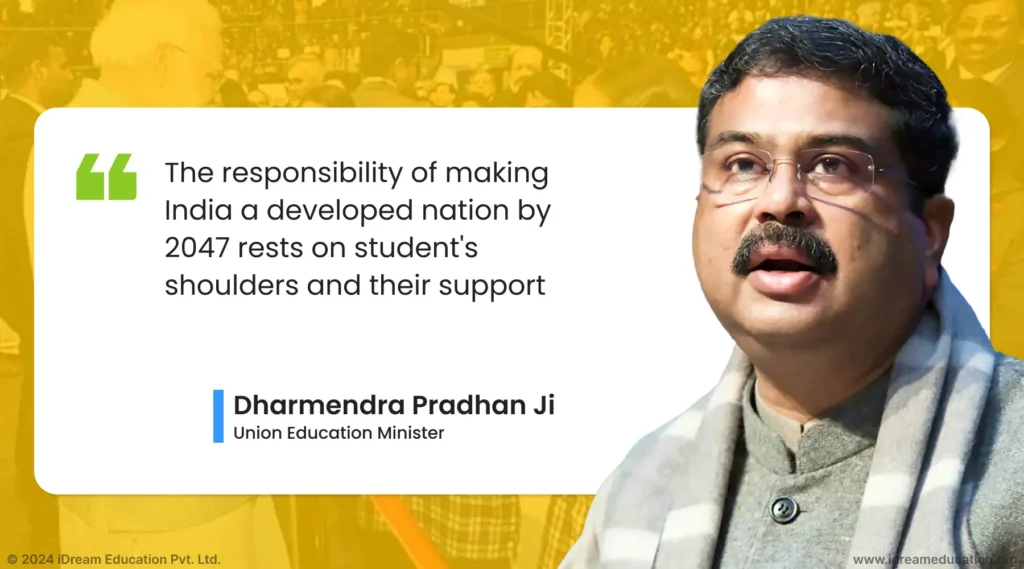
Education Minister Dharmendra Pradhan Ji addressed students by mentioning “The responsibility of making India a developed nation by 2047 rests on your shoulders and your support.“
Questions addressed during the 7th edition of Pariksha Pe Charcha 2024
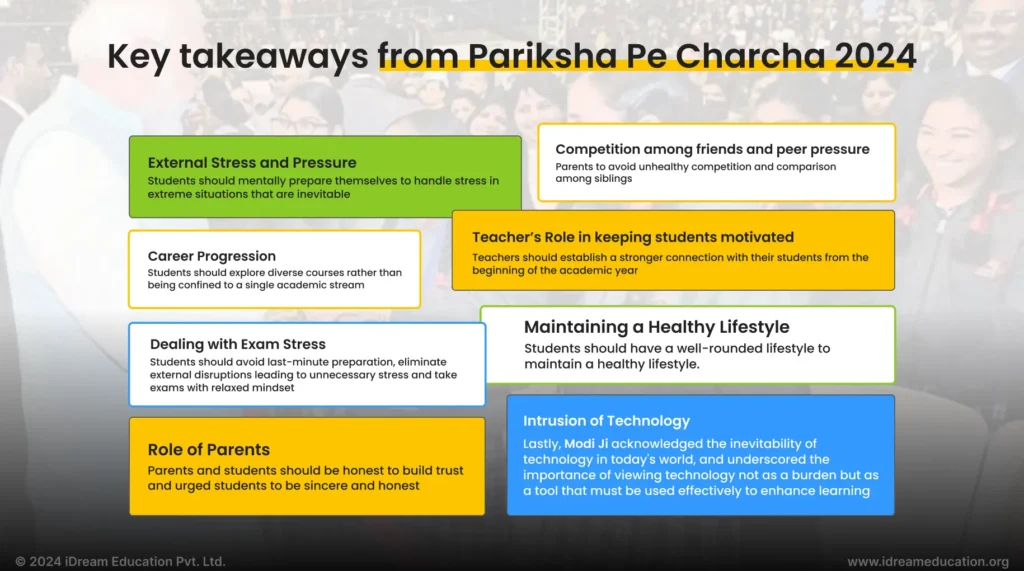
External Stress and Pressure
Md. Arsh student from Govt. Sarvodaya Bal Vidyalaya, Burari in Delhi, and Dania Shabu, class 10th student from a private CBSE school in Oman brought up this question in Pariksha Pe Charcha 2024. The students requested the Prime Minister to suggest ways to address pressure from external factors, such as cultural and societal expectations.
To this, PM Modi Ji highlighted the role of parents and teachers in collectively mitigating stress by discussing ways to reduce stress for each student. On the other hand, he encouraged the students to mentally prepare themselves, drawing a parallel with the experience of traveling from one extreme climate to another. Just as the mind adapts to extreme weather conditions in advance, he advised assessing stress levels and gradually increasing them to ensure that the students’ capabilities are not impacted with stress instead they are ready with the ways to deal with external stress and pressure.
Teacher’s Role in keeping students motivated
Bunty Medi, a music teacher from Sivasagar Assam, and Shri Kondakanchi Sampatha Rao, a teacher from ZP High School, Upparapalli, Andhra Pradesh brought up this question in Pariksha Pe Charcha 2024. The teachers requested the Prime Minister to guide them on the role of teachers in motivating their students.
In response, Modi Ji said that the music teacher holds the potential to alleviate the stress not only for a specific class but for all students in the school. He then said if teachers are looking for strategies to reduce students’ exam stress, then the need of hour is to first eliminate the connection that is built only for exams. He suggested that teachers should establish a stronger connection with their students from the beginning of the academic year. By fostering a deeper connection, students would feel more comfortable discussing their concerns, ultimately leading to a stress-free exam environment.
He then illustrated the current digital era and pointed out that both teachers and students nowadays have smartphones. However, he questioned whether students have ever reached out to them to discuss non-academic matters, highlighting the prevailing connection of teachers and students which is specific subjects. Modi Ji then said that “When teachers expand their role beyond subject matters, students would be more inclined to share their stress, creating an positive environment without any stress of exams”
To make it more understandable, he shared the example of doctors establishing a personal connection with their patients, the Prime Minister emphasized that this connection serves as a significant aspect of the healing process. He then concluded by saying, “Build a personal relationships with families and acknowledge students for their accomplishments before them” because “teachers are more than just a job role, they have the responsibility of shaping the lives of their students”.
Competition among friends and peer pressure
Bhagya Laxmi from Govt Demonstration Multipurpose School in Andaman & Nicobar Islands, Swathi Dileep from Kendriya Vidyalaya, Calicut, Kerala, and Drashti Chauhan from JNV Panchmahal in Gujarat brought up this question in Pariksha Pe Charcha 2024. The students and teacher requested the Prime Minister to guide the ways to avoid unhealthy or unnecessary competition and not take peer pressure.
In response to this, the Prime Minister underscored the significance of fostering healthy competition. He emphasized that unhealthy competition often originates in family situations, therefore urged parents to avoid the situation that can lead to comparison among siblings. To make his suggestion more relatable, the Prime Minister shared a video where children, while engaging in healthy competition, prioritized helping one another. Modi Ji further stressed that a friend’s achievement doesn’t limit one’s own potential.
He urged parents to refrain from comparing their children to others and advised to not make the achievement of their children their visiting card. During Pariksha Pe Charcha 2024 PM Modi Ji encouraged students to celebrate their friends’ successes, emphasizing that “friendship is not based on transactional emotions”.
Dealing with Exam Stress
Adrita Chakraborti, a student of Pranavanda Bidya Mandir, West Tripura, Shaikh Taifur Rehman, Jawahar Navodaya Vidyalaya, Bastar, Chhattisgarh and students from Adarsh Vidyalaya, Cuttack, Odisha, Rajyalaxmi Acharya brought up this question in Pariksha Pe Charcha 2024. The students requested the Prime Minister to guide them to deal with last moment stress or making silly mistakes during exams due to stress.
The Prime Minister underscored the importance of avoiding that occur due to parental over-enthusiasm or excessive student diligence. He urged parents to refrain from exaggerating the significance of exam day through new clothing, rituals, or stationery. Simultaneously, he advised students against last-minute preparation, encouraging a relaxed mindset and eliminating external disruptions that could lead to unnecessary stress.
Further, Modi Ji emphasized the significance of reading the question paper and strategically planning time allocation, to avoid last-minute panic. He reminded students that, despite the increasing prevalence of computers and phones, most exams are still written, and urged them to maintain the practice of writing. Proposing that 50 percent of their study time be dedicated to writing, he highlighted that true understanding often comes through the act of writing. Additionally, the Prime Minister encouraged students not to panic because of the pace of other students.
Maintaining a Healthy Lifestyle
This question in Pariksha Pe Charcha 2024 has been brought up by Najma Khatoon a student of PM SHRI Kendriya Vidyalaya in Kargil, Ladakh, Abhishek Kumar Tiwari, and a teacher from Tobi Lahme a government higher secondary in Arunachal Pradesh and Dhiraj Subhas, a student of Senior Secondary School from Rajasthan. The students and teacher requested Modi Ji to guide them to maintain balance between a healthy lifestyle with studies and exam preparation.
In this context, Prime Minister Narendra Modi underscored the importance of recharging mobile phones as a metaphor for the necessity of prioritizing physical health. He advocated for a well-rounded lifestyle and asked to avoid excess of everything. In continuity, he said, “A healthy body is crucial for a healthy mind“. Modi Ji elaborated on the idea, highlighting the significance of incorporating healthy routines such as spending time in sunlight and ensuring regular, quality sleep.
The Prime Minister shared a personal insight, revealing his practice of achieving deep sleep within 30 seconds of going to bed, emphasizing the need for a balanced sleep cycle. He said, “Being fully awake when awake and enjoying sound sleep when asleep is a balance that can be attained“.
Discussing nutrition, PM Modi emphasized the importance of maintaining a balanced diet. Additionally, he stressed the significance of regular exercise and engaging in physical activities to promote overall fitness.
Career Progression
This question in Pariksha Pe Charcha 2024 has been brought up by Aditi Tanwar of The Millennium School in Panipat, Haryana, and Madhumita Mallick of Kendriya Vidyalaya, Barrackpore, North 24 Pargana, West Bengal.
In response to the situation, Prime Minister Modi emphasized the importance of gaining clarity in career paths to avoid confusion and indecisiveness. Drawing inspiration from the cleanliness initiative and the government’s commitment to it, he highlighted the growing significance of ‘Swachhata’ as a national priority. PM Modi shared that India’s art and culture sector has experienced a remarkable 250-fold growth in the past decade, encouraging students to recognize their potential in exploring various fields.
Modi Ji further urged students not to underestimate themselves and emphasized the value of full dedication and going all in. He discussed the National Education Policy, highlighting its provisions that encourage students to explore diverse courses rather than being confined to a single academic stream. Commending the students’ participation, skills, and dedication in the showcased exhibition, he praised their effectiveness in communicating government schemes compared to the Ministry of Information and Broadcasting.
PM Modi Ji stressed the need for decisiveness to eliminate confusion in choosing a career path. He illustrated the point with an analogy of ordering food in a restaurant. He advised evaluating the positives and negatives of decisions to be made, emphasizing the importance of thoughtful decision-making.
Role of Parents
This question in Pariksha Pe Charcha 2024 has been brought up by Deepasri, a student from Puducherry Government Higher Secondary School. She asked Modi Ji about the role of parents and ways to build trust.
In addressing her inquiry, Prime Minister Modi Ji emphasized the prevalent issue of lack of trust within families. He urged parents and teachers to address this matter seriously. He said, lack of trust amongst students is not a sudden issue but is a result of a long process and requires students, teachers, and parents to do a deep self-analysis of their conduct. Modi Ji proposed that honest communication is a key strategy to rectify this situation. In alignment with this notion, he urged students to be sincere and honest.
Furthermore, Modi Ji advocated for parents to express confidence in their children rather than doubting them. He then said, lack of trust can lead to depression in children. Thus, urged teachers to maintain open channels of communication with students and avoid favoritism.
Modi Ji suggested an experimental approach, encouraging families and friends to regularly meet and discuss positive thoughts that can help children grow.
Intrusion of Technology
Abhinav Rana, a student from Kangoo, Hamirpur, Himachal Pradesh, and two parents Chandresh Jain from Pune, Maharashtra, and Kumari Puja Srivastava, from Ramgarh, Jharkhand brought up this question in Pariksha Pe Charcha 2024. They wanted to know how to educate and encourage students to manage exam stress effectively while enjoying the benefits of mobile technology for learning.
Anything in excess can have detrimental effects, remarked the Prime Minister, drawing a parallel between the overuse of mobile phones and the overconsumption of home-cooked meals, which, despite being nutrient-rich, can lead to health issues. Emphasizing the need for judicious decision-making, he urged effective use of technology and mobile phones.
Addressing a common parental concern, the Prime Minister highlighted the challenges related to privacy and secrecy. He advocated the establishment of family rules and regulations, including no use of electronic gadgets during dinner, and also suggested creating no gadget zones within homes.
Acknowledging the inevitability of technology in today’s world, the Prime Minister underscored the importance of viewing it not as a burden but as a tool that must be used effectively. He encouraged students to educate their parents about the educational benefits of technology and suggested sharing passcodes within families to promote transparency, thereby preventing potential evils.
In addition, Prime Minister Modi Ji recommended the use of dedicated mobile applications and tools to monitor screen time. He also stressed the need to educate students about the educational potential of mobile phones in the classroom.
Students M Vagesh from Chennai, Tamil Nadu, and Sneha Tyagi from Udam Singh Nagar, Uttarakhand during Pariksha Pe Charcha 2024 requested Prime Minister to share his approach to handling pressure and stress, seeking guidance on cultivating positivity
The Prime Minister expressed satisfaction in acknowledging that children understand the challenges associated with the position of the Prime Minister. He emphasized that unforeseen situations are a part of everyone’s life and avoiding them is not a productive approach. According to the Prime Minister, a more effective strategy is to confront challenges actively, fostering continuous learning and personal enrichment.
Highlighting his own approach, the Prime Minister stated, “I challenge every challenge“. Here, he emphasized the importance of not waiting passively for challenges to pass. He views each challenge as an opportunity to learn and grow, enriching his experience in dealing with new situations. The Prime Minister said, “I draw confidence from the support of the 1.4 billion citizens of the country, and for me, there are billions of solutions to every challenge”. He emphasized that his awareness of the capabilities of the nation and its people forms the fundamental basis of his thinking.
Acknowledging that he will be at the forefront and mistakes will be his, still, my strength comes from the capabilities of the nation. He stated, “The more I enhance the capabilities of my countrymen, my ability to challenge the challenges improves’ ‘. To explain this further, he highlighted the issue of poverty as an example. He expressed the belief that when the poor actively strive to overcome poverty. With the necessary tools provided by the government, such as proper housing, sanitation, education, healthcare, and piped water, the eradication of poverty becomes achievable.
While outlining the progress made during his 10-year tenure, Modi Ji said that 250 million people were lifted out of poverty. He further highlighted the positive impact of empowering individuals and providing essential resources.
With numerous examples during Pariksha Pe Charcha 2024, Prime Minister Modi emphasized the government’s commitment to creating a nation where both the current and future generations have opportunities to excel and showcase their abilities. He stressed the importance of a collective national resolve. In concluding his address, the Prime Minister encouraged all students, extending his best wishes for them to attain their life goals.
iDream Education Found Inspiration in Prime Minister Modi Ji’s Insightful Conversation with Students, Teachers, and Parents during Pariksha Pe Charcha 2024
Our commitment to students, teachers, and ecosystem partners is fueled by a common motivation. Through a diverse curriculum aligned with multi-categories digital content on iPrep, we aim to eliminate the stress experienced by students during learning as well as exams.
iPrep’s content is thoughtfully curated and created to make learning enjoyable and engaging for students. With its easily comprehensible K-12 content, iPrep eliminates the need for last-minute preparation and self-doubt among students. Additionally, the inclusion of non-academic content on iPrep is intended to empower students as suggested in NEP. Content beyond academics allows them to widen their horizon and form a better & deep understanding on important aspects of growth. This will help them in life, careers, and in building a better nation with more capable, responsible, and enabled individuals. By providing unrestricted access to a wide range of content, we align with the New Education Policy. Through this approach, we strive to empower students, enabling them to learn based on their individual interests
Pariksha Pe Charcha 2024, with Prime Minister Narendra Modi Ji, serves as a guiding light for students, teachers, and parents. Additionally, it provides valuable insights for the business fraternity.
August 15′ 2025 Update: A Guinness World Record for Pariksha Pe Charcha
Pariksha Pe Charcha, Prime Minister Narendra Modi’s flagship initiative, has not only inspired millions of students, teachers, and parents but has also made history on the global stage. The program has achieved a Guinness World Record for the “most people registered on a citizen engagement platform in one month.” With 3.53 crore valid registrations and a staggering 21 crore viewers, Pariksha Pe Charcha stands as a testament to the nation’s collective commitment to fostering a positive and stress-free learning environment. This remarkable feat showcases the growing importance of open dialogue on exams and education in shaping the future of India’s youth.
In an era, where students’ attention spans are fleeting, keeping them actively involved in classroom teaching is a concern for teachers. While certain students demonstrate a strong commitment to their studies, others who are less engaged in classes may exhibit disinterest or disrupt the learning environment. Lack of engagement is a concern for teachers, as they aspire to foster a consistent level of involvement from every student in their classes.
The question then arises: How can teachers achieve this goal?
Enter the era of smart classes, leading to excitement, engagement, and a touch of magic in the classroom experience. The integration of smart classes in the classroom elevates the teaching experience for teachers by providing interactive content, thereby reducing the need for extensive lesson planning.
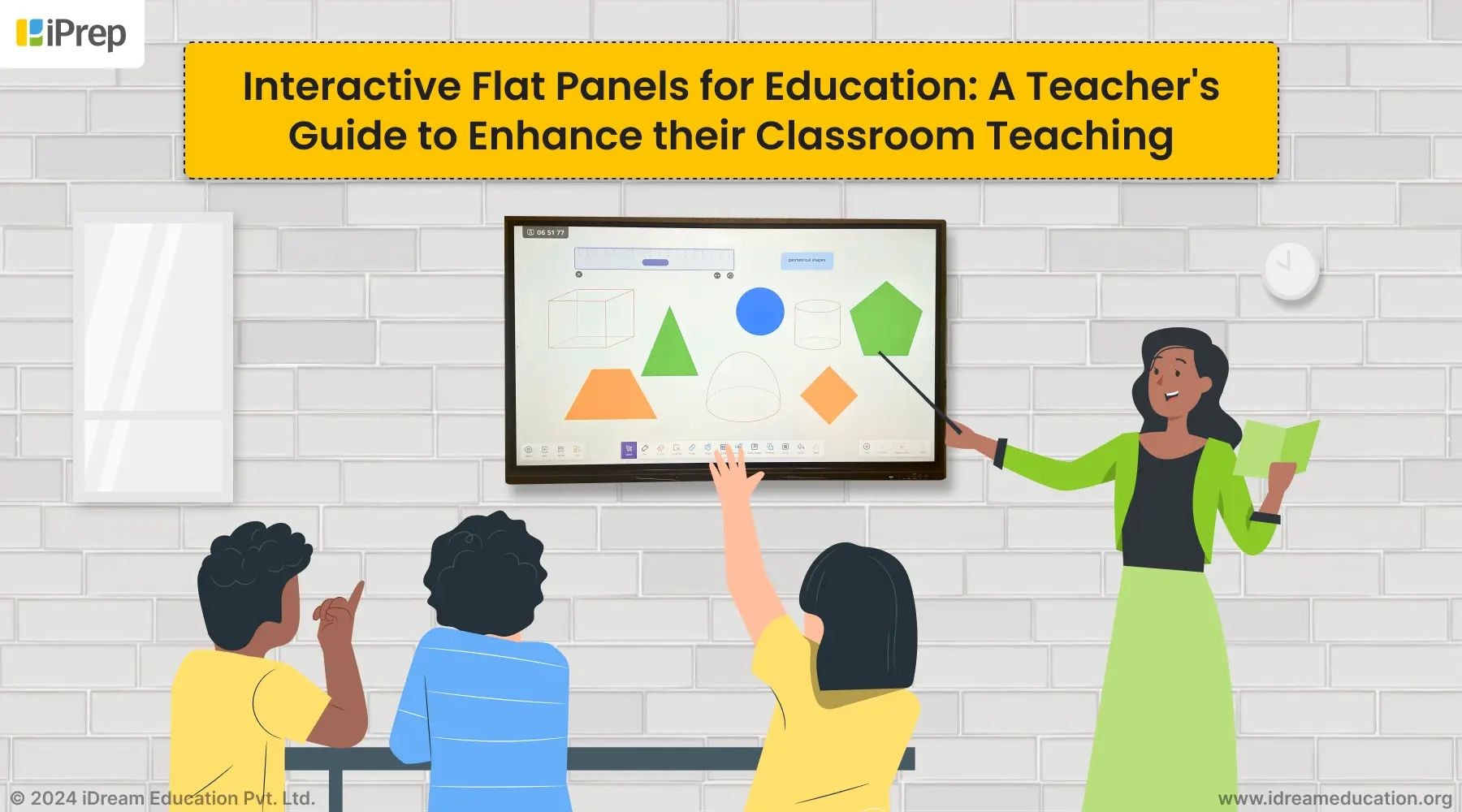
Smart classrooms can be set up on diverse hardware, ranging from Android-based Smart TVs, Interactive Flat Panels, Open pluggable systems, and Projectors to Interactive White Boards. Among these highly in-demand smart class hardware options is the Interactive Flat Panel (IFP), because of its exceptional features and the benefits it provides to teachers.
How can teachers enhance teaching with Interactive Flat Panels for Education?
Interactive flat panels for education enable interactive learning content
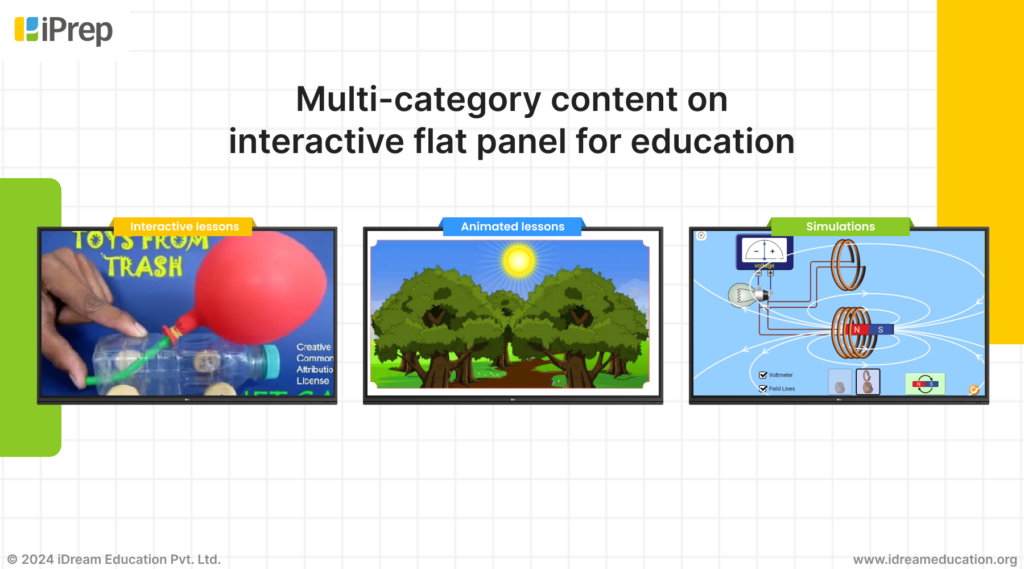
Interactive flat panels in education empower teachers with learning materials in different forms such as syllabus books, video lessons, practice, notes, interactive lessons, and practicals through a dedicated learning platform. One of the examples of this is iPrep, designed for K-12 schools and is easily accessible on interactive flat panels. It offers curriculum-aligned content in various formats, eliminating the necessity for extensive lesson planning. Engaging content on IFP not only simplifies lessons but also enhances students’ comprehension of concepts.
Interactive flat panels for education foster real-time collaboration
Interactive flat panels enhance teaching by facilitating collaborative learning through real-time interaction. Teachers can conduct group activities such as story writing, engaging book reading sessions, and problem-solving exercises using the interactive board. The integration of iPrep on IFP provides teachers with an array of offline content for collaborative endeavors, including syllabus books, storybooks, inspirational biographies, interactive lessons, and more. For example, teachers can enhance the learning experience by incorporating hands-on activities through DIY videos, fostering increased participation and confidence in a vibrant and joyful classroom environment.
Interactive flat panels for education offer digital annotations
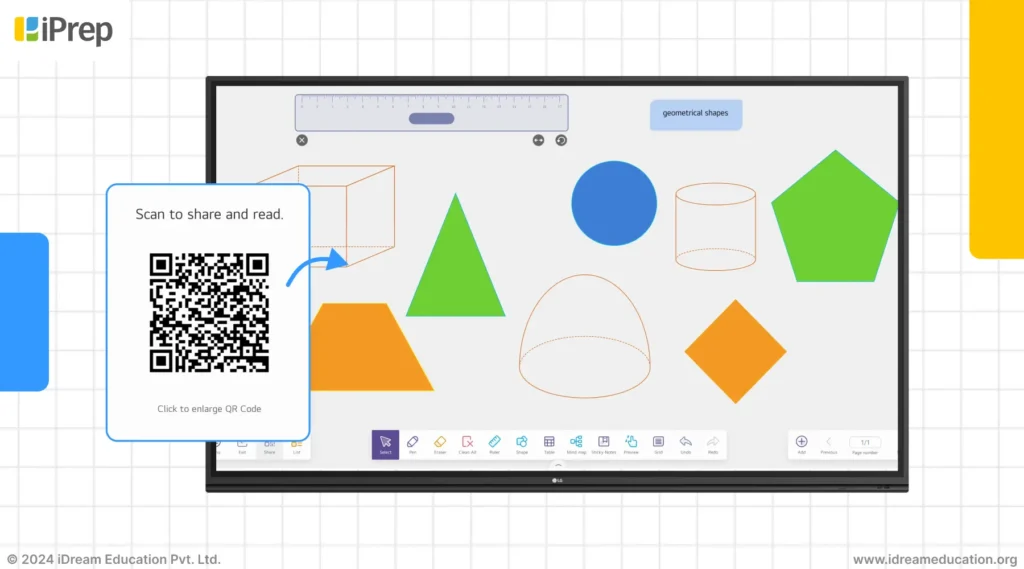
Interactive flat panels for education provide teachers with annotation tools that allow them to effortlessly draw content on the screen during lessons. These tools include features such as figures, shapes, rulers, and more, enabling teachers to save valuable time that would otherwise be spent on drawing on blackboards. The flat panel functions as a smart board in the classroom, eliminating the need for erasing explanations – teachers can simply add pages and seamlessly continue teaching. Interactive flat panels in classrooms not only streamline the teaching process but also ensure that explanations are saved within the same class and across other related classes. The annotation tools act as magic chalk for teachers, allowing them to unleash their creativity on the board.
Further, teachers can use sticky notes to highlight important concepts or facts, employ mind maps to illustrate the flow of ideas, and explore various other creative teaching techniques. In essence, smart classes on interactive flat panels can be used by teachers in various ways to make classrooms creative and engaging.
Interactive flat panels for education allow multimedia integration
Smart class on IFP enhances classroom experiences by enabling teachers to integrate multimedia elements like videos, images, and interactive simulations, making lesson delivery more engaging and catering to diverse learning styles. Pre-installed iPrep Digital Content with Integrated Monitoring & Reporting with IFP further empowers teachers with curriculum-aligned content on IFP in various formats, eliminating the necessity to search for online content. iPrep offers Digital content for IFPs similar to textbooks in the local language, helping teachers create a familiar and engaging environment at their fingertips without the hassle of connecting IFPs to the internet.
Interactive flat panels for education allow to conduct interactive quizzes
Teachers can enhance their teaching approach by using iPrep on IFP to conduct real-time quizzes with practice questions. The interactive nature of iPrep on interactive flat panels allows for instant result display and discussions on answers, encouraging active student participation and deepening their understanding. Simultaneously, it provides valuable insights for teachers into the learning needs and interests of their students. With the use of iPrep’s practice content on IFP teachers can improve student collaboration contributing to a joyful learning environment. Moreover, it serves as a valuable educational resource on days when students may not be in the mood for regular studies or when teachers are occupied with other teaching responsibilities, teachers can encourage students to engage in practice sessions using iPrep on IFP, making optimum use of time.
The interactive flat panel offers gesture-based controls, providing an engaging experience for students who can use intuitive gestures to interact with on-screen objects. iPrep features gesture-based learning on IFP through simulations, designed to enhance logical comprehension of concepts such as friction, gravity, and more. By executing specific actions like movement or adjusting weight through touch, students can experience these concepts in real time. This approach allows teachers to integrate games and activities that foster learning through hands-on interaction.
Interactive flat panels for education allow documentation of classroom sessions
The implementation of interactive flat panels (IFP) for education enables teachers to document and save content drawn or written on the board during lesson delivery. The saved lessons serve as valuable resources for students, facilitating effective revision and providing a foundation for future classes. Moreover, IFP promotes the convenience of sharing these resources via email with students, parents, and other stakeholders for communication and updates.
Interactive flat panels for education support Remote Learning
The QR scanner functionality within IFP effortlessly connects traditional classroom content with digital. Teachers can share QR codes with students who are not physically present, allowing them to easily access and learn from the classroom content displayed on the board on their smartphones. This enables remote learners to effortlessly access and absorb the in-class instruction in the comfort of their homes, fostering a more interactive and technologically integrated learning environment. This feature serves as a collaborative functionality, facilitating smooth interaction with students participating remotely.
Interactive flat panels for education allow to keep track of teaching
Through learning platforms such as iPrep on IFP, teachers can monitor the content being taught and adjust their teaching plans accordingly. iPrep’s reporting dashboard enables teachers and other stakeholders to track video lessons, practice sessions, syllabus materials, and more used in the classroom, along with their durations. This continuous reporting and monitoring contribute to improved lesson planning and delivery.
Interactive flat panels for the professional development of teachers
IFPs have the potential to contribute to teacher training and professional development sessions in schools. Teachers can engage in collaborative efforts with colleagues, sharing insights on their utilization of IFP, iPrep (learning platform), and its features to elevate classroom teaching. This collaborative approach fosters ongoing learning within schools, contributing to the strengthening of teacher training as envisioned in National Education Policy (NEP) of 2020.
“Interactive Flat Panels for education are proving to be indispensable smart class devices that significantly enhance the capabilities of teachers and the overall teaching experience”.
With increasing demand for IFPs, especially in the context of smart classrooms, it is becoming a cornerstone in the EdTech industry. The incorporation of iPrep further elevates their value, providing teachers with a seamless and efficient means of diverse educational content. Notably, the offline functionality ensures accessibility for schools across diverse locations in India, making IFPs a practical and versatile solution for both private and public schools. As we witness the evolution of education technology, the Interactive Flat Panel stands out as a key enabler, enhancing the way students learn and teachers instruct.
In case you would like to know more about interactive flat panels for education, you connect with us at +91 7678265039 or share your details here. You can also write to us at share@idreameducation.org
Students advancing NEP goals through technology by Smart Class Providers in India.
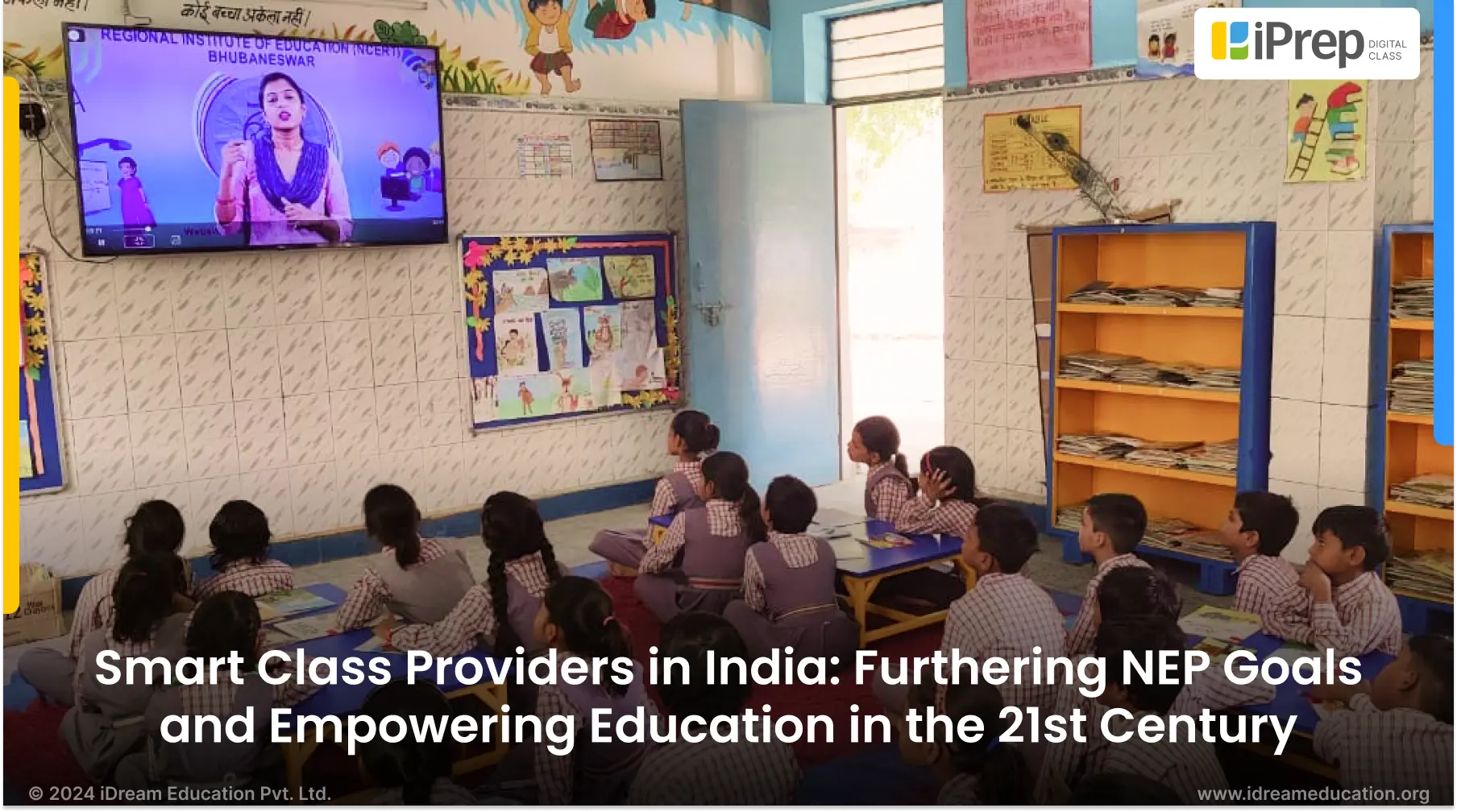
The rise of smart class providers in India is enhancing the nation’s education landscape, bringing classrooms to life with engaging, technology-enhanced learning experiences. This digital revolution, fueled by the goals of the National Education Policy (NEP) 2020, is empowering teachers and students alike. Smart classrooms are no longer a luxury, but a necessity, meeting the NEP’s vision for continuous teacher development and tech integration. By offering dynamic multimedia content, real-time assessments, and a host of other features, these solutions are changing the way how students learn. As a result, smart class providers in India are thriving, constantly innovating to create scalable and impactful solutions for schools, CSR initiatives, PSUs, NGOs, and foundations across India.
Smart Class Providers in India Making Education Accessible and Affordable
Smart Class Providers in India are actively supporting the goals of NEP 2020, particularly teacher empowerment, through several key initiatives:
NEP-Aligned Content and Platforms: Smart Class providers in India such as iDream Education offer comprehensive platforms and NEP aligned content. This empowers teachers to address learning gaps, create inclusive classrooms, and boost student engagement. The focus is on enhancing conceptual understanding in a joyful learning environment.
Scalable and Affordable Solutions: To ensure widespread accessibility, smart class providers such as iDream Education offer a variety of smart class hardware options. This makes smart classrooms a scalable and affordable solution for various educational initiatives aiming to achieve NEP 2020 objectives.
Holistic Education with NEP-Aligned Digital Content: The NEP-Aligned Digital Content by iDream Education, one of the smart class providers in India emphasizes holistic education. It prioritizes conceptual understanding, ethics, human values, and life skills. Continuous formative assessment and bilingual options are also integrated to support diverse language preferences and the broader goals of NEP 2020.
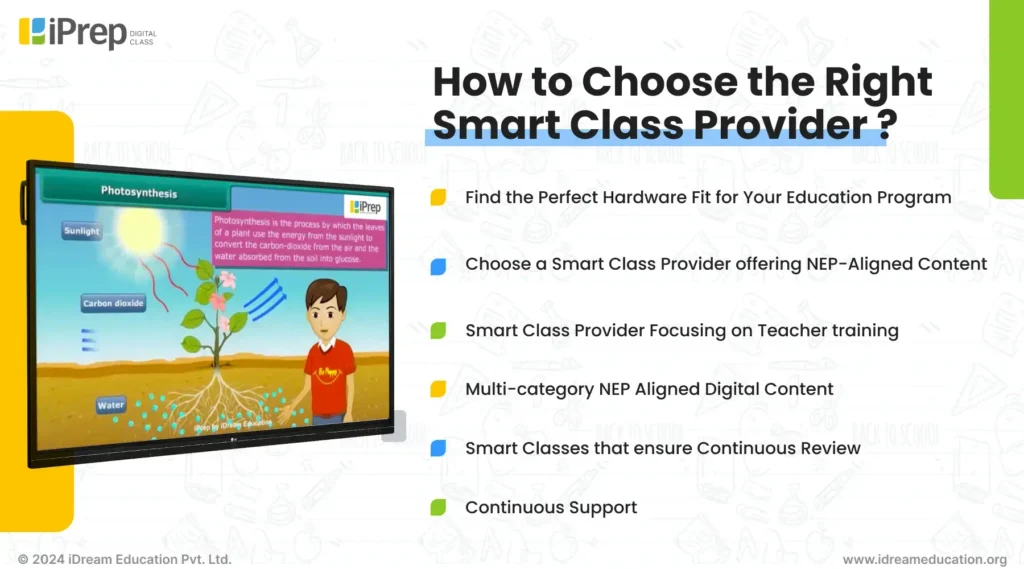
How to Choose the Right Smart Class Provider?
Find the Perfect Hardware Fit for Your Education Program
When selecting a smart class provider, prioritize those that offer flexibility in hardware options tailored to your specific educational initiatives. A good provider will suggest you options based on the existing classroom setup being regularly used in classrooms and offer recommendations based on your needs and budget. For instance, smart TVs are a user-friendly and cost-effective solution that aligns well with teachers’ existing habits of using smartphones. Alternatively, interactive flat panels are a more comprehensive option popular with corporate and government institutions, providing a robust platform for interactive learning. The ideal hardware should be both affordable and easy for teachers to adopt with minimal training.
Choose a Smart Class Provider offering NEP-Aligned Content
Look for a smart class provider in India that offers more than just hardware. Opt for one that provides an integrated learning platform equipped with comprehensive content aligned with the National Education Policy (NEP) and the school’s curriculum. This ensures that the technology is not merely a tool, but a catalyst for meaningful student growth. NEP-aligned content fosters holistic development by addressing both academic and non-academic aspects of learning. This benefits teachers with all resources at one place, streamlining lesson planning and delivery, and ultimately enhancing the educational experience for students.
Smart Class Provider Focusing on Teacher training
Teacher Training is a critical factor when selecting a smart class provider in India. Ensuring teachers are proficient in using the hardware and learning platform is essential to drive the regular integration of technology into classrooms. Comprehensive training programs should align with the National Education Policy 2020’s emphasis on continuous professional development, empowering teachers to effectively leverage smart classroom tools on a daily basis and enhance the overall learning experience for students.
Multi-category NEP Aligned Digital Content
To create engaging and effective learning experiences, consider smart class providers offering content in diverse formats. A prime example is iDream Education’s iPrep platform, featuring NEP-aligned digital content that turns textbooks into animated video lessons, syllabus books, notes, and practice exercises. iPrep goes beyond academics by offering life-skill content through videos and stories sourced from a variety of providers, creating a well-rounded educational experience.
Smart Classes that ensure Continuous Review
To maximize the impact of smart classes, it’s crucial to choose a provider that offers continuous reporting and monitoring of teacher usage. This data-driven approach ensures that teachers are effectively leveraging the technology integrated into schools. iPrep by iDream Education, stands out by tracking usage across all content categories and generating offline reports that automatically sync to a cloud-based dashboard. This real-time insight empowers schools and CSR/NGO/Government to focus on data-driven learning outcomes and continuously improve the effectiveness of their smart classroom implementation.
Continuous Support
When selecting a smart class provider in India, prioritize ongoing support beyond initial implementation. iDream Education, with teams located across major states, excels in this area by offering continuous support and training. This ensures teachers remain motivated to use integrated technology daily and the solution operates seamlessly. To further strengthen engagement, we also conduct school activities such as Science Day, children’s Day, teachers day, and more, fostering personal connections and maximizing the use and impact of the implemented smart classroom solutions.
iDream Education and its Vision of Making Unlimited Learning Accessible to All
iDeam Education is committed to enhancing education in India by working in complete alignment with the goals and vision of the National Education Policy (NEP) 2020. Our mission is to bridge educational gaps and ensure that high-quality learning experiences reach the last mile learners, regardless of their location or background. As one of the leading smart class providers in India, we understand the unique challenges faced by diverse schools. That’s why we offer unparalleled customization of content as per educational programs. The customization is done to fit the specific needs, budget constraints, and school profiles of our partners.
Whether a school caters to foundational literacy and numeracy (FLN) or follows the K-12, K-10, or K-15 models, or requires a combination of grade levels, our adaptable solutions can be seamlessly integrated. Our commitment extends beyond academics, as we recognize the importance of holistic development. With our Content + add-on beyond the academics section, we empower students with vocational skills, essential life skills, and knowledge in health, safety, and sanitation, fostering well-rounded individuals ready to thrive in the 21st century.
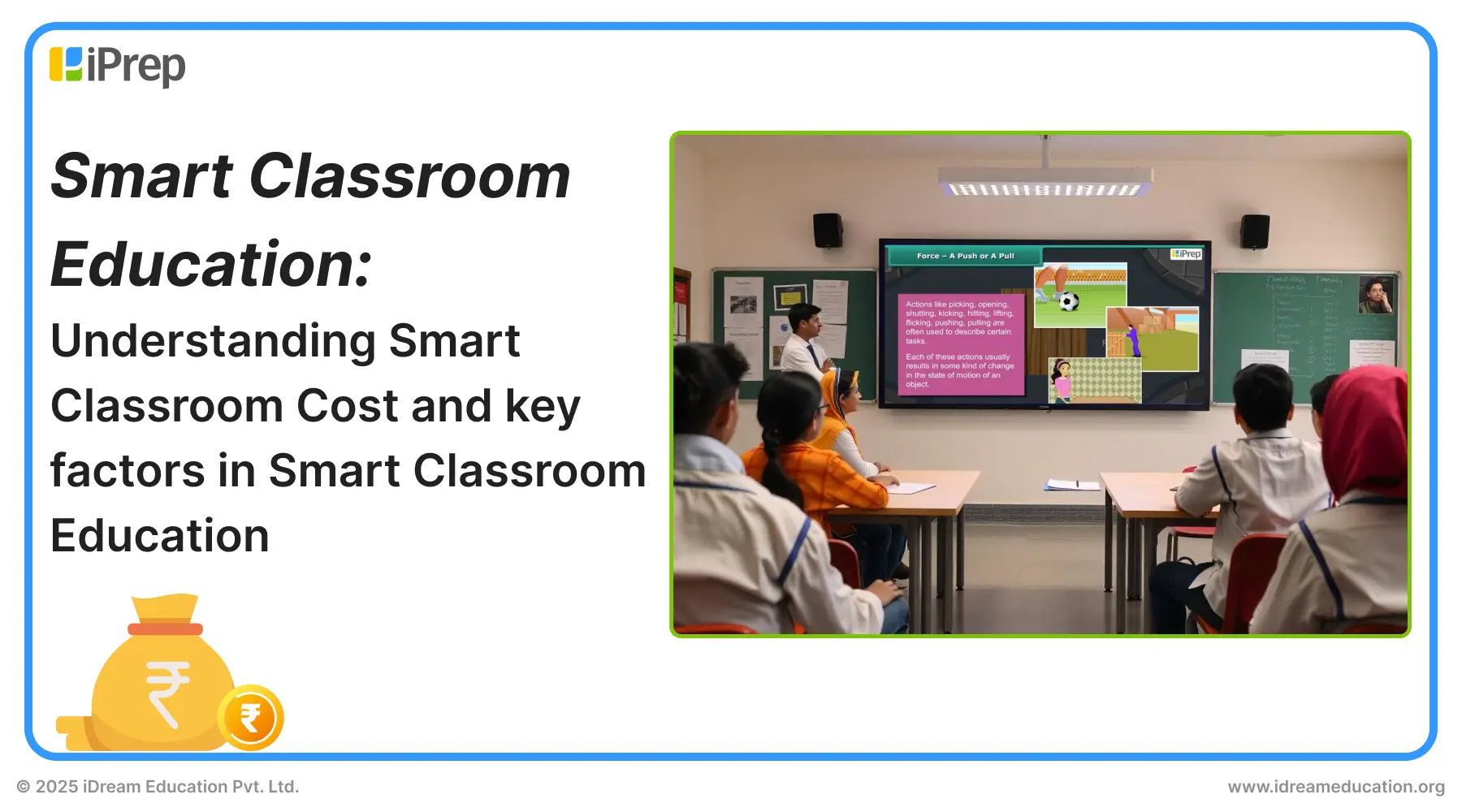
Smart Classroom Education designed to break barriers to learning
When looking to buy a Smart Class or setting up a smart classroom, cost is an essential factor and may often pose a barrier. Educators and Education programme/ School planners often grapple with questions such as where to buy a smart class, what is the cost of a smart class, what is the best smart class solution, who is the best smart class provider, what is the price of a smart class, and even how to buy a smart class.
The list is endless – and rightly so. A smart classroom is not a one-time purchase, but a long-term investment that delivers impact for years to come. That’s why, at iDream Education, our endeavour is to support and empower schools and education programme planners with the right knowledge about Smart Classroom solutions, guiding them at every step of their smart class implementation journey.
In this blog, we delve into the finer nuances of Smart Class education and explore how our smart classroom solutions are designed to address diverse Smart Class requirements.
To help you plan better, we’ve also included a Smart Classroom Setup Checklist and a Smart Classroom Cost Guide, enabling you to gain a comprehensive understanding of Smart Class education—from planning and budgeting to implementation.
Why Smart Class Costs Should Be Seen as an Investment, Not an Expense
Today, Education Technology (EdTech) is seamlessly complementing traditional classrooms. It isbeing fine tuned to make classroom experiences more engaging for students and achieve greater efficiency for teachers. Yet, despite its growing impact, Smart Class education is often viewed with hesitation largely due to misconceptions around smart class costs.
Beyond visible hardware, the true cost of a Smart Classroom spans a much broader spectrum. It starts from the learning platform, content and physical infrastructure to implementation, teacher training, ongoing maintenance, and more. When viewed as a comprehensive ecosystem rather than a standalone setup, the overall smart class investment can appear high to many prospective adopters, especially if these components are not evaluated in terms of long-term value and impact.
How Smart Class Investments Can Be Affordable and Future-Ready?
Smart Classroom education is the latest paradigm in Education. It is an approach that uses ICT (Information, Communication and Technology) for students to visualize better and learn better, and for teachers to be equipped better and teach better.
With the integration of advanced equipment and rich visual teaching aids, today’s Smart Classrooms have emerged as powerful centres of educational innovation already driving learning outcomes at scale. By thoughtfully blending traditional pedagogy with technology, lakhs of students are experiencing deeper conceptual understanding, while learning becomes more engaging, joyful, and interactive.
What truly makes Smart Class investments affordable and future-ready is their simplicity and scalability. At its core, transforming a conventional classroom into a Smart Classroom requires
Together, these two elements unlock a wide range of teaching possibilities. This bringing depth, interactivity, and continuity to learning through a single integrated setup.
Breaking Down Smart Class Costs: Where the Money Really Goes
When schools or education programme planners evaluate Smart Class investments, the perceived smart class setup cost often feels high because multiple components are bundled together. However, when broken down thoughtfully, Smart Class education becomes far more predictable, scalable, and affordable than commonly assumed.
Below is a practical breakdown of the key smart class cost components involved in setting up a Smart Classroom:
Smart Class Hardware
This is the most visible part of the investment and typically includes:
Smart Board / Interactive Flat Panel
Basic classroom audio setup (optional) and accessories if needed
Indicative cost range: ₹50000 thousand – ₹2.5 lakh per classroom (depending on screen size, brand, and features)
This is usually a one-time investment with a lifespan of several years.
Smart Class LMS / Learning Application
The learning application or LMS is what truly brings the Smart Class to life. It enables:
Structured digital lesson delivery
Easily navigable digital lesson, assignments and assessments
Teacher-friendly classroom controls
Indicative cost range: ₹3K – ₹4K per smart classroom per year. Smart class LMS cost may not vary much but may change basis customization in categories and features.
This is a recurring but scalable cost, aligned with actual usage.
Smart Class Content
Offline Curriculum-aligned digital content ensures technology enhances pedagogy rather than distracts from it. This typically includes:
Concept videos and animations
Digital syllabus Books
Simulations and interactive exercises
Question banks and assessments
Workbooks and worksheets
Chapterwise PPT
e-library content
Life skills and value education & more
Indicative cost range: Often bundled with the LMS & costs around ₹10K – ₹15K per device per year
Offline smart class content reduces teacher dependency on external resources and saves preparation time.
Reporting & Analytics
Reporting tools help program managers/officials keep a track of:
Content & category usage
Reliability of smart class content for daily classroom teaching
Teacher adoption and effectiveness
Indicative cost range: Usually included within the LMS or available as a value-added module
Strong reporting and impact-sharing by Smart Class providers ensure that project officials have clear visibility into classroom usage and learning outcomes. This enables data-driven decisions for continuous improvement, timely interventions, and informed scaling, ensuring accountability and long-term programme success. Most importantly, it builds confidence and satisfaction that the Smart Classroom cost investment is delivering measurable and meaningful results.
Teacher Training & Onboarding
Experiential teacher training is a critical component of successful Smart Class implementation. It ensures that teachers clearly understand how Smart Classes function in real classroom scenarios and builds confidence in using new technology effectively during daily teaching. This typically includes:
Initial onboarding sessions
Hands-on, practical training
Classroom-based activities and demonstrations
Indicative cost range: ₹5,000 – ₹15,000 per school (Costs vary based on school location, as on-ground teams travel to individual schools for in-person training.)
Well-trained teachers maximise the return on Smart Classroom investments, reduce resistance to technology adoption, and ensure sustained usage and measurable progress long after implementation.
Before you Buy a Smart Class: Here is a Smart Classroom Checklist
Pre-Installation Assessment
Equipment verification
Warranty documentation
Software testing
Infrastructure readiness check
Infrastructure Setup
Power Requirements:
Dedicated 5A/15A points
Stabilized power supply
Proper earthing
Cable management
Network Needs:
Minimum 10Mbps bandwidth (if the Smart Class is online)
Reliable Wi-Fi coverage
Backup internet connection
Classroom Layout Guidelines
Space Planning:
Display height: 4-5 feet from floor
Viewing angle: Maximum 160 degrees
Teacher station placement
Student seating arrangement
Charging station locations
Training Framework
Smart Board operation
LMS integration
Teaching methodology
Technical troubleshooting
Assessment tools usage
Smart Classroom cost varies significantly based on factors such as the region, level of education, and specific technological requirements
Smart class cost increases because of the need for advanced infrastructure and technology standards. Costs may include interactive whiteboards, tablets or laptops for students, high-speed internet connectivity, and software.
Smart Class Cost increases because of ongoing expenses for maintenance, software updates, and teacher training contribute to the overall investment.
Smart Class Costs vary between urban and rural areas. Urban schools may have better access to resources and infrastructure, resulting in comparatively lower upfront costs for advanced technologies. In rural settings, the challenge lies in establishing the basic infrastructure before implementing smart classroom solutions, resulting in high cost of implementation. Factors that increase the cost of implementation in rural settings are reliable electricity supply, internet connectivity, and the need for initial setup of a smart class solution.
Are there any adaptable and affordable smart class solutions to ensure equitable access
Yes, iPrep Digital Class is an affordable and easy to implement smart class solution. It is easy to set up & install, and significantly reduces smart class costs while ensuring updated, rich and joyful content at all times.
iPrep Digital class is a user-friendly, Smart Classroom solution designed to equip 21st-century schools. It equips teachers with a comprehensive collection of Digital Content & Resources in one accessible platform. This smart class solution streamlines the smart class setup for schools by offering efficient hardware choices. Not only hardware, but, iPrep Digital class offers digital content compatible with any operating system, and seamless offline reporting integrated with automatic synchronization to a cloud-based monitoring dashboard.
iPrep Digital Class eliminates costly digital infrastructure
The cost associated with setting up a smart classroom in India is subject to factors such as room size, incorporated equipment, technology, and the chosen vendor. Traditional smart classrooms often feature interactive displays, projectors, computers, audio tools, and additional technology such as cameras and interactive whiteboards.
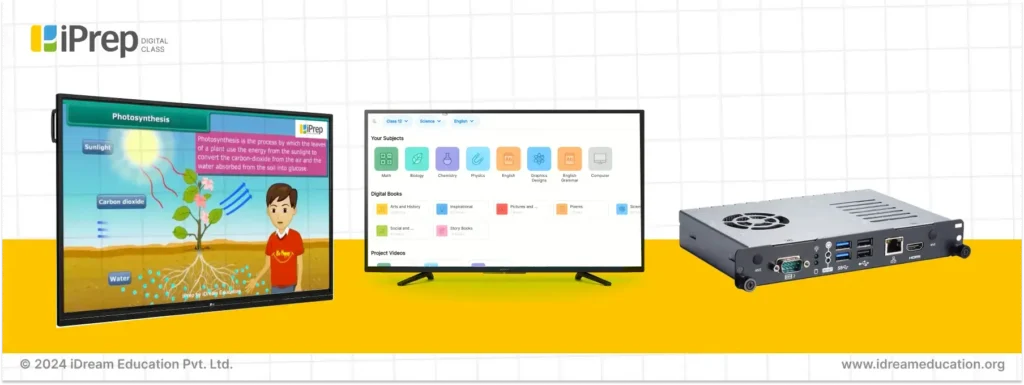
In contrast, iPrep Digital Class streamlines the requirements to just one device, such as an interactive flat panel, smart TV, Open Pluggable System (OPS), Interactive White Boards, or any preferred alternative. The cost of these devices for a Smart Class is reduced, as they do not necessitate extra space, wiring, or furniture. Just like TVs, they can be easily mounted on any classroom wall and only require a single power plug for setup.
iPrep Digital Class eliminates the maintenance, update or training cost
The integration of smart class setups with wired connections and supporting hardware increases cost for maintenance, software updates, and teacher training, thereby contributing to the overall cost of smart classrooms. In contrast, the iPrep digital classroom offers a hassle-free, plug-and-play solution. Teachers simply need to plug in the pen drive and play to deliver lessons through the iPrep content. iPrep can also be pre-loaded in system memory or enabled through a network setup. Software updates are seamlessly handled from the backend, allowing teachers to download and update the learning platform effortlessly. Additionally, the smart class cost remains unaffected by teacher training, as iPrep is an easy-to-use solution. Teachers can operate it without much training, similar to any other Android or Windows app they use in their daily lives on phones or TVs, ultimately reducing the overall smart class cost.
iPrep Digital Class eliminates cost of Internet
The expense of implementing smart classrooms rises significantly when internet access becomes a necessity for learning. The initial consideration is often to establish a reliable internet connection to ensure uninterrupted learning. On the other hand, iPrep Digital Class presents a cost-effective smart class solution which is designed to work completely offline. It provides all K-12 learning content aligned with the curriculum preloaded on a pendrive, eliminating the requirement for setting up Wi-Fi connections and thereby reducing the overall smart class cost.
Moreover, sustainable implementation partners can go a step further by integrating sustainable solutions such as solar-enabled smart classrooms, effectively eliminating electricity costs in schools.
Smart Classroom Budget Guide
In this section we take you through indicative costs of a Smart Classroom. Please note that these costs are dynamic and give an approximate or ballpark figure of budgeting for a Smart Classroom. The budget guide charts the costing of various components starting from the Smart Board and includes costs of various other components, such as the second most crucial component of a smart classroom – the teaching software.
This is useful for deciding the specification of the UPS and Invertor Battery to purchase for the smart classroom.
Implementation Scale Costs – An Illustration Table
No. of Classrooms
Min. Recommended Smart Classrooms
Hardware Cost1
Support Equipment2
Teaching Software3
Maintenance4
Total Investment (₹)
1
1
126,270
43,765
35,400
10,272
215,707
10
5
631,300
218,825
177,000
51,359
1,078,534
20
10
12,62,700
437,650
354,000
102,718
2,157,068
30
15
18,94,000
656,475
531,000
154,076
3,235,601
40
20
25,25,300
875,300
708,000
209,350
4,396,350
50
25
31,56,600
10,94,125
885,000
256,786
5,392,511
1Hardware Cost: Smart Board/IFP (LG TR3DJ) – Free Freight & Installation and Training with a 3-year on-site warranty 2Support Equipment: UPS, Battery, Inverter, UPS Stand, Bluetooth Speaker, Webcam 3Teaching Software: Lifetime, up-to-date NEP aligned content at all times with on-time teacher training, data reporting dashboard access, single window support 4Maintenance: Including Training/Re-training, Internet/Data Costs, Incidental repairs & purchases such as cables/adapters, routers, and Energy Costs, general 5% per annum
*All prices are indicative and inclusive of GST except Invertor Battery where 25% GST is applicable
Package Inclusions
Component
Specification
Storage
SanDisk 256GB Pen Drive
Camera
Logitech C930E HD Webcam
Primary UPS
MICROTEK 1025 (12V) DG
Battery
MTK1502121JT 150Ah/12V
Backup UPS
MICROTEK Legend 650
Audio
Portronics Slick 5 Bluetooth Speaker
Storage
Microtek Container Trolley
Transport
Free for IFP items*
*Additional charges for non-IFP items
While the cost of implementing Smart Class technology may initially seem a point of concern, it should not be the primary concern for your education initiatives. Our commitment is to work with you to ensure that the vision of enabling access to quality education and implementation remains within your planned budget.
Together, we can bridge educational gaps, empower communities, and pave the way for a brighter, technology-enhanced future for all.
If you’d like to know more about smart classrooms, smart classroom equipment, their pricing, overall setup costs, or other digital learning solutions, you may contact us at:+91 7678265039. You can also write to us share@idreameducation.org or share your details here
Want to know more about Smart classroom equipment with price? Read here
ASER 2023, titled ‘Beyond Basics,’ is a nation-wide citizen-led household survey. It provides insights into the activities and preparedness of youth aged 14 to 18 for leading productive lives as adults.
About the ASER 2023 Survey
The survey focuses on four key aspects: educational and career pathways, the application of foundational skills in daily life, digital access, and future skills and aspirations.
The ‘Beyond Basics’ survey for the year 2023 by ASER was carried out in 28 districts across 26 states. The survey was conducted with 34,745 youth aged 14-18. Each major state included a survey of one rural district, except for Uttar Pradesh and Madhya Pradesh. In UP and MP two rural districts were included.
The survey gathered information on the current activities of the youth and their proficiency in both basic and applied tasks.
“Notably, the study placed particular emphasis on assessing the youth’s access to digital devices and their skills in performing digital tasks. Additionally, the survey delved into the aspirations of the youth related to their future”.
ASER had concentrated on the 14-18 age group in 2017 and came up with findings and recommendations highlighting the urgent need to focus on this age group. In 2023, the ASER 2023 revisited this demographic to further enhance understanding of youth in this age range, as well as changes since 2017.
The Imperative Need of Prioritizing the Youth Population
Six years since ASER 2017, with the COVID-19 pandemic, there has been significant changes in the lives of people across the world. In India, the prolonged closures of schools and colleges ranked among the lengthiest globally. This impacted millions of learners and led to learning loss among students nationwide. The pandemic led a widespread shift of education, employment, and services to remote and online platforms, emphasizing the necessity for digital access and proficiency.
In the midst of this change, the National Education Policy (NEP) was released in June 2020.
The National Education Policy (NEP) advocates for a three-tier pedagogical framework in Indian school education. This structure in policy defines a ‘secondary’ stage’ which covers the age group of 14-18 years and the importance of areas such as multidisciplinary education and life skills, for students in the 14-18 age group.
ASER 2023 ‘Beyond Basics’ explored four key domains
Activity: What activities currently occupy the youth of India? Are they attending school or college, seeking additional tuition, undergoing vocational training, preparing for exams, or engaged in employment?
Ability: Proficiency in comprehending simple text and performing basic arithmetic tasks. Capable of executing basic calculations needed for everyday situations, such as calculating interest for repayment and applying discounts. Further, it focuses on youth’s ability to read and comprehend simple instructions, such as those found on a medicine packet.
Awareness and digital aptitude: Do they have smartphones? Are they financially aware? Do they have knowledge of digital technologies and platforms? How do they utilize smartphones, and can they execute fundamental digital tasks on these devices?
Aspirations: What are their ambitions for the future? How extensive is their desire for further education and their careers? Who do they look up to as their role models?
Enrollment: 86.8% of individuals aged 14 to 18 are currently enrolled in an educational institution. While there are minor gender differences in enrollment, age plays a significant role in these patterns. Notably, older youth exhibit a higher likelihood of not being enrolled. The percentage of those not enrolled is 3.9% for 14-year-olds and increased to 32.6% for 18-year-olds.
Enrolled Streams: The majority of youth within this age range are enrolled in the Arts/Humanities stream. In the eleventh grade or beyond, over half of them opted for the Arts/Humanities stream (55.7%), with STEM following at 31.7% and Commerce at 9.4%. In the STEM stream, the enrollment rate is lower for females (28.1%) compared to males (36.3%).
Vocational Training: Just 5.6% of the surveyed young individuals are engaged in vocational training or related courses. Among college-level youth, the highest proportion (16.2%) is engaged in vocational training. The majority of young people are enrolled in short-duration courses, typically lasting for six months or less.
Employment: A greater proportion of males (40.3%) engage in non-household work for at least 15 days in the previous month compared to females (28%). In both genders, the majority of young individuals involved in activities other than household work are typically employed on family farms.
Ability (Pg. No. 35, 36, 37)
Foundational reading Ability: Approximately 25% of individuals in this age bracket 14-18 are still unable to fluently read a text at the Standard II level in their regional language. Just over half of them, or 57.3%, can read sentences in English. Among those capable of reading English sentences, 73.5%, can comprehend their meanings. When considering enrollment categories, females outperform males in reading a Standard II level text in their regional language, with a rate of 76% compared to 70.9%. Conversely, males excel over their female counterparts in arithmetic and English reading.
Foundational Arithmetic Ability: In general, nearly half of the youth population demonstrates proficiency in common calculations, such as time measurement, weight addition, and application of the unitary method. Across all routine mathematical tasks, males outperform females. Those youths who have fundamental arithmetic skills are more likely to excel in everyday calculations.
Comprehending Ability: Among young individuals capable of reading a text at a Standard I level or higher, almost two-thirds can read at least three out of four questions from the medicine packet. A higher percentage of males (69.2%) demonstrate this proficiency compared to females (61.7%). Performance is stronger for those who are enrolled in Standard XI-XII or undergraduate education compared to those in Standard X or below. Additionally, less than half of unenrolled youth exhibit the ability to answer at least three out of four questions.
Calculating Ability: Among young individuals proficient in subtraction or higher-level mathematical calculations, more than 60% can successfully complete budgeting tasks, approximately 37% can apply discounts, and only around 10% can accurately calculate repayments. It is noteworthy that males consistently outperform females in various financial calculation tasks.
Awareness and Digital Aptitude (Pg. No. 38)
Access to digital devices: Nearly 90% of young individuals have a smartphone in their households and are proficient in its usage. Among smartphone users, males (43.7%) are more than twice as likely to own a smartphone compared to females (19.8%). In contrast, the presence of a computer or laptop in households is significantly lower, with only 9% having one at home. Youths with access to a computer or laptop at home are considerably more likely to be proficient in its use (85%) compared to those without access (33.9%). Furthermore, females exhibit a lower likelihood of being proficient in the use of smartphones or computers in comparison to their males.
Knowledge of digital devices: Around 50% of surveyed males have an email ID, while the figure is just under 30% for females. Nearly all young individuals (90.5%) acknowledge using social media during the reference week, with a slightly higher percentage among males (93.4%) compared to females (87.8%). Among the youth who utilized social media, only approximately half are aware of the online safety settings outlined in the survey. Notably, males exhibit a higher awareness of these settings compared to females.
Usage of Digital devices: Two-thirds of youth having smartphones used it for learning during the reference week of the survey. These activities include watching online study-related videos, resolving doubts, and exchanging notes. Additionally, a quarter of non-enrolled youth also reported participating in educational endeavors using their smartphones during the same period.
Fundamental digital tasks: Nearly 80% of young individuals used their smartphones for entertainment activities, such as watching movies or listening to music, during the reference week of the survey.
Aspiration (Pg. No. 60, 62, 64, 66)
Education Goals: A greater percentage of boys, compared to girls, indicated a lack of interest in pursuing further studies after completing Standard XII.
Role models and career goals: The career aspirations of young individuals exhibit significant gender distinctions. In the surveyed group of boys, the top two choices were the army (13.8%) and police (13.6%), while other job categories lagged behind. On the other hand, among girls and young women, the most prevalent selections were teacher (16%) and doctor (14.8%), with police (12.5%). Among the surveyed young individuals, one in four were unable to identify a specific career aspiration.
Career Aspiration: The most common responses fell into the “Don’t know” category. Approximately one in five youths (21%), with minimal variation between genders, struggled to specify any particular type of work or job they aspire for.
Considering the findings of ASER 2023, Madhav Chavan, the co-founder and CEO of Pratham Foundation, emphasized the need for a shift in mindset, stating, “While technology can be helpful, it is crucial for our perspectives to evolve.”
Technology is useful but our mindsets have to change
Madhav Chavan
Key Takeaways
Smartphone ownership in rural households has increased from 36% in 2018 to 74% in 2022
Two decades ago it was believed that computers and the internet would revolutionize education. A decade later mobile technology led to the belief that education anytime anywhere is possible. From one laptop per child we started thinking mobile devices will replace books. Now we are about to reach a situation of having a mobile phone in every home.
89% of youth have stated that they have a smart phone at home, 92% stated they know how to use a smartphone. According to self-declared information in ASER 2023, almost half the population has used mobile phones for their studies, significant but much less than those who use Youtube on smartphones.
Agriculture employs over 50% of India’s workforce, only 0.7% of the surveyed youth are enrolled in agriculture courses beyond Std X
Half of the students start working part-time after completing Std X
Opportunities outlined in ASER 2023:
The adoption of technology and usage of smartphones for learning are going to be crucial. A shift is required for the right, more effective and safer use of these devices by the youth.
Universal Elementary school enrolment has been achieved in India. We are on our way to achieve universal secondary and higher secondary enrolment.
While the NEP talks about bringing flexibility in entering and re-entering the education process. The need really is for the underprivileged youth to study while working to earn a living. Open schooling and digital education is a powerful combination that is growing.
The education system should also enable goals of youth outside academics. The idea of life goals not being defined by academics is becoming popular. Contrary to our education system that has grown to train students to aim at one purpose in life i.e. to do well in academics and get jobs, times are changing. While this will continue to be a goal for youth, the notion of life goals being outside academics and jobs are getting wider prominence.
From Right to Education (RTE) 2009 to NEP 2020: Progress towards equipping youth for the future
Schooling
Key Takeaway ASER 2023: An increase in enrollment levels for the secondary stage, with simultaneous increase in the demand for students to perform exceptionally well in high-stakes examinations.
Opportunity: The National Education Policy (NEP) 2020 outlines the ambitious objective of achieving 100% secondary school enrollment. It proposes achieving this goal through continuous monitoring of students’ enrollment, attendance, and learning levels. To achieve this, we need provisions for appropriate opportunities for students to reenter school or bridge learning gaps. The examination pressure should be reduced by reevaluating the timing and structure of assessments. NEP 2020 puts forth various recommendations for examination reform and increased flexibility. Furthermore, policy emphasis on youth enrollment as it gives the education system the additional time and space to prepare them for life.
Foundational Literacy and Numeracy
Key Takeaway ASER 2023: There is a pressing need for targeted initiatives to address Foundational Literacy and Numeracy (FLN) among a substantial proportion of youth aged 14-18. These efforts are essential not only for academic improvement but also for meeting daily life activities. ASER 2023 data suggests that around 25% of youth in the 14-18 age bracket may require support in building FLN skills.
Opportunity: The NEP 2020 acknowledges the necessity for addressing the learning gap among individuals who have fallen behind. Consequently, we may implement initiatives to actively support students in grades VIII and above who are lagging behind.
Digital access and digital possibilities for the future
Key Takeaway ASER 2023 : Youth have smartphones and are adept at using them. Connectivity is generally accessible, even in remote villages.
Opportunity: As the nation’s digital infrastructure is swiftly taking shape, it is imperative for schools to incorporate digital skills into their curriculum. This will enable the effective orientation, training, and motivation of youth to develop enhanced digital capabilities on a broad scale, facilitating the proficient use of digital resources for various purposes. The National Education Policy (NEP) 2020 advocates integrating technology to enhance educational processes and outcomes. This involves fostering digital literacy and promoting initiatives grounded in technology to achieve these goals.
Work
Key Takeaway ASER 2023: Many young individuals engage in employment while they are in school or college. Contributing to family farms or businesses may be essential for families’ economic reasons. But it’s worth noting that many non-family jobs might not take into account the need for flexibility among working students.
Opportunity: The NEP 2020 endeavors to significantly envision vocational education. For this policy proposes gradual integration of vocational education programs into mainstream education across all educational institutions.
Way Forward
NEP 2020 has reimagined the ‘foundational stage’ (age 3 to 8). The Government’s NIPUN Bharat Mission has begun to rework structure and practices. Similar to the pathway linking NIPUN to early grades, we need active efforts to translate middle school and secondary school reform ideas into action, along with close tracking.
The ASER 2023 findings also underscore the importance of empowering our youth with the requisite knowledge, skills, and opportunities for personal and community growth. It is evident that aligning educational strategies with the National Education Policy (NEP) 2020 is a key step towards achieving this goal. The integration of technology by providing EdTech solutions, serves as a progressive stride in this direction.
iDream Education has designed its solutions completely in alignment with NEP 2020, to help youth address learning gaps, develop understanding of regional languages, and impart vocational skills to contribute to a holistic education that not only leads academic progress but also improves practical capabilities.
As we aspire for a future where every youth can take charge of their own progress, and of their communities. The need of collaborative efforts grounded in NEP 2020 and supported by technology become indispensable for realizing this vision. For secondary school age students, NEP’s ‘learning to work’ perspective is largely dependent on a complete re-imagination of how vocational education is offered to students in the future. One of the results of universal elementary education is an increase in expectations of students and family members to get white collar jobs, while this creates cutthroat competition for getting into colleges, it also closes young minds to the possibility of exploring other livelihood pathways for progress. The responsibility of creating a new highway for transition from school to work lies not only on the education system but also with industry. Developing such paths that will enable young people to find productive livelihoods so that they have fruitful lives is one of the major challenges India faces today.
Learn about the genesis of e-Adhigam Initiative by the Government of Haryana, providing a digital leap to learning. With 5 lakh students receiving tablets for seamless online education, this initiative marks a significant step towards a brighter future.
The e-Adhigam (Advance Digital Haryana Initiative of Government with Adaptive Modules) project, introduced by the Department of School Education, Haryana Govt, aims to provide tablets to all students in grades 10th to 12th, enabling them to access learning materials that foster 21st-century skills and open up new opportunities.
During the launch of the e-Adhigam Initiative, the Honorable Chief Minister of Haryana, Manohar Lal Khattar Ji, said,
“Through e-learning, students in Haryana will emerge as global students”.
He highlighted that the initiative originated from the challenges faced by many families during the COVID pandemic, while making a shift to online education. The e-Adhigam Initiative is contextualized to address these difficulties. Therefore, the tablets distributed to students will go beyond classroom teaching, offering information on global events and affairs.
Target of Implementing e-Adhigam Initiative
The nation set a goal for the year 2030. But, the Haryana government has set an even more ambitious target of achieving it by 2025.
What is being done to achieve this objective?
The Haryana Government has placed a significant emphasis on the education sector. Out of the state budget of 1.70 lakh crore, a substantial amount of 20,000 crore has been allocated to the education sector. The Chief Minister emphasized the transformative power of education, stating that “Education is a powerful weapon one can use to change the world”, and quoted Nelson Mandela.
Scope of e-Adhigam Initiative
Initially, under the e-Adhigam scheme, approximately 300,000 tablets were distributed to students in government schools in Classes 10 and 12.
The government then extended this e-Adhigam initiative to benefit 500,000 students in Classes 10-12. These devices are equipped with pre-loaded content, personalized and adaptive learning (PAL) software, and with 2GB of free data.
However, it has been specified that Class 11 students will receive the tablets only after successfully clearing the Class 10 board exams and qualifying for the following academic year. Chief Minister Manohar Lal Khattar Ji announced during the launch of the e-Adhigam Initiative at Maharishi Dayanand University in Rohtak that, starting from the next academic year (2023), all classes from 9 to 12 will be covered under the e-Adigham scheme.
What work has been done in the e-Adhigam tablet project by the Haryana government?
The School Education Department, Government of Haryana had been proactively researching and developing an implementation strategy for some time. Lessons learned from similar projects in other states of India indicated limited success, primarily when the program focused solely on distributing devices. Research findings also highlighted that the introduction of laptops posed a challenge, for example, teachers-students found the interface of learning platforms to be alien and were not even aware of making use of it. Additionally, the high maintenance costs and lack of internet connectivity proved to be significant drawbacks.
Recognizing the need for a comprehensive approach, the department sought input from various stakeholders, including teachers, parents, and students. A successful roll-out required a holistic understanding of current practices and the barriers to technology adoption.
Securing a resilient device was just one aspect of their strategy. The equal focus was on ensuring post-purchase maintenance, service, and on-site support through a dedicated field management team. The department integrated mobile device management (MDM) software, restricting access solely to whitelisted content.
Academic content delivered through an adaptive system
To meet the educational needs of students software was needed that enables high-quality academic content aligned with the school curriculum with navigation and access in vernacular languages. Additionally, interactive features such as quizzes, games, discussion prompts, and a repository of practice questions were integral.
To achieve this, the School Education Department’s team collaborated with vendors who could curate freely available content from diverse platforms, delivering it through a Personalized and Adaptive Learning (PAL) platform.
Personalized and Adaptive Learning (PAL) stands at the forefront of educational technology in India and globally, offering a structure where each student can carve out their distinct learning journey.
This innovative software dynamically adjusts its content based on real-time student performance, offering insights into individual progress. Despite the Indian government issuing comprehensive guidelines on PAL in 2018, widespread implementation experiences were limited.
Comprehensive Evaluation of PAL Solution by experts from IIT Bombay who developed EdTech Tulna Framework
Through extensive consultations with experts from IIT Bombay, a comprehensive framework was established to assess PAL vendors across the board. The evaluation criteria encompassed diverse aspects, drawing from scores obtained in pilot studies within schools, as well as specific product and process features unique to PAL. A team of subject and technical experts was enlisted to evaluate the products. As a result, academic content for PAL in Hindi, English, and Social Science subjects has been developed at highly competitive prices. Vendor selection for additional subjects was also completed as part of the process.
Internet data for accessing the content
The third component of the program focused on ensuring sufficient data connectivity, in addition to addressing hardware and software requirements. Therefore, govt. in its e-Adhigam initiative has provided each student with a reliable data plan of 2GB per day.
Apart from a three-pronged strategy,
Haryana’s e-Adhigam initiative places significant emphasis on acknowledging the role of teachers. This is due to the recognition that education technology interventions minimizing the role of teachers often result in poor modules, low student engagement, and a lack of incentive structure. Therefore, the School Education Department took special care to ensure that they provide comprehensive training to teachers until they become proficient in navigating and utilizing the fundamental features of the PAL Solution, including those designed for students.
Beneficiaries of e-Adhigam by the Government of Haryana
Under this initiative, 5 lakh students have received tablets (preloaded with personalized and adaptive learning (PAL) software. They are also provided with complimentary 2GB of internet data daily.
To expand access to online educational resources, the government has also provided tablets to 37,370 teachers. The tablets with teachers contain a specialized teacher module, facilitating virtual interactions with their students.
The e-Adhigam tablet project by the Haryana Govt awards work to a Haryana Startup, iDream Education for the implementation of PAL
Through a two-phase tendering and evaluation process, the Department has selected three PAL providers for the Personalized Adaptive Learning platform on student tablets.
“iDream Education is among the three chosen providers who have been granted the opportunity to implement its iPrep PAL solution across its home state for the designated five subjects.”
In the e-Adhigam Initiative, Samsung tablets were distributed to every Government School student of classes 10th, 11th, and 12th in Haryana in 2022, with an integrated PAL solution for adaptive learning.
iDream Education provided iPrep PAL for five subjects for grades 11 and 12 and is currently in use by students. As per continuous tracking, it has been evaluated that students who attempted both diagnostic and the final test in the subjects of economics, business studies, and geography showed improvement of 44%.
If you can not measure it, you can not solve it!
iDream Education provides customer support to students, and teachers, ensuring timely resolution of issues.
A central reporting dashboard deeply tracks the usage and learning outcomes data of every student. The reports are then shared daily with officials for impact assessment and tracking.
To Conclude,
Appreciating the Chief Minister for enabling tablets, the student expressed gratitude and said,
“Thanks to Manohor Sarkar we have tablets in hand for learning and we are saved from setbacks led by the pandemic”.
“With the availability of these tablets, we are not only able to study curriculum. In fact, now we are able to prepare for competitive exams as well,” said the students.
The Haryana Government has taken a strategic and well-planned statewide initiative. We anticipate that this project will enhance students’ learning outcomes throughout Haryana, preparing them to be a global student.
If in case you would like to know more about our digital learning solutions, visit our website, www.idreameducation.org, or write to us at share@idreameducation.org
Step into the vibrant variety of languages and cultures as we celebrate World Hindi Day.
A linguistic harmony that resonates across borders, Hindi stands tall as one of the world’s most widely spoken languages. Hindi weaves together the intricate threads of India’s rich history, diverse culture, and identity. Beyond its linguistic ability, Hindi serves as a bridge, uniting speakers of regional languages and fostering communication that goes beyond India.
Did you know?
World Hindi Day is celebrated on January 10th each year. It commemorates the anniversary of the first time Hindi was spoken in the United Nations General Assembly (UNGA) in 1949.
In 1950, the Union of India established Hindi as its official language. Article 343 of the Indian Constitution designates Hindi in the Devanagari script as the official language of India.
Every 3 years, World Hindi Conference is conducted to promote the hindi language
First-ever World Hindi Conference happened in Nagpur in 1975
A total of 122 representatives from 30 nations attended the conference.
Since then, every three year World Hindi Conference has been conducted to spread awareness of the contribution of Hindi speakers and scholars. This serves as a reminder of the rich cultural heritage embedded in the language Hindi.
Need to promote Hindi as a medium of instruction in classrooms of India
Cultural Identity and National Unity
Promoting Hindi as a medium of instruction in classrooms helps reinforce and preserve India’s cultural identity. By using Hindi and other local languages as a medium of instruction, teachers can connect students with their cultural roots. Further, Hindi in classrooms promotes a shared understanding and familiar learning environment
Enhanced Communication and Accessibility
A significant portion of the Indian population speaks Hindi. This makes Hindi a language that can bridge communication gaps across different states and regions. Therefore, using Hindi as a medium of instruction can enhance communication among students from various linguistic backgrounds. Further, it will facilitate easier interaction and collaboration, breaking down language barriers and promoting inclusivity in the learning environment.
Socio-Economic Opportunities
Proficiency in Hindi can open up numerous socio-economic opportunities for students. As Hindi is widely used in government offices, and various professional fields, students who are proficient in Hindi are better equipped to navigate the job market. Moreover, Hindi as a medium of instruction can empower students to participate more actively in the economic landscape of the country. This will further contribute to their personal growth and the overall development of society.
As we celebrate World Hindi Day, we extend our heartfelt wishes to all our students, teachers and business fraternity.
At iDream Education, we recognize the significance of preserving our cultural heritage, and on this special occasion, we reiterate our commitment to keeping students connected with Hindi and other Indian languages. We thoughtfully designed our learning platform, iPrep, to be bilingual, providing students and teachers with the flexibility to choose their preferred medium of learning and teaching.
As we embrace linguistic diversity, let us continue to nurture the roots of our heritage and celebrate the beauty of language Hindi on this World Hindi Day and beyond.